Adherence to antiretroviral therapy among HIV and AIDS patients at the Kwa-Thema clinic in Gauteng Province, South Africa
Abstract
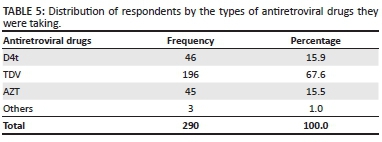
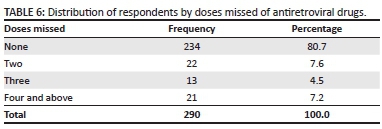
BACKGROUND: Introduction of antiretroviral therapy (ART) has shown reduction in HIV-related mortality and morbidity in people living with HIV and AIDS. Since high levels of adherence of more than 95.0% is required to achieve effective suppression of viral load, researchers found it important to establish whether people are pursuing what is expected of them. AIM AND SETTING: The study was aimed at determining adherence to ART among HIV and AIDS patients at the Kwa-Thema clinic in Gauteng Province. METHODS: Quantitative cross-sectional descriptive design was used. Ethical clearance was sort from MEDUNSA Research Ethics Committee. Validity and reliability were maintained throughout the study. A non-probability systematic sampling was used. Data were collected using administered structured questionnaire, and a total of 290 respondents were involved. Data were analysed using SPSS software version 22. RESULTS: The findings indicated that the adherence to ART was 77.0%. Factors that were significantly associated with adherence were gender (χ2 = 3.78, df = 1, p < 0.05), level of education (χ2 = 3.52, df = 3, p = 0.032), co-treatment of HIV and other infections (χ2 = 5.46, df = 4, p = 0.019), ability to follow ART (χ2 = 12.82, df = 1, p = 0.000 < 0.05), and types of antiretroviral drugs. RECOMMENDATION: The study recommends intensification of health education campaign against stigma and gender discrimination. Providing feedback to patients regarding benefits of ART is important. CONCLUSION: The study concluded that adherence to ART at the Kwa-Thema clinic was suboptimal (less than 95%) at 77%, but comparable with the adherence levels in other developing countries.
 Thumbnail
 Thumbnail
 Thumbnail
 Thumbnail