Practical insights for enhancing primary care rehabilitation services in low-resource contexts
Abstract
BACKGROUND: Rehabilitation services are crucial for addressing the growing burden of functioning problems related to chronic conditions in low and middle-income countries. These services, however, remain limited in South Africa and Zimbabwe's primary health care (PHC) settings. AIM: To identify recommendations for enhancing the accessibility and quality of rehabilitation services in PHC in South Africa and Zimbabwe from the perspectives of primary care providers (PCPs) and patients. SETTING: Ten PHC facilities in the Eastern Cape, South Africa and in Manicaland, Zimbabwe. METHODS: A qualitative descriptive study was conducted. Semi-structured interviews were conducted with 37 PCPs and 40 patients. Thematic analysis of transcribed and translated data was done in ATLAS.ti version 22.2.4 RESULTS: Five key recommendations emerged: (1) provide rehabilitation services closer to home through facility-based services, outreach, home visits and telerehabilitation; (2) improve patient awareness of rehabilitation through patient education, community engagement and patients actively seeking information; (3) enhance PCPs' knowledge and basic skills in rehabilitation through training and guideline development; (4) improve communication among PHC stakeholders; and (5) advocate for rehabilitation inclusion in leadership, resource allocation and multi-disciplinary teams. CONCLUSION: Implementing the identified recommendations could significantly improve the accessibility and quality of rehabilitation services in PHC, aligning with global initiatives to scale up rehabilitation in health systems. Future research should focus on evaluating the implementation and impact of these recommendations. CONTRIBUTION: The study emphasises the inclusion of PCPs' and end-users' voices in providing practical, context-specific strategies for establishing or strengthening rehabilitation services in low-resource PHC settings.
rehabilitation; physiotherapy; occupational therapy; speech and language therapy; audiology; primary health care
Introduction
Globally, a major scaling up of rehabilitation services is needed in response to the current trends in health and ageing.12,34
Despite this escalating need, rehabilitation has been a low priority for many countries, especially those with limited health investments. Often considering rehabilitation non-essential, these countries do not allocate specific budgets for this service, which decreases both the availability and the quality of rehabilitation services.567897101110
Strengthening rehabilitation services within PHC is crucial to address these challenges. While South Africa and Zimbabwe have community-based rehabilitation programmes,12,1314151616
To effectively enhance rehabilitation services in PHC, it is essential to obtain valuable insights from those at the forefront of primary care delivery and the end-users of these services.171817
Despite the clear importance of strengthening rehabilitation in PHC, limited information on context-specific strategies has been available in low-resource contexts. A recent scoping review cited the following key enablers to the integration of rehabilitation services in LMICs' PHC systems: raising awareness of rehabilitation roles, sharing information across different care levels, managing referral pathways and facilitating outreach programmes.1920,2122
This study aimed to provide informed recommendations and context-specific strategies to guide PHC, rehabilitation service planners and policy makers in developing and extending equitable rehabilitation services in PHC.
The study objectives were to: (1) describe the recommendations from the perspectives of PCPs and patients in two low-resource contexts; (2) compare the findings between these two groups; and (3) analyse differences and similarities between the contexts of South Africa and Zimbabwe. The recommendations are intended to promote equitable access to affordable rehabilitation services. They do not provide guidance on clinical interventions.
Research methods and design
Study design
A qualitative descriptive design was used to afford the researchers the flexibility to understand human experiences and provide practical recommendations for enhancing rehabilitation in PHC.2310,2425
Setting
The study took place in 10 PHC facilities located in two districts of Manicaland, Zimbabwe, and two districts of the Eastern Cape, South Africa. Six of the selected PHC facilities were from South Africa. These provinces are among the poorest in both countries with most of the populations residing in rural areas,26,27
South Africa's public primary care consists of approximately 3500 clinics and community health centres (CHCs).282930119
Sampling and recruitment of participants
Patient participants were purposively sampled to ensure diverse demographic characteristics (e.g. age, gender, location) and varying rehabilitation experiences. Inclusion criteria for participants were: (1) adults (18 years or older) or their carers; (2) any health-related functioning problems as described by the International Classification of Functioning Disability and Health Framework (ICF)31
The PCPs were purposively sampled based on the following inclusion criteria: (1) providing primary care to adult patients; (2) at least six months experience in PHC; and (3) willingness to participate. A maximum variation approach was used to select for diversity in age, gender, healthcare profession, location and years of PHC experience. Student PCPs were excluded. Recruitment included snowball sampling through in-person communications and e-mails. Prospective participants completed a short survey to confirm eligibility, followed by written informed consent. Data collection was conducted concurrently with the data analysis, which allowed for ending the recruitment processes once data saturation was achieved, that is, when adequate information had been obtained to address study objectives and no new themes arose from subsequent interviews.32
Description of sample
A total of 37 PCPs were interviewed - 22 from South Africa and 15 from Zimbabwe. The PCP participants consisted of 30 non-rehabilitation PCPs and 7 rehabilitation professionals (6 from district and 1 from PHC). The PCPs' median age was 42 years and ranged from 27 to 63 years (More detailed descriptions of this sample have been published elsewhere).24
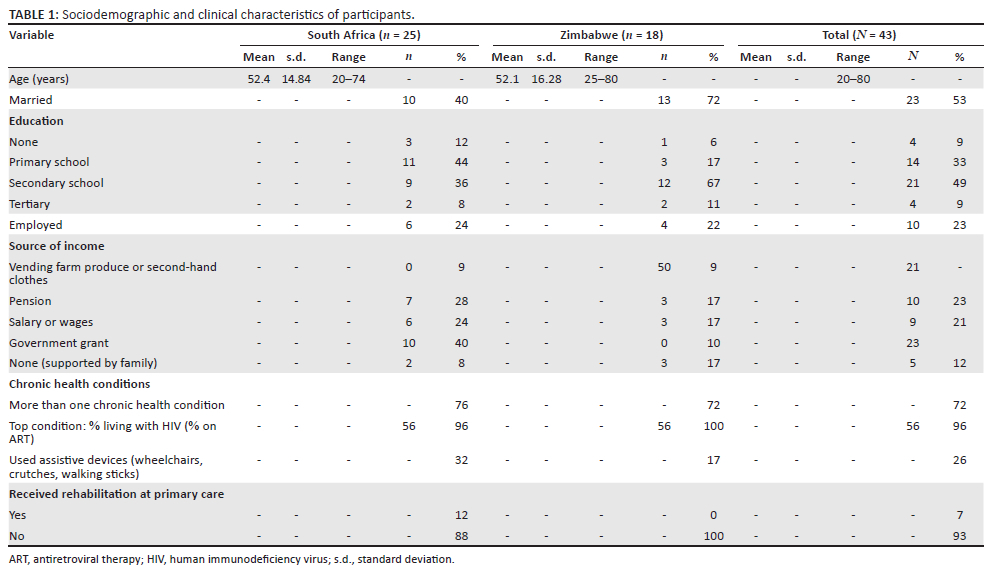
In all, 40 primary care patients were interviewed. Their demographics and other characteristics are presented in Table 1. Most patients experienced pain-, mobility- and mental-related functioning problems.
Data collection
Patient participants were interviewed face-to-face in PHC consultation rooms, while PCP participants were given the choice of in-person, phone or video-conference interviews at their convenience. Each interview lasted 20 min - 30 min and was audio-recorded. To encourage participants to provide honest responses, non-participants were not permitted to enter the rooms during the interviews. The semi-structured interviews were conducted in the participants' preferred language (English, Shona or isiXhosa) following a scheduled guide that was developed from similar studies on improving integrated PHC.33,3410,24
Data analysis
Transcripts were professionally transcribed and checked against recordings for accuracy by the first author. The Shona and isiXhosa recordings were translated into English by the translation service and verified by bilingual research assistants. Transcripts were sent back to consenting participants for feedback on data accuracy in reflecting their responses. Using ATLAS.ti version 22.2.4, the first author performed inductive thematic analysis following the six-step iterative process described by Braun and Clarke35
Reflexivity
The first author conducted a reflexive analysis,23
Trustworthiness
To ensure credibility (truth value), triangulation was done using multiple data sources, methods or researchers to cross-verify the findings. Confirmability was achieved through member checking by sharing the findings with PCP participants to validate the accuracy of the data interpretation. There were difficulties in sharing findings with patient participants because of loss of contact, language barriers without a professional translator and the lack of electronic devices. However, confirmability was further ensured through peer debriefing and reflexive journaling. Dependability was established by maintaining a clear audit trail involving comprehensive documentation of methodology and decisions made during the study. In terms of transferability, detailed descriptions of the data collection, analysis and interpretation were provided.
Ethical considerations
All procedures performed in studies involving human participants were in accordance with the ethical standards of the institutional and/or national research committee and with the 1964 Helsinki Declaration and its later amendments or comparable ethical standards. The study (project research number: 19376) was approved by the Stellenbosch University Health Research Ethics Committee (S21/01/002 [PhD]) and Medical Research Council of Zimbabwe (MRCZ/A/2916). The Permanent Secretary to the Ministry of Health, Provincial Medical Directorate of Manicaland Province, District Medical Officers and PHC facility managers granted study permission in Zimbabwe. The Eastern Cape Department of Health, District Offices of the Department of Health and PHC facility managers granted study permission in South Africa. Prior to each interview, voluntary written informed consent was obtained from all study participants for participation and publication of anonymised data. All data were anonymised by removing any names from the transcripts. Electronic recordings and identifying information were kept in an access-restricted location.
Results
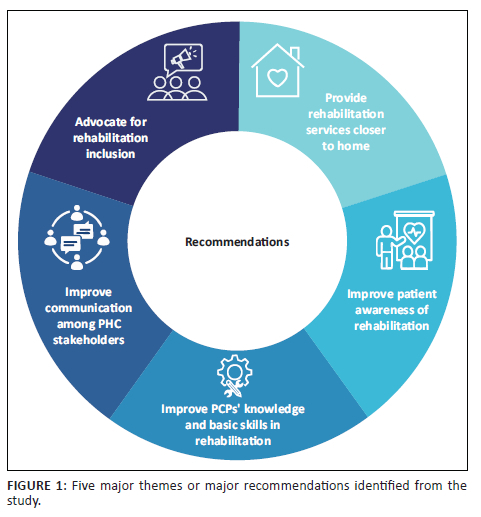
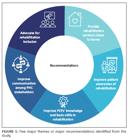
Five major themes representing the major recommendations were identified from the analysis of the participants' responses (Figure 1).
Each major recommendation included sub-themes or sub-recommendations, which are described next along with supportive quotes. Each quote is labelled with the participant's code ('PCP' indicating non-rehabilitation PCP; 'P' indicating a primary care patient and 'RP' indicating rehabilitation professionals, location [urban or rural] and the country).
Recommendation 1: Provide rehabilitation services closer to home
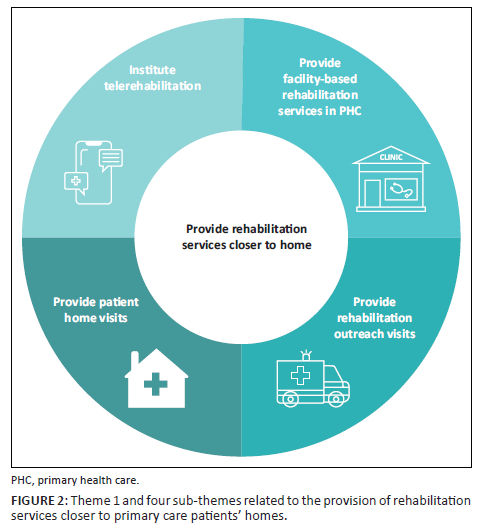
The first recommendation related to bringing rehabilitation services closer to primary care patients' homes (Figure 2). Four sub-themes highlighted the methods that could be used to achieve this recommendation.
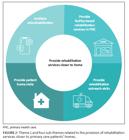
Provide facility-based rehabilitation services in primary health care
Patients expressed the need for facility-based rehabilitation services to be available at local clinics rather than centralised facilities. They highlighted the logistical and financial challenges of accessing distant services at higher-level healthcare institutions:
'It was always our wish that the clinic must have rehab … Because if you want to go to [District hospital], you need to hire a car. Then we go there and for us to return home, we must hire again. It's expensive for us.' (P13, RURAL, ZW)
'If these services come closer to us, we are better served … we can walk to the clinic and in an event that I cannot walk, I might need a small amount for people to push me in a wheelbarrow or hire a scotch cart.' (P15, RURAL, ZW)
Walking appeared to be the primary means of transportation for many individuals in these contexts. This suggests that rehabilitation services located within walking distance could be more accessible to the community. To ensure effective rehabilitation, services must be easily reachable, taking into account patients' mobility and financial constraints.
Provide rehabilitation outreach visits
Patients recognised that it may not be possible to have continuous rehabilitation services at each clinic. They suggested that rotational rehabilitation outreach services be implemented. One participant indicated a realistic and potentially manageable frequency for such services, considering resource constraints:
'Isn't it possible for the rehabilitation facilities to rotate in PHCs … so that those without the means to access hospitals may also be assisted? At least if they can visit here once a year, it would be better … just once a year. If they come and tell me what to do with my back that's painful, that can really help … while they are here with us.' (P10, RURAL, ZW)
Patients valued that personal engagement with rehabilitation professionals, although infrequent, would provide a critical touchpoint for them to receive professional guidance and that contact could significantly impact their well-being.
The PCPs concurred with patients regarding the need for regular outreach visits, but further highlighted the importance of logistical planning and communication with rehabilitation professionals. Additionally, outreach efforts to inform the community about these services would be crucial:
'If there's some outreach programs, like you visit us once a month, you tell us in advance that you'll be coming to the facility … then we mobilise our clients who may need those services.' (PCP9, RURAL, ZW)
Noteworthy is how the PCPs realised the importance of this engagement to be more frequent, suggesting monthly visits as compared to patients who requested annual visits.
The patients suggested that rehabilitation professionals conduct specialised clinics during their outreach visits that focus on the prevalent health conditions within the community. The approach was thought to effectively utilise healthcare resources while providing the required engagement with rehabilitation professionals:
'Maybe you can come to the clinic … then you indicate the specific type of conditions that you want to assist people with. You then invite the people and help them. That's the type of help that I think would be helpful … But the issue is that the kind of assistance that we would need from you is through direct engagement as we are doing right now … Because there are so many of us in this area who need assistance.' (P12, RURAL, ZW)
Provide patient home visits
The PCPs viewed home visits as opportunities for collaboration with rehabilitation professionals, building their capacity to guide and monitor patients independently when rehabilitation professionals were unavailable. They valued this approach's potential to bridge the rehabilitation service gap and ensure continuity of care:
'We don't have outreach services for rehab but maybe we can engage with them. When we want to do home visits, we can go together with the rehab tech [rehabilitation technician] … we assist the patient together whilst the rehab tech is teaching the patient how to exercise. Then later during the absence of the rehab, when we go alone as community health nurses, we can monitor what they are doing.' (PCP1, URBAN, ZW)
The patients expressed willingness to receive home visits for rehabilitation services. They indicated trust in the rehabilitation professionals being able to provide a beneficial and convenient service:
'Of course, I would. If they just visit my house and tell me that they want to help me, I will accept their help.' (P11, RURAL, ZW)
Institute telerehabilitation
Notably, patients recommended the use of digital and mobile communication technologies to provide healthcare. None of the PCPs made this recommendation:
'Something that I wish can be done is to have communication with the clinic. Maybe over the phone.' (P7, URBAN, SA)
Recommendation 2: Improve patient awareness of rehabilitation
Patients realised that obtaining knowledge and information about rehabilitation and self-management strategies was essential. Rehabilitation awareness enhanced their autonomy in healthcare and reduced unnecessary medical interventions. It also empowered them to address functioning problems in the absence of rehabilitation professionals:
'… many of us lack enough knowledge about rehabilitation issues. This would certainly prevent us from going to the doctors too much. You know the doctors will always have something to say and at times we end up paying a lot of money for the prescribed medicines, yet we could have assisted ourselves through such exercises.' (P4, URBAN, ZW)
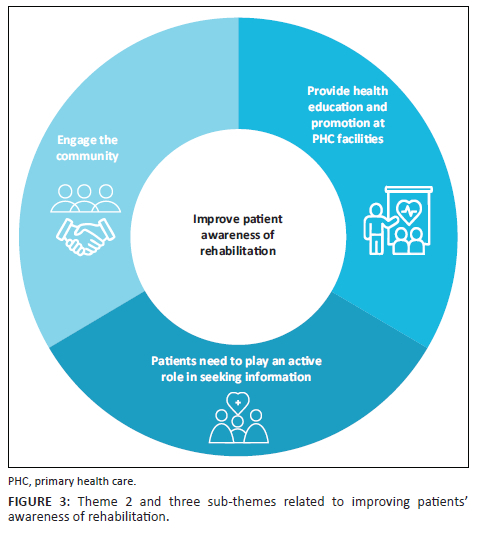
Three sub-themes highlighted how the primary care patients' awareness of rehabilitation could be increased (Figure 3).
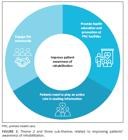
Provide health education and promotion at primary health care facilities
The potential strategies for increasing rehabilitation awareness suggested by the patients included providing health education talks and materials at the clinics. The PCPs, particularly the nurses, were mostly expected to be the providers of patient education:
'You can advertise the service and paste them in clinics in such spaces [noticeboards].' (P4, URBAN, ZW)
'I think the nurses should come and educate the people during health education sessions or when people come to seek medical help.' (P10, RURAL, ZW)
The PCPs suggested similar strategies for increasing patients' awareness, including designing and distributing educational material such as flyers, pamphlets and charts, and conducting health education talks. The nurses realised that even though they were providing the latter at the clinics, they needed to include rehabilitation topics:
'… health education to our patients during the time they are still waiting in waiting area, yes we do that but our … focus is only about those patients who are on ART … so I think we need to educate more about all things like rehabilitation.' (PCP15, RURAL, ZW)
Although the patients expected the nurses to primarily provide the information, the nurses recommended that the rehabilitation professionals conduct the educational talks. The novelty of varied professions was thought to potentially renew the patients' interest, thus enhancing the educational efforts:
'Because some clients they are used to us. I've been here for 16 years [laughs] … So, if they see a new face, they are telling them today I want to educate you about rehabilitation, they pay more attention.' (PCP9, RURAL, ZW)
Patients need to play an active role in seeking information
Patients recognised the need to play their part for them to benefit from patient education, by reporting their functioning problems to the PCPs and being proactive in seeking information regarding rehabilitation services:
'I think, if somebody visits the clinic, they should tell the nurses the truth, then the nurses can educate them accordingly.' (P3, URBAN, ZW)
'I guess, for them to explain, one should have gone to look for them.' (P18, RURAL, ZW)
Engage the community
A key recommendation for increasing awareness of rehabilitation involves engaging the community. Both the patients and PCPs suggested that the rehabilitation professionals conduct awareness campaigns at community gatherings:
'… or even to do awareness campaigns where people are educated whenever they gather, even at funerals or village health workers should also be taught the importance of rehabilitation.' (P10, RURAL, ZW)
'Do outreach educations where you do talks in schools, public talks like visit especially informal settlements.' (PCP14, URBAN, ZW)
Patients from both South Africa and Zimbabwe highlighted how the PCPs could leverage the close-knit nature of the community to disseminate appropriate knowledge regarding rehabilitation:
'Because if I receive any information, I should share it with whoever cares to come and check on me. I would say, in this community, I would want to see my friend receiving the same help. I also go and check on them if they are bedridden … They said I should do this and that - and we assist each other. I won't lie to you - that is how we operate here.' (P12, RURAL, ZW)
'… people will know that … there will be physiotherapists there and anyone who has problems related to that will be assisted. Just like me, I will also spread the word. (P10, RURAL, SA)
In the same vein, PCPs cited how involving community leaders could improve the effectiveness of community awareness campaigns.
'For things to be accepted in rural areas mostly, we need village heads. So, if the information first reaches the village head it would be easily accepted in the rural areas.' (PCP2, RURAL, SA)
Recommendation 3: Improve primary care providers' knowledge and basic skills in rehabilitation
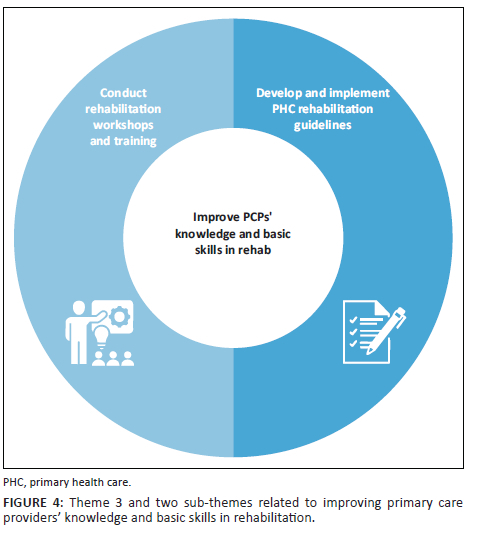
Two sub-themes were identified regarding how to increase PCPs' knowledge of rehabilitation (Figure 4).
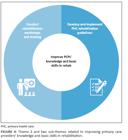
Conduct rehabilitation workshops and training
The PCPs called for regular workshops and training sessions to empower them with knowledge and skills for basic rehabilitation. The PCPs needed to understand the rehabilitation needs of the primary care patients they consulted and know which patients to refer to rehabilitation:
'I think there is a need for conducting some workshops … So that we can be taught on how best we can help our clients and … I know also how we can handle some certain rehab cases at our clinics … As nurses we are very flexible. Like at the clinic, we do most of the work so, if we can do a short course, it would be good for us to help the minor cases then we refer severe cases.' (PCP1, URBAN, ZW)
Develop and implement primary care rehabilitation guidelines
Primary care providers highlighted the need for standard practical guidelines on identification, referral and provision of basic rehabilitation services in PHC to improve their competence. Well-defined roles related to rehabilitation were thought to facilitate better collaboration among the multidisciplinary team members:
'If we've got some job descriptions, if we've got some guidelines … for everyone and then all health staff gets to know what we can do with our patients on rehabilitation.' (PCP6, RURAL, ZW)
'… the manual or guidelines … so if we are taught then you really know how to handle the client, even the things you are using on the client.' (PCP7, RURAL, ZW)
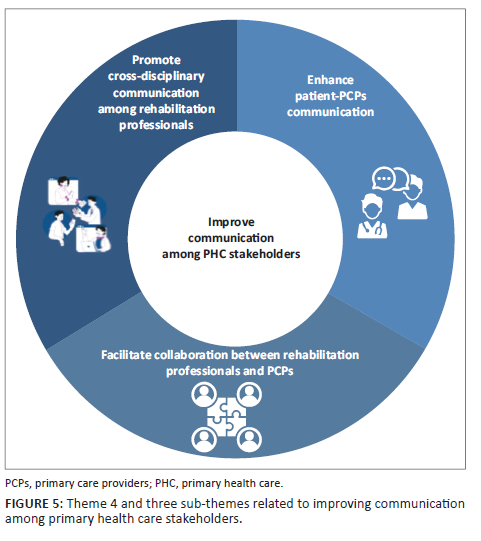
Recommendation 4: Improve communication among primary health care stakeholders
Three sub-themes were identified indicating how communication could be improved among the various PHC stakeholders (including patients, PCPs and rehabilitation professionals) (Figure 5).
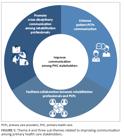
Enhance patients-primary care provider communication
Patients recognised that two-way communication between themselves and their PCPs was crucial to receiving optimal healthcare. The patients suggested having anonymous platforms through which they could voice their concerns without feeling intimidated:
'I believe that there should be things like suggestion boxes in every clinic … Sometimes it is not easy to tell the nurse or to ask for such information because you feel like you are telling them what to do or teaching them their job.' (P5, URBAN, SA)
In South African contexts, PCPs recommended feasible strategies to overcome the language barriers that were present between rehabilitation professionals and patients such as the use of translators (professional or family):
'… ask them to bring someone that they trust to come and translate so that we can relay the information we have.' (P14, URBAN, SA)
Facilitate collaboration between rehabilitation professionals and primary care providers
The PCPs appreciated the need to facilitate regular meetings between rehabilitation professionals and clinic staff to foster collaboration:
'We need to hold some meetings with the rehab team … then we discuss some challenges and the way forward for the clients.' (PCP1, URBAN, ZW)
'We need to improve the teamwork, to coordinate and communicate effectively …' (PCP4, URBAN, ZW)
Promote cross-disciplinary communication among rehabilitation professionals
In South Africa, even though rehabilitation was offered at the primary care level, the absence of some rehabilitation disciplines meant that better communication was needed to provide basic rehabilitation, for example, speech therapy in the absence of a speech therapist. Telerehabilitation was suggested as a means of improving communication between rehabilitation professionals:
'… having a speech therapist in your district that you know you can phone and get some telephonic advice …' (RP22, RURAL, SA)
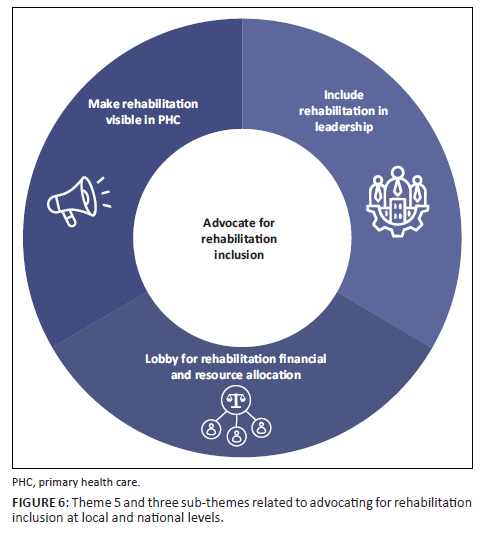
Recommendation 5: Advocate for rehabilitation inclusion
Figure 6 shows the three sub-themes related to advocating for rehabilitation inclusion in leadership roles, resource allocation and policy at the local and national levels.
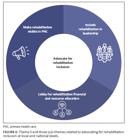
Include rehabilitation in leadership
The rehabilitation professionals advocated for the inclusion of rehabilitation professionals in leadership roles at facility level:
'I think the rehabilitation workers need to be included in …management.' (RP6, URBAN, SA)
Lobby for rehabilitation financial and resource allocation
Both PCPs and patients recognised the need for the allocation of finance and resources to support rehabilitation (transport, space and equipment):
'Maybe if transport services will be provided that is just waiting for the rehabilitation centre …' (PCP7, RURAL, ZW)
'Like for this wheelchair which we are using, which is broken, if you could get help even from donors to get a better wheelchair, so that … we can carry him to the clinic … wheelchairs are expensive to buy. We can't.' (P13, RURAL, SA)
Patients were also wary of the need for financial investment to equip PHC systems with the necessary infrastructure, diagnostic equipment and essential medicines. They recognised that if rehabilitation was to be nested within PHC, the gaps in PHC systems needed to be addressed first:
'The health professionals and Government must ensure that we receive ample help and enough medication here in the rural areas. They must also provide us with X-rays so that we can be examined if we have such problems as back pain … so that they can check the extent of damage because right now we are just being given tablets for killing the pain.' (P15, RURAL, ZW)
One patient who had experienced relatively better PHC in a neighbouring country commented:
'Things are not of the right standard. If things were at a standard that we witnessed in South Africa, Zimbabwe would never have problems around people's health. In South Africa, they have all the resources - they might fail to fully utilise them all, but they have them.' (P9, RURAL, ZW)
Make rehabilitation visible in primary health care
Advocacy by rehabilitation professionals was recognised as essential to increasing the visibility and recognition of the rehabilitation profession within the multidisciplinary team:
'… there are so many people with so many challenges which we meet but those people they never get help simply because the rehabilitation seems far away.' (P4, URBAN, ZW)
Discussion
This study sought to understand the recommendations from adult primary care patients and providers to enhance the accessibility and quality of rehabilitation services at this level of healthcare in low-resource contexts. Five key recommendations were identified that require interventions addressing both the supply and demand for rehabilitation services among adult primary care patients.
The patients, PCPs and rehabilitation professionals were unanimous in recommending that rehabilitation services be in closer proximity to the people. Previous studies have highlighted the significant barriers faced by individuals when accessing rehabilitation services, including unavailability of transport, long travel distances and associated costs.363629,3738383136
Regarding facility-based rehabilitation, significant planning and financial investment would be required for its establishment. This investment includes the recruitment of diverse rehabilitation professionals (e.g. physiotherapists, occupational therapists, speech and language therapists, audiologists) in PHC.3940414242438
Further investment in establishing facility-based rehabilitation in PHC would require providing adequate infrastructure and equipment to enable the newly established rehabilitation professionals to provide optimal care in these settings. Considering the settings' resource constraints, it would be critical to prioritise what is most concerning to the defined communities.
In the absence of rehabilitation professionals, the remaining suggested methods (outreach, home visits and telerehabilitation) may be cost-effective ways of extending rehabilitation services without the need for permanent staffing at every clinic. A recent South African study demonstrated telerehabilitation as a viable alternative to traditional facility-based rehabilitation during coronavirus disease 2019 (COVID-19) pandemic, which overcomes barriers such as distance and reduces financial burden.4444454611
The current study underscored the potential role that existing PCPs could play in enhancing or integrating rehabilitation within PHC. The findings emphasised the need for PCPs to better understand the patients' functioning problems, actively identify patients with rehabilitation needs during routine consultations and refer these patients timeously to rehabilitation. Gilmore et al. reported how such practices are necessary to avoid delayed, inappropriate or inadequate rehabilitation referrals.474849505050
Parallel to the provision of rehabilitation services, the current study emphasised the critical need to increase awareness of rehabilitation among patients and the communities. For patients, recommendations include implementing targeted patient education during consultations, distributing rehabilitation-related educational materials and conducting health promotion talks on rehabilitation topics in clinic waiting rooms. These strategies align with previous research that demonstrated the effectiveness of similar educational interventions in empowering patients in their healthcare interactions and self-management.515253
In this study, effective communication across stakeholders at multiple levels of the health system and other sectors was recommended as crucial for enhancing or integrating rehabilitation services in PHC. At the clinical level, poor interdisciplinary collaboration leads to inadequate, inappropriate or delayed rehabilitation referrals resulting in fragmented care and suboptimal health outcomes.4354
Given the reported poor communication with patients in these settings, PCPs and rehabilitation professionals require training in this domain, including patient-PCP cooperation, refining referral routines and enhancing the flow of patient information among healthcare providers and other sectors.10555657
Differences in country settings were closely related to the performance statuses of the PHC systems. Thus, recommendations from Zimbabwe predominantly focussed on establishing rehabilitation services in PHC rather than enhancing existing primary care rehabilitation services. Currently, the core service delivery functions of PHC in Zimbabwe are severely suboptimal, with inadequate medicines, primary care workforce and infrastructure. More public spending on PHC will be required to strengthen the country's overall PHC framework before rehabilitation can be nested within it.58
Study limitations
Although this study provided recommendations for enhancing access for primary care patients to rehabilitation in low-resource contexts, it does not determine whether these recommendations would lead to the desired outcome. Thus, more nuanced research is needed to assess the readiness, feasibility and impact of implementing these recommendations on health outcomes in these specific contexts.
The study involved a few selected PHC facilities and districts in one province in each country. The findings cannot be generalised to other districts, provinces or low-resource contexts. Quantitative research would be useful in obtaining a broader understanding of these recommendations in the countries. Finally, while the qualitative descriptive approach enabled us to explore the perspectives of both patients and PCPs, the participants were not involved in the analysis and interpretation of the data. Future research could employ more participatory research approaches that utilise high-level engagement with patients to provide additional unique insights.59
Conclusion
This study provides practical context-specific strategies for ensuring that primary care patients in South Africa and Zimbabwe could have better access to quality rehabilitation. From the perspectives of PCPs and patients, key areas for improvement include providing rehabilitation services closer to home, improving patient awareness of rehabilitation, improving PCPs' knowledge and basic skills in rehabilitation, improving communication among primary care stakeholders and advocating for rehabilitation inclusion at policy and leadership levels. Our findings underscore the urgent need to integrate rehabilitation into PHC to address the growing demand for these services amid epidemiological transitions and resource constraints. Future research can consider the impact of these recommendations on the quality and accessibility of rehabilitation services available to primary care patients. Primary care providers, rehabilitation service planners and policymakers can use these findings as a roadmap as they move towards strengthening rehabilitation in PHC.
Competing interests
The authors reported that they received funding from the Medical Research Council of South Africa and the National Research Foundation Chair Initiative which may be affected by the research reported in the enclosed publication. The authors have disclosed those interests fully and have implemented an approved plan for managing any potential conflicts arising from their involvement. The terms of these funding arrangements have been reviewed and approved by the affiliated university in accordance with its policy on objectivity in research.
Authors' contributions
M.Y.C., K.B., and Q.A.L. contributed to the design and implementation of the research, analysis of the results, and writing of the article.
Funding information
The work was supported by the Medical Research Council of South Africa (Grant SU-PT-15/10-000005), and the National Research Foundation Chair Initiative (UID 115461).
Data availability
The data that support the findings of this study are openly available in the SUNScholarData repository at https://doi.org/10.25413/sun.23545428.
Disclaimer
The views and opinions expressed in this article are those of the authors and are the product of professional research. The article does not necessarily reflect the official policy or position of any affiliated institution, funder, agency or that of the publisher. The authors are responsible for this article's results, findings and content.
Acknowledgements
This article is based on the first author's thesis entitled 'Towards strengthening of rehabilitation at primary care: exploring the needs and perspectives regarding rehabilitation services in two South African and Zimbabwean settings' towards the Doctor of Philosophy Degree in the Department of Physiotherapy in the Faculty of Health and Rehabilitation Sciences at Stellenbosch University, South Africa on March 2024, with supervisors Prof. Quinette Abegail Louw and Dr. Karina Berner. It is available here: https://scholar.sun.ac.za/handle/10019.1/130603.
References
-
1.Stucki G, Bickenbach J, Gutenbrunner C, Melvin J. Rehabilitation: The health strategy of the 21st century. J Rehabil Med. 2018;50(4):309-316. https://doi.org/10.2340/16501977-2200
» https://doi.org/10.2340/16501977-2200 -
2.Nyabani P. Epidemiological transition and the dual burden of communicable and noncommunicable diseases in Zimbabwe. Int J Noncommun Dis. 2021;6(4):166. https://doi.org/10.4103/jncd.jncd_69_21
» https://doi.org/10.4103/jncd.jncd_69_21 -
3.Kabudula CW, Houle B, Collinson MA, et al. Progression of the epidemiological transition in a rural South African setting: Findings from population surveillance in Agincourt, 1993-2013. BMC Public Health. 2017;17(1):424. https://doi.org/10.1186/s12889-017-4312-x
» https://doi.org/10.1186/s12889-017-4312-x -
4.Gutenbrunner C, Nugraha B. 2.1 Rehabilitation: Rehabilitation as a health strategy. J Int Soc Phys Rehabil Med. 2019;2(5):15-18. https://doi.org/10.4103/jisprm.jisprm_7_19
» https://doi.org/10.4103/jisprm.jisprm_7_19 -
5.World Health Organization. Rehabilitation in health systems: Guide for action [homepage on the Internet]. Geneva; 2019 [cited 2022 Mar 19]. Available from: https://apps.who.int/iris/handle/10665/332444
» https://apps.who.int/iris/handle/10665/332444 -
6.Geberemichael SG, Tannor AY, Asegahegn TB, Christian AB, Vergara-Diaz G, Haig AJ. Rehabilitation in Africa. Phys Med Rehabil Clin N Am. 2019;30(4):757-768. https://doi.org/10.1016/j.pmr.2019.07.002
» https://doi.org/10.1016/j.pmr.2019.07.002 -
7.Neill R, Shawar Y, Ashraf L. Joint learning on strengthening rehabilitation in primary health care virtual roundtable series technical report [homepage on the Internet]. 2023 [cited 2024 Jan 11]. Available from: https://www.acceleratehss.org/wp-content/uploads/2023/02/Final-Technical-Report_RehabPHCRoundtables.pdf
» https://www.acceleratehss.org/wp-content/uploads/2023/02/Final-Technical-Report_RehabPHCRoundtables.pdf -
8.Conradie T, Berner K, Louw Q. Describing the rehabilitation workforce capacity in the public sector of three rural provinces in South Africa: A cross-sectional study. Int J Environ Res Public Health. 2022;19(19):12176. https://doi.org/10.3390/ijerph191912176
» https://doi.org/10.3390/ijerph191912176 -
9.Nota A, Chikwanha T, January J, Dangarembizi N. Factors contributing to defaulting scheduled therapy sessions by caregivers of children with congenital disabilities. Malawi Med J. 2015;27(1):25. https://doi.org/10.4314/mmj.v27i1.7
» https://doi.org/10.4314/mmj.v27i1.7 -
10.Charumbira MY, Conradie T, Berner K, Louw QA. Bridging the chasm between patients' needs and current rehabilitation care: Perceptions of adults presenting for primary care in the Eastern Cape. BMC Health Serv Res. 2024;24(1):1-17. https://doi.org/10.1186/s12913-024-10564-5
» https://doi.org/10.1186/s12913-024-10564-5 -
11.Maseko LJ, Adams F, Myezwa H. Perceptions of integrated rehabilitation service delivery in a metropolitan district. Afr J Prim Health Care Fam Med. 2024;16(1):e1-e10. https://doi.org/10.4102/phcfm.v16i1.4069
» https://doi.org/10.4102/phcfm.v16i1.4069 -
12.McAlister M. Community-based rehabilitation in Zimbabwe. Physiotherapy (United Kingdom) 1989;75(7):432-434. https://doi.org/10.1016/S0031-9406(10)62618-1
» https://doi.org/10.1016/S0031-9406(10)62618-1 -
13.Chappell P, Johannsmeier C. The impact of community-based rehabilitation as implemented by community rehabilitation facilitators on people with disabilities, their families and communities within South Africa. Disabil Rehabil. 2009;31(1):7-13. https://doi.org/10.1080/09638280802280429
» https://doi.org/10.1080/09638280802280429 -
14.Bresick G, Pressentin KB von, Mash R. Evaluating the performance of South African primary care: A cross-sectional descriptive survey. S Afr Fam Pract. 2019;61(3):109-116. https://doi.org/10.1080/20786190.2019.1596666
» https://doi.org/10.1080/20786190.2019.1596666 - 15.Mash B, Ray S, Essuman A, Burgueño E. Community-orientated primary care: A scoping review of different models, and their effectiveness and feasibility in sub-Saharan Africa. BMJ Glob Health. 2019;4(Suppl 8):e001489.
-
16.Kleinitz P, Sabariego C, Llewellyn G, et al. Integrating rehabilitation into health systems: A comparative study of nine middle-income countries using WHO's Systematic Assessment of Rehabilitation Situation (STARS). PLoS One. 2024;19(2 February):e0297109. https://doi.org/10.1371/journal.pone.0297109
» https://doi.org/10.1371/journal.pone.0297109 -
17.Davidson KW, Mangione CM, Barry MJ, et al. Collaboration and shared decision-making between patients and clinicians in preventive health care decisions and US preventive services task force recommendations. JAMA. 2022;327(12):1171-1176. https://doi.org/10.1001/jama.2022.3267
» https://doi.org/10.1001/jama.2022.3267 -
18.Bombard Y, Baker GR, Orlando E, et al. Engaging patients to improve quality of care: A systematic review. Implement Sci. 2018;13(1):98. https://doi.org/10.1186/s13012-018-0784-z
» https://doi.org/10.1186/s13012-018-0784-z -
19.Waterworth CJ, Smith F, Kiefel-Johnson F, Pryor W, Marella M. Integration of rehabilitation services in primary, secondary, and tertiary levels of health care systems in low- and middle-income countries: A scoping review. Disabil Rehabil. 2024;1-12. https://doi.org/10.1080/09638288.2024.2317422
» https://doi.org/10.1080/09638288.2024.2317422 -
20.Narain S, Mathye D. Strategies to integrate physiotherapists into primary health care in South Africa. S Afr J Physiother. 2023;79(1):1796. https://doi.org/10.4102/sajp.v79i1.1796
» https://doi.org/10.4102/sajp.v79i1.1796 -
21.Olaleye OA, Abiodun AO. Integrating physiotherapy into primary health care in Nigeria: Perceptions of primary health care practitioners. J Interprof Care. 2023;37(5):737-742. https://doi.org/10.1080/13561820.2022.2143487
» https://doi.org/10.1080/13561820.2022.2143487 -
22.McColl MA, Shortt S, Godwin M, et al. Models for integrating rehabilitation and primary care: A scoping study. Arch Phys Med Rehabil. 2009;90(9):1523-1531. https://doi.org/10.1016/j.apmr.2009.03.017
» https://doi.org/10.1016/j.apmr.2009.03.017 -
23.Bradshaw C, Atkinson S, Doody O. Employing a qualitative description approach in health care research. Glob Qual Nurs Res. 2017;4:233339361774228. https://doi.org/10.1177/2333393617742282
» https://doi.org/10.1177/2333393617742282 -
24.Charumbira MY, Louw QA. Primary care provider perspectives on a rehabilitation guidance tool for low-resource contexts. Rehabil Dev Health Syst. 2024;1(1):a5. https://doi.org/10.4102/radhs.v1i1.5
» https://doi.org/10.4102/radhs.v1i1.5 -
25.Tong A, Sainsbury P, Craig J. Consolidated criteria for reporting qualitative research (COREQ): A 32-item checklist for interviews and focus groups. Int J Qual Health Care. 2007;19(6):349-357. https://doi.org/10.1093/intqhc/mzm042
» https://doi.org/10.1093/intqhc/mzm042 -
26.STATSSA. General household survey 2017. 2019. Pretoria [cited 2024 Feb 09] Available from https://www.statssa.gov.za
» https://www.statssa.gov.za -
27.Vollmar HC, Ostermann T, Redaèlli M. Using the scenario method in the context of health and health care - A scoping review Data collection, quality, and reporting. BMC Med Res Methodol. 2015;15(1):89. https://doi.org/10.1186/s12874-015-0083-1
» https://doi.org/10.1186/s12874-015-0083-1 - 28.McKenzie A, Assegaai T, Schneider H. South Africa: A primary health care case study in the context of the COVID-19 pandemic. Geneva: World Health Organization; 2023.
-
29.Ministry of Health and Child Care. National Health Strategy Zimbabwe 2021-2025 [homepage on the Internet]. Harare; 2016 [cited 2022 Mar 19]. Available from: https://www.znfpc.org.zw/wp-content/uploads/2023/01/National-Health-Strategy-for-Zimbabwe2021_2025.pdf
» https://www.znfpc.org.zw/wp-content/uploads/2023/01/National-Health-Strategy-for-Zimbabwe2021_2025.pdf -
30.Ray SC, Masuka N. Facilitators and barriers to effective primary health care in Zimbabwe. Afr J Prim Health Care Fam Med. 2017;9(1):a1639. https://doi.org/10.4102/phcfm.v9i1.1639
» https://doi.org/10.4102/phcfm.v9i1.1639 - 31.Stephens D. World Health Organization's international classification of functioning, disability and health - ICF. J Audiol Med. 2001;10(3):7-10.
-
32.Saunders B, Sim J, Kingstone T, et al. Saturation in qualitative research: Exploring its conceptualization and operationalization. Qual Quant. 2018;52(4):1893-1907. https://doi.org/10.1007/s11135-017-0574-8
» https://doi.org/10.1007/s11135-017-0574-8 -
33.Roberge P, Hudon C, Pavilanis A, et al. A qualitative study of perceived needs and factors associated with the quality of care for common mental disorders in patients with chronic diseases: The perspective of primary care clinicians and patients. BMC Fam Pract. 2016;17(1):1-14. https://doi.org/10.1186/s12875-016-0531-y
» https://doi.org/10.1186/s12875-016-0531-y -
34.Mlenzana NB, Eide AH, Frantz JM. Perceptions and satisfaction of caregivers regarding rehabilitation services from selected rehabilitation centres in the Western Cape. Afr J Disabil. 2018;7:1-5. https://doi.org/10.4102/ajod.v7i0.415
» https://doi.org/10.4102/ajod.v7i0.415 -
35.Braun V, Clarke V. Using thematic analysis in psychology. Qual Res Psychol. 2006;3(2):77-101. https://doi.org/10.1191/1478088706qp063oa
» https://doi.org/10.1191/1478088706qp063oa -
36.Kamenov K, Mills J, Chatterji S, Cieza A. Needs and unmet needs for rehabilitation services: A scoping review. Disabil Rehabil. 2019;41(10):1227-1237. https://doi.org/10.1080/09638288.2017.1422036
» https://doi.org/10.1080/09638288.2017.1422036 - 37.National Department of Health. National Health Insurance White Paper 2017. Pretoria: National Department of Health; 2017; p. 2013-2015.
-
38.Nancy P-M, Karl P, Supa P. Rural-urban health disparities among older adults in South Africa. Afr J Prim Health Care Fam Med. 2019;11(1):1-6. https://doi.org/10.4102/phcfm.v11i1.1890
» https://doi.org/10.4102/phcfm.v11i1.1890 -
39.Dassah E, Aldersey H, McColl MA, Davison C. Factors affecting access to primary health care services for persons with disabilities in rural areas: A 'best-fit' framework synthesis. Glob Health Res Policy. 2018;3(1):36. https://doi.org/10.1186/s41256-018-0091-x
» https://doi.org/10.1186/s41256-018-0091-x -
40.World Health Organization. The world health report 2006: Working together for health [homepage on the Internet]. Geneva: World Health Organization; 2006 [cited 2024 Jul 13]. Available from: https://www.who.int/publications/i/item/9241563176
» https://www.who.int/publications/i/item/9241563176 -
41.Conradie T, Berner K, Louw Q. Rehabilitation workforce descriptors: A scoping review. BMC Health Serv Res. 2022;22(1):1169. https://doi.org/10.1186/s12913-022-08531-z
» https://doi.org/10.1186/s12913-022-08531-z -
42.Roots RK, Li LC. Recruitment and retention of occupational therapists and physiotherapists in rural regions: A meta-synthesis. BMC Health Serv Res. 2013;13(1):59. https://doi.org/10.1186/1472-6963-13-59
» https://doi.org/10.1186/1472-6963-13-59 -
43.Ned L, Cloete L, Mji G. The experiences and challenges faced by rehabilitation community service therapists within the South African Primary Healthcare health system. Afr J Disabil. 2017;6(0):a311. https://doi.org/10.4102/ajod.v6i0.311
» https://doi.org/10.4102/ajod.v6i0.311 -
44.Balton S, Pillay M, Armien R, et al. Lived experiences of South African rehabilitation practitioners during coronavirus disease 2019. Afr J Disabil. 2023;13:1229. https://doi.org/10.4102/ajod.v13i0.1229
» https://doi.org/10.4102/ajod.v13i0.1229 -
45.Nizeyimana E, Joseph C, Plastow N, Dawood G, Louw QA. A scoping review of feasibility, cost, access to rehabilitation services and implementation of telerehabilitation: Implications for low- and middle-income countries. Digit Health. 2022;8(December):205520762211316. https://doi.org/10.1177/20552076221131670
» https://doi.org/10.1177/20552076221131670 -
46.Harriparsad R, Dlungwane T. Perceptions of rehabilitation coordinators on community outreach services in KwaZulu-Natal, South Africa. African Journal for Physical Activity and Health Sciences (AJPHES) 2021;27(4):439-454. https://doi.org/10.37597/ajphes.2021.27.4.3
» https://doi.org/10.37597/ajphes.2021.27.4.3 -
47.Gilmore B, MacLachlan M, McVeigh J, et al. A study of human resource competencies required to implement community rehabilitation in less resourced settings. Hum Resour Health. 2017;15(1):70. https://doi.org/10.1186/s12960-017-0240-1
» https://doi.org/10.1186/s12960-017-0240-1 -
48.ShahAli S, Shahabi S, Etemadi M, et al. Barriers and facilitators of integrating physiotherapy into primary health care settings: A systematic scoping review of qualitative research. Heliyon. 2023;9(10):e20736. https://doi.org/10.1016/j.heliyon.2023.e20736
» https://doi.org/10.1016/j.heliyon.2023.e20736 -
49.World Health Organization. Integrating rehabilitation into health systems [homepage on the Internet]. [cited 2021 Apr 28]. Available from: https://www.who.int/activities/integrating-rehabilitation-into-health-systems
» https://www.who.int/activities/integrating-rehabilitation-into-health-systems - 50.World Health Organization. Task shifting: Global recommendations and guidelines. Geneva: World Health Organization; 2008.
- 51.Smith JL. Self-management strategies employed by stroke survivors in the Western Cape, South Africa. Dissertation, University of Cape Town; 2019.
-
52.Spinner JR, Haynes E, Nunez C, Baskerville S, Bravo K, Araojo RR. Enhancing FDA's reach to minorities and under-represented groups through training: Developing culturally competent health education materials. J Prim Care Community Health. 2021;12:215013272110036. https://doi.org/10.1177/21501327211003688
» https://doi.org/10.1177/21501327211003688 -
53.O'Mara-Eves A, Brunton G, Oliver S, Kavanagh J, Jamal F, Thomas J. The effectiveness of community engagement in public health interventions for disadvantaged groups: A meta-analysis. BMC Public Health. 2015;15(1):129. https://doi.org/10.1186/s12889-015-1352-y
» https://doi.org/10.1186/s12889-015-1352-y -
54.Seckler E, Regauer V, Rotter T, Bauer P, Müller M. Barriers to and facilitators of the implementation of multi-disciplinary care pathways in primary care: A systematic review. BMC Fam Pract. 2020;21(1):113. https://doi.org/10.1186/s12875-020-01179-w
» https://doi.org/10.1186/s12875-020-01179-w -
55.Kumurenzi A, Richardson J, Thabane L, et al. Effectiveness of interventions by non-professional community-level workers or family caregivers to improve outcomes for physical impairments or disabilities in low resource settings: Systematic review of task-sharing strategies. Hum Resour Health. 2023;21(1):1-16. https://doi.org/10.1186/s12960-023-00831-7
» https://doi.org/10.1186/s12960-023-00831-7 - 56.World Health Organization. WHO Strategic Communications Framework for effective communications. Geneva: World Health Organization; 2017.
-
57.ReLAB-HS. Using the World Health Assembly Resolution as a tool to strengthen local and national advocacy for rehabilitation - Guidance note for in-country advocates [homepage on the Internet]. [cited 2024 Jul 14]. Available from: https://relabhs.org/world-health-assembly-resolution-advocacy-guidance/
» https://relabhs.org/world-health-assembly-resolution-advocacy-guidance/ -
58.Bitton A, Fifield J, Ratcliffe H, et al. Primary healthcare system performance in low-income and middle-income countries: A scoping review of the evidence from 2010 to 2017. BMJ Glob Health. 2019;4(Suppl 8):e001551. https://doi.org/10.1186/s13033-022-00545-8
» https://doi.org/10.1186/s13033-022-00545-8 -
59.Abayneh S, Lempp H, Kohrt BA, Alem A, Hanlon C. Using participatory action research to pilot a model of service user and caregiver involvement in mental health system strengthening in Ethiopian primary healthcare: A case study. Int J Ment Health Syst. 2022;16(1):1-18. https://doi.org/10.1186/s13033-022-00545-8
» https://doi.org/10.1186/s13033-022-00545-8

Accepted: 04 Nov. 2024
Published: 06 Feb. 2025