Exploring the gastric cancer care pathway in South Africa
Abstract
BACKGROUND: Gastric cancer (GC) diagnosis and care data in South Africa (SA) is sparse, and SA has a high GC mortality rate. Mapping the GC care pathway is needed to explore its efficacy in association with the SA GC burden and mortality. AIM: The study aims to map the GC care pathway in SA from diagnosis to management by healthcare professionals (HCPs) involved in the GC patient journey and explore barriers and facilitators to the effective flow of the GC care pathway. SETTING: Interviews conducted with South African HCPs were the data source used in this article for analysis. General physicians (GP) were the first contact point with chain-referral sampling sourcing other clinicians. METHODS: Interviews were conducted via Microsoft Teams (MS Teams) and Google Meet with qualitative analyses via MAXQDA. RESULTS: Themes identified were GC care pathway processes, public versus private healthcare system differences and care pathway challenges. Multidisciplinary team (MDT) care is practised for GC in SA, starting with the GP or nurse followed by gastroenterologist (GI), surgeon and pathologist. Thereafter, nurses, dieticians and palliative care specialists are involved. Healthcare sector differences are diagnosis time, GC staging, HCP and treatment access. Challenges include low GC index of suspicion by primary care clinicians (PCC) and Helicobacter pylori (H. pylori) detection. CONCLUSION: A MDT approach for optimal treatment and patient care may be the best method for prolonged life. CONTRIBUTION: A South African national consensus for GC care via a MDT, emphasising early diagnosis to aid in a robust treatment plan for improved patient outcomes is warranted.
gastric cancer; South Africa; care pathway; mapping; multi-disciplinary team; healthcare sector; diagnosis; treatment; management
Introduction
Gastric cancer (GC) is a substantial public health problem worldwide. In 2022, it was reported that GC was the 5th most common cancer and 5th leading cause of cancer-related mortality globally.12,3 Gastric cancer incidence varies vastly between countries and regions, and this may be because of many factors such as infectious agents, genetics, environmental toxins and diet.33
The 2022 South African National Cancer registry (NCR) report indicated that in South Africa (SA), GC makes up 1.92% of all cancers in males and 1.13% of all cancers in females,456Helicobacter pylori (H. pylori) infection, tobacco use, gastrointestinal reflux disease, obesity and a family history of GC.7
Care pathways for various conditions are used to strategise and implement a standardised patient centric care approach from diagnosis to post treatment phases.8910111213
In SA, data regarding GC diagnosis and care are sparse; yet, GC is a dire condition with a substantial age standardised mortality rate of 0.31 per 100 000 people in males and 0.14 per 100 000 people in females.14
The study aims to map the South African GC care pathway from diagnosis to management by HCPs involved in the GC patient journey, and to explore the barriers and facilitators to the effective flow of the GC care pathway.
Research methods and design
Study design
This research article follows a qualitative study design using in-depth HCP interviews.
Setting
Participants in this study are HCPs from the public and private healthcare sectors in SA. The participants are HCPs who diagnose, treat or manage GC.
Study population and sampling strategy
The interview participants included general practitioners (GPs), gastroenterologists (GIs), surgeons, oncologists, nurses, pathologists, dieticians and palliative care specialists in the private and public healthcare sectors from the three most populated provinces in South Africa - Gauteng, KwaZulu-Natal and Western Cape. The GP was the first point of contact and chain-referral (snowball) sampling was used to source other clinicians involved in the diagnosis, care and treatment of GC. The GPs were sourced by their likelihood of encountering cancer patients based on the size of their practice and geographical location. The interview guides were piloted by a GP, an oncologist and a surgeon to increase the accuracy and relevance of the questions for further dissemination to HCPs.
Data collection
Primary data were collected from 30 HCPs using qualitative in-depth interviews via telephone call and online meeting platforms (Google Meet and Microsoft Teams), which were recorded for accurate transcription. The duration of the interviews ranged from 20 to 40 min per HCP over a 5-month period. Informed consent was received by all interview participants for participation and recording. There were eight sets of interview transcripts unique to the eight disciplines of HCPs. After the interviews were conducted, they were transcribed manually and precisely on Microsoft (MS) Word, followed by cleaning, formatting and processing of transcripts in MS Word. Files were cleaned to remove any duplicate text elements such as repeated questions, responses or words, to ensure accuracy and clarity of the transcriptions.
Data analysis
Computer-assisted qualitative data analysis software (CAQDAS) MAXQDA was used to analyse the processed and formatted interview transcripts. A MAXQDA project was created to organise, analyse and visualise qualitative data efficiently, for efficient data management and comprehensive qualitative insights. MAXQDA streamlined the data analysis to maintain consistency and improve the rigour of the qualitative research.
Inductive qualitative analysis was employed to eliminate preconceived ideas and patterns. The inductively analysed transcript data allowed for the unbiased generation of concepts and themes. The first phase of the analysis for the generation of initial codes employed open coding in MAXQDA, which distinctly partitions the qualitative data to identify similarities and differences. Labels were assigned to different data segments that represent significant concepts. This step generated a large number of codes, displaying the thorough and distinct nature of the qualitative data. After open-phase coding in MAXQDA, similar codes were identified and merged to eliminate overlaps, ensuring each code represents only one concept for clarity of the data analysis.
After code finalisation, homogeneous codes were grouped together into sub-themes to classify the data for further analysis to obtain insights. Homogeneous sub-themes were further grouped into broader categories called themes, to capture overarching concepts of the data and to summarise the findings. Common patterns across the sub-themes were identified and organised into higher-level themes that represent the vital aspects of the data. After the analysis, a report was generated in MS Word.
Ethical considerations
Ethical clearance to conduct this study was obtained from the University of the Witwatersrand Human Research Ethics Committee (Medical) (No. M220752).
Results
The 8 disciplines of 30 HPCs comprising 5 GPs, 4 GIs, 4 surgeons, 5 oncologists, 2 pathologists, 5 nurses, 3 dieticians and 2 palliative care specialists, all had more than 10 years of experience treating cancer patients from both the public and private health sectors in SA. The HCPs comprised of an equal number of men and women distributed equally across the three most densely populated provinces - Gauteng, KwaZulu-Natal and Western Cape.
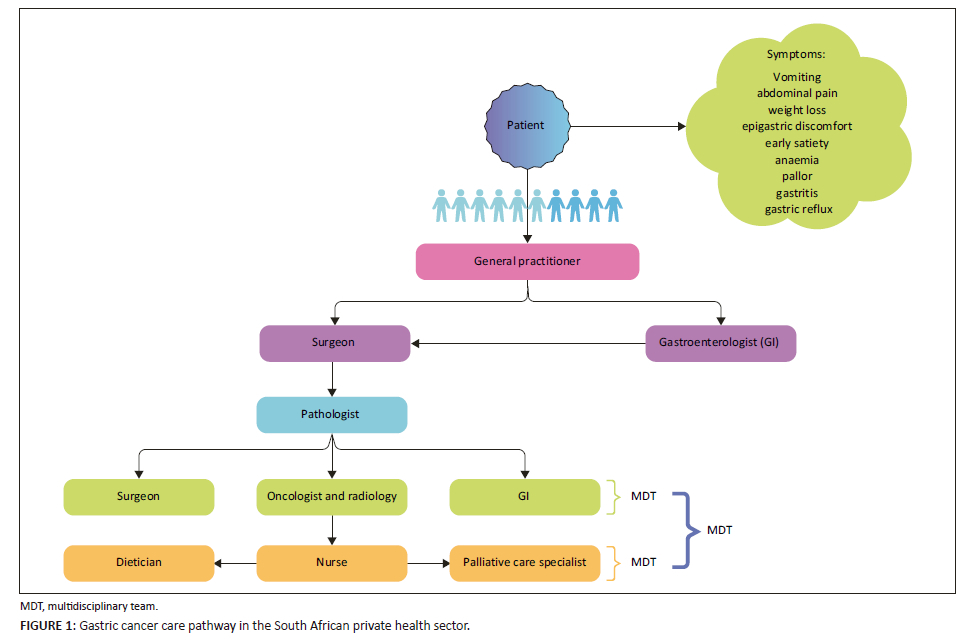
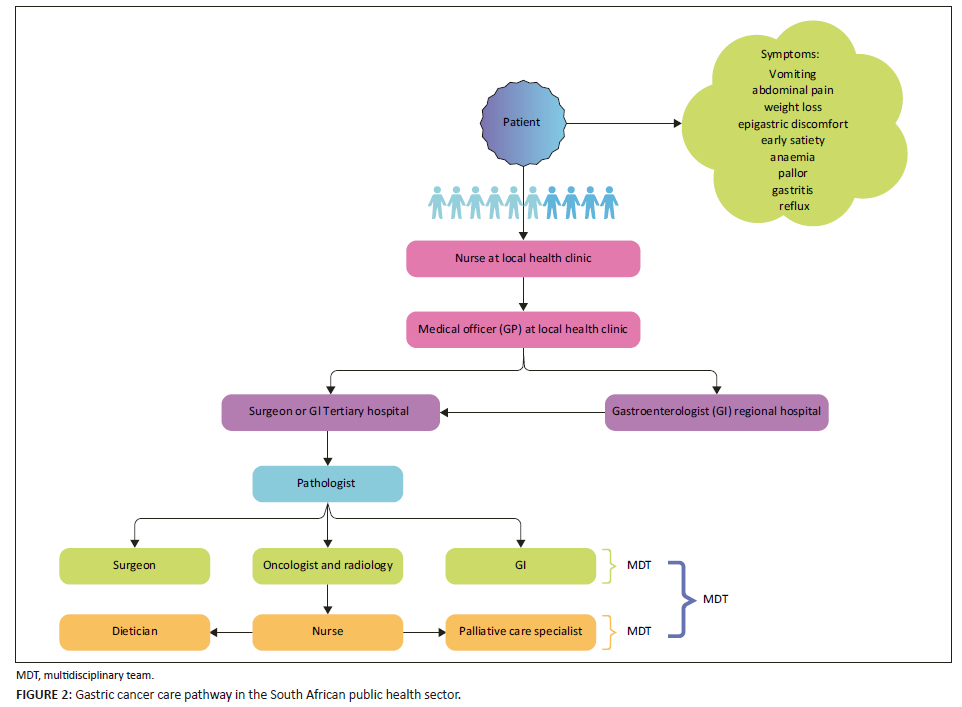
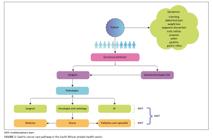
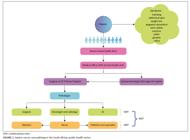
The private and public healthcare sectors in SA follow a similar GC care pathway - with slightly more linearity in the public sector - regarding HCPs selection in the referral process and the diagnostic, staging and treatment regimens (Figure 1 and Figure 2). The generic flow of care from the initial consultation starts with the GP or nurse at a local public clinic followed by the GI, surgeon and pathologist. After pathology, the flow reverts to the surgeon and the introduction of the oncologist; and thereafter, the supportive functions by the nurse, dietician and palliative care specialist. The nurse is usually introduced into the pathway upon diagnosis of GC. The dietician and palliative care specialists are also introduced at the diagnosis step, but this differs between the private and public sectors. The stark differences between the two healthcare sectors are the time to diagnosis, staging of GC and the waiting periods for consultation with the various clinicians and GC treatment at each step.
The major themes that were identified in the qualitative analysis were:
-
Referral and coordination processes in the GC care pathway include diagnostic processes, the role of HCPs in GC care pathway and MDT care.
-
Public versus private sector healthcare system differences include disparities in diagnosis stage, disparities in treatment access and disparities in time and access to HCPs.
-
Challenges and gaps experienced in the GC care pathway include delays in the GC diagnosis, Low GC index of suspicion by PCC and H. pylori detection.
Each of these three major themes are discussed in detail:
1. Referral and coordination processes in the GC care pathway describe the route from initial consultation with the PCC, which is a GP or nurse, to either a GI or surgeon for a gastric endoscopy depending on the symptoms such as gastric reflux, weight loss, nausea, dyspepsia, gastric disturbances, epigastric pain and anaemia that does not subside with treatment. The surgeon makes the GC diagnosis from the biopsy results provided by the pathologist. After a GC diagnosis, the oncologist is consulted and a treatment regimen is decided upon by the surgeon and oncologist based on the GC stage. The nurse is introduced to the care pathway to assist the oncologist and surgeon with treatment administration, side effect management, patient counselling and the patients' bedside care. The dietician is consulted for optimal nutritional intake to prepare the patient for treatment and ensure optimal recovery after treatment. Palliative care is usually introduced to GC patients in late-stage diagnosis for improved comfort and quality of life. The analysis revealed a MDT approach for optimal care of GC patients. The MDT at the initial level comprises the GI, surgeon and oncologist, and the second level includes the nurse, dietician and palliative care specialist. The nurse is involved in both levels of the MDT.
2. Public versus private sector healthcare system differences: Healthcare system differences between the private and public sectors include GC staging disparities at diagnosis, endoscopy referral and scheduling, access to cancer specialists, timeliness and support for GC treatment, post-treatment management and follow-up in GC care. All the aspects of the public health sector are severely delayed compared to the private sector because of limited resources and inefficiencies in the public health sector.
3. Challenges and gaps experienced in the GC care pathway include H. pylori screening and detection in GC patients, and gaps in GC index of suspicion by PCC and GC diagnosis delays.
Discussion
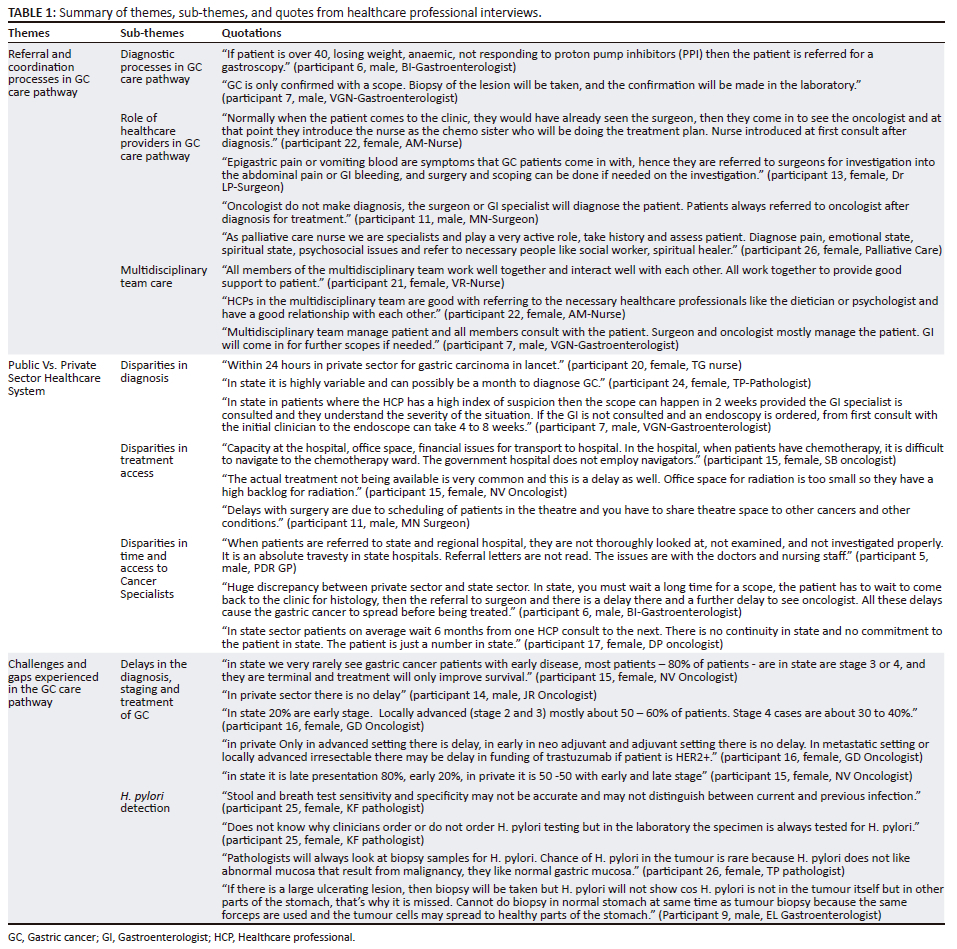
The aim of this study is to map the South African GC care pathway from diagnosis to various HCPs involved in the GC patient journey and to explore the barriers and facilitators to the effective flow of the GC care pathway. The GC care pathway indicates that the HCPs work in a MDT for optimal care of the GC patient in both the private and public health sectors. The findings from the study show that diagnostic process for GC involves the patient's clinical examination, endoscopic biopsy testing and radiology. There are disparities in GC diagnosis, access to treatment and access to cancer specialists in both the private and public health sectors. These disparities are because of medical insurance differences in the private sector, and limited resources and staff inefficiencies in the public sector. There are significant delays to GC diagnosis, treatment and staging in the public sector compared to the private sector. Helicobacter pylori detection is a challenge in GC patients because of primary health practitioners not screening early enough and the absence of the bacteria in biopsy tissue. The Summary of themes, sub-themes, and quotes from healthcare professional interviews are indicated in Table 1.
The GC diagnostic process revealed in this study are aligned with literature where recently diagnosed GC patients presents with an epigastric endoscopy report for mild symptoms, including dyspepsia and reflux, but also for signs and symptoms indicative of advanced disease, such as gastrointestinal bleeding, anaemia, dysphagia, weight loss and severe vomiting. Gastric endoscopy with a computed tomography (CT) scan and endoscopic ultrasound provides a GC diagnosis and clinical staging for GC. Positron emission tomography (PET) scans are required to detect advanced GC disease and peritoneal washing.15
The 2022 National Comprehensive Cancer Network (NCCN) and the 2022 European Society for Medical Oncology (ESMO) guidelines recommend a MDT approach for GC treatment and patient care which supports the findings of this study.16,17 The guidelines state that GC patient management requires a few disciplines comprising surgical oncology, medical oncology, radiation oncology, GI, radiology and pathology.16,17 Findings from this study reveals that the GC patient management in SA follows a similar structure comprising of the surgeon, clinical oncologist (includes medical and radiation oncology), GI, radiology and pathology. The guidelines mention the importance of supportive care provided by the nurses, palliative care specialist, nutritionists and social workers which aligns with the findings of this study where the nurses, dieticians, palliative care specialists and GPs comprise the supportive MDT health workers.16,17 This study found that nurses form part of the primary MDT as well as the supportive MDT. Literature supports this finding as nurses are known as oncology 'coordinators of care' or 'navigators' and are integral in relaying physical and psychosocial patient information to the specialists in the MDT and administering specialist prescribed treatment to patients.181919
A strong theme that emerged was the disparities in the private healthcare system compared to the public healthcare system especially with regards to diagnosis, treatment and access to cancer specialists. In SA, 84.2% and 15.8% of the population uses public health services and private medical insurance, respectively.20421,22 Private healthcare patients live closer to hospitals, have means to travel and funds to pay for diagnostic testing.22
In the private sector, there are generally no delays to GC treatment and HCP access because of the patients being members of private medical insurance schemes which covers patient care at private hospitals.23231
Research on public health services in SA shows poor quality of care and poor patient outcomes owing mainly to ineffective leadership at hospitals and clinics.24625,26 The shortage of medicines and medical staff, suboptimal infrastructure and staff competencies, and poor safety and working conditions in the public health7,11 sector align with the delayed time to GC diagnosis, delayed treatment access, limited treatment options, and restricted nutritional and palliative care identified in this study.
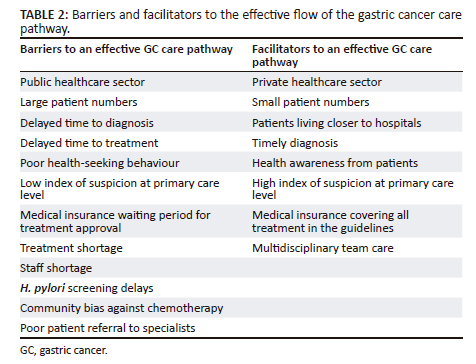
The Barriers and facilitators to the effective flow of the GC care pathway are indicated in Table 2. Challenges and gaps identified in the GC care pathway exist in both the private and public health sectors and include a low index of suspicion for GC by the PCC, H. pylori screening delays and poor public health service. Early recognition and diagnosis of GC for timely treatment requires accessible, good quality health services coupled with optimal healthcare workers and resources.2728,29
Literature indicates that the leading risk factor for peptic ulcer disease and GC is H. pylori infection with a prevalence of over 80% in adults from developing countries.30H. pylori infection.30H. pylori was not present in the GC biopsy tissue. Surgeons biopsy potentially malignant tissue for GC testing and this tissue does not test positive for H. pylori as the bacteria travels away from malignant tissue to areas of the GI tract with healthy gut mucosa.31H. pylori infection because of H. pylori not being screened at the early stage of only peptic ulcer disease, and screening from malignant GC biopsy tissue is too late for H. pylori presence.
Limitations, strengths and recommendations
The limitation of this study notes the exclusion of patient participation and the lack of verification of the pathway from the patient perspective. Barriers to the GC care pathway at a patient level was not identifiable because of exclusion of patient participation. The difference between the oncology and radiology practice structure between the Gauteng province and the rest of the SA is a limitation as the medical oncologist from Gauteng cannot practice radiology and thus cannot comment on this treatment modality. The reflexivity limitation of the primary investigator and interviewer was that the Western Cape and Gauteng provinces had superior treatment and care for GC patients because of the investigator living in KwaZulu-Natal and witnessing poor healthcare from the KwaZulu-Natal public sector hospitals. This bias was cleared up in the interview stage as participants reported similar insights from all three provinces.
The strengths of this study include it being the first study to explore the GC care pathway in SA, the participation of eight different health worker disciplines, HCP participation from the three major provinces in SA, HCP participation from both the private and public health sectors. Insights gathered on other areas of GC treatment and care like nutrition, targeted therapy and staging of GC are also notable strengths.
Future research is necessary to address the gaps and limitations of this study. There is a need for further studies on H. pylori by collaborating with GPs and pathologists to explore the causal relationship between H. pylori and GC in SA.32
Recommendations from this research include the training of PCC by specialist HCPs to increase their GC index of suspicion,32H. pylori screening earlier in the GC patient journey to decrease time to diagnosis and time to treatment.3121,22 The robust cohort of study participants and their experience with treating GC have provided valuable insights, which can aid in shaping practice of MDTs for GC and harmonise treatment and management decisions at all stages in the GC patient journey.3333
Conclusion
In conclusion, this study's findings suggest that thorough initial staging upon GC diagnosis provides a basis for a vigorous treatment plan, enhanced decision making on surgery and treatment administration. These steps will facilitate the effective flow of the GC care pathway and provide patients with a solid understanding of their disease and prognosis. An effective care pathway may assist in identifying a potential for cure or increased quality of life as early as possible in the patients' treatment plan.1516
Competing interests
The authors declare that they have no financial or personal relationships that may have inappropriately influenced them in writing this article.
Authors' contributions
A.R.: Conceptualisation, investigation, methodology, formal analysis and writing. M.M. and J.K.: Conceptualisation, supervision, validation, review and editing. C.G.: Validation. N.K.: Supervision, methodology, analysis review and editing.
Funding information
This research received no specific grant from any funding agency in the public, commercial or not-for-profit sectors.
Data availability
The data that support the findings of this study are available from the corresponding author, A.R., upon reasonable request.
Disclaimer
The views and opinions expressed in this article are those of the authors and are the product of professional research. The article does not necessarily reflect the official policy or position of any affiliated institution, funder, agency or that of the publisher. The authors are responsible for this article's results, findings and content.
Acknowledgements
This article is partially based on the authors thesis "Understanding the Epidemiology and Pathways to Care of Gastric Cancer in South Africa" towards the degree of Doctor of Philosophy (PhD) in the Faculty of Public Health, Department of Health Sciences, University of the Witwatersrand, South Africa on 30 January 2025, with supervisors Dr Natasha Khamisa, Dr Mazvita Muchengeti and Prof. Juliana Kagura.
References
-
1. International Agency for Research on Cancer Global Cancer Observatory 2024 report. Available from: https://gco.iarc.fr/en
» https://gco.iarc.fr/en -
2. Ilic M, Ilic I. Epidemiology of stomach cancer. World J Gastroenterol. 2022;28(12):1187-1203. https://doi.org/10.3748/wjg.v28.i12.1187
» https://doi.org/10.3748/wjg.v28.i12.1187 -
3. Iwu CD, Iwu-Jaja CJ. Gastric cancer epidemiology: Current trend and future direction. Hygiene. 2023;3(3):256-268. https://doi.org/10.3390/hygiene3030019
» https://doi.org/10.3390/hygiene3030019 -
4. National cancer registry 2022 report. 2022. Available from: https://www.nicd.ac.za/centres/national-cancer-registry/
» https://www.nicd.ac.za/centres/national-cancer-registry/ -
5. Statistics South Africa 2024 updated report. Available from: https://www.statssa.gov.za
» https://www.statssa.gov.za -
6. Moodley Y, Madiba T. Out-patient visits for gastrointestinal cancer at a quaternary South African hospital-trends and geospatial distribution. Afr Health Sci. 2020;20(1):359-367. https://doi.org/10.4314/ahs.v20i1.41
» https://doi.org/10.4314/ahs.v20i1.41 - 7. Botha JL, Booysen N, Jacobs J, et al. Gastric cancer in South Africa: A prospective analysis of prognostic factors and survival. S Afr J Surg. 2016;54(3):8-12.
-
8. Metsala E, Schroderus-Salo T, Straume K, et al. The factors for success and lack of success in the breast cancer patient care pathway: A qualitative study from the health care staff perspective. Eur J Breast Health. 2022;18(3):222-228. https://doi.org/10.4274/ejbh.galenos.2022.2022-3-1
» https://doi.org/10.4274/ejbh.galenos.2022.2022-3-1 -
9. Olsen CF, Bergland A, Bye A, Debesay J, Langaas AG. Crossing knowledge boundaries: Healthcare providers' perceptions and experiences of what is important to achieve more person-centered patient pathways for older people. BMC Health Serv Res. 2021;21:310. https://doi.org/10.1186/s12913-021-06312-8
» https://doi.org/10.1186/s12913-021-06312-8 -
10. Vanhaecht K, Panella M, Van Zelm R, Sermeus W. An overview on the history and concept of care pathways as complex interventions. Int J Care Pathw. 2010;14(3):117-123. https://doi.org/10.1258/jicp.2010.010019
» https://doi.org/10.1258/jicp.2010.010019 -
11. Kwan J. Care pathways for acute stroke care and stroke rehabilitation: From theory to evidence. J Clin Neurosci. 2007;14(3):189-200. https://doi.org/10.1016/j.jocn.2006.01.026
» https://doi.org/10.1016/j.jocn.2006.01.026 -
12. Schrijvers G, Van Hoorn A, Huiskes N. The care pathway: Concepts and theories: An introduction. Int J Integr Care. 2012;12(6):e192. https://doi.org/10.5334/ijic.812
» https://doi.org/10.5334/ijic.812 - 13. Rotter T, de Jong RB, Lacko SE, et al. Clinical pathways as a quality strategy. In: Busse R, Klazinga N, Panteli D, Quentin W, editors. Improving healthcare quality in Europe: Characteristics, effectiveness and implementation of different strategies [Internet]. Copenhagen: European Observatory on Health Systems and Policies; 2019.
- 14. Ramadhar A, Miller PN, Muchengeti M, Kagura J, Chu K, Gaskill C. Gastric cancer in Sub-Saharan Africa - a systematic review of primary data. Ecancer 2024;18:1680.
-
15. Joshi SS, Badgwell BD. Current treatment and recent progress in gastric cancer. CA Cancer J Clin. 2021;71:264-279. https://doi.org/10.3322/caac.21657
» https://doi.org/10.3322/caac.21657 -
16. Ajani JA, D'Amico TA, Bentrem DJ, et al. Gastric cancer, version 2.2022, NCCN clinical practice guidelines in oncology. J Natl Compr Canc Netw. 2022;20(2):167-192. https://doi.org/10.6004/jnccn.2022.0008
» https://doi.org/10.6004/jnccn.2022.0008 -
17. Lordick F, Carneiro F, Cascinu S, et al. Gastric cancer: ESMO clinical practice guideline for diagnosis, treatment and follow-up. Ann Oncol. 2022;33(10):1005-1020. https://doi.org/10.1016/j.annonc.2022.07.004
» https://doi.org/10.1016/j.annonc.2022.07.004 -
18. Horlait M, De Regge M, Baes S, Eeckloo K, Leys M. Exploring non-physician care professionals' roles in cancer multidisciplinary team meetings: A qualitative study. PLoS One. 2022;17(2):e0263611. https://doi.org/10.1371/journal.pone.0263611
» https://doi.org/10.1371/journal.pone.0263611 -
19. Ju M, Wang SC, Syed S, et al. Multidisciplinary teams improve gastric cancer treatment efficiency at a large safety net hospital. Ann Surg Oncol. 2020;27:645-650. https://doi.org/10.1245/s10434-019-08037-9
» https://doi.org/10.1245/s10434-019-08037-9 -
20. Statista Region South Africa 2021 to 2022, August 2023 report. Available from: https://www.statista.com/statistics/1115752/share-of-medical-aid-scheme-members-in-south-africa-by-population-group/
» https://www.statista.com/statistics/1115752/share-of-medical-aid-scheme-members-in-south-africa-by-population-group/ -
21. Gordon T, Booysen F, Mbonigaba J. Socio-economic inequalities in the multiple dimensions of access to healthcare: The case of South Africa. BMC Public Health. 2020;20:1-3. https://doi.org/10.1186/s12889-020-8368-7
» https://doi.org/10.1186/s12889-020-8368-7 -
22. McLaren ZM, Ardington C, Leibbrandt M. Distance decay and persistent health care disparities in South Africa. BMC Health Serv Res. 2014;14:541. https://doi.org/10.1186/s12913-014-0541-1
» https://doi.org/10.1186/s12913-014-0541-1 -
23. Herbst Cl, Miot JK, Moch SL, Ruff P. Colorectal Cancer (CRC) treatment and associated costs in the public sector compared to the private sector in Johannesburg, South Africa. BMC Health Serv Res. 2020;20:290. https://doi.org/10.1186/s12913-020-05112-w
» https://doi.org/10.1186/s12913-020-05112-w -
24. Malakoane B, Heunis JC, Chikobvu P, Kigozi NG, Kruger WH. Public health system challenges in the Free State, South Africa: A situation appraisal to inform health system strengthening. BMC Health Serv Res. 2020;20:1-14. https://doi.org/10.1186/s12913-019-4862-y
» https://doi.org/10.1186/s12913-019-4862-y -
25. Modisakeng C, Matlala M, Godman B, Catharina Meyer J. Medicine shortages and challenges with the procurement process among public sector hospitals in South Africa; findings and implications. BMC Health Serv Res. 2020;20:234. https://doi.org/10.1186/s12913-020-05080-1
» https://doi.org/10.1186/s12913-020-05080-1 -
26. Pillay R. Managerial competencies of hospital managers in South Africa: A survey of managers in the public and private sectors. Hum Resour Health. 2008;6:1-7. https://doi.org/10.1186/1478-4491-6-4
» https://doi.org/10.1186/1478-4491-6-4 - 27. Carneiro F. Stomach cancer. In: Steward BW, Wild CP, editors. World cancer report 2014. Lyon: International Agency for Research on Cancer, 2014; pp. 383-391.
-
28. White JR, Matthew B. Identifying the pre-malignant stomach: From guidelines to practice. Transl Gastroenterol Hepatol. 2022;7:8. https://doi.org/10.21037/tgh.2020.03.03
» https://doi.org/10.21037/tgh.2020.03.03 -
29. Ho PJ, Cook AR, Binte Mohamed Ri NK, Liu J, Li J, Hartman M. Impact of delayed treatment in women diagnosed with breast cancer: A population-based study. Cancer Med. 2020;9(7):2435-2444. https://doi.org/10.1002/cam4.2830
» https://doi.org/10.1002/cam4.2830 -
30. Plummer M, Franceschi S, Vignat J, Forman D, De Martel C. Global burden of gastric cancer attributable to pylori. Int J Cancer. 2015;136(2):487-490. https://doi.org/10.1002/ijc.28999
» https://doi.org/10.1002/ijc.28999 -
31. Park JY, Von Karsa L, Herre R. Prevention strategies for gastric cancer: A global perspective. Clin Endos. 2014; 47(6):478-489. https://doi.org/10.5946/ce.2014.47.6.478
» https://doi.org/10.5946/ce.2014.47.6.478 -
32. Jensen H, Tørring ML, Olesen F, Overgaard J, Vedsted P. Cancer suspicion in general practice, urgent referral and time to diagnosis: A population-based GP survey and registry study. BMC Cancer. 2014;14:1-11. https://doi.org/10.1186/1471-2407-14-636
» https://doi.org/10.1186/1471-2407-14-636 - 33. Crowley K, Brian WH. Expert advisory bodies in the policy system. In: Brans M, Geva-May I, Howlett M, editors. Routledge handbook of comparative policy analysis. 1st ed. New York: Routledge, 2017; p. 181-198.

Accepted: 26 Jan. 2025
Published: 30 Apr. 2025