Exploring diabetes-related stigma in adolescence: A critical review
Abstract
BACKGROUND: Stigma experiences challenge Type 1 Diabetes Mellitus (T1DM) adolescents. Such an impact causes complications in their self-management behaviour and identity formation. AIM: To critically synthesise, analyse, interpret and reflect on research regarding the experiences of T1DM adolescents and stigma through identifying the types of stigma experienced and the impact they have on T1DM adolescents. METHOD: Three scholarly databases were used to identify scientific data, which was subjected to a screening process using the Preferred Reporting Items for Systematic Reviews and Meta-Analyses (PRISMA) method of extraction and analysis. One hundred and nine articles were scanned, yet 14 eligible articles were included in the review. Using thematic analysis, the experiences of T1DM adolescents and stigma were consolidated, improving our understanding of the interactive nature of stigma. RESULTS: T1DM adolescents experience social, enacted, internal and self-stigma. These experiences result in suboptimal T1DM self-management and the non-disclosure of a T1DM diagnosis. Negative effects associated with stigma experiences are linked to challenges in T1DM identity integration and decreased wellness. A diagram was developed to explain the continuous interactive nature of stigma. CONCLUSION: Stigma experiences may have a negative impact on adolescents in the absence of support structures and appraisal strategies. CONTRIBUTION: Within a primary care setting, practitioners are empowered to comprehend the stigmas experienced by T1DM adolescents. Through this knowledge, adolescents may be educated to cope with such experiences without compromising their T1DM self-management or their psychosocial development. Academically, the model can assist future researchers in understanding the relationships that exist between stigmas while informing opportunities for interventions in curbing the effects of stigma.
adolescence; critical review; perceived stigma; stigma; T1DM
Introduction
Well-being in adolescence matters.122
Adolescent development (at ages 12-18 years) remains a particularly vulnerable phase during which numerous cognitive, identity, emotional and social changes occur.3,43,453,53678
Adolescents living with Type 1 Diabetes Mellitus (T1DM) need to, in addition to developmental challenges, fulfil the role of disease manager and self-administrator of life-dependent treatment through self-injecting. Self-injecting is considered to be a highly stigmatised act yet forms part of the daily reality for patients living with T1DM.
Recent global statistics in the International Diabetes Federation (IDF) Atlas Report communicate that 1.52 million people, under the age of 20 years, live with T1DM.91011
Diabetes is a chronic metabolic condition that develops as a result of the destruction or dysfunction of pancreatic beta-cells, resulting in insufficient production of insulin12,13,14159
In T1DM, the body erroneously attacks itself, causing the pancreas to stop manufacturing insulin.1617181910,20
Adolescents commence self-managing T1DM. Scholars found conflicting evidence on how adolescents interpret the transition from the parental management of their diabetes to the self-management thereof.2021
Glycaemic levels indicate the amount of sugar in the bloodstream. Typical aetiological complications of diabetes mellitus include hypoglycaemia, diabetic ketoacidosis, hyperglycaemic neuropathy and hyperglycaemic diabetic coma.13222323,24
Stigma is the possession of idiosyncrasies of a discrediting or different nature and is considered to devaluate a person's identity, may disqualify a person's humanity or act as a source of resilience.252627,28
Stigma is noted to hold many variants, including social, enacted, perceived, internalised and self-stigma. Social stigma entails the negative perception of society on a particular group or individual possessing a distinguishing characteristic that separates them from what is considered 'normal'.29,30263126,30,3226,29,3334
Various studies confirm that enacted, perceived and internalised stigmas are linked to self-stigma.26,29,3026,30262929
Adolescents who live with a chronic disease, such as T1DM, find it more challenging to manage the biological, psychological and psychosocial factors that face them, while self-managing their diabetes, independent of parents.35,3637
Taking these aspects into consideration, the 2030 Agenda for Sustainable Goals22923,24
Aim
It is for these reasons, this critical review aims to critically synthesise, analyse, interpret and reflect on previous research regarding the experiences of T1DM adolescents and stigma to provide a holistic, integrated and in-depth perspective on the experiences when stigma, T1DM and adolescence intersect. Special attention was given to the types of stigmas experienced and how they influence T1DM adolescents. Available scientific literature regarding T1DM and adolescence is ample, yet limitations exist on stigma experiences and how they influence adolescents living with T1DM.
Method
Research approach
A critical review perfectly positions this research in its quest to analyse existing literature on the topic. It allowed for a substantial investigation of the findings of identified literature and the interpretation thereof, allowing for a summarised body of knowledge. The approach further paved the way to move beyond a mere description of current research to the construction of a hypothesis founded in the thorough investigation of existing literature.38 All data collection and review occurred in 2023.
Search method
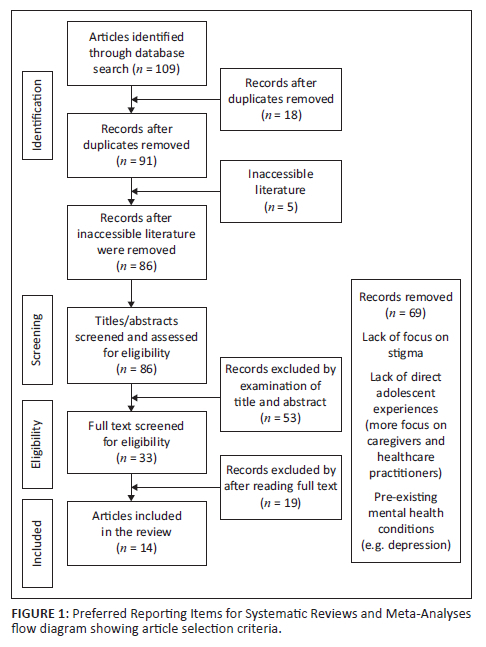
With the assistance of a North-West University (Potchefstroom Campus) faculty librarian, EBSCOhost (including Academic Search Complete, APA PsycINFO, APA PsycARTICLES and SocINDEX), Scopus and ScienceDirect databases were used to identify relevant academic literature. The keywords used to identify relevant literature were adolescence*, diabetes*, stigma, type 1 diabetes* and T1DM. Boolean operators AND and OR were used to further clarify the scope of articles. A total of 109 articles were identified. Eighteen duplicates were removed, and a further five articles were removed because of their inaccessibility, narrowing the total number of articles included for screening to 86.
Inclusion and exclusion criteria
All searches were restricted to incorporate published and peer-reviewed articles dated 2013-2023, allowing for relevant and current data. The age range of inclusion was limited to adolescents aged 12-18 years, currently living with T1DM. Full-text journals and those who followed a qualitative, quantitative or mixed method approach have been included, while review articles were excluded. Conference proceedings have been excluded, while Doctor of Philosophy theses, Master's dissertations, and mini dissertations were included. Lastly, only articles that have been published in English or those that have been translated before their publication have been included in the search approach.
Critical appraisal of literature gathered
Two independent reviewers scanned the initial article titles, abstracts, purpose and aims to determine relevance based on how they correlate to the review question and the keywords as guided by the inclusion and exclusion criteria. The title, keywords and abstracts were scanned to determine compliance with these criteria. Fifty-three articles were excluded, bringing the total number of articles to be presented for a full text scan to a total of 33.
Both the primary and secondary reviewers independently and manually reviewed the full text of selected articles, subjecting them to in-and-exclusion criteria while assessing the soundness of their methodology. Special care was taken to obtain ethical approval and ensure that both ascent and consent were provided for the participation of adolescents with T1DM in the review. After the articles were scanned independently, the primary and secondary reviewers discussed their findings. Each article was discussed, and the relevance to the study was examined. In cases where the reviewers' opinions differed, reviewers reverted to the full text of the articles, and a collective decision was made. Through the process, 19 articles were excluded leaving a total of 14 scientific and peer reviewed articles that possessed rigour.
Figure 1 visually depicts the Preferred Reporting Items for Systematic Reviews and Meta-Analyses (PRISMA) flow diagram, showing article selection criteria.
A total of 69 articles did not qualify for this review, and reasons for exclusion included a lack of focus on stigma and a lack of direct experiences of adolescents (more focus was given to experiences from parents, caregivers and healthcare practitioners). Further exclusions were based on adolescents with pre-existing mental health conditions, such as depression.
Information synthesis
An in-depth understanding was obtained by both reviewers of the 14 articles identified for the review. Relevant information pertaining to the research question was extracted and tabulated in Microsoft Excel©39
All relevant data were included in the synthesis for the purpose of transparency and relevance and to ensure that possible themes were not omitted. Such inclusions added to the transferability, reliability and validity of the findings. Specific focus was given to identifying the types of stigmas experienced, followed by an investigation into how stigma influences T1DM adolescents. For this to have crystallised, articles were read and re-read again, process notes were made and visually depicted to ensure an in-depth understanding of the subjective experiences of participants in context (for qualitative studies), while results from quantitative studies were listed and incorporated in the visual depiction of data. Mixed method studies were, initially, viewed in their entirety, whereafter qualitative and quantitative data were incorporated in the visual depiction.
Data extraction
Following an in-depth understanding of data, data extraction was performed by the primary reviewer. The extracted data contain the title and author(s), country where the study was performed, participants and gender specifications, the research design and aim of each article, a summary of the main findings and the limitations of each article. Within the process of data extraction, care was taken to reflect on the aspects of each study, answering the current research question. Table 1 presents the extracted data.
Review findings
In total, 14 publications were included in this critical review, three from the United States, three from Africa, two from Canada, two from Australia, one from Turkey, one from Korea, one from Jamaica and one from Israel, providing a wide scope of data through various contexts and cultures. Of the 14 articles, nine produced qualitative data, three focused on quantitative methods and two utilised mixed method approaches. Of the 14 articles, three were pioneering studies focusing on the experiences of T1DM adolescents and stigma in their specific areas or countries, Jamaica, Perth and Uganda. Combined, these studies allowed access to the experiences of 888 adolescents, of which 544 were female, 393 male and 5 gender fluid individuals.
Types of stigma
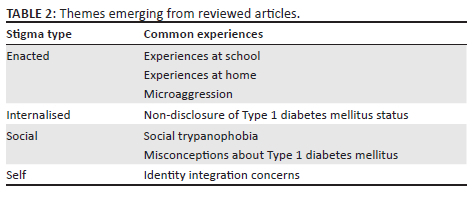
Four stigma types were identified in all 14 articles of the review, namely enacted stigma, internalised stigma, social stigma and self-stigma. The types of stigmas and the emerging themes, as identified in the review, are illustrated in Table 2.
Enacted stigma
The most common form of stigma experienced by T1DM adolescents is enacted stigma. Enacted stigma refers to the discrediting behaviour, verbally or non-verbally, intentionally or non-intentionally, directed at a stigmatised person.26
The effects of enacted stigma can be significantly linked to compromised T1DM self-management and higher haemoglobin A1c (Hb1Ac) levels, having serious consequences on health and a negative impact on psychological well-being.44,47
Experiences at school
Stigma experiences at school are evident in the exclusion of T1DM adolescents from participating in sports or social activities.41,44,46,47,48,49,51,52,534143
On the school grounds, stigma is experienced through the close monitoring and reprimanding behaviour of teachers at school, specifically related to self-management.14,46,48464646,525244,46,47,53
On the sports field, school policies prohibit the carrying of equipment, such as insulin pumps, while engaged in team sports, which physically distinguishes T1DM adolescents as different.51,5314,51
Added to this, teachers fear the effects of hypoglycaemia. Fearing their inability to assist in these situations, they decide to exclude T1DM adolescents from teams.4949,5151
Experiences at home
Stigma experiences at home revolve around overprotective parents who mistrust the abilities of their T1DM adolescent to effectively self-manage. Such parents are reportedly overprotective and controlling to the extent that they create dependent adolescents.14,43,46,47,51,53
While most articles report on the overprotection of T1DM adolescents by parents, an article from Kenya explains how adolescents of uninvolved parents successfully manage T1DM, yet, in spite of successful self-management, the desire to be part of, and fit into a social group remains.52
Enacted stigma at home is clearly evident in parental reluctance to allow adolescents the opportunity to become independent through learning to self-manage their T1DM. Acts such as these set the stage on which T1DM adolescents feel less worthy and increase their vulnerability to experiences of microaggression.
Microaggression
Microaggressions are verbal, non-verbal or subtle acts directed at T1DM adolescents to discredit them.4041,47,48,5252
At school, peers observe how teachers act negatively towards T1DM adolescents and follow their example by acting with microaggression, under the banner of 'promoting school polices'.41,4641,47,49,53534646
Internalised stigma
Internalised stigma relates to the experiences of living with a stigma and involves feelings of shame, self-blame, guilt, being a burden to others, weak, inferior and abnormal,26,29,3334
Non-disclosure of Type 1 diabetes mellitus status
The perception of stigma, and the evaluation thereof as important, is significantly linked to the decision to disclose T1DM status.41,4541,43,44,45,47,48,49,52,5344
Those brave enough to disclose their T1DM reap the benefits and report positive experiences through the continuous support of friends and family, receiving assistance from peers in difficult times and a reduction of stigma experiences.41,43,4745
Social stigma
Social stigma ranked third most frequent. Themes identified within social stigma are trypanophobia, misconceptions about T1DM and culturally driven stigma. Social stigma sets the stage for the existence of all types of stigmas. The effect of social stigma leads to stigma-avoidant behaviour, such as managing T1DM in secret and out of the public eye.45
Social trypanophobia
The management of T1DM involves testing sugar levels via a finger prick and injecting insulin to control HbA1c levels.10,2041,43,44,45,47,48,49,50,5241,43,44,4943,49
Misconceptions about type 1 diabetes mellitus
Common social misconceptions regarding T1DM are based on a lack of T1DM disease knowledge and on cultural superstitions. The most occurring lack of T1DM knowledge is that this non-communicable disease is, in fact, contagious and that its root cause is ascribed to maintaining an unhealthy lifestyle, thus explaining the misinterpretation between T1DM and T2DM.44,45,47,48,52,5341,44,46,47,48,49,51,52,5344,45,47,48,52,53
A last yet noteworthy and frequently occurring theme under social stigma is found in cultural superstitions derived from articles in Jordan and Africa, where T1DM is believed to be a punishment for previous family or individual sins or being the victim of witchcraft.45,47,48,5245,47,48,52
Social stigma drivers in Turkey view male T1DM adolescents as weak, while females are considered less fertile.4547,52Sukaali', which is linked to early mortality.4748
Complications of social stigma have no boundaries, as they dictate the accepted norms of society. Type 1 diabetes mellitus adolescents have to cope with their diagnosis while adapting to the responsibility of self-management. While this remains a difficult task in a stable and supportive environment, imagine the impact of attempts to incorporate T1DM into identity in a hostile environment, ridden with stigma.
Self-stigma
Self-stigma occurs when labels are internalised and behaviour is adapted to reinforce the stigma.26,30404040,41,43,45,48,49,53
Identity integration concerns
Incorporating T1DM into identity appeared as the most concerning theme under self-stigma. Adolescents experience inner conflict because of T1DM, see themselves as less autonomous, differentiated from what is expected from them both culturally and according to gender roles, as well as being incapable of living a normal life.40,41,43,45,48,49,5340,41,43,45,53415340,42,43,44,45,46,48,49,50,51,52,53
Adolescents who incorporated T1DM into their identity and self-concept viewed T1DM as a part of their new selves and viewed self-management as a challenge rather than a threat. For these individuals, stigma experiences are seen as opportunities to educate peers about their illness.4343
The influence of stigma experiences was observed in all studies, with negative experiences of stigma found to cause a lower quality of life (QoL), which impacts identity development and integration.4240,42,44,45,5045,504045,504450
Discussion
This critical review sets out to analyse and synthesise the most updated research available on how adolescents with T1DM experience stigma. Two sub-questions guided the research by, firstly, identifying the types of stigmas that impact T1DM adolescents and, secondly, to consolidate how stigma influences adolescents living with T1DM.
Through this review, it can be inferred that enacted, internalised, social and self-stigma is experienced by most adolescents. Stigma leads to non-disclosure of T1DM status.41,43,44,45,47,48,49,52,5341,42,44,45,46,47,48,49,50,5240,41,43,45,48,49,5340,41,42,43,45,48,49,53
Within any society, there are social norms and values that should be adhered to gain social acceptance. Behaviour and characteristics that contradict this norm can be described as social stigma.29,303232
Social stigma fosters an environment conducive to the perpetuation of other forms of stigma, such as enacted stigma.
Enacted stigma unfolds when discrediting behaviour is directed at the T1DM adolescent who possesses the condition that society fears and discredits.26
Up to this point, the review produced findings on both social stigma and enacted stigma. Literature defines perceived stigma in contradicting ways. Various definitions of perceived stigma exist. Perceived stigma is the belief that individuals hold about others' attitudes towards an illness,5455
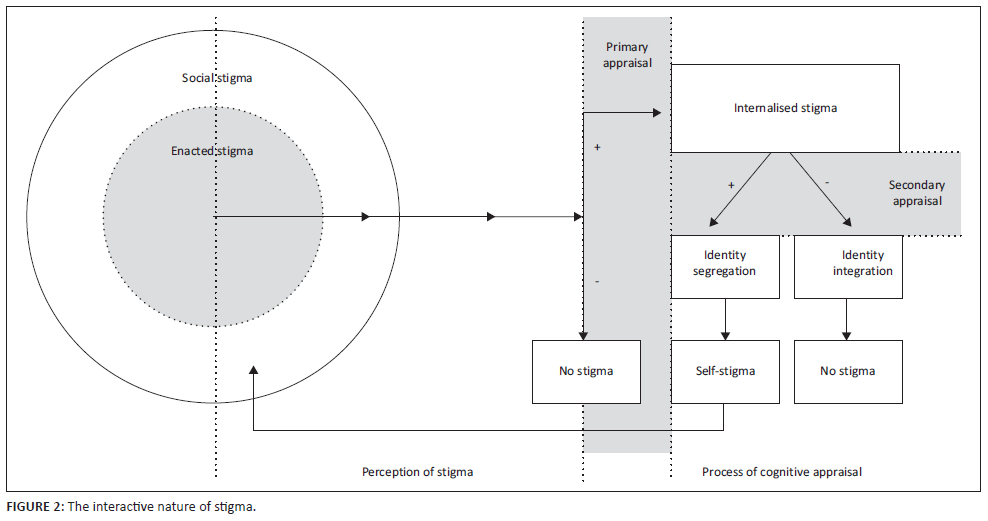
From the identified literature, a clear structure of the interactive nature of stigma emerged (Figure 2), clearly indicating the function of perception and the process of cognitive appraisal from social and enacted stigma to internalised and self-stigma.
In this review, and as illustrated in Figure 2, perceived stigma is found to be a process of the perception and cognitive appraisal of stigma rather than a stigma type. When an individual experiences either social or enacted stigma, it is channelled through a primary and secondary cognitive appraisal process. This process assigns value to the experience of the stigma. If the stigma is encountered and appraised as negative, no stigma is felt by the individual; however, if the individual assigns value to the stigma and primarily appraises it as positive, it results in internalised stigma.
Internalised stigma relates to the experiences of living with a stigma and involves feelings of shame, self-blame and guilt.26,29,3340,41,43,44,45,46,47,48,49,50,51,52,53
This internalised stigma appraisal leads to a constant internal battle of self-awareness amplified by the signs of T1DM and its successful management. Literature concurs with the findings in this review, adding that internalised stigma experiences negatively impact well-being and wider mental health.3456
Following internalised stigma, a secondary cognitive appraisal occurs, this time resulting in the decision to incorporate the stigma into self-identity or to reject the stigma. Type 1 diabetes mellitus adolescents who decline to incorporate stigma experiences choose to incorporate T1DM into their identity. Through the review, it was evident that those adolescents who negatively appraise stigma in the secondary cognitive appraisal process found it easier to incorporate T1DM into their identity, which resulted in minimal or no experiences of stigma, and reported taking an active stance in their self-management behaviour while disclosing their T1DM status and even educating peers about their condition.41,43,4740,42,43,44,45,46,48,49,50,51,52,53
By definition, self-stigma occurs when labels are internalised and behaviour is adapted to reinforce the stigma.26,3057
Lastly, secretive self-management reinforces the negative perception the public has on injecting, linking self-management to illegal drug abuse, consistent with the definition of self-stigma, stating that self-stigma reinforces social stigma. This finding completes Figure 2 on the interactive nature of stigma, illustrating how the experience of stigma is continuous unless interventions are aimed at challenging the processes of perception and cognitive appraisal of stigma.
To summarise, experiences of stigma by T1DM adolescents are vast and extend from their social world to their deepest core. Stigma not only influences the world that T1DM adolescents live in, but it also negatively impacts their ability to become healthy, confident, independent, contributing members of society. In applying the presented Figure 2 to future studies, reviewers hope that clarity can be given to the experiences of T1DM adolescents and others living with stigma, in an effort to curb stigma and the perception and appraisal of such stigma.
Limitations
This review study was based on the results and discussions of 14 identified articles. In total, these articles provided access to the experiences of 883 adolescents from 14 countries. The diverse geographical spread of the article provides a thorough overview of the current research on T1DM, adolescents and stigma but cannot be generalised to a global representation. Further, some articles incorporated a large sample of participants, while others consisted of minute samples, and thus are not representative of all T1DM adolescent experiences per country, yet provide good baseline information.
Suggestions for future research and interventions
Future research surrounding the clinical impact of stigma on T1DM self-management is needed urgently. Diabetologists or endocrinologists are invited to drive research on the clinical impact of stigma experiences on T1DM self-management and well-being. Interventions to extinguish the impact of stigma experiences for T1DM adolescents should be designed and applied in healthcare policy, within assistance or management programmes and within intervention programmes. (1) Type 1 diabetes mellitus assistance or management programmes should be aimed at educating parents through developmental transition periods, such as from childhood to adolescence. Parents need to be empowered with effective skills to hand over diabetes management to adolescents. (2) Intervention programmes assisting adolescents to integrate T1DM into identity should be designed and implemented as a matter of urgency. Such interventions will foster resilience in T1DM adolescents, which will allow them to appraise stigma as frivolous. (3) Research needs to be expanded on the stigma experiences of T1DM adolescents, focusing on the perception and cognitive appraisal of T1DM stigma.
Conclusion
In this review, a thorough consolidation and synthesis of literature produced in-depth insight into the types of stigmas experienced by T1DM adolescents. Through the process of dissecting the stigma types, patterns of interaction between stigmas were observed, and a diagram was developed to illustrate the interactive nature of stigma. The impact of stigma experiences on T1DM adolescents where consolidated under suboptimal T1DM self-management, the promotion of secretive or non-disclosing behaviour and a lack of T1DM identity integration. The impact of stigma on this population has severe consequences for physical and mental health, well-being and normal adolescent development.
Limited scientific evidence is available on understanding T1DM stigma experiences globally, and a challenge is extended to fellow researchers to pursue such research.
Competing interests
The authors declare that they have no financial or personal relationships that may have inappropriately influenced them in writing this article.
CRediT authorship contribution
Nadine Janneke: Design, Implementation, Analysis, Writing - manuscript. Elmari Deacon: Design, Implementation, Analysis, Writing - manuscript. All authors reviewed the article, contributed to the discussion of results, approved the final version for submission and publication and take responsibility for the integrity of its findings.
Ethical considerations
Ethical clearance to conduct this study was obtained from the North-West University Health Research Ethics Committee (HREC) (No. NWU-00133-23-A1). In addition, both reviewers completed the Training and Resources in Research Ethics Evaluation (TRREE) online ethics training and declared no conflict of interest.
Funding information
This research received no specific grant from any funding agency in the public, commercial or not-for-profit sectors.
Data availability
The authors confirm that the data supporting the findings of this study are available within the article.
Disclaimer
The views and opinions expressed in this article are those of the authors and are the product of professional research. It does not necessarily reflect the official policy or position of any affiliated institution, funder, agency or that of the publisher. The authors are responsible for this article's results, findings and content.
Acknowledgements
This article contains research previously presented at the Annual Psychology Congress held in Johannesburg on 9 October 2024. The full manuscript is submitted for journal publication. No permission for publishing is required from the conference organisers. The sole intellectual property and ownership rest with the authors.
References
-
1.Crone EA, Achterberg M. Prosocial development in adolescence. Curr Opin Psychol. 2022;44:220-225. https://doi.org/10.1016/j.copsyc.2021.09.020
» https://doi.org/10.1016/j.copsyc.2021.09.020 -
2.World Health Organization. The global strategy for women's, children's and adolescents' health 2016-2030 [homepage on the Internet]. 2015 [cited 2023 May 13]. Available from: https://www.who.int/docs/default-source/child-health/the-global-strategy-for-women-s-children-s-and-adolescents-health-2016-2030.pdf
» https://www.who.int/docs/default-source/child-health/the-global-strategy-for-women-s-children-s-and-adolescents-health-2016-2030.pdf - 3.Louw D, Louw A. Child and adolescent development. 3rd ed. Bloemfontein: Psychology Publications; 2022.
- 4.Alessandro P, Mastorci F, Vassalle C. Adolescent health and wellbeing: Current strategies and future trends. Cham: Springer International Publishing; 2019.
-
5.Branje S, De Moor EL, Spitzer J, Becht AI. Dynamics of identity development in adolescence: A decade in review. J Res Adolesc. 2021;31(4):908-927. https://doi.org/10.1111/jora.12678
» https://doi.org/10.1111/jora.12678 - 6.Goldstein E, Van Hooff J. Cognitive psychology. 2nd ed. Hampshire: Centage; 2019.
-
7.Jones CM, Clayton HB, Deputy NP, et al. Prescription opioid misuse and use of alcohol and other substances among high school students - Youth risk behavior survey, United States, 2019. MMWR Suppl. 2020;69(1):38-46. https://doi.org/10.15585/mmwr.su6901a5
» https://doi.org/10.15585/mmwr.su6901a5 -
8.Ciranka S, Van den Bos W. Adolescent risk-taking in the context of exploration and social influence. Dev Rev. 2021;61(61):100979. https://doi.org/10.1016/j.dr.2021.100979
» https://doi.org/10.1016/j.dr.2021.100979 - 9.Ogle G, Wang F, Gregory G, Maniam J. IDF Atlas report 2022. Brussels: IDF; 2022, p. 1-15.
-
10.Hatzir L, Tuval-Mashiach R, Pinhas-Hamiel O, Silberg T. Good health practices and well-being among adolescents with type-1 diabetes: A cross-sectional study examining the role of satisfaction and frustration of basic psychological needs. Int J Environ Res Public Health. 2023;20(3): 1688. https://doi.org/10.3390/ijerph20031688
» https://doi.org/10.3390/ijerph20031688 -
11.Liu S, Leone M, Ludvigsson JF, et al. Association and familial coaggregation of childhood-onset type 1 diabetes with depression, anxiety, and stress-related disorders: A population-based cohort study. Diabetes Care. 2022;45(9):1987-1993. https://doi.org/10.2337/dc21-1347
» https://doi.org/10.2337/dc21-1347 - 12.DeFronzo RA, E. Ferrannini, Zimmet P, Alberti G. International textbook of diabetes mellitus. 4th ed. John Wiley & Sons; 2015.
-
13.Goyal R, Jialal I. Diabetes mellitus type 2 [homepage on the Internet]. Treasure Island, FL: StatPearls Publishing; 2020 [cited 2023 Mar 12]. Available from: https://www.ncbi.nlm.nih.gov/books/NBK513253/
» https://www.ncbi.nlm.nih.gov/books/NBK513253/ -
14.World Health Organization. HEARTS D: Diagnosis and management of type 2 diabetes [homepage on the Internet]. 2020 [cited 2023 Mar 05]. Available from: https://apps.who.int/iris/handle/10665/331710
» https://apps.who.int/iris/handle/10665/331710 -
15.World Health Organization. World health statistics 2022: Monitoring health for the SDGs, sustainable development goals [homepage on the Internet]. WHO; 2022 [cited 2023 Mar 05]. Available from: https://www.who.int/publications-detail-redirect/9789240051157
» https://www.who.int/publications-detail-redirect/9789240051157 -
16.Centers for Disease Control and Prevention. What is diabetes? [homepage on the Internet]. CDC; 2022 [cited 2022 Jul 07]. Available from: https://www.cdc.gov/diabetes/basics/diabetes.html
» https://www.cdc.gov/diabetes/basics/diabetes.html -
17.National Institute of Diabetes and Digestive and Kidney Diseases. Insulin resistance & prediabetes [homepage on the Internet]. National Institute of Diabetes and Digestive and Kidney Diseases. 2018 [cited 2023 Mar 05]. Available from: https://www.niddk.nih.gov/health-information/diabetes/overview/what-is-diabetes/prediabetes-insulin-resistance
» https://www.niddk.nih.gov/health-information/diabetes/overview/what-is-diabetes/prediabetes-insulin-resistance -
18.Centers for Disease Control and Prevention. All about your A1C [homepage on the Internet]. CDC; 2022 [cited 2023 Mar 05]. Available from: https://www.cdc.gov/diabetes/managing/managing-blood-sugar/a1c.html
» https://www.cdc.gov/diabetes/managing/managing-blood-sugar/a1c.html -
19.Centre for Diabetes. 4 ways to take insulin [homepage on the Internet]. CDC; 2021 [cited 2023 Mar 05]. Available from: https://www.cdc.gov/diabetes/basics/type-1-4-ways-to-take-insulin.html
» https://www.cdc.gov/diabetes/basics/type-1-4-ways-to-take-insulin.html -
20.Farthing P, Bally J, Rennie DC, Dietrich Leurer M, Holtslander L, Nour MA. Type 1 diabetes management responsibilities between adolescents with T1D and their parents: An integrative review. J Spec Pediatr Nurs. 2022;27(4):e12395. https://doi.org/10.1111/jspn.12395
» https://doi.org/10.1111/jspn.12395 -
21.Helgeson VS, Vaughn AK, Seltman H, Orchard T, Libman I, Becker D. Featured article: Trajectories of glycemic control over adolescence and emerging adulthood: An 11-year longitudinal study of youth with type 1 diabetes. J Pediatr Psychol. 2017;43(1):8-18. https://doi.org/10.1093/jpepsy/jsx083
» https://doi.org/10.1093/jpepsy/jsx083 -
22.National Institute of Diabetes and Digestive and Kidney Diseases. Managing diabetes [homepage on the Internet]. National Institute of Diabetes and Digestive and Kidney Diseases; 2020 [cited 2023 Mar 05]. Available from: https://www.niddk.nih.gov/health-information/diabetes/overview/managing-diabetes
» https://www.niddk.nih.gov/health-information/diabetes/overview/managing-diabetes -
23.Hansen UM, Olesen K, Willaing I. Diabetes stigma and its association with diabetes outcomes: A cross-sectional study of adults with type 1 diabetes. Scand J Public Health. 2020;48(8):140349481986294. https://doi.org/10.1177/1403494819862941
» https://doi.org/10.1177/1403494819862941 -
24.Rechenberg K, Koerner MSR. General anxiety, diabetes-specific anxiety, and quality of life in adolescents with type 1 diabetes. Sci Diabetes Self-Manag Care. 2022;48(6):263501062211256. https://doi.org/10.1177/26350106221125689
» https://doi.org/10.1177/26350106221125689 - 25.Ainlay SC, Becker G, Coleman LM. The dilemma of difference: A multidisciplinary view of stigma. Boston, MA: Springer US; 1986.
-
26.Pescosolido BA, Martin JK. The stigma complex. Annu Rev Sociol. 2015;41(1):87-116. https://doi.org/10.1146/annurev-soc-071312-145702
» https://doi.org/10.1146/annurev-soc-071312-145702 -
27.Harvey LJ, White FA. Emotion self-stigma as a unique predictor of help-seeking intentions: A comparative analysis of early adolescents and young adults. Psychol Psychother. 2023;96(3):762-777. https://doi.org/10.1111/papt.12467
» https://doi.org/10.1111/papt.12467 -
28.Wylie TAF, Shah C, Connor R, et al. Transforming mental well-being for people with diabetes: Research recommendations from Diabetes UK's 2019 diabetes and mental well-being workshop. Diabet Med. 2019;36(12):1532-1538. https://doi.org/10.1111/dme.14048
» https://doi.org/10.1111/dme.14048 -
29.Rai SS, Syurina EV, Peters RMH, Putri AI, Zweekhorst MBM. Non-communicable diseases-related stigma: A mixed-methods systematic review. Int J Environ ResPublic Health. 2020;17(18): 6657. https://doi.org/10.3390/ijerph17186657
» https://doi.org/10.3390/ijerph17186657 - 30.Tanaka N, Hamamoto Y, Kurotobi Y, et al. Stigma evaluation for diabetes and other chronic non-communicable disease patients: Development, validation and clinical use of stigma scale - The Kanden Institute Stigma Scale. J Diabetes Investig. 2022;13(12):2081-2090.
-
31.Arslan G. School belongingness, well-being, and mental health among adolescents: Exploring the role of loneliness. Aust J Psychol. 2021;73(1):70-80. https://doi.org/10.1080/00049530.2021.1904499
» https://doi.org/10.1080/00049530.2021.1904499 -
32.Schabert J, Browne JL, Mosely K, Speight J. Social stigma in diabetes. Patient. 2013;6(1):1-10. https://doi.org/10.1007/s40271-012-0001-0
» https://doi.org/10.1007/s40271-012-0001-0 -
33.Stangl AL, Earnshaw VA, Logie CH, et al. The health stigma and discrimination framework: A global, crosscutting framework to inform research, intervention development, and policy on health-related stigmas. BMC Med. 2019;17(1):1-13. https://doi.org/10.1186/s12916-019-1271-3
» https://doi.org/10.1186/s12916-019-1271-3 -
34.Birtel MD, Wood L, Kempa NJ. Stigma and social support in substance abuse: Implications for mental health and well-being. Psychiatry Res. 2017;252(97):1-8. https://doi.org/10.1016/j.psychres.2017.01.097
» https://doi.org/10.1016/j.psychres.2017.01.097 -
35.Datye K, Bonnet K, Schlundt D, Jaser S. Experiences of adolescents and emerging adults living with type 1 diabetes. Diabetes Educ. 2019;45(2):194-202. https://doi.org/10.1177/0145721718825342
» https://doi.org/10.1177/0145721718825342 -
36.Hussein S, Jespersen LN, Ingersgaard MV, Skovby P, Grabowski D. Trying to be like everybody else: A qualitative study revealing the importance of social contexts and illness representations among adolescents with type 1 diabetes and their parents. Chronic Illn. 2023;20(1):174239532311552. https://doi.org/10.1177/17423953231155287
» https://doi.org/10.1177/17423953231155287 -
37.Ross D. Adolescent well-being: A definition and conceptual framework. J Adolesc Health. 2020;67(4):472-476. https://doi.org/10.1016/j.jadohealth.2020.06.042
» https://doi.org/10.1016/j.jadohealth.2020.06.042 -
38.Grant MJ, Booth A. A typology of reviews: An analysis of 14 review types and associated methodologies. Health Info Libr J. 2009;26(2):91-108. https://doi.org/10.1111/j.1471-1842.2009.00848.x
» https://doi.org/10.1111/j.1471-1842.2009.00848.x -
39.Braun V, Clarke V. Using thematic analysis in psychology. Qual Res Psychol. 2006;3(2):77-101. https://doi.org/10.1191/1478088706qp063oa
» https://doi.org/10.1191/1478088706qp063oa -
40.Crespo-Ramos G, Cumba-Avilés E, Quiles-Jiménez M. 'They called me a terrorist': Social and internalized stigma in Latino youth with type 1 diabetes. Health Psychol Rep. 2018;6(4):307-320. https://doi.org/10.5114/hpr.2018.80004
» https://doi.org/10.5114/hpr.2018.80004 -
41.Anderson M, Tulloch-Reid MK. 'You cannot cure it, just control it': Jamaican adolescents living with diabetes. Compr Child Adolesc Nurs. 2017;42(2):109-123. https://doi.org/10.1080/24694193.2017.1411406
» https://doi.org/10.1080/24694193.2017.1411406 -
42.Arij Soufi, Mok E, Henderson M, Dasgupta K, Rahme E, Nakhla M. Association of stigma, diabetes distress and self-efficacy with quality of life in adolescents with type 1 diabetes preparing to transition to adult care. Diabet Med. 2023;41(1):e15159. https://doi.org/10.1111/dme.15159
» https://doi.org/10.1111/dme.15159 -
43.Commissariat PV, Kenowitz JR, Trast J, Heptulla RA, Gonzalez JS. Developing a personal and social identity with type 1 diabetes during adolescence. Qual Health Res. 2016;26(5):672-684. https://doi.org/10.1177/1049732316628835
» https://doi.org/10.1177/1049732316628835 -
44.Ingram JA, Ohan JL, Bebbington K. Diabetes stigma predicts higher HbA1c levels in Australian adolescents with type 1 diabetes. Stigma Health. 2022;7(4):454-460. https://doi.org/10.1037/sah0000408
» https://doi.org/10.1037/sah0000408 -
45.Arda Sürücü H, Baran Durmaz G, Turan E. Does type 1 diabetic adolescents' fear of stigmatization predict a negative perception insulin treatment? Clin Nurs Res. 2018;29(4):235-242. https://doi.org/10.1177/1054773818815258
» https://doi.org/10.1177/1054773818815258 -
46.Puckett C, Wong JC, Talbot S, Min HJ, Chokr N. Institutional role conflict in the digital age: The case of diabetes management at school. SSM Qual Res Health. 2023;3(3):100215. https://doi.org/10.1016/j.ssmqr.2022.100215
» https://doi.org/10.1016/j.ssmqr.2022.100215 -
47.Nsamba J, Nabirye G, Hense S, Drenos F, Mathews E. Lived experiences of newly diagnosed type 1 diabetes mellitus children and adolescents in Uganda. J Multidiscip Healthc. 2022;15(15):2647-2665. https://doi.org/10.2147/JMDH.S389265
» https://doi.org/10.2147/JMDH.S389265 -
48.Hapunda G, Abubakar A, Van de Vijver F, Pouwer F. Living with type 1 diabetes is challenging for Zambian adolescents: Qualitative data on stress, coping with stress and quality of care and life. BMC Endocr Disord. 2015;15:20. https://doi.org/10.1186/s12902-015-0013-6
» https://doi.org/10.1186/s12902-015-0013-6 -
49.Elissa K, Bratt EL, Axelsson ÅB, Khatib S, Sparud-Lundin C. Societal norms and conditions and their influence on daily life in children with type 1 diabetes in the West Bank in Palestine. J Pediatr Nurs. 2017;33:16-22. https://doi.org/10.1016/j.pedn.2016.12.005
» https://doi.org/10.1016/j.pedn.2016.12.005 -
50.Brazeau AS, Nakhla M, Wright M, et al. Stigma and its association with glycemic control and hypoglycemia in adolescents and young adults with type 1 diabetes: Cross-sectional study. J Med Internet Res. 2018;20(4):e151. https://doi.org/10.2196/jmir.9432
» https://doi.org/10.2196/jmir.9432 -
51.Fried L, Chetty T, Cross D, et al. The challenges of being physically active: A qualitative study of young people with type 1 diabetes and their parents. Can J Diabetes. 2020;45(5):421-427. https://doi.org/10.1016/j.jcjd.2020.09.010
» https://doi.org/10.1016/j.jcjd.2020.09.010 -
52.Palmer T, Waliaula C, Shannon G, et al. Understanding the lived experience of children with type 1 diabetes in Kenya: Daily routines and adaptation over time. Qual Health Res. 2021;32(1):145-158. https://doi.org/10.1177/10497323211049775
» https://doi.org/10.1177/10497323211049775 -
53.Kim JE. Illness experiences of adolescents with type 1 diabetes. J Diabet Res. 2022;2022:1-10. https://doi.org/10.1155/2022/3117253
» https://doi.org/10.1155/2022/3117253 -
54.Subu MA, Wati DF, Netrida N, et al. Types of stigma experienced by patients with mental illness and mental health nurses in Indonesia: A qualitative content analysis. Int J Ment Health Syst. 2021;15(77):1-12. https://doi.org/10.1186/s13033-021-00502-x
» https://doi.org/10.1186/s13033-021-00502-x -
55.Alimoradi Z, Golboni F, Griffiths MD, Broström A, Lin CY, Pakpour AH. Weight-related stigma and psychological distress: A systematic review and meta-analysis. Clin Nutr. 2019;39(7):1-47. https://doi.org/10.1016/j.clnu.2019.10.016
» https://doi.org/10.1016/j.clnu.2019.10.016 -
56.Hollinsaid NL, Pachankis JE, Bränström R, Hatzenbuehler ML. Hypervigilance: An understudied mediator of the longitudinal relationship between stigma and internalizing psychopathology among sexual-minority young adults. Clin Psychol Sci. 2023;216770262311590. https://doi.org/10.31219/osf.io/xaz78
» https://doi.org/10.31219/osf.io/xaz78 -
57.Dansey D, Shbero D, John M. Keeping secrets: How children in foster care manage stigma. Adopt Foster. 2019;43(1):35-45. https://doi.org/10.1177/0308575918823436
» https://doi.org/10.1177/0308575918823436

Accepted: 22 Oct. 2025
Published: 06 Dec. 2025