To what extent does access to improved sanitation explain the observed differences in infant mortality in Africa?
Abstract
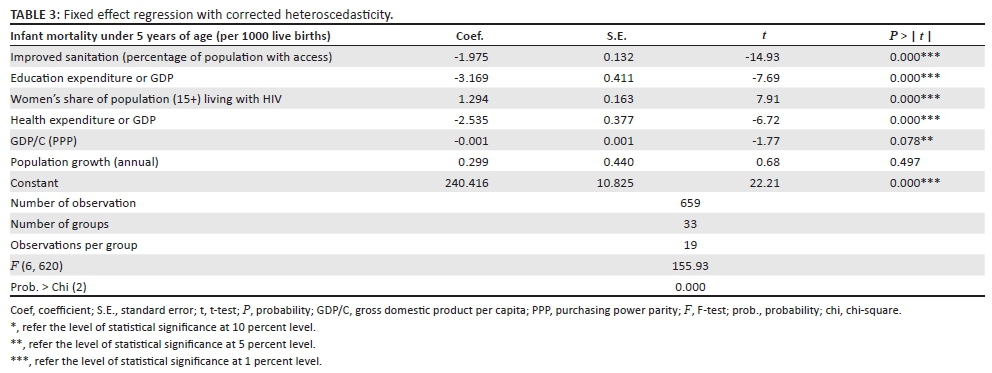
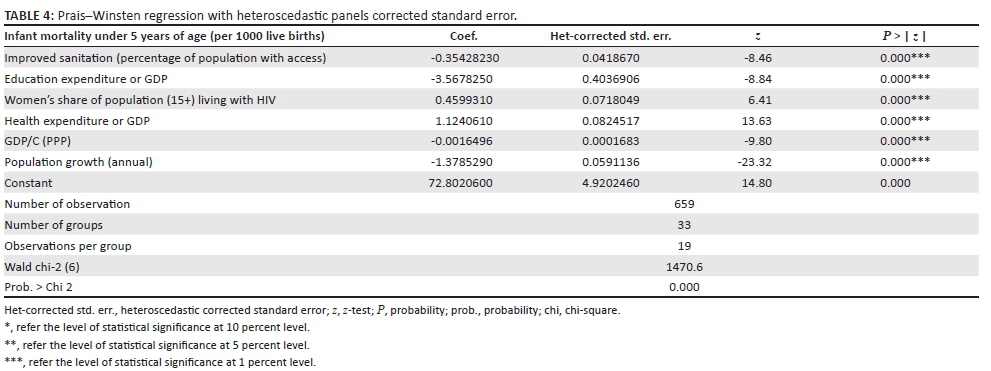
BACKGROUND: To my knowledge, there was no systematic study so far that analysed the extent of the impact of improved sanitation on infant mortality in the African context with long years of full-fledged longitudinal data AIM: The aim of this study was to empirically examine the extent to which improved sanitation explains the observed differences in infant mortality under 5 years of age across African countries. SETTING: The study covered a panel of 33 countries from north, south, east, west and central Africa for the years 1994-2013. METHODS: The study first conducted Durbin-Wu-Hausman specification test and then used fixed effect model. In addition, Praison-Winsten regression with corrected heteroscedasticity was employed to verify the consistency of the results that were revealed in using fixed effect estimation method. RESULTS: The study revealed that a 1% increase in access to improved sanitation would reduce infant mortality by a rate of about two infant deaths per 1000 live births. Also, the study confirmed that a significant decline in infant mortality rate was highly linked to improvements in education, health and sustainable economic growth. CONCLUSION: The findings have wide implications especially for African countries for which decreasing infant mortality is one of the most crucial priorities in the continent to reverse the current deep-rooted challenges related to human capital formation.
 Thumbnail
 Thumbnail
 Thumbnail
 Thumbnail
 Thumbnail
 Thumbnail