Medical education and the quality improvement spiral: A case study from Mpumalanga, South Africa
Abstract
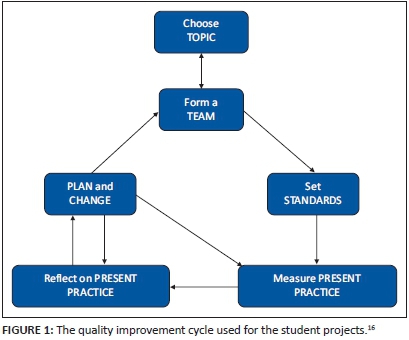
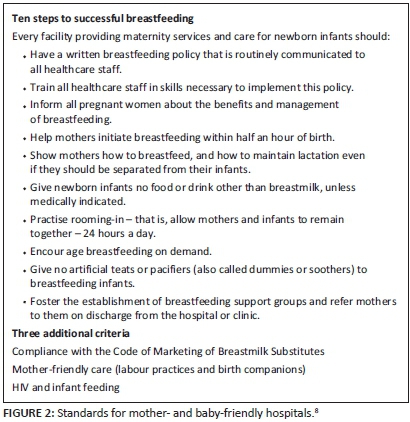
BACKGROUND: The short timeframe of medical students' rotations is not always conducive to successful, in-depth quality-improvement projects requiring a more longitudinal approach. AIM: To describe the process of inducting students into a longitudinal quality-improvement project, using the topic of the Mother- and Baby-Friendly Initiative as a case study; and to explore the possible contribution of a quality-improvement project to the development of student competencies. SETTING: Mpumalanga clinical learning centres, where University of Pretoria medical students did their district health rotations. METHOD: Consecutive student groups had to engage with a hospital's compliance with specific steps of the Ten Steps to Successful Breastfeeding that form the standards for the Mother- and Baby-Friendly Initiative. Primary data sources included an on-site PowerPoint group presentation (n = 42), a written group report (n = 42) and notes of individual interviews in an end-of-rotation objectively structured clinical examination station (n = 139. RESULTS: Activities in each rotation varied according to the needs identified through the application of the quality-improvement cycle in consultation with the local health team. The development of student competencies is described according to the roles of a medical expert in the CanMEDS framework: collaborator, health advocate, scholar, communicator, manager and professional. The exposure to the real-life situation in South African public hospitals had a great influence on many students, who also acted as catalysts for transforming practice. CONCLUSION: Service learning and quality-improvement projects can be successfully integrated in one rotation and can contribute to the development of the different roles of a medical expert. More studies could provide insight into the potential of this approach in transforming institutions and student learning.
 Thumbnail
 Thumbnail