Clinical recommendations for chronic musculoskeletal pain in South African primary health care
Abstract
BACKGROUND: Chronic musculoskeletal pain (CMSP) is prevalent globally and places a significant burden on individuals, healthcare systems and economies. Contextually appropriate clinical practice guidelines (CPGs) on CMSP are advocated to translate evidence into practice. AIM: This study aimed to investigate the applicability and feasibility of evidence-based CPG recommendations for adults with CMSP in the primary health care (PHC) sector of South Africa (SA). SETTING: The PHC sector in South Africa (SA). METHODS: Consensus methodology was used, comprising two online Delphi rounds and a consensus meeting. A multidisciplinary panel of local healthcare professionals involved in CMSP management was purposefully sampled and invited to participate. The first Delphi survey considered 43 recommendations. In the consensus meeting, the results of the first Delphi round were discussed. The second Delphi round reconsidered the recommendations with no consensus. RESULTS: Seventeen experts participated in the first Delphi round, 13 in the consensus meeting and 14 in the second Delphi round. In Delphi round two, 40 recommendations were endorsed, three were not endorsed and an additional recommendation was added. CONCLUSION: A multidisciplinary panel endorsed 41 multimodal clinical recommendations as applicable and feasible for the PHC of adults with CMSP, in SA. Although certain recommendations were endorsed, they may not be readily implementable in SA because of context factors. CONTRIBUTION: The study forms the basis of a model of care for contextually relevant PHC of CMSP. Future research should explore factors that could influence the uptake of the recommendations into practice to optimise chronic pain care in SA.
chronic musculoskeletal pain; clinical practice guidelines; consensus methods; primary health care; multidisciplinary; contextually relevant
Introduction
Chronic pain and disability are a global and local South African (SA) concern. The pooled prevalence of chronic pain in developing countries is 18% (95% confidence interval: 10% - 29%), (range 13% and 51%),1223,443
Chronic musculoskeletal pain is a multidimensional phenomenon, comprising interactions between biological, psychological, behavioural, social and environmental factors.3,56
South Africa is an upper-middle-income country,789101112,13
This study therefore focusses on addressing the knowledge gap on the acceptability and feasibility of existing CPG recommendations for implementation in the local, South African PHC context. The existing CPG recommendations were extracted from high-quality CPGs.14,151010
Research methods and design
Study design
A priori consensus methodology involving a group of local experts was used,1616,1716,18
Study population and sampling
The study population comprised healthcare professionals involved in chronic pain management in the SA context. A multidisciplinary group of healthcare professionals was identified through purposive sampling and invited to participate. Panellists participating in consensus processes are typically individuals who have practical experience and interest in the topic being investigated.16
•Experience, expertise and interest in CMSP management and/or
•Work experience in any of the different healthcare settings or sectors (public PHC, private practice, academic institutions, and professional organisations); and/or
•Different clinical disciplines (medical doctors, clinical nurse practitioners, pharmacologists, physiotherapists, occupational therapists, psychologists, managers, researchers); and/or
•Expertise in CPG writing and use; and
•At least 3 years' experience in the field.
As it is important to include patients' views in guideline development, patient views were considered in a separate research phase, as part of implementation strategies for the recommendations.19
Potential participants were identified by the authors through contributions in conferences focussing on pain management and public health, publications and public healthcare sector involvement. These potential participants were then requested to suggest other potential participants who may fit the inclusion criteria.1820
Development of evidence-based recommendations prior to consensus study
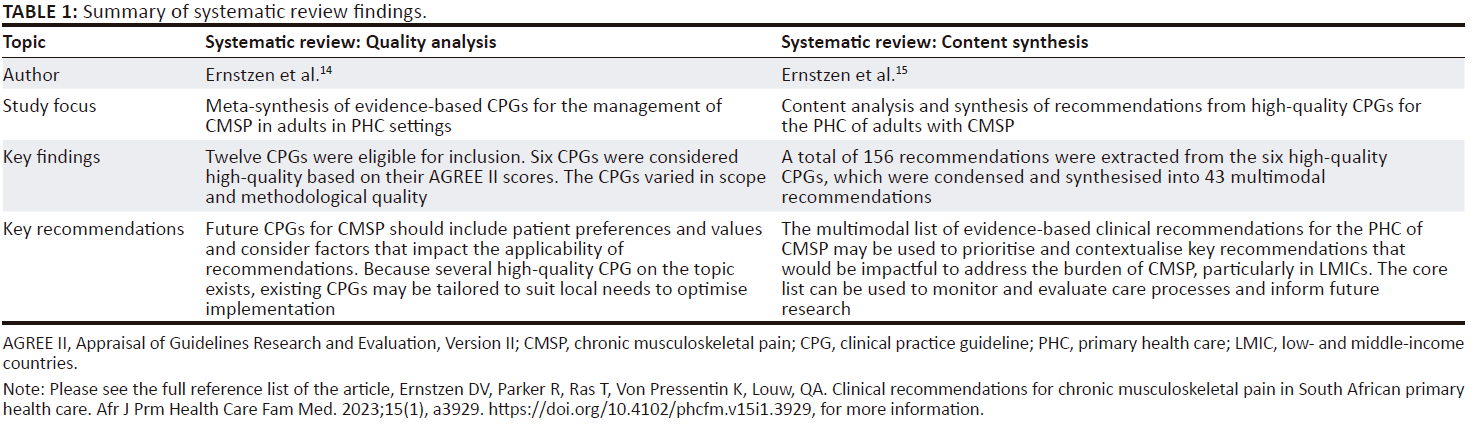
Prior to conducting the consensus study, we conducted a systematic review to identify high-quality CPGs for PHC of CMSP141521Table 1. The consensus approach described in this study utilised the list of 43 extracted recommendations to ascertain consensus about the applicability and feasibility of each recommendation for the SA PHC context.
Data collection
Participants completed an online Delphi survey via Stellenbosch University surveys (SUNsurvey), using an emailed survey link. The survey provided a short introduction about the study, a request for informed consent and instructions on how to complete the survey. The participants were presented with 43 recommendations, accompanied by the strength of the body of evidence (SoBE) for each recommendation. A five-point Likert scale (strongly agree [1], partly agree [2], undecided [3], partly disagree [4] and strongly disagree [5]) was used for voting. A non-applicable (n/a) key, which was considered a missing data point, was available if a statement was outside the scope of expertise of the participant. The survey requested participants to consider the applicability and feasibility of the clinical recommendation to endorse the recommendation for the SA context. Applicability or feasibility was defined as the ability to put a recommendation into practice when considering the barriers and facilitators to implementation. Applicability or feasibility considers the population in the intended setting, as well as the knowledge, skill, staff, time frames, equipment and resources that influence applicability.22
Two weeks after the survey closed, a face-to-face consensus meeting was held. The purpose was to present the results of the first Delphi round and to discuss recommendations for which consensus was not reached after the Delphi round (i.e. recommendations for which the Likert responses were 3 or above; or no consensus). The meeting was audiotaped, and a summary of discussions and decisions was made by the PI. After the meeting, the research team revised the wording of the recommendations to ensure that they incorporated the panel comments and were grammatically correct.
The second-round online survey was administered 1 week after the consensus meeting. Participants could vote for the adapted or contextualised recommendations using the same Likert scale. The survey was open for 3 weeks. Two reminders were sent before the closing date of the survey.
The steps leading to the list of recommendations are summarised as follows:
•Step 1: Conduct a systematic review to identify high-quality CPGs on the PHC of CMSP14
•Step 2: Extract and synthesise a core list of recommendations for PHC of CMSP from existing high-quality CPGs15
•Step 3: Panel evaluate and endorse or reject each recommendation for its applicability and feasibility in the SA PHC context (Delphi round 1)
•Step 4: Consensus meeting to discuss Delphi round 1 results
•Step 5: Panel re-evaluate and endorse or reject adapted or contextualised recommendations for their applicability and feasibility in SA PHC context (Delphi round 2)
•Step 6: Panel produce a list of recommendations endorsed for the SA PHC.
Data management and analysis
The data were extracted from the online survey into an Excel spreadsheet. An explicit method for the combination of results for the two Delphi rounds was used.1616,23171720
Quality assurance measures
For the Delphi rounds, voting was independent and confidential. The panel members signed a conflict-of-interest document to declare any actual or potential financial, professional affiliation and intellectual conflicts of interest that may have a direct influence on the content of the recommendations. The researchers were committed to neutrality in the process. In the consensus meeting, the PI facilitated the discussion, and the research team provided input to the rest of the group. This process is inherent to a consensus meeting (group decision-making). The researchers' engagement in the consensus meeting was grounded in the evidence statements and making sure that each member contributed equally. Only D.E. and Q.L. were involved in the data analysis and the rest of the research team contributed to the interpretation of the results. The researchers also completed a conflict of interest declaration. An independent research assistant (a social anthropologist) attended the consensus meeting and audited the data.
Ethical considerations
The study protocol was approved by the Stellenbosch University Health Research Ethics Committee (HREC), SA. Electronic (tick box) informed consent was obtained on the online Delphi questionnaire and written informed consent and conflict of interest declarations was obtained at the consensus meeting. The survey enabled confidential responses and anonymous extraction of data. Because of the nature of the in-person consensus meeting, participants were aware of each other's participation but were requested to uphold the confidentiality of the information shared. Participants were aware that they could exit the study at any point in time. The recommendations for the Conducting and REporting of DElphi Studies (CREDES)18
Results
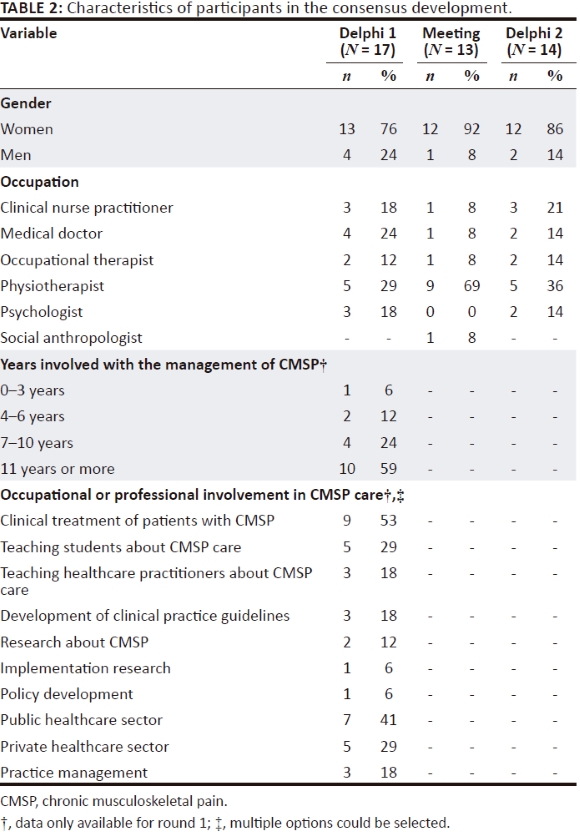
The researchers invited 26 potential participants and 17 of them participated in the Delphi round one, 14 participated in the consensus meeting and 13 in the second Delphi round. The reasons for non-participation were time constraints and geographical distance (for the consensus meeting). Table 2 provides an overview of the participants' characteristics. Physiotherapists were the largest professional group at the consensus meeting. Thirteen of the round one participants were from the Western Cape province.
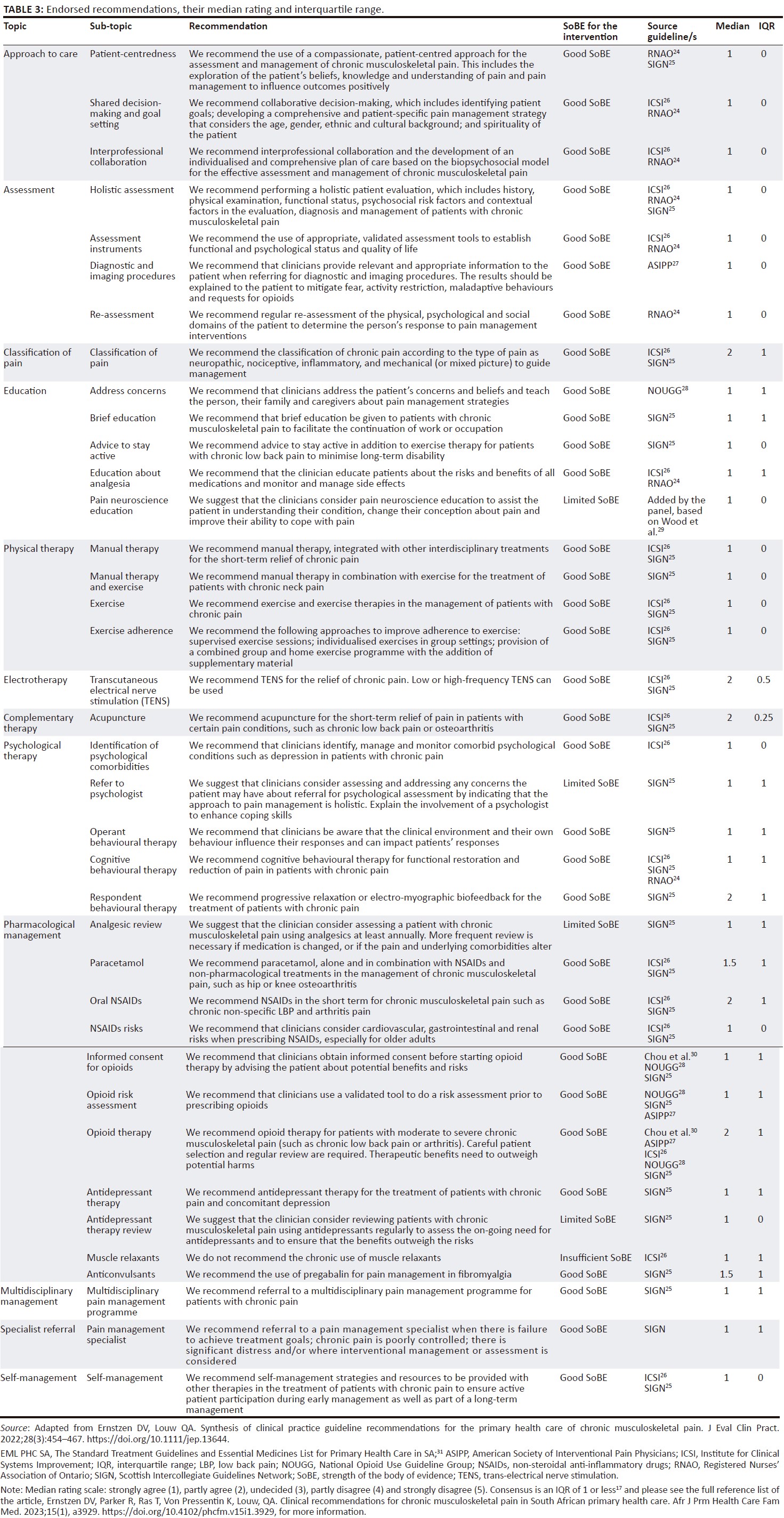
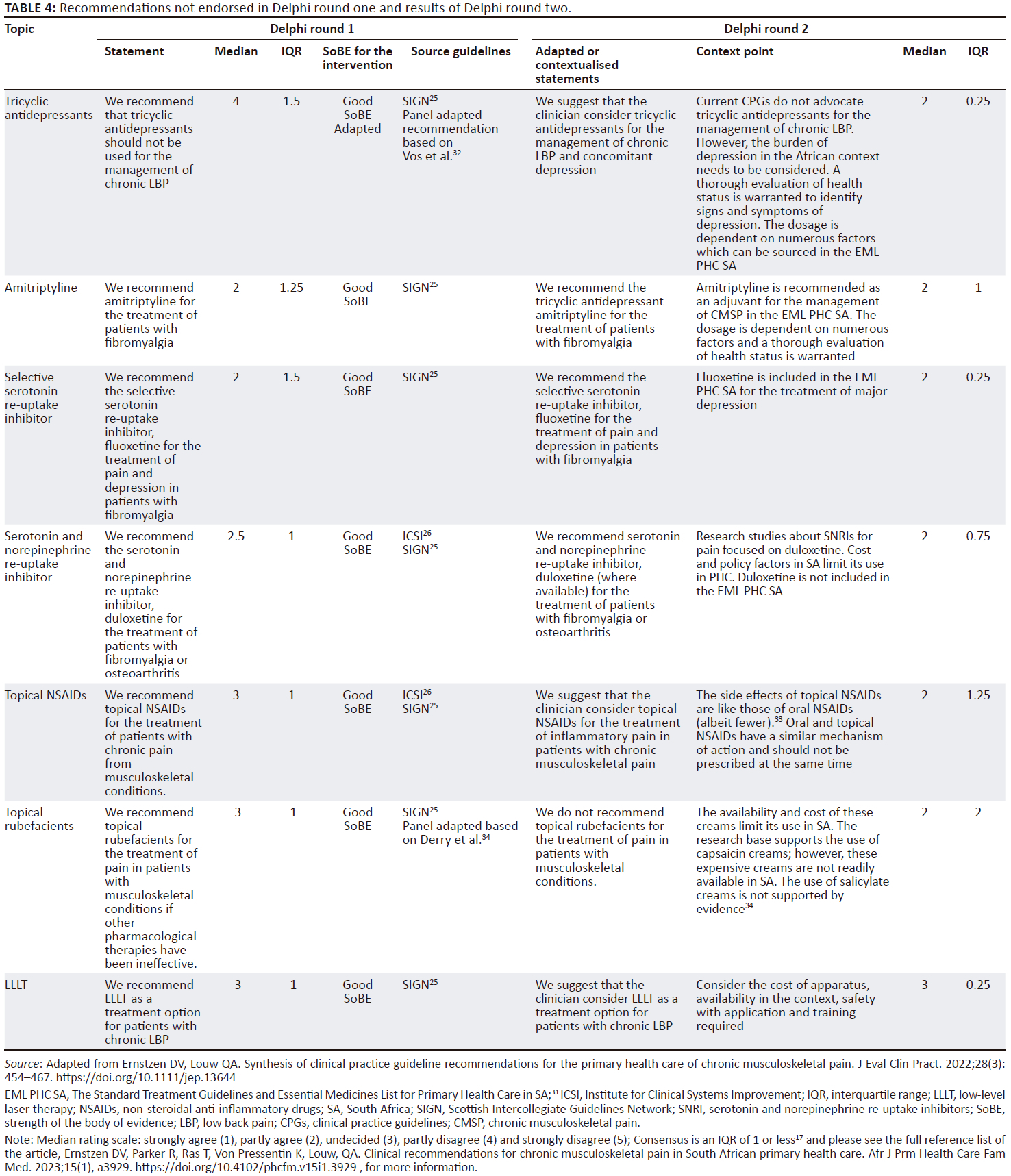
Out of the original core set of 43 recommendations, 36 were endorsed (a median score of 1 or 2 and an IQR of 1 or less) during Delphi round one and seven were not endorsed. Table 3 presents the recommendations for which consensus was achieved in the first Delphi round, which indicated recommendations that could be adopted for the SA context. Table 4 shows the original and reformulated recommendations with no consensus or undecided ratings at the end of Delphi round one, and the results after discussion at the panel meeting and re-voting on these statements in the second Delphi round. Table 4 therefore indicates recommendations that needed to be adapted or contextualised to be acceptable or feasible for the SA context. However, two recommendations received no consensus, and one was undecided, after contextualisation.
The seven recommendations that were not endorsed in the first Delphi round and therefore had uncertain applicability and feasibility to the SA PHC sector comprised six recommendations about pharmacological management for the prescription of topical non-steroidal anti-inflammatory drugs (NSAIDs), topical rubefacients and antidepressants for chronic pain conditions. Low-level laser therapy (LLLT) was the only non-pharmacological intervention with uncertain applicability and feasibility for the SA context. Although the recommendations for topical NSAIDs and rubefacients were adapted, they were not endorsed in Delphi round two because of their limited availability and the risk of side effects. The recommendations for tricyclic antidepressants for the management of chronic low back pain (LBP) were amended by the panel.
After two Delphi rounds, the panel reached a consensus on 41 recommendations, of which a recommendation on pain neuroscience education was added and endorsed by the panel. All recommendations, endorsed in round two, as well as six in round one, were endorsed as 'partly agree' indicating that uncertainty about these remain, motivating the need for further investigation.
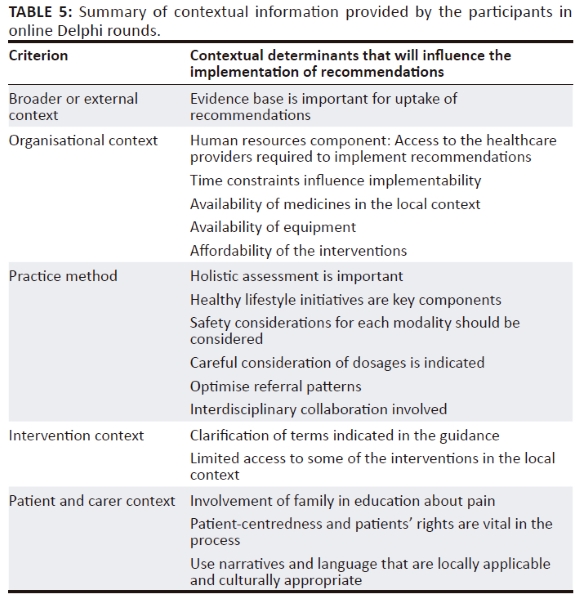
Table 5 provides a summary of the contextual determinants listed by participants listed in the online Delphi rounds.
Discussion
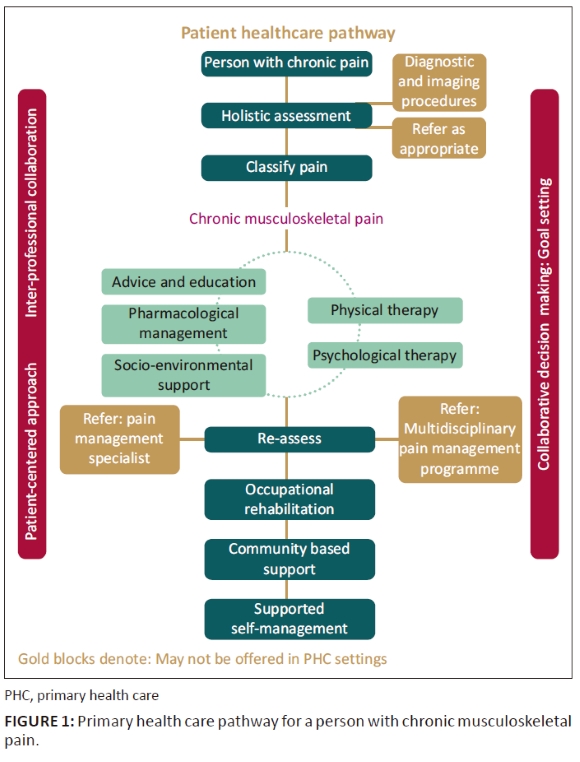
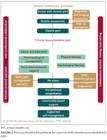
This study provides information on the acceptability and feasibility of evidence-based CPG recommendations for the multimodal care of CMSP in SA PHC settings. Interdisciplinary care and the involvement of nurses, medical practitioners, physiotherapists, occupational therapists, mental health practitioners, social workers and patient participation are emphasised to achieve therapeutic goals (Figure 1). We followed a structured and rigorous decision-making process via the participation of a panel of local experts who considered the evidence and context-specific circumstances for the applicability and feasibility of the recommendations. The study's findings may be useful for decision-making regarding CMSP, when considering PHC interventions in the context of the NHI in SA. The endorsed recommendations indicate the aspects that may be prioritised to address in policy and practice to address the burden of CMSP in this context; and they provide clear direction to clinicians regarding interventions for CMSP and their underpinning body of evidence. The participants identified several contextual factors (Table 5) that may impact the implementability of the recommendations in practice. These contextual factors included organisation of health services at the primary care level, human resource capacity, practice patterns, access to care, intervention determinants, availability of equipment and patient-specific factors. Although certain recommendations were endorsed as applicable and feasible for the SA context, they may not be readily implementable without a change in contextual conditions, particularly in remote or rural communities. The implementation of the endorsed recommendations will require strategic prioritisation and a multisectoral implementation plan.
The recommendations support a person-centred approach to care and collaborative decision-making with the patient and the multidisciplinary team. The main outcome of the collaboration is the formation of a therapeutic alliance between the healthcare provider and the patient.3535368,37
The multidimensional impact of CMSP requires holistic assessment. The panel agreed that the value of diagnostic imaging in chronic pain conditions should be carefully considered. This notion is supported by findings from a systematic review that negative diagnostic tests do not necessarily decrease the patient's fear or concern about pain.38393336
Consistent with a multimodal approach to CMSP care, the panel recognised the importance of physical therapy, psychological therapy and socio-environmental support as a core first-line management for CMSP. Multidisciplinary management is important because of the close relationship between chronic pain, physical activity, psychological distress and the social determinants of health.3,5,408,37,4158
Patient empowerment for self-management within a supportive environment is a key outcome of CMSP care. Empowerment towards self-management should commence early in the patient management pathway. The various recommendations focussing on patient education support this notion. Chronic musculoskeletal pain, because of its persistent nature, requires ongoing and supported self-management.4243,445,36434245
Several factors influenced the endorsement of recommendations related to the pharmacological management of CMSP. The prescription of analgesics should be based on the step-wise approach and within the guidance of the SA Essential Medicines List for PHC (EML PHC).4647484949
The recommendations regarding the anti-depressant drugs amitriptyline, fluoxetine and duloxetine were the focus of discussion during the consensus meeting in the study because of uncertainties that existed about them. The use of antidepressant medication in CMSP is an important consideration because depression is a common co-morbidity with CMSP53231503146
Certain recommendations were not endorsed because of concerns about their availability in the intended context, cost, safety and efficacy. The use of topical NSAIDs was not endorsed based on the risks associated with using oral and topical NSAIDs concurrently. A systematic review of the efficacy of topical NSAIDs concluded that they can be effective in the relief of osteoarthritis pain.331751
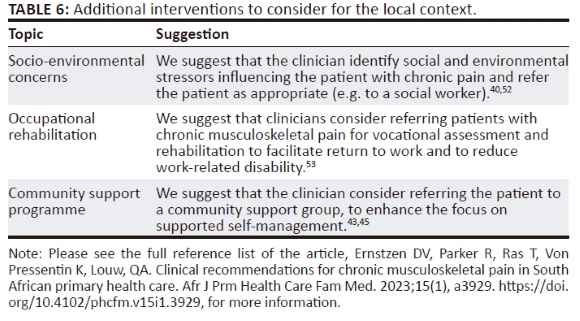
Based on the findings of the study, a patient pathway was synthesised to offer a visual overview of the recommendations and different decision-making points in a patient's journey through the PHC sector. The discussion from the consensus meeting indicated that for the holistic management of people with chronic pain, additional interventions need to be considered for the local context, which had not been listed in the original CPGs. These additional recommendations form part of the patient pathway and are summarised in Table 6.
Strengths and limitations of the study
The strength of this study was the systematic method that was followed to evaluate and endorse the recommendations. Through the electronic Delphi survey, the multidisciplinary panel confidentially provided their opinions about the applicability and feasibility of the recommendations for the intended context. We believe that the panellists used their scientific and contextual knowledge, and clinical experience integrated with their own belief system to make decisions.1819
The following limitations need to be considered when interpreting the findings of this study. Despite the delay in the publication of information, an updated search identified only one CPG that could potentially have been included in the synthesis process. The study did not include an analysis of the level of stability over Delphi rounds.171618181946
Conclusion
A set of evidence-based recommendations for the PHC of CMSP pain in SA was endorsed by a multidisciplinary panel of local experts. This study summarises these recommendations for the assessment and management of CMSP, comprising pharmacological and non-pharmacological management to enhance a multidisciplinary approach. Future research should explore the influence of other context-specific factors within health systems and communities, which were reported as adjunct recommendations in this study as they could influence the uptake of the recommendations into practice.
Competing interests
The authors declare that they have no financial or personal relationships that may have inappropriately influenced them in writing this article.
Authors' contributions
D.V.E. conceptualised and designed this study as part of her PhD Project. Q.A.L. made substantial contributions to the conceptualisation and design of the study. All authors contributed to data analysis and interpretation and collaboratively planned the manuscript. D.V.E. acted as the primary investigator and drafted the first version of the manuscript; the co-authors provided critical revisions to the drafts. All authors approved the final version of the manuscript and have accepted accountability for the study.
Funding information
This study is based on the research supported in part by the Stellenbosch University Rural Medical Education Partnership Initiative (SURMEPI), the National Research Foundation (NRF) of South Africa (grant no.: 85086) and the South African Medical Research Council (SAMRC). Any opinions, findings and conclusions or recommendations expressed in this study are those of the authors and the NRF does not accept any liability in this regard. The funding bodies did not take part in the design, data collection, data interpretation or writing of the manuscript.
Data availability
The full data set is available from the corresponding author and can be obtained through the Stellenbosch University library repository.
Disclaimer
The views and opinions expressed in this article are those of the authors and do not necessarily reflect the official policy or position of any affiliated agency of the authors.
Acknowledgements
The authors would like to thank all panellists who contributed their valuable expertise and time towards the various phases of the consensus study. The SIGN2515
References
-
1.Sá KN, Moreira L, Baptista AF, et al. Prevalence of chronic pain in developing countries. Pain Rep. 2019;4(6):e779. https://doi.org/10.1097/pr9.0000000000000779
» https://doi.org/10.1097/pr9.0000000000000779 -
2.Kamerman PR, Bradshaw D, Laubscher R, et al. Almost 1 in 5 South African adults have chronic pain: A prevalence study conducted in a large nationally representative sample. Pain. 2020;161(7):1629-1635. https://doi.org/10.1097/j.pain.0000000000001844
» https://doi.org/10.1097/j.pain.0000000000001844 -
3.Nicholas M, Vlaeyen JWS, Rief W, et al. The IASP classification of chronic pain for ICD-11: Chronic primary pain. Pain. 2019;160(1):28-37. https://doi.org/10.1097/j.pain.0000000000001390
» https://doi.org/10.1097/j.pain.0000000000001390 -
4.Treede RD, Rief W, Barke A, et al. A classification of chronic pain for ICD-11. Pain. 2015;156(6):1003-1007. https://doi.org/10.1097/j.pain.0000000000000160
» https://doi.org/10.1097/j.pain.0000000000000160 -
5.Kohrt BA, Griffith JL, Patel V. Chronic pain and mental health: Integrated solutions for global problems. Pain. 2018;159(1):S85-S90. https://doi.org/10.1097/j.pain.0000000000001296
» https://doi.org/10.1097/j.pain.0000000000001296 -
6.Fischer F, Lange K, Klose K, Greiner W, Kraemer A. Barriers and strategies in guideline implementation - A scoping review. Healthcare. 2016;4(3):36. https://doi.org/10.3390/healthcare4030036
» https://doi.org/10.3390/healthcare4030036 -
7.The World Bank. World Bank country and lending groups [homepage on the Internet]. c2022 [cited 2022 Jun 22]. Available from: https://datahelpdesk.worldbank.org/knowledgebase/articles/906519-world-bank-country-and-lending-groups
» https://datahelpdesk.worldbank.org/knowledgebase/articles/906519-world-bank-country-and-lending-groups -
8.Conradie T, Charumbira M, Bezuidenhout M, Leong T, Louw Q. Rehabilitation and primary care treatment guidelines, South Africa. Bull World Health Organ. 2022;100(11):689-698. https://doi.org/10.2471/BLT.22.288337
» https://doi.org/10.2471/BLT.22.288337 -
9.Department of Health Republic of South Africa. National Health Insurance for South Africa: Towards universal health coverage [homepage on the Internet]. White Paper. 2015 [cited 2020 Aug 31]. Available from: https://www.health-e.org.za/wp-content/uploads/2015/12/National-Health-Insurance-for-South-Africa-White-Paper.pdf%0Ahttp://www.doh.gov.za/list.php?type=NationalHealthInsurance
» https://www.health-e.org.za/wp-content/uploads/2015/12/National-Health-Insurance-for-South-Africa-White-Paper.pdf%0Ahttp://www.doh.gov.za/list.php?type=NationalHealthInsurance -
10.Dizon JM, Machingaidze S, Grimmer K. To adopt, to adapt, or to contextualise? The big question in clinical practice guideline development. BMC Res Notes. 2016;9(1):1-8. https://doi.org/10.1186/s13104-016-2244-7
» https://doi.org/10.1186/s13104-016-2244-7 -
11.Wilkinson M, Wilkinson T, Kredo T, et al. South African clinical practice guidelines: A landscape analysis. S Afr Med J. 2017;108(1):23-27. https://doi.org/10.7196/SAMJ.2017.v108i1.12825
» https://doi.org/10.7196/SAMJ.2017.v108i1.12825 -
12.Smith BH, Fors EA, Korwisi B, et al. The IASP classification of chronic pain for ICD-11: Applicability in primary care. Pain. 2019;160(1):83-87. https://doi.org/10.1097/j.pain.0000000000001360
» https://doi.org/10.1097/j.pain.0000000000001360 -
13.Kastner M, Bhattacharyya O, Hayden L, et al. Guideline uptake is influenced by six implementability domains for creating and communicating guidelines: A realist review. J Clin Epidemiol. 2015;68(5):498-509. https://doi.org/10.1016/j.jclinepi.2014.12.013
» https://doi.org/10.1016/j.jclinepi.2014.12.013 -
14.Ernstzen DV, Louw QA, Hillier SL. Clinical practice guidelines for the management of chronic musculoskeletal pain in primary healthcare: A systematic review. Implement Sci. 2017;12(1):1-13. https://doi.org/10.1186/s13012-016-0533-0
» https://doi.org/10.1186/s13012-016-0533-0 -
15.Ernstzen DV, Louw QA. Synthesis of clinical practice guideline recommendations for the primary health care of chronic musculoskeletal pain. J Eval Clin Pract. 2022;28(3):454-467. https://doi.org/10.1111/jep.13644
» https://doi.org/10.1111/jep.13644 -
16.Kea B, Sun BC. Consensus development for healthcare professionals. Intern Emerg Med. 2015;10(3):373-383. https://doi.org/10.1007/s11739-014-1156-6
» https://doi.org/10.1007/s11739-014-1156-6 -
17.Von Der Gracht HA. Consensus measurement in Delphi studies review and implications for future quality assurance. Technol Forecast Soc Change. 2012;79(8):1525-1536. https://doi.org/10.1016/j.techfore.2012.04.013
» https://doi.org/10.1016/j.techfore.2012.04.013 -
18.Jünger S, Payne SA, Brine J, Radbruch L, Brearley SG. Guidance on Conducting and REporting DElphi Studies (CREDES) in palliative care: Recommendations based on a methodological systematic review. Palliat Med. 2017;31(8):684-706. https://doi.org/10.1177/0269216317690685
» https://doi.org/10.1177/0269216317690685 -
19.Ernstzen DV, Hillier SL, Louw QA. An innovative method for clinical practice guideline contextualisation for chronic musculoskeletal pain in the South African context. BMC Med Res Methodol. 2019;19(1):1-12. https://doi.org/10.1186/s12874-019-0771-3
» https://doi.org/10.1186/s12874-019-0771-3 -
20.Veugelers R, Gaakeer MI, Patka P, Huijsman R. Improving design choices in Delphi studies in medicine: The case of an exemplary physician multi-round panel study with 100% response. BMC Med Res Methodol. 2020;20(1):156. https://doi.org/10.1186/s12874-020-01029-4
» https://doi.org/10.1186/s12874-020-01029-4 -
21.Brouwers MC, Kho ME, Browman GP, et al. AGREE II: Advancing guideline development, reporting and evaluation in health care. Can Med Assoc J. 2010;182(18):E839-E842. https://doi.org/10.1503/cmaj.090449
» https://doi.org/10.1503/cmaj.090449 -
22.The ADAPTE Collaboration. The ADAPTE process: Resource toolkit for guideline adaptation. Version 2.0. Available from: https://g-i-n.net/wp-content/uploads/2021/03/ADAPTE-Resource-toolkit-March-2010.pdf
» https://g-i-n.net/wp-content/uploads/2021/03/ADAPTE-Resource-toolkit-March-2010.pdf - 23.Hsu C, Sanford B. The Delphi technique: Making sense of consensus. Res Eval. 2007;12(10), 1-8.
- 24.Registered Nurses' Association of Ontario (RNAO). Assessment and management of pain. 3rd ed. Toronto: RNAO; 2013.
-
25.Scottish Intercollegiate Guidelines Network. SIGN 136: Management of chronic pain [homepage on the Internet]. c2013 [cited 2020 Sep 25]. Available from: http://www.sign.ac.uk/pdf/SIGN136.pdf
» http://www.sign.ac.uk/pdf/SIGN136.pdf -
26.Hooten W, Timming R, Belgrade M, et al. Institute for clinical systems improvement. [homepage on the Internet]. Assessment and management of chronic pain; c2013 [cited n.d.] Available from: https://www.scribd.com/document/196780791/Assessment-and-Management-of-Chronic-Pain
» https://www.scribd.com/document/196780791/Assessment-and-Management-of-Chronic-Pain - 27.Manchikanti L, Abdi S, Atluri S, et al. American Society of Interventional Pain Physicians (ASIPP) guidelines for responsible opioid prescribing in chronic non-cancer pain: Part 2 - Guidance. Pain Physician. 2012;15(3 Suppl):67-116.
-
28.National Opiod Use Guideline Group (NOUGG). Canadian guideline for safe and effective use of opioids for chronic noncancer pain: Part B: Recommendations for practice. [homepage on the internet]. c2010. [cited 2023 March 13]. Available from https://www.cpd.utoronto.ca/opioidprescribing/files/2016/11/opioid_guideline_part_b_v5_6.pdf.
» https://www.cpd.utoronto.ca/opioidprescribing/files/2016/11/opioid_guideline_part_b_v5_6.pdf -
29.Wood L, Hendrick PA. A systematic review and meta-analysis of pain neuroscience education for chronic low back pain: Short-and long-term outcomes of pain and disability. Eur J Pain. 2019;23(2):234-249. https://doi.org/10.1002/ejp.1314
» https://doi.org/10.1002/ejp.1314 -
30.Chou R, Fanciullo GJ, Fine PG, et al. Clinical guidelines for the use of chronic opioid therapy in chronic noncancer pain. J Pain. 2009;10(2):113-130. https://doi.org/10.1016/j.jpain.2008.10.008
» https://doi.org/10.1016/j.jpain.2008.10.008 -
31.National Department of Health. Standard treatment guidelines and Essential Medicines List: Primary health care level, 2014 edition [homepage on the Internet]. c2014 [cited 2020 Jul 22]. Available from: http://www.kznhealth.gov.za/pharmacy/edlphc2014a.pdf
» http://www.kznhealth.gov.za/pharmacy/edlphc2014a.pdf -
32.Vos T, Allen C, Arora M, et al. Global, regional, and national incidence, prevalence, and years lived with disability for 310 diseases and injuries, 1990-2015: A systematic analysis for the Global Burden of Disease Study 2015. Lancet. 2016;388(10053):1545-1602. https://doi.org/10.1016/S0140-6736(16)31678-6
» https://doi.org/10.1016/S0140-6736(16)31678-6 -
33.Derry S, Ra M, Rabbie R, Derry S, Moore RA, Rabbie R. Topical NSAIDs for chronic musculoskeletal pain in adults. Cochrane Database Syst Rev. 2012;9(9):CD007400. https://doi.org/10.1002/14651858.CD007400.pub2
» https://doi.org/CD007400» https://doi.org/10.1002/14651858.CD007400.pub2 -
34.Derry S, Matthews P, Wiffen P, Moore R. Salicylate-containing rubefacients for acute and chronic musculoskeletal pain in adults. Cochrane Database Syst Rev. 2014;11:CD007403. https://doi.org/10.1002/14651858.CD007403.pub3
» https://doi.org/CD007403» https://doi.org/10.1002/14651858.CD007403.pub3 -
35.Monsivais DB, Engebretson CJC, Rn DA. Cultural cues : Review of qualitative evidence of patient-centered care in patients with nonmalignant chronic pain. Rehabil Nurs. 2011;36(4):166-171. https://doi.org/10.1002/j.2048-7940.2011.tb00085.x
» https://doi.org/10.1002/j.2048-7940.2011.tb00085.x -
36.Nortjé N, Albertyn R. The cultural language of pain: A South African study. S Afr Fam Pract. 2015;57(1):24-27. https://doi.org/10.1080/20786190.2014.977034
» https://doi.org/10.1080/20786190.2014.977034 -
37.Scheffler E, Visagie S, Schneider M. The impact of health service variables on healthcare access in a low resourced urban setting in the Western Cape, South Africa. Afr J Prim Health Care Fam Med. 2015;7(1):1-11. https://doi.org/10.4102/phcfm.v7i1.820
» https://doi.org/10.4102/phcfm.v7i1.820 -
38.Sharma S, Traeger AC, Reed B, et al. Clinician and patient beliefs about diagnostic imaging for low back pain: A systematic qualitative evidence synthesis. BMJ Open. 2020;10(8):e037820. https://doi.org/10.1136/bmjopen-2020-037820
» https://doi.org/e037820» https://doi.org/10.1136/bmjopen-2020-037820 -
39.Lin I, Wiles L, Waller R, et al. What does best practice care for musculoskeletal pain look like? Eleven consistent recommendations from high-quality clinical practice guidelines: Systematic review. Br J Sports Med. 2019;54(2):79-86. https://doi.org/10.1136/bjsports-2018-099878
» https://doi.org/10.1136/bjsports-2018-099878 -
40.Hruschak V, Cochran G. Psychosocial and environmental factors in the prognosis of individuals with chronic pain and comorbid mental health. Soc Work Health Care. 2017;56(7):573-587. https://doi.org/10.1080/00981389.2017.1326074
» https://doi.org/10.1080/00981389.2017.1326074 -
41.Maconick L, Jenkins LS, Fisher H, Petrie A, Boon L, Reuter H. Mental health in primary care: Integration through in-service training in a South African rural clinic. Afr J Prim Health Care Fam Med. 2018;10(1):1-7. https://doi.org/10.4102/phcfm.v10i1.1660
» https://doi.org/10.4102/phcfm.v10i1.1660 -
42.Du S, Nursing M, Hu L, et al. Self-management program for chronic low back pain : A systematic review and meta-analysis. Patient Educ Couns. 2017;100(1):37-49. https://doi.org/10.1016/j.pec.2016.07.029
» https://doi.org/10.1016/j.pec.2016.07.029 -
43.Devan H, Hale L, Hempel D, Saipe B, Perry MA. What works and does not work in a self-management intervention for people with chronic pain? Qualitative systematic review and meta-synthesis. Phys Ther. 2018;98(5):381-397. https://doi.org/10.1093/ptj/pzy029
» https://doi.org/10.1093/ptj/pzy029 -
44.Pincus T, Holt N, Vogel S, et al. Cognitive and affective reassurance and patient outcomes in primary care : A systematic review. Pain. 2013;154(11):2407-2416. https://doi.org/10.1016/j.pain.2013.07.019
» https://doi.org/10.1016/j.pain.2013.07.019 -
45.Western Cape Government. Western Cape on wellness (WOW) [homepage on the Internet]. c2020 [cited 2020 Jul 23]. Available from: https://www.westerncape.gov.za/westerncape-on-wellness/
» https://www.westerncape.gov.za/westerncape-on-wellness/ -
46.The National Department of Health South Africa: Essential drugs programme. Primary healthcare standard treatment guideline and Essential Medicines List [homepage on the Internet]. c2020 [cited 2022 May 5]. Available from: http://www.kznhealth.gov.za/pharmacy/PHC-STG-2020.pdf
» http://www.kznhealth.gov.za/pharmacy/PHC-STG-2020.pdf -
47.World Health Organization. Curbing prescription opioid dependency. Bull World Health Organ. 2017;95(5):318-319. https://doi.org/10.2471/BLT.17.020517
» https://doi.org/10.2471/BLT.17.020517 -
48.Chaparro LE, Furlan AD, Deshpande A, Mailis-Gagnon A, Atlas S, Turk DC. Opioids compared with placebo or other treatments for chronic low back pain: An update of the cochrane review. Cochrane Database Syst Rev. 2013;8:CD004959. https://doi.org/10.1002/14651858.CD004959.pub4
» https://doi.org/CD004959» https://doi.org/10.1002/14651858.CD004959.pub4 -
49.Toupin AK, Bisaillon J, Welch V, et al. Tramadol for osteoarthritis. Cochrane Database Syst Rev. 2019;2019(5):CD005522. https://doi.org/10.1002/14651858.CD005522.pub3
» https://doi.org/CD005522» https://doi.org/10.1002/14651858.CD005522.pub3 -
50.Su M, Liang L, Yu S. Amitriptyline therapy in chronic pain. Int Arch Clin Pharmacol. 2015;1(1):1-5. https://doi.org/10.23937/2572-3987.1510001
» https://doi.org/10.23937/2572-3987.1510001 -
51.Yousefi-Nooraie R, Schonstein E, Heidari K, et al. Low level laser therapy for nonspecific low-back pain. Cochrane Database Syst Rev. 2008;2:CD005107. https://doi.org/10.1002/14651858.CD005107.pub4
» https://doi.org/CD005107» https://doi.org/10.1002/14651858.CD005107.pub4 -
52.Dueñas M, Ojeda B, Salazar A, Mico JA, Failde I. A review of chronic pain impact on patients, their social environment and the health care system. J Pain Res. 2016;9:457-467. https://doi.org/10.2147/JPR.S105892
» https://doi.org/10.2147/JPR.S105892 -
53.Schandelmaier S, Ebrahim S, Burkhardt SCA, et al. Return to work coordination programmes for work disability : A meta-analysis of randomised controlled trials. PLoS One. 2012;7(11):e49760. https://doi.org/10.1371/journal.pone.0049760
» https://doi.org/e49760» https://doi.org/10.1371/journal.pone.0049760

Accepted: 22 Feb. 2023
Published: 25 Apr. 2023