Botswana country profile: Primary health care
Abstract
Botswana, an upper-middle-income country in sub-Saharan Africa (SSA), is sparsely populated, with a population of about 2.4 million. The country has a national roadmap to develop a world-class healthcare system. Achievements in health service delivery include access to healthcare, the national human immunodeficiency virus (HIV) programme and a foundation for primary health care (PHC). The government of Botswana spent approximately 14.6% of its general government expenditure on healthcare in 2022. Botswana's Universal Health Coverage (UHC) Service index is lower than that of most middle-income countries and the global average. Family medicine (FM) is a relatively new speciality in Botswana; approximately 40 family physicians are practising in the public health system. The health workforce density in Botswana is 4.1 doctors and 31 nurses per 10 000 population. Primary health care in Botswana emphasises community engagement through district platforms. The strong PHC foundation is an opportunity for FM to contribute to high-quality health systems in Botswana.
primary care; country profile; family medicine; Vision 2036; Universal Health Coverage; primary health care; community engagement; health systems
Introduction
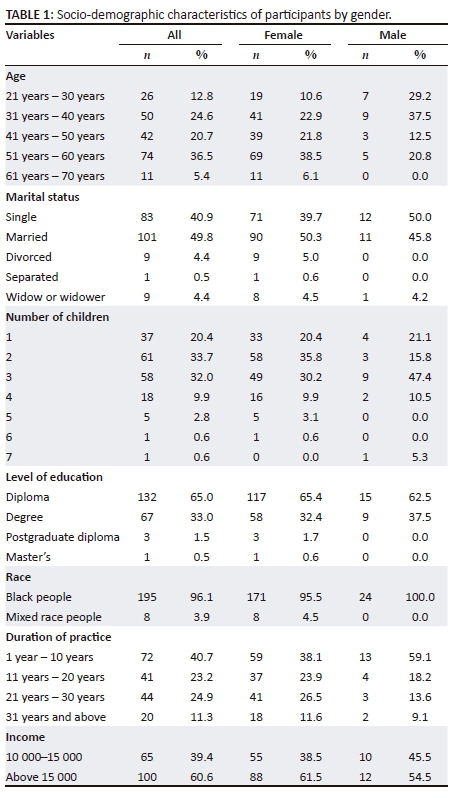
Botswana is a landlocked country in sub-Saharan Africa (SSA) with an estimated population of 2.4 million people.121Table 1 summarises key demographic and socio-economic indicators according to the country's 2022 population and housing census.1 Figure 1 shows the map of Botswana highlighting the distribution of public hospitals.3

Health service and disease profile
The national roadmap 'Vision 2036' aims towards 'Achieving prosperity for all' and aspires to a world-class healthcare service where Botswana will live long and healthy lives.445
Health system inputs and structure
Notable achievements in health service delivery and outcomes for the country include better access to healthcare, the national HIV programme and a strong commitment to primary health care (PHC). The establishment of the country's first medical school in 2009 aimed to strengthen human resources for health by augmenting the number of local doctors. However, the Ministry of Health (MoH) database recorded the density of doctors to be 4.3 per 10 000 population in 2012.67
Healthcare expenditure and access
Botswana's health expenditure is primarily government-based. The government of Botswana spent approximately 14.6% of its general government expenditure on healthcare in 2022, while out-of-pocket spending was less than 6% of total health expenditure.22
The government of Botswana, through the MoH and the Ministry of Local Government and Traditional Affairs (LGTA), is the main provider of healthcare services in the country. This is done through a four-tiered health system: a network of nearly 1000 mobile health stops and 350 health posts linked to 311 clinics, 18 primary hospitals, two general referral hospitals, one quaternary hospital and one psychiatry referral hospital.66
Family medicine in Botswana
Family medicine (FM), a relatively new speciality in Botswana, is slowly gaining momentum as the clinical leaders of primary care. Currently, approximately 40 family physicians are practising in the public health system, covering over half of the districts. Since 2009, when the University of Botswana medical school was established, FM has been part of the medical school's undergraduate curriculum with rotations in the 3rd and 5th years. Postgraduate FM training started in 2011 with 8 trainees,88
Service delivery
Primary care is mostly provided by nurses. The health workforce density in Botswana has declined, with 1003 doctors and 7641 nurses.9
Through this model, primary care facilities provide a wide range of health services, including preventive, promotive, curative and rehabilitative care across all ages. This is facilitated by staffing that includes the full range of primary care providers, including public health specialists and primary care providers.
The multisectoral approach of PHC is implemented through the representation of health in local government committees, as illustrated in Table 2. The table illustrates how the PHC team serves as a technical advisor by participating in various district committees. At the community level, there is the Village Development Committee (VDC), which oversees social development, including those related to health. Resolutions or recommendations from their forum are then channelled through to the community development and social services and/or health and education committees. Issues are then refined and escalated to the relevant offices within the district council or government.
As previously highlighted, our healthcare system operates under two parallel healthcare delivery models, that is, government and privately funded institutions. As noted in Table 2, there is a forum called 'District Health Planning', which serves as the convening point where both government-funded facilities and non-government/privately funded organisations meet to present individualised progress reports on their activities. This ensures alignment of various stakeholders with the national health priorities as directed by the District Economic Planning Team. Another forum where such interaction is illustrated is through the Disaster Management Forum, chaired by the District Commissioner, the most senior government representative in the district. This forum facilitates pulling of resources especially during natural hazards and major disease outbreaks.
Primary health care in Botswana has always emphasised community engagement through these district platforms. Different community-based services, that is, the home-based care programme, which is for patients on palliative care treatment, exist within our healthcare ecosystem. A clear pathway for interaction with local clinics has been established through a layered approach, starting with healthcare volunteers who visit individual patients and community healthcare educators who establish and participate in local health committees, that is, village health committee (VHC). These are committees that ensure a direct link between the community and the local clinic.
Conclusion
Botswana is currently undergoing a health transition characterised by both epidemiologic changes and a shift in health service delivery models. While great strides have previously been made in health outcomes, the transition presents a challenge to the country's vision of a long and healthy life for all. The strong PHC foundation is an opportunity for FM to contribute to high-quality health systems in Botswana.
Competing interests
The authors declare that they have no financial or personal relationships that may have inappropriately influenced them in writing this article. The author, Billy Tsima, is an assistant editor of this journal. Billy Tsima has no other competing interests to declare.
CRediT authorship contribution
Yaone Bogatsu: Conceptualisation, Project administration, Writing - original draft, Writing - review & editing. Ludo S. Monene: Writing - review & editing. Mothusi Mogatle: Writing - original draft, Writing - review & editing. Stephane Tshitenge: Writing - review & editing. Billy Tsima: Writing - review & editing. Kesegofetse Chabaesele: Conceptualisation. Keneilwe Motlhatlhedi: Conceptualisation, Writing - original draft, Writing - review & editing. All authors reviewed the article, contributed to the discussion of results, approved the final version for submission and publication, and take responsibility for the integrity of its findings.
Funding information
This research received no specific grant from any funding agency in the public, commercial or not-for-profit sectors.
Data availability
Data sharing is not applicable to this article as no new data were created or analysed in this study.
Disclaimer
The views and opinions expressed in this article are those of the authors and are the product of professional research. They do not necessarily reflect the official policy or position of any affiliated institution, funder, agency or that of the publisher. The authors are responsible for this article's results, findings and content.
Acknowledgements
References
-
1. Statistics Botswana. Population and housing census 2022 population of cities, towns and villages [homepage on the Internet]. 2022 [cited 2025 Oct 25]. Available from: https://www.statsbots.org.bw/sites/default/files/publications/Population%20%20Housing%20Census%202022-%20Key%20Demographic%20and%20Socio-Economic%20Indicators.pdf
» https://www.statsbots.org.bw/sites/default/files/publications/Population%20%20Housing%20Census%202022-%20Key%20Demographic%20and%20Socio-Economic%20Indicators.pdf -
2. The World Bank Group. Data for Botswana, Upper middle income [homepage on the Internet]. 2025 [cited 2026 Feb 12]. Available from: https://data.worldbank.org/?locations=BW-XT
» https://data.worldbank.org/?locations=BW-XT -
3. Seitio-Kgokgwe O, Gauld RDC, Hill PC, Barnett P. Assessing performance of Botswana's public hospital system: The use of the world health organization health system performance assessment framework. Int J Health Policy Manag. 2014;3(4):179-189. https://doi.org/10.15171/ijhpm.2014.85
» https://doi.org/10.15171/ijhpm.2014.85 - 4. Republic of Botswana. Botswana Vision 2036 overview: Achieving prosperity for all. Gaborone: National Planning Commission; 2022.
-
5. United Nations. Transforming our world: The 2030 agenda for sustainable development [homepage on the Internet]. United Nations; 2015 [cited 2025 Oct 19]. Available from: http://sdgs.un.org/publications/transforming-our-world-2030-agenda-sustainable-development-17981
» http://sdgs.un.org/publications/transforming-our-world-2030-agenda-sustainable-development-17981 -
6. Nkomazana O, Peersman W, Willcox M, Mash R, Phaladze N. Human resources for health in Botswana: The results of in-country database and reports analysis. Afr J Prim Health Care Fam Med. 2014;6(1):8. https://doi.org/10.4102/phcfm.v6i1.716
» https://doi.org/10.4102/phcfm.v6i1.716 -
7. Statistics Botswana. Public health personnel statistical brief 2020 [homepage on the Internet]. 2020 [cited 2025 Oct 19]. Available from: https://www.statsbots.org.bw/sites/default/files/Health%20Personnel%20Statistical%20Brief%202020.pdf
» https://www.statsbots.org.bw/sites/default/files/Health%20Personnel%20Statistical%20Brief%202020.pdf -
8. Tsima BM, Bogatsu Y, Motlhatlhedi K, Brockbank C, Ray SC, Tsima B. Family physicians as advocates for primary health care in Botswana. Afr J Prim Health Care Fam Med. 2025;17(1):a4908. https://doi.org/10.4102/phcfm.v17i1.4908
» https://doi.org/10.4102/phcfm.v17i1.4908 -
9. Statistics Botswana. Public health personnel 2023 [homepage on the Internet]. Gaborone: Statistics Botswana; 2025 [cited 2025 Oct 19]. Available from: https://www.statsbots.org.bw/sites/default/files/publications/PUBLIC%20HEALTH%20PERSONNEL%202025.pdf
» https://www.statsbots.org.bw/sites/default/files/publications/PUBLIC%20HEALTH%20PERSONNEL%202025.pdf

Accepted: 16 July 2026
Published: 12 Sept. 2026