Assessing home-based rehabilitation within the development of an integrated model of care for people living with HIV in a resource-poor community
Abstract
BACKGROUND: People living with HIV (PLHIV) are living longer lives but are at a greater risk of developing disability. South Africa has the largest antiretroviral therapy (ART) programme in the world, shifting HIV from a deadly to a chronic disease. The integration of rehabilitation into chronic care is therefore now crucial to ensure the highest quality of life of PLHIV AIM: To describe how a home-based rehabilitation (HBR) programme adhered to the fundamental principles of a theoretical model of integrated care developed for the study setting in KwaZulu-Natal, South Africa METHOD: The process and results from the HBR programme were assessed in relation to the model of care to ascertain which principles of the model were addressed with the HBR programme and which elements require further investigation RESULTS: The HBR programme was able to apply a number of principles such as evidence-based practice, task shifting to lay personnel, enabling patient-centred care and maximising function and independence of PLHIV. Other elements such as the adoption of a multidisciplinary approach, training on the use of disability screening tools and the use of evidence to influence policy development were more difficult to implement CONCLUSION: It is possible to implement elements of the integrated model of care. Further research is needed to understand how principles that require further training and collaboration with other stakeholders can be implemented. The results of this study provide additional evidence towards understanding the feasibility of the theoretical model and what is required to adjust and test the full model
Background
Following more than a decade of activism by human rights' and civil society organisations,12345678
Enhancing the quality of life of PLHIV requires, among other interventions, the integration of rehabilitation in the continuum of care, an aspect of care that has often been neglected in the emergency-type of response to HIV. Improved access to ART has resulted in PLHIV living longer lives, but this comes with new health challenges related to chronicity9,1011512131415
In response to this challenge, a team of South African-based researchers at the University of KwaZulu-Natal and the University of the Witwatersrand developed a larger research project that attempted to describe the needs of rehabilitation for PLHIV and understand which model of care would best integrate chronic HIV and rehabilitation services. The project (with all its sub-studies) was located in a semi-rural, resource-poor area of KwaZulu-Natal province, South Africa. The larger project included an exploratory study,1611,1718,1920181116
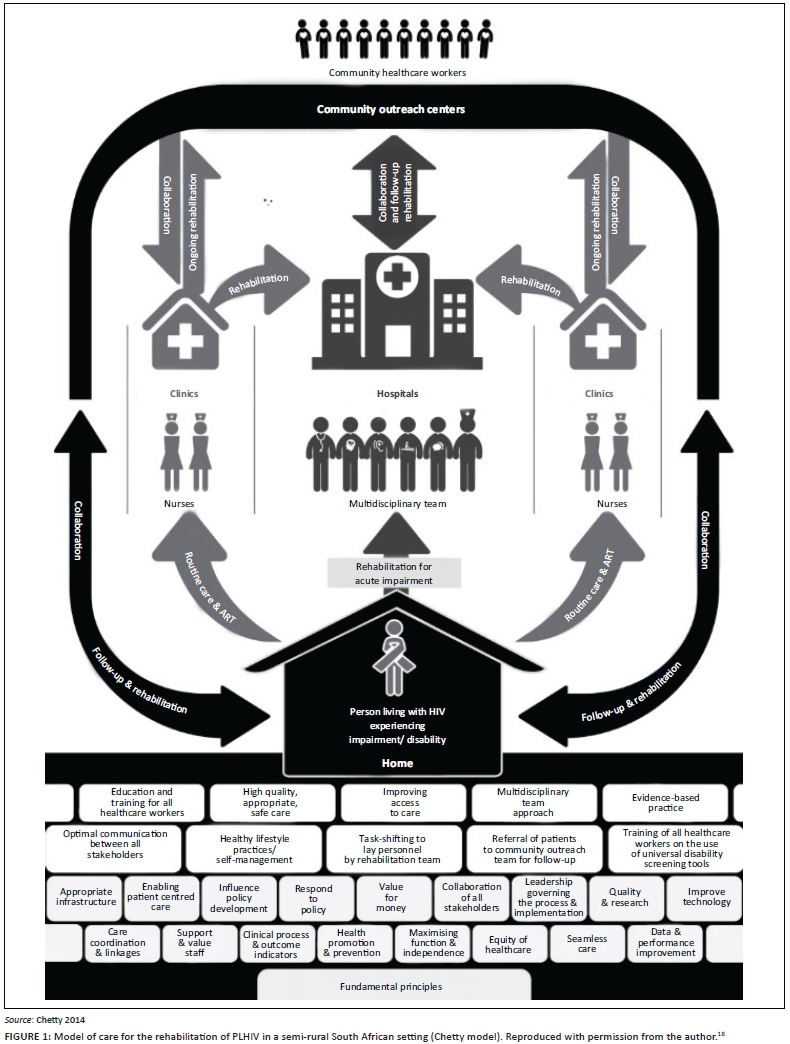
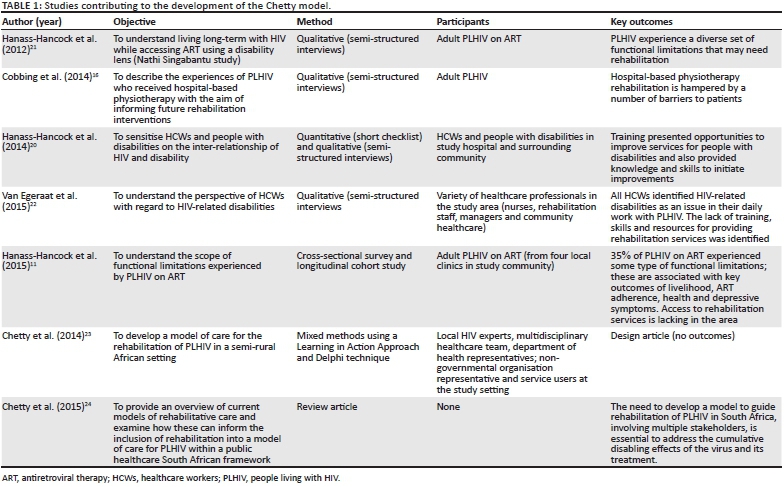
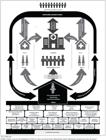
The Chetty model promotes greater integration and collaboration between hospitals and communities. It also supports alternative approaches such as task shifting, a strategy that aims to train community care workers (CCWs) to deliver varied health services to PLHIV experiencing disability in resource-poor settings. The Chetty model was a result of a series of consultative and interlinked research projects that aimed to understand living long-term with HIV in a semi-rural setting in KwaZulu-Natal, South Africa. The studies that were located at the project setting and contributed to the development of the Chetty model are summarised in Table 1. Figure 1 depicts the Chetty model. A number of studies11,16,20,21,222324
Sources of evidence informing the scope of this article
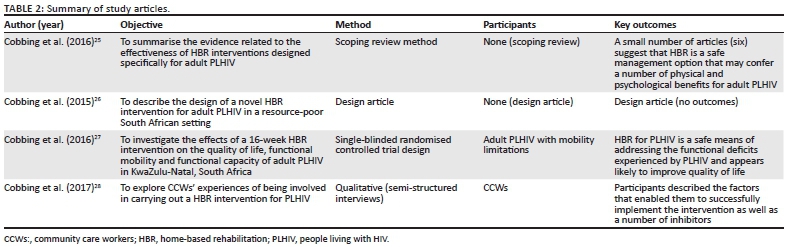
This theoretical article is the fifth and concluding article in a series of articles contributing to a doctoral study focusing on HBR for PLHIV. The study area is situated in the same resource-poor community in which the Chetty model was developed. The study aimed to design an HBR intervention for adult PLHIV as a pathway to comprehensive care and to determine the effect of this intervention on PLHIVs' perceived disability, quality of life, functional mobility and capacity. The study process included four distinct steps: a scoping review of available literature,252627,28 Table 2 summarises the four articles that were undertaken as part of the overarching doctoral study. This final article assesses to what extent the study was able to implement the principles of the Chetty model.18
The systematic scoping of the existing literature revealed a paucity of evidence related to HBR interventions for PLHIV25262729
A task shifting approach was employed, in which four CCWs who lived in the study community received training from a qualified physiotherapist to enable them to implement this HBR programme (training is also a requirement of the Chetty model). This training, conducted over a four-week period, included theoretical instruction on research ethics, basic anatomy and HIV-related pathology, as well as practical skills including strength and aerobic exercise prescription. The experiences of the CCW involved in this programme are further described in a qualitative article.28
Methods
For the purposes of this article, the authors use the Chetty model to assess if the intervention was able to apply the fundamental principles of the model. A comparison of the overall study in relation to the Chetty model was undertaken using a desk review to assess how the process and results of the study adhere to the fundamental principles of this model as well as to highlight areas that were not adequately addressed. The first author took the lead on this task, after which the two co-authors (who were research supervisors for this study and who have conducted other research in this area) analysed and revised this comparison where necessary.
Findings
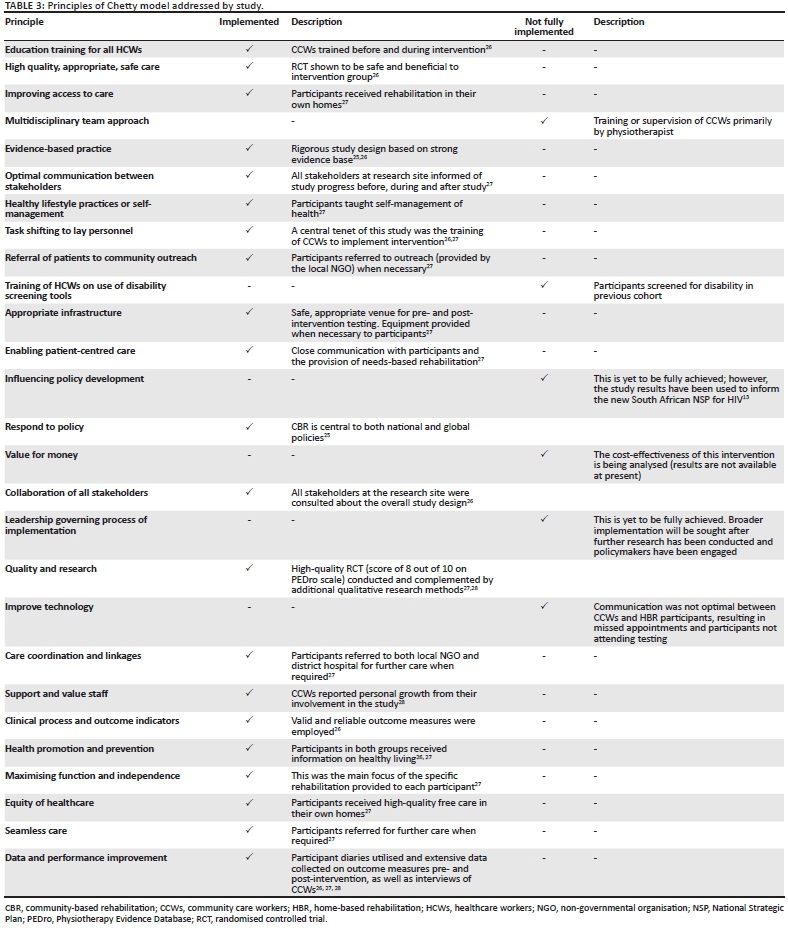
Table 3 indicates which of the principles of the Chetty model this study was able to implement and how each principle was addressed.
The elements of the Chetty model that were implemented in this study included the training of HCWs, task shifting to lay workers, support of staff, improved access to safe patient-centred care, linkages to institutional care and community outreach, as well as a specific focus on maximising the function and independence of study participants. The publications from this study further reveal that the HBR programme was based on a sound evidence-based information253014,31 task shifting325,12 The study process included a high-quality, rigorous RCT research method, with the data obtained from valid and reliable outcome indicators. It is also important to acknowledge that the study benefited from being part of the overall project and was conducted in a setting where the researchers had worked for a number of years, where healthcare staff had been trained on the relationship between HIV and disability and were thus more receptive to alternative rehabilitation solutions. This fact may also have limited the objectivity of the researchers conducting this appraisal.
Discussion
The assessment described above suggests that the development and implementation of the HBR programme were able to adhere to the majority of the fundamental principles of the Chetty model. The fact that trained CCWs were able to safely implement the HBR intervention provides empirical support for a task shifting approach to the rehabilitation management of PLHIV. Task shifting has been defined as the reassignment of specific tasks to different cadres of HCWs333435121120
Another key principle of the Chetty model of care that could not be implemented in this study was the full adoption of a multidisciplinary team approach in the design and implementation of the HBR intervention. While the pre- and post-intervention testing for the RCT assessed a broad range of outcome measures, assessing physical, spiritual and psychological factors, the intervention focused primarily on providing rehabilitation that addressed participants' physical and functional limitations, reflecting the background of the lead author, a qualified physiotherapist. The lead author also functioned as the supervising rehabilitation specialist, who conducted the training of the CCWs and supervised them throughout the 16-week programme. In order to better reflect a holistic and integrated approach of the Chetty model, the research team needs to develop innovations that will involve collaboration with the full cross-section of health professionals. Integration could for instance be facilitated through enhanced training, which allows CCWs to employ simple screening tests that assess an individual's physical function, psychological state and social needs. A trained CCW could also provide counselling and facilitate referral to an appropriate professional. This screening could take place during routine clinic visits, at patients' homes or even in patient adherence clubs, where both screening and rehabilitation services could be provided.
The Chetty model of care also recommends that alternative rehabilitation interventions for PLHIV should represent good value for money for state and external funders. With a specific focus on HIV care in Africa, two separate reviews33,36 concluded that task shifting will ensure cost-effectiveness and sustainability of interventions, without compromising patient care. Indeed, studies of HBR interventions for other chronic disease populations37,38,39 have shown that these interventions are cost-effective, if not more so, than traditional institution-based interventions. It is important, therefore, that research funds are allocated to measure the cost of novel rehabilitation interventions for PLHIV in comparison to current practice, in addition to assessing outcome measures of health, quality of life and function. A cost-benefit analysis of the HBR intervention implemented in this study is currently being conducted, but no results were available at the time of writing. Where possible, all rehabilitation interventions that provide an alternative to the standard of care should be assessed for cost-effectiveness, in order to enable policymakers and stakeholders to assess the feasibility of taking up these approaches in the public sector. The Chetty model needs to be supported by more practical approaches on how to collect this kind of data efficiently.
Implementing the Chetty model should take advantage of existing initiatives for integrated community care, and this is indeed a potential addition that could be made to the Chetty principles. For instance the South African Department of Health has recently trialled ward-based outreach teams, comprising six CCWs supervised by one nurse, to improve health promotion and disease prevention in resource-poor communities.4041
Those principles that involved a larger component of stakeholders, access to technology or collaboration with policymakers were more difficult to implement within the doctoral study context. Some of those will be implemented, however, within the larger project, and therefore further follow-up and assessment of the implementation of the Chetty model over time in this context will be very beneficial to understand if and how this theoretical model can be implemented.
Conclusion
This article has shown how the HBR intervention, designed and assessed in this study, complements a wider model of chronic care for PLHIV that has been developed in the same resource-poor location. Study participants were provided with safe, evidence-based and accessible patient-centred rehabilitation using a task shifting paradigm that empowered and trained lay care workers from the study community. The assessment of this study within the wider Chetty model has the potential to further inform pragmatic implementation strategies that may enhance the health-related quality of life of PLHIV and provide alternative rehabilitation options, particularly for people experiencing disability in resource-poor communities. Such a trial needs to integrate the approach from this study and other fundamental principles of the model of care that this HBR intervention did not seek to address. These elements include the adoption of a multidisciplinary approach throughout the research process, the investigation of programme cost-effectiveness and potential training approaches for disability screening. Evidence of this nature could then be used to inform policy development and ultimately the translation of theory into practice. As more and more PLHIV gain access to effective treatment and live longer lives, it is imperative that HCWs, advocates, researchers, communities and wider stakeholders form collaborations that focus on providing the appropriate policy and operational structures to ensure that rehabilitation is widely included in the management and care of this population. This will give PLHIV the best possible chance of achieving a better health-related quality of life and the opportunity to participate more fully in all of their life pursuits.
Competing interests
The authors declare that they have no financial or personal relationships that may have inappropriately influenced them in writing this article.
Authors' contributions
All authors conceptualised the article. S.C. developed and wrote the article. H.M. and J.H.-H. provided input on the outline and central question of this article and considerable assistance with the editing of the draft manuscript.
Acknowledgements
This work was supported by the South African Medical Research Council's National Health Scholars Programme (NHSP) and the National Research Foundation's Thuthuka Programme.
References
- 1. Moyle D. Speaking truth to power: The story of the AIDS law project. Auckland Park: Jacana; 2015.
-
2. UNAIDS. Global AIDS update [homepage on the Internet]. 2016 [cited 2017 Mar 23]. Available from: http://www.unaids.org/en/resources/documents/2016/Global-AIDS-update-2016
» http://www.unaids.org/en/resources/documents/2016/Global-AIDS-update-2016 -
3. South African Parliament. Minister Aaron Motsoaledi: Health Department Budget Vote 2016/17 [homepage on the Internet]. 2016 [cited 2017 March 10]. Available from: http://www.gov.za/speeches/debate-health-budget-vote-national-assembly-10-may-2016-dr-aaron-motsoaledi-minister-health
» http://www.gov.za/speeches/debate-health-budget-vote-national-assembly-10-may-2016-dr-aaron-motsoaledi-minister-health -
4. UNAIDS. 90-90-90: An ambitious treatment target to help end the AIDS epidemic [homepage on the Internet]. Geneva, Switzerland: UNAIDS; 2014 [cited 2017 Mar 10]. Available from: http://www.unaids.org/en/resources/documents/2014/90-90-90
» http://www.unaids.org/en/resources/documents/2014/90-90-90 -
5. World Health Organization. Consolidated guidelines on the use of antiretroviral drugs for treating and preventing HIV infection: Recommendations for a public health approach: Second edition [homepage on the Internet]. 2016 [cited 2017 March 17]. Available from: http://www.who.int/hiv/pub/arv/arv-2016/en/
» http://www.who.int/hiv/pub/arv/arv-2016/en/ - 6. Heywood M. The treatment action campaign's quest for equality in HIV and health: Learning from and lessons for the trade union movement. Glob Labour J. 2015;6(3):314-335.
- 7. Lazarus JV, Safreed-Harmon K, Barton SE, et al. Beyond viral suppression of HIV - The new quality of life frontier. BMC Med. 2016;14(1):94.
- 8. Hanass-Hancock J, Chappell P, Myezwa H, et al. Committing to inclusion to end AIDS by 2030. Lancet HIV. 2016;3(12):e556-e557.
-
9. Deeks SG, Lewin SR, Havlir DV. The end of AIDS: HIV infection as a chronic disease. Lancet. 2013;382(9903):1525-1533. https://doi.org/10.1016/S0140-6736(13)61809-7
» https://doi.org/10.1016/S0140-6736(13)61809-7 - 10. Nixon S, Forman L, Hanass-Hancock J, et al. Rehabilitation: A crucial component in the future of HIV care and support. South Afr J HIV Med. 2011;12(2):12-14.
-
11. Hanass-Hancock J, Myezwa H, Carpenter B. Disability and living with HIV: Baseline from a cohort of people on long term ART in South Africa. PLoS One. 2015;10(12):e0143936. https://doi.org/10.1371/journal.pone.0143936
» https://doi.org/10.1371/journal.pone.0143936 -
12. Department of Health. Framework and strategy for disability and rehabilitation services in South Africa (2015-2020) [homepage on the Internet]. 2015 [cited 2017 Apr 3]. Available from: http://ilifalabantwana.co.za/wp-content/uploads/2016/07/Framework-25-may_1_3.docx
» http://ilifalabantwana.co.za/wp-content/uploads/2016/07/Framework-25-may_1_3.docx -
13. Health Sytems Trust. National strategic plan on HIV, STIs and TB, 2017-2022 [homepage on the Internet]. 2017 [cited 2017 Mar 23]. Available from: http://www.hst.org.za/publications/national-strategic-plan-hiv-tb-and-stis-2017-2022
» http://www.hst.org.za/publications/national-strategic-plan-hiv-tb-and-stis-2017-2022 -
14. Department of Health. National health insurance for South Africa: Towards Universal health coverage [homepage on the Internet]. 2015 [cited 2017 Mar 23]. Available from: https://www.health-e.org.za/wp-content/uploads/2015/12/National-Health-Insurance-for-South-Africa-White-Paper.pdf
» https://www.health-e.org.za/wp-content/uploads/2015/12/National-Health-Insurance-for-South-Africa-White-Paper.pdf -
15. Department of Health. White paper on the rights of persons with disabilities [homepage on the Internet]. 2016 [cited 2017 Mar 10]. Available from: http://www.gov.za/sites/www.gov.za/files/39792_gon230.pdf
» http://www.gov.za/sites/www.gov.za/files/39792_gon230.pdf -
16. Cobbing S, Hanass-Hancock J, Deane M. Physiotherapy rehabilitation in the context of HIV and disability in KwaZulu-Natal, South Africa. Disabil Rehabil. 2014;36(20):1687-1694. https://doi.org/10.3109/09638288.2013.872199
» https://doi.org/10.3109/09638288.2013.872199 - 17. Myezwa H, Hanass-Hancock J, Pautz N, Smith R, Carpenter B. Investigating the interaction between disability and depressive symptoms in the era of widespread access to ART. J AIDS Clin Res. 2016;7(77).
- 18. Chetty V. A model of care for the rehabilitation of people living with HIV in a semi-rural South African setting. South African Heal Rev. 2014;4(14):183.
-
19. Chetty V, Hanass-Hancock J, Myezwa H. Expert consensus on the rehabilitation framework guiding a model of care for people living with HIV in a South African setting. J Assoc Nurses AIDS Care. 2016;27(1):77-88. https://doi.org/10.1016/j.jana.2015.10.003
» https://doi.org/10.1016/j.jana.2015.10.003 -
20. Hanass-Hancock J, Alli F. Closing the gap: Training for healthcare workers and people with disabilities on the interrelationship of HIV and disability. Disabil Rehabil. 2015;37(21):2012-2021. https://doi.org/10.3109/09638288.2014.991455
» https://doi.org/10.3109/09638288.2014.991455 - 21. Hanass-Hancock J, Nixon S, Myezwa H, Van Eggerat L, Gibbs A. 'Nathi Singabantu' an exploratory study of HIV related Disability in KwaZulu-Natal. Durban: HEARD; 2012.
-
22. Van Egeraat L, Hanass-Hancock J, Myezwa H. HIV-related disabilities: An extra burden to HIV and AIDS healthcare workers? Afr J AIDS Res. 2015;14(3):285-294. https://doi.org/10.2989/16085906.2015.1084938
» https://doi.org/10.2989/16085906.2015.1084938 -
23. Chetty V, Hanass-Hancock J. Development of a model of care for rehabilitation of people living with HIV in a semirural setting in South Africa. JMIR Res Protoc. 2014;3(4):e68. https://doi.org/10.2196/resprot.3580
» https://doi.org/10.2196/resprot.3580 -
24. Chetty V, Hanass-Hancock J. The need for a rehabilitation model to address the disparities of public healthcare for people living with HIV in South Africa. African J Disabil [serial online]. 2015;4(1):1-6. Available from: http://ajod.org/index.php/ajod/article/view/137
» http://ajod.org/index.php/ajod/article/view/137 -
25. Cobbing S, Hanass-Hancock J, Myezwa H. Home-based rehabilitation interventions for adults living with HIV: A scoping review. African J AIDS Res. 2016;15(1):77-88. https://doi.org/10.2989/16085906.2016.1159968
» https://doi.org/10.2989/16085906.2016.1159968 -
26. Cobbing S, Hanass-Hancock J, Myezwa H. A home-based rehabilitation intervention for people living with HIV and disability in a resource-poor community, KwaZulu-Natal: Study protocol for a randomised controlled trial. Trials. 2015;16:491. https://doi.org/10.1186/s13063-015-1025-2
» https://doi.org/10.1186/s13063-015-1025-2 - 27. Cobbing S, Hanass-Hancock J, Myezwa H. A home-based rehabilitation intervention for adults living with HIV: A randomized controlled trial. J Assoc Nurses AIDS Care. 2017;28(1):105-117.
-
28. Cobbing S, Chetty V, Hanass-Hancock J, Myezwa H. 'Knowing I can be helpful makes me feel good inside, it makes me feel essential': Community health care workers' experiences of conducting a home-based rehabilitation intervention for people living with HIV in KwaZulu-Natal, South Africa. AIDS Care. 2017:1-5. https://doi.org/10.1080/09540121.2017.1290208
» https://doi.org/10.1080/09540121.2017.1290208 -
29. Jacobson NS, Truax P. Clinical significance: A statistical approach to defining meaningful change in psychotherapy research. J Consult Clin Psychol. 1991;59(1):12. https://doi.org/10.1037/0022-006X.59.1.12
» https://doi.org/10.1037/0022-006X.59.1.12 -
30. World Health Organization. Community-based rehabilitation: CBR Guidelines [homepage on the Internet]. Geneva: WHO. 2010 [cited 2017 Feb 27]. Available from: http://www.who.int/disabilities/cbr/guidelines/en/
» http://www.who.int/disabilities/cbr/guidelines/en/ -
31. Department of Health. The primary health care package for South Africa: A set of norms and standards [Internet]. Pretoria: Government Printer; 2001 [cited 2017 Mar 10]. Available from: https://www.westerncape.gov.za/general-publication/primary-health-care-package-sa-set-norms-and-standards
» https://www.westerncape.gov.za/general-publication/primary-health-care-package-sa-set-norms-and-standards - 32. World Health Organization. Task shifting: Rational redistribution of tasks among health workforce teams: Global recommendations and guidelines. Geneva: World Health Organization; 2007.
-
33. Callaghan M, Ford N, Schneider H. A systematic review of task-shifting for HIV treatment and care in Africa. Hum Resour Health. 2010;8:8. https://doi.org/10.1186/1478-4491-8-8
» https://doi.org/10.1186/1478-4491-8-8 -
34. Schneider H, Hlophe H, Van Rensburg D. Community health workers and the response to HIV/AIDS in South Africa: Tensions and prospects. Health Policy Plan. 2008;23(3):179-187. https://doi.org/10.1093/heapol/czn006
» https://doi.org/10.1093/heapol/czn006 -
35. Petersen I, Hanass Hancock J, Bhana A, Govender K. A group-based counselling intervention for depression comorbid with HIV/AIDS using a task shifting approach in South Africa: A randomized controlled pilot study. J Affect Disord. 2014;158:78-84. https://doi.org/10.1016/j.jad.2014.02.013
» https://doi.org/10.1016/j.jad.2014.02.013 -
36. Crowley T, Mayers P. Trends in task shifting in HIV treatment in Africa: Effectiveness, challenges and acceptability to the health professions. Afr J Prim Heal Care Fam Med. 2015;7(1):1-9. https://doi.org/10.4102/phcfm.v7i1.807
» https://doi.org/10.4102/phcfm.v7i1.807 -
37. Collins L, Scuffham P, Gargett S. Cost-analysis of gym-based versus home-based cardiac rehabilitation programs. Aust Heal Rev. 2001;24(1):51-61. https://doi.org/10.1071/AH010051
» https://doi.org/10.1071/AH010051 -
38. Salvetti XM, Oliveira JA, Servantes DM, De Paola AAV. How much do the benefits cost? Effects of a home-based training programme on cardiovascular fitness, quality of life, programme cost and adherence for patients with coronary disease. Clin Rehabil. 2008;22(10-11):987-996. https://doi.org/10.1177/0269215508093331
» https://doi.org/10.1177/0269215508093331 - 39. Munro J, Corrigall H, Angus NJ, Thompson D, Leslie S. Home versus hospital-based cardiac rehabilitation: A systematic review. Rural Remote Health. 2011;11(2):1532.
- 40. Padayachee T, Chetty N, Matse M, Mampe T, Schneider H. Progress in the establishment of ward based outreach teams: Experiences in the North West Province. S Afr Health Rev. 2013;73-79.
-
41. Doherty T, Kroon M, Rhoda N, Sanders D. Ending preventable child deaths in South Africa: What role can ward-based outreach teams play? SAMJ South African Med J. 2016;106(7):672-674. https://doi.org/10.7196/SAMJ.2016.v106i7.10790
» https://doi.org/10.7196/SAMJ.2016.v106i7.10790

Accepted: 24 Apr. 2017
Published: 31 Aug. 2017