Traditional health practitioners' training needs on biomedical knowledge and skills in a South African township
Abstract
BACKGROUND: Traditional health practitioners (THPs) play an important role in communities by providing necessary health services for a variety of health problems. Possessing complementary biomedical knowledge and skills is vital in saving lives of patients. However, less is known about biomedical knowledge and skills among THPs. AIM: This study aimed to explore and describe the training needs of THPs on biomedical knowledge and skills in urban townships in South Africa. SETTING: The study was conducted in a township in the City of Tshwane Metropolitan Municipality of Gauteng province, South Africa. METHODS: A qualitative, explorative, descriptive design with 18 THPs was employed through snowballing sampling. Data were collected through a lekgotla group discussion and thematic content analysis undertaken. RESULTS: Themes that emanated include knowledge of the basic physiological functioning of the human body; biomedical knowledge and skills required for the assessment of patients; managing emergency health conditions and understanding diagnostic concepts used in traditional health practice versus biomedical systems. CONCLUSION: Traditional health practitioners have demonstrated interest in being trained on certain skills used within the biomedical system to care for patients. Performing the necessary first-aid skills by THPs will assist patients in the communities while waiting for emergency services or referrals. Provision of training programmes for THPs on first aid interventions during emergencies is therefore recommended. CONTRIBUTION: The study revealed that capacitating THPs with biomedical knowledge and skills can improve their ability to promote healthy living and prevent health problems in communities where access to resources is limited.
traditional health practitioner; biomedical health practitioners; training needs; biomedical system; knowledge and skills
Introduction
Traditional medicine offers solutions to people's health needs and complements the primary level of care in most African communities.1,234,5,678
Having knowledge and skills in biomedical procedures would mean that THPs can obtain information on vital signs or parameters of the patient's health condition, such as temperature, pulse, respiration and hydration status and detect any signs of a patient in shock.9101112131,5,14
The role and importance of THPs in providing primary health care services to poor communities, where there is a shortage of resources and access to facilities is costly, have been reported.3,15
The contribution of THPs in managing several conditions, such as malaria, anaemia, cholera, dehydration and fever, by using local herbs and referring patients they could not manage in time to the hospital has been reported.16171817
Contrary to biomedicine, in traditional medicine, the training of THPs focuses on diagnosing the causes of illness from a variety of sources such as evil spirits or curses and the displeasing of ancestors.19202122
Aim
This study aimed to explore and describe the training needs of THPs on biomedical knowledge and skills in urban townships in South Africa.
Research design and methods
Research design
The study adopted a qualitative, exploratory and descriptive research design using a lekgotla discussion to engage the participants. A qualitative research design was used because little is known about the training needs of THPs and to allow the participants and researchers to engage so that their authentic views can be heard and shared.23Lekgotla, as a qualitative method of collecting data, involves indigenous leaders facilitating consensus by collectively engaging in robust discussions with the participants thereby improving the rigour of the data collection method.24lekgotla was seen as an appropriate data collection method that the THPs are familiar with because they are also community indigenous knowledge and leaders.
Study setting
The study was conducted in the City of Tshwane Metropolitan Municipality of Gauteng Province, South Africa. The province of Gauteng has rural, urban and semi-urban areas, with diverse cultural and traditional beliefs and practices. There are approximately 11 district municipalities in Gauteng Province, including the city of Tshwane. Most of the THPs are in rural areas and urban townships, where the dominant residents are black African people. Residents living in these townships are known to utilise the services of both the traditional health and Western health systems. Gaining access to an indigenous research setting requires that researchers be aware of potential barriers or impediments such as principles for establishing rapport, negotiation and compromise approaches, their perceptions about traditional health as well as expected dress code.2523
Study population and sampling method
The study participants comprised both male and female THPs. It was previously estimated that there were between 150 000 and 200 000 THPs in South Africa.26lekgotla was then decided and eighteen participants consented to be part of the lekgotla discussion.
Data collection
The study adopted a lekgotla discussion as a method of data collection to draw on the debates and dialogue where participants in a collective group engage in an open discussion based on the issues raised.27Lekgotla discussion is a form of participatory approach to discuss pertinent issues, in which the participants are involved in identifying opportunities that are helpful to address a social change.2824lekgotla discussion successfully for health research involving indigenous people as they find it culturally appropriate and in line with the participants' ways of knowing.29lekgotla method is a common method of problem-solving and engagement used among Africans in seeking consensus by adopting participatory processes.30lekgotla discussion allows the participation of the whole cohorts or representative groups of participants without looking at the numbers.23lekgotla may begin once every expected participant has arrived.24lekgotla discussion are effective to generate large numbers of creative new ideas and information that contribute to knowledge. In this study, lekgotla discussion was used as a means of cultural respect and promotion of collaborative partnership with THPs.
The meeting was held in the yard of the leading THP. The engagements were conducted in English as most participants are conversant in the language. All participants, including researchers, were seated in a circle to promote equity.30lekgotla discussion, participants were first asked if ever they experience challenges when assessing health needs of their patients. They were also probed depending on the provided answers. This led to the conclusion that the participating THPs have training needs on biomedical knowledge and skills. Therefore, they were asked about the training needs that this paper is reporting. The central question of this study was: What are your training needs as THPs on biomedical knowledge and skills? The question was asked so that the lekgotla discussion should remain focussed on the THPs' training needs. During data collection, the leading THP, who is also conversant in English and traditional health language, assisted in translating the information that was being shared by participants to provide context and clarity. Traditional Health Practitioners were also encouraged to express themselves in their vernacular so that meaning of their input is not distorted The concept of biomedicine was subsequently explained to guide the responses of THPs and clarify any unclear explanations. Involving the leading THP as a co-facilitator ensured that the discussion shifted towards open dialogue and ownership of the discussion was transferred to participants. Participants took turns by raising their hands and allowing them to be recognised by the facilitator prior to sharing training needs. The lead author also ensured that participants who were not raising their hands were asked to share their ideas as during lekgotla every member is supposed to deliberate issues under discussion to the best of their understanding of the topic.30
In between the discussions, the facilitators (researchers and the leading THP) directed and monitored the discussion process through probing, so that the ideas raised were understood within the context of the discussion. As the participants were sharing their training needs, all the researchers (individually) collected field notes to further understand the training needs identified by the participants. The lead author ensured that all the participants contributed to the discussion and conclude if no more new data were forthcoming out of the engagement. Once all the participants had shared their ideas and there was no repetition of the same information from the probing, the facilitator summarised the inputs from the discussion. The participants were further engaged in debates based on the summary of the ideas shared by the facilitator and each participant was asked to comment by adding new information from the summary. The process was repeated until all the participants agreed that there was no more new information to be discussed. This was to ensure that there was data saturation. The lekgotla discussion was audio recorded as permitted by participants. The debates and dialogues assisted participants to agree on their identified needs without undermining the knowledge and roles they play in their practices.
Data analysis
The data were analysed using thematic content analysis. Thematic analysis approach was used, as it enabled the researcher to explore the meaning that participants attached to their lived experiences and how they constructed their social world through meaning-making.313231
Ethical considerations
Permission to conduct the study was granted by the Faculty of Health Sciences Human Research Ethics Committee at the University of Pretoria (protocol 192/2020). All methods were carried out in accordance with the relevant guidelines and regulations. Written informed consent was obtained from all the participants. Participants were given information on the nature of the study, its intended purpose and data collection methods. In the consent form, participants were advised to indicate if there is any information that they shared, which needs to be kept strictly confidential. Permission was also sought for publishing information in an article format, and there was no objection from all the participants.
Results
Demographic characteristics of the participants
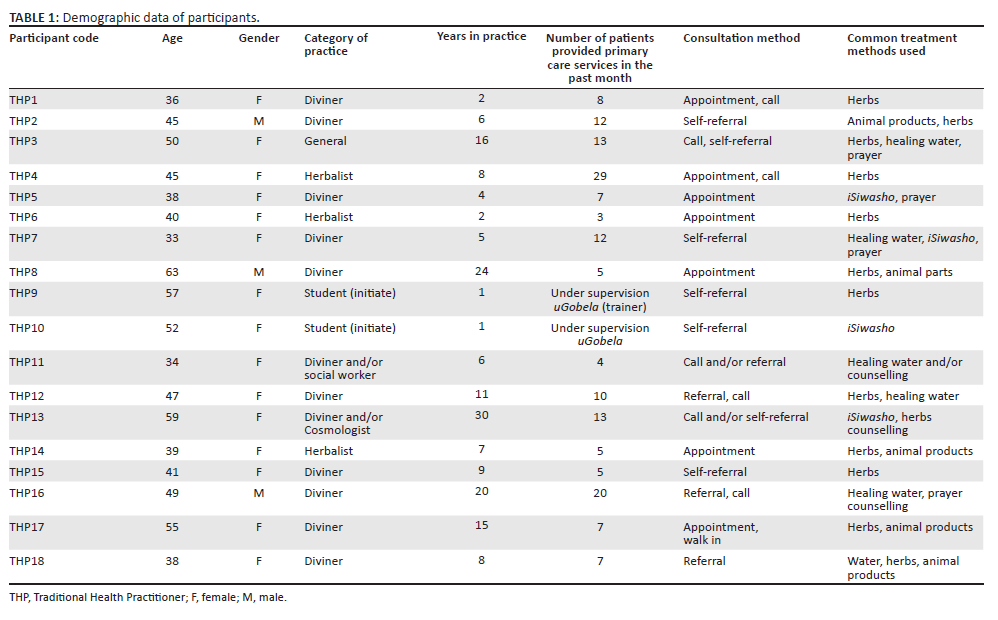
A total of 18 THPs participated in the study. In terms of the age of participants, the oldest THP was 63 years old while the youngest was 34 years old with 40.3 as the average age. Gender-wise, 15 (83%) THPs were females and 3 (17%) were males. Regarding the category of practice, 3 (16.6%) were identified as herbalists, 12 (66.6%) as diviners, 2 (11.1%) were students undergoing initiation and 1 (5.5%) was a general practitioner.
Regarding years in the practice category, the highest number of years was 30, while the least was 1, including student initiations. The average for the years of experience, excluding two students, was 10 years, while cumulatively all THPs provided consultation to 144 different patients monthly. Results also indicated that THPs use consultation methods such as appointments made by patients, phone calls, self-referrals, referrals by other THPs, appointments and walk-ins by patients. Regarding the commonly used methods of treatment, THPs reported that they use herbs, animal products, prayer and iSiwasho (healing water). Counseling of patients by THPs was also added as a complementary service. Table 1 shows the demographic profile of the participants.
Presentation of themes and sub-themes
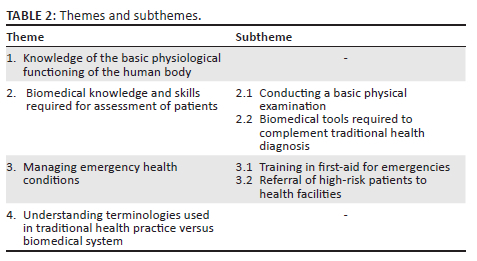
Four themes that emanated from the lekgotla discussion are knowledge of the basic physiological functioning of the human body; biomedical knowledge and skills required for biomedical assessment; managing emergency health conditions and understanding terminology used in traditional health practice versus biomedical systems. The themes and subthemes discussed in this article are listed in Table 2.
Theme 1: Knowledge of basic physiological functioning of the human body
Lekgotla's discussions revealed that THPs are keen on learning biomedical knowledge pertaining to the functioning of the human body and diseases. Traditional Health Practitioners reported that when they are knowledgeable about how the body functions, they can understand and consider how their interventions can influence patient outcomes.
This is what the THPs said:
'When coming to the diseases like hypertension and diabetes mellitus we are not fully knowledgeable about how they affect the body. Most of the time, you find that the Western is saying that the person has high blood pressure and diabetes mellitus, and when we come to mix our herbs, the person ends up being okay. But we cannot explain how this happens.' (THP6, female, 40 years)
'I would like them to know the basics of how the body works because you find that most of them when they come, they hyperventilate, and pass out. I have to know what is wrong with them physically before I can help them spiritually.' (THP10, female, 52 years)
Other participants revealed that in traditional health practice, there are different ways in which body functioning is assessed. Further, the medications are tailored to treat certain body parts. Hence learning about functioning from a biomedical perspective can enhance their knowledge and understanding.
Elaborating on the same, the THPs said the following:
'The way in which we assess our patients and le hore mere ya sebetsa, ho ya ka hore re bona motho a le jwang [the way we assess our patients' condition and if the herbs work, depends on how we see the person to be]. Ba bang ba tla ba le weak and ba hloka mere ya ho nwa ho ba fa maatla [Others come being weak and need herbs to boost their energy levels].' (THP2, male, 42 years)
'Rona re rutilwe hore [we were taught that], if a patient present with a problem ya ho tsholla [a problem of diarrhoea], bothata bo ka teng, so o hloka mere ya ho emisa letsholoho [the problem is in the gut, so the patient needs herbs to stop the diarrhoea]. I am not sure [how diarrhoea is defined] in your medical language.' (THP4, female, 45 years)
Theme 2: Biomedical knowledge and skills required by Traditional Health Practitioners for assessment of patients
The second theme that emerged from this study was the biomedical knowledge and skills required by THPs to assess patients. Participants reported such knowledge and skills as important for conducting physical examinations. Additionally, THPs indicated that they require skills in using biomedical tools that help to complement their diagnosis of patients.
Subtheme 2.1: Conducting a basic physical examination
Traditional health practitioners reported on the biomedical knowledge and skills required to determine the extent of the problem patients present. This includes the ability to perform an assessment and knowing what to look for in the patients:
'Re le dingaka [as THPs], we also want to know certain things from Western medicine. This is because sometimes one patient will come and he or she is weak; if I learned how to check for dangers before I waste time, then I can do something urgently to help.' (THP1, female, 36 years)
'You must be able to check the patient, the whole body if there are other things. When the ambulance comes, they will ask about the basic vital signs like how much is the temperature [of the patient] … So, we also can learn to be able to tell those vital signs.' (THP7, female, 33 years)
Other THPs cautioned against adopting Western medicine and said:
'In traditional medicine we have our way of doing things. We may learn certain things from Western medicine, but we cannot move away ku imfundiso zom'khulu [from the teachings of the elders].' (THP11, female, 34 years)
'As much as we want to learn from our colleagues, I hope we will not lose isintu [our way of life and/or doing things]. Western medicine has their way yoku yenza izinto [of doing their things], nathi we have our way. So kumele ku be ne balance [there must be a balance].' (THP14, female, 49 years)
Subtheme 2.2: Biomedical tools required to complement traditional health diagnosis
Participants indicated that they need knowledge of basic medical tools such as measuring temperature, pulse and respiration rate, as well as those required for performing basic life support. Further, they indicated that having the skills for using biomedical tools increases their confidence in interventions when patients come to their practices:
'By taking the pulse, using the thermometer and all those other things they use, we can have more options. You will first use your indigenous knowledge of taking a pulse, if you are not sure you will use the Western equipment to help you.' (THP17, female, 55 years)
'Yes, I agree it is also difficult for us to tell patients who are HIV [human immunodeficiency virus] positive that they are positive, we don't how to say it or how to tell them. You cannot tell them, and it is not our place because we don't have the necessary skills or machines to diagnose.' (THP8, male, 63 years)
Another participant explained how knowledge from both biomedical and traditional health practice can be useful:
'I need to know the issues of patients with sugar diabetes, in terms of regular blood tests. Sometimes you find that they [patients] need to continue with our traditional medicines. It ends up with a combination of both traditional and medical medicines. Sometimes when you see, they haven't told you but when you use ditaola [bones], they [ancestors] advise you that this one used both medical and traditional.' (THP12, female, 47 years)
Theme 3: Managing emergency health conditions
Traditional health practitioners manage patients with health conditions that sometimes require them to have knowledge and skills to be able to render appropriate care as dictated by the health of the patient. Traditional health practitioners reported that they need training in first aid interventions and the referral of patients who are high risk or are severely ill during consultations.
Subtheme 3.1: Training first-aid for emergencies
Most participants indicated that they require knowledge of first-aid interventions so that they can manage patients who need urgent interventions for a variety of health conditions. The first-aid interventions include monitoring vital signs, performing basic life support and cardiopulmonary resuscitation (CPR).
On this issue, the participants remarked the following:
'Let me just make an example, if any of us can fall now, do you know what is your first aid kit? What do you have in your first-aid kit? Nothing!, this person has fainted, and you are only having snuff.' (THP8, male, 63 years)
'If we can be taught on drip management because sometimes you can check a person and see that he or she lacks fluids in his or her body. You want to know what I can do faster to help, it is first aid, CPR to prolong life until the ambulance arrives.' (THP6, female, 40 years)
One THP said the following regarding their training needs:
'I mean when the patient is having fits [convulsions], I need to know how to calm them down [while waiting for emergency services].' (THP3, female, 50 years)
Subtheme 3.2: Referral of high-risk patients to health facilities
It emerged that, at times, the patient's condition may necessitate immediate referral, and THPs should be able to facilitate this referral. A variety of serious and urgent health conditions such as mental illness and high-risk pregnancy were mentioned.
One of the participants commented:
'I hear them, and I agree that first aid and the issue of pulses are important, but we must be able to assess the patient, notice signs and symptoms, and see that the patient is having a serious illness so that we can call an ambulance or refer to the clinic.' (THP7, female, 33 years)
THP7 and THP17 went further and said:
'Another problem is mental illness; someone comes with this issue, and they are very uncontrollable, so you need to send them to the hospital first.' (THP7, female 33 years)
'A pregnant woman who is at the last stage, I treat them, and you find out that they are in labour, I don't have the skills on checking on how far. I have to send them to the hospital so that there won't be any complications.' (THP17, female, 55 years)
Theme 4: Understanding terminologies used in traditional health practice versus biomedical system
It further emerged under this theme that understanding the concepts and terms used in both biomedical and traditional health practices is important for collective understanding and facilitation of communication. In terms of terminologies and their definitions, some THPs reiterated that they do not understand biomedical terms. The difficulty to understand the terms is associated with a lack of necessary training to acquire such knowledge of complex medical terminologies:
'I want to believe that we use different words with the same meaning. This might be confusing as in Western medicine names are used in English, like a stethoscope, we call it lenaka [horn] in our practices.' (THP9, female, 57 years)
'We miss each other because our language is different from your language. So, if we can be taught about the meaning of names that Western doctors use so that we speak the same language.' (THP16, male, 49 years)
Subsequently, it was mentioned that while biomedical practitioners may translate terminologies used by THPs, they are not used within the same context. Therefore, there is a difference between biomedical definitions and those used by THPs:
'When coming to bolwetsi ba [condition of] Sefola, they call it a sore in Western and you find that they diagnose it as sugar diabetes which ends up in amputations. Therefore, such amputations were unnecessary. Traditionally, Sefola can be treated without cutting the leg.' (THP8, male, 63 years)
The findings under this theme demonstrate that there is immense potential for knowledge exchange and enhancing the understanding of the use of diagnostic concepts between practitioners in both systems of healthcare. Practitioners' and patients' common understanding of diagnostic concepts can improve communication and compliance among patients.
Discussion
This study provides more insights into the training needs of THPs in biomedical knowledge and skills. Traditional health practitioners reported that they render health services under categories of practice such as herbalists, diviners, student initiates and general practitioners. In South Africa, the Traditional Health Practitioners' Act 22 of 2007 makes provision for the registration of THPs under the categories of diviners, herbalists, traditional birth attendants and traditional surgeons.33Inyanga in Isizulu, while diviners are called Isangoma.334iSiwasho, known as healing water used to protect a person against attack by evil spirits.35malopo.36
Knowledge of the functioning of the human body is important for healthcare providers as it ensures the provision of safe and efficient health services.3722
The findings from the current study indicate that THPs are willing to learn more about biomedical skills and acquire knowledge from BHPs. Based on the identified training needs, more baseline information must be collected regarding the possible barriers to capacitating THPs, especially regarding their level of education, knowledge and skills. One of the challenges identified regarding traditional healthcare practice is the lack of 'scientific' evidence to substantiate their knowledge and practices.382239
Within traditional health practices, tools used to diagnose diseases include the use of ditaola (throwing bones), water and prayer.4,401441423942,43, Great potential for contributing to health services exists as proven in countries where THPs provide such crucial diagnostic information.
In the current study, basic medical interventions such as assessing vital signs, emergency childbirth, CPR and measuring patients' blood glucose are some skills that were seen to be helpful for THPs. According to THPs, knowledge of basic medical care or commonly known as first aid may well be beneficial in ensuring and promoting safe patient care and evading unnecessary patient complications. Understanding vital signs may also be of benefit for THPs to develop diagnostic skills, particularly for patients who may be in imminent danger and need urgent medical attention. Previous studies reported that THPs and traditional birth attendants were trained as primary health care workers. This resulted in changes in health behaviours for patients after THPs provided services and further resulted in improvements in health conditions.44,45
The value of having a collective understanding in using concepts and names has been emphasised in this study. Traditional health practitioners stated that there are similarities between concepts used in traditional health practice and Western medicine. This is a significant finding as it breaks some of the barriers and stereotypes that exist regarding the unempirical nature of traditional health practice. The difference may be in the meaning and origin of the concept. However, the symptoms are mostly the same.4,46Sefola, were mentioned by participants, who associated the disease with a sore that does not heal. Steyn and Muller (2000) also reported that THPs in their study referred to Sefola as cancer-type sore.47lefu la hloho [mental illness] were reported.48
Strengths and limitations
The findings of our study have the potential to facilitate collaboration between THPs and BHPs by enhancing the referral system between the two systems. The methodology used in this study offers perspectives on how to conduct a needs assessment and offers reference points for THPs and indigenous knowledge holders, which are different from those of BHPs.
Conclusion
Our study explored the training needs of THPs on biomedical knowledge and skills. Traditional health practitioners who are equipped with complementary knowledge on biomedicine are better positioned to diagnose emergencies, provide first aid interventions and refer patients timely. If THPs are to be capacitated with such knowledge on biomedicine, it would be appropriate to design programmes that are tailor-made to meet the needs of THPs while preserving sacred knowledge systems in traditional health practice. Yet, THPs can apply the knowledge and skills so that their approach to health is holistic while addressing various health challenges brought by patients.
The following recommendations were made based on these findings:
• Designing and provision of courses for THPs geared to assist THPs in recognising emergency situations and to refer timely.
• Evaluate the possibilities of opening medical schools for training of THPs, adopting training models such as those offered by the School of Chinese Medicine in Taiwan49
• For research, a large-scale study could yield a greater understanding on the similarities between methods of diagnosis in traditional health practice and biomedical health system.
Competing interests
The authors declare that they have no financial or personal relationships that may have inappropriately influenced them in writing this article.
Authors' contributions
The authors of this article are M.M., M.R.M., R.J.S., E.M., M.L., M.M.R. and supervisor F.M.M. All the authors contributed equally to the writing of this article and approved the final article for publication.
Funding information
This research received funding from an NRF grant (Ref. No. SARCHI 190531440620).
Data availability
The data supporting the findings of this study are available from the corresponding author, M.E.M., upon reasonable request.
Disclaimer
The views and opinions expressed in this article are those of the authors and do not necessarily reflect the official policy or position of any affiliated agency of the authors and the publisher.
Acknowledgements
The authors would like to acknowledge Prof. F.M.M. who is the SARCHI chair for the Ubuntu community model of nursing. They would also like to acknowledge the THPs in the urban township of Tshwane, in particular Dr E Mabena.
References
-
1.Shewamene Z, Dune T, Smith CA. Use of traditional and complementary medicine for maternal Health and wellbeing by African migrant women in Australia: A mixed method study. BMC Complement Med Ther. 2020;20:60. https://doi.org/10.1186/s12906-020-2852-6
» https://doi.org/10.1186/s12906-020-2852-6 -
2.Mothibe ME, Sibanda M. African traditional medicine: South African perspective. In: Mordeniz C, editor. Traditional and complementary medicine. IntechOpen; 2019 [cited xx]. Available from: https://www.intechopen.com/books/8323
» https://www.intechopen.com/books/8323 -
3.Zuma T, Wight D, Rochat T, Moshabela M. The role of traditional health practitioners in rural KwaZulu-Natal, South Africa: Generic or mode specific? BMC Complement Altern Med. 2016;16(1):304. https://doi.org/10.1186/s12906-016-1293-8
» https://doi.org/10.1186/s12906-016-1293-8 -
4.Musyimi CW, Mutiso VN, Nandoya ES, Ndetei DM. Forming a joint dialogue among faith healers, traditional healers and formal health workers in mental health in a Kenyan setting: Towards common grounds. J Ethnobiol Ethnomed. 2016;12:4. https://doi.org/10.1186/s13002-015-0075-6
» https://doi.org/10.1186/s13002-015-0075-6 -
5.Nemutandani SM, Hendricks SJ, Mulaudzi MF. Perceptions and experiences of allopathic health practitioners on collaboration with traditional health practitioners in post-apartheid South Africa. Afr J Prim Health Care Fam Med. 2016;8:e1-e8. https://doi.org/10.4102/phcfm.v8i2.1007
» https://doi.org/10.4102/phcfm.v8i2.1007 -
6.Boum Y, Haberer S, Leke RS. Traditional healers to improve access to quality health care in Africa. Lancet Glob Health. 2021;9(11):e1487-e1488. https://doi.org/10.1016/S2214-109X(21)00438-1
» https://doi.org/10.1016/S2214-109X(21)00438-1 - 7.Muweh AN. Modernity in traditional medicine: Women's experiences and Perceptions in the Kumba Health District, SW Region Cameroon [Doctoral dissertation]. Umeå International School of Public Health; 2011.
- 8.Kadima MG. Concurrent use of traditional medicine and prescribed antibiotics and/or antiviral medicines and their effects on antimicrobial resistance and treatment failure in Ilembe district, Kwazulu-Natal province, South Africa [Doctoral dissertation]. Durban: University of Kwa-Zulu Natal; 2019.
-
9.Sapra A, Malik A, Bhandari P. Vital sign assessment [homepage on the Internet]. Treasure Island, FL; StatPearls Publishing; 2021 [cited 2022 Nov 13]. Available from: https://www.ncbi.nlm.nih.gov/books/NBK553213/
» https://www.ncbi.nlm.nih.gov/books/NBK553213/ -
10.World Health Organisation. WHO supports scientifically proven traditional medicine [homepage on the Internet]. 2020 [cited 2022 Nov 12]. Available from: https://www.afro.who.int/news/who-supports-scientifically-proven-traditional-medicine
» https://www.afro.who.int/news/who-supports-scientifically-proven-traditional-medicine -
11.Hooft A, Nabukalu D, Mwanga-Amumpaire J, Gardiner MA, Sundararajan R. Factors motivating traditional healer versus biomedical facility use for treatment of pediatric febrile illness: Results from a qualitative study in Southwestern Uganda. Am J Trop Med Hyg. 2020;103(1):501-507. https://doi.org/10.4269/ajtmh.19-0897
» https://doi.org/10.4269/ajtmh.19-0897 -
12.Nann S. How beliefs in traditional healers' impact on the use of allopathic medicine: In the case of indigenous snakebite in Eswatini. PLoS Negl Trop Dis. 2021;9(15):e0009731. https://doi.org/10.1371/journal.pntd.0009731
» https://doi.org/10.1371/journal.pntd.0009731 -
13.Zhang Q, Wang Y, Chen A, et al. Xiaoxuming decoction: A traditional herbal recipe for stroke with emerging therapeutic mechanisms. Front Pharmacol. 2021;14(12):802381. https://doi.org/10.3389/fphar.2021.802381
» https://doi.org/10.3389/fphar.2021.802381 -
14.Atwine F, Hultsjö S, Albin B, Hjelm K. Healthcare seeking behaviour and the use of traditional medicine among persons with type 2 diabetes in south-western Uganda: A study of focus group interviews. Pan Afr Med J. 2015;20:76. https://doi.org/10.11604/pamj.2015.20.76.5497
» https://doi.org/10.11604/pamj.2015.20.76.5497 -
15.Lampiao F, Chisaka J, Clements C. Communication between traditional medical practitioners and western medical professionals. Front Sociol. 2019;4:37. https://doi.org/10.3389/fsoc.2019.00037
» https://doi.org/10.3389/fsoc.2019.00037 -
16.Birhan W, Giday M, Teklehaymanot T. The contribution of traditional healers' clinics to public health care system in Addis Ababa, Ethiopia: A cross-sectional study. J Ethnobiol Ethnomed. 2011;7:39. https://doi.org/10.1186/1746-4269-7-39
» https://doi.org/10.1186/1746-4269-7-39 -
17.Desta KT, Kessely DB, Daboi JG. Evaluation of the performance of the National Tuberculosis Program of Liberia during the 2014-2015 Ebola outbreak. BMC Public Health. 2019;19(4):1221. https://doi.org/10.1186/s12889-019-7574-7
» https://doi.org/10.1186/s12889-019-7574-7 -
18.Das S. Earning their trust: Understanding the role of traditional healers and their role in approaching Africa's Ebola epidemic. Voices Bioethics. 2020;6:1-4. https://doi.org/10.7916/vib.v6i.5907
» https://doi.org/10.7916/vib.v6i.5907 -
19.White P. The concept of diseases and health care in African traditional religion in Ghana. HTS Theolog Stud. 2015;71(3):01-07. https://doi.org/10.4102/HTS.V71I3.2762
» https://doi.org/10.4102/HTS.V71I3.2762 -
20.Mckenzie A, Schneider H, Schaay N, Scott V, Sanders D. Case study from South Africa primary health care systems (PRIMASYS) [homepage on the Internet]. 2018 [cited 2022 Nov 13]. Available from: https://www.researchgate.net/publication/327552599_case_study_from_south_africa_primary _health_care_systems_primasys/citation/download
» https://www.researchgate.net/publication/327552599_case_study_from_south_africa_primary _health_care_systems_primasys/citation/download -
21.Louw G, Duvenhage A. The education and training levels of the South African traditional healer: A present-day perspective. Aust Med J. 2016;9. https://doi.org/10.21767/AMJ.2016.2720
» https://doi.org/10.21767/AMJ.2016.2720 -
22.Mbatha N, Gomo E, Gqaleni N, Ngcobo M. Core competencies acquired in indigenous training of Traditional Health Practitioners in Kwazulu-Natal. Afr Health Sci. 2019;19(4):3100-3106. https://doi.org/10.4314/ahs.v19i4.32
» https://doi.org/10.4314/ahs.v19i4.32 -
23.Hammarberg K, Kirkman M, De Lacey S. Qualitative research methods: When to use them and how to judge them, Hum Reprod. 2016;31(3):498-501. https://doi.org/10.1093/humrep/dev334
» https://doi.org/10.1093/humrep/dev334 - 24.Pienaar AJ. African indigenous methodology in qualitative research: The lekgotla-a holistic approach of data collection and analysis intertwined. In: De Chesnay M, editor. Nursing research using data analysis: Qualitative designs and methods in nursing. New York: Springer Publishing Company, p. 57-67; 2015.
-
25.Peu M, Mulaudzi F, Rikhotso S, Ngunyulu R, Rasweswe M. Reflections on accessing indigenous research settings: Encounters with traditional health practitioners and leaders in Vhembe district, South Africa. Cult Psychol. 2020;27(2):227-242. https://doi.org/10.1177/1354067X20971249
» https://doi.org/10.1177/1354067X20971249 - 26.Pretorius E. Traditional healers. S Afr Health Rev. 1999;18:249-256.
-
27.Rasweswe MM, Peu MD, Mulaudzi FM. The importance of local language in healthcare: Naming and defining dysmenorrhea. J Commun Healthc. 2022;16(2):205-214. https://doi.org/10.1080/17538068.2022.2094690
» https://doi.org/10.1080/17538068.2022.2094690 -
28.Nare NE, Pienaar A, Mphuthi DD. Conceptualisation of African primal health care within mental health care. Curationis. 2018;41(1):a1753. https://doi.org/10.4102/curationis.v41i1.1753
» https://doi.org/10.4102/curationis.v41i1.1753 -
29.Rasweswe MM, Peu MD, Mulaudzi FM. The indigenous meaning of dysmenorrhea: Using modified photovoice to document perspectives of traditional health practitioners (THPs) and indigenous knowledge holders (IKHs). F1000Research. 2021:10:672. https://doi.org/10.12688/f1000research.53908.1
» https://doi.org/10.12688/f1000research.53908.1 -
30.Mzondi A. Lekgotla and Magadi: Ubuntu oriented practical theology research methods. Pharos J Theol. 2022:103:1-17. https://doi.org/10.46222/pharosjot.10328
» https://doi.org/10.46222/pharosjot.10328 - 31.Evans C, Lewis J. Analysing semi-structured interviews using thematic analysis: Exploring voluntary civic participation among adults. London: SAGE Publications Limited; 2018.
-
32.Bradshaw C, Atkinson S, Doody O. Employing a qualitative description approach in health care research. Glob Qual Nurs Res. 2017;4:1-8. https://doi.org/10.1177/2333393617742282
» https://doi.org/10.1177/2333393617742282 - 33.South Africa. The Traditional Health Practitioners Act 22 of 2007. Government Gazette. Pretoria: Government Publishers, 2007; p. 2-48.
-
34.Semenya SS, Potgieter MJ. Bapedi traditional healers in the Limpopo Province, South Africa: Their socio-cultural profile and traditional healing practice. J Ethnobiol Ethnomed. 2014;10:4. https://doi.org/10.1186/1746-4269-10-4
» https://doi.org/10.1186/1746-4269-10-4 - 35.Oosthuizen GC. Traditional African explanation and treatment of diseases. In The healer-prophet in Afro-Christian churches. Leiden: Brill, 1992; p. 73-74.
- 36.Mokgobi MG. Understanding traditional African healing. Afr Journal Phys Health RecreatDance. 2014;20(2):24-34.
-
37.Brazier Y. Anatomy: A brief introduction. Medical News Today [homepage on the Internet]. 2020 [cited 2022 Nov 13]. Available from: https://www.medicalnewstoday.com/articles/248743
» https://www.medicalnewstoday.com/articles/248743 - 38.Moshabela M, Zuma T, Gaede B. Bridging the gap between biomedical and traditional health practitioners in South Africa. S Afr Health Rev. 2016;2016(1):83-92.
-
39.Moeta M, Mooa R, Mgolozeli S, Bhana V, Moagi M. Integrating African traditional health knowledge and practices into health sciences curricula in higher education: An Imbizo Approach. Int J Afr Renaissance Stud Multi- Inter- Transdiscip. 2019;14:67-82. https://doi.org/10.1080/18186874.2019.1635505
» https://doi.org/10.1080/18186874.2019.1635505 - 40.Ondo ZG. How traditional healers diagnose and treat diabetes mellitus in the Pretoria Mamelodi area and how do these purported medications comply with complementary and alternative medicine regulations. Arch Pharmacol Ther. 2019;1(2):33-45.
-
41.Umeh CA, Onyi SC, Ahaneku HP. Mobile "doctors" and their medical diagnosis in rural Southern Nigeria: Truth or deception? - A public health case report. Pan Afr Med J. 2014;17:148. https://doi.org/10.11604/pamj.2014.17.148.3777
» https://doi.org/10.11604/pamj.2014.17.148.3777 -
42.Sundararajan R, Langa PV, Morshed T, Manuel S. Traditional healers as client advocates in the HIV-endemic region of Maputo, Mozambique: Results from a qualitative study. SAHARA J. 2021;18(1):77-85. https://doi.org/10.1080/17290376.2021.1909492
» https://doi.org/10.1080/17290376.2021.1909492 -
43.Audet CM, Gobbo E, Sack DE. Traditional healers use of personal protective equipment: A qualitative study in rural South Africa. BMC Health Serv Res. 2020;20:655. https://doi.org/10.1186/s12913-020-05515-9
» https://doi.org/10.1186/s12913-020-05515-9 -
44.Hoff W. Traditional health practitioners as primary health care workers. Trop Doct. 1997;27(1):52-55. https://doi.org/10.1177/00494755970270S116
» https://doi.org/10.1177/00494755970270S116 -
45.Green B, Colucci E. Traditional healers' and biomedical practitioners' perceptions of collaborative mental healthcare in low- and middle-income countries: A systematic review. Transcult Psychiatry. 2020;57:107-194. https://doi.org/10.1177/1363461519894396
» https://doi.org/10.1177/1363461519894396 -
46.Bautista-Valarezo E, Duque V, Verdugo Sánchez AE. Towards an indigenous definition of health: An explorative study to understand the indigenous Ecuadorian people's health and illness concepts. Int J Equity Health. 2020;19:101. https://doi.org/10.1186/s12939-020-1142-8
» https://doi.org/10.1186/s12939-020-1142-8 -
47.Steyn M, Muller A. Traditional healers and cancer prevention. Curationis. 2020;23(3):4-11. https://doi.org/10.4102/curationis.v23i3.675
» https://doi.org/10.4102/curationis.v23i3.675 -
48.Mosotho L, Louw D, Calitz FJ. Schizophrenia among Sesotho speakers in South Africa. Afr J Psychiatry. 2011;14(1):50-55. https://doi.org/10.4314/ajpsy.v14i1.65473
» https://doi.org/10.4314/ajpsy.v14i1.65473 -
49.Huang Y, Hao W, Wang Y, Liu X, Cheung H. A study on the extracurricular classes education model of Chinese medicine and the cultivation of comprehensive practical ability of Chinese students from Hong Kong, Macao, Taiwan and Overseas. Creative Educ. 2018;9:1389-1395. https://doi.org/10.4236/ce.2018.99103
» https://doi.org/10.4236/ce.2018.99103

Accepted: 14 June 2023
Published: 01 Nov. 2023