Self-reported knowledge and skills related to diagnosis and management of keratoconus among public sector optometrists in the Limpopo province, South Africa
Abstract
BACKGROUND: Keratoconus (KC) has been regarded as a rare condition, although recent studies, including those in South Africa, suggest it is common and is increasing in prevalence. Furthermore, South African-based studies have shown that KC is normally detected at advanced or severe stages. Knowledge and skills for examination, diagnosis and management of KC by optometrists are important for the early detection and management of the disease. AIM: This study aimed to evaluate self-reported knowledge and skills for examination, diagnosis and management of KC patients among public sector optometrists. SETTING: Seven public hospitals of the Capricorn district of the Limpopo province, South Africa. METHODS: A quantitative cross-sectional descriptive study design was used. A self-administered online questionnaire was used to collect data on demographic characteristics of participants and their knowledge, skills and practice for the diagnosis and management of KC RESULTS: Twenty-four optometrists (n = 24) with a mean age of 39 ± 5.67 years, 18 (75%) of whom were female, participated in the study. Nineteen (79%) reported that their hospitals did not have the appropriate equipment to examine, diagnose and manage KC patients. Lack of equipment, poor knowledge, skills and competencies, hospital's level of services, policy and lack of interest were cited as barriers to contact lens fittings in KC patients. Using a dichotomised summation of self-reported knowledge and skills of KC, 13 (54.2%) of the optometrists were knowledgeable and skilled on risk factors of KC and examining, diagnosing and managing KC patients. CONCLUSION: A significant proportion of optometrists did not have the appropriate knowledge and skills to examine, diagnose and manage KC patients. Lack of equipment and poor knowledge and skills were the main barriers to contact lens fittings in managing KC CONTRIBUTION: This article highlights the need for the district to upskill the optometrists through a structured programme with a theory and practical component and also provide the necessary equipment to enhance patient care.
keratoconus; knowledge and skills of keratoconus; optometrist; Capricorn district of the Limpopo province; Contact lenses
Introduction
Keratoconus (KC) is a progressive, noninflammatory, bilateral corneal ectasia that presents with thinning and protrusion, resulting in high myopia and irregular astigmatism.1,23,42,5,61
The early stages of KC are characterised by blurred or distorted vision, constant eye rubbing, Charleaux's oil droplet sign, scissors reflex with retinoscopy and frequent changes of spectacles, although better visual acuity may still be achieved with spectacles.2,72,88,9
The classification and management of KC are dependent on the clinical presentation, which becomes more pronounced as the condition progresses.784,9
Current management protocols of KC promote early detection to manage the symptoms, provide vision correction, arrest progression and rehabilitate visual loss using spectacles, contact lenses or surgical procedures as indicated.2,10,11,12,137,14,151612
There has not been a national screening programme in South Africa; hence, prevalence or KC and the rate of undiagnosed patients has not been reported yet. However, anecdotal evidence suggests that KC is prevalent in patients presenting at public hospitals in the Capricorn district of the Limpopo province, South Africa. The service model used in these public facilities is such that optometrists provide primary eye care services at all levels of hospitals and, additionally, support community health centres and clinics.1718
Early detection and appropriate management of KC patients require optometrists to be knowledgeable and clinically competent and have appropriate infrastructure. A lack of these will potentially contribute to misdiagnoses and underdiagnoses,19,20,21,22
Research methods and design
Study design
This quantitative, cross-sectional, descriptive study design was conducted over 3 months, commencing in July 2020. Self-administered online questionnaires were used with the aim of evaluating the self-reported knowledge and skills of diagnosing and managing KC. The study design allowed researchers to reach optometrists who were inaccessible because of geographical location.
Setting
The study was conducted in public hospitals within the Capricorn district, Limpopo province, South Africa. The Capricorn district has eight public hospitals, seven of which consented to participate in the study. Six of the hospitals, Botlokwa, Helen Franz, Lebowakgomo, Seshego, W.F. Knobel and Zebediela are district hospitals, and Mankweng is a tertiary hospital. Mankweng, Lebowakgomo and Seshego are located in townships or semi-urban areas, although they, like the other hospitals, were mostly serving persons from rural areas. The hospitals employ optometrists and provide comprehensive eye care service to the general public within the district. Service includes screening, examination, diagnosis and management of eye conditions in a controlled hospital setting, as well as outreach programmes.
Study population
All 24 optometrists employed in the seven public hospitals of the Capricorn district were included in the study. Purposive sampling was used to select the optometrists because of their common shared characteristics. After gatekeeper permissions were granted by hospitals, optometrists were invited to participate in the study through convenient online media platforms including e-mail and WhatsApp. They all gave consent of participation.
Data collection
A self-administered online questionnaire was developed, piloted and used to collect data in the study.
Development of the questionnaire
The questionnaire, consisting of closed-ended questions on practitioner demography, work experience, KC knowledge and skills, equipment availability and current KC-related diagnosis and management practices, was developed from existing literature and practice. This study also explored possible barriers experienced by optometrists to KC diagnosis and management. The item questions that assessed the level of knowledge and skills were measured on a five-point Likert scale ranging from poor = 1, fair = 2, average = 3, good = 4 to excellent = 5. The total summation of all six items was calculated, and optometrists whose total summation was equal to or above the median score (50% more) were considered knowledgeable.
Google Forms was used to administer the questionnaires, which were completed and returned online. Data from these questionnaires were captured onto a Microsoft Excel spreadsheet.
Validity of the questionnaire
The questionnaire used was developed by the primary author and reviewed by the secondary authors. It was then validated by a panel of eight experts in the field of optometry, some of whom were academicians and some of whom were in public and private practice. The Pearson product moment correlations test was conducted on all knowledge and skills items, which were found to be valid, and their count values were greater than the critical values at 0.05 significance. Hence, it was concluded that all the knowledge and skills questions were valid.
Reliability of the questionnaire
Test-retest reliability was conducted by re-administering the questionnaire to the first five (20.8%) respondents 10 days after their first encounter so as to check for consistency. For internal consistency, Cronbach's alpha was computed for all knowledge and skills question results, which showed high correlation of items, and also a score of 0.79 was attained, indicating reliability of the questionnaire.
Data analysis
Data were captured onto an Excel spreadsheet and exported to the Statistical Package for Social Sciences (SPSS) version 26 for analysis. Descriptive statistics, including frequencies and percentages, mean values, standard deviations and ranges, were calculated. Bivariate analysis was used to analyse the relationship between variables using a 5% significance level (p = 0.05).
Ethical considerations
Ethical clearance to conduct the study was obtained from the Biomedical Research Ethics Committee of the University of KwaZulu-Natal (ref. no. BREC/000.01223/2020). Permission to conduct the study was also obtained from the Limpopo Province Department of Health (reference number LP-202005-002).
Results
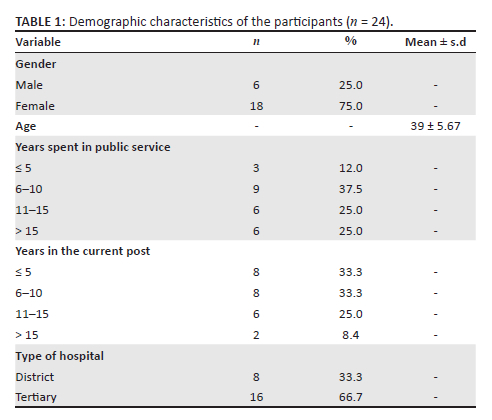
Table 1 shows the demographic characteristics of the participants. All 24 optometrists returned completed questionnaires; hence, the study attained a 100% response rate. Twenty-four optometrists with a mean age of 39 ± 5.67 years participated in the study. Eighteen (75.0%) were female and six (25.0%) were male. All optometrists were black Africans. The majority of practitioners (87.5%) had more than 5 years of working experience in public service, and 66.7% had occupied their current post for more than 5 years. Four (16.7%) optometrists had changed their place of work in the past 5 years or less and only one (4.2%) in the past 11-15 years.
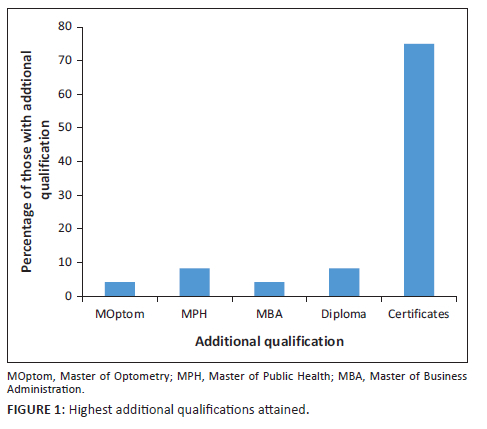
Figure 1 shows additional qualifications attained. Four (16.7%) optometrists had acquired master's qualifications and others had either a diploma or certificate.
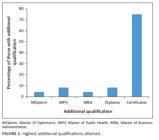
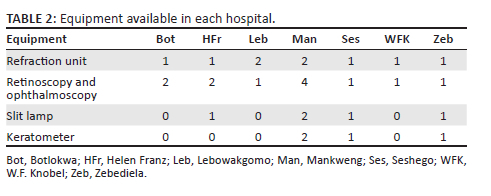
Table 2 shows the number of equipment available at each of the seven hospitals. Mankweng and Lebowakgomo hospitals had two refraction units (of ophthalmic chair and stand, projector, phoropter and/or trial case and frame) each, while other hospitals had one refraction unit each. Regarding retinoscope and ophthalmoscopes, Mankweng hospital had four units, Botlokwa and Helen Franz had two units each and all other hospitals had one unit each. Three (42.8%) hospitals did not have a slit lamp biomicroscope, and four (57.1%) did not have a keratometer. Mankweng hospital reported waiting for delivery of a Pentacam during the time of the study. None of the other hospitals had other equipment such as pachymeters and topographers. No other relevant equipment for KC examination was available.
After dichotomising the summation of the total score of the six items into knowledgeable (score equal to or above the median of 50%) or not knowledgeable, 13 (54.2%) optometrists were found to be knowledgeable about KC, and 11 (45.8%) were not knowledgeable.
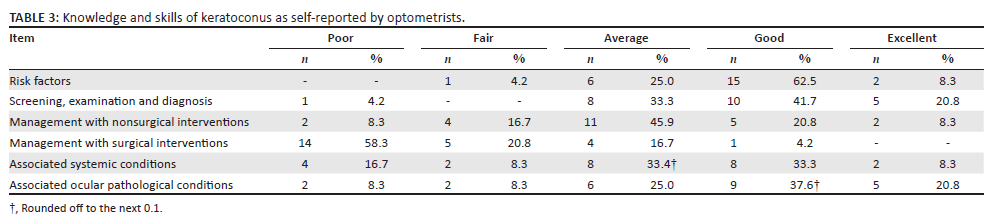
Table 3 shows the practitioners' self-reported perceptions of their knowledge and skills regarding diagnosis and management of KC. A total of 15 (62.5%) optometrists reported having good knowledge and skills of the risk factors for KC; 10 (41.7%) had good knowledge and skills of screening, examination and diagnosis of KC; 9 (37.5%) had good knowledge and skills of ocular pathological conditions; and 8 (33.3%) had good knowledge of the associated systemic conditions. The majority (58.3%) reported having poor knowledge of surgical interventions of KC.
Six (25.0%) optometrists indicated that they received training on examination, diagnosing and managing KC. Of the training in KC received by optometrists, 5 (20.8%) attended a presentation in a continuous professional development (CPD) workshop, and only one attended a workshop with a practical component that included fitting contact lenses on KC patients. Of the five optometrists who attended training, 2 (33.3%) were in the past year, 3 (50%) were in the past 3 years and 1 (17%) was in the past 5 years. However, all 24 (100%) optometrists, including those who had received training, indicated that they required some form of additional training and would like to attend training.
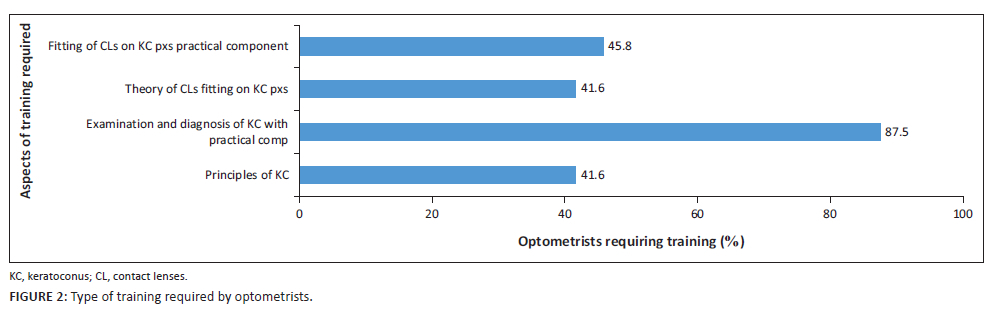
Figure 2 shows the aspects of training required by optometrists. The majority (87.5%) of optometrists reported that they require training in theory and practice related to examination and diagnosis of KC patients, while a further 45.8% reported requiring training in theory and practice of fitting contact lenses on KC patients. A total of 10 (41.6%) optometrists required training in the principles of KC, and another 10 (41.6%) required training in the fitting of contact lenses on KC patients.
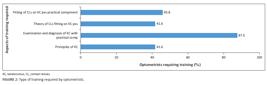
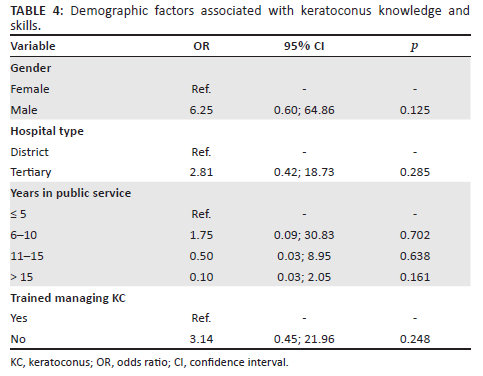
Table 4 shows the demographic variables associated with the knowledge and skills of optometrists regarding KC. There was no significant difference in findings between male and female optometrists (p = 0.125); those in district and tertiary hospital types (p = 0.285); whether optometrists were initially trained in managing KC or not; or by the number of years optometrists had in practice post their graduation (p = 0.161 to p = 0.702). In a bivariate analysis, male optometrists were six times more likely to be knowledgeable compared with female optometrists (odds ratio [OR] = 6.25, [95% CI: 0.60; 64.86]). Optometrists in the tertiary Mankweng hospital were three times more likely to be knowledgeable than those in district hospitals (OR = 2.81, [95% CI: 0.42; 18.73]). There was no likelihood that optometrists who attended some form of additional postgraduate or CPD training had reported better knowledge and skills about KC than those who did not. Instead, the optometrists who never attended any training had three times more likelihood of superior self-reported knowledge and skills about KC (OR = 3.14, [95% CI: 0.45; 21.96]).
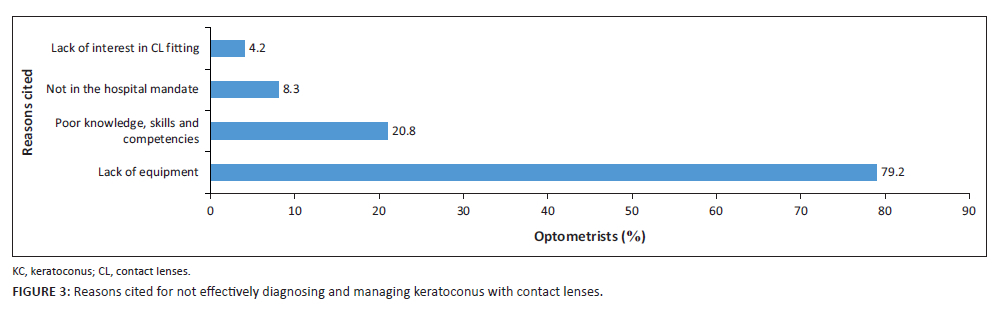
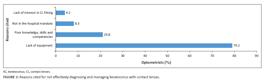
Figure 3 shows common reasons cited by optometrists as barriers to effective diagnosis and management of KC with contact lenses. Nineteen (79.2%) optometrists cited lack of appropriate equipment and 5 (20.8%) reported lack of knowledge, skills and competencies. Of the 5 (20.8%) who had appropriate equipment at their hospital, only three (12.5%) fitted contact lenses, 1 (4.0%) did not fit contact lenses, citing a lack of knowledge, skills and competencies, while the other (4.0%) indicated a lack of interest in contact lenses fitting.
Discussion
This study aimed to assess the level of self-reported knowledge and skills in the examination, diagnosis and management of KC by optometrists in the public hospitals of Capricorn district, Limpopo province, South Africa. Optometrists' knowledge and skills in the diagnostic and referral patterns of KC patients optimise patient care1919,2019
The study revealed that mostly young adults, with a mean age of 39 years (s.d. ± 5.67), were employed as optometrists in the study facilities, which may be attributed to the fact that the Department of Health in this province started with the training and employment of optometrists only in the past two decades. Research indicates23,2425262626
Similar to the findings of Gcabashe et al.272728,29,30
Most optometrists (87.5%) had many years of experience serving the public sector, and the 100% retention rate with low staff turnover augurs well for the public health sector in the Limpopo province. This finding is contrary to the study by Buthelezi and Van Staden,3130,31,32,33
The availability of equipment was evaluated to determine the facility infrastructure's suitability for fitting contact lenses or conducting follow-up consultation visits for contact lens-wearing patients. Despite all seven hospitals having refraction units, retinoscopes and ophthalmoscopes, of concern is that only three hospitals had keratometers and slit lamp biomicroscopes. The lack of critical equipment indicates that the facilities do not meet the minimum equipment requirements for contact lens fitting as stipulated by the HPCSA, the regulatory authority.168,34,3536,3738
A dichotomised summation of self-reported clinical knowledge and skills about KC of optometrists revealed that 46% of optometrists in these hospitals lacked the basic knowledge and skills for KC patient care. Despite all having over 5 years' experience in optometry practice, their knowledge and skills for examining, diagnosing and managing KC were not adequate. With limited knowledge and skills, there is a high likelihood of underdiagnosing, misdiagnosing and poor management of diseases.39
To the best of our knowledge, no similar study investigating the knowledge and skills of KC was conducted with optometrists, and only one such study was conducted with ophthalmologists at a tertiary referral centre in Lucerne, Switzerland.2020
Upon evaluation of the various elements of the MKK separately, almost all optometrists (96%) had cumulatively rated their knowledge and skills of risk factors, screening, examination and diagnosis of KC range from average to excellent. This is commendable in patient care. In a resource-constrained environment such as public hospitals in South Africa, where there is a lack of equipment, this will enable optometrists to develop a protocol for optimising KC patient risk assessment, screening, examination and diagnosis.40,4137
The majority of the optometrists (75.0%) rated their knowledge of nonsurgical interventions from average to excellent. It is, however, concerning that a significant proportion (25.0%) reported poor to fair knowledge of surgical interventions of KC. These findings imply that patients are not being provided with the most appropriate management intervention strategy. Sound knowledge of intervention strategies, both surgical and nonsurgical, enhances clinical decision-making and supports creativity in patient management.42
At least 25.0% of optometrists reported having attended presentations as part of CPD workshops; however, all reported that they needed further training with an emphasis on practical components. Furthermore, they expressed the need for training on general principles of KC, theoretical and practical components in examining, diagnosing and managing KC patients and the theory and practice of fitting contact lenses for management of KC patients. This may indicate that attending CPD workshops did not have significant impact or that the knowledge and skills gap was so significant that it could not be adequately closed by the regular CPD activities offered. Continuous professional development activities are beneficial in providing appropriate knowledge and skills to the professionals using formal or structured methods, although there is limited knowledge on how they impact patient outcomes.4343,44
The optometrists in this study may need a structured, formal training programme which is periodical and which has both theoretical and practical components to help bridge the knowledge and skills gap among these optometrists. In addition, informal, continuous and volitional peer support groups, mentorship programmes, observations and team meetings or briefings4443
A bivariate analysis of the self-reported knowledge and skills of optometrists showed a higher likelihood that recent graduates who were male, employed at the tertiary hospital and did not undergo additional training were most likely to be more knowledgeable than their counterparts. These findings had higher p-values, suggesting poor significance, owing to limitations such as sample size. Male optometrists were generally newly qualified in comparison and hence may have better knowledge and skills retention from their more recent undergraduate training. The majority were woman (75%) who had been in employment and may either have not had the same level of undergraduate training or have retained less of the acquired knowledge and skills over the years because of KC management not being part of the clinical protocols at their respective hospitals. Contrary to this concession, the study by Hodge et al.19
Contact lenses were reported to be fitted only at Mankweng hospital, and only three of the five optometrists at the facility fit contact lenses. As this facility is a referral centre for all other hospitals, having only three optometrists for the entire district is inadequate, as these optometrists will have to do diagnosis, contact lens fittings and aftercare consultations. There is a likelihood that these patients had long waiting periods for their referring optometrists to secure appointments and hence present exhibiting late signs of KC. Patients may experience challenges including requiring more time to complete consultation at the tertiary hospital compared with their local district hospital, inconvenience with distance, transportation and travelling times and also the costs associated with travelling, which have potential to increase patient dropout.45
The majority of optometrists (79.2%) reported equipment as the main barrier to screening, examination, diagnosis, management of KC and contact lens fitting, which has also been a common finding in earlier14,3546,4714,25314848
In cases where equipment was available, lack of knowledge and skills was also cited by 20.8% of optometrists as a barrier to screening, examining, diagnosing and managing KC patients, especially with contact lenses. Irrespective of previous training, some were still not knowledgeable, suggesting that the training may be ineffective. Optometrists may require structured programmes or regular reskilling workshops and other forms of knowledge enhancement such as case studies. Upskilling programmes are one effective approach to providing knowledge and skills to healthcare professionals.49
Other barriers reported were hospital policy, as optometrists (8.3%) indicated that contact lens fitting was not in the mandate of the hospitals. In addition, some optometrists (4.2%) reported less interest in contact lenses fitting. This is contrary to the principles of patient care, because this policy on contact lens fitting and dispensing in public hospitals conflicts with the regulated scope of practice of optometrists about fitting and dispensing contact lenses as outlined by the HPCSA.18,5031
Recommendations arising from this study are that hospitals should invest in upskilling their optometrists through programmes to acquire up-to-date clinical knowledge, skills and competencies in KC patients' care. Optometrists need to be able to perform the full spectrum of care for KC patients as defined by the regulatory authority minimum competency document.5051,52
Hospitals need to develop protocols for screening, examination, diagnosis and management of all patients, including KC patients. The protocols should also define the level of service to be provided at each hospital and further define the type of resources including equipment required per hospital. In addition to the protocols, hospitals should further revise their policy level of service such that it adheres to the scope of practice of optometry. This should be accompanied by the provision of resources that enable practising a full scope for all professions. Optometrists in all hospitals should be able to fit contact lenses and manage contact lens-wearing patients, and in cases where the fitting is not possible, they should at least be able to support contact lens-wearing patients for their aftercare consultations.
Thirdly, hospitals need to invest in the provision of appropriate equipment that would enable optometrists to screen, examine and diagnose KC with ease at nascent stages. In addition, they must provide resources to enable optometrists to fit, dispense and provide aftercare of contact lenses to consulting KC patients. While equipment such as optical coherence tomographers (OCTs), Pentacams and pachymeters are necessary at the referral centres, all hospitals require basic equipment such as slit lamp biomicroscopes and keratometers to enable basic KC screening and examination and to conduct contact lens fitting and aftercare consultation sessions.
One of the limitations of this study is that self-reported knowledge and skills were evaluated. In addition, the study area was purposively selected and therefore determined a limited sample size. Future studies should consider the objective evaluation of the knowledge and skills of optometrists to ascertain their abilities to provide KC patient care. A broader study area, such as provincial or national context, may also be considered to include a larger sample size for better inferences of the findings.
Conclusion
The appropriate diagnosis and management of KC are important to preserve and correct the vision of the KC patient so that they maintain a good quality of life. This study found that 45% of optometrists lacked adequate knowledge and skills for examination, diagnosis and management of KC patients, 79.2% of optometrists reported their respective hospitals did not have relevant equipment and only three (12.5%) of the 24 optometrists fitted contact lenses to manage KC patients. The study further indicated that only three of the seven hospitals had the equipment to conduct external examinations and evaluate the corneal curvature. The lack of equipment and resources were considered to contribute to and impede the ability of optometrists to diagnose and manage KC patients. Optometrists who were employed for longer periods in the public hospitals had a lack of knowledge and skills as compared with those more recently employed in this district. It is recommended that Capricorn district public hospitals should invest in regular upskilling for optometrists, develop relevant protocols for management of KC patients in line with the resources available and provide sufficient and appropriate equipment for diagnosis of KC and management with contact lenses.
Competing interests
The authors declare that they have no financial or personal relationship(s) that may have inappropriately influenced them in writing this article.
Authors' contributions
The article was developed from the PhD thesis of the study undertaken by P.M.W.N. under the supervision of V.R.M. and K.P.M. as supervisor and co-supervisor, respectively.
Funding information
This research work received a grant from the College of Health Sciences at the University of KwaZulu-Natal to cover data collection costs.
Data availability
Data used to support the findings of the study are available from P.M.W.N, the corresponding author, upon request.
Disclaimer
The authors declare that views expressed in this article are those of their own and are not necessarily views, position or policy of their affiliated agencies.
Acknowledgements
The authors would like to acknowledge invaluable contribution and selflessness of the optometrists and eye care managers in public hospitals in the Capricorn district of Limpopo, South Africa. They would like to specially acknowledge Dr S. Ntuli, who performed the data analysis and interpretation of results.
References
-
1.Hashemi H, Heydarian S, Hooshmand E, et al. The prevalence and risk factors for keratoconus: A systematic review and meta-analysis. Cornea. 2020;39(2):263-270. https://doi.org/10.1097/ICO.0000000000002150
» https://doi.org/10.1097/ICO.0000000000002150 -
2.Romero-Jiménez M, Santodomingo-Rubido J, Wolffsohn J. Keratoconus: A review. Cont Lens Anterior Eye. 2010;33(4):157-166. https://doi.org/10.1016/j.clae.2010.04.006
» https://doi.org/10.1016/j.clae.2010.04.006 -
3.Gokhale NS. Epidemiology of keratoconus. Indian J Ophthalmol. 2013;61(8):382-383. https://doi.org/10.4103/0301-4738.116054
» https://doi.org/10.4103/0301-4738.116054 -
4.Mas Tur V, MacGregor C, Jayaswal R, O'Brart D, Maycock N. A review of keratoconus: Diagnosis, pathophysiology, and genetics. Surv Ophthalmol. 2017;62(6):770-783. https://doi.org/10.1016/j.survophthal.2017.06.009
» https://doi.org/10.1016/j.survophthal.2017.06.009 -
5.Khaled ML, Helwa I, Drewry M, Seremwe M, Estes A, Liu Y. Molecular and histopathological changes associated with keratoconus. Biomed Res Int. 2017;2017:7803029. https://doi.org/10.1155/2017/7803029
» https://doi.org/10.1155/2017/7803029 -
6.Kok YO, Tan GF, Loon SC. Review: Keratoconus in Asia. Cornea. 2012;31(5):581-593. https://doi.org/10.1097/ICO.0b013e31820cd61d
» https://doi.org/10.1097/ICO.0b013e31820cd61d -
7.Gordon-Shaag A, Millodot M, Shneor E. The epidemiology and etiology of keratoconus. Int J Keratoco Ectatic Corneal Dis. 2012;1(1):7-15. https://doi.org/10.5005/jp-journals-10025-1002
» https://doi.org/10.5005/jp-journals-10025-1002 -
8.Vazirani J, Basu S. Keratoconus: Current perspectives. Clin Ophthalmol. 2013;2013(7):2019-2030. https://doi.org/10.2147/OPTH.S50119
» https://doi.org/10.2147/OPTH.S50119 - 9.Wheeler J, Hauser MA, Afshari NA, Allingham RR, Liu Y. The genetics of keratoconus: A review. Reprod Syst Sex Disord. 2012;(suppl. 6):001.
-
10.Sharma N, Rao K, Maharana PK, Vajpayee RB. Ocular allergy and keratoconus. Indian J Ophthalmol. 2013;61(8):407-409. https://doi.org/10.4103/0301-4738.116063
» https://doi.org/10.4103/0301-4738.116063 -
11.Andreanos KD, Hashemi K, Petrelli M, Droutsas K, Georgalas I, Kymionis GD. Keratoconus treatment algorithm. Ophthalmol Ther. 2017;6(2):245-262. https://doi.org/10.1007/s40123-017-0099-1
» https://doi.org/10.1007/s40123-017-0099-1 -
12.Parker JS, Van Dijk K, Melles GRJ. Treatment options for advanced keratoconus: A review. Surv Ophthalmol. 2015;60(5):459-480. https://doi.org/10.1016/j.survophthal.2015.02.004
» https://doi.org/10.1016/j.survophthal.2015.02.004 -
13.Shi Y. Strategies for improving the early diagnosis of keratoconus. Clin Optom. 2016;8:13-21. https://doi.org/10.2147/OPTO.S63486
» https://doi.org/10.2147/OPTO.S63486 -
14.Hick JL, Hanfling D, Burstein JL, et al. Health care facility and community strategies for patient care surge capacity. Ann Emerg Med. 2004;44(3):253-261. https://doi.org/10.1016/j.annemergmed.2004.04.011
» https://doi.org/10.1016/j.annemergmed.2004.04.011 -
15.Cavas-Martínez F, De La Cruz Sánchez E, Nieto Martínez J, Fernández Cañavate FJ, Fernández-Pacheco DG. Corneal topography in keratoconus: State of the art. Eye Vis (Lond). 2016;3:5. https://doi.org/10.1186/s40662-016-0036-8
» https://doi.org/10.1186/s40662-016-0036-8 -
16.HPCSA. Minimum equipment contact lenses fitting HPCSA. Minimum equipment for contact lenses fitting [homepage on the Internet]. 2019 [cited 2022 Apr 24]. Available from: https://www.google.com/search?client=firefox-b-d&q=minimum+equipment+contact+lenses+fitting+hpcsa
» https://www.google.com/search?client=firefox-b-d&q=minimum+equipment+contact+lenses+fitting+hpcsa -
17.South African Optometry Association. SAOA submission in response to green paper on National Health Insurance [homepage on the Internet]. 2011 [cited 2022 Apr 24]. Available from: https://www.google.com/search?q=SAOA+submission+in+response+to+green+paper+on+Nation al+Health+Insurance&client=firefox-b-d&ei
» https://www.google.com/search?q=SAOA+submission+in+response+to+green+paper+on+Nation al+Health+Insurance& client=firefox-b-d& ei -
18.Health Professions Act of 1974. Government Gazette No R47 GG 38426 [homepage on the Internet]. 1974 [cited 2022 Apr 24]. Available from: https://www.google.com/search?q=health+professions+act+of+1974&client=firefox-b-d&ei
» https://www.google.com/search?q=health+professions+act+of+1974& client=firefox-b-d& ei -
19.Hodge C, Chan C, Zantos S, Kokkinakis J, Stapleton F, Sutton G. Therapeutic treatment of keratoconus: A survey of local optometric practice criteria. Clin Exp Optom. 2015;98(4):312-318. https://doi.org/10.1111/cxo.12233
» https://doi.org/10.1111/cxo.12233 -
20.Baenninger PB, Bachmann LM, Iselin KC, et al. Mismatch of corneal specialists' expectations and keratoconus knowledge in general ophthalmologists - A prospective observational study in Switzerland. BMC Med Educ. 2021;21(1):297. https://doi.org/10.1186/s12909-021-02738-0
» https://doi.org/10.1186/s12909-021-02738-0 -
21.Manyisa ZM, Van Aswegen EJ. Factors affecting working conditions in public hospitals: A literature review. Int J Africa Nurs Sci. 2017;6:28-38. https://doi.org/10.1016/j.ijans.2017.02.002
» https://doi.org/10.1016/j.ijans.2017.02.002 -
22.Naderan M, Shoar S, Kamaleddin M, Rajabi M, Naderan M, Khodadadi M. Keratoconus clinical findings according to different classifications. Cornea. 2015;34(9):1005-1011. https://doi.org/10.1097/ICO.0000000000000537
» https://doi.org/10.1097/ICO.0000000000000537 -
23.USAID, YouthLead Admin. 6 top benefits of hiring young talent | YouthPower [homepage on the Internet]. [cited 2022 Apr 24]. Available from: https://www.youthpower.org/resources/6-top-benefits-hiring-young-talent
» https://www.youthpower.org/resources/6-top-benefits-hiring-young-talent -
24.YERP. How young people contribute to Victoria [homepage on the Internet]. Yerp; 2013 [cited 2022 Apr 24]. Available from: https://yerp.yacvic.org.au/why-it-matters/involve-young-people/how-young-people-contribute-to-victoria
» https://yerp.yacvic.org.au/why-it-matters/involve-young-people/how-young-people-contribute-to-victoria -
25.Maphumulo WT, Bhengu BR. Challenges of quality improvement in the healthcare of South Africa post-apartheid: A critical review. Curationis. 2019;42(1):1901. https://doi.org/10.4102/curationis.v42i1.1901
» https://doi.org/10.4102/curationis.v42i1.1901 -
26.Wilson M. Disadvantages of hiring younger employees [homepage on the Internet]. StartUp Advice; 2013 [cited 2022 Jul 01]. Available from: https://www.under30ceo.com/disadvantages-of-hiring-younger-employees/
» https://www.under30ceo.com/disadvantages-of-hiring-younger-employees/ -
27.Gcabashe N, Moodley VR, Hansraj R. Keratoconus management at public sector facilities in KwaZulu-Natal, South Africa: Practitioner perspectives. Afr Vis Eye Health. 2022;81(1):7. https://doi.org/10.4102/aveh.v81i1.698
» https://doi.org/10.4102/aveh.v81i1.698 -
28.Review of Optometry. Optometric workforce survey projects modest growth, more employed ODs [homepage on the Internet]. Johnson Medical Information. [cited 2022 May 01]. Available from: https://www.reviewofoptometry.com/article/optometric-workforce-survey-projects-modest-growth-more-employed-ods
» https://www.reviewofoptometry.com/article/optometric-workforce-survey-projects-modest-growth-more-employed-ods -
29.Ee-Tan C. Women in optometry: Then and now - Cookiemagazine [homepage on the Internet]. [cited 2022 May 01]. Available from: https://cookiemagazine.org/women-in-optometry-then-and-now/
» https://cookiemagazine.org/women-in-optometry-then-and-now/ -
30.Myers C. Optometric management - Optometric women [homepage on the Internet]. 2018 [cited 2022 May 01]. Available from: https://www.optometricmanagement.com/issues/2018/june-2018/social-optometric-women
» https://www.optometricmanagement.com/issues/2018/june-2018/social-optometric-women -
31.Van Staden D, Buthelezi L. Integrating eye health into policy: Evidence for health systems strengthening in KwaZulu-Natal. Afr Vis Eye Health. 2020;79(1):a549. https://doi.org/10.4102/aveh.v79i1.549
» https://doi.org/10.4102/aveh.v79i1.549 -
32.Gesesew HA, Tebeje B, Alemseged F, Beyene W. Health workforce acquisition, retention and turnover in Southwest Ethiopian Health Institutions. Ethiop J Health Sci. 2016;26(4):331. https://doi.org/10.4314/ejhs.v26i4.5
» https://doi.org/10.4314/ejhs.v26i4.5 -
33.Michas F. Hospital staff turnover in the U.S. [homepage on the Internet]. Statista; 2020 [cited 2022 May 01]. Available from: https://www.statista.com/statistics/1251378/staff-turnover-rate-of-hospitals-in-the-united-states/
» https://www.statista.com/statistics/1251378/staff-turnover-rate-of-hospitals-in-the-united-states/ - 34.Asimellis G, Kaufman EJ. Keratoconus. Treasure Island, FL: StatPearls Publishing; 2022.
-
35.Kojima T, Nishida T, Nakamura T, et al. Keratoconus screening using values derived from auto-keratometer measurements: A multicenter study. Am J Ophthalmol. 2020;215:127-134. https://doi.org/10.1016/j.ajo.2020.02.017
» https://doi.org/10.1016/j.ajo.2020.02.017 -
36.Anitha V, Vanathi M, Raghavan A, Rajaraman R, Ravindran M, Tandon R. Pediatric keratoconus - Current perspectives and clinical challenges. Indian J Ophthalmol. 2021;69(2):214-225. https://doi.org/10.4103/ijo.IJO_1263_20
» https://doi.org/10.4103/ijo.IJO_1263_20 -
37.Chatzis N, Hafezi F. Progression of keratoconus and efficacy of corneal collagen cross-linking in children and adolescents. J Refract Surg. 2012;28(11):753-758. https://doi.org/10.3928/1081597X-20121011-01
» https://doi.org/10.3928/1081597X-20121011-01 -
38.Messmer E. Update on corneal cross-linking for keratoconus. Oman J Ophthalmol. 2013;6(suppl. 1):S8-S11. https://doi.org/10.4103/0974-620X.122288
» https://doi.org/10.4103/0974-620X.122288 -
39.Pakenham-Walsh N, Bukachi F. Information needs of health care workers in developing countries: A literature review with a focus on Africa. Hum Resour Health. 2009;7(1):1-13. https://doi.org/10.1186/1478-4491-7-30
» https://doi.org/10.1186/1478-4491-7-30 -
40.Rafati S, Hashemi H, Nabovati P, et al. Demographic profile, clinical, and topographic characteristics of keratoconus patients attending at a tertiary eye center. J Curr Ophthalmol. 2019;31(3):268-274. https://doi.org/10.1016/j.joco.2019.01.013
» https://doi.org/10.1016/j.joco.2019.01.013 -
41.Gomes JA, Tan D, Rapuano CJ, et al. Global consensus on keratoconus and ectatic diseases. Cornea. 2015;34(4):359-369. https://doi.org/10.1097/ICO.0000000000000408
» https://doi.org/10.1097/ICO.0000000000000408 -
42.Downie LE, Lindsay RG. Contact lens management of keratoconus. Clin Exp Optom. 2015;98(4):299-311. https://doi.org/10.1111/cxo.12300
» https://doi.org/10.1111/cxo.12300 -
43.Wray J, Aleo G. The importance of continuing professional development (CPD) for nurses [homepage on the Internet]. Evidence-Based Nursing Blog; 2021 [cited 2022 Jul 01]. Available from: https://blogs.bmj.com/ebn/2021/11/14/the-importance-of-continuing-professional-development-cpd-for-nurses/
» https://blogs.bmj.com/ebn/2021/11/14/the-importance-of-continuing-professional-development-cpd-for-nurses/ -
44.Mlambo M, Silén C, McGrath C. Lifelong learning and nurses' continuing professional development, a metasynthesis of the literature. BMC Nurs. 2021;20(1):1-13. https://doi.org/10.1186/s12912-021-00579-2
» https://doi.org/10.1186/s12912-021-00579-2 -
45.Grover S, Mallnaik S, Chakrabarti S, Mehra A. Factors associated with dropout from treatment: An exploratory study. Indian J Psychiatry. 2021;63(1):41-51. https://doi.org/10.4103/psychiatry.IndianJPsychiatry_87_19
» https://doi.org/10.4103/psychiatry.IndianJPsychiatry_87_19 -
46.Goins RT, Williams KA, Carter MW, Spencer SM, Solovieva T. Perceived barriers to health care access among rural older adults: A qualitative study. J Rural Health. 2005;21(3):206-213. https://doi.org/10.1111/j.1748-0361.2005.tb00084.x
» https://doi.org/10.1111/j.1748-0361.2005.tb00084.x -
47.Turnbull A. NHS workers say lack of resources harms patient care [homepage on the Internet]. [cited 2022 Apr 24] Independent Nurse; 2015. Available from: https://www.independentnurse.co.uk/news/nhs-workers-say-lack-of-resources-harms-patient-care/89038
» https://www.independentnurse.co.uk/news/nhs-workers-say-lack-of-resources-harms-patient-care/89038 -
48.Patel D, Mercer E, Mason I. Ophthalmic equipment survey 2010: Preliminary results. Com Eye Health. 2010;23(73):22-25. https://doi.org/10.1111/j.2045-0648.2010.tb00005.x
» https://doi.org/10.1111/j.2045-0648.2010.tb00005.x -
49.Gasteiger N, Van Der Veer SN, Wilson P, Dowding D. Upskilling health and care workers with augmented and virtual reality: Protocol for a realist review to develop an evidence-informed programme theory. BMJ Open. 2021;11(7):e50033. https://doi.org/10.1136/bmjopen-2021-050033
» https://doi.org/10.1136/bmjopen-2021-050033 -
50.HPCSA. Regulations defining the scope of the profession of optometry and dispensing Opticians. GN R280/2007 (Health Professions Act 56 OF 1974) [homepage on the Internet]. 2015 [cited 2022 May 08]. Available from: https://discover.sabinet.co.za/document/1168168#reg2
» https://discover.sabinet.co.za/document/1168168#reg2 -
51.Van Zyl LM, Fernandes N, Rogers G, Du Toit N. Primary health eye care knowledge among general practitioners working in the Cape Town metropole. S Afr Fam Pract. 2011;53(1):52-55. https://doi.org/10.1080/20786204.2011.10874060
» https://doi.org/10.1080/20786204.2011.10874060 -
52.Ortiz-Toquero S, Martin R. Keratoconus screening in primary eye care - A general overview. Eur Ophthal Rev. 2016;10(2):80-85. https://doi.org/10.17925/EOR.2016.10.02.80
» https://doi.org/10.17925/EOR.2016.10.02.80

Accepted: 08 July 2022
Published: 15 Dec. 2022