Self-perceived competency of midwives in Kenya: A descriptive cross-sectional study
Abstract
BACKGROUND: Midwifery competence is demonstrated in the context of midwifery education, regulation and practice to support the quality delivery of care to women. Midwives with appropriate competencies can deliver up to 80% of maternal health services. The pre-service education programmes in Kenya offers different midwifery competencies for the various programmes, influencing expected outcomes in practice. AIM: This study aimed to assess midwives' perceived level of competence based on the International Confederation of Midwives (ICM) standards in Kenya. SETTING: The study was conducted in selected public health facilities in Kenya. METHODS: An observational cross-sectional design was used. A multi-stage sampling technique was used to select the counties and health facilities and random sampling to determine 576 midwives. Data were collected using a self-administered assessment tool adopted from the ICM competency domains. RESULTS: A total of 495 (85.9%) midwife respondents participated in this study, of which 389 (78.6%) respondents in all training categories were highly competent in the four ICM domains. The midwives' qualifications and facility level were associated with their self-perceived competence during practice. Those trained in the direct-entry midwifery programme were more competent, p = 0.016 (Kruskal wallis H = 8.432). CONCLUSION: Midwives' competence was influenced by the level of education and facility where they practice. All pre-service midwifery programme graduates must meet the essential ICM competencies and need to enhance continuous professional development (CPD) programmes and facility-based mentorship for the midwives. CONTRIBUTION: To optimise midwifery-led practice in primary health care, midwifery competence should be enhanced in pre-service and in-service education for improved health outcomes.
midwifery; nurse-midwife; education; competence; competency
Introduction
Globally, over 70% of maternal deaths are caused by complications of pregnancy and childbirth and complications of preterm birth account for more than 85% of newborn deaths.123456
Midwives are integral in providing quality maternal and neonatal health (MNH) care and reducing preventable maternal and perinatal mortality and morbidity. Midwives are the majority providers of MNH, offering over 83% of the care needed by women and newborns.1789
The ICM has set global standards for minimum essential competencies for midwifery practice to provide high-quality, evidence-based health services for women, newborns and childbearing families.1010
Proficiency in these domains is expected to equip midwives with the necessary competencies and confidence to enhance the care of the woman and the neonate. A competent midwife will contribute to achieving the third sustainable development goal (SDG),1112
However, there are inadequacies in midwifery education in low- and middle-income countries. These include deficient curriculum with tutors confident in theoretical teaching and not practical skills teaching with limited exposure to clinical practice for students.13,14,151617,18
Because of the overwhelming need for midwifery services in primary health care, midwives often function independently and take responsibility for clinical decisions and management of women and newborns. Therefore, enhancing their competencies and practice within their scope of practice is essential as an autonomous profession.
Confidence and competence of a midwife are required for optimal performance of a task.16
Evidence from developed countries showed low levels of competence among graduate nurses in legal and ethical practice and advocated for support to enhance the competence as they enter practice.192019
In Kenya, a national confidential enquiry into maternal deaths (CEMD) in 2017 revealed that 92% of mothers received suboptimal care from skilled health personnel, with midwives providing most of the care. Inadequate clinical skills, inadequate monitoring and lack of timely intervention for mothers with prolonged abnormal observations were identified as the main contributing factors to the maternal deaths.5
Research methods and design
Study design
This article reports on a component of phase 1 of an explanatory, sequential, mixed-methods study. Phase 1 of the study was a quantitative, observational, descriptive, cross-sectional study design focused on self-perceived competence and confidence of midwives. The other quantitative component in phase 1 on self-perceived confidence of midwives on knowledge and skills has already been published.21
Setting
Health care in Kenya is offered at primary (dispensaries and health centres), secondary (sub-county and county referral hospitals) or tertiary (national teaching and referral hospitals) levels.9
Private and faith-based facilities were excluded, as midwives could not always practise autonomously in these settings. Midwives in Kenya train and qualify at certificate, diploma, higher diploma or degree (bachelor, master or doctoral) levels and are licensed to function at all levels of health care facilities. Common midwife cadres in Kenya include Kenya Registered Midwifery (KRM), Kenya Registered Community Health Nursing (KRCHN) and Bachelor of Science of Nursing (BScN). The KRCHN and BScN programmes are integrated and train nurses or midwives who qualify with general nursing, midwifery, mental health and community health competencies. The KRM programme only trains students who are to be midwives.
Study population and sampling strategy
The study population included midwives working in public secondary or tertiary health facilities. As of 2019, Kenya had 20 775 registered midwives distributed by qualifications: 432 KRMs, 19 477 KRCHNs and 866 BScNs.22
Sample size determination
The sample size was calculated for midwives with each qualification to ensure precise competence estimation across all programmes. According to a similar study in Ethiopia, 31.6% of midwives attained the minimum required competency score, and this proportion was used in the sample size calculation.23
Sampling technique
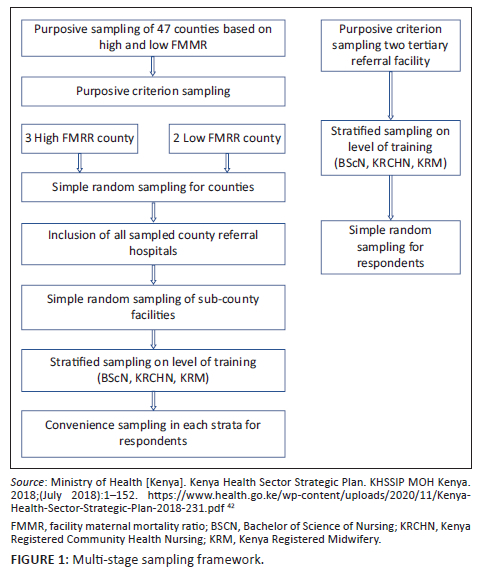
A multi-stage stratified sampling approach was used, as shown in Figure 1. The sample was split between the secondary levels of care (in the counties) and tertiary hospitals based on the number of midwives who worked at RMNCH units. The sample needed from the counties was 301 (52.3%) and 275 (47.7%) from the tertiary hospitals.
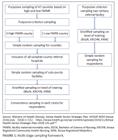
The 47 counties were divided into two groups based on their facility maternal mortality ratio (FMMR). Kenya considers an average FMMR of 97.5 as a threshold for high versus low performing facilities.4
All eight county referral hospitals were included in the study. Moreover, three sub-county facilities were randomly sampled from each of the eight counties. In total, therefore, the study sampled 32 facilities in the counties. The required sample of 301 from these 32 facilities was further stratified by the required qualifications - KRMs (54), KRCHN (137), BScN (110) - and the distribution of midwives between the facilities.
The tertiary hospital sample of 275 was stratified between the two hospitals based on the proportion of midwives employed; this implied a sample of 167 midwives from tertiary hospital A and 108 from tertiary hospital B. Stratification was then done according to the proportion needed with each qualification category KRM (27), KRCHN (158) and BScN (89) based on the distribution of midwives in the two facilities.
Data collection
The study was conducted between November 2019 and March 2020. The questionnaire was adapted from the 2019 ICM self-assessment tool, which assessed the level of competence and confidence in knowledge, skills and behaviour in the four ICM domains. Skills were defined as the ability to perform a specific task to a measurable level of performance, while behaviour was defined as a person's way of responding to the actions of others.10
Nine experts' panellists evaluated the questionnaire's content validity. They were either working in the facilities as midwives, in policy or educators in midwifery in Kenya. The investigator requested the experts to independently review and critique each item to ensure the appropriateness of the content and phrasing of each item using a three-point Likert scale (3, essential; 2, useful; and 1, not necessary). The content validity ratio (CVR) was calculated for each item and a ratio of 0.8 or more was taken as acceptable.24
The panel of experts adapted the tool and modifications were done in terms of the content, the phrasing of the items, the instructions for completing the questionnaire, layout, formatting and context-specific demographic data. Two items on ongoing care of the woman, which the experts indicated were inappropriate for the Kenyan context, were deleted. These items were related to the religious, cultural and socio-political environment. The removal of the two items was done before the pilot study.
A pilot study with 50 participants (10% of the sample size) further validated the questionnaire and checked the data collection process. From the pilot study, time allocated to the study was adjusted from 30 min to 45-60 min; paraphrasing some sentences and revising the instructions for filling the tool were also incorporated. These participants were from a different county, not part of the study. The pilot data were tested for reliability, and an adequate average Cronbach's alpha coefficient of 0.87 was achieved in all four competency domains of the tool.25
Research assistants (RAs) were recruited from other facilities, not part of the study. The assistants did not hold any managerial positions to minimise any power imbalance with the participants. The participant information sheet and consent form were given in hardcopy and electronically, 48 h before the start of data collection. Once the participants signed the consent form, a copy was provided. A convenient time to complete the questionnaire was agreed upon in order to not disrupt the service delivery. The research team addressed any questions on the data collection day. This was an interviewer-administered questionnaire, where the RAs administered the questionnaire to each participant in a private room at the hospital. The RA interviewed each of the participants, which took about 45-60 min and captured the data in real time using organisation network analysis (ONA) software during the interview.
Data management and analysis
Data were checked continuously during data collection, and any inconsistencies or incomplete data were corrected by following up with the respondents. Data captured in the ONA software were exported to the Statistical Package for Social Sciences (SPSS) version 26.0 for analysis.
Competence was self-rated on two dimensions, namely, knowledge and skills. Knowledge was rated according to how long ago the midwife updated her knowledge through short courses, seminars, conferences or workshops. The knowledge scale was defined as current knowledge (updated within 1 year, high score 3), updated knowledge within the last 2-3 years (moderate score 2) and updated knowledge > 3 years ago (low score 1).
The midwife's skills were assessed according to the midwife's self-perceived safe performance of the skill (i.e. no preventable complications and with good maternal and neonatal outcomes). Their skills were rated according to how often they were safely performed, and the scale was defined as follows: not performed skill safely within the past year (low score of 1), performed skill only once within the year (moderate score of 2) and performed skill more than once within the year (high score 3).
As defined by ICM, a holistic assessment of competence included up-to-date knowledge and experience of performing the skill.10
Categorical data were summarised using frequencies and percentages. In contrast, continuous (numerical) variables were summarised using means or medians with standard deviation (s.d.) or interquartile ranges (IQR) depending on the distribution of the data.
The association between competence levels and socio-demographic characteristics, facility level and qualifications was analysed using the Pearson's chi-square test (Fisher's exact test where cells had counts less than 5). The difference between the dependent variable (competence levels for knowledge and skills) and the independent variables (socio-demographic characteristics, the level of the facility and midwives' qualifications) was analysed using the Kruskal-Wallis test. Post hoc analysis was performed where there was a statistically significant difference in categorical variables. All statistical tests were tested at a 5% significance level, and a p-value of < 0.05 was considered statistically significant.
Ethical considerations
Ethical approval to conduct the study was obtained from the following institutions: Stellenbosch University Health and Research Ethics Committee 2 (HREC2) (No. S18/10/254); AMREF Ethics and Scientific Review Committee (ESRC) (No. AMREF - ESRC P 652/2019); Moi Teaching and Referral Hospital-Moi University Institutional Research and Ethics Committee (IREC) (No. IREC/2019/000092) and Kenyatta National Hospital-University of Nairobi Ethics and Research Committee (ERC) (No. KNH-ERC/A/73). Research license was obtained from the National Commission for Science, Technology and Innovation (NACOSTI) (No. 8777616). Permission was also sought from the county government, while the respondents gave informed consent.
Results
Characteristics of respondents
A total of 495 (representing 86% of the required sample size) midwives completed the questionnaire. The distribution of the midwives by qualifications was as follows: those with KRCHN - 295 (100% of the required sample size), BScN degree - 156 (78%) and those with the KRM diploma - 44 (54%).
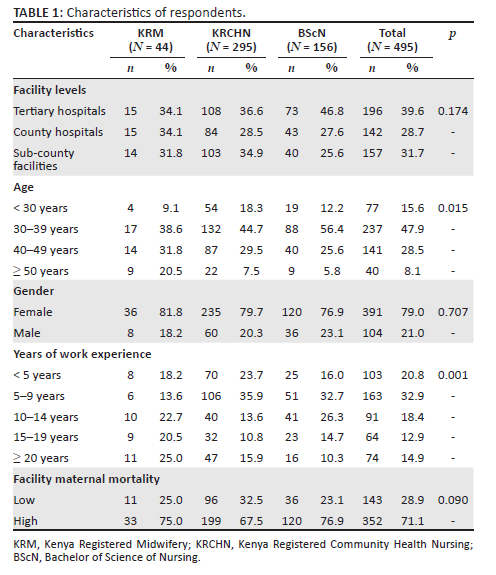
The characteristics of the midwives are presented in Table 1. Data were collected in 26 facilities: 2 tertiary, 6 county and 18 sub-county facilities. Midwives were spread between levels of care, with 39.6% at the tertiary level, 28.7% at the county level and 31.7% at the sub-county level (p = 0.714). Female midwives accounted for 391 (79.0 %), with almost half of the respondents (237; 47.9 %) aged between 30 and 39 years, with a median age of 37.0 years (IQR 32.0-43.0).
Midwives from the KRM programme (median age 40.0 years [IQR 32.5-47.0]) were significantly older than those from the KRCHN (median age 36.0 years [IQR 30.0-43.0]) and BScN programmes (median age 37.0 years [IQR 32.0-43.0]) (p = 0.04). Midwives differed significantly in their years of experience per qualification, from the least experienced with KRCHN (median experience 7.0 years [IQR 5.0-15.0]) to BScN (median experience 10.0 years [IQR 5.5-14.5]) to the most experienced with KRM (median experience 13.0 years [IQR 6.5-19.5]) (p = 0.007). There was no significant association between FMMR of facilities or gender with the type of qualification.
Self-perceived knowledge and skills
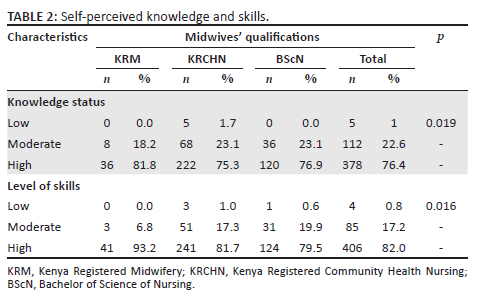
The overall levels of self-perceived knowledge and skills for midwives with different qualifications are presented in Table 2. Overall, the majority of the midwives reported to be up to date with their knowledge (378; 76.4%) and could safely perform the required skills (406; 82.0%).
There were, however, significant differences between qualifications in terms of knowledge status (p = 0.09) and safe performance of skills (p = 0.016). For instance, KRM-qualified midwives had higher knowledge status (81.8%) as compared to KRCHN and BScNs.
For knowledge status, direct-entry midwives at the diploma level (KRM) reported higher levels of knowledge (36; 81.8%) compared to KRCHNs and BSNs, respectively. Similarly, the KRMs had higher ratings of 41 (93.2%) for safe performance of skills compared to KRCHNs and BScNs.
Respondents' competence status
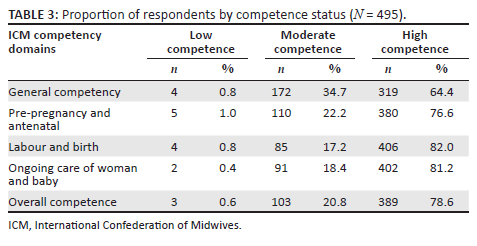
Table 3 presents the proportion of midwives by competence status. Overall, 389 (78.6%) of the midwives reported high competence across all the ICM domains. Midwives reported the lowest level of competency in the general competency domain (64.4% had high competence), followed by pre-pregnancy and antenatal care (76.6%), ongoing care (81.2%) and finally labour and childbirth (82.0%). Only a small proportion of less than 1% of the midwives reported low competence in the four ICM domains.
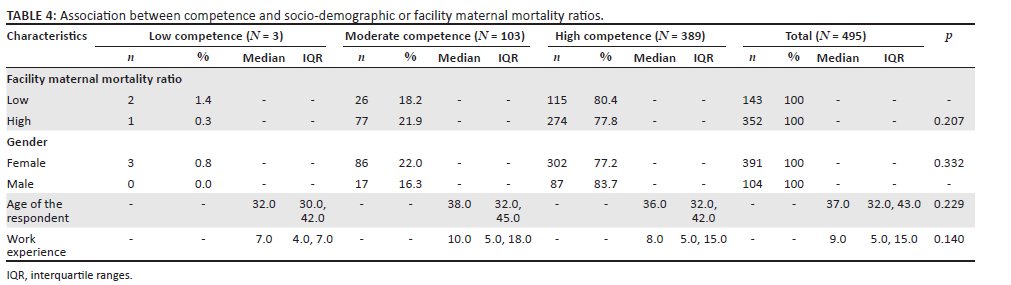
The association between competence, socio-demographic characteristics and FMMR is presented in Table 4. There was no significant association between competence levels and age, gender, FMMR or work experience.
Relationship between qualifications and competence
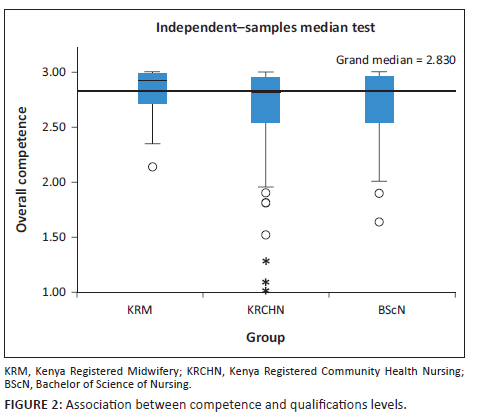
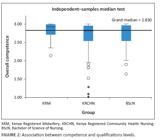
The relationship between qualifications and competence is shown in Figure 2. The median overall competence score for KRM was 2.93 (IQR 2.4-3.0), for KRCHN was 2.80 (IQR 1.9-3.0) and for BScN was 2.82 (IQR 2.0-3.0) (p = 0.016). Post hoc analysis demonstrated that statistical significance was because of the difference between KRM and other qualifications (KRM-KRCHN [p = 0.004]; KRM-BScN [p = 0.018] KRCHN-BScN [p = 0.549]).
Relationship between facility level and competence
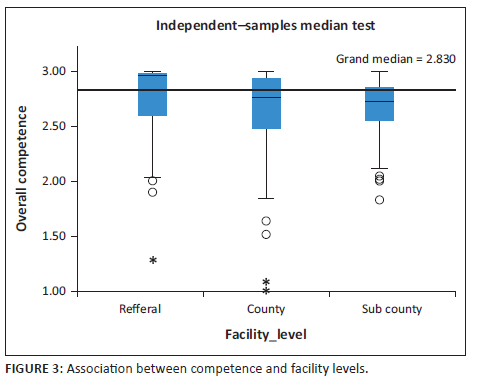
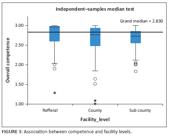
The relationship between competency and facility level is shown in Figure 3. The median overall competency score for the tertiary referral level was 2.98 (IQR 2.0-3.0), for the county level was 2.80 (IQR 1.7-3.0) and for the sub-county level was 2.82 (IQR 2.2-2.8) (< 0.001). Post hoc analysis demonstrated that statistical significance was because of the difference between the tertiary referral hospitals and those who were based at county and sub-county facilities (sub-county-county, p = 0.317; sub-county-tertiary referral, p < 0.001, county-tertiary referral p < 0.001).
Discussion
Most of the midwives were highly competent in their competence, knowledge and skills. This implies that only 21% of midwives were not highly competent. The type of qualification and facility level were associated with the self-perceived competence of midwives in Kenya. Those who qualified as direct midwives had a higher median score than those who qualified as nurse midwives at the diploma and degree levels. Moreover, those who worked at the tertiary level had a higher score than those at the county and sub-county health facilities. The findings of this study are similar to studies conducted in India and Tanzania where nurse midwives from lower-level facilities had low competence and/or skills levels compared to those from higher facilities.26,27
Globally, midwives are expected to update their knowledge and skills for safer practice and improved maternal and newborn health outcomes through continuous professional development (CPD) programmes.10,2823,29
The KRCHN and BScN midwives had similar competency scores but were significantly lower than the direct-entry KRM midwives. The KRCHN and BScN programmes strongly focus on nursing as a whole; thus, graduates are likely to have less exposure to midwifery competencies. Similarly, the finding of the present study is supported by a study in Pakistan, which found that direct entry to midwifery education positively influenced graduates' perceptions of their knowledge, skills and behaviours and their practice.3015,3117
Compared to county and sub-county levels, tertiary referral facilities have more expertise and specialists, who function in multidisciplinary teams. They have more resources, opportunities and structured systems for CPD that support knowledge and skills development. Regular exposure to performing skills in practice over time influences a midwife's competence.323334
Although a trained midwife is assumed to have the requisite knowledge and skills for safe practice, this study showed that only 64% of midwives had a high level of competence in the general competency domain (ICM Competency 1); this domain assessed the autonomy of a midwife to practise, scope of practice and communications skills and prevention of health problems of reproduction and early life, which are fundamental in promoting the health and overall well-being of the woman and infant.35
In the current study, the age of respondents, years of work experience, gender and FMMR did not influence the level of competence. Other studies have found a relationship between gender, age and the years of experience with competence.23,36,37
Strengths and limitations of the study
To the best of our knowledge, this is the first study to assess the perceived level of competence among midwives in practice in Kenya. These findings and the action plan for mitigating against the low competency levels reported among midwives can be generalised to many African settings and other LMICs that suffer from similar challenges in midwifery training, midwifery workforce composition, distribution and shortage as reported in the State of the Midwifery Report 2021 that make achieving universal health coverage elusive.8
Implications
Our findings revealed that the integrated nurse-midwifery degree and diploma programmes produced less competent midwives compared to direct-entry midwifery programme because their training is less focused on these specific skills set in midwifery competencies. This implies that the majority of the current workforce who provide midwifery care may not meet the competencies to practise as midwives. There is a need to expand the direct entry midwifery training at diploma and degree levels to ensure the adherence of ICM set standards.
Furthermore, the KRCHN and BScN training programmes should pay attention to local context and tailor midwifery-led practice education standards through curricula reviews to enhance midwifery competencies. Moreover, the graduates of these programmes in practice (in-service) should have more targeted CPD to ensure that their competencies in midwifery are maintained, especially in the general competency domain. Policymakers should incorporate the midwifery practitioners and educators in the policy formulation and implementation to address the gaps in training and practice.
Midwives working in tertiary facilities were more competent than those working in county and sub-county facilities. There is a need to invest in midwifery knowledge and skills acquisition among the midwives working in the county and primary level facilities through access to focused CPD programmes for competency enhancement. Moreover, low-dose high-frequency facility-based mentoring of midwives in the lower-level facilities by experienced midwives and skilled health personnel from higher facilities are effective in improving the midwives' competencies in the provision of quality midwifery care contributing to a reduction in perinatal and maternal mortalities.3839,40
Furthermore, there is a need for the health institutions and managers to provide support systems to the midwives in maintaining their competence in practice and strive to change the organisational culture to ensure that the health facilities are learning institutions through facility-based mentoring.41
A follow-up study should measure the actual competence of midwives and verify the findings of this study. This will provide further insights into current midwifery competence and contribute to a larger body of evidence that can guide midwifery education and training policy in Kenya.
Conclusion
Overall, 79% of midwives self-reported to have high competence. Graduates from direct-entry midwifery training programmes were more competent than those from integrated nurse-midwifery training programmes. Midwives working at the tertiary hospitals were more competent than those in the county and sub-county levels. All pre-service training programmes must ensure that graduates meet the basic ICM competencies. In-service CPD programmes must focus on midwives in the lower-level facilities and integrated nurse-midwife practitioners.
Competing interests
E.C.T. and D.K. reported no potential conflict of interest. R.M. declares his conflict being the editor for the Journal of African Primary Health and Family Medicine.
Authors' contributions
E.C.T. was responsible for the conceptualisation, data curation, investigation, formal analysis, methodology, supervision, resources and writing of the original draft. D.K. was responsible of the conceptualisation, methodology, data curation and writing, review and editing of the article. R.M. was responsible for the conceptualisation, methodology and writing, review and editing of the article. All authors read and approved the final manuscript to be published.
Funding information
This research received no specific grant from any funding agency in the public, commercial or not-for-profit sectors.
Data availability
The data that support the findings of this study are not openly available because of the sensitivity of human data and are available from the corresponding author (E.T.) upon reasonable request.
Disclaimer
The views and opinions expressed in this article are those of the authors and do not necessarily reflect the official policy or position of any affiliated agency of the authors.
Acknowledgements
The authors appreciate the research assistants and heads of the facilities both at national and county governments who supported the data collection process. They would like to thank the midwives who were the respondents.
References
-
1.WHO. Global strategic directions for strengthening nursing and midwifery 2016-2020 [homepage on the Internet]. Geneva: World Health Organization; 2016 [cited 2019 Apr 07]. Available from: https://www.who.int/hrh/nursing_midwifery/global-strategic-midwifery2016-2020.pdf
» https://www.who.int/hrh/nursing_midwifery/global-strategic-midwifery2016-2020.pdf -
2.Bhutta ZA, Das JK, Bahl R, et al. Can available interventions end preventable deaths in mothers, newborn babies, and stillbirths, and at what cost?. Lancet. 2014;384(9940):347-370. https://doi.org/10.1016/s0140-6736(14)60792-3
» https://doi.org/10.1016/s0140-6736(14)60792-3 - 3.World Health Organization. Ending preventable maternal mortality (EPMM): A renewed focus for improving maternal and newborn health and well-being. Geneva: WHO; 2021.
-
4.Kenya National Bureau of Statistics (KNBS) and ICF International. Kenya Demographic and Health Survey (KDHS) 2014 [homepage on the Internet]. 2015 [cited 2020 May 04]. Available from: https://dhsprogram.com/pubs/pdf/fr308/fr308.pdf
» https://dhsprogram.com/pubs/pdf/fr308/fr308.pdf - 5.Ministry of Health [Kenya]. Ministry of Health. Saving Mothers Lives Summary of Findings: Confidential Enquiry into Maternal Deaths in Kenya. KHSSIP MOH Kenya. 2017;(July 2018):1-152.
-
6.WHO. Strategies towards ending preventable maternal mortality (EPMM) [homepage on the Internet]. 2015 [cited 2021 Mar 02]. Available from: https://apps.who.int/iris/handle/10665/153544
» https://apps.who.int/iris/handle/10665/153544 -
7.Nove A, Friberg IK, De Bernis L, et al. Potential impact of midwives in preventing and reducing maternal and neonatal mortality and stillbirths: A lives saved tool modelling study. Lancet Glob Health. 2021;9(1):e24-e32. https://doi.org/10.1016/s2214-109x(20)30397-1
» https://doi.org/10.1016/s2214-109x(20)30397-1 -
8.World Health Organization, United Nations Population Fund, International Confederation of Midwives. The state of the World's midwifery 2021: Building a health workforce to meet the needs of women, newborns and adolescents everywhere 2021 [homepage on the Internet]. 2021 [cited 2021 Aug 04]. Available from: https://www.unfpa.org/publications/sowmy-2021
» https://www.unfpa.org/publications/sowmy-2021 -
9.Ministry of Health. Kenya Health Sector Strategic Plan (KHSSP) July 2018-June 2023: Transforming health systems: Attainment of Universal health coverage by 2022 [homepage on the Internet]. 2020 [cited 2021 Jul 22]. Available from: https://www.health.go.ke/wp-content/uploads/2020/11/Kenya-Health-Sector-Strategic-Plan-2018-231.pdf
» https://www.health.go.ke/wp-content/uploads/2020/11/Kenya-Health-Sector-Strategic-Plan-2018-231.pdf - 10.International Confederation of Midwives. Essential competencies for midwifery practice: 2019 Update; 2019.
- 11.Mills S, Abouzahr C, Kim J, Rassekh BM, Sarpong D. Civil registration and vital statistics for monitoring the sustainable development goals; 2017.
-
12.United Nations. Sustainable Development Goals. New York: United Nations Department of Economic and Social Affairs [homepage on the Internet]. 2016 [cited 2019 Nov 23]. Available from: https://sustainabledevelopment.un.org/sdg3#targets
» https://sustainabledevelopment.un.org/sdg3#targets -
13.Gavine A, MacGillivray S, McConville F, Gandhi M, Renfrew MJ. Pre-service and in-service education and training for maternal and newborn care providers in low-and middle-income countries: An evidence review and gap analysis. Midwifery. 2019;78:104-113. https://doi.org/10.1016/j.midw.2019.08.007
» https://doi.org/10.1016/j.midw.2019.08.007 -
14.WHO. Strengthening quality midwifery education for Universal Health Coverage 2030: Framework for action [homepage on the Inetrnet]. 2019 [cited 2021 Feb 17]. Available from: https://www.who.int/publications/i/item/9789241515849
» https://www.who.int/publications/i/item/9789241515849 -
15.Adegoke AA, Mani S, Abubakar A, Van den Broek N. Capacity building of skilled birth attendants: A review of pre-service education curricula. Midwifery. 2013;29(7):e64-e72. https://doi.org/10.1016/j.midw.2012.08.009
» https://doi.org/10.1016/j.midw.2012.08.009 -
16.Malwela T, Maputle SM, Lebese RT. Factors affecting integration of midwifery nursing science theory with clinical practice in Vhembe District, Limpopo Province as perceived by professional midwives. Afr J Prim Health Care Fam Med. 2016;8(2):1-6. https://doi.org/10.4102/phcfm.v8i2.997
» https://doi.org/10.4102/phcfm.v8i2.997 -
17.Edwards G, Hellen K, Brownie S. Developing a work/study programme for midwifery education in East Africa. Midwifery. 2018;59:74-77. https://doi.org/10.1016/j.midw.2018.01.007
» https://doi.org/10.1016/j.midw.2018.01.007 - 18.Nabirye RC, Beinempaka F, Okene C, Groves S. Improving midwifery care in Ugandan public hospitals: The midwives' perspective. Int J Health Prof. 2014;2(1):7-14.
-
19.Huang J, Lu H, Li J, et al. Comparison of midwives' self-perceived essential competencies between low and high maternal mortality ratio provinces in China. Journal of Clinical Nursing. 2020;29(23-24):4733-4747. https://doi.org/10.1111/jocn.15514
» https://doi.org/10.1111/jocn.15514 -
20.Bäck L, Sharma B, Karlström A, Tunon K, Hildingsson I. Professional confidence among Swedish final year midwifery students-A cross-sectional study. Sex Reprod Healthc. 2017;14:69-78. https://doi.org/10.1016/j.srhc.2017.10.003
» https://doi.org/10.1016/j.srhc.2017.10.003 -
21.Tallam E, Kaura D, Mash R. Midwives' self-perceived confidence in their knowledge and skills in Kenya: An observational cross-sectional study. Int J Africa Nurs Sci. 2022;16:100387. https://doi.org/10.1016/j.ijans.2021.100387
» https://doi.org/10.1016/j.ijans.2021.100387 -
22.NCK Mapping and annual retention report. Nursing Council of Kenya. Nurses in Practice by Cadre [homepage on the Internet]. 2019 [cited 2019 Mar 16]. Available from: https://nckenya.com/nckprofilingreport
» https://nckenya.com/nckprofilingreport -
23.Yigzaw T, Ayalew F, Kim Y-M, et al. How well does pre-service education prepare midwives for practice: competence assessment of midwifery students at the point of graduation in Ethiopia. BMC Med Educ. 2015;15(1):1-10. https://doi.org/10.1186/s12909-015-0410-6
» https://doi.org/10.1186/s12909-015-0410-6 - 24.Waltz CF, Bausell RB. Nursing research: Design, statistics, and computer analysis: Philadelphia, PA: FA Davis company; 1981.
-
25.Taber KS. The use of Cronbach's alpha when developing and reporting research instruments in science education. Res Sci Educ. 2018;48(6):1273-1296. https://doi.org/10.1007/s11165-016-9602-2
» https://doi.org/10.1007/s11165-016-9602-2 -
26.Chaturvedi S, Upadhyay S, De Costa A. Competence of birth attendants at providing emergency obstetric care under India's JSY conditional cash transfer program for institutional delivery: An assessment using case vignettes in Madhya Pradesh province. BMC Pregnancy Childbirth. 2014;14(1):1-11. https://doi.org/10.1186/1471-2393-14-174
» https://doi.org/10.1186/1471-2393-14-174 - 27.Mbinda MA. Assessing the factors associated with knowledge, attitude and skills on neonatal resuscitation among nurse midwives in Dodoma region: Hospital-based analytical cross sectional study. Dodoma: The University of Dodoma, Institutional repository; 2021.
-
28.Baloyi OB, Jarvis MA. Continuing professional development status in the World Health Organisation, Afro-region member states. Int J Afr Nurs Sci. 2020;13(1):100258. https://doi.org/10.1016/j.ijans.2020.100258
» https://doi.org/10.1016/j.ijans.2020.100258 -
29.Bäck L, Karlström A. Developing confidence during midwifery training: The experience of Swedish final year students. Sexual Reprod Healthc. 2020;25:100535. https://doi.org/10.1016/j.srhc.2020.100535
» https://doi.org/10.1016/j.srhc.2020.100535 -
30.Lakhani A, Jan R, Baig M, et al. Experiences of the graduates of the first baccalaureate midwifery programme in Pakistan: A descriptive exploratory study. Midwifery. 2018;59:94-99. https://doi.org/10.1016/j.midw.2018.01.008
» https://doi.org/10.1016/j.midw.2018.01.008 -
31.Sharma J, Leslie HH, Kundu F, Kruk ME. Poor quality for poor women? Inequities in the quality of antenatal and delivery care in Kenya. PLoS One. 2017;12(1):e0171236. https://doi.org/10.1371/journal.pone.0171236
» https://doi.org/10.1371/journal.pone.0171236 -
32.Bäck L, Hildingsson I, Sjöqvist C, Karlström A. Developing competence and confidence in midwifery-focus groups with Swedish midwives. Women Birth. 2017;30(1):e32-e38. https://doi.org/10.1016/j.wombi.2016.08.004
» https://doi.org/10.1016/j.wombi.2016.08.004 -
33.WHO. Definition of skilled health personnel providing care during childbirth: The 2018 joint statement by WHO: UNFPA, UNICEF, ICM, ICN, FIGO and IPA; 2018 [homepage on the Internet]. [cited n.d.]. Available from: https://apps.who.int/iris/bitstream/handle/10665/272818/WHO-RHR-18.14-eng.pdf
» https://apps.who.int/iris/bitstream/handle/10665/272818/WHO-RHR-18.14-eng.pdf -
34.Yin Y, Li J, Lu H, Yao J, Hou R. Essential competencies for three grades of midwives in China. Int J Nurs Sci. 2018;5(1):18-23. https://doi.org/10.1016%2Fj.ijnss.2017.12.010
» https://doi.org/10.1016%2Fj.ijnss.2017.12.010 -
35.Fullerton JT, Thompson JB, Johnson P. Competency-based education: The essential basis of pre-service education for the professional midwifery workforce. Midwifery. 2013;29(10):1129-1136. https://doi.org/10.1016/j.midw.2013.07.006
» https://doi.org/10.1016/j.midw.2013.07.006 -
36.Tarimo EA, Moyo G, Masenga H, Magesa P, Mzava D. Performance and self-perceived competencies of enrolled nurse/midwives: A mixed methods study from rural Tanzania. BMC Health Serv Res. 2018;18(1):1-14. https://doi.org/10.1186/s12913-018-3096-8
» https://doi.org/10.1186/s12913-018-3096-8 -
37.Maputle MS, Netshisaulu KG. Expected clinical competence from midwifery graduates during community service placement in Limpopo province, South Africa. Health SA. 2018;23(1):1-7. https://doi.org/10.4102/hsag.v23i0.1166
» https://doi.org/10.4102/hsag.v23i0.1166 -
38.Shikuku DN, Mukosa R, Peru T, Yaite A, Ambuchi J, Sisimwo K. Reducing intrapartum fetal deaths through low-dose high frequency clinical mentorship in a rural hospital in Western Kenya: A quasi-experimental study. BMC Pregnancy Childbirth. 2019;19(1):1-12. https://doi.org/10.1186/s12884-019-2673-0
» https://doi.org/10.1186/s12884-019-2673-0 -
39.Ersdal H, Vossius C, Bayo E, et al. A one-day 'Helping babies breathe' course improves simulated performance but not clinical management of neonates. Resuscitation. 2013;84(10):1422-1427. https://doi.org/10.1016/j.resuscitation.2013.04.005
» https://doi.org/10.1016/j.resuscitation.2013.04.005 -
40.Evans CL, Johnson P, Bazant E, Bhatnagar N, Zgambo J, Khamis AR. Competency-based training 'Helping mothers survive: Bleeding after birth' for providers from central and remote facilities in three countries. Int J Gynecol Obstet. 2014;126(3):286-290. https://doi.org/10.1016/j.ijgo.2014.02.021
» https://doi.org/10.1016/j.ijgo.2014.02.021 -
41.Shikuku DN, Nyaoke I, Maina O, et al. The determinants of staff retention after emergency obstetrics and newborn care training in Kenya: A cross-sectional study. BMC Health Serv Res. 2022;22(1):1-10. https://doi.org/10.21203/rs.3.rs-484003/v1
» https://doi.org/10.21203/rs.3.rs-484003/v1 -
42.Ministry of Health [Kenya]. Kenya Health Sector Strategic Plan. KHSSIP MOH Kenya. 2018;(July 2018):1-152. https://www.health.go.ke/wp-content/uploads/2020/11/Kenya-Health-Sector-Strategic-Plan-2018-231.pdf
» https://www.health.go.ke/wp-content/uploads/2020/11/Kenya-Health-Sector-Strategic-Plan-2018-231.pdf

Accepted: 11 Aug. 2022
Published: 14 Dec. 2022