Early detection, care and control of hypertension and diabetes in South Africa: A community-based approach
Abstract
BACKGROUND: Non-communicable diseases (NCDs) are a major public health concern with raised blood pressure and glucose emerging as leading causes of death and disability. AIM: This community-based demonstration project using community caregivers (CCGs) trained in screening for hypertension and diabetes aimed at improving early detection and linkage to care and management. SETTING: The project was conducted in KwaZulu-Natal province. METHODS: The CCGs were trained in NCD-related health education, promotion and screening for hypertension and diabetes using an accredited programme. The CCGs screened community members for hypertension and diabetes using three screening methods: door-to-door visits, community campaigns and workplaces. RESULTS: Twenty-five CCGs received the accredited NCD training. A total of 10 832 community members were screened for hypertension and 6481 had their blood glucose measured. Of those screened, 29.7% and 4.4%, respectively, had raised blood pressure (≥ 140/90 mmHg) and blood glucose (≥ 11.0 mmol/L) who required referral to a primary healthcare facility. More than one in five (21.0%, n = 1448), of those with no previous hypertension diagnosis, were found to have raised blood pressure at screening, representing newly detected cases. Less than a third (28.5%) of patients referred to the facilities for raised blood pressure actually presented themselves for a facility assessment, of which 71.8% had their hypertension diagnosis confirmed and were advised to continue, adjust or initiate treatment. Similarly, 29.1% of patients referred to the facilities for raised blood glucose presented themselves at the facility, of which 71.4% received a confirmatory diabetes diagnosis. CONCLUSION: Community caregivers played an important role in early detection of raised blood pressure and raised blood glucose, and in referring patients to primary care.
community health workers; hypertension; diabetes; KwaZulu-Natal; non-communicable diseases
Introduction
Globally, and particularly in sub-Saharan Africa, non-communicable diseases (NCDs) are emerging as a major public health concern. The Global Burden of Disease, Injuries and Risk Factors Study 2017 reported a 40% increase in early deaths and disabilities from 1990 to 2017 attributed to NCDs, with the leading risk factors for disability and death being raised blood pressure (BP), smoking and raised blood sugar.1123
The NCD management in LMICs is characterised by a general lack of attention to health promotion at all levels of care. These include early detection, as well as care and management, to prevent disease progression and complications.456
Models of NCD detection, care and management are needed to meet SA's challenge. Worldwide, it is recognised that NCD management is an onerous task. It requires intervening at different levels from prevention, early detection to basic and complex care and management of patients over their lifespan.7
Restructuring the health services to include testing and evaluating new models of care designed to provide good-quality NCD care, based on policy and supported by governance structures for sustainability and scalability, is needed.893,103
South Africa in its pledge to 'improve the health of all' has embarked on a clear strategic plan to revitalise the health system as outlined in its PHC re-engineering plan1198
The goal of this article is to describe the implementation of a community-based programme, namely, HealthRise South Africa (SA), which equipped a cadre of healthcare workers - CCGs - to perform tasks such as screening and clinical measures in the general population. This initiative aimed to enable early detection of risk factors for NCDs and promote referral and linkage to care as well as promote the management of patients having NCDs such as hypertension and diabetes. The article presents process evaluation results of the HealthRise SA programme in uMgungundlovu district municipality in KwaZulu-Natal (KZN) to demonstrate the programme implementation and reach. Specifically, it seeks to demonstrate the extent to which NCD-trained CCGs were able to conduct screenings for hypertension and diabetes, identify individual risks of community members and refer them to a local healthcare facility for confirmatory diagnosis and treatment.
Methods
Study design
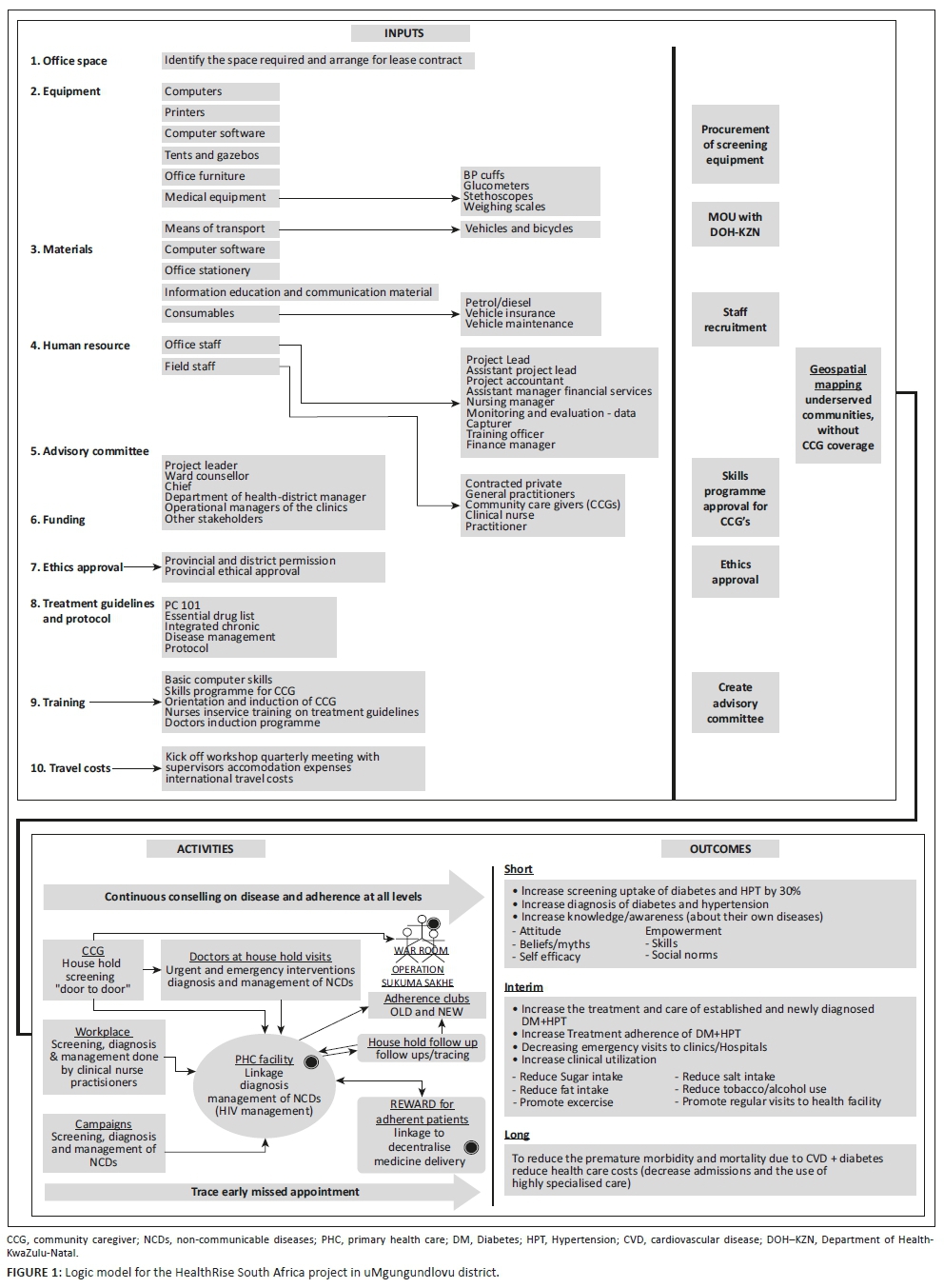
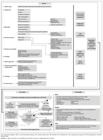
HealthRise SA was established as a community-based demonstration project by Medtronic Foundation, a global philanthropy, after negotiations with the Provincial and National Departments of Health. The logic model for the HealthRise SA programme in uMgungundlovu district is shown in Figure 1. Participants aged ≥ 15 years were accessed from the communities using three methods: door-to-door household visits, community campaigns and workplace visits. A process evaluation was conducted, where outputs including numbers screened, referred and diagnosed were used to assess programme implementation in the screening and referral phases of the programme.
Setting
HealthRise was established as a demonstration project designed to improve screening, diagnosis, management and control of hypertension and diabetes in underserved communities. The other countries that participated in the global HealthRise initiative were Brazil, India and the United States. Implementing organisations in each location developed programmes tailored uniquely to each local context and a common feature of the programme was empowering front-line health workers.13
Expectra Health Solutions (EHS), a local non-profit organisation, was commissioned to conduct this demonstration project in uMgungundlovu district municipality. This district is 1 of 11 in the province. It was chosen because it is one of the National Health Insurance (NHI) pilot sites, and characteristic features of the pilot sites include being an underserved area with poor health outcomes and a health system in need of improvement.14151617
HealthRise SA was conducted in the Msunduzi, uMshwathi and Mkhambathini subdistricts of uMgungundlovu.
Training of community caregivers
For this demonstration project, 25 people were recruited from the community to be trained as CCGs (EHS CCGs). They were recruited using set criteria, namely, communication skills, minimum of matric education, previous work experience in healthcare or as a volunteer CCG for > 1 year and a passion for helping the communities in which they reside.
A 3-day NCD skills training programme was developed for these CCGs. It was based on an accredited community health programme developed by EHS and approved by the Health and Welfare Sector Education Authority (HWSETA). All training adhered to the DoH protocol and guidelines including Adult Primary Care, ICDM, Diabetes Type 2 Management Guidelines and the Ideal Clinic concept, with view to possible scalability of the programme.18,19
From the outset, the project was implemented in full consultation and participation of the KZN DoH. It was therefore crucial to build the capacity of the DoH staff in NCD work. This required training of the DoH CCGs to match the level of skill of the EHS CCGs. Furthermore, clinical nurse practitioners and professional nurses from the facilities were trained to increase their knowledge about NCDs and garner their support for the management and care of NCD patients referred to their facilities.
Study population and sampling strategy
A cross-sectional approach was used for the initial phase of this demonstration project. Seven PHC facilities were selected from across the Msunduzi, uMshwathi and Mkhambathini subdistricts. These were purposively selected using predefined criteria in a consultative process with the KZN DoH. The criteria included facilities with no or minimal DoH CCGs. The selected facilities were also required to represent a combined catchment area that comprised residents living in rural informal, rural formal (farm), urban formal and urban informal areas. The seven facilities had a catchment population totalling 163 995 people.
All individuals aged ≥ 15 years were eligible for screening. They were approached using three methods, namely, door-to-door home-based visits, campaigns and workplace visits. Using the DoH guidelines for CCGs, it was determined that each pair of CCGs could access an average of 15 households per day, which over the 13-month period would result in screening a targeted number of over 10 500 people.
Households and workplaces that were approximately within a 5 km - 10 km radius of each facility were visited. Door-to-door visits were conducted where a CCG started from one end of each street and visited every household up to the other end of the street during working hours. However, within the catchment areas, EHS CCGs would not work in areas where DoH CCGs (with their mainly HIV mandate at the time) were already working. This was to avoid interfering with the DoH CCG work and causing possible confusion of multiple CCGs visiting community members on the same day.
Once the home was accessed every eligible and consenting household member was screened for BP and blood glucose. Overall 10 658 households were visited with an available population of 11 860 household members. Of these 7954 people consented to be screened. Sixteen workplaces were visited comprising farms and factories, from which 525 people were screened. Screenings were conducted at workplaces to accommodate employed community members who were not available at home or were unable to visit a health facility because of work commitments. Twenty-four campaigns were conducted at community centres from which 2353 people were screened. A total of 10 832 people were screened by HealthRise SA KZN.
Data collection
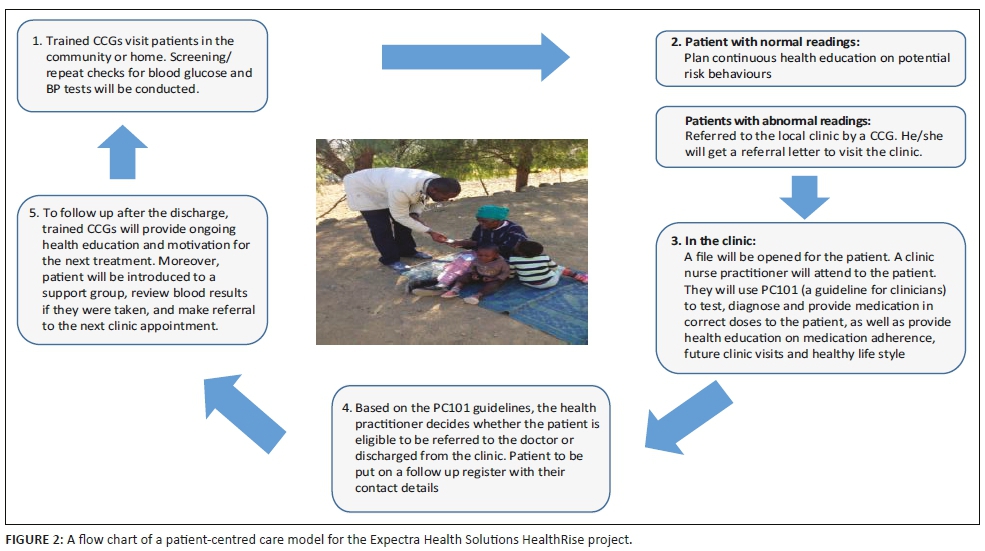
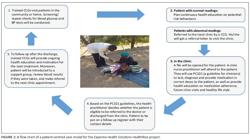
Using a patient-centred approach, data on demographics and socio-economic status of all family members were collected. They were then screened for hypertension and diabetes, which was followed by a facility referral, where necessary (Figure 2). The instruments used included the family profile questionnaire and an individual screening questionnaire. The questionnaires were pre-tested among a small convenience sample of community members and researchers for comprehensiveness and the instruments were refined accordingly.
The family profile questionnaire was used to obtain data on all family members, including demographics, highest level of education, employment, specific questions for women on pregnancy and breastfeeding, type of birth and immunisation status of children in the family, sources of income and grant status. The family profile was used to assess which family members were aged ≥ 15 years and were therefore eligible to be screened.
The individual-level general screening questionnaire was administered to individuals aged ≥ 15 years. It included items on risk behaviours, demographics, diabetes risk assessment, previous diagnoses of hypertension and diabetes, current medication use and previous diagnoses of communicable conditions and other NCDs. Waist circumference, heights and weights were obtained from consenting individuals.
Measurement of BP and random blood glucose was conducted using standardised techniques prescribed in the South African Department of Health's Adult Primary Care guidelines.19
Individuals who had a BP reading ≥ 140/90 mmHg had their BP measured again 6 h later, or on the following day. If they were found to have a persistent BP of ≥ 140/90 mmHg, they were referred to the facility for a confirmatory diagnosis and possible initiation of treatment. Patients who were currently on hypertension treatment and who were found to have readings ≥ 140/90 mmHg were referred to the facility for adjustment of their treatment. Patients with a reading of ≥ 160/100 mmHg, whether newly detected or previously diagnosed, were immediately referred to the facility.
A blood glucose test was conducted on all persons aged ≥ 45 years. For individuals < 45 years old, the FINDRISC diabetes risk assessment20
Community caregivers followed up patients who were referred to the facility after 1 week of their referral. If they did not visit the facility, reasons for not attending were assessed and a referral made to the nursing manager by telephone.
Monthly exports of the data collected were cleaned and analysed and used to calculate indicators on screening, referral, referral completion and diagnosis. The indicators were used to monitor programme performance and make necessary process adjustments along the 13 months of the programme.
Data analysis
Data were analysed using Stata 14.0 (StataCorp, TX, USA).21
Ethical considerations
The study was conducted in accordance with the International Ethical Practice for Research with Human Subjects. Written informed consent was obtained from all participants. Participants who were unable to read and/or write had the consent forms read out to them and a finger print was obtained. Ethical approval for the study was obtained from the Human Sciences Research Council of South Africa (HSRC) Research Ethics Committee (REC). Protocol Number: REC 4/21/09/16. The HSRC REC is registered with the South African National Health Research Ethics Council (REC-290808-015). The HSRC REC has US Office for Human Research Protections (OHRP) Federal-wide Assurance (FWA Organisation No. 0000 6347).
Results
Demographic and socio-economic profile by the three screening methods
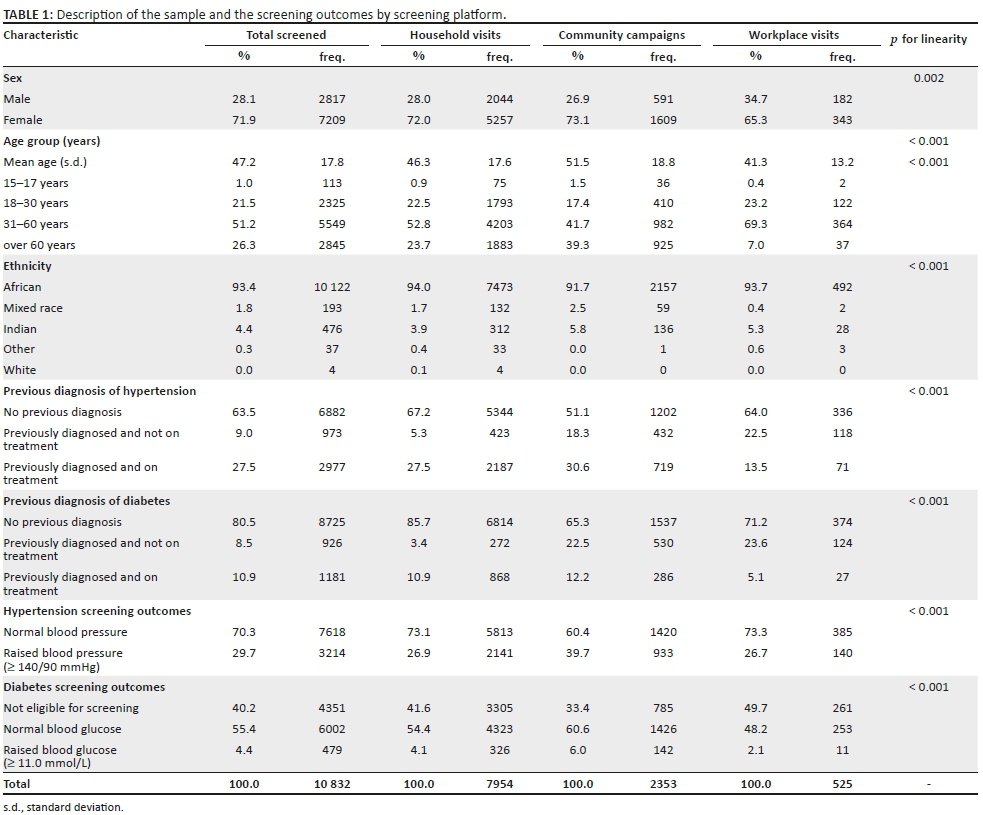
Of the 10 832 individuals screened, 51.2% were 31-60 years old and 26.3% were older than 60 years (Table 1). Almost three-quarters (71.9%) were women and 93.5% were of African ethnicity. When compared with the demographic distribution of uMgungundlovu district,22
More than a third (36.5%, n = 3950) reported that they had previously been diagnosed with hypertension. Of those with previous hypertension diagnoses, three-quarters (75%, n = 2977) reported currently taking treatment. Almost a fifth (19.5%, n = 2107) of the screened sample reported that they had previously been diagnosed with diabetes; 56% (n = 1181) of whom were currently taking diabetic treatment.
The majority of screened individuals (73%, n = 7954) were obtained from household visits, 21.7% (n = 2353) at community campaigns and 4.8% (n = 525) at workplace visits. Sex, ethnicity and age group distributions differed between the three screening methods. There was a higher proportion of men screened at workplaces than at community campaigns and households. The mean age of individuals screened at community campaigns was 51.5 years, which was significantly higher than those screened at households (46.3 years) and workplaces (41.3 years). The proportion of individuals with previously known hypertension and diabetes diagnoses was lowest among those screened at households, while community campaigns yielded the highest proportions of individuals with known previous diagnoses.
Identification of hypertension and diabetes status
Of the 10 832 screened individuals, 29.7% were found to have raised BP of ≥ 140/90 mmHg. With respect to screening for diabetes, 40.2% were not eligible for diabetes screening (they were < 45 years old or had no or minimal risk factors for diabetes according to the diabetes risk assessment); 55.4% had normal levels of random blood glucose and 4.4% had a raised blood glucose of ≥ 11.0 mmol/L who required referral to a facility for confirmatory diagnosis.
A higher proportion of individuals with raised BP was found among those screened at community campaigns (39.7%) than at workplaces (26.7%) and households (26.9%). Community campaigns also yielded the highest proportion of individuals with raised blood glucose (6.0%), followed by household screenings (4.1%) and workplace screenings (2.1%).
Of the 6882 individuals without a prior hypertension diagnosis, more than one in five (21.0%) was found to have raised BP, thus representing newly detected cases of hypertension (Table 2). Similarly, of the 8725 individuals without a prior diabetes diagnosis, 1.4% were newly detected cases of raised blood glucose.
Management of hypertension and diabetes
For those patients previously diagnosed and on treatment for hypertension, almost half (49.6%, n = 1476) had a raised BP at screening (Table 2). For those patients previously diagnosed with diabetes and on treatment, 28.2% (n = 333) had a raised random blood glucose level (≥ 11 mmol/L).
Referral and linkage to primary healthcare
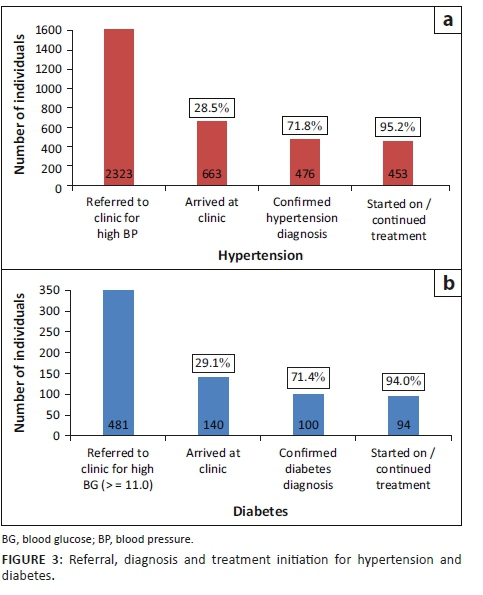
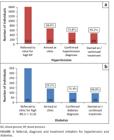
Figure 3 shows the referral, diagnosis and treatment initiation of the individuals who were screened and referred for hypertension and diabetes. Of the 2323 participants referred to the facilities for raised BP, only 663 (28.5%) arrived at the facility, 476 (71.8%) of whom had their hypertension diagnosis confirmed and 453 (95.2%) started or continued their treatment. Of the 481 participants referred to facilities for raised blood glucose, 140 (29.1%) arrived at the facility, 100 (71.4%) of whom were found to have a confirmed diabetes diagnosis and 94 (94.0%) were started onto or continued treatment.
Discussion
This article explored the feasibility of trained CCGs to engage with communities and assess their hypertension and diabetes status. Existing PHC services are geared towards in-facility patient healthcare seeking for acute ailments. The tasks of CCGs are geared towards home-based care for patients with HIV and/or TB.
In this study, CCGs were trained to engage with communities, access homes, conduct campaigns, visit workplaces and obtain clinical measurements of BP and blood glucose. The findings reveal substantial numbers of participants with an unmet need for hypertension and diabetes education, care and management, as well as poor control and follow-up care of those previously diagnosed. For those participants who were referred and attended the facility, more than nine in 10 people started or continued with treatment.
This demonstration project draws attention to the substantial number of patients who did not visit the facility upon referral. Similar rates of following up at facilities after referral were found in another study with community health workers screened for CVD.237
In addition, NCD-trained CCGs may be able to provide on the spot-informed care to patients and help with educational efforts and management issues that may arise once a patient has left the facility following diagnosis. A South African study reported lowered blood glucose levels at 18 months following an empowerment education programme in the first 3 months of care.243
It may be argued that this active form of case finding for NCDs is labour-intensive and the actual yield of linkage to care poor,34
In the South African context, a strong foundation has been laid for the management of HIV and AIDS using a PHC approach. A major focus will be to move from an infectious disease-specific focus to a focus on patients with a chronic condition or prevention of potentially chronic conditions - aimed at generic education on lifestyle and well-being.25
The limitation of this project is that it was conducted in one district with characteristics such as high unemployment, low resourced health systems and high diabetes and hypertension prevalence, and therefore the findings may not be generalised to other districts in the province. The population screened was largely a mobile population residing in the city for purposes of work and this may have hampered follow-up visits. In rural areas, the long distances from the facility and possible financial constraints may have limited access to health services.
Conclusion
This demonstration project draws attention to the unmet healthcare of people living with NCDs in communities. It also draws attention to the potential value of well-trained CCGs to bridge the gap in resource-limited communities by shifting work from specialist level down to community care level. More specifically, it calls for additional efforts focussing on referral of patients at risk following detection. Methods to motivate patients and facilitate their referral uptake are required. This calls for a systematic approach to NCD identification and linkage to care at community level using existing services nuanced by innovations that lend themselves to enhancing measures for early detection, scale-up and sustainability.
Competing interests
The authors have declared that no competing interest exists.
Authors' contributions
All authors are responsible for the study concept and design. Sa.M. and Si.M. collected the data. P.R. supervised the study. S.J., Sa.M. and R.S. performed the analysis and drafted the article. P.R., Sa.M. and Si.M. provided critical review of the article. All authors read and approved the final article.
Funding information
The implementation of the HealthRise intervention programme was funded by Medtronic Foundation. The views expressed in the submitted article are those of the authors and do not reflect those of the funder.
Data availability statement
Data sharing is not applicable to this article.
Disclaimer
The views and opinions expressed in this article are those of the authors and do not necessarily reflect the official policy or position of any affiliated agency of the authors.
Acknowledgements
We thank Mrs Sindi Mthethwa and Mrs Nomndeni Zimu from the provincial and district level health departments respectively, as well as the former KZN MEC for Health, Dr Sibongiseni S Dhlomo, for their support, motivation and assistance in coordinating the project. We also thank the following technical experts, staff members and colleagues for their support and efforts in implementing the project: Dr Nhlankanipho Gumede, Dr Mzulungile Nodikida, Dr Anam Nyembezi, Dr Zaino Petersen, Dr Charmaine Hlatshwayo, Ms Busi Madela, Ms Londeka Makhoba, Ms Lungile Madela, and Mr Malibongwe Manyathela. We also extend our gratitude to the CCGs and community members who participated in the research.
References
- 1.Institute for Health Metrics and Evaluation (IHME). Findings from the Global Burden of Disease study 2017. Seattle, WA: IHME; 2018.
- 2.GBD 2017 DALYs and HALE Collaborators. Global, regional, and national disability-adjusted life-years (DALYs) for 359 diseases and injuries and healthy life expectancy (HALE) for 195 countries and territories, 1990-2017: A systematic analysis for the Global Burden of Disease study 2017. Lancet Glob Health Metrics. 2018;392(10159):1859-1922.
-
3.Kane J, Landes M, Carroll C, Nolen A, Sodhi S. A systematic review of primary care models for non-communicable disease interventions in Sub-Saharan Africa. BMC Fam Pract. 2017;18(1):46. https://doi.org/10.1186/s12875-017-0613-5
» https://doi.org/10.1186/s12875-017-0613-5 -
4.Kruk ME, Nigenda G, Knaul FM. Redesigning primary care to tackle the global epidemic of noncommunicable disease. Am J Public Health. 2015;105(3):431-437. https://doi.org/10.2105/AJPH.2014.302392
» https://doi.org/10.2105/AJPH.2014.302392 -
5.Nojilana B, Bradshaw D, Pillay-van Wyk V, et al. Emerging trends in non-communicable disease mortality in South Africa, 1997-2010. S Afr Med J. 2016;106(5):477-484. https://doi.org/10.7196/SAMJ.2016.v106i5.10674
» https://doi.org/10.7196/SAMJ.2016.v106i5.10674 -
6.Nojilana B, Bradshaw D, Pillay-van Wyk V, et al. Persistent burden from non-communicable diseases in South Africa needs strong action. S Afr Med J. 2016;106(5):23-24. https://doi.org/10.7196/SAMJ.2016.v106i5.10776
» https://doi.org/10.7196/SAMJ.2016.v106i5.10776 -
7.Lall D, Engel N, Devadasan N, Horstman K, Criel B. Models of care for chronic conditions in low/middle-income countries: A 'best fit' framework synthesis. BMJ Global Health. 2018;3(6):e001077. https://doi.org/10.1136/bmjgh-2018-001077
» https://doi.org/10.1136/bmjgh-2018-001077 -
8.Mendis S, Al Bashir I, Dissanayake L, et al. Gaps in capacity in primary care in low-resource settings for implementation of essential noncommunicable disease interventions. Int J Hypertens. 2012;2012:584041. https://doi.org/10.1155/2012/584041
» https://doi.org/10.1155/2012/584041 - 9.National Department of Health. Integrated chronic disease manual: A stepby step guide to implementation. Pretoria: DepartmentofHealth; 2013.
-
10.Levitt NS, Steyn K, Dave J, Bradshaw D. Chronic noncommunicable diseases and HIV-AIDS on a collision course: Relevance for health care delivery, particularly in low-resource settings--insights from South Africa. Am J Clin Nutr. 2011;94(6):1690S-1696S. https://doi.org/10.3945/ajcn.111.019075
» https://doi.org/10.3945/ajcn.111.019075 - 11.Pillay Y, Barron P. The implementation of PHC re-engineering in South Africa. Pretoria: Department of Health; 2011.
-
12.Rabkin M, de Pinho H, Michaels-Strasser S, Naitore D, Rawat A, Topp SM. Strengthening the health workforce to support integration of HIV and noncommunicable disease services in sub-Saharan Africa. AIDS. 2018;32(1):S47-S54. https://doi.org/10.1097/QAD.0000000000001895
» https://doi.org/10.1097/QAD.0000000000001895 -
13.HealthRise. HealthRise South Africa: Improving care for people living with cardiovascular disease, diabetes [homepage on the Internet]. c2016 [cited 2019 Oct 15]. Available from: https://www.health-rise.org/wp-content/uploads/2016/09/HealthRise-Slipsheet-South-Africa.pdf
» https://www.health-rise.org/wp-content/uploads/2016/09/HealthRise-Slipsheet-South-Africa.pdf - 14.Khumalo G. 10 Districts announced for NHI pilot. Pretoria: South African Government News Agency; 2012.
-
15.Wollum A, Gabert R, McNellan CR, et al. Identifying gaps in the continuum of care for cardiovascular disease and diabetes in two communities in South Africa: Baseline findings from the HealthRise project. PLoS One. 2018;13(3):e0192603. https://doi.org/10.1371/journal.pone.0192603
» https://doi.org/10.1371/journal.pone.0192603 -
16.Jardim TV, Reiger S, Abrahams-Gessel S, et al. Hypertension management in a population of older adults in rural South Africa. J Hypertens. 2017;35(6):1283-1289. https://doi.org/10.1097/HJH.0000000000001312
» https://doi.org/10.1097/HJH.0000000000001312 - 17.Massyn N PA, Peer N, Day C, editors. District health barometer 2016/17. Durban: Health Systems Trust; 2017.
- 18.National Department of Health. Strategic plan for the prevention and control of non-communicable disease 2013-2017. Pretoria: Department of Health; 2013-2017.
- 19.National Department of Health. Primary care 101 guideline 2013/14: Symptom-based integrated approach to the adult in primary care. Pretoria: Department of Health; 2013.
-
20.Bernabe-Ortiz A, Perel P, Miranda JJ, Smeeth L. Diagnostic accuracy of the Finnish Diabetes Risk Score (FINDRISC) for undiagnosed T2DM in Peruvian population. Prim Care Diabetes. 2018;12(6):517-525. https://doi.org/10.1016/j.pcd.2018.07.015
» https://doi.org/10.1016/j.pcd.2018.07.015 - 21.StataCorp. 2015. Stata Statistical Software: Release 14. College Station, TX: StataCorp LP.
- 22.Statistics South Africa. Census 2011 municipal report - KwaZulu-Natal. Report no. 03-01-53. Pretoria: Statistics South Africa; 2012.
-
23.Levitt NS, Puoane T, Denman CA, et al. Referral outcomes of individuals identified at high risk of cardiovascular disease by community health workers in Bangladesh, Guatemala, Mexico, and South Africa. Glob Health Action. 2015;8:26318. https://doi.org/10.3402/gha.v8.26318
» https://doi.org/10.3402/gha.v8.26318 -
24.Price C, Shandu D, Dedicoat M, Wilkinson D, Gill GV. Long-term glycaemic outcome of structured nurse-led diabetes care in rural Africa. QJM. 2011;104(7):571-574. https://doi.org/10.1093/qjmed/hcr005
» https://doi.org/10.1093/qjmed/hcr005 -
25.Mahomed O, Asmall S, Freeman M. An integrated chronic disease management model: A diagonal approach to health system strengthening in South Africa. J Health Care Poor Underserved. 2014;25(4):1723-1729. https://doi.org/10.1353/hpu.2014.0176
» https://doi.org/10.1353/hpu.2014.0176

Accepted: 30 Oct. 2019
Published: 20 Feb. 2020