Implementation of the framework for disability and rehabilitation in Gauteng, South Africa
Abstract
BACKGROUND: The Framework and Strategy for Disability and Rehabilitation (FSDR) in South Africa aims to improve rehabilitation services for individuals with disabilities. However, research related to its implementation process is limited AIM: To explore the experiences of the implementation process of FSDR among stakeholders in Gauteng, South Africa SETTING: The study was conducted in 5 districts in the Gauteng Province of South Africa namely, City of Johannesburg, Ekurhuleni, West Rand, Sedibeng, and Tshwane METHODS: A descriptive qualitative study design was used, combining semi-structured interviews and focus groups with diverse stakeholders, including clinicians, rehabilitation managers and community health workers. Data were analysed thematically using MAXQDA software, with key themes mapped deductively to the stages of the EPIS (Exploration, Preparation, Implementation, Sustainment) framework to identify key implementation steps taken RESULTS: Challenges to implementation including resource shortages, limited career progression, weak management communication and procedural inefficiencies were reported. Participants emphasised the need for policy adaptations reflecting field experiences and advocated for increased accountability and resources. The EPIS framework highlighted the critical role of phase-specific interventions and continuous monitoring for effective policy implementation CONCLUSION: The study concludes that systemic barriers must be addressed to enhance the sustainability and impact of the FSDR policy on rehabilitation services CONTRIBUTION: Recommendations include fostering accountability, improving resource allocation and realigning policies with frontline needs to ensure long-term improvements in disability and rehabilitation services
disability; rehabilitation; policy analysis; implementation science; FSDR; policy processes
Introduction
People with disabilities have greater unmet health needs, which are exacerbated by the coronavirus disease 2019 (COVID-19) pandemic.123,43,4,5
In South Africa, access to rehabilitation is affected by many factors. A situational analysis on rehabilitation services in SA6745
Rehabilitation 2030 aims to ensure global access to rehabilitation by 2030, addressing disparities in service provision.657
Health inequities remain a persistent challenge globally and in South Africa, and equitable access to rehabilitation services is critical to addressing these disparities. Public health policy plays a central role in promoting inclusive health systems that ensure persons with disabilities are not marginalised.8910
Although the FSDR was well conceptualised, previous studies have primarily focused on its content, context, role-players and processes. These studies found that, while the FSDR is well aligned with the global Rehabilitation 2030 agenda, the actual implementation process remains vague and underdeveloped.10
Understanding how such frameworks are implemented is not only a scientific imperative - contributing to the field of implementation science - but also a social necessity, given the real-world implications for service delivery to a historically underserved population. Furthermore, identifying barriers and enablers to implementation provides insight into resource allocation, system readiness and the adjustments required to strengthen future policy implementation.11,12
This study aims to contribute to this body of knowledge by examining the implementation of the FSDR in Gauteng province, using the Exploration, Preparation, Implementation and Sustainment (EPIS) framework.513
Aim of the study
The aim of this study is to explore the implementation of the Framework and Strategy for Disability and Rehabilitation Services for South Africa (2015-2020).
Research methods and design
Study objectives
• To map the process of implementation of the FSDR in Gauteng province based on the experiences of stakeholders involved in the implementation.
• To explore the perceptions of implementation outcomes and the experiences of stakeholders involved in the implementation of the FSDR in Gauteng.
Study design
This study adopted a descriptive qualitative single-case study design to explore stakeholder experiences during the implementation of the FSDR in Gauteng province. Data collection involved 15 semi-structured interviews and 6 focus group discussions (FGDs). Interviews were conducted using open-ended questions and continued until data saturation was achieved. Both online and face-to-face interviews were transcribed verbatim. Focus groups, conducted during national, provincial and district meetings, provided both qualitative and observational data. Participants included rehabilitation therapists, academics and non-governmental organization (NGO) representatives.
Study setting
The research was conducted in Gauteng Province, which has a population of approximately 15 million people, accounting for about 25% of South Africa's total population. The study involved participants from five districts within the province, including the City of Johannesburg, Ekurhuleni, West Rand, Sedibeng and Tshwane. Although Gauteng has made progress in improving data systems, disaggregated data on disability remains limited and inconsistent across districts. Where data are available, it reflects a range of disability types, including physical, sensory, intellectual and psychosocial disabilities, with higher prevalence reported in poorer communities. However, there is a lack of detailed, up-to-date statistics to guide service planning and policy implementation at the district level. This lack of comprehensive data poses challenges for tailoring rehabilitation services to meet the diverse needs of people with disabilities across the province.
Study participants
Participants were selected using purposive and snowball sampling techniques to ensure a diverse representation of relevant stakeholders. Purposively sampled individuals included national and provincial rehabilitation managers, representatives from disability persons organisations (DPOs), and frontline rehabilitation therapists. Snowball sampling allowed the identification of additional participants such as community health workers, members of rehabilitation professionals' organisations and academic experts, enhancing the richness of the data.
Data collection
Data were collected through semi-structured interviews and FGDs, which explored stakeholders' experiences with FSDR implementation. An interview guide comprising open-ended questions was developed to steer the discussions. Two pilot interviews were conducted to refine the guide and were retained in the final dataset because of minimal changes. Interviews and FGDs were audio recorded and transcribed verbatim. FGDs were held during national and provincial-level meetings and included some participants who had also taken part in the individual interviews. Observational data were gathered during FGDs to capture group dynamics and interactions. All data were stored securely, with personal identifiers removed to maintain confidentiality.
Data analysis
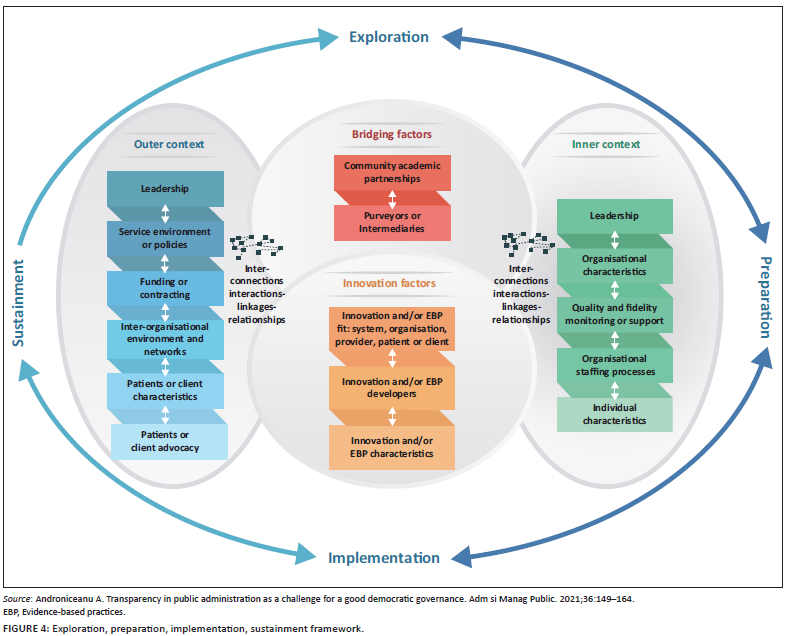
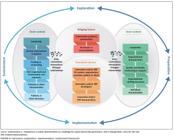
Data were analysed using deductive thematic analysis, guided by the EPIS framework, as seen in Figure 4. (Exploration, Preparation, Implementation and Sustainment) as outlined by a previous study.14
Trustworthiness
This study employed multiple strategies to ensure trustworthiness in its qualitative research. Credibility, linked to internal validity, was achieved through member checking to ensure transcripts accurately reflected participants' responses. Transferability, addressing the generalisability of findings, was supported by detailed descriptions of the research process, including participant details, methods and timeframes.1516
Ethical considerations
Ethical clearance to conduct this study was obtained from the University of the Witwatersrand Human Research Ethics Committee (Medical) (No. M220364). The study adhered to the ethical principles outlined in the Helsinki Declaration.
Results
Demographic data of participants
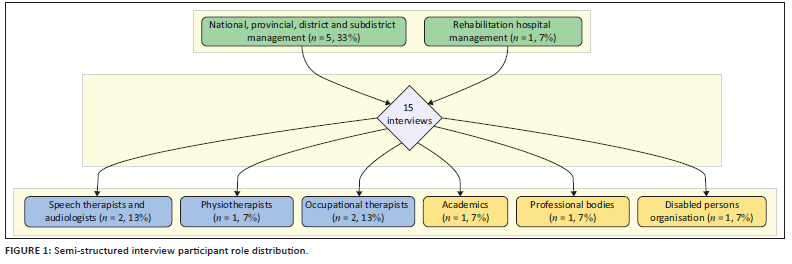
The study included 15 semi-structured interviews with stakeholders such as national and provincial rehabilitation managers, rehabilitation professionals, academics, members of professional bodies and representatives from DPOs. In addition, six FGDs were conducted with multidisciplinary rehabilitation professionals, community health workers and therapy-specific professional groups, including occupational therapists, podiatrists, speech therapists and audiologists. The participant demographic information revealed a notable gender imbalance, with a significant majority being female (85%) compared to male participants (15%). In terms of age distribution, the participants represented a diverse age range, with the highest concentration in the 25-35 years and 35-45 years groups. Fewer participants fell within the 45-55 years and 55-65 years brackets, indicating that a younger to mid-career demographic was most prominent in the study.
Figure 1 presents the distribution of participants in 15 interviews, colour-coded by role type: green for management levels, blue for clinical staff and yellow for external stakeholders, with each box showing both the participant count and their percentage of the total.
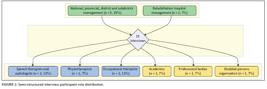
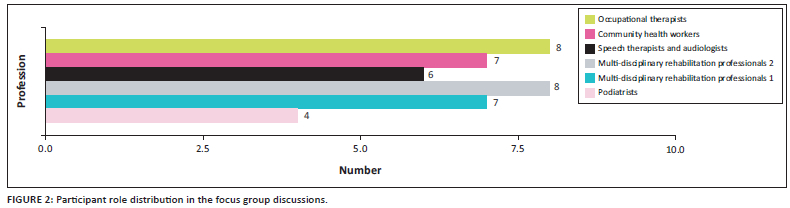
Figure 2 shows the number of participants in focus group discussions by profession, with occupational therapists and one group of multidisciplinary rehabilitation professionals having the highest participation (n = 8), and podiatrists the lowest (n = 4).
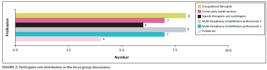
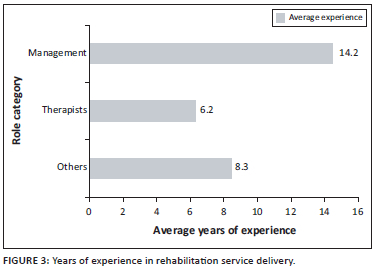
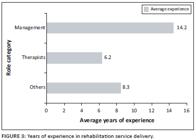
Figure 3 shows that management roles have the highest average experience at 14.2 years, followed by others (primarily clinicians and community health workers) at 8.3 years and rehabilitation therapists with the least at 6.2 years, indicating varying experience levels across role categories.
Overview of results
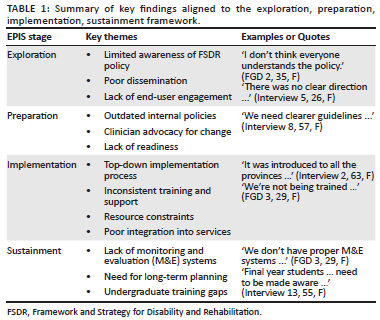
Table 1 summarises the key themes and illustrative quotes from the study, organised according to the stages of the EPIS framework.
Exploration stage: Understanding the policy context
This stage explored participants' awareness and understanding of the FSDR policy and its objectives. Many reported limited exposure to the policy during their training or orientation. Several participants noted a disconnect between policy development and frontline realities, particularly the lack of engagement with end-users during the formulation of the FSDR.
Policy awareness: The following response illustrates one of the participant's perception on policy awareness:
'I don't think everyone understands the policy.' (FGD 2, 35, F)
Lack of end-user engagement: Participants shared their view on end-user engagement, as evident in the following statements:
'There was no clear direction on what is happening. The question why we were not involved with representing Gauteng and we'd never got the answer for that.' (Interview 5, 26, F)
'I don't even know if the stakeholders know about it or know of it or know how to implement it or know what the outcomes would be.' (Interview 7, 29, F)
Policy dissemination: One of the participants responses gave insight into policy dissemination:
'We did a distribution of the manual documents that also ensured that the document is available in soft copy on our website. Also facilitated the development of implementation and template in all the provinces.' (Interview 3, 59, M)
Policy approval mechanisms: A participant disclosed their understanding of the policy approval mechanisms:
'So ultimately every single policy or strategy document has to be approved by the National Health Council … the Minister, Deputy Minister, members of executive council, and all heads of departments.' (Interview 2, 63, F)
Preparation stage: Readiness and local adaptation
This stage examined how participants prepared for implementing the FSDR. Many highlighted the need to revise existing internal policies and strengthen operational guidelines to support implementation on the ground:
'The existing assistive device policy is outdated, and we need clearer guidelines to ensure that resources are allocated to those who need them most.' (Interview 8, 57, F)
Experienced clinicians often advocated for better support systems and clearer processes to facilitate policy implementation in real-world contexts.
Implementation stage: Actions and challenges
The FSDR was introduced through a top-down approach, with dissemination beginning at the national level and filtering through provinces and districts. However, there was no standardised implementation plan, resulting in inconsistencies. The absence of formal training and guidance further contributed to uneven uptake.
Top-down implementation process:
• The National Department of Health (NDoH) commissioned a task team to develop the FSDR.
• The FSDR was approved by the National Health Council in 2014.
• In 2015, the FSDR was disseminated in hard and soft copy to all nine provinces through the National Rehabilitation Forum.
• Provincial rehabilitation managers were expected to cascade the FSDR and facilitate training.
• No national guidelines were provided, leaving each province to decide on implementation.
• The NDoH only conducted training upon request from provinces.
• Gauteng, hard copies were sent to the five districts.
• District managers were tasked with further dissemination and training.
• Some ground-level clinicians were unaware of the FSDR.
Implementation gaps: Implementation gaps were identified:
'While the outreach efforts were commendable, the lack of formal FSDR training for staff led to inconsistencies in implementation.' (Interview 6, 28, F)
Top-down implementation: Participants shared their view on the top-down implementation as:
'It [FSDR] was introduced to all the provinces during the National Rehab Forum … then provincially, it was alluded that it should be incorporated in our operational plans.' (Interview 2, 63, F)
'But management doesn't understand what it actually means … all they know is that you have to see this policy, you have to follow this guideline.' (Interview 9, 41, F)
Training deficits: Participants shared their view on training deficits:
'Provinces were given the choice to ask for assistance or to facilitate training … people at Provincial Head Office, Districts and lower down should be familiar with the FSDR.' (FGD 2, 35, F)
'We are not being trained, treating the patient on disability, so it's difficult for us in the community … when you go into the household because you don't know how to deal with the patient with the disability.' (FGD 3, 29, F)
Intersectoral collaboration: Participants highlighted that effective implementation of the FSDR often depended on partnerships across different government departments and sectors:
'That roadshow [as a result of the FSDR], it was in collaboration with Social Development … We embarked on training all the caregivers. Mental health was also involved.' (Interview 11, 28, F)
Feasibility constraints: Some respondents expressed concerns about the practicality of applying the FSDR tools consistently in routine service delivery:
'It's just not feasible for users to use the document or any other measure with each patient.' (FGD 4, 37, M)
Resource limitations: A recurrent theme was the shortage of both material and human resources, which hindered the policy's intended outcomes:
'I think the lack of resources or limited resources is a major challenge - and human resources too.' (Interview 9, 41, F)
Integration of rehabilitation services: Respondents noted that rehabilitation services were often marginalised within the broader health system priorities:
'Rehab doesn't seem to be a priority … we're always a little bit on the outside.' (Interview 10, 36, F)
Lack of stratified implementation: Participants pointed to gaps in how the FSDR addressed the varying needs of different healthcare levels and community contexts:
'There aren't subcategories for hospitals and community … there's a gap in how hospitals feed into communities.' (Interview 7, 33, F)
Staff burnout: Several participants discussed the emotional and physical toll on healthcare workers, warning about the risk of burnout:
'We don't want to burn out … our life is over and we don't enjoy what we've been put here to do.' (FGD 5, 57, M)
Sustainment stage: Long-term integration and monitoring
This stage focused on how well the FSDR had been integrated over time and what measures were in place to ensure its sustainability. Participants widely noted a lack of formal monitoring and evaluation (M&E) mechanisms, which undermined the ability to track progress and impact.
Monitoring and evaluation: The absence of strong and effective monitoring and evaluation mechanisms was seen as a major barrier to assessing progress and guiding improvement:
'We don't have the proper M&E systems in place to track the success of the policy … difficult to determine if we're moving in the right direction.' (FGD 3, 29, F)
'The follow-up and monitoring of the progress didn't come through strongly.' (Interview 8, 57, F)
'We do strategic planning at the end of every year … so we know where we are, where we want to go.' (Interview 15, 39, F)
Long-term planning and organisational culture: Participants highlighted the need for consistent support, planning and policy integration into the daily functioning of the health system. Several emphasised that undergraduate health professionals should be introduced to such policies early in their training:
'The final year students, especially the rehab ones, need to be made aware of the existence of such policies. So when they come into a workplace, they have an open mind to say, this is what I should expect as a therapist.' (Interview 13, 55, F)
Summary
Using the EPIS framework allowed for a structured analysis of the implementation process of the FSDR in Gauteng. Key barriers included limited awareness, inconsistent implementation practices, insufficient training and weak monitoring systems. However, participants also proposed practical recommendations for improving awareness, building capacity and embedding the policy into daily practice.
Discussion
The study findings showed the implementation process of the FSDR. These insights offer guidance for refining the FSDR and ensuring its long-term impact on disability and rehabilitation services in South Africa. The implementation process of the FSDR policy is intertwined with the broader experiences faced by the healthcare organisation, including resource shortages, poor communication and management inefficiencies. By addressing these systemic issues and fostering a culture of support and accountability, the organisation can better prepare for the effective implementation of policies aimed at improving service delivery and staff well-being.
The findings from the implementation process of the FSDR policy highlight several critical areas of focus, particularly the varied levels of awareness, resource limitations and the need for systemic changes within the healthcare environment. By aligning the findings with the EPIS framework, the process can be scientifically analysed to understand key areas of improvement. Key insights include resource and communication gaps, clinician-led advocacy for policy adaptation, systemic challenges during intervention rollout and the importance of ongoing monitoring, systemic changes and accountability to achieve sustained impact.
Exploration phase
During the Exploration Phase, the assessment of policy awareness revealed significant variability among participants, highlighting a critical gap in the dissemination and communication of the FSDR objectives. This lack of awareness, particularly during educational and orientation programmes, aligns with previous research, where inadequate policy dissemination has been identified as a barrier to effective implementation in health systems.1718
Preparation phase
In the Preparation Phase, the identification of systemic challenges and recommendations for improvement indicates steps taken towards addressing gaps in the implementation process. Participants, particularly long-serving clinicians, advocated for better career progression opportunities and resource allocation. Similar to findings in other health systems, the lack of career advancement is a well-documented issue in healthcare, often leading to burnout and reduced job satisfaction and reduced willingness to implement policy.1419
Implementation phase
The Implementation Phase revealed ongoing efforts to integrate services, though challenges like high case loads, understaffing and long waiting times for referrals hindered progress. The lack of a formal FSDR introduction to staff, despite these efforts, underscores the need for more structured implementation strategies. This finding is supported by authors20,21422
Sustainment phase
Finally, in the Sustainment Phase, the focus is on continuous training, policy integration and systemic changes aimed to promote long-term adherence to the FSDR. Participants stressed the need for fostering a culture of accountability and transparency within organisations, a challenge also observed in the broader literature on health policy sustainment.2324
The implementation of the FSDR and similar policies faces significant challenges because of limited career progression, resource shortages and systemic inefficiencies like bureaucratic delays and poor facility upkeep. A disconnect between management and frontline staff, marked by weak communication and lack of engagement in policy implementation, further hinders progress, mirroring findings from other health system research that poor management-staff relations weaken policy effectiveness.252627
This study's strengths lie in its detailed examination of the FSDR policy implementation through the lens of the EPIS framework, allowing for a structured and comprehensive understanding of the policy's rollout within the South African healthcare system. The inclusion of voices from both frontline clinicians and organisational stakeholders provided rich, context-specific insights into the practical realities of policy implementation. Furthermore, the study successfully highlighted systemic barriers such as poor communication, resource shortages and limited career advancement opportunities, which are often underreported yet critically affect implementation outcomes. These findings not only align with existing literature but also offer locally relevant guidance for future interventions. However, the study does have limitations. It was conducted within a single organisational context, which may limit the generalisability of its findings to other settings in South Africa. In addition, the lack of quantitative measures means the insights are largely qualitative and subjective, which could affect the perceived comprehensiveness of the conclusions. The absence of long-term follow-up also restricts the understanding of the policy's sustainability over time.
Based on the findings, several recommendations can be made to better align future policy implementation with both frontline realities and national health priorities. Firstly, improving communication strategies and ensuring consistent policy dissemination across all levels of staff is essential. Management structures should prioritise inclusive planning and decision-making processes that involve frontline workers, fostering a sense of ownership and accountability. Investment in infrastructure and human resources, particularly in rural and under-resourced areas, should be a key policy focus. Ongoing training and capacity-building initiatives must be embedded within organisational culture to support staff well-being and professional development.284
Conclusion
The implementation of the FSDR policy is influenced by a complex array of factors, including resource limitations, communication challenges and systemic inefficiencies. By mapping these factors within the EPIS framework, it becomes clear that addressing these barriers through structured interventions, stakeholder engagement and ongoing evaluation is critical for ensuring the policy's effectiveness and sustainability.
Evaluating the perceptions of the FSDR implementation is crucial to identify gaps and recommend future disability policy in South Africa. This evaluation is also required by the NDOH to ensure better future policy implementation.
The findings may inform decision-making and policy implementation to enhance rehabilitation service provision. The study's findings will also contribute to the field of rehabilitation services implementation science.
Competing interests
The authors reported that they received funding from the South African Society of Physiotherapy (SASP), the New Generation of Academics Programme (NGAP) and the Faculty of Health Sciences Research grants (FRC), which may be affected by the research reported in the enclosed publication. The author has disclosed those interests fully and has implemented an approved plan for managing any potential conflicts arising from their involvement. The terms of these funding arrangements have been reviewed and approved by the affiliated university in accordance with its policy on objectivity in research.
Authors' contributions
N.A.R.H.E.K. contributed towards the conceptualisation, visualisation, methodology, data collection and analysis and writing of the original draft. N.B.-D. and S.I.P. contributed towards the conceptualisation, visualisation, supervision, writing - review and editing. J.K. contributed towards the conceptualisation, visualisation, writing - review and editing.
Funding information
The authors would like to acknowledge the South African Society of Physiotherapy (SASP), the New Generation of Academics Programme (NGAP) and the Faculty of Health Sciences Research grants (FRC) for their funding contributions to this study. The funders had no involvement in the research process of this study.
Data availability
Data are available upon reasonable request. The data cannot be shared publicly because of ethical considerations as some information in the transcripts contains potentially identifiable information. Requests for data can be sent to the granting ethical clearance committee, the Human and Research Ethics Committee (Medical) of the University of the Witwatersrand by contacting Ms Zanele Ndlovu at
Disclaimer
The views and opinions expressed in this article are those of the authors and are the product of professional research. It does not necessarily reflect the official policy or position of any affiliated institution, funder, agency, or that of the publisher. The authors are responsible for this article's findings, and content.
Acknowledgements
The authors would like to acknowledge the South African Society of Physiotherapy (SASP), the New Generation of Academics Programme (NGAP) and the Faculty of Health Sciences Research grants (FRC) for their funding contributions to this study. This article is partially based on the author's thesis entitled 'Evaluation of the implementation outcomes of the Framework and Strategy for Disability and Rehabilitation for South Africa: An explanatory mixed-methods study' towards the degree of Doctor of Philosophy in the Department of Physiotherapy, University of the Witwatersrand, South Africa, on 18 July 2025, with supervisors Dr Sonti Pilusa and Dr Natalie Benjamin-Damons.
References
-
1. Carpenter B, Nyirenda M, Hanass-Hancock J. Disability, a priority area for health research in South Africa: An analysis of the burden of disease study 2017 Disabil Rehabil. 2022;44(25):7839-7847. https://doi.org/10.1080/09638288.2021.2000047
» https://doi.org/10.1080/09638288.2021.2000047 -
2. Crable EL, Lengnick-Hall R, Stadnick NA, Moullin JC, Aarons GA. Where is 'policy' in dissemination and implementation science? Recommendations to advance theories, models, and frameworks: EPIS as a case example. Implement Sci. 2022;17(1):80. https://doi.org/10.1186/s13012-022-01256-x
» https://doi.org/10.1186/s13012-022-01256-x -
3. Jessani NS, Rohwer A, Schmidt BM, Delobelle P. Integrated knowledge translation to advance noncommunicable disease policy and practice in South Africa: Application of the Exploration, Preparation, Implementation, and Sustainment (EPIS) framework. Health Res Policy Syst. 2021;19(1):82. https://doi.org/10.1186/s12961-021-00733-x
» https://doi.org/10.1186/s12961-021-00733-x -
4. Moullin JC, Dickson KS, Stadnick NA, Rabin B, Aarons GA. Systematic review of the exploration, preparation, implementation, sustainment (EPIS) framework. Implement Sci. 2019;14:1-16. https://doi.org/10.1186/s13012-018-0842-6
» https://doi.org/10.1186/s13012-018-0842-6 -
5. Morris LD, Grimmer KA, Twizeyemariya A, Coetzee M, Leibbrandt DC, Louw QA. Health system challenges affecting rehabilitation services in South Africa. Disabil Rehabil. 2021;43(6):877-883. https://doi.org/10.1080/09638288.2019.1641851
» https://doi.org/10.1080/09638288.2019.1641851 -
6. Louw QA, Conradie T, Xuma-Soyizwapi N, et al. Rehabilitation capacity in South Africa - A situational analysis. Int J Environ Res Public Health. 2023;20(4):3579. https://doi.org/10.3390/ijerph20043579
» https://doi.org/10.3390/ijerph20043579 - 7. Philpott S, McLaren P, Rule S. Toward 'Rehab 2030': Building on the contribution of mid-level community-based rehabilitation workers in South Africa. S Afr Health Rev. 2020;1:155-162.
-
8. Mulcahy A, Streed JrCG, Wallisch, AM, et al. Gender identity, disability, and unmet healthcare needs among disabled people living in the community in the United States. Int J Environ Res Public Health. 2022;19(5):2588. https://doi.org/10.3390/ijerph19052588
» https://doi.org/10.3390/ijerph19052588 -
9. Hussein El Kout, NA, Pilusa, S, Masuku, KD. A review of the framework and strategy for disability and rehabilitation services in South Africa. Afr J Disabil. 2022;11:a893. https://doi.org/10.4102/ajod.v11i0.893
» https://doi.org/10.4102/ajod.v11i0.893 - 10. Mitra S, Yap J. The disability data report. Disability data initiative. New York: Fordham Research Consortium on Disability; 2021.
-
11. Sherry K, Ned L, Engelbrecht M. Disability inclusion and pandemic policymaking in South Africa: A framework analysis. Scand J Disabil Res. 2024;26(1):227-243. https://doi.org/10.16993/sjdr.1066
» https://doi.org/10.16993/sjdr.1066 -
12. Pillay S, Duncan M, De Vries PJ. Autism in the Western Cape province of South Africa: Rates, socio-demographics, disability and educational characteristics in one million school children. Autism. 2021;25(4):1076-1089. https://doi.org/10.1177/1362361320978042
» https://doi.org/10.1177/1362361320978042 - 13. Hill M, Hupe P. Implementing public policy: An introduction to the study of operational governance. London: Sage; 2021.
- 14. Androniceanu A. Transparency in public administration as a challenge for a good democratic governance. Adm si Manag Public. 2021;36:149-164.
-
15. Kassai R, Van Weel C, Flegg K, et al. Priorities for primary health care policy implementation: Recommendations from the combined experience of six countries in the Asia-Pacific. Aust J Prim Health. 2020;26(5):351-357. https://doi.org/10.1071/PY19194
» https://doi.org/10.1071/PY19194 -
16. Waddell A, Lennox A, Spassova G, Bragge P. Barriers and facilitators to shared decision-making in hospitals from policy to practice: A systematic review. Implement Sci. 2021;16:1-23. https://doi.org/10.1186/s13012-021-01142-y
» https://doi.org/10.1186/s13012-021-01142-y - 17. Imperial MT. Implementation structures: The use of top-down and bottom-up approaches to policy implementation. In: Hannah E, editor. Oxford research encyclopedia of politics. Oxfordshire: Oxford University Press; 2021, pp. 75-77.
-
18. Nevedal AL, Reardon CM, Jackson GL et al. Implementation and sustainment of diverse practices in a large integrated health system: A mixed methods study. Implement Sci Commun. 2020;1:1-13. https://doi.org/10.1186/s43058-020-00053-1
» https://doi.org/10.1186/s43058-020-00053-1 -
19. Correa VC, Lugo-Agudelo LH, Aguirre-Acevedo DC et al. Individual, health system, and contextual barriers and facilitators for the implementation of clinical practice guidelines: A systematic metareview. Health Res Policy Syst. 2020;18:1-11. https://doi.org/10.1186/s12961-020-00588-8
» https://doi.org/10.1186/s12961-020-00588-8 -
20. Hudson B, Hunter D, Peckham S. Policy failure and the policy-implementation gap: Can policy support programs help?. Policy Des Pract. 2019;2(1):1-14. https://doi.org/10.1080/25741292.2018.1540378
» https://doi.org/10.1080/25741292.2018.1540378 -
21. Lemke AA, Harris-Wai JN. Stakeholder engagement in policy development: Challenges and opportunities for human genomics. Genetics in Medicine. 2015;17(12):949-957. https://doi.org/10.1038/gim.2015.8
» https://doi.org/10.1038/gim.2015.8 - 22. Buse K, Mays N, Colombini M, Fraser A, Khan M, Walls H. Making Health Policy, 3e. Chicago: McGraw Hill; 2005.
-
23. Hoagwood KE, Purtle J, Spandorfer J, Peth-Pierce R, Horwitz SM. Aligning dissemination and implementation science with health policies to improve children's mental health. Am Psychol. 2020;75(8):1130. https://doi.org/10.1037/amp0000706
» https://doi.org/10.1037/amp0000706 - 24. Thomson G, Crowther S. Attuning to trustworthiness and final reflections. In: Crowther S, Thomson G, editors. Hermeneutic phenomenology in health and social care research. London: Routledge, 2022; p. 213-227.
-
25. Kakar ZUH, Rasheed R, Rashid A, Akhter S. Criteria for assessing and ensuring the trustworthiness in qualitative research. Int J Bus Reflect. 2023;4(2):150-173. https://doi.org/10.56249/ijbr.03.01.44
» https://doi.org/10.56249/ijbr.03.01.44 -
26. Kamenov K, Mills JA, Chatterji S, Cieza A. Needs and unmet needs for rehabilitation services: A scoping review. Disabil Rehabil. 2019;41(10):1227-1237. https://doi.org/10.1080/09638288.2017.1422036
» https://doi.org/10.1080/09638288.2017.1422036 - 27. Sherry K. Disability and rehabilitation: Essential considerations for equitable, accessible and poverty-reducing health care in South Africa. S Afr Health Rev. 2014;1:89-99.
-
28. Hall R, Visagie S. A qualitative exploration of the uses of the International Classification of Functioning, Disability and Health at an inpatient neurorehabilitation facility in the Western Cape, South Africa. Disabil Rehabilitation. 2022;44(4): 582-589. https://doi.org/10.1080/09638288.2020.1773943
» https://doi.org/10.1080/09638288.2020.1773943

Accepted: 29 Apr. 2025
Published: 03 Sept. 2025