Forfeiture to the State: Using Grammar to Interpret Section 35 of the Criminal Procedure Act
Abstract
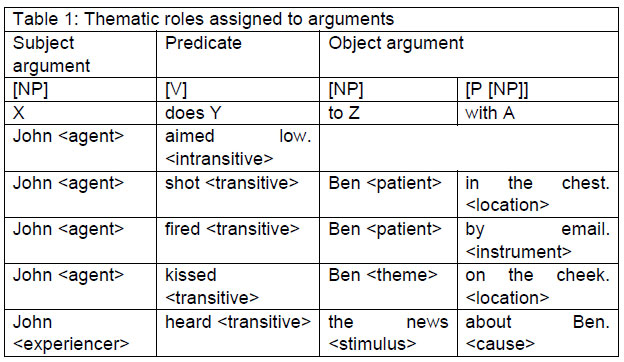
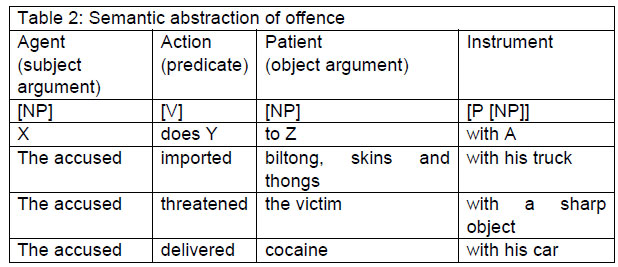
Section 35(1)(a) of South Africa's Criminal Procedure Act 51 of 1977 allows a court of law to declare items forfeited to the state if they were used as weapons or instruments in aid of committing an offence. However, it is not always clear what qualifies as potential instruments of crime or what the proximity of the instrument is to the offence. For the purpose of statutory interpretation, this contribution identifies a grammatical construction frequently present in abstractions of offence descriptions as a means to identify an instrument and its direct involvement in an offence. It takes the form of the construction, "X does Y to Z with A", which contains the instrument prepositional phrase "with A". Read with other thematic roles like "Agent" and "Patient", the statutory interpreter should be able to determine both the relevant instrument role and its potential to affect a change in the object of a sentence, suggesting direct involvement. To better understand the grammar, this contribution modestly explains the Cognitive Linguistic approach to argument structure and thematic roles and briefly summarises Ronald Langacker's "action chain" model. The grammatical construction is then applied to examples taken from South African and Dutch case law dealing with forfeiture to illustrate its potential as a tool for interpretation.
Cognitive linguistics; forfeiture; grammar; instrument; language and law; Criminal Procedure Act; statutory interpretation; thematic roles