Reading Psalm 112 as a "Midrash" on Psalm 111
Abstract
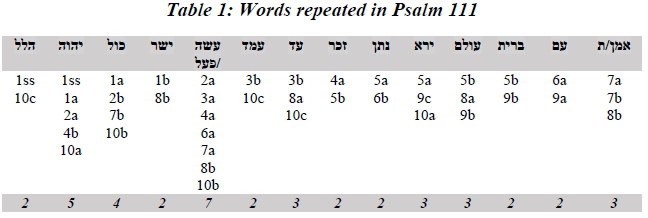
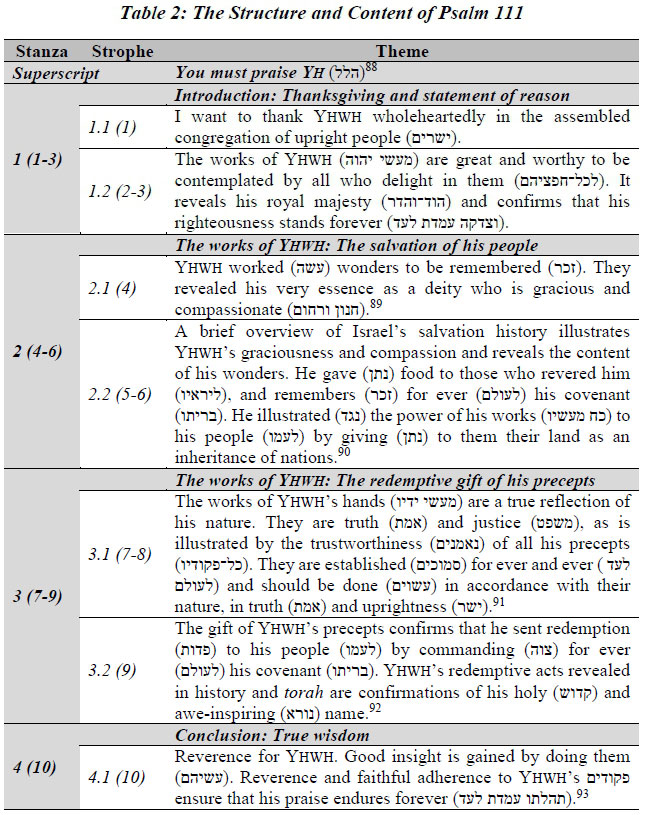
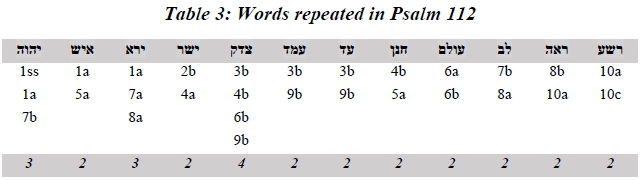
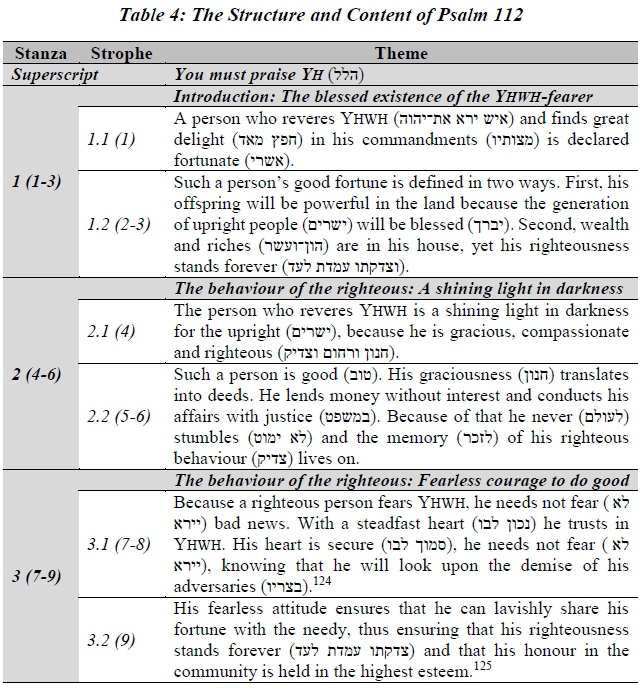
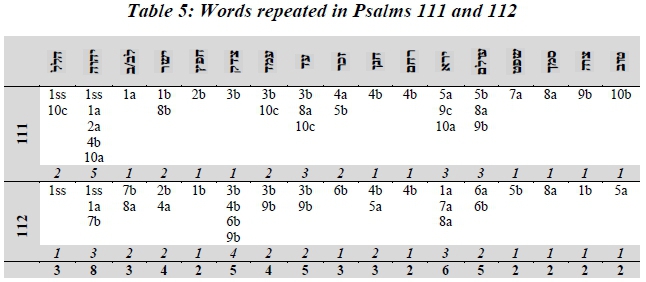
Psalms 111 and 112 are "twin" poems displaying similar characteristics such as the superscript •––• ••, an acrostic form, and shared vocabulary. Surprisingly, the shared characteristics are noted, but the poems often interpreted in isolation. Ps 111 is classified as a hymn or a song of thanksgiving and Ps 112 as a wisdom poem. The prominent presence of so-called "wisdom terminology" in Ps 112 plays a major role in its classification, while the presence of similar terminology in Ps 111 is ignored. The present study engages in an intertextual reading of the two poems. They are read as an intentional, artistic literary composition. Following Michael Fishbane's notion of inner-biblical exegesis, I argue that Ps 112 is an intentional "midrash" on Ps 111, and that the pair should be read as a composition in the context of the late Torah-wisdom redaction of the Psalter in general and Book V of the Psalter in particular.
Psalm 111; Psalm 112; twin psalms; intertextuality; inner-biblical exegesis; midrash; literary composition; wisdom; Torah wisdom; Psalter Book V; Persian Period