And the Word became prophet
Abstract
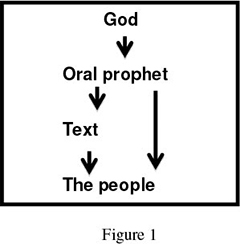
When scribes and priests in the post-exilic period of Israel's history started to write down or to compile the word of God, a process was initiated whereby prophecy was no longer transmitted orally, but through texts. This was part of the first steps for the written word to "become prophet." However, during this process, it was not just the text that exerted prophetic power, but also the interpreter. This meant that although the post-exilic Jewish community had a text-centred orientation, the illiterate were dependent on the literate interpretations of the texts. This brought a new dilemma for the listener: which interpretation would be more accurate than others? This dilemma can also be expressed in terms of the authority of the text versus the authority of the interpreter. By writing down the word of God, the seeds were sown by which the authority of texts was also undermined. The problem is that no text can on its own act as prophet without the aid of an interpreter.
 Thumbnail