Darkness as an Anthropological Space: Perspectives Induced by Psalms 88 and 139 on the Themes of Death, Life and the Presence of YHWH
Abstract
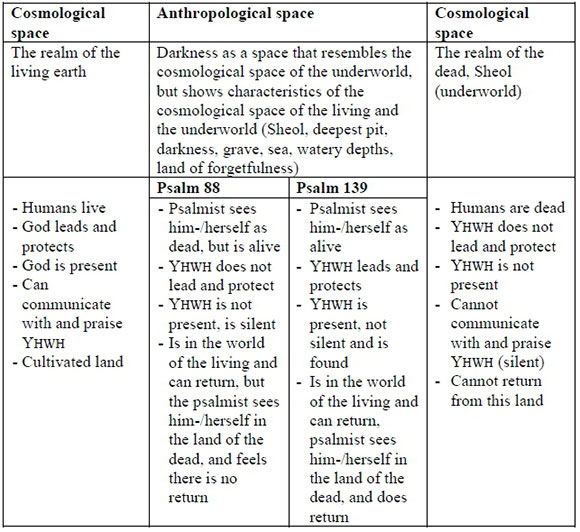
In this article an intertextual comparison is made between Pss 88 and 139 on the theme and use of the concept of "darkness." In the meta-narrative of the shape and shaping of the Psalter, these two psalms are counterpointed to each other. Psalm 88 is traditionally viewed as an individual lament of a person who is sick, dying or facing death. Darkness is a prominent theme in this psalm, with a situation of hopelessness in the exilic period. In contrast, darkness is portrayed differently in Psalm 139, where a different message for the post-exilic period is presented in the meta-narrative. Psalm 139, from the perspective of YHWH as creator, can be interpreted as a ritual or individual meditative confession after some sort ofpossible trial period. To gain a better understanding on the use of darkness in these two psalms, the theme is analysed from the perspective of anthropological space.
Psalm 88; Psalm 139; anthropological space; darkness; death; life; presence of Yhwh