Was the Levite's Concubine Unfaithful or Angry? A Proposed Solution to the Text Critical Problem in Judges 19:2
Abstract
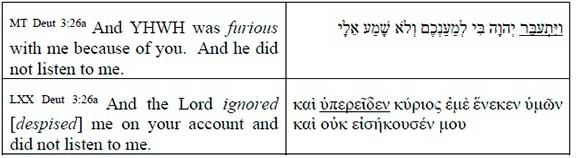
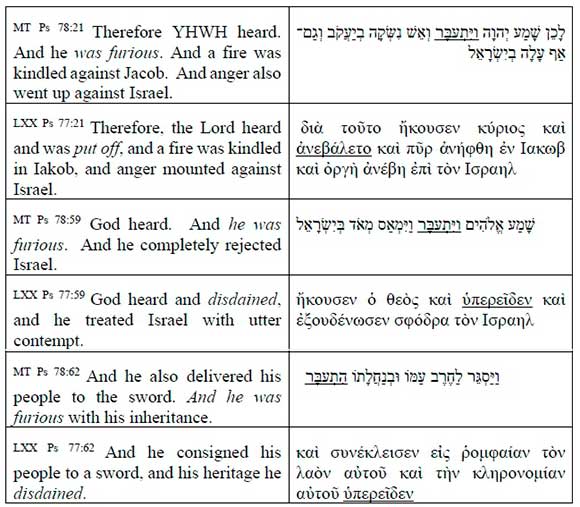
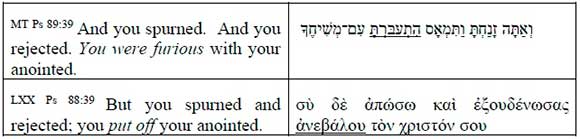
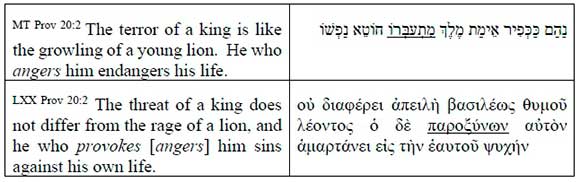
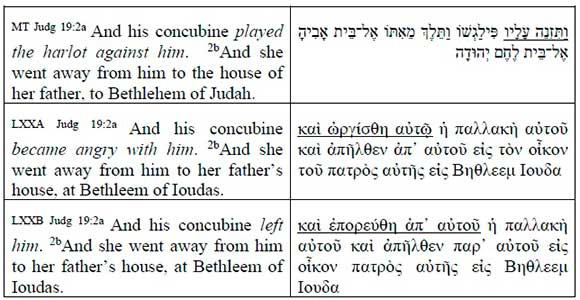
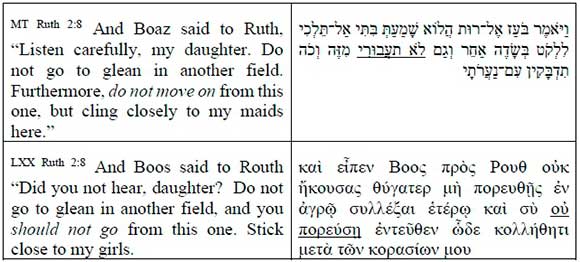
Judges 19:2 poses a text critical problem that has vexed scholars for over a century. According to the MT, the Levite's concubine left her husband and returned to her father's house in Bethlehem because she had "played the harlot against him." According to LXXA, the woman left her husband because she was "angry with him." However, no other Greek, Latin or Aramaic variant of the verse supports MT or LXXA. This article proposes a new hypothesis for understanding the relationship among the various textual variants of Judg 19:2. It will be argued that the earliest Vorlage used the verb –”— in the hitpa 'el form which has the meaning "to be furious". This Vorlage is reflected in LXXA. Later scribes then read the verb –”— in the qal form that has multiple meanings that depend on context. LXXB translated the verb in Greek with the meaning of "to move on". In contrast, Pseudo-Philo interpreted the verb with the meaning of "to transgress". The MT, which emended "to transgress" to "to play the harlot" , represents the final stage in the redaction process.
Judges 19:2; Textual criticism; Septuagint; Pseudo-Philo; Masoretic Text