Use of real-time quantitative reverse transcription polymerase chain reaction for the detection of African horse sickness virus replication in Culicoides imicola
Abstract
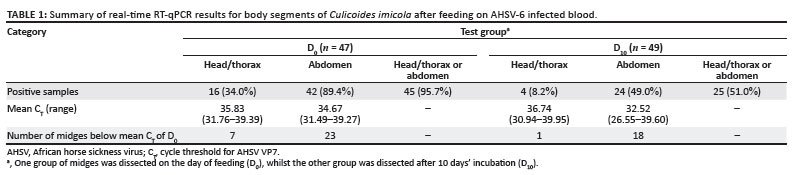
Despite its important role as vector for African horse sickness virus (AHSV), very little information is available on the dissemination of this virus in Culicoides (Avaritia) imicola Kieffer (Diptera: Ceratopogonidae). This study reports on the applicability of a real-time quantitative reverse transcription polymerase chain reaction (RT-qPCR) to detect AHSV in dissected midges. A total of 96 midges were fed on AHSV-infected blood, after which one test group was dissected into head/thorax and abdomen segments immediately after feeding and the other only after 10 days of incubation. The majority of the midges (96%) ingested the virus successfully and there was no significant difference between the virus concentration in the heads/thoraxes and the abdomens immediately after feeding. After incubation, virus was detected in 51% of the midges and it was confined to the abdomen in the majority of these. The fact that virus was detected only in the heads/thoraxes of four Culicoides midges after incubation suggests the presence of a mesenteronal escape barrier. Replication in the salivary glands was not shown. An increase of the mean virus concentration in the abdomen after incubation indicates localised viral replication. The real-time RT-qPCR is recommended for further studies investigating the replication and dissemination of AHSV in Culicoides midges.