Comparative ultrastructure of fibrin networks of a dog after thrombotic ischaemic stroke
Abstract
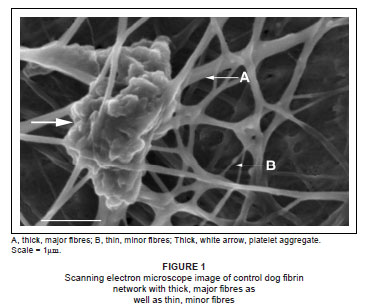
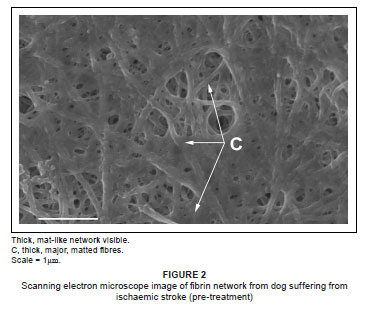
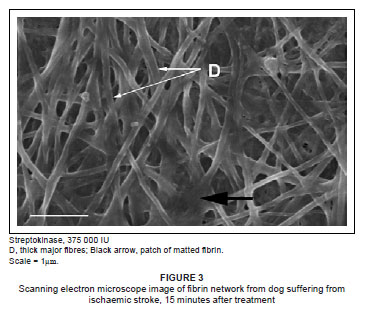
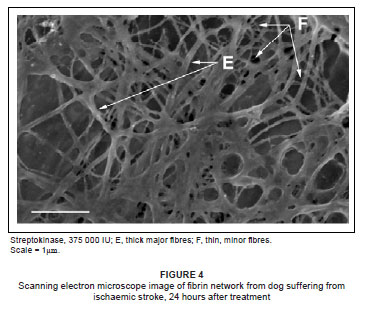
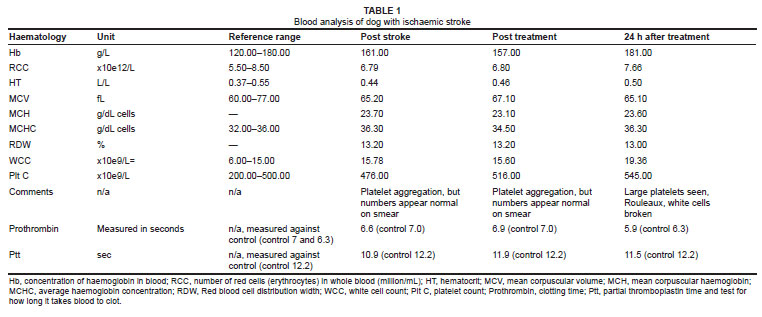
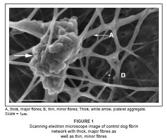
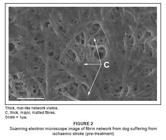
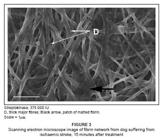
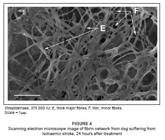
A cerebrovascular accident or stroke is a rare condition in dogs, but previous studies suggest that it is now increasingly being recognised. Platelets and fibrin networks are involved in haemostasis, which is disrupted during a thrombotic event. In this study we investigate the ultrastructure of the fibrin networks of a dog that had suffered ischaemic stroke, following suspected thrombo-embolism from clots that became dislodged during catheter maintenance (flushing with heparinised saline) 2 days after carotid artery catheter insertion. Fibrin networks of blood samples that were collected immediately after the stroke, 15 min after treatment with streptokinase and 24 h after treatment, were studied. The results were compared to those of two control dogs. During a stroke, fibrin morphology changes to form a thick, matted layer. Post-treatment ultrastructure shows that the fibrin morphology returns to that comparable to controls. Our results show that during thrombotic risk, fibrin network morphology changes visibly and reduces the fibrinolytic activity of the coagulation system.
dog; fibrin networks; Ischemic stroke; platelets; Scanning Electron Microscopy
 Thumbnail
 Thumbnail
 Thumbnail
 Thumbnail