Survey of the knowledge, attitude and perceptions on bovine tuberculosis in Mnisi community, Mpumalanga, South Africa
Abstract
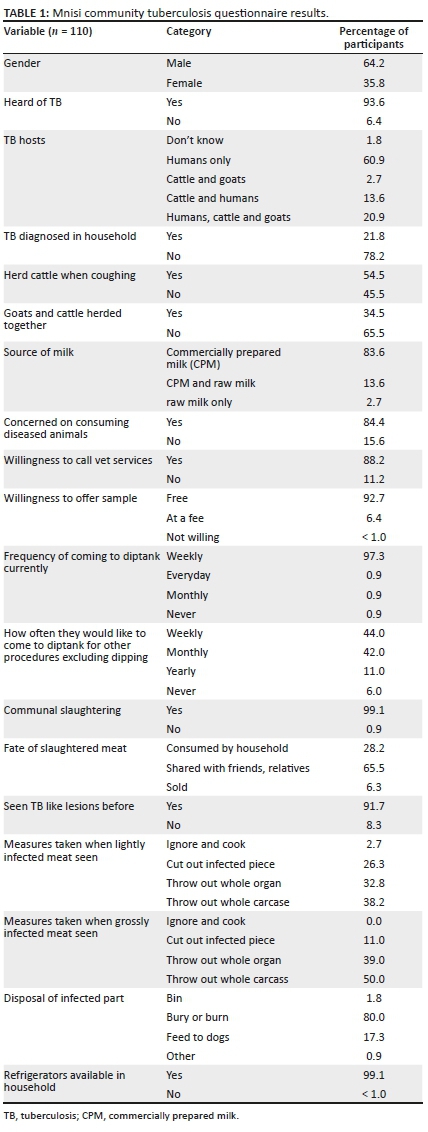
Tuberculosis (TB) is a global health concern of zoonotic importance, and Mycobacterium bovis and Mycobacterium tuberculosis are the most common causes of TB in animals and humans, respectively. Integral to TB control strategies are the communities affected by this epidemic. Tuberculosis awareness by the community is an effective TB control strategy as education empowers people to make informed choices with regard to mitigating TB risk factors in their daily lives. We conducted a knowledge, attitude and perceptions survey in Mnisi pastoral community in South Africa using a semi-structured questionnaire to evaluate the level of bovine TB (bTB) awareness, and provided informed feedback to the community on the outcome of the study. Although participants were aware of TB, the knowledge of the zoonotic potential of bTB and about susceptible hosts was limited. The study findings showed knowledge gaps regarding common risk factors, including coughing while herding cattle, unsupervised/uninspected communal slaughter and improper disposal of infected meat. In contrast, it was noted that the majority of participants discarded meat with visible lesions and consumed pasteurised milk; thus, the risk of TB transmission via the ingestion route is low. Tuberculosis knowledge gaps were evident in the community, and public health and veterinary authorities need to improve relationships with stakeholders and implement awareness programmes that use a one health approach.
bovine tuberculosis; awareness; Mpumalanga; surveillance; zoonosis