Scanning electron microscopy investigation of fibrin networks after thermal injury
Abstract
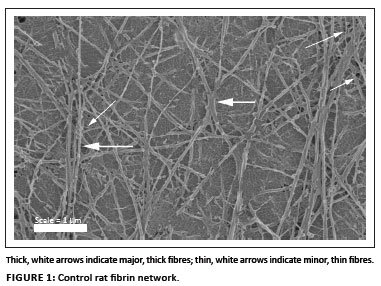
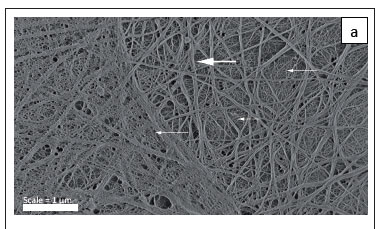
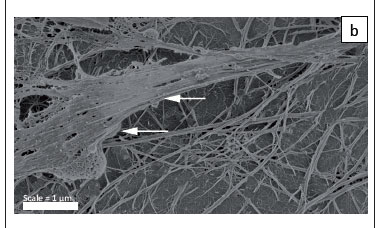
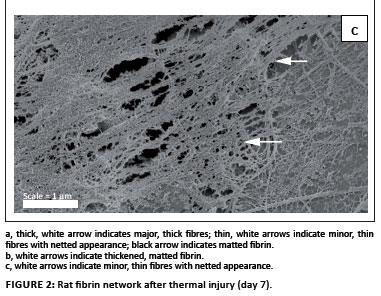
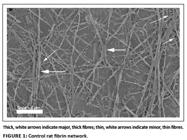
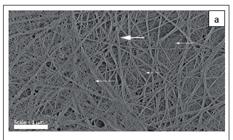
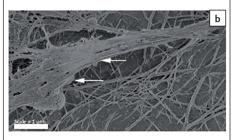
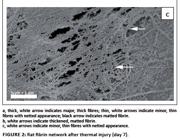
Injury due to burning is known to impact on coagulation and haemostasis by disturbing the coagulation cascade and is also associated with impaired fibrinolysis. Also, venous thrombosis, pulmonary embolism and hypercoagulability are common during thermal injury. Using a Wistar albino rat model, we investigated in this study whether burn injury affects the ultrastructure of the fibrin networks. A typical fibrin network will contain mostly major, thick fibres with minor, thin fibres distributed amongst them. We found that the clot architecture changes after burn injury, showing more prominent minor, thin fibres in a netted appearance. Also, the clot showed areas of matted fibrin. We suggest that the thrombotic events associated with burn injury are due to the thickened and netlike areas formed when thrombin activates the coagulation cascade. This is due to impaired fibrinolysis activities, causing the resulting fibrin clots not to be successfully disseminated. Small fragments of these netted, clumped areas may therefore break loose and lead to thrombotic events after burn injuries. The current study therefore provided morphological evidence for thrombotic events associated with burn injury.
 Thumbnail
 Thumbnail
 Thumbnail
 Thumbnail