Spatial variation of epoxyscillirosidine concentrations in Moraea pallida (yellow tulp) in South Africa
Abstract
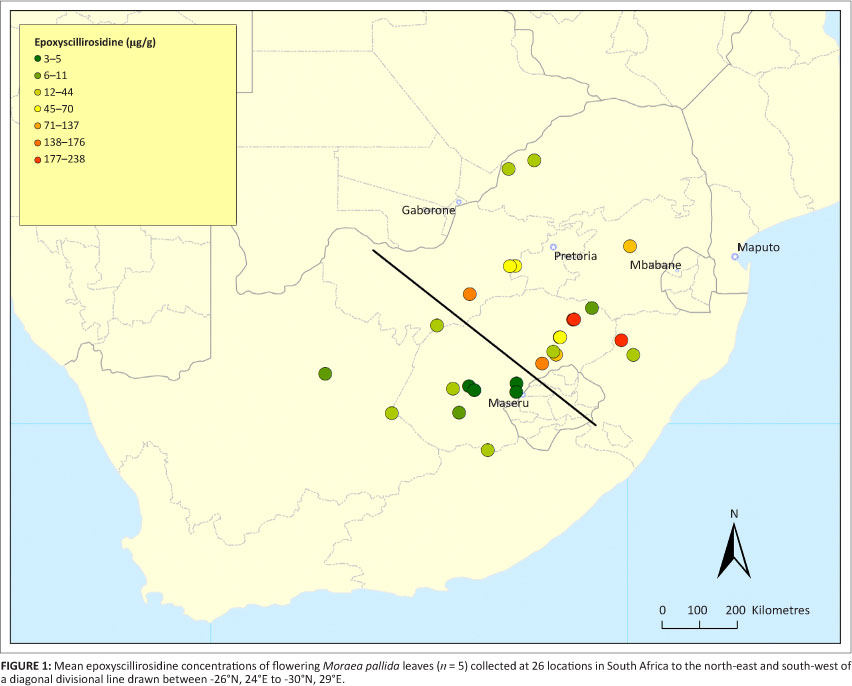
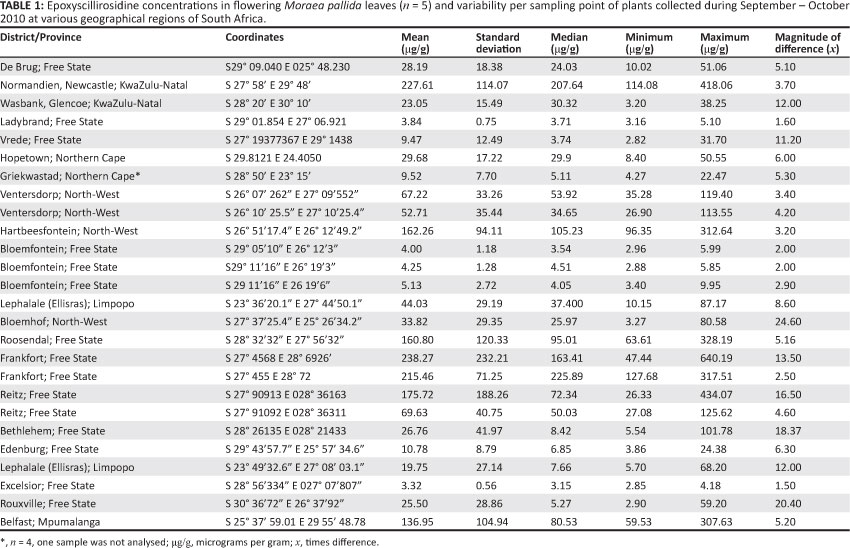
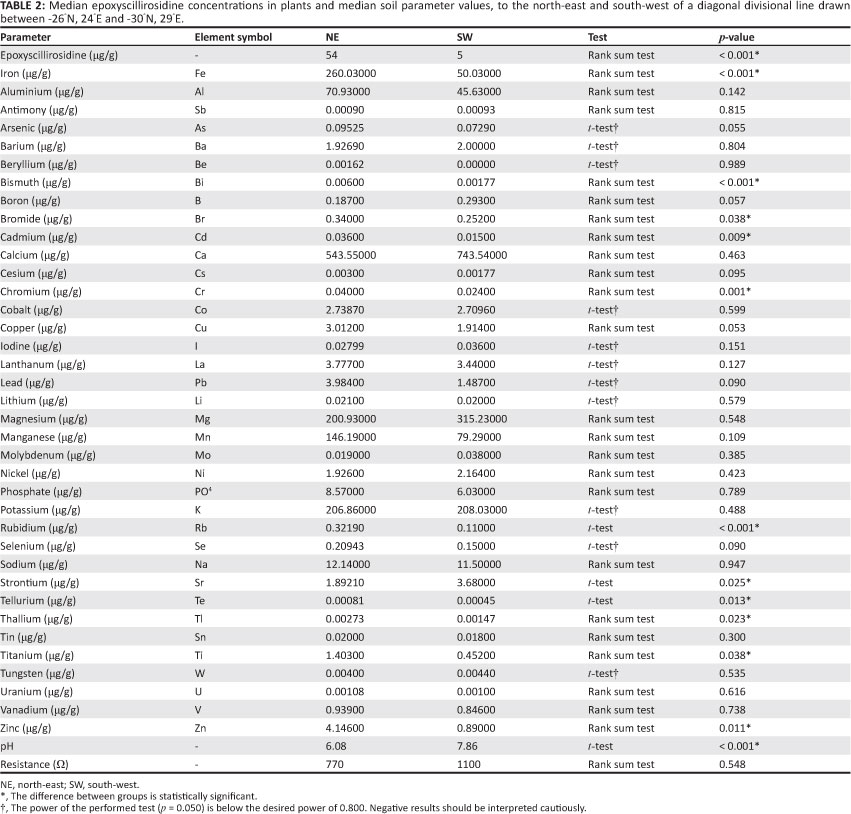
Moraea pallida (yellow tulp) poisoning is economically the most important intoxication of livestock in South Africa. Poisoning varies according to locality, climatic conditions and growth stage of the plant. The primary objective of this study was to determine the concentration of the toxic principle, epoxyscillirosidine, in yellow tulp leaves and to ascertain I the variability of epoxyscillirosidine concentrations within and between different locations. A secondary objective was to utilise Geographic Information Systems in an attempt to explain the variability in toxicity. Flowering yellow tulp plants were collected at 26 sampling points across 20 districts of South Africa. The leaves of five plants per sampling point were extracted and submitted for liquid chromatography/mass spectrometry analysis. A large variation in mean epoxyscillirosidine concentrations, ranging from 3.32 µg/g - 238.27 µg/g, occurred I between different geographical regions. The epoxyscillirosidine concentrations also varied tremendously between individual plants (n = 5) collected at the same sampling point, with up to a 24 times difference between the lowest and highest concentration detected. No generalised I correlation between epoxyscillirosidine concentrations and soil elemental concentrations could be established. However, samples obtained from the north-eastern part of the sampling I region tended to have higher epoxyscillirosidine concentrations compared to samples obtained from the south-western part of the sampling region. Higher toxin concentrations in the northeast were associated with statistically significant higher soil concentrations of iron, bismuth, bromide, cadmium, chromium, rubidium, tellurium, thallium, titanium and zinc, whilst soil concentrations of strontium and soil pH, were significantly lower. This study corroborated the contention that epoxyscillirosidine concentration in yellow tulp fluctuates and may explain I the variability in toxicity.
 Thumbnail