First molecular isolation of Mycoplasma ovis from small ruminants in North Africa
Abstract
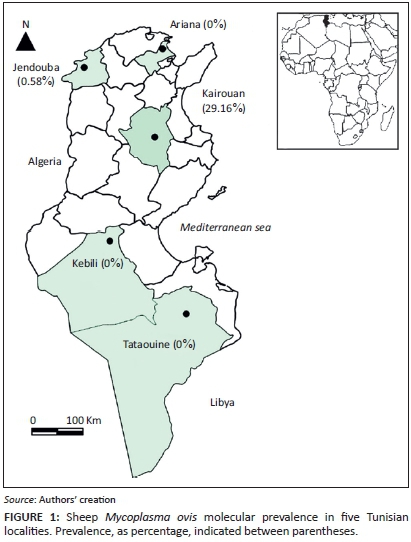
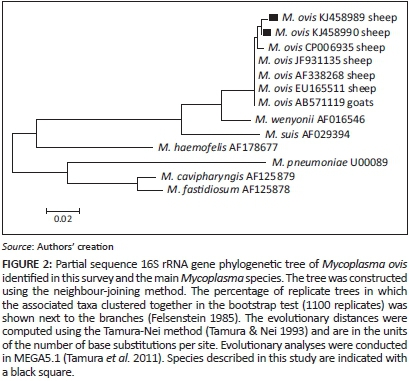
Eperythrozoonosis is a small ruminant disease caused by the bacterium Mycoplasma ovis (formerly known as Eperythrozoon ovis). Whilst acute infection in sheep may result in an anaemia and ill thrift syndrome, most animals do not develop clinical signs. Molecular methods were used to compare and evaluate the prevalence of infection with M. ovis in sheep and goats in Tunisia. A total of 739 whole blood samples from 573 sheep and 166 goats were tested for the M. ovis 16S rRNA gene using PCR. The overall prevalence was 6.28% ± 0.019 (36/573). Only sheep were infected with M. ovis (p< 0.001), and the prevalence was significantly higher in central Tunisia (29.2%) compared with other regions (p < 0.05). The prevalence revealed significant differences according to breed and bioclimatic zones (p < 0.001). Furthermore, the prevalence in young sheep (35/330; 10.6%) was higher than in adults (1/243; 0.41%) (p < 0.001). Only sheep of the Barbarine breed were infected, with a prevalence of 11.8% (p < 0.001). This is the first molecular study and genetic characterisation of M. ovis in North African sheep breeds.
 Thumbnail
 Thumbnail