Acaricidal activity of the aqueous and hydroethanolic extracts of 15 South African plants against Rhipicephalus turanicus and their toxicity on human liver and kidney cells
Abstract
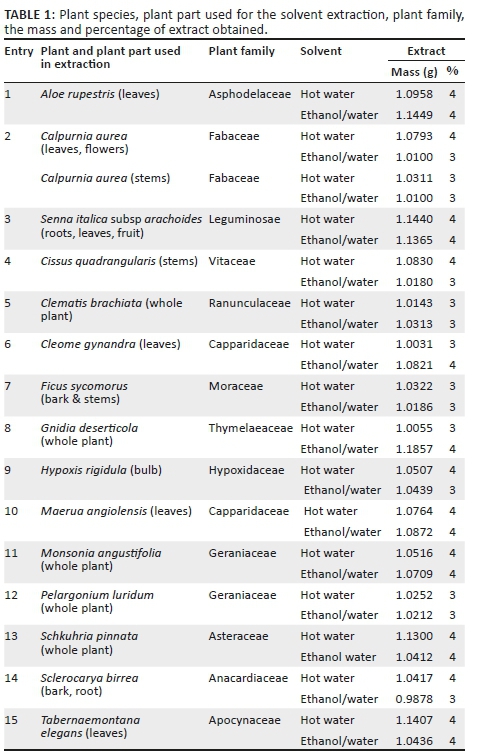
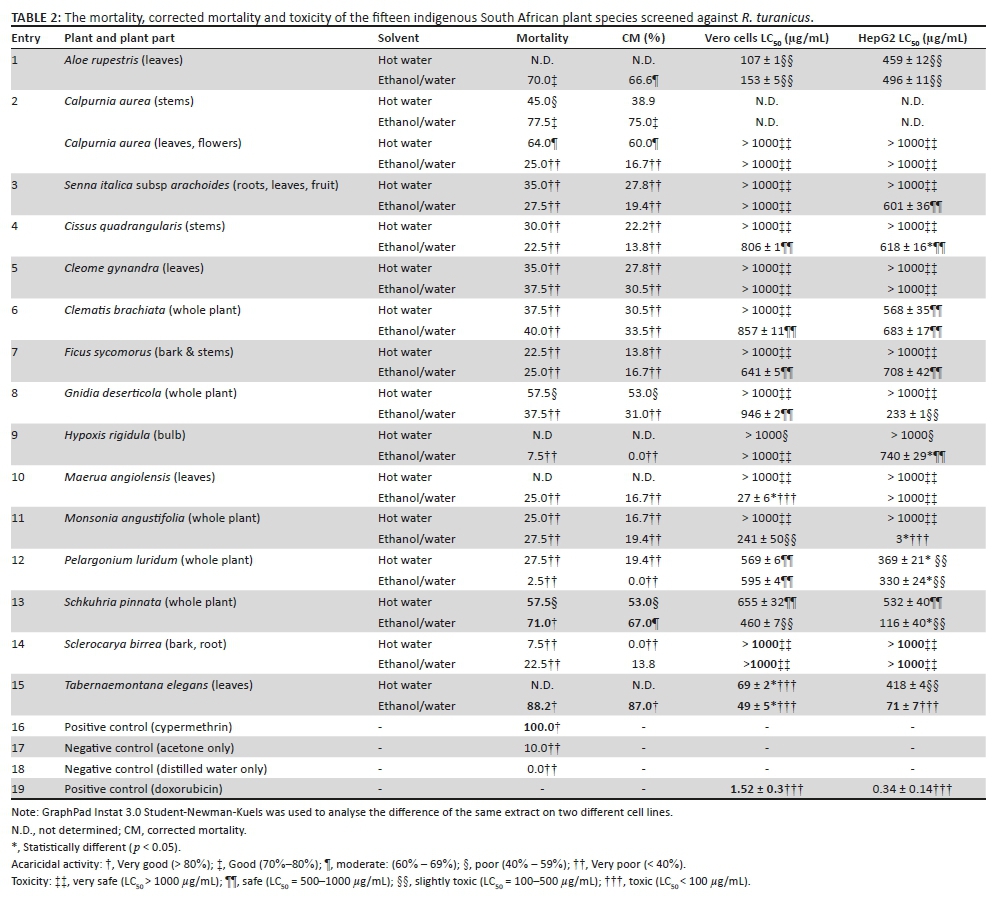
Hot water and hydroethanolic (70:30) extracts were prepared from 15 plant species, which were investigated to discover eco-friendly and less expensive tick control methods as an alternative to synthetic acaricides. A contact bioassay was used to determine the acaricidal activity of these extracts against the cattle tick, Rhipicephalus turanicus (Acari: Ixodidae) at a concentration of 20% (200 mg/mL). The hydroethanolic extracts had better activity than the hot water extracts against R. turanicus. The hydroethanolic extract from Tabernaemontana elegans (leaves) had the best mortality (87.0%). This was followed by Calpurnia aurea (stems) with a mortality of 75.0%, Schkuhria pinnata (whole plant) with a mortality of 67.0% and Aloe rupestris (leaves) with a mortality of 66.6%. The toxicity of the plant extracts was also investigated and it was found that most of the hydroethanolic and hot water extracts were either safe or very safe on human Vero kidney and liver HepG2 cells. From this study, it was evident that botanicals have the potential to be developed as environmentally benign natural acaricides against R. turanicus.
Rhipicephalus turanicus; contact bioassay; acaricidal activity; Vero cells; HepG2 cells; toxicity; water; ethanol