Immunogenicity of a plasmid DNA vaccine encoding G1 epitope of bovine ephemeral fever virus G glycoprotein in mice
Abstract
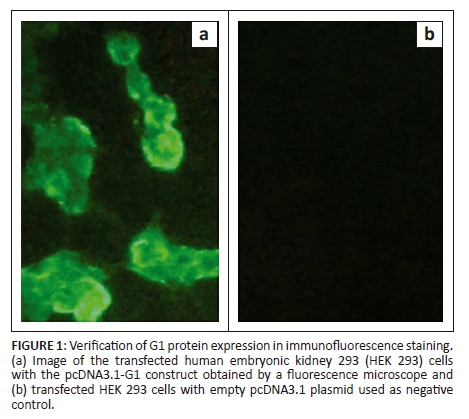
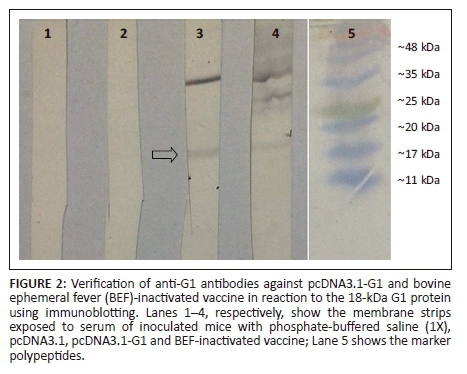
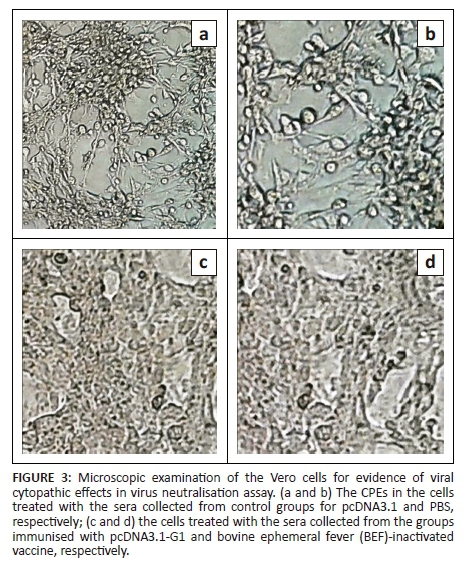
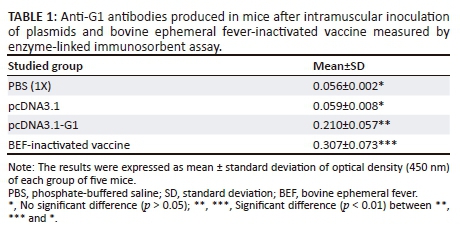
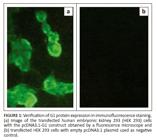
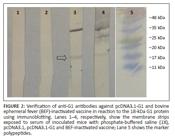
The aim of this study was to investigate the immunogenicity of a plasmid deoxyribonucleic acid (DNA) vaccine encoding the G1 epitope of bovine ephemeral fever virus (BEFV) G glycoprotein in mice. A plasmid DNA carrying the G1 gene was constructed and designated as pcDNA3.1-G1. The expression of the target gene was confirmed in human embryonic kidney 293 (HEK 293) cells transfected with pcDNA3.1-G1 by indirect immunofluorescent staining. Immunisation experiments were intramuscularly carried out by vaccinating 6-week-old female mice in four groups, including the pcDNA3.1-G1 construct, pcDNA3.1 (+) plasmid alone, BEF-inactivated vaccine and phosphate-buffered saline (PBS) (1X) three times with 2-week intervals. Fourteen days after the last immunisation, the animals were bled and the resulting sera were tested for anti-G1-specific antibodies by immunoblotting analysis, indirect enzyme-linked immunosorbent assay (ELISA) and virus neutralisation (VN) test. Serological assays showed that the pcDNA3.1-G1 construct expressing G1 protein was able to elicit specific antibodies against this antigen. Virus neutralisation test showed that pcDNA3.1-G1 could induce anti-BEFV-neutralising antibodies in mice. Our findings indicated that a new dimension can be added to vaccine studies for bovine ephemeral fever (BEF) using eukaryotic expression plasmids encoding the G1 antigen in the future.
 Thumbnail
 Thumbnail
 Thumbnail