The occurrence of Culicoides species, the vectors of arboviruses, at selected trap sites in Zimbabwe
Abstract
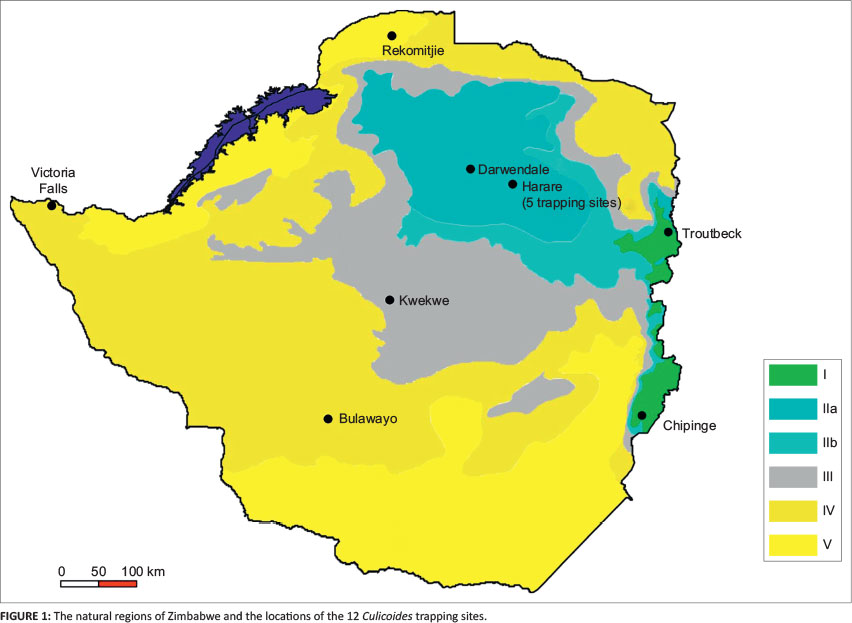
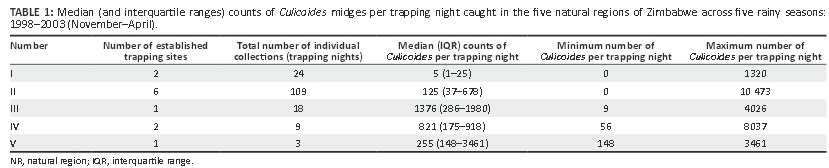
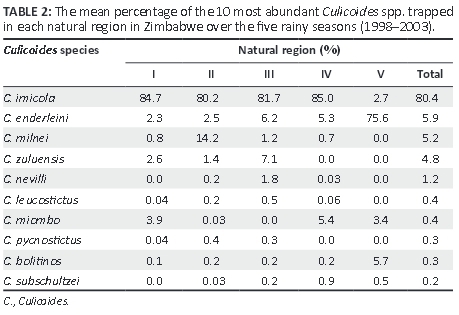
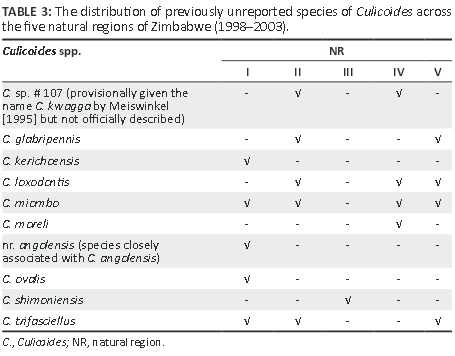
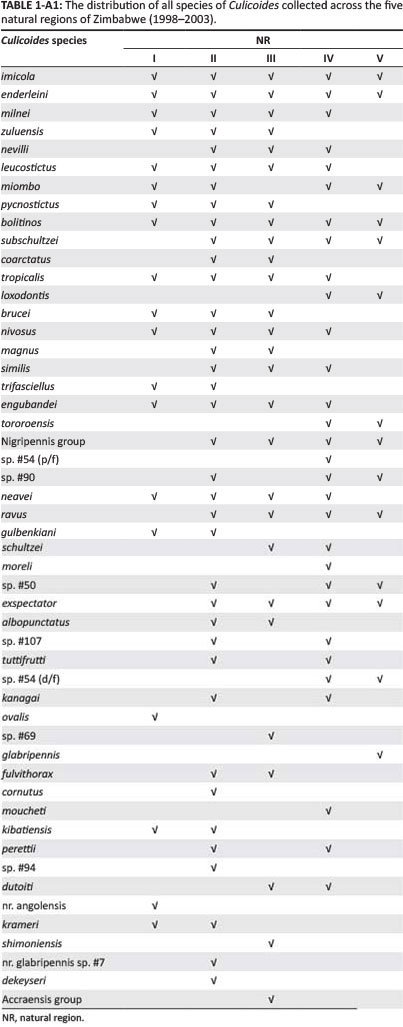
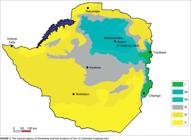
A study of the distribution of Culicoides species was conducted by establishing 12 light trap sites over five rainy seasons between 1998 and 2003 covering all the geo-climatic natural regions of Zimbabwe. In total, 279 919 specimens of Culicoides were trapped over a total of 163 trapping nights. The highest median counts of Culicoides per trapping night were recorded in natural region III, which has climatic conditions conducive to the successful development of the larvae. Culicoides imicola, the major vector of bluetongue and African horse sickness viruses in Africa, was found to be the most abundant species (80.4%), followed by Culicoides enderleini (5.9%) and Culicoides milnei (5.2%). This study identified 10 species of Culicoides that had not been previously described in Zimbabwe, including Culicoides loxodontis and Culicoides miombo, which are members of the C. imicola complex. A total of 23 994 Culicoides midges were collected from five trap sites in Harare, Zimbabwe, with the dominant species, C. imicola, representing 91.6% of the total collection. Seventeen arboviruses were isolated from these midges, 15 of which were bluetongue virus. The predominant bluetongue virus serotype was serotype 11, followed by serotypes 1, 8, 12 and 15. Bluetongue virus serotypes 1, 2, 8, 10, 12, 15, 16 and 18, detected in this study, had not been previously reported in Zimbabwe.
 Thumbnail