Determination of the optimal time of vaccination against infectious bursal disease virus (Gumboro) in Algeria
Abstract
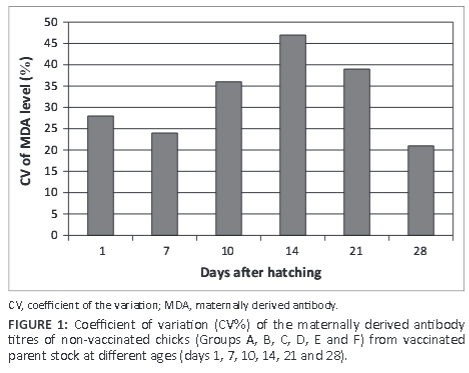
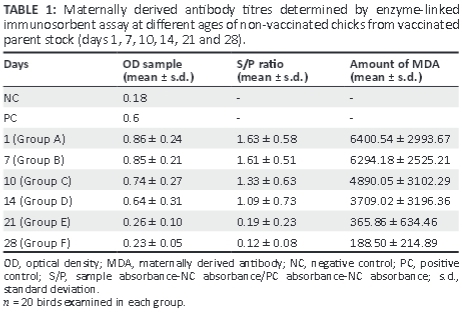
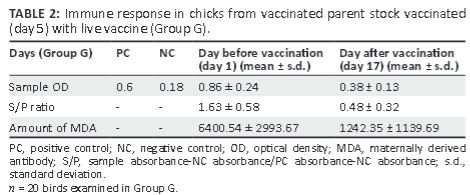
This study was conducted to determine the effect of maternally derived antibody (MDA) on live vaccine against infectious bursal disease. A total of 140 chicks selected from vaccinated parent stock were used in this investigation. In a preset vaccination schedule, blood samples were collected to check for the actual effect. It was noticed that on day 1 the chicks contained a high level (6400.54 ± 2993.67) of maternally derived antibody that gradually decreased below a positive level within 21 days (365.86 ± 634.46). It was found that a high level of MDA interferes with the vaccine virus, resulting in no immune response. For better immune response, it is suggested that the chickens should be vaccinated at day 21, as the uniformity of MDA is poor (coefficient of the variation [CV] > 30%), and boosted at day 28. Indeed, two vaccinations are necessary to achieve good protection against infectious bursal disease virus of the entire flock.
 Thumbnail