A review of the epidemiology and control of gastrointestinal nematode infections in cattle in Zimbabwe
Abstract
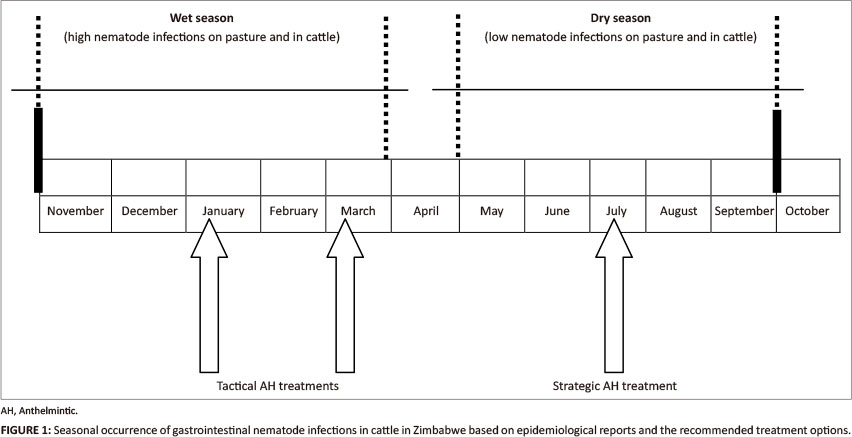
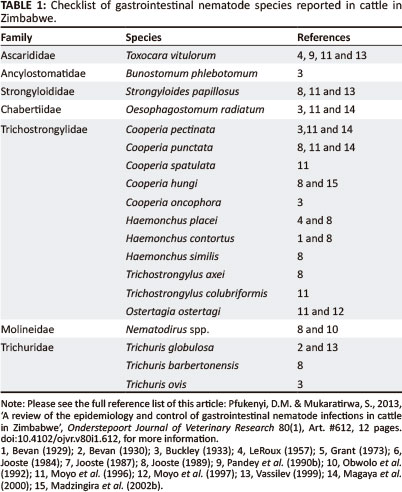
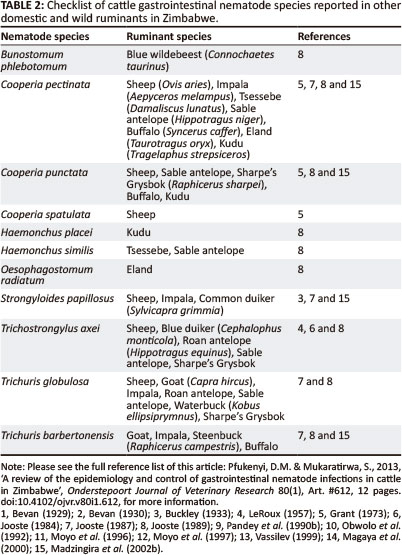
In this review, the main gastrointestinal nematodes infecting cattle in Zimbabwe and the epidemiological factors influencing their occurrence are reviewed and discussed. Nineteen gastrointestinal nematode species that belong to seven families have been found to occur in cattle in Zimbabwe. The main genera reported to date are Cooperia, Haemonchus, Trichostrongylus and Oesophagostomum and the dominant species are Cooperia pectinata, Cooperia punctata, Haemonchus placei and Trichostrongylus axei. The mixed infection by several species from the genera is the cause of parasitic gastroenteritis in cattle in Zimbabwe. Production and husbandry practices, season, host age and environment are considered to be the main factors that influence gastrointestinal nematode infection in cattle. The geographical distribution of the gastrointestinal nematodes is also reviewed in relation to the climatic conditions of the country. Various control options are discussed and how they are applicable to the Zimbabwean situation. Based on reports and existing data on the epidemiological features of the gastrointestinal nematode infection in cattle, practical control measures are critically reviewed and recommendations are made for a national control programme.
 Thumbnail