The Constitutional and Legislative Powers of Local Authorities in South Africa: The Applicability of an Ocean Accounts Framework as an Ocean-Governance Instrument*
Abstract
This research examines the Ocean Accounts Framework (OAF) as an instrument for ocean governance and policy development by South African local authorities. The Constitution imposes sustainable developmental duties on municipalities, requiring them to budget and plan in a way that prioritises basic community needs and promotes social and economic development. With their funding primarily coming from property rates, service surcharges and payments from national government, municipalities are responsible for local economic and infrastructure development, promoting a safe and healthy environment, and service delivery. Coastal management is the shared responsibility of all three branches of government and frequently overlaps. South Africa adopted the National Development Plan (NDP) to promote economic growth and address the triple challenge of inequality, unemployment and poverty. Operation Phakisa prioritises marine transport, offshore oil and gas, aquaculture and marine protection services. This article examines the relationship between the OAF and the legislative and policy instruments that guide coastal and ocean governance in South Africa's local government sphere. As part of a community of practice (CoP), the research assesses the applicability of the OAF in South Africa and the Western Indian Ocean (WIO), with a focus on the legal context in which the OAF is to be used. It investigates the constitutional and legislative powers and functions of local authorities that are relevant to the blue economy and the extent to which municipalities exercise these powers and functions. It also assesses the OAF's potential to evaluate food security and sustainability risks for local populations, and whether local authorities can legislate against marine-resource crimes to augment national legislation. Finally, the study argues that using the OAF to measure ocean value for municipal development could boost funding and help local authorities meet the requirements set by the Constitution, the NDP and the Sustainable Development Goals (SDGs). Local authorities should realise the importance of the ocean and its living resources and use a credible valuation tool to exercise their legislative powers.
local government; oceans account framework; coastal governance; municipal powers relevant to the blue economy; sustainable development goals
1 INTRODUCTION
The Constitution requires municipalities to budget and plan in such a way that they prioritise basic community needs, promote socio-economic development, and participate in national and provincial programmes1 - all of which require funding. Their main funding sources are property rates, surcharges on service fees2 and financial payments from national government.3 The Constitution entitles local government "to an equitable share of revenue raised nationally to enable it to provide basic services and perform the functions allocated to it."4 The amount a municipality gets depends mainly on the number of low-income people in the area.5 Apart from an equitable share, municipalities may also qualify for conditional or unconditional allocations from national government.6 Conditional grants must be used for a specific purpose, while unconditional grants can be used at the recipient's discretion. Most municipalities depend heavily on these allocations.7
South Africa has 257 local authorities responsible for developing local economies, providing infrastructure, promoting a safe and healthy environment, and delivering services.8 Forty-four local, twelve district, and four metropolitan municipalities border on the sea, giving them access to the marine environment of South Africa - a resource of immense value and a key hub for socio-economic and habitational activity. These municipalities exercise their powers and functions within the coastal zone, but they share their roles and responsibilities with other spheres of government.9 As an important socio-economic resource, the ocean has potential to increase in value for social development.10 Such development is a constitutional obligation imposed upon municipalities. The management of the coastal environment is a responsibility shared by all three branches of government, with some duties overlapping. Municipalities are expected to oversee, plan for, safeguard and improve land usage while maximising social, economic and environmental opportunities.11
In order to establish a socio-economic developmental roadmap towards building a society that benefits all of its members, South Africa adopted the National Development Plan (NDP).12 Every sector's plans, policies, programmes and operations are guided by the NDP, including the distribution of funds, human capital investment, and other resources that advance the country. Within its framework, the government, organised industry, labour and citizens can collaborate to boost economic growth and address the triple challenge of inequality, unemployment and poverty. One of the tools set up to make the NDP operational is Operation Phakisa,13 which prioritises marine transport, offshore oil and gas, aquaculture and marine protection services.14
This article probes the relationship between the legislative and policy instruments applicable to the country's coastal and ocean governance in the local sphere of government, and the Ocean Accounts Framework (OAF). Following a "blue economy model", the OAF, created by The Global Ocean Accounts Partnership for Sustainable Development, includes social and ecological values in its framework of accounting. This innovative method intends to enhance ocean governance to have the greatest positive impact on long-term human interaction with the ocean.15 The research is part of a community of practice (CoP) assessing the applicability of the OAF in South Africa. It aims to establish how information on ocean resource-use can advance ocean governance in South Africa and the Western Indian Ocean (WIO) as a central component of a wider strategy to ensure that ocean governance optimally enhances the broader sustainability goals of these states by ensuring inclusive, secure and sustainable coastal communities, in line with the SDGs16 and the NDP.
With a focus on local government's legal framework, this article investigates the extent to which municipalities exercise their constitutional and legislative powers and functions related to the blue economy. For context, a brief overview of the "blue economy" concept is included. The study further considers how the OAF can help assess localised risks around food security and sustainable development and examines how municipalities can adopt legislation that addresses marine-resource crimes in a way that supports national laws and reduces food-security risks.
It is argued that the OAF's potential to measure ocean value for municipal development purposes could lead to increased funding allocations, which would help local authorities meet constitutional mandates, the NDP and the SDGs, with special reference to the protection of fisheries resources.
2 THE BLUE ECONOMY
In June 2014,17 the Seychelles Deputy President unequivocally stated: "The Blue Economy is Africa's future." It was later confirmed that a whole chapter of Agenda 2063, the African Union's new growth plan for the continent, would be dedicated to the concept of the blue economy.18
Many countries are setting ambitious "blue economy" goals to achieve sustainable development of the ocean economy.19 The blue economy encourages environmental sustainability, socio-economic growth, strengthening of the marine ecosystems, transparent governance and economic growth.20 The United Nations SDG 14 commits member states to balance the exploitation of ocean resources with conservation and sustainable use. The notion of sustainable economic use of these resources coalesces around the "blue economy" concept, which, from a policy perspective, "is the awareness of maritime resources and their capacity to contribute to poverty reduction, human welfare and economic opportunity".21
Other initiatives on the continent reflect the growing interest in the potential of fisheries, marine trade, energy resources and other aspects of the blue economy.22 The 2014 Africa Progress Report mentioned the need for a "blue revolution" that would see far greater investment in managing the continent's fisheries resources and addressing the high level of illegal and unregulated activities in the sector.23 Pollution and illegal, unreported and unregulated (IUU) fishing, including blast fishing, cause irreparable damage to ecosystems that "require regional and global responses"24 as well as localised action, considering that threats to the ecosystems most often originate on land. If local authorities realise the importance of the ocean and its living resources in achieving their constitutional mandates, and if an acceptable value-measurement tool is available, it may motivate them to exercise their legislative powers as they relate to matters that impact the ocean.
For the South African Institute of International Affairs (SAIIA), "at its core, the Blue Economy approach is premised on the sustainable use, management and conservation of aquatic and marine ecosystems and associated resources."25 To reap the benefits of an ocean-based economy, the environment must be carefully explored and monitored, which "requires a toolbox of integrative, adaptive and participatory processes". These tools need to be "quickly adopted and implemented to better support national and regional visions towards a truly sustainable Blue Economy."26 These methods, which enable regions of importance to be prioritised for their benefits to community livelihoods, food security and ecosystem service functions, include integrated marine and coastal spatial planning, integrated coastal management (ICM), integrated development and terrestrial spatial planning and land-use management. In the local-government sphere, the integrated development plan (IDP) process provides a "toolbox of integrative, adaptive and participatory processes" with which municipalities are well acquainted.
3 INTERNATIONAL OBLIGATIONS TO PROTECT MARINE LIVING RESOURCES
The adoption of the United Nations Convention on the Law of the Sea (UNCLOS)27 effectively made all marine resources located within 200 nautical miles from coasts in the Exclusive Economic Zones (EEZs) the property of coastal states. South Africa's rights and obligations are primarily derived from UNCLOS, which also grants it broad sovereign rights to control the use of all resources in its territorial waters and EEZ. The Maritime Zones Act28 brings UNCLOS into domestic law.
Article 56(1)(a) of UNCLOS provides that in the EEZ, among other things, the coastal state has sovereign rights to explore, exploit, conserve and manage natural resources, whether living or non-living. It also has jurisdiction regarding the protection and preservation of the marine environment.29 This and other international commitments, such as the Sustainable Development Goals (SDGs)30 and the Agreement on Port State Measures to Prevent, Deter and Eliminate Illegal, Unreported and Unregulated Fishing (PSMA),31 require nations to develop strategic visions of the ocean.32
Article 61 of UNCLOS obliges coastal states to conserve marine living resources (MLRs) by determining the allowable catch size in their EEZ,33 and protecting it against over-exploitation.34 It must also have measures in place to "maintain or restore populations of harvested species at levels which can produce the maximum sustainable yield, as qualified by relevant environmental and economic factors, including the economic needs of coastal fishing communities and the special requirements of developing States".35 As for the utilisation of living resources, coastal states must promote the optimum utilisation of the living resources in the EEZ,36 while guarding against the "economic dislocation" of nationals who traditionally fish in the area.37 Although these obligations fall on the national government, the over-exploitation of some species originates on land where municipalities have jurisdiction.
The international community, particularly the Food and Agriculture Organization (FAO) and the United Nations Office on Drugs and Crime (UNODC), has noted the overexploitation of MLRs as a threat to livelihoods and food security,38 especially for developing nations.39
In recognising the scourge of illegal fishing, the FAO coined the term "illegal, unregulated, and unreported (IUU) fishing" in its International Plan of Action to Prevent, Deter, and Eliminate Illegal, Unreported, and Unregulated Fishing (IPAO-IUU), which was adopted in 2001.40 The increased incidence of IUU-fishing and the rise of international organised crime in the fisheries environment led to the adoption by the United Nations (UN) of the PSMA, which entered into force in June 2016.41
The over-exploitation of MLRs has been internationally recognised for a number of years42 and has resulted in several instruments aimed at combating the bane. Examples of such international attempts include:
the Convention on International Trade in Endangered Species of Wild Fauna and Flora (CITES) (1973),43 which aims to ensure that the trade of wild animals and plants does not threaten their survival;
the United Nations Fish Stocks Agreement (UNFSA) (1995),44 which deals with the management of straddling fish stocks and highly migratory species;
the FAO Code of Conduct for Responsible Fisheries (1995), which establishes principles and standards for the management and development of all fisheries; and
the United Nations Convention against Transnational Organised Crime (UNTOC) (2000),45 which promotes more effective cooperation in the prevention of transnational organised crime.
The African Union also recognises IUU-fishing as a threat to food security in its Integrated Maritime Strategy,46 while under UNCLOS, regional fisheries management organisations (RFMOs)47 have been established as "vehicles of good governance" from the perspective of international measures aimed at protecting MLRs from IUU-fishing.48 They assess fish stocks and ensure compliance through relevant enforcement mechanisms.49
The importance of "fisheries in the social and economic wellbeing and livelihood of the people of the region, in ensuring food security and alleviating poverty" has also been recognised by the Southern African Development Community (SADC), resulting in the Protocol on Fisheries in 2001.50 According to the Protocol, the member states agree to harmonise their domestic legislation, paying particular attention to fisheries and the management of shared resources, and to take the necessary steps to maximise the resources available for fisheries law enforcement, thereby preserving aquaculture, the aquatic environment, and the way of life for fishing communities.
4 NATIONAL DUTY TO PROTECT AND THREATS TO THE RESOURCES
In addition to upholding international commitments, the Constitution guarantees everyone the right-
"(a) to an environment that is not harmful to their health or wellbeing; and
(b) to have the environment protected, for the benefit of present and future generations, through reasonable legislative and other measures that-
(i) prevent pollution and ecological degradation;
(ii) promote conservation; and
(iii) secure ecologically sustainable development and use of natural resources while promoting justifiable economic and social development."51
The Constitution grants everyone the right to sufficient food.52 The State, including local government, "must take reasonable legislative and other measures, within its available resources, to achieve the progressive realisation" of this right.53
The Marine Living Resources Act (MLRA)54 is a measure such as is contemplated in section 24(b) of the Constitution. The Act is administered by the Department of Forestry, Fisheries and the Environment (DFFE), making the protection of MLRs a national function. Among its objectives, the most relevant to this article include the conservation of MLRs for present and future generations.55 The Act aims to achieve some of its objectives by providing for the appointment56 and powers57 of fisheries control officers tasked with protecting the resources. In practice, the number of onshore appointees is totally insufficient, leading some coastal municipalities to employ municipal law enforcement officers to assist with anti-poaching operations.58
The MLRA creates three categories of exploiters of MLRs, namely subsistence, recreational and commercial fisheries.59 Subsistence fishers may harvest the resource for their own needs and sell extras, though not on a large scale. Recreational fishing is regulated by seasons and requires licences.60 There is, however, a fourth category that constitutes a separate informal industry. These are the people who illegally exploit resources with the primary aim of supplying the black market.61
It was estimated that 1 475 tons of West Coast rock lobster were poached in the 2015 calendar year,62 while statistics for the 2008-2019 period show that 370 742 lobsters had been confiscated.63 In the period 2006-2019, a total of 1 059 217 kilograms of abalone were confiscated.64 TRAFFIC estimates that 96 million abalone units were poached in the period 2006-2016.65 These quantities of illegally harvested abalone far exceed the legally produced varieties, supporting the notion that this crime is mainly committed by highly organised criminal groups.66
All categories of exploiters, as well as all beneficiaries and consumers of marine resources, reside within municipal boundaries. Any action or inaction by local government therefore affects both them and the coastal environment.
5 POWERS AND FUNCTIONS OF LOCAL AUTHORITIES
In South Africa, government is constituted as national, provincial and local spheres that are distinctive, interdependent and interrelated.67 Though each sphere is autonomous, with unique functions and powers, they are also interdependent in achieving the objectives set by the Constitution.68 Each sphere of government must respect the constitutional status, powers and functions of the others,69 not assume any power or function except those conferred upon them by the Constitution,70 and may not encroach on the functional integrity of another sphere.71 They must also cooperate with one another.72
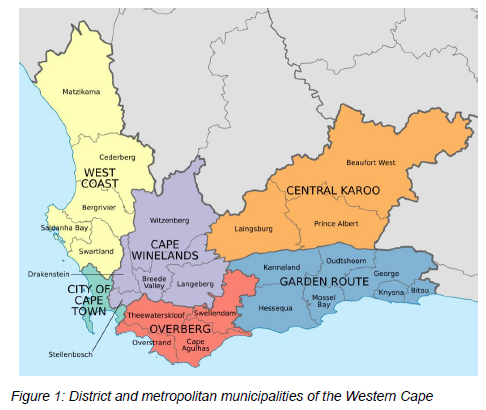
The Constitution establishes three categories of local government:73 metropolitan, district and local municipalities. The map in Figure 1 shows the geographical and jurisdictional areas of these categories within the Western Cape Province.74
The City of Cape Town is the sole metropolitan municipality, while each district municipality contains several local municipalities. The Garden Route District, for example, comprises several local municipalities, including five coastal municipalities. These municipal areas cover the entire coastline and thus the coastal environment, which is the transition zone between the land and the sea.75 The coastal environment is home to various activities (including recreation, mining and fishing), making it a social, commercial and economic asset and an environment to be protected.
In terms of their constitutional mandate, municipalities' executive and legislative authority within their jurisdiction is vested in municipal councils.76 The councils are authorised to administer the powers and functions conferred upon them by section 156 of the Constitution, including the local government matters listed in Parts B of Schedules 4 and 5 to the Constitution77 and any other matter assigned to them by national or provincial legislation.78 Metropolitan municipalities have all the powers and functions listed,79 but in the case of district and local municipalities, they are divided.80 This is done in section 84 of the Local Government: Municipal Structures Act81 (Structures Act), although they still share some functions and jurisdictional areas. This is problematic, as it is not always clear who is responsible for a specific function or power.82 As can be seen from Figure 1, the Garden Route District Municipality shares jurisdiction with five coastal municipalities. The two most relevant powers, as far as district municipalities are concerned, are "integrated development planning for the district municipality as a whole, including a framework for integrated development plans of all municipalities in the area of the district municipality"83 and municipal health services.84 The general rule is that Part B of both Schedules 4 and 5 are the exclusive legislative competence of local municipalities.85
The local-government matters listed in Part B of Schedule 4 that are most pertinent to this article are municipal planning, which would include integrated development planning and spatial planning and land use, and pontoons, ferries, jetties, piers and harbours, excluding the regulation of international and national shipping and matters related thereto.86 Part B of Schedule 5 bestows the following relevant powers on municipalities: beaches, markets (which can include fish markets), control of public nuisances, public places, recreation, and local amenities.87
Municipal councils have the right to govern the local-government affairs of their respective local communities at their discretion, subject to national and provincial legislation.88 Their original and constitutionally entrenched powers, functions, rights and duties, which can only be constrained in line with the Constitution,89 are outlined in section 4 of the Local Government: Municipal Systems Act90 (Systems Act). These include, inter alia, the duty to use the resources of the municipality in the best interests of the local community,91 striving to ensure that services are provided in a financially and environmentally sustainable manner,92 and promoting and developing within its financial and administrative capacity.93 The national or provincial spheres of government may not impede or compromise the executive and legislative authority of a municipality.94
A municipality's elected council exercises its executive and legislative powers95 by, inter alia, developing and adopting policies and by-laws and implementing applicable national and provincial legislation. They also administer by-laws for the effective administration of the matters that fall under their jurisdiction,96 such as those listed in Parts B of Schedules 4 and 5 to the Constitution and any other matter assigned to them by national or provincial legislation.97 Importantly, they also have the right to exercise any power concerning a matter reasonably necessary for, or incidental to, the effective performance of their function,98 including their obligation to provide municipal services to the community, prepare, approve and implement budgets, and impose and recover rates, taxes, levies, service fees, and surcharges.99 In addition to the above, municipalities may do anything else that falls within their legislative and executive competence.100
Certain of the local authorities among the large number of coastal municipalities are referenced to illustrate how they interpret and exercise their powers. The City of Cape Town Coastal By-Law, for example, intends to "provide measures for managing and protecting the coastal zone; protecting the natural environment of the coastal zone; managing public access to the coastal zone; manage, control and regulate public access and behaviour at beaches and beach areas".101 The council derives its legislative powers from:
a) section 156(1) of the Constitution, which confers on a municipality the executive authority and right to administer "(a) the local government matters listed in Part B of Schedule 4 and Part B of Schedule 5; and (b) any other matter assigned to it by national or provincial legislation";
b) its legislative and executive competency relating to matters such as municipal planning, building regulations, use of and access to beaches, and nuisance, as pertaining to the coastal zone;
c) Part B of Schedule 4 of the Constitution, listing pontoons, ferries, jetties, piers and harbours as municipal functional areas;
d) Part B of Schedule 5 of the Constitution, granting legislative competence relating to beaches and amusement facilities, local amenities, noise pollution, and traffic and parking to local government; and
e) the National Environmental Management: Integrated Coastal Management Act102 (ICM Act), which affords coastal municipalities the powers to administer matters contemplated in sections 18(1), 20(2) and 50 of the Act.
In addition to powers derived from the Constitution and local government-specific legislation such as the Systems Act and the Structures Act, municipalities are also empowered by other legislation.
The Spatial Planning and Land Use Management Act103 (SPLUMA) requires every municipality to adopt a land-use management scheme for its area.104 Some of the relevant purposes of a land-use scheme for this article are to promote economic growth, social inclusion, efficient land development and minimal impact on public health, the environment and natural resources.105
Section 18(1) of the ICM Act requires that "[e]ach municipality whose area includes coastal public property must within four years of the commencement of this Act, make a by-law that designates strips of land as coastal access land in order to secure public access to that coastal public property", putting the cut-off date in December 2013. Section 20(1) of the ICM Act requires a municipality in whose area coastal access land falls to, inter alia, signpost entry points to that coastal access land; control the use of, and activities on, that land; ensure that the provision and use of coastal access land and associated infrastructure do not cause adverse effects to the environment, and describe or otherwise indicate all coastal access land in any municipal coastal management programme and any municipal spatial development framework prepared in terms of the Municipal Systems Act. In terms of section 20(2), a municipality may make by-laws for the proper implementation of subsection (1). Section 50 allows a municipality to make by-laws to administer its coastal management and to provide for the implementation, administration and enforcement of the coastal management programme. The designation of land as coastal access land is the only peremptory provision, whereas sections 20(2) and 50 are discretionary.
Municipalities have dealt with these issues differently. The eThekwini Metropolitan Municipality, for example, opted for a Beaches By-Law106 and a Coastal Management By-Law.107
Matzikama Local Municipality adopted its Coastal Management By-Law to provide for procedures, methods and practices to regulate the use and management of the coastal zone and to control activities in the coastal zone, and to provide for matters incidental thereto.108 The coastal zone is defined as "the area comprising coastal public property, the coastal protection zone, coastal access land and coastal protected areas, the seashore, coastal waters and the exclusive economic zone and includes any aspect of the environment on, in, under and above such area".109 Most other coastal municipalities have adopted by-laws to provide for procedures, methods and practices to regulate the use, management and control of bathing and beach areas and public land adjoining beaches.110
Section 153 of the South African Constitution imposes developmental duties on municipalities. According to the long title of the Systems Act, one of its purposes is to "establish a simple and enabling framework for the core processes of planning, performance management, resource mobilisation and organisational change which underpin the notion of developmental local government". Development is defined as "sustainable development, and includes integrated social, economic, environmental, spatial, infrastructural, institutional, organisational and human resources upliftment of a community" aimed at improving its members' quality of life and "ensuring that development serves present and future generations."111 The principal tool to achieve these goals and assist municipalities in achieving their constitutional objectives is a strategic plan known as the integrated development plan (IDP), which must be adopted by each municipality.112
6 MUNICIPAL JURISDICTION AND THE LEGISLATIVE AND POLICY INSTRUMENTS GOVERNING COASTAL AND OCEAN GOVERNANCE
The local sphere of government consists of all municipalities across the country.113 National legislation establishes the criteria and procedures to determine municipal boundaries by an independent authority,114 hence the establishment of the Municipal Demarcation Board,115 which determines the boundaries of all South Africa's municipalities116 to ensure proper social and economic development.117 Section 25 of the Demarcation Act sets out the factors that the board must take into account when a municipal boundary is determined.
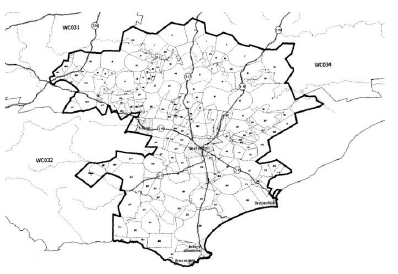
The Member of the Executive Committee for local government in a province establishes municipalities in the areas demarcated by the Board by notice in the Provincial Gazette (commonly known as a section 12 notice).118 The section 12 notice must, inter alia, set out the boundaries of the municipality concerned. For example, the section 12 notice of the Cape Agulhas Municipality119 reads as follows:
"LOCAL GOVERNMENT: MUNICIPAL STRUCTURES ACT, 1998 (ACT 117 OF 1998)
ESTABLISHMENT OF THE CAPE AGULHAS MUNICIPALITY (WC033)
By virtue of the powers vested in me by sections 12 and 14 of the Local Government: Municipal Structures Act, 1998 (Act 117 of 1998), I hereby give notice of the establishment of the Cape Agulhas Municipality on the terms set out in the Schedule hereto.
2.(1) On 3 March 2000 the Municipal Demarcation Board, acting in terms of section 21 of the Municipal Demarcation Act, determined the boundaries of the Local Municipality, as reflected in the map appearing in Provincial Notice 69/2000 published in Provincial Gazette Extraordinary No. 5431 of 3 March 2000. A copy of the map is republished in Annexure 'I' to this Schedule."
The demarcation maps of the Board indicate the high water line as the seaward boundary of coastal municipalities.120
In terms of section 2 of the ICM Act, one of its objectives is to "preserve, protect, extend and enhance the status of coastal public property as being held in trust by the State on behalf of all South Africans, including future generations".
Constitutionally, environmental management is considered a concurrent legislative responsibility. Therefore, the ICM Act designates functions and responsibilities for all three spheres of government concerning coastal zone management. It also provides for the delegation of power or assignment of duty, as well as the revocation of any delegation issued.121 Mandatory roles and responsibilities for municipalities are set out in the national coastal management programme.122 Some of these include:
ensuring that the public has equitable access to coastal public property (CPP) by designating coastal access land, establishing by-laws that designate strips of coastal access land to promote access to CPP, and following an environmentally sensitive and socially responsible process in designating coastal access land;
delineating coastal management lines in municipal zoning schemes maps, determining and adjusting coastal boundaries of coastal access land and delineating coastal boundaries determined or adjusted in terms of s 26 of the ICM Act on zoning scheme maps; and
preparing and adopting a municipal coastal management programme for managing the coastal zone or specific parts of the coastal zone in the municipality, and ensuring that any plan, policy or programme adopted by an organ of state that may affect coastal management is consistent and aligned with municipal coastal management programmes, which in turn is aligned with provincial coastal management programmes and the national coastal management programme, and ensuring that IDPs (including the spatial development framework) are consistent with other statutory plans (see s 52(1)(a-f) of the ICM Act) adopted by either a national or a provincial organ of state;
undertaking consultation and public participation; and
implementation of land-use legislation in coastal protection zones. (In implementing any legislation that regulates the planning or development of land, in a manner that conforms to the principles of cooperative governance contained in Chapter 3 of the Constitution, municipalities must apply that legislation in relation to land in the coastal protection zone in a way that gives effect to the purposes for which the protection zone is established, as set out in section 17 of the ICM Act.)
Specific sections of the ICM Act apply to the local sphere of government.123 Funding the implementation of the applicable sections of the Act assigned to provincial and local government should be budgeted for via the Medium Term Expenditure Framework process. Additional funding may be made available via the DFFE Working for the Coast Programme. The roles and responsibilities of municipalities and the distinction between what is required of metro and district municipalities versus local municipalities are less clear. The ICM Act provides the following definition:
"municipality"-
(a) means a metropolitan, district or local municipality … ; or
(b) in relation to the implementation of a provision of this Act in an area which falls within both a local municipality and a district municipality, means-
(i) the district municipality; or
(ii) the local municipality, if the district municipality, by agreement with the local municipality, has assigned the implementation of that provision in that area to the local municipality;"
This means that municipal responsibilities are automatically assigned124 to metropolitan and district municipalities unless local municipalities have capacity, in which case district municipalities may assign certain provisions to such local municipalities.125
The ICM Act requires estuaries of the Republic to be managed in a coordinated and efficient manner, in accordance with a national estuarine management protocol (the Protocol). Section 33(2) of the ICM Act empowers the Minister responsible for Environmental Affairs, with the concurrence of the Minister responsible for Water Affairs, to publish a protocol that will guide the management of estuaries through the development and implementation of estuarine management plans (EMPs). The EMPs seek to achieve greater harmony between ecological processes and human activities while accommodating orderly and balanced estuarine resource utilisation.
According to the National Biodiversity Assessment of 2018, South Africa has 290 estuaries and 42 micro-estuaries. Over 63 per cent of South Africa's estuarine areas are heavily altered and under-protected, putting serious pressure on important ecological processes and reducing productivity, food security, fisheries livelihoods, property values and recreational enjoyment.126
In Abbott v Overstrand Municipality,127 it was found that the assignment of functions to municipalities in the Protocol (as it then was) presented constitutional challenges, as the assignment should have been done in terms of the ICM Act, and not the Protocol. To address the unconstitutionality, the Protocol was amended "to assign the provincial environmental departments as responsible management authorities to develop EMPs and coordinate implementation of the estuarine management protocols in consultation with the affected local and district municipalities". Provinces, in turn, "may enter into agreements with municipalities willing to take the function of developing the EMPs in terms of section 156(4) of the Constitution and continue with the estuarine management function."128 According to the Protocol, "most estuarine systems occur within the boundaries of a single municipality" and local authorities "generally have closer involvement with activities happening within and around estuaries than the other spheres of government, and it is the local people that usually benefit most from the goods and services that estuaries provide. The Systems Act requires all municipalities to develop and implement IDPs that promote participation of communities and liaison with other spheres of government.129
7 DEVELOPMENTAL LOCAL GOVERNMENT
Section 23 of the Systems Act requires a local authority to undertake developmentally-oriented planning to ensure that it-
"(a) strives to achieve the objects of local government set out in section 152 of the Constitution;
(b) gives effect to its developmental duties as required by section 153 of the Constitution; and
(c) together with other organs of state contribute to the progressive realisation of the fundamental rights contained in sections 24, 25, 26, 27 and 29 of the Constitution."130
Section 152 of the Constitution requires municipalities, inter alia, to provide services in a sustainable manner, promote social and economic development, and ensure a safe and healthy environment. Section 153 compels a municipality to "structure and manage its administration and budgeting and planning processes to give priority to the basic needs of the community, and to promote the social and economic development of the community; and participate in national and provincial development programmes".
The requirements of section 23(c) of the Systems Act compel municipalities to plan how they will progressively give effect to environmental, property, housing, health care, food, water, social security and education rights as set out in the Constitution.
Municipalities are constitutionally obliged to promote social and economic development as part of their developmental duties.131 Developmental local government necessitates working with communities to improve their quality of life and requires commitment, which is considered to be the "foundation of the constitutional vision for local government".132 Developmental local government encompasses interrelated characteristics, including maximising economic growth and integrating and coordinating activities, as expressed in the White Paper on Local Government (White Paper).133 To achieve these objectives, municipalities must "participate in national and provincial development programmes".134 Integrated development planning (IDP), a concept that was introduced by the White Paper, is the most crucial tool municipalities use to carry out these directives. The IDP is a municipality's "strategic plan for its development".135 The White Paper envisions ways in which IDPs promote developmental local government.136 Some of the most relevant to this article are that IDPs should:
assist the alignment of financial and institutional resources with agreed policy objectives and programmes;
integrate municipal activities with development planning undertaken by other spheres of government, as well as international initiatives;
assist local governments to evaluate their responsibilities, prioritise programmes, and allocate resources; and
help local authorities focus on the environmental sustainability of their development strategies.
Section 36 of the Systems Act requires a municipality to give effect to its IDP and "conduct its affairs in a manner that is consistent with its integrated development plan". As the principal strategic planning instrument, the IDP "guides and informs all planning and development, and all decisions with regard to planning, management and development, in the municipality".137 A municipality is also legally bound to its IDP in the exercise of its executive authority unless it is inconsistent with national or provincial legislation, in which case the legislation prevails.138 If an IDP has been passed as a by-law, the IDP binds all other persons to the extent that it imposes duties upon them or affects their rights.139
Chapter 5 of the Systems Act provides the legal framework for an IDP, including its core components.140 The details that an IDP must address at a minimum are listed in section 2 of the Local Government: Municipal Planning and Performance Management Regulations, 2001.141 Some of the applicable aspects that must be incorporated in the IDP include:
any investment and development initiatives in the municipality, including infrastructure, physical, social, economic and institutional development;142
all known projects, plans and programmes to be implemented within the municipality by any organ of state;143
a financial plan reflecting at least-
-
the financial resources that are available for capital project developments and operational expenditure;144 and
-
ways and means of increasing revenues and external funding for the municipality and its development priorities and objectives;145
a spatial development framework indicating desired patterns of land use within the municipality,146 and providing strategic guidance in respect of the location and nature of development within the municipality;147
a strategic assessment of the environmental impact of the spatial development framework;148
programmes and projects for the development of land within the municipality;149
alignments with the spatial development frameworks reflected in the IDPs of neighbouring municipalities;150 and
a visual representation of the desired spatial form of the municipality, which representation must indicate, among other things, desired or undesired utilisation of space in a particular area, areas where strategic intervention is required, and areas where priority spending is required.151
IDPs must also reflect the "municipal council's vision for the long-term development of the municipality with special emphasis on the municipality's most critical development and internal transformation needs".152 The IDP must also contain "the council's development priorities and objectives for its term"153 and "a financial plan, which must include a budget projection for at least the next three years".154
Steytler and De Visser opine that the process of the IDP is not substantially different from strategic models used by government and the corporate sector, but two principles differentiate normal strategic planning from an IDP: it must have a developmental focus, and it is an intergovernmental planning process.155 In addition, it should be noted that the Act and regulations impose stringent requirements regarding public participation.156
Section 27 of the Systems Act provides:
"(1) Each district municipality, within a prescribed period after the start of its elected term and after following a consultative process with the local municipalities within its area, must adopt a framework for integrated development planning in the area as a whole.
(2) A framework referred to in subsection (1) binds both the district municipality and the local municipalities in the area of the district municipality, and must at least-
(a) identify the plans and planning requirements binding in terms of national and provincial legislation on the district municipality and the local municipalities or on any specific municipality;
(b) identify the matters to be included in the integrated development plans of the district municipality and the local municipalities that require alignment;
(c) … and
(d) determine procedures-
(i) for consultation between the district municipality and the local municipalities during the process of drafting their respective integrated development plans."
As part of the IDP process, municipalities must identify and forecast economic sectors with growth potential and which must be supported to increase employment. The Overstrand municipality's IDP157 is used as an example (see Figure 1 for its location). The municipality identified flagship projects that include a thorough and detailed scope of employment development initiatives designed to understand and significantly advance socio-economic growth and effect. Flagship projects include Oceans and Green Economies (Sustainable Initiatives) and AquaHubs. In 2015, the municipality's GDP from the agriculture, forestry and fishing industries was R268.1 million, or 6,4 per cent, with steady growth of 1,8 per cent between 2005 and 2015 despite slowing down slightly.158
From the Overstrand IDP, it is clear that the municipality used regional GDP (GDPR) figures to forecast sectors with growth potential. In the four sectors considered as primary sectors for the maintenance and creation of employment, agriculture, forestry and fishing are listed, but a downward trend is forecasted.159 Numerous industries that provide jobs, including some in the tourism sector and manufacturing, are predicted to increase. To establish a just balance in the path toward recovery, the municipality undertakes to collaborate closely with sectors that are expanding and assist those that are having difficulty,160 but it is clear that priority will be given to expanding sectors. The agriculture, forestry and fishing sectors are ranked number four in the primary sectors for employment as they employ 12,1 per cent of the people "relative to GDPR".161
The problem with using GDP for IDP purposes is that it does not reflect the long-term potential or outcomes of "frontier economies" such as the ocean.162 Statistics South Africa (Stats SA) employs natural capital accounting (NCA) "to provide credible evidence for integrated planning and decision-making in support of the development needs of the country".163 NCA refers to the systematic, reliable and regular measurement of stocks and flows of natural resources and ecosystems, so that their state as well as the benefits they provide to society can be recognised, understood and integrated into policy, planning and decision-making.164 This arises from the need to track the natural environment, including its improvement or decline, and what that means for people and the economy. This is akin to the system of national accounts that measures Gross Domestic Product (GDP) in order in turn to measure economic performance. Another system used to help the government allocate funds is the population census. The census shows where the nation is headed and assists in determining where to build everything from schools to houses, and roads to public amenities.165
It is noted that municipalities can benefit from the use of the ocean accounts framework (OAF) in the development of their IDPs to forecast the sectors with growth potential.
8 IMPORTANCE OF OAF FOR LOCAL GOVERNMENT
With a coastline spanning more than 3 600 kilometres, South Africa possesses significant maritime resources. There are two components to the fishing sector: the traditional fishing industry (or wild capture), which includes commercial, recreational and subsistence fisheries, and aquaculture.166 Around 28 000 people are employed directly in the commercial fishing industry, which has an annual revenue of about R8 billion. Many thousands more rely on fishery resources to meet their basic needs in the small-scale and recreational sectors.167 Potts and Bova found that South Africa spent R18.9 billion on recreational fishing, and the results of the economic models indicate that there would be a loss of R36.2 billion in production, R32.6 billion in income, and 94 070 jobs if recreational fishing did not exist in South Africa.168
Around 75 per cent of all the country's fishing occurs along the coast of the Western Cape, while in the Eastern Cape, commercial, small-scale and recreational fishing are significant industries. Apart from fisheries, the Western Cape and KwaZulu-Natal are popular tourism destinations, with their beaches being major attractions.169 There has been a greater emphasis on the development of non-consumptive marine-resource utilisation, with significant benefits to the economy and employment generation. Some of the notable economic and job-creation contributions include shark-cage diving, the tiger-shark (Galeocerdo cuvier) diving industry in the Aliwal Shoal marine protected area (MPA), viewing and snorkelling with seals, boat- and land-based whale watching, visits to penguin colonies and turtle tours.170
The ocean-accounts framework (OAF) provides a common, consistent and standardised information infrastructure for organising and integrating ocean data from various domains. The OAF is "distinct from related initiatives, largely due to its comprehensive scope and statistical foundations. It can bring coherence, an environmental perspective, and a policy context to the many interpretations of the 'ocean economy' and 'blue economy' that centres on sustainability and inclusivity".171 It is increasingly being recognised as an important ocean-governance and policy-development instrument172 that boosts the transdisciplinary power of data-integrated coastal management and international reporting. The OAF is locally recognised, including in the Assessment Report towards the development of a national strategy for advancing environmental-economic and ecosystem accounting in South Africa.173 South Africa is also a major player174 in the Africa Community of Practice (ACoP), a regional collaboration platform for governments, international organisations and research institutions interested in learning about and developing ocean accounts in Africa.
The OAF's value as an ocean-governance and policy-development instrument is illustrated primarily in its distinguishability from other compilations of ocean-related information on the basis that it is designed to enhance the consistency, comparability and coherence of ocean-related maps, data, statistics and indicators across social, environmental and economic domains. Secondly, it is compatible with relevant international statistical standards and approaches - including but not limited to the System of National Accounts (SNA), System of Environmental-Economic Accounting (SEEA) and the Framework for Development of Environment Statistics (FDES), including the Fundamental Principles of Official Statistics. Above all, it promotes the application of scientific and international standards, as well as data quality and coherence across multiple frameworks. In addition, the OAF's design supports coherent and holistic reporting and assessment of the wide range of social, economic and environmental conditions related to oceans. This broad perspective is consistent with the practical information requirements of decision-making to achieve sustainable development. The OAF may help to coordinate and balance the needs of various activities within the same area through clear and holistic reporting and assessment of the diverse social, economic and environmental conditions within a zone. It also offers a comprehensible, agreed-upon information base for integrated coastal management (ICM). In all, the OAF boosts the transdisciplinary power of data for marine spatial planning, ICM and international reporting, thanks to its comprehensive scope and statistical foundations.175
South Africa's NDP identifies key priorities relevant to the marine environment. To fast-track remedial action on the crucial development challenges mentioned in the NDP, Operation Phakisa: Oceans Economy, was introduced in 2014. One of the fundamental pillars of Operation Phakisa is to achieve sustainable ocean development and unleash the ocean economy through the sustainable use of living and non-living resources for economic and social development. To this end, several sectoral policies have been developed.176
South Africa has committed to implementing several instruments in line with its national legislation and policies, as listed above. This has informed the development of sectoral strategies, such as the National Biodiversity Strategy and Action Plan (NBSAP), which support the implementation of these policies through related legislation and other measures. Sectoral legislation, including specific regulations of certain Acts, is crucial to guide where and when human activities occur in the ocean space and will be used to enable implementation of the forthcoming marine area plans.177
South Africa has also ratified several pertinent international agreements pertaining to the maritime environment, and these agreements have been incorporated into national policy, strategy and legal frameworks.178
9 CONCLUSION
The economic contribution of recreational fishing, which includes 94 070 full-time jobs,179 emphasises its importance as a source of income and food for households. From a subsistence and employment perspective, marine fishing is important for coastal areas. For around 29 000 subsistence fishers, marine resources are a basic source of sustenance. Small-scale and artisanal fishermen frequently catch high-value resources while maintaining relatively modest, low-cost enterprises. Industrial fisheries, of which there are a few in South Africa, aim to capture large quantities of primarily offshore resources with high-priced vessels and gear. For the fishing sector to reach its full potential, a number of fundamental problems must be rectified. Although these problems affect local government severely, they fall within the ambit of national government. Some of these problems include:
Fishing licences of small value are awarded to a high number of rights holders, rather than fewer rights of substantial value. According to the NDP, "[t]his increases the number of participants, but also decreases the average gain per participant and increases the difficulty of enforcement".180
It is not feasible to increase the permissible catch for the majority of fishing resources because they have either been overfished or fished to their maximum capacity. The resource must be maintained, or the entire fishing industry will collapse.
Industrial fisheries with high capital requirements provide higher wages and better working conditions than small-scale, low-capital fisheries. Cutting back on the rights granted to industrial fisheries in favour of small-scale businesses can only result in employment losses.
Traditional fishers must be afforded better opportunities and support.181
Although the protection of MLRs is a national function, some provinces assign public entities to act as chief custodians. An example would be CapeNature managing the Western Cape's natural environment,182 including its six MPAs.183 The management, conservation and harvesting of MLRs are so vital to employment and food security at a local level that some municipalities have taken responsibility for the protection thereof. The City of Cape Town and the Overstrand Municipality, for example, have established dedicated units for this purpose. On the West Coast, regular joint operations involving municipal law enforcement officers are conducted to curb lobster poaching.
Because of their integrated nature, the IDP process and the involvement of local authorities in the development and implementation of coastal management plans can help address the fundamental issues. Even though they originate in the conduct of national government, these matters affect the very people that local government is mandated to serve. The IDP has the potential to measure "adequately" and account for "material contributions of the ocean to society and the community in addition to socio-cultural aspects".184
The obligations imposed on municipalities by the Constitution, the suite of local government law, as well as legislation relating to integrated development planning, spatial planning and land-use management (SPLUM) and integrated coastal management require decision-making within "a complex web of relationships between individuals and institutions" requiring public and private institutions to manage their common affairs".185 Ocean governance is a process characterised by a wide variety of different actors and institutions, norms, behavioural relationships and boundaries.186 The Global Oceans Accounts Partnership has stated: "A particularly important behaviour for accounting purposes is the spending of money on ocean-related activities, including but not limited to protection, management, and fiscal incentives."187 A survey of municipal by-laws aimed at protecting MLRs shows that more legislation is not the answer. Research by the Dullah Omar Institute indicates that capacity building is required to implement what exists within the available framework of by-laws, policies and strategies.188 According to the Institute, "[t]here is a need for integration of initiatives across the three spheres, from planning and budgeting to implementation, development, to enforcement."189
For this purpose, one of the broad categories of ocean-governance accounts that record features and consequences of ocean-related decision-making, namely environmental-activity accounts, could be employed. Such accounts focus on recording economic activity ("e.g. government spending, taxes, and subsidies") that is directly associated with ocean management.190 From an economic perspective, a case can be made that government spending on the protection of MLRs should be commensurate with the value of these assets.
The use of the OAF linked to the IDP and SPLUM processes may also alleviate systemic problems and concerns arising from a lack of proper consultation by the national department,191 and instances of the nonchalant, dismissive manner in which the relevant government department acts (or fails to act) upon requests and calls for some form of accountability.192
* This research was funded by the South African Research Chairs Initiative through the South African National Department of Science and Innovation/National Research Foundation, by a community-of-practice grant in Ocean Accounts Framework (UID: 125455). The opinions expressed in this publication are not necessarily those of the funding bodies.
1 S 153 of the Constitution of the Republic of South Africa, 1996 (Constitution).
2 S 229(1)(a) of the Constitution.
3 S 227(1)(a) of the Constitution.
4 S 227 of the Constitution.
References
-
5 Education Training Unit for Democracy and Development "Local Government Finances & Budgets" (undated) https://etu.org.za/guides/local-government-finances-and-budgets/ (accessed 2026-06-03).
» https://etu.org.za/guides/local-government-finances-and-budgets/ -
6 S 227(1)(b) of the Constitution.
» https://www.statssa.gov.za/?p=14537 - 8 S 152 of the Constitution; Cooperative Governance and Traditional Affairs (COGTA) "Municipalities in South Africa" (2022) https://www.cogta.gov.za/index.php/2022/08/01/municipalities-in-south-africa/ (accessed 2023-01-19).
- 9 Local Government Sector Education & Training Authority "Building Capacity at the Municipal Level to Develop the Local Economic Development Potential of Marine Resources" 2022 17(3) Local Government Bulletin https://dullahomarinstitute.org.za/multilevel-govt/local-government-bulletin/archives/volume-17-issue-3-september-2022/building-capacity-at-the-municipal-level-to-develop-the-local-economic-development-potential-of-marine-resources (accessed 2023-02-28).
- 11 Local Government SETA https://dullahomarinstitute.org.za/multilevel-govt/local-government-bulletin/archives/volume-17-issue-3-september-2022/building-capacity-at-the-municipal-level-to-develop-the-local-economic-development-potential-of-marine-resources.
- 12 National Planning Commission National Development Plan 2030: Our Future - Make It Work (2012).
13 For a critique on the efficacy of Operation Phakisa, see Rogerson and Rogerson "Emergent Planning for South Africa's Blue Economy: Evidence From Coastal and Marine Tourism" 2019 30 Urbani Izziv 30-31.
14 Department of Planning, Monitoring and Evaluation "Operation Phakisa" (undated) https://www.operationphakisa.gov.za/pages/home.aspx (accessed 2022-10-18).
15 Snow, Pittaway, Hurst and Botha "Ocean Governance and the Aporias of 'Accounting' and 'Accountability'" 2021 38 Alternation 138-166 https://strathprints.strath.ac.uk/79988/ (accessed 2023-02-22).
16 United Nations General Assembly "Transforming Our World: The 2030 Agenda for Sustainable Development" Resolution adopted by the General Assembly on 25 September 2015 A/Res/70/1 (21 October 2015).
17 At the 22nd Ordinary Session of the Assembly of Heads of State and Government of the African Union.
18 South African Institute of International Affairs (SAIIA) "Oceans Governance Increasingly Prominent on African and Global Agenda" (2014) https://saiia.org.za/news/oceans-governance-increasingly-prominent-on-african-and-global-agenda/ (accessed 2022-08-25).
19 Fenichel, Addicott, Grimsrud, Lange, Porras and Milligan "Modifying National Accounts for Sustainable Ocean Development" 2020 3 Nature Sustainability 889.
20 Spamer Riding the African Blue Economy Wave: A South African Perspective Paper presented at the 4th IEEE International Conference on Advanced Logistics and Transport (20-22 May 2015) 1.
21 Rogerson and Rogerson 2019 Urbani Izziv 24.
22 See, e.g., New Partnership for Africa's Development (NEPAD) Policy Framework and Reform Strategy for Fisheries and Aquaculture in Africa: Creating a Conducive and Enabling Environment for the Fish Sector to Create Equitable, Social and Economic Development in Africa (2014) https://wedocs.unep.org/handle/20.500.11822/26707 (accessed 2022-09-07); NEPAD Planning and Coordinating Agency, and African Union InterAfrican Bureau for Animal Resources The Pan-African Fisheries and Aquaculture Policy Framework and Reform Strategy: Key Policy Messages - Transition to Sustainability, Profitability and Equitable Distribution (2016).
23 Africa Progress Panel Africa Progress Report 2014: Grain, Fish, Money (2014) 87.
24 South African Institute of International Affairs (SAIIA) "Room For (Blue) Growth? Exploring National, Regional and Global Strategies" (2017) https://saiia.org.za/news/room-for-blue-growth-exploring-national-regional-and-global-ocean-strategies/ (accessed 2023-01-26).
25 Ibid.
26 Ibid.
27 UN General Assembly Convention on the Law of the Sea 1833 UNTS 3 (1982). Adopted: 10/12/1982; EIF: 16/11/1994 https://treaties.un.org/Pages/ViewDetailsIII.aspx?src=TREATY&mtdsg_no=XXI-6&chapter=21&Temp=mtdsg3&clang=_en (accessed 2026-01-27).
28 15 of 1994.
29 Art 56(b)(iii) of UNCLOS.
30 UNGA Transforming Our World: The 2030 Agenda for Sustainable Development.
31 Food and Agriculture Organisation Agreement on Port State Measures to Prevent, Deter and Eliminate Illegal, Unreported and Unregulated Fishing (2016) 55 ILM 1159. Adopted: 22/11/2009; EIF: 05/06/2016.
32 Gacutan, Galparsoro, Pinarbaşi, Murillas, Adewumi, Praphotjanaporn, Johnston, Findlay, and Milligan "Marine Spatial Planning and Ocean Accounting: Synergistic Tools Enhancing Integration in Ocean Governance" 2022 136 Marine Policy 104936.
33 Art 61(1) of UNCLOS.
34 Art 61(2) of UNCLOS.
35 Art 61(3) of UNCLOS.
36 Art 62(1) of UNCLOS.
37 Art 62(3) of UNCLOS.
38 FAO "Combatting and Eliminating Illegal, Unreported and Unregulated (IUU) Fishing in the Asia-Pacific Region" (2019) https://openknowledge.fao.org/items/5812a598-5b6a-43ab-ba35-64ec3b1d04c2 (accessed 2020-11-01).
39 Marine Resources Assessment Group Final Report for the UK's Department for International Development (undated) 68.
40 FAO "International Plan of Action to Prevent, Deter and Eliminate Illegal, Unreported and Unregulated Fishing (IPOA-IUU)" Adopted on 23 June 2001 at the 120th Session of the FAO Council.
41 FAO "Agreement on Port State Measures (PSMA)" (undated) https://www.fao.org/port-state-measures/background/history/en/ (accessed 2026-06-03).
42 FAO Combatting and Eliminating Illegal, Unreported and Unregulated (IUU) Fishing in the Asia-Pacific Region (2019) 2; FAO Illegal, Unreported and Unregulated Fishing (2016) 1; UN Crime and Development in Africa (2005) 89; UNODC Combating Transnational Organised Crime Committed at Sea Issue Paper (2013) 4; Fish-i Africa Illegal Fishing? Evidence and Analysis (2017) 28; FAO Report of the Second Meeting of the Part 6 Working Group Established by the Parties of the Agreement on the Port State Measures to Prevent, Deter and Eliminate Illegal, Unreported and Unregulated Fishing (2018) 2; FAO Joining Forces in the Fisheries Sector: Promoting Safety, Decent Work and the Fight Against IUU Fishing (2018) 3.
43 993 UNTS 243 (3 March 1973). EIF: 01/07/1975.
44 2167 UNTS 3; A/RES/50/240. Adopted: 04/08/1995; EIF: 11/12/2001.
45 A/RES/55/25. Adopted: 15/11/2000; EIF: 29/09/2003; INTERPOL International Law Enforcement Co-operation in the Fisheries Sector (2018) 28.
46 African Union "2050 Africa's Integrated Maritime Strategy (2050 AIM Strategy)" (2012) https://au.int/sites/default/files/documents/30929-doc-2050_aim_strategy_eng_0.pdf (accessed 2019-03-18) par 16(ii).
47 These include the International Commission for the Conservation of Atlantic Tunas (ICCAT), Commission for the Conservation of Southern Bluefin Tuna (CCSBT), Indian Ocean Tuna Commission (IOTC), South East Atlantic Fisheries Organisation (SEAFO), South West Indian Ocean Fisheries Commission (SWIOFC), and the Benguela Current Commission (BCC).
48 Sydnes "New Regional Fisheries Management Regimes: Establishing the South East Atlantic Fisheries Organisation" 2001 25 Marine Policy 353 354.
49 Sydnes 2001 Marine Policy 354.
50 Southern African Development Community (SADC) Protocol on Fisheries (2001) https://www.sadc.int/document/protocol-fisheries-2006 (accessed 2023-01-31).
51 S 24 of the Constitution.
52 S 27(1)(b) of the Constitution.
53 S 27(2) of the Constitution.
54 18 of 1998.
55 S 2(b) of the MLRA.
56 S 9 of the MLRA.
57 S 51 of the MLRA.
58 See Van As "Poaching of Marine Living Resources: Can the Tide Be Turned?" 2020 69 SA Crime Quarterly 2-34.
59 Ss 19-21 of the MLRA.
60 In October 2007, the Minister responsible for fisheries suspended all commercial abalone fishing with effect from 1 February 2008; Department of Environmental Affairs and Tourism (DEAT) "Draft Guidelines for Marine Ranching in South Africa, Marine and Coastal Management" (2007).
61 Hauck Regulating Marine Resources in South Africa: The Case of the Abalone Fishery (1999) 213.
62 WWF South Africa v Minister of Agriculture, Forestry and Fisheries 2019 (2) SA 403 (WCC) par 36.
63 These statistics do not include the fisheries stations of Cape Town, which did not submit reports, and Hout Bay, where all the records were destroyed in a fire.
64 Van As 2020 SA Crime Quarterly 2-34.
65 Okes, Bürgener, Moneron and Rademeyer Empty Shells: An Assessment of Abalone Poaching and Trade From Southern Africa (2018).
66 UNODC Combating Transnational Organised Crime Committed at Sea 4; De Coning and Witbooi Towards a New Fisheries Crime Paradigm: South Africa as an Illustrative Example 211; Institute for Security Studies Organised Crime in Post-Apartheid South Africa Occasional Paper 28 (1998) 2; Hubschle "Organised Crime in Southern Africa" 2016 First Annual Review 7.
67 S 40(1) of the Constitution.
68 S 40(2) of the Constitution.
69 S 41(1)(e) of the Constitution.
70 S 41(1)(f) of the Constitution.
71 S 41(1)(g) of the Constitution.
72 S 41(1)(h) of the Constitution.
73 S 155 of the Constitution.
74 Wikipedia List of Municipalities in the Western Cape (2021) https://en.wikipedia.org/wiki/List_of_municipalities_in_the_Western_Cape (accessed 2021-03-02).
75 Du Plessis Environmental Law and Local Government in South Africa (2021) 21-2.
76 S 151(2) of the Constitution.
77 S 156(1)(a) of the Constitution.
78 S 156(1)(b) of the Constitution.
79 S 83(1) of the Local Government: Municipal Structures Act 117 of 1998 (Structures Act).
80 S 83(2) of the Structures Act.
81 117 of 1998.
82 Nel v Hessequa Local Municipality WCD 14-12-2015 case no 1256/2013; Le Sueur v Ethekwini Municipality 2013 ZAKZPHC 6; Van As By-Laws or Bye Laws: The Failure to Implement and Administer Unpublished paper presented at Local Government Law Conference on Harnessing the Law to Promote and Improve Local Government, Nelson Mandela University, Port Elizabeth (2013); Van As Drafting and Establishing a Cemeteries and Crematoria By-Law for Municipalities in South Africa Unpublished conference paper presented at IERM National Cemeteries Association of the Institute of Environment and Recreation Management, Durban (2007).
83 S 84(1)(a) of the Structures Act.
84 S 84(1)(i) of the Structures Act.
85 City of Johannesburg Metropolitan Municipality v Gauteng Development Tribunal 2010 (6) SA 182 (CC).
86 Others are air pollution, building regulations, local tourism, municipal health services, municipal public transport and trading regulations.
87 Billboards and the display of advertisements in public places, cleansing, licensing and control of undertakings that sell food to the public, parks, roads, noise pollution, and street trading are also included.
88 S 151(3) of the Constitution.
89 Fedsure Life Assurance v Greater Johannesburg Transitional Metropolitan Council 1999 (1) SA 374 (CC).
90 32 of 2000.
91 S 4(2)(a) of the Systems Act.
92 S 4(2)(d) of the Systems Act.
93 S 4(2)(g) of the Systems Act.
94 S 151(2) and (4) of the Constitution.
95 S 11(1) and (2) of the Systems Act. A municipality may exercise these powers within the boundaries of another municipality in terms of an agreement and subject to Ch 5 of the Structures Act.
96 S 156(2) of the Constitution.
97 S 156(1)(a) and (b) of the Constitution.
98 S 156(5) of the Constitution.
99 S 4(1)(c)(ii) of the Systems Act.
100 S 11(3)(a), (e), (f), (h), (i), (l), (m) and (n) of the Systems Act.
101 City of Cape Town Coastal By-Law, 2020 in Province of the Western Cape: Provincial Gazette Extraordinary 8301 of 11/08/2020.
102 24 of 2008.
103 16 of 2013.
104 It was supposed to be done within five years from the commencement date of SPLUMA, which was 1 July 2015, setting a final date of 1 July 2020. Not all municipalities (e.g. Nelson Mandela Bay Metropolitan Municipality) made the cut-off date.
105 S 25 of SPLUMA.
106 eThekwini, South Africa Beaches By-Law, 2015 in KwaZulu-Natal PG 1523 of 2015-10-12.
107 eThekwini Coastal Management By-Law, 2018 in KwaZulu-Natal PG 2071 of 2019-04-25.
108 In Province of the Western Cape: Provincial Gazette Extraordinary 8177 of 2019-11-15.
109 S 1 of the Matzikama Local Municipality Coastal Management By-Law, 2019.
110 See, for example, the Mossel Bay Municipality: By-Law Relating to the Control of the Seashore and Sea, 2011 in Province of Western Cape: Provincial Gazette 6879 of 2011-06-03.
111 S 1 of the Systems Act.
112 S 25(1) of the Systems Act.
113 S 151(1) of the Constitution.
114 S 155(3)(b) of the Constitution.
115 S 2 of the Local Government: Municipal Demarcation Act, 27 of 1998 (Demarcation Act).
116 S 21 of the Demarcation Act.
117 S 24 of the Demarcation Act.
118 S 12 of the Structures Act.
119 Established on 22 September 2000 in Provincial Notice 495 of 2000.
120 Available at www.demarcation.org.za.
121 S 89 of the ICM Act.
122 Department of Environmental Affairs (DEA) "South Africa's National Coastal Management Programme" (2014).
123 Western Cape Government: Environmental Affairs and Development Planning Western Cape Coastal Management Programme: 2016 (2016) Appendix A.
124 In terms of sections 156 and 229 of the Constitution.
125 Western Cape Government: Environmental Affairs and Development Planning Western Cape Coastal Management Programme: 2016 12.
126 See National Estuarine Management Protocol published in terms of section 33(2) of the ICM Act GN 533 in GG 44724 of 2021-06-18 4.
127 [2016] ZASCA 68.
128 Par 5 of the Protocol.
129 Chapter 5 of the Systems Act.
130 The most relevant are sections 24 (environment) and 27 (food).
131 S 152(1)(c) of the Constitution.
132 Bekink Principles of South African Local Government Law (2006) 70.
133 Department of Constitutional Development The White Paper on Local Government (White Paper) in GN 423 in GG 18739 of 1998-03-13 38.
134 S 153(b) of the Constitution.
135 S 25(1) of the Systems Act.
136 White Paper, Section B par 3.1.1.
137 S 35(1)(a) of the Systems Act.
138 S 35(1)(b) of the Systems Act.
139 S 35(1)(c) of the Systems Act.
140 S 26 of the Systems Act.
141 Local Government: Municipal Planning and Performance Management Regulations, GN R796 in GG 22605 of 2001-08-24 (Planning and Performance Regulations).
142 Reg 2(1)(b) and (c) of the Planning and Performance Regulations.
143 Reg 2(1)(d) of the Planning and Performance Regulations.
144 Reg 2(3)(b) of the Planning and Performance Regulations.
145 Reg 2(3)(c) of the Planning and Performance Regulations.
146 Reg 2(4)(c)(i) of the Planning and Performance Regulations.
147 Reg 2(4)(c)(iii) of the Planning and Performance Regulations.
148 Reg 2(4)(f) of the Planning and Performance Regulations.
149 Reg 2(4)(g) of the Planning and Performance Regulations.
150 Reg 2(4)(h) of the Planning and Performance Regulations.
151 Reg 2(4)(i) of the Planning and Performance Regulations.
152 S 26(a) of the Systems Act.
153 S 26(c) of the Systems Act.
154 S 26(h) of the Systems Act.
155 Steytler and De Visser Local Government Law of South Africa (2007) 7-4.
156 See, for example, ch 4; ss 18, 28 and 29 of the Systems Act.
157 Overstrand Municipality "IDP Amended Integrated Development Plan 2022 - 2027" (31 May 2022) https://www.overstrand.gov.za/integrated-development-plan-idp/final-idp-review-and-amendment-2026-27-29-may-2026/?layout=file (accessed 2022-10-19) 224.
158 Overstrand Municipality IDP 234.
159 Overstrand Municipality IDP 218.
160 Ibid.
161 Overstrand Municipality IDP 219.
162 Fenichel et al Nature Sustainability 889.
163 Statistics South Africa (Stats SA) National Natural Capital Accounting Strategy: A Ten-Year Strategy for Advancing Natural Capital Accounting in South Africa (2021).
164 Stats SA National Natural Capital Accounting Strategy 3.
165 Stats SA "Census 2011" (undated) https://www.statssa.gov.za/?page_id=3979 (accessed 2022-09-07).
166 SADC-EU EPA "South African Fisheries and the SACD-EU Economic Partnership Agreement" (2017) https://sadc-epa-outreach.com/images/files/sadc-eu-epa-fisheries-july-2017.pdf (accessed 2022-09-13).
167 Government Communications "Forestry, Fisheries and the Environment" in Mokoena (ed) Republic of South Africa Yearbook 2020/21 (2021) 7.
168 Potts and Bova "Understanding the Economic Activity Generated by Recreational Fishing in South Africa Provides Insights on the Role of Recreational Fisheries for Social Development" 2021 29(2) Fisheries Management and Ecology 9.
169 DFFE National Data and Information Report for Marine Spatial Planning 27.
170 DFFE National Data and Information Report for Marine Spatial Planning 29.
171 Global Ocean Accounts Partnership (GOAP) Technical Guidance on Ocean Accounting for Sustainable Development (2021) 26.
172 South Africa is among the first eight institutions in the world to be a GOAP member. See https://www.unescap.org/sites/default/files/Global_Dialogue_on_Ocean_Accounting-Draft_Workshop_Report_for_comment.pdf.
173 Ginsburg, Driver, Bouwer, Parry and Nel Assessment Report Towards the Development of a National Strategy for Advancing Environmental-Economic and Ecosystem Accounting in South Africa Developed as part of Stats SA & SANBI's Natural Capital Accounting & Valuation of Ecosystem Services Project - South Africa (2018) http://www.statssa.gov.za/wp-content/uploads/2019/02/Natural-Capital-Accounting-Assessment-Report.pdf (accessed 2022-09-07).
174 Global Ocean Accounts Partnership "Africa Community of Practice" (August 2020) https://www.oceanaccounts.org/africa-community-of-practice/ (accessed 2022-09-07).
175 Global Ocean Accounts Partnership Global Dialogue on Ocean Accounting and First Annual Meeting of the Global Ocean Accounts Partnership Held at University of New South Wales, Sydney, Australia (12-15 November 2019); and an e-mail from Professor Kenneth Findlay, Cape Peninsula University of Technology, dated 22 April 2021.
176 Including but not limited to the National Environmental Management of the Ocean (2014); Small Scale Fisheries Policy (2012); National Aquaculture Policy Framework (2013); The Comprehensive Maritime Transport Policy (2017); National Tourism Sector Strategy (2017); and Integrated Resource Plan (2018). See DFFE National Data and Information Report for Marine Spatial Planning 30.
177 Such legislation includes but is not limited to the National Environmental Management Act 107 of 1998; National Environmental Management: Protected Areas Act 57 of 2003; Integrated Coastal Management Act 24 of 2008; Marine Living Resources Act 18 of 1998; Mineral and Petroleum Resources Development Act 28 of 2002; Marine Traffic Act 2 of 1981; Tourism Act 3 of 2014; and National Heritage Resources Act 25 of 1999. See DFFE National Data and Information Report for Marine Spatial Planning 31.
178 These international agreements include (but are not limited to) the United Nations Convention on the Law of the Sea (UNCLOS); Safety of Life at Sea Convention (SOLAS); Convention on Biological Diversity (CBD); and International Convention for the Prevention of Pollution from Ships (MARPOL).
179 Potts and Bova 2021 Fisheries Management and Ecology 10.
180 National Planning Commission National Development Plan 2030 229.
181 Ibid.
182 Western Cape Nature Conservation Board Act 15 of 1998.
183 CapeNature "Marine Protected Areas" (2026) https://www.capenature.co.za/marine-protected-areas-1 (accessed 2026-02038).
184 Gacutan et al 2022 Marine Policy 2.
185 GOAP "Technical Guidance on Ocean Accounting for Sustainable Development" (2019) https://www.oceanaccounts.org/files/Technical-Guidance-on-Ocean-Accounting-for-Sustainable-Development-v32.pdf 95.
186 Ibid.
187 GOAP https://www.oceanaccounts.org/files/Technical-Guidance-on-Ocean-Accounting-for-Sustainable-Development-v32.pdf 96.
188 Local Government Sector Education & Training Authority https://dullahomarinstitute.org.za/multilevel-govt/local-government-bulletin/archives/volume-17-issue-3-september-2022/building-capacity-at-the-municipal-level-to-develop-the-local-economic-development-potential-of-marine-resources 6.
189 Ibid.
190 GOAP https://www.oceanaccounts.org/files/Technical-Guidance-on-Ocean-Accounting-for-Sustainable-Development-v32.pdf 96.
191 See West Coast Rock Lobster Association v The Minister of Environmental Affairs and Tourism [2010] ZASCA 114.
192 Border Deep Sea Angling Association v Department of Agriculture, Forestry and Fisheries [2014] ZAGPPHC 1038.