Improving the Compilation of English-Chinese Children's Dictionaries: A Children's Cognitive Perspective
Abstract
Children's dictionaries have existed for more than one thousand years in China, and play an important role in children's learning. However, many of those produced in China are deficient in the selection of the wordlist, in exemplification, and in definition. This paper aims at improving the compilation of English-Chinese children's dictionaries (ECCDs) from a children's cognitive perspective. Children's dictionaries should not only be an abridgement or simplification of dictionaries for adults, because their target user group is immature, uninformed and untrained children. Informed by some innovations in current English learner's dictionaries, this paper proposes that the making of ECCDs needs to be improved in the following aspects. Firstly, instead of lexicographers' intuition, the selection of headwords should be based on an English corpus for Chinese children. Secondly, the words used in examples should be congruent with children's limited cognitive and learning abilities. Thirdly, a multifaceted method of explanation should be provided in order to assist children in understanding the meaning of headwords.
english-chinese children's dictionaries; user focus; children's corpus; headwords; children's cognitive ability; illustrations; examples; engels-chinese kinderwoordeboeke; gebruikersfokus; KINDERKORPUS; TREFWOORDE; KINDERS SE KOGNITIEWE VERMOËNS; ILLUSTRASIES; VOORBEELDE
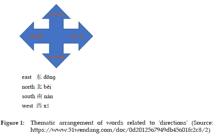 Thumbnail
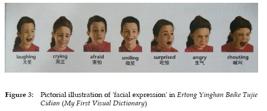 Thumbnail
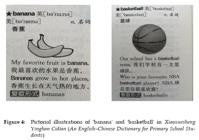 Thumbnail
 Thumbnail