A Systematic Literature Review of Over Three Decades of Dictionary Use Research in Lexikos
Abstract
This study presents a systematic literature review of empirical research on dictionary use published in the journal Lexikos over its 35-volume history (1991-2025). The paper employs the PRISMA methodology. Based on 44 relevant studies identified, the review analyses trends in research focus, methodology, educational context, geographic distribution, and investigated languages. Findings reveal a growing interest in dictionary use, particularly since 2012, with a strong emphasis on English-language contexts and higher education. Methodologically, mixed-methods and cross-sectional designs dominate, while longitudinal research remains notably absent. Asia and Europe are the most represented regions, although studies span diverse global contexts. The review highlights underexplored areas such as primary education, non-English dictionary use, and longitudinal perspectives. The review also calls for future research that addresses these gaps, explores dictionary use at different language proficiency levels, and examines the pedagogical integration of digital dictionary tools. The findings provide valuable insights for researchers aiming to investigate dictionary use and dictionary-based learning.
Dictionary Use; Systematic Review; User Behaviour; Prisma; Methodology; Lexikos; Language Education; Empirical Studies; Quantitative Research; Qualitative Research; Mixed Methods Research; Lexikos
Abstract
In dieser Studie wird eine systematische Literaturübersicht über die empirische Forschung zum Wörterbuchgebrauch vorgestellt, die in der Zeitschrift Lexikos im Laufe ihrer 35 Bände umfassenden Geschichte (1991-2025) veröffentlicht wurde. Die Studie basiert auf der PRISMA-Methode. Auf der Grundlage von 44 identifizierten relevanten Studien werden Trends in Bezug auf Forschungsschwerpunkte, Methodik, Bildungskontext, geografische Verteilung und untersuchte Sprachen analysiert. Die Ergebnisse zeigen ein wachsendes Interesse an der Wörterbuchnutzung, insbesondere seit 2012, mit einem starken Schwerpunkt auf englischsprachigen Kontexten und Hochschulbildung. Methodisch gesehen dominieren gemischte Methoden und Querschnittsstudien, während Längsschnittstudien nach wie vor nicht vorhanden sind. Asien und Europa sind die am stärksten vertretenen Regionen, obwohl die Studien verschiedene globale Kontexte umfassen. Der Bericht hebt bisher wenig erforschte Bereiche wie die Grundschulbildung, die Verwendung nicht-englischer Wörterbücher und die Längsschnittperspektive hervor. Die Übersicht fordert außerdem zukünftige Forschungsarbeiten, die diese Lücken schließen, den Wörterbuchgebrauch auf verschiedenen Sprachniveaus untersuchen und die pädagogische Integration von digitalen Wörterbuchwerkzeugen untersuchen. Die Ergebnisse liefern wertvolle Erkenntnisse für Forscher, die die Wörterbuchnutzung und das wörterbuchgestützte Lernen untersuchen wollen.
Wörterbuchbenutzung; Systematische Überprüfung; Benutzerverhalten; Prisma; Methodik; Sprachunterricht; Empirische Studien; Quantitative Forschung; Qualitative Forschung; Mixed Methods Research
1. Introduction
Dictionaries have long been regarded as indispensable tools in language learning and teaching that provide learners with access to a wealth of lexical, grammatical and cultural information (Karras 2019). Their importance spans various educational contexts from traditional classroom environments through digital learning to even self-directed learning scenarios (Verhun et al. 2024). Over the years, the study of dictionary use has evolved significantly, drawing the interest of researchers in fields such as second language acquisition (SLA), lexicography, and educational technology. Early studies focused primarily on the utilisation of print dictionaries, and investigated how users interacted with monolingual (Barnhart 1962, Quirk 1973), bilingual (Tomaszczyk 1979), and specialized dictionaries (Bergenholtz and Tarp 1995) to enhance their vocabulary (Bogaards 2010, Laufer and Hill 2000, Laufer 1993, Laufer and Hadar 1997), grammar (Bogaards and Van der Kloot 2001, Lew and Dziemianko 2006), reading comprehension (Ard 1982, Bensoussan et al. 1984, Knight 1994, Nesi and Meara 1991, Tono 2001), and writing skills (Bogaards 1996, Dziemianko 2010, Hartmann 2008, Laufer and Hadar 1997). These studies laid the groundwork for understanding the behaviours, strategies, and challenges learners face when using dictionaries as learning aids. With technological advancements, the focus of research has broadened to include electronic, digital and online dictionaries (Dziemianko 2010, Rundell 2015, Taylor and Chan 1994), which offer more dynamic and user-friendly interfaces compared to their print counterparts. These digital tools have introduced features such as audio pronunciations, visual aids, and context-sensitive or fuzzy search options, thereby fundamentally changing the way users interact with lexical information. Consequently, research began to investigate the effectiveness of digital dictionaries, exploring their impact on language learning outcomes (Dziemianko 2012, Lew and Galas 2008), user preferences (Müller-Spitzer and Koplenig 2014), and the cognitive processes involved (Miller 1986, Okuyama and Igarashi 2007) in dictionary consultation. The shift toward digital dictionaries has raised new questions about how learners access, interpret, and utilize the information provided (Bogaards 1998, Carstens 1995, Scholfield 1999), and this prompted ongoing investigations into the pedagogical implications of integrating dictionary use into language instruction (Chi 2003, Hartmann 1999, Lew and Galas 2008).
In this diverse research landscape, the study of dictionary use remains a dynamic field, reflecting the continuous evolution of both language learning practices and lexicographical innovations. As such, understanding how dictionaries are utilized in various learning contexts is relevant not only for language educators but also for lexicographers aiming to develop more effective reference tools (Atkins and Varantola 1997, Lew and De Schryver 2014, Miller 1986, Müller-Spitzer and Koplenig 2014). The growing body of such research underscores the importance of conducting systematic literature reviews (e.g., Ge et al. 2024) and meta-analyses (e.g., Zhang et al. 2021) to map the current state of knowledge, identify trends, and highlight areas that require further investigation.
Within the field of linguistics, Lexikos has established itself over the past three decades as a leading forum for lexicographical scholarship. With 35 volumes published to date, the journal is set to commemorate its 35th anniversary in 2025 as a specialized and influential journal dedicated to the advancement of lexicographic research. It has consistently featured a diverse collection of studies focusing on dictionary use, including user preferences, lookup behaviours, and digital dictionary developments. Despite the existence of numerous reviews and meta-analyses on dictionary use, there is a noticeable gap in research that specifically examines the contributions of Lexikos to this body of knowledge. Therefore, the present study seeks to fill this gap by systematically reviewing the literature on dictionary use (and users) published in Lexikos. By focusing exclusively on this journal, this study aims to uncover trends, patterns, and areas that may warrant further exploration. Through utilizing the PRISMA methodology, this review synthesizes the findings from Lexikos in order to provide a detailed overview of lexicographical research conducted over the past three decades.
Methodology
The present study employs the Preferred Reporting Items for Systematic Reviews and Meta-Analyses (PRISMA) methodology (Page et al. 2021) to systematically identify, select, and synthesize the literature on dictionary use published in Lexikos. The methodology is comprised of several key steps, namely defining inclusion and exclusion criteria, identifying sources, screening for eligibility, and analysing the data.
A comprehensive search was conducted in Lexikos on 15 April 2025: 35 volumes published from the journal's inception in 1991 to 2025 were scrutinised. Altogether there were 1028 electronic items (including articles, forewords, editorials, full volumes in a separate publication announcement, front matters and tables of contents), out of which 915 were articles. However, the search targeted (research) articles that investigated any aspect of dictionary use only, including but not limited to dictionary consultation behaviours, digital vs. print dictionary usage, the impact of dictionaries on language learning outcomes, user preferences, and the pedagogical implications of dictionary use. When searching for articles, we decided to manually examine each volume of Lexikos to ensure that no relevant studies were overlooked. This involved systematically going through the titles and abstracts of every article in each volume. By manually reviewing the content, we aimed to capture studies that could not be identified through keyword searches alone, thereby enhancing the thoroughness and accuracy of the study selection process.
Inclusion criteria were established to identify articles that specifically focused on dictionary use. The criteria were as follows:
1. published in
Lexikos: only articles published in the journal Lexikos were included to ensure a focused analysis of research trends within the journal;2. focus on dictionary use: studies must involve theoretical or empirical research related to any form of dictionary use, user behaviour, or dictionary-based language learning, including both qualitative and quantitative as well as mixed methods studies;
3. language: articles published in Afrikaans, Dutch, English, French or German (the language of contributions in Lexikos) were all included in the analysis.
Exclusion criteria were designed to eliminate studies that were not relevant to the review's objectives. Articles were excluded if their primary focus was not on dictionary use.
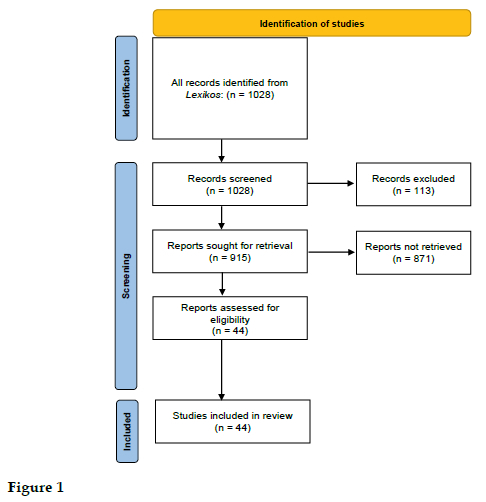
As explained earlier, the initial search identified all articles published in Lexikos. After that, relevant titles, abstracts and keywords of all the identified articles were screened for relevance based on the above inclusion and exclusion criteria. In cases where the title, abstract and keywords were insufficient to determine eligibility, the full text of the article was examined. The screening was conducted by all three authors to ensure consistency. Any disagreements regarding article eligibility were resolved through discussion until a consensus was reached. The results of the selection process were recorded in a PRISMA flow diagram (see Figure 1), detailing the number of articles identified, screened, assessed for eligibility, and included in the final review. This flow diagram provides transparency and replicability, as recommended by the PRISMA guidelines (Page et al. 2021).
Data from the included studies were extracted systematically using the following coding sheet. Key information extracted from each study included:
- bibliographic details: author(s), year of publication, and volume number of Lexikos;
- research focus: the specific aspect(s) of dictionary use addressed in the study (e.g., user behaviour, etc.);
- study design and methodology: type of study (e.g., qualitative, quantitative, or mixed methods), number of participants, country from which the participants/respondents were drawn, languages investigated, sample size, and data collection methods.
The coding process was carried out by all authors to ensure accuracy and consistency. Any discrepancies in data extraction were discussed and resolved.
As a next step, a narrative synthesis approach was employed to analyse the findings of the studies included. Accordingly, the extracted data were organized thematically based on the research focus and methodology, which allowed for the identification of common trends, and evolving themes in dictionary use over time. Descriptive statistics (e.g., n = number of items) were also used to summarize the frequency of different research topics, methodologies, and findings across the studies.
Finally, to ensure the robustness of the review, the quality of the included studies was assessed using a standardized checklist adapted to the context of dictionary use research. This checklist evaluated factors such as the clarity of research objectives, appropriateness of study design and methodology, transparency of data collection and analysis, and the validity of conclusions drawn. Studies were not excluded based on quality assessment.
Results
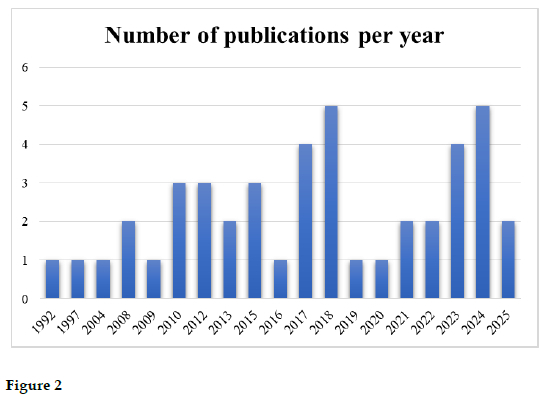
Regarding the number of published papers on dictionary use (n = 44, see Appendix), the analysis of publication trends - based on the corpus - clearly demonstrates evolving and growing scholarly interest in dictionary use studies over the examined time period (see Figure 2).
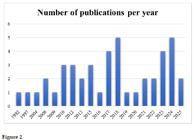
Initially, from 1992 to 2009, research papers in this field appeared sporadically and remained at a relatively low number typically ranging between one and two studies per year. A noticeable shift occurred in 2012, when the frequency of publications on dictionary use began to increase. This development coincided with the rapid spread of online dictionary use, supported by the growing accessibility, speed, and reliability of internet connections. A particularly significant event was Macmillan's announcement in 2012 that, from 2013 onwards, it would cease publishing dictionaries in book form and instead would focus exclusively on digital resources (EURALEX 2012). This shift symbolized a broader trend: web-based dictionaries were becoming increasingly popular and dominant, opening up new research avenues, as the use of digital and online dictionaries involves fundamentally different practices compared to paper dictionaries.
The upward trajectory peaked in the years 2017 and 2018, which represented the highest number of scholarly contributions during this growth period. Following this peak, there was a temporary decrease in the rate of published works, probably due to the COVID-19 situation, which prevented the conducting of many studies building on formerly used research methodologies. However, the data reveal a recent surge in research activities, particularly in 2023 and 2024: this suggests renewed scholarly interest and potentially new directions or methodological advancements in the field.
The language distribution of the analysed studies further highlights a clear dominance of English: nearly all publications (43 out of 44) were written in English, and only one paper appeared in Afrikaans. This dominance underscores the status of English as the primary language of academic communication in the field of lexicographical and dictionary use research. Given that English is widely regarded as the global lingua franca as well as the language of science (O'Neil 2018), this overwhelming preference is hardly surprising. It suggests not only the international scope of the field but also the global scholarly community's sustained interest in issues related to dictionary usage. Moreover, the use of a global lingua franca, such as the English language, indubitably facilitates the wider dissemination and influence of these studies across diverse academic contexts.
From a research methodological point of view, the reviewed studies point to a distinct inclination towards certain research paradigms. However, before examining these in detail, it is important to acknowledge several previous works closely related to our topic. One notable systematic literature review is Lexikos at Eighteen by De Schryver (2009), which focused exclusively on articles published in Lexikos. More recently, Ge et al. (2024) conducted a scoping review of studies on dictionary use and language learning, offering a broader, systematic overview across various journals. In addition to these major reviews, two other studies have provided valuable insights into dictionary use in specific national contexts: Margalitadze and Meladze (2023) explored dictionary use in Georgia, while P. Márkus and Dringó-Horváth (2023) investigated the Hungarian context. Although these works are closely related to the topic of dictionary use, we did not include or categorize them within our dataset, as they are primarily descriptive in nature and/or synthesize findings from earlier studies, rather than present new empirical research.
The rest of papers may be classified into different categories. Mixed-methods designs are particularly prevalent, featuring in 12 studies, which signals a marked tendency among researchers to involve both qualitative and quantitative approaches for gaining a more holistic understanding of dictionary use (habits). This preference is consistent with findings from broader review studies in the field. In a recent meta-review of mixed-methods research throughout the 2020s, Riazi and Farsani (2024) cite the work of Amini Farsani et al. (2021), who - drawing their conclusion on the basis of an analysis of 3,814 empirical articles published between 2009 and 2018 in 18 leading applied linguistics journals - found that, after quantitative studies (42.6%), mixed-methods research constituted the second most frequent methodological approach (25.9%). This growing reliance on mixed methods likely reflects the complex, context-dependent nature of dictionary use, which often requires both statistical generalisation and in-depth contextual insights.
Regarding the quantitative research paradigm, a total of 8 studies in our corpus were quantitative in nature. Notably, the dataset also includes four replication studies (Chen and Liu 2023, Ekwa Ebanéga and Moussavou 2008, Jewalani et al. 2019, Li et al. 2024). Although replication studies remain relatively rare in applied linguistics, their presence in our corpus reflects a growing emphasis on methodological rigour and the validation of previous findings. This trend aligns with the increasing recognition of the value of replication studies in the field. In fact, a recent special issue of Studies in Second Language Acquisition was dedicated entirely to the topic, highlighting the field's urgent need for more replication studies. As noted in the introduction to that issue (see McManus 2024), replication not only strengthens the empirical foundations of linguistic research but also contributes significantly to a deeper and more reliable understanding of key issues. On the other hand, 10 studies (Al-Ajmi 2008, Benzehra and McCreary 2010, Boonmoh 2012, Campoy-Cubillo 2021, Chaves-Yuste and Márquez-Cruz 2025, Gavriilidou et al. 2024, Kim 2017, Kim 2018, Milić et al. 2018, Pujol and Corrius 2013) explicitly utilized either a pre-test and post-test design or an experimental-group and control-group design. These designs allowed researchers to assess the immediate effects of dictionary use interventions on specific language learning outcomes, such as vocabulary acquisition, comprehension, or test performance.
Regarding purely qualitative research methods in the sample, 6 studies were identified. These studies employ various research methodologies with distinct features and purposes. Law (2024) uses qualitative content analysis to examine the effectiveness of secondary school EFL textbooks for dictionary use training. Furthermore, using the think-aloud protocol method, Vrbinc, Farina and Vrbinc (2022) compare dictionary look-up behaviours. In a descriptive study, Xue (2017) investigates how learner's dictionaries represent the cultural dimension of meaning for EFL learners. Through trends analysis De Schryver (2009) provides a comprehensive overview of Lexikos' contributions to key themes and developments in lexicography. Relying on log file analysis, De Schryver, Joffe, Joffe and Hillewaert (2006) study dictionary users' look-up behaviour. In addition, with the help of self-reflections and offering insights into dictionary use experience, Mdee (1997) compares university students' dictionary use and needs. The above studies present different approaches to lexicography research: qualitative content analysis and descriptive research are more systematic in nature, whereas think-aloud protocols and self-reflections are more introspective. On the other hand, trends analysis and log file analysis are more focused on temporal changes and usage patterns, respectively.
An analysis of the applied research designs reveals clear methodological preferences and highlights notable research patterns. Cross-sectional studies seem dominant, appearing in 34 studies: these clearly indicate researchers' preference for gathering data at a single, specific point in time to gain immediate insights and to conduct comparative analyses of dictionary use. Interestingly, among the papers examined, no explicitly identified longitudinal studies were found. This gap supports Nesi's (2013) observation, who claims that most studies merely take a "snapshot" of dictionary user skills. This suggests that research which tracks participants and observes dictionary usage patterns over extended periods is notably absent from this scholarly domain. This enables the identification of future research directions.
Overall, the examined studies display considerable variability in participant numbers. The sample sizes range widely from small-scale studies involving as few as 10 or 13 participants (generally qualitative studies) to large-scale research with over 300 participants. More specifically, small sample sizes (fewer than 50 participants) are relatively common, with several studies (n=11) reporting groups of 10-45 participants, and a moderate number of studies (n=15) involved between 50 and 150 participants. Finally, large-scale studies involving more than 150 participants are less frequent but notable (n=8), with reported sample sizes of between 168 and 509 participants. This distribution highlights two trends: while small to moderately sized context-specific studies dominate, there is a noteworthy presence of large-sample research, which may allow for more robust statistical analyses and greater generalizability. Nevertheless, the overall variability in sample sizes suggests a lack of standardization in research designs within the field.
The analysis of educational levels targeted by the reviewed studies reveals distinct trends and research preferences. Studies clearly prioritise higher education contexts, with 31 studies explicitly focusing on university-level learners. This suggests that dictionary research predominantly explores issues pertinent to adult learners. This might be explained by easier access to participants or the importance of dictionary use at advanced proficiency levels (cf. Béjoint 1981, Battenburg 1989, Kosem 2008, Nesi 2000). On the other hand, research explicitly focusing on younger learners is noticeably scarce. Only two studies examined dictionary use at the primary education level: one involved mainstream and intercultural primary school pupils aged 10-12 (grades 5-6) (Gavriilidou et al. 2024), while the other study (Van der Merwe 2012) concentrated on primary learners in Grade 4. Additionally, one study extended the scope of research across educational levels: a study by Margalitadze and Meladze (2023) examined dictionary use across primary, secondary and higher education levels, and another focused concurrently on secondary and higher education (Tono 1992).
An analysis of the countries from which the participants/respondents of the analysed studies were drawn highlights distinct geographic areas of research. Chinastands out as the most frequently examined context, with seven studies. Following China, Poland appears prominent with four studies, which indicates focused and consistent attention on dictionary use in Polish contexts. Thailand and South Africaeach feature in three studies, and a moderate level of interest is apparent in countries like Spain (n = 3), Indonesia (n = 2), and Korea (n = 2), each represented by two studies. At a continental comparison, Asia emerges as the most represented region, with countries such as China, Thailand, Indonesia, Korea, Japan, Taiwan, Jordan, and Kuwait (with the latter two countries classified under 'Asia' in the current study) contributing to the body of research. Europe also shows substantial representation, led by Poland and Spain, and supplemented by individual studies from Germany, Greece, Hungary, Serbia, and Slovenia. This points to a well-established tradition of lexicographic inquiry within the European academic landscape. Furthermore, Africa, while less represented overall, still shows a notable presence with three studies from Republic of South Africa and one each from Zimbabwe and Namibia. This suggests growing scholarly engagement with dictionary use on the African continent, particularly in multilingual or second-language learning contexts. It is also important to note that Lexikos - the journal analysed in this study - is the only journal in Africa exclusively devoted to lexicography, which likely contributes to the relatively higher visibility of African research in this field. North America and Oceania are less prominently featured, with the United States being the only representative from North America, and no studies originating from Oceania in the reviewed sample. South America is absent: this points to potential gaps in regional representation and opportunities for future research.
The analysis of languages investigated in the reviewed studies underscores the clear dominance of English, reflecting its global status and importance in educational and lexicographical research. English was the primary focus in 26 studies, which indicates widespread scholarly attention towards understanding dictionary use in English-language contexts (cf. Nied Curcio 2022). This focus on English is likely to be due to the international relevance of English and its role as a lingua franca and a language and medium of instruction. Beyond the English language, several studies explored bilingual or multilingual dictionary use. These studies investigated dictionary interactions between English and other languages including e.g. Serbian, Chinese, Arabic, Japanese, German, French, and Swahili. These studies reflect an interest in examining dictionary use in linguistically diverse settings and highlight cross-linguistic issues, challenges and opportunities. In addition, studies examined dictionary use related solely to specific languages like Greek, Georgian, Bahasa Indonesian, Afrikaans, Ndebele, and Gabonese. Though individually less represented, these studies illustrate curiosity about dictionary use concerning languages beyond the dominant global language of English.
Conclusion
This systematic literature review set out to examine dictionary use research published in Lexikos, a specialized journal of lexicography that has played a pivotal role in shaping the discourse around dictionary-related studies over the past three decades. By analysing 44 empirical papers from 1991 to 2025 using the PRISMA framework, the review has revealed clear trends, methodological patterns, and emerging gaps in the field. The findings demonstrate that scholarly interest in dictionary use has grown significantly over time, with a notable increase in publications from 2012 onwards, coinciding with the rise of digital and online dictionaries. This shift has brought about methodological diversification, particularly in the increased use of mixed-methods designs. Despite this methodological expansion, cross-sectional research seems to dominate the field and there is scarcity of longitudinal research on dictionary use. In terms of research contexts, the field shows a focus on higher education, with minimal attention given to primary and secondary school learners. Geographically, the reviewed studies predominantly originate from Asia and Europe, with a strong emphasis on English-language contexts, both in terms of the language of publication and the language of investigation.
Importantly, the review identifies a noticeable lack of replication studies and large-scale investigations, as well as insufficient reporting of participant numbers in some cases, which are factors that can limit the generalizability and transparency of findings. Additionally, while the reviewed studies cover a wide range of topics such as user behaviour, digital innovations, and pedagogical applications, there remains untapped potential for deeper exploration into cognitive processes, long-term learning effects, and classroom-based interventions. As a final note, we encourage future authors in this field to place more emphasis on the consistent use of research methodology and terminology, as clearer conceptual frameworks and methodological transparency will strengthen the validity and impact of dictionary use research.
References
- Al-Ajmi, H. 2008. The Effectiveness of Dictionary Examples in Decoding: The Case of Kuwaiti Learners of English. Lexikos 18: 15-26.https://doi.org/10.5788/18-0-474
- Alzi'abi, S.E. 2017. Guessing Verb-Adverb Collocations: Arab EFL Learners' Use of Electronic Dictionaries. Lexikos 27: 50-77.https://doi.org/10.5788/27-1-1394
- Amini Farsani, M., H.R. Jamali, M. Beikmohammadi, B. Daneshvar Ghorbani and L. Soleimani. 2021. Methodological Orientations, Academic Citations, and Scientific Collaboration in Applied Linguistics: What Do Research Synthesis and Bibliometrics Indicate? System 100(3): 102547.https://doi.org/10.1016/j.system.2021.102547
- Ard, J. 1982. The Use of Bilingual Dictionaries by ESL Students While Writing. ITL Review of Applied Linguistics 58: 1-27.
- Atkins, B.T.S. and K. Varantola. 1997. Monitoring Dictionary Use. International Journal of Lexicography 10(1): 1-45.
- Barnhart, C. 1962. Problems in Editing Commercial Monolingual Dictionaries. Householder, F.W. and S. Saporta (Eds.). 1962. Problems in Lexicography: 161-181. Bloomington: Indiana University Press.
- Battenburg, J.D. 1989. A Study of English Monolingual Learners' Dictionaries and their Users. West Lafayette, Indiana, USA: Purdue University.
- Béjoint, H. 1981. The Foreign Student's Use of Monolingual English Dictionaries: A Study of Language Needs and Reference Skills. Applied Linguistics II(3): 207-222.
- Bensoussan, M., D. Sim and R. Weiss. 1984. The Effect of Dictionary Usage on EFL Test Performance Compared with Student and Teacher Attitudes and Expectations. Reading in a Foreign Language 2(2): 262-276.
- Benzehra, R. and D.R. McCreary. 2010. The OEAD: New Perspectives on English-Arabic Dictionaries for English-Speaking Users and Users' Surveys. Lexikos 20: 1-25.https://doi.org/10.5788/20-0-130
- Bergenholtz, H. and S. Tarp (Eds.). 1995. Manual of Specialised Lexicography. The Preparation of Specialised Dictionaries. Amsterdam/Philadelphia: John Benjamins.
- Beyer, H.L. and A.K. Faul. 2010. Namibian University Entrants' Concepts of 'a Dictionary'. Lexikos 20: 644-679.https://doi.org/10.5788/20-0-160
- Bogaards, P. 1996. Dictionaries for Learners of English. International Journal of Lexicography 9(4): 277-320.
- Bogaards, P. 1998. Using Dictionaries: Which Words Are Looked Up by Foreign Language Learners? Atkins, B.T.S. and K. Varantola (Eds.). 1998. Studies of Dictionary Use by Language Learners and Translators: 151-157. Tübingen: Niemeyer.
- Bogaards, P. 2010. Dictionaries and Second Language Acquisition. Dykstra, A. and T. Schoonheim (Eds.). 2010. Proceedings of the XIV EURALEX International Congress, 6-10 July 2010, Leeuwarden: 99-123. Ljouwert: Fryske Akademy.
- Bogaards, P. and W.A. van der Kloot. 2001. The Use of Grammatical Information in Learners' Dictionaries. International Journal of Lexicography 14(2): 97-121.https://doi.org/10.1093/ijl/14.2.97
- Boonmoh, A. 2010. The Use of Pocket Electronic Dictionaries by Thai University Students. Lexikos 20: 680-690.https://doi.org/10.5788/20-0-161
- Boonmoh, A. 2012. E-dictionary Use under the Spotlight: Students' Use of Pocket Electronic Dictionaries for Writing. Lexikos 22: 43-68.https://doi.org/10.5788/22-1-997
- Boonmoh, A. 2021. Use of Dictionaries and Online Tools for Reading by Thai EFL Learners in a Naturalistic Setting. Lexikos 31(1): 239-258.https://doi.org/10.5788/31-1-1645
- Çağlayan Özkan, A. 2025. The Effectiveness of the "Real-Life-Based School Dictionary" as an Electronic Dictionary. Lexikos 35(1): 143-156.https://doi.org/10.5788/35-1-2006
- Campoy-Cubillo, M.C. 2021. Fostering Learners' Online Dictionary Skills through Active Dictionary Rubrics. Lexikos 31(1): 487-510.https://doi.org/10.5788/31-1-1663
- Carstens, A. 1995. Language Teaching and Dictionary Use: An Overview. Lexikos 5: 105-116.
- Chan, A.Y.W. 2012. Advanced Cantonese ESL Learners' Use of a Monolingual Dictionary for Language Production. Lexikos 22: 109-138.https://doi.org/10.5788/22-1-1000
- Chan, A.Y.W. 2017. The Effectiveness of Using a Bilingualized Dictionary for Determining Noun Countability and Article Selection. Lexikos 27: 183-213.https://doi.org/10.5788/27-1-1399
- Chaves-Yuste, B. and M. Márquez-Cruz. 2025. Digital Lexicography in ESP: Enhancing Vocabulary Acquisition and Reading Comprehension in Students of Commerce Degree. Lexikos 35(1): 109-128.https://doi.org/10.5788/35-1-2004
- Chen, Y. and S. Liu. 2023. A Further Look into the Use of a Dictionary APP in EFL Writing: A Replication Study. Lexikos 33(1): 324-349.https://doi.org/10.5788/33-1-1820
- Chi, M.L.A. 2003. An Empirical Study of the Efficacy of Integrating the Teaching of Dictionary Use into a Tertiary English Curriculum in Hong Kong. Vol. IV. Research Reports (Ed. G. James). Hong Kong: Language Centre, Hong Kong University of Science and Technology, Language Center.
- Claassen, D. 2015. 'n Evaluasie van Pharos Aanleerderwoordeboek vir skole/Learner's Dictionary for Schools en Longman-HAT Afrikaans Dictionary and Grammar for English Speakers in 'n Afrikaanse taalverwerwingskursus op universiteitsvlak. Lexikos 25: 31-55.https://doi.org/10.5788/25-1-1290
- De Schryver, G.-M. 2009. Lexikos at Eighteen: An Analysis. Lexikos 19: 372-403.https://doi.org/10.5788/19-0-445
- De Schryver, G.-M., D. Joffe, P. Joffe and S. Hillewaert. 2006. Do Dictionary Users Really Look Up Frequent Words? - On the Overestimation of the Value of Corpus-based Lexicography. Lexikos 16: 67-83.https://doi.org/10.5788/16-0-648
- Dziemianko, A. 2010. Paper or Electronic? The Role of Dictionary Form in Language Reception, Production and the Retention of Meaning and Collocations. International Journal of Lexicography 23(3): 257-273.
- Ekwa Ebanéga, G.-M. and F.T. Moussavou. 2008. A Survey of the Dictionary Use of Gabonese Students at Two South African Universities. Lexikos 18: 349-365.https://doi.org/10.5788/18-0-491
- EURALEX. 2012. End of Print Dictionaries at Macmillan.https://euralex.org/2012/11/05/end-of-print-dictionaries-at-macmillan/ [10 April 2025].
- Fajt, B. 2024. Exploring Dictionary Preferences: A Comparative Study of EFL and GFL Learners in Hungarian Higher Education. Lexikos 34(1): 419-436.https://doi.org/10.5788/34-1-1945
- Fallianda, F. 2020. A Survey of Indonesian Students' Use of Dictionaries. Lexikos 30(1): 609-628.https://doi.org/10.5788/30-1-1607
- Gavriilidou, Z., A. Markos and E. Konstantinidou. 2024. How Can We Raise Strategic Dictionary Use in the Classroom: The Effect of a Dictionary Awareness Program on Dictionary Use Strategies. Lexikos 34(1): 99-122.https://doi.org/10.5788/34-1-1882
- Ge, X., S. Zhang, H. Xu and X. Zhang. 2024. A Scoping Review of Studies into Dictionary Use and Language Learning. Lexikos 34(1): 331-354.https://doi.org/10.5788/34-1-1940
- Hadebe, S. 2004. Improving Dictionary Skills in Ndebele. Lexikos 14: 89-104.https://doi.org/10.5788/14-0-684
- Hartmann, R.R.K. (Ed.). 1999. Dictionaries in Language Learning. Recommendations, National Reports and Thematic Reports from the TNP Sub-project 9: Dictionaries. Thematic Network Project in the Area of Languages, Berlin Free University.
- Hartmann, R.R.K. 2008. Twenty-five Years of Dictionary Research: Taking Stock of Conferences and Other Lexicographic Events Since LEXeter '83. Bernal, E. and J. DeCesaris (Eds.). 2008. Proceedings of the XIII EURALEX International Congress, 15-19 July 2008, Barcelona, Spain: 131-148. Barcelona: Universitat Pompeu Fabra.
- Karras, I. 2019. The Use of Dictionaries in English as Foreign Language Teaching and Learning. Osuchowska, D. and L. Harmon (Eds.). 2019. Contents, Use, Usability: Dictionaries from the Perspective of a Translator and a Language Teacher: 49-62. Bern: Peter Lang International Academic Publishing.
- Kim, S. 2017. "Minimum Input, Maximum Output, Indeed!" Teaching Collocations Through Collocation Dictionary Skills Development. Lexikos 27: 265-286.https://doi.org/10.5788/27-1-1403
- Kim, S. 2018. A Lexicographic Approach to Teaching the English Article System: Help or Hindrance? Lexikos 28: 196-220.https://doi.org/10.5788/28-1-1462
- Knight, S. 1994. Dictionary Use While Reading: The Effects on Comprehension and Vocabulary Acquisition for Students of Different Verbal Abilities. The Modern Language Journal 78(3): 285-299.https://doi.org/10.2307/330108
- Kosem, I. 2008. Dictionaries for University Students: A Real Deal or Merely a Marketing Ploy? Bernal, E. and J. DeCesaris (Eds.). 2008. Proceedings of the XIII EURALEX International Congress, 15-19 July 2008, Barcelona, Spain: 1575-1584. Barcelona: Universitat Pompeu Fabra.
- Laufer, B. 1993. The Effect of Dictionary Definitions and Examples on the Use and Comprehension of New L2 Words. Cahiers de Lexicologie 63(2): 131-142.
- Laufer, B. and L. Hadar. 1997. Assessing the Effectiveness of Monolingual, Bilingual, and "Bilingualized" Dictionaries in the Comprehension and Production of New Words. The Modern Language Journal 81(2): 189-196.
- Laufer, B. and M. Hill. 2000. What Lexical Information Do L2 Learners Select in a CALL Dictionary and How Does It Affect Word Retention? Language Learning & Technology 3(2): 58-76.
- Lew, R. and G.-M. de Schryver. 2014. Dictionary Users in the Digital Revolution. International Journal of Lexicography 27(4): 341-359.
- Lew, R. and A. Dziemianko. 2006. A New Type of Folk-inspired Definition in English Monolingual Learners' Dictionaries and its Usefulness for Conveying Syntactic Information. International Journal of Lexicography 19(3): 225-242.
- Lew, R. and K. Galas. 2008. Can Dictionary Skills Be Taught? The Effectiveness of Lexicographic Training for Primary School Level Polish Learners of English. Bernal, E. and J. DeCesaris (Eds.). 2008. Proceedings of the XIII EURALEX International Congress, 15-19 July 2008, Barcelona, Spain: 1273-1285. Barcelona: Universitat Pompeu Fabra.
- Lew, R., M. Grzelak and M. Leszkowicz. 2013. How Dictionary Users Choose Senses in Bilingual Dictionary Entries: An Eye-Tracking Study. Lexikos 23: 228-254.https://doi.org/10.5788/23-1-1213
- Li, L. and H. Xu. 2015. Using an Online Dictionary for Identifying the Meanings of Verb Phrases by Chinese EFL Learners. Lexikos 25: 191-209.https://doi.org/10.5788/25-1-1295
- Liang, P. and D. Xu. 2018. An Empirical Study of EFL Learners' Dictionary Use in Chinese-English Translation. Lexikos 28: 221-244.https://doi.org/10.5788/28-1-1463
- Margalitadze, T. and G. Meladze. 2023. How to Solve Problems in Dictionary Use: The Georgian Case. Lexikos 33(2): 63-78.https://doi.org/10.5788/33-2-1840
- McManus, K. 2024. Replication Studies in Second Language Acquisition Research: Definitions, Issues, Resources, and Future Directions: Introduction to the Special Issue. Studies in Second Language Acquisition 46(5): 1299-1319.https://doi.org/10.1017/S0272263124000652
- Mdee, J.S. 1997. Language Learner's Use of a Bilingual Dictionary: A Comparative Study of Dictionary Use and Needs. Lexikos 7: 94-106.https://doi.org/10.5788/7-1-974
- Milić, M., T. Glušac and A. Kardoš. 2018. The Effectiveness of Using Dictionaries as an Aid for Teaching Standardization of English-based Sports Terms in Serbian. Lexikos 28: 262-286.https://doi.org/10.5788/28-1-1465
- Miller, G.A. 1986. Dictionaries in the Mind. Language and Cognitive Processes 1(3): 171-185.https://doi.org/10.1080/01690968608407059
- Müller-Spitzer, C. and A. Koplenig. 2014. Online Dictionaries: Expectations and Demands. Müller-Spitzer, C. (Ed.). 2014. Using Online Dictionaries. Lexicographica Series Maior 145: 143-188. Berlin: Walter de Gruyter.
- Müller-Spitzer, C., M.J. Domínguez Vázquez, M. Nied Curcio, I.M. Silva Dias and S. Wolfer. 2018. Correct Hypotheses and Careful Reading Are Essential: Results of an Observational Study on Learners Using Online Language Resources. Lexikos 28: 287-315.https://doi.org/10.5788/28-1-1466
- Nesi, H. 2000. The Use and Abuse of EFL Dictionaries: How Learners of English as a Foreign Language Read and Interpret Dictionary Entries. Tübingen: Max Niemeyer.
- Nesi, H. 2013. Researching Users and Uses of Dictionaries. Jackson, H. (Ed.). 2013. The Bloomsbury Companion to Lexicography: 62-74. London: Bloomsbury Academic.
- Nesi, H. and P. Meara. 1991. How Using Dictionaries Affects Performance in Multiple-choice EFL Tests. Reading in a Foreign Language 8(1): 631-643.
- Nied Curcio, M. 2022. Dictionaries, Foreign Language Learners and Teachers. New Challenges in the Digital Era. Klosa-Kückelhaus, A., S. Engelberg, Ch. Möhrs and P. Storjohann (Eds.). 2022. Dictionaries and Society: Proceedings of the XX EURALEX International Congress, 12-16 July 2022, Mannheim, Germany: 71-84. Mannheim: IDS-Verlag.
- Okuyama, Y. and H. Igarashi. 2007. Think-aloud Protocol on Dictionary Use by Advanced Learners of Japanese. The JALT CALL Journal 3(1-2): 45-58.
- O'Neil, D. 2018. English as the Lingua Franca of International Publishing. World Englishes 37(2): 146-165.
- Page, M.J., J.E. McKenzie, P.M. Bossuyt, I. Boutron, T. Hoffmann, C.D. Mulrow et al. 2021. The PRISMA 2020 Statement: An Updated Guideline for Reporting Systematic Reviews. BMJ 372(71): 1-9.https://doi.org/10.1136/bmj.n71
- P. Márkus, K. and I. Dringó-Horváth. 2023. Developing Dictionary Skills through Monolingual and Bilingual English Dictionaries at Tertiary-level Education in Hungary. Lexikos 33(1): 350-381.https://doi.org/10.5788/33-1-1821
- Ptasznik, B. 2022. After the Digital Revolution: Dictionary Preferences of English Majors at a European University. Lexikos 32(1): 220-249.https://doi.org/10.5788/32-1-1721
- Ptasznik, B. 2023. Evaluating the Usefulness of the Learning Tools in Monolingual Online Dictionaries for Learners of English: Gauging the Preferences of Polish Students of English. Lexikos 33(1): 109-124.https://doi.org/10.5788/33-1-1799
- Ptasznik, B. and R. Lew. 2018. Which Learning Tools Accompanying the Paid Online Version of LDOCE Do Advanced Learners of English Find Useful? Lexikos 28: 448-460.https://doi.org/10.5788/28-1-1474
- Pujol, D. and M. Corrius. 2013. The Role of the Learner's Native Culture in EFL Dictionaries: An Experimental Study. Lexikos 23: 565-584.https://doi.org/10.5788/23-1-1230
- Quirk, R. 1973. The Social Impact of Dictionaries in the UK. McDavid, R.I. and A.R. Duckert (Eds.). 1973. Lexicography in English: 76-88. New York: New York: Academy of Sciences.
- Riazi, A.M. and M.A. Farsani. 2024. Mixed-methods Research in Applied Linguistics: Charting the Progress through the Second Decade of the Twenty-first Century. Language Teaching 57(2): 143-182.https://doi.org/10.1017/S0261444823000332
- Rundell, M. 2015. From Print to Digital: Implications for Dictionary Policy and Lexicographic Conventions. Lexikos 25: 301-322.https://doi.org/10.5788/25-1-1301
- Schierholz, S.J. 2015. Methods in Lexicography and Dictionary Research. Lexikos 25: 323-352.https://doi.org/10.5788/25-1-1302
- Scholfield, P. 1999. Dictionary Use in Reception. International Journal of Lexicography 12(1): 13-34.
- Taylor, A. and A. Chan. 1994. Pocket Electronic Dictionaries and Their Use. Martin, W., W. Meijs, M. Moerland, E. ten Pas, P. van Sterkenburg and P. Vossen (Eds.). 1994. EURALEX '94 Proceedings. Papers Submitted to the 6th EURALEX International Congress on Lexicography in Amsterdam, The Netherlands: 598-605. Amsterdam: EURALEX.
- Tomaszczyk, J. 1979. Dictionaries: Users and Uses. Glottodidactica 12: 103-119.
- Tono, Y. 1992. The Effect of Menus on EFL Learners' Look-up Processes. Lexikos 2: 230-253.https://doi.org/10.5788/2-1-1136
- Tono, Y. 2001. Research on Dictionary Use in the Context of Foreign Language Learning: Focus on Reading Comprehension. Lexicographica Series Maior 106. Tübingen: Max Niemeyer.
- Van der Merwe, M.F. 2012. A Study of the Use of the HAT Afrikaanse Skoolwoordeboek by Primary School Children. Lexikos 22: 352-366.https://doi.org/10.5788/22-1-1012
- Verhun, T., M. Davydovych, K. Parnus, M. Kosheleva, I. Biliak and O. Khorosh. 2024. Algorithms for Optimizing Vocabulary Acquisition in Language Learning. Proceedings of the International Conference on Applied Innovation in IT 12(1): 105-114.
- Xue, M. 2017. Representing the Cultural Dimension of Meaning in Learner's Dictionaries - From the Perspective of Chinese EFL Learners in L2 Reception. Lexikos 27: 578-596.https://doi.org/10.5788/27-1-1416
- Zhang, S., H. Xu and X. Zhang. 2021. The Effects of Dictionary Use on Second Language Vocabulary Acquisition: A Meta-analysis. International Journal of Lexicography 34(1): 1-38.https://doi.org/10.1093/ijl/ecaa010
- Zou, D. 2016. Comparing Dictionary-induced Vocabulary Learning and Inferencing in the Context of Reading. Lexikos 26: 372-390.https://doi.org/10.5788/26-1-1345