Correct Hypotheses and Careful Reading Are Essential: Results of an Observational Study on Learners Using Online Language Resources
Abstract
In the past two decades, more and more dictionary usage studies have been published, but most of them deal with questions related to what users appreciate about dictionaries, which dictionaries they use and what type of information they need in specific situations - presupposing that users actually consult lexicographic resources. However, language teachers and lecturers in linguistics often have the impression that students do not use enough high-quality dictionaries in their everyday work. With this in mind, we launched an international cooperation project to collect empirical data to evaluate what it is that students actually do while attempting to solve language problems. To this end, we applied a new methodological setting: screen recording in conjunction with a thinking-aloud task. The collected empirical data offers a broad insight into what users really do while they attempt to solve language-related tasks online.
dictionary use; observational study; language learners; online resources; search strategies; online dictionaries; automatic translators
 Thumbnail
 Thumbnail
 Thumbnail
 Thumbnail
 Thumbnail
 Thumbnail
 Thumbnail
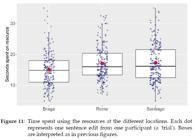 Thumbnail
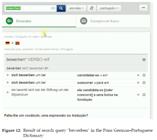 Thumbnail
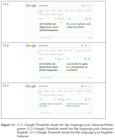 Thumbnail