Semantic-Lexicographic Aspects of Deverbal -ung-Nominalizations in German: Theoretical Foundations and Descriptive Possibilities
Abstract
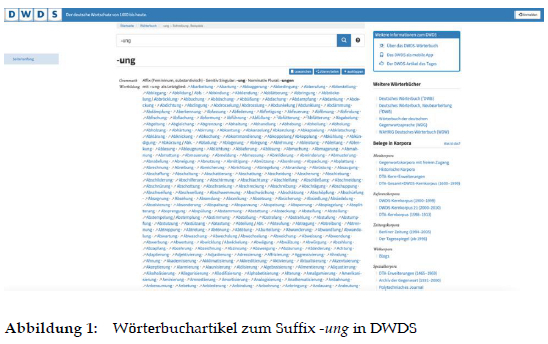
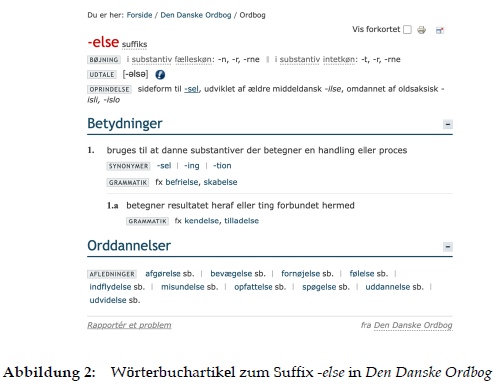
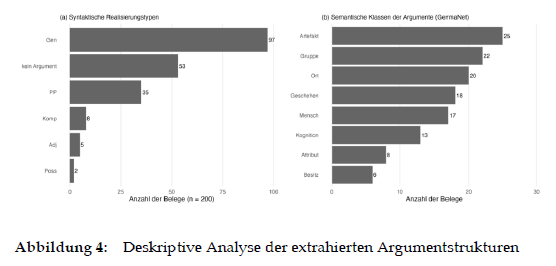
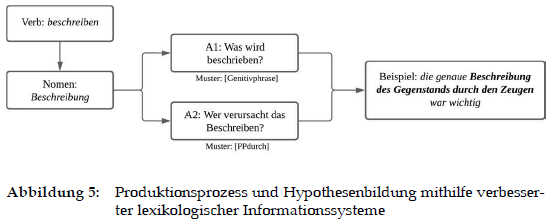
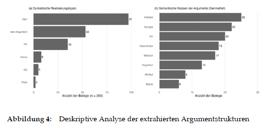
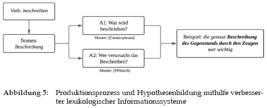
Contemporary digital dictionaries exhibit significant shortcomings in the systematic representation of morpho-lexical information. This study uses German deverbal -ung-nominalisations to examine how corpus-based argument structure analyses can improve their lexicographic documentation. Based on a semantically annotated corpus, 200 -ung-nominalisations were analysed both quantitatively and qualitatively. The results lead to two central findings: (a) Regular polysemy: The morphological formation mechanisms explain the systematic polysemy between process (nomen actionis) and result (nomen acti) readings, a relationship whose connection to the -ung affix is not presented in existing monolingual dictionaries; (b) Stable argument structure: The semantic argument structure (of the nomen actionis) is characterised by a stable "minimal program" (the argument for the patient/theme and the argument for the cause of change). The study consequently proposes an optimised model that integrates these explicit argument structure patterns and their semantic functions. This systematic approach is crucial for advanced learners of German (DaF), as it enables the productive formation of nominalisations. The work thus demonstrates that a systematic morpho-lexical presentation addresses the growing need for structured digital lexicography and supports foreign language acquisition.
deverbal nouns; -ung-nominalisations; argument structure; digital lexicography; users' needs; corpus-based methods; regular polysemy
 Thumbnail
 Thumbnail
 Thumbnail
 Thumbnail
 Thumbnail