The Role of Combining Forms in Creating New English Compounds: Data-Driven and Construction Approaches
Abstract
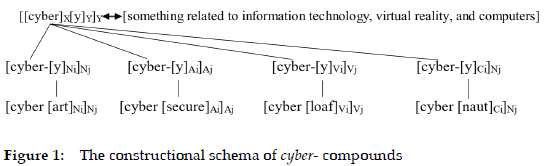
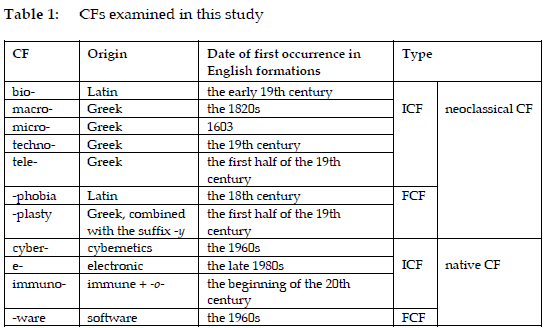
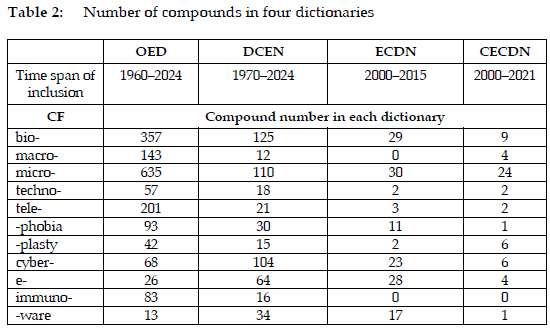
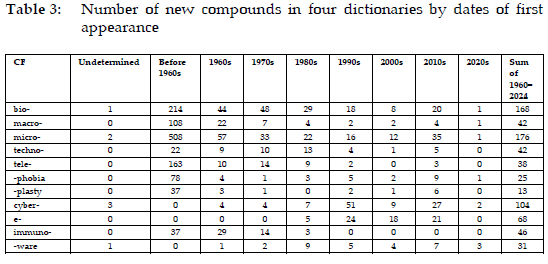
This paper explores the role of combining forms (CFs) in the formation of new compounds in contemporary English and examines their productivity and underlying mechanisms. This study applies the data-driven and construction approaches to investigate 11 neoclassical and native CFs, utilising both dictionaries and corpora when employing the data-driven approach. This paper culls new compounds from the Oxford English Dictionary and three neologism dictionaries. The three main findings are as follows: Firstly, the 11 CFs used in forming new compounds can be classified as highly productive, moderately productive, or low in productivity. Secondly, the construction morphology (CxM) can be used to analyse the formational mechanisms of new compounds. According to CxM, the CF compounds are abstracted as hierarchical schemas that are form-meaning pairs. The compounds exhibit syntactic and semantic constraints on their formation. Thirdly, the status of neologisms as compounds, blends or derivatives is scrutinised, along with their treatment in dictionaries. This study provides insights into the ongoing evolution of compounding in present-day English and discusses the role of CFs in lexical innovation.
combining forms; new english compounds; data-driven approach; construction morphology; productivity; formational mechanism
 Thumbnail