A German-Chinese e-Dictionary of Manufacturing Technology in the Automotive Industry: The Design Concept
Abstract
This article presents the design concept and procedure of the German-Chinese e-dictionary of manufacturing technology in the automotive industry. The dictionary is unidirectional (German to Chinese) and designed to improve specialised communication, and its target users include Chinese engineers, students, and interpreters in this sector. Our dictionary project differs from traditional German-Chinese specialised dictionaries for technical terms in the following ways: First, we have compiled a German-Chinese comparable corpus as the foundation of the dictionary. Second, based on user diversity, we have developed preliminary user profiles and carried out the initial project design. The design process involves constructing a knowledge framework and term entries for the automotive manufacturing sector.
Specialised Lexicography; Bilingual Dictionary; Dictionary Project; Knowledge Base; Frame-based Terminology; Communicative Theory Of Terminology; Specialised Verbs; Contextual Information; Technical Terms; Automotive Manufacturing
Abstract
Dieser Artikel stellt das Designkonzept und den Prozess des deutsch-chinesischen elektronischen Fachwörterbuchs für Fertigungstechnik in der Automobilindustrie vor. Das Wörterbuch ist unidirektional (Deutsch-Chinesisch) und dient der Verbesserung der fachsprachlichen Kommunikation. Zu den Zielgruppen gehören chinesische Ingenieurinnen und Ingenieure, Studierende sowie Dolmetscherinnen und Dolmetscher in diesem Fachgebiet. Unser Wörterbuchprojekt weist in folgender Hinsicht Unterschiede zu traditionellen deutsch-chinesischen Fachwörterbüchern für technische Termini auf: Zunächst haben wir ein deutsch-chinesisches vergleichbares Korpus als Grundlage für das Wörterbuch zusammengestellt. Zweitens haben wir aufgrund der unterschiedlichen Nutzergruppen vorläufige Nutzerprofile entwickelt und die erste Projektkonzeption durchgeführt. Der Design-Prozess beinhaltet die Entwicklung eines Wissensrahmens sowie die Entwicklung terminologischer Wörterbucheinträge für die Automobilherstellungsbranche.
Fachlexikografie; Zweisprachiges Wörterbuch; Wörterbuchprojekt; Wissensbasis; Frame-based Terminologie; Die Kommunikative Theorie Der Terminologie; Fachverben; Kontextinformationen; Technische Termini; Automobilfertigung
1. Introduction
Since the first modern automobile powered by an internal combustion engine was invented in 1886, the automotive industry has undergone a significant transformation from traditional gasoline-fueled vehicles to electric vehicles powered by new energy sources. In Industry 4.0, the movement of automotive production lines and talent across the global market has become more intensive. As key participants in the automotive manufacturing supply chain, China and Germany share a certain degree of cooperation. Nevertheless, language barriers, such as terminological differences in multinational corporations, have increased communication costs. For instance, engineers frequently encounter specific communicative contexts in which they must interpret German technical drawings and documents as well as communicate with their German colleagues via email. In such scenarios, having access to comparable terms and contextual information is essential for accurate comprehension and effective communication. When translating documentation in a domain-specific way, the lack of reliable terminological resources makes it necessary to learn how to identify specialised concepts and clarify how specialised terms match up with their equivalents in translation activities (Faber and León-Araúz 2021). In this sense, most German-Chinese dictionaries in the automotive industry, focusing on descriptive nouns and compounds, fail to meet users' communicative needs. Considering the growing interest of Chinese electric vehicle manufacturers and component suppliers, a high-quality specialised dictionary customised to the characteristics of automotive industry would be beneficial for expanding domestic business into international markets.
Given the diversity of user characteristics mentioned above, there is an essential need for a bilingual lexicographic product that contains both linguistic and specialised conceptual features for the Chinese market. Therefore, we plan to develop a German-Chinese specialised e-dictionary of manufacturing technology in the automotive industry (hereinafter referred to as DCFFA, which stands for "Deutsch-Chinesisches Fach-wörterbuch für Fertigungstechnik in der Automobileindustrie"). This bilingual specialised dictionary is unidirectional, displaying the meaning of German specialised lexical units in Chinese. It aims to help translators understand and determine terms and their equivalents in context, as well as to enable professionals and technicians to use terms in writing tasks. Students majoring in automotive engineering and related domain-specific subjects can use it as reference material to learn about the knowledge in the automotive industry. As China becomes a global leader in industries like automotive, electronics, and chemical engineering, bilingual specialised dictionaries must adapt to new trends in data processing, structure design, and digital information presentation to suit the expectations of users. In this regard, the function of a bilingual specialised dictionary is no longer limited to communication and knowledge transmission (see Kastberg 2018) but also includes the comparison of the two languages and the translation of concepts; the characteristics of dictionary users are diversified according to the degree of acquisition of foreign languages and specialised knowledge. For instance, analysing syntactic information within dictionary entries can help users understand and use concepts in foreign languages.
2. The DCFFA dictionary project
In professional communication, specialised dictionaries are designed to aid users in bridging their "knowledge gaps" (Schierholz 2003: 6). Given the increased number of users, specialised communication is no longer limited to experts (León-Araúz 2022) but also takes place among semi-experts and laypeople. Therefore, specialised lexicographic resources must address the limitations of traditional methods; specifically, the onomasiological approach to defining specialised lexical units and denominations no longer meets the requirements of users in specialised communication. In the broader sense of terminology, the four characteristics of the term as the object of terminological study are
(1) the communicational situation where it is employed;
(2) the specialisation of its semantic features;
(3) the knowledge it represents;
(4) the type of signification (Adelstein and Cabré 2002: 5).
In this regard, both terminological and specialised lexicographical work must consider linguistic and specialised knowledge dimensions to capture semantic features within the communicative context. Employing a hybrid approach can facilitate the compilation of bilingual specialised dictionaries that integrate theoretical frameworks and linguistic approaches. Based on the four aspects outlined above, bilingual specialised dictionaries should address (1) the types of specialised lexical units in the source language and their equivalents in the target language; (2) the designation of knowledge within the specific field; (3) semantic features and syntactic combinations; and (4) usage examples in context.
The most significant change in the theoretical framework of terminology over the past few decades has been the shift from the General Theory of Terminology (hereinafter referred to as GTT) to the Communicative Theory of Terminology (hereinafter referred to as CTT). The latter is considered a fundamental terminological theory that facilitates the linguistic approach to addressing specialised concepts. Unlike the GTT, the CTT emphasises three key dimensions: linguistic, socio-communicative, and cognitive (Cabré Castellví 1999: 25, CabréCastellví 2003: 187). According to the CTT, terminologists tend to employ linguistic methods to address terms. Among these methods, the University of Granada's Frame-Based Terminology (hereinafter referred to as FBT) is a process-oriented approach to dealing with terms in automotive manufacturing. As a new way to build the knowledge base (hereinafter referred to as KB), the conceptual networks in FBT are organised differently from the traditional tree structures found in conventional terminological resources. The processing technique for the terminological dataset focuses on semantic and syntactic behaviors, aiming to construct the combinatorial potential of terms (Faber Benítez 2009: 123; Faber et al. 2009: 5).
The DCFFA dictionary is an online resource for automotive manufacturing technology, available in both German and Chinese. It is designed to improve specialised communication for three target user groups: (1) Chinese engineers working in the automotive and related industries; (2) students majoring in automotive engineering, mechanical engineering, and related fields; and (3) translators specialising in mechanical, automotive, and other technical sectors. Unlike most bilingual specialised dictionaries targeting the Chinese market, which focus on collecting nouns and provide a static microstructure, our dictionary incorporates exclusive predicative lexical units, such as verbal lexical units, nominalisations, and compounds, as well as their participants and contextual information, into the entries. This approach recognises the practical requirements of daily work in the automotive manufacturing business, especially in terms of understanding and refining German technical documentation and manuals and in terms of acquiring subject-specific expertise.
When developing a bilingual specialised dictionary with unidirectional translation from German to Chinese, the primary challenge is to match the equivalence between German and Chinese concepts by processing the comparable corpus (Section 3.1). A human-centered approach has a significant impact on user needs analysis. To achieve this goal, we analyse the profiles of potential users to identify the end-use functions of the dictionary (Section 3.2). During the design process, the concept is represented by FBT, which is regarded as a dynamic, process-oriented approach (Faber Benítez et al. 2005; Faber 2011). To be specific, we started by developing the knowledge model for the Automotive Manufacturing Event (hereinafter referred to as AME) at the macro-level (Section 4.1.1). We selected three types of terms (specialised verbs, nominalisations, and compounds) as headwords (Sections 4.1.2 and 4.1.3). At the micro-level, we used a top-down method to gather key components from dictionaries and other resources to create the definition template (Section 4.2.1) and a bottom-up method to analyse combinatorial potentials from the corpus texts we compiled (Section 4.2.2). By using definition templates and analysing the corpus texts, we established a clear structure for entries (Section 5) that aligns with the AME frame while enriching the entry interface to meet user needs.
3. Design approach
3.1 Corpus design
The automotive manufacturing industry, which includes the design, development, manufacturing, marketing, sales, and aftermarket service of automobiles, is a fast-expanding sector and one of the largest industries worldwide. This interdisciplinary domain contains mechanical machining and manufacturing, electrical engineering and automation, quality management, industrial engineering, and supply chain management. In this regard, we have developed comparable corpus with German and Chinese pairs, ensuring that the selection of corpus resources closely aligns with this subject while also accounting for industry-related overlaps. Currently, the comparable corpus contains the following materials:
(1) Three management handbooks, published by international automotive groups, are available in both German and Chinese.
(2) Classic textbooks and manuals on automotive manufacturing, written by experts and professors, are available in both Chinese and German versions.
(3) Each language corpus includes papers and articles on automotive manufacturing topics, e.g. manufacturing technologies, electric vehicle production, and intelligent vehicle systems.
The corpus consists of written texts; we selected the most recent versions of the documentation when determining the time frame. This approach was chosen because most scientific and technical terms are specific to individual industries, and studies examining language evolution in science and technology are irrelevant to specialised lexicographic research focused exclusively on this sector. Most journal articles are available online and were sourced from various journal websites. All this information and these texts will be converted into plain texts.
To sum up, the German corpus contains 1,485,574 tokens, equivalent to 1,122,847 words, while the Chinese corpus comprises 1,370,301 tokens, corresponding to 1,130,341 words. We successfully achieved our goal of compiling a small- to medium-sized bilingual dictionary, with each corpus of language part containing approximately one million words. All texts are available in a computer-readable format.
From the perspective of text distribution, classic textbooks, guidebooks, and manuals constitute 83% of the corpus texts. As Lorente (2001) summarised, Orientations of Terminological Activity states that terminological activity in Central Europe has typically concentrated on industrial standardisation and document management. Therefore, the large number of German classic textbooks and guidebooks reflects the objective of standardisation in industrial manufacturing and should be included in the German corpus.
Compared to the German corpus, the proportion of classic textbooks, guidebooks, and manuals in the Chinese corpus is nearly equal to that of published literature and articles. Chinese publishers and scholars have invested considerable effort in automobile manufacturing, confirming China's critical position in the industrial advancement of the automotive sector.
3.2 User needs analysis
We conducted a comprehensive questionnaire analysis (Yu 2025) to identify and address the specific needs of potential users (Chinese engineers and technicians, translators, and students). The first part collected general information such as user types, occupations, and German learning methods to draw out the fundamental user characteristics. The second part focused on specifics of dictionary usage, users' preferences for lexicographic reference tools, and the reasons behind their choices when dealing with specialised terminology in text comprehension, production, and translation. The third part involved completing two tasks: (1) identifying German and Chinese concepts based on a collection of figures from the vehicle manufacturing process, and (2) evaluating the advantages and disadvantages of the lexicographic information within the individual entry of two widely used online German-Chinese dictionaries.
Figure 1 provides an overview of the user characteristics within the scope of the questionnaire. The user profiles are diverse, with varying levels of specialised knowledge and German language proficiency. What is obvious is that most respondents reported speaking German at an elementary level. When asked about their use of the dictionary in their daily work, two major points stood out. First, translating technical documentation and files from Chinese into German occurs more frequently than the reverse. Second, 76.88% of respondents were identified as semi-experts. For these semi-experts, the dictionary serves a dual purpose: it is both a resource for learning about automobile production and a tool to facilitate communication in German-speaking environments. This dual function is particularly important given that only 20% of respondents have studied German for more than three years.
Based on Yu (2025: 107), we summarise insights in terms of dictionary use as follows:
(1) When using specialised dictionaries, scenarios of text production and translation are more frequent than those of text comprehension. Therefore, traditional specialised dictionaries that collect nouns and offer equivalents no longer satisfy users' needs.
(2) The German-Chinese specialised dictionaries were seldom cited by the respondents as a resource for authoring materials such as specifications, manuals, and production instructions. It implies that in the environments where the production of a big amount of technical writing is needed, users may not have access to adequate bilingual specialised dictionaries.
(3) Most respondents prefer "quick access" and "accurate translation" when choosing specialised dictionaries or reference materials in the text production process.
In the entry evaluation task, we presented the dictionary entry for the German verb zusammenfügen ("to join") from two German-Chinese dictionary applications: Pons German-Chinese Dictionary and Das Neue Deutsch-Chinesische Wörterbuch. More than 110 of the 160 respondents indicated that the Chinese equivalents provided in the entry were the most useful for understanding the meaning of the verb. Next, respondents thought example sentences to be important components for demonstrating how terms are used in contexts. However, they also identified the lack of collocations, synonyms, and example sentences as factors that diminished the usefulness of the dictionaries.
Finally, we asked respondents for recommendations on how to make German-Chinese specialised e-dictionaries better. As far as content is concerned, respondents have pointed out the importance of definitions, example sentences, and contextual information to be included in dictionary entries. Some respondents suggested adding multimedia elements (videos and illustrations) to improve the visualisation of entries for online dictionaries. In addition to refining the entries, suggestions were made to add new words, make the dictionary more accessible and introduce social and cultural topics for future versions.
Based on the findings from the three parts of the questionnaire, the diversity of users and their usage scenarios can help dictionary designers clarify what users are concerned about. Therefore, from a macro perspective, establishing a knowledge framework in the relevant field can assist users in gaining a comprehensive understanding of the automotive manufacturing knowledge system and partially compensate to some extent for their lack of specialised knowledge. From a micro perspective, the entry design must consider the semantic, syntactic, and pragmatic behavior of terms, as well as their combinatorial possibilities (see also Faber Benítez 2009, Faber 2015).
4. Design procedure
As Faber and Leon-Araúz (2021) stated, when designing a terminology KB, designers should not only consider how to present information but also decide what types of information should be included in the terminology entries. Furthermore, the design approach should be driven by the user needs so that the user benefits from the resource.
This section focuses on the design procedure, which includes a domain-specific KB and term entries. The former puts "events" in automotive manufacturing at the macro level, which are used to embed concepts into the "knowledge framework" according to the paradigm of automotive manufacturing process. The latter demonstrates, from the micro perspective, how to extract and present data using a frame-based approach. These two aspects provide the core foundation for the design of DCFFA.
4.1 Knowledge base construction
4.1.1 Automotive manufacturing event: A dynamic event
Faber et al. (2007: 40) defined frames in a broad sense as knowledge structures. This hands-on, process-focused approach extends beyond a simple structure to enhance the flexibility and clarity of specialised knowledge. Since automotive manufacturing is a dynamic process that integrates parts production, machining, and assembly, knowledge representation should provide "conceptual contexts or situations in which a concept is related to others in a dynamic structure" (Faber 2011: 14). Accordingly, the proposed AME ontological schema illustrates the knowledge framework and is organised around three fundamental elements: Agent, Process, and Patient/Result, which distinguishes production resources, manufacturing activities, and final products. Environmental factors are integrated into the Process and Result modules to reflect the dynamic, real-world context of manufacturing. The framework also incorporates industrial standards such as DIN 85801 and NAICS 3362 and accounts for global supply chain relationships between original equipment manufacturers (OEMs) and component suppliers. Inspired by the frame-based structure of EcoLexicon (Faber, León-Araúz and Reimerink 2014; Reimerink, León-Araúz and Magaña Redondo 2010), the AME ontological schema enables a relatively dynamic and coherent representation of specialised knowledge, facilitating the simulation and analysis of complex manufacturing activities (see Figure 2).
As shown in Figure 2, the AME is a dynamic and evolving process involving multiple participants. An agent, either a physical entity or a human actor, leads the process. As a specific type of patient role, the agent participates in the assembly of vehicles, which includes automobile parts and aftermarket components. The three macro categories, Agent, Process, and Patient/Result, define the key conceptual roles and relationships inherent in this domain, with AME functioning as a framework to illustrate these connections. Furthermore, peripheral categories such as instruments, manners, locations, functions, and materials that support the automotive manufacturing process are distributed throughout the entire event.
4.1.2 Type of headwords
As Lorente Casafont (2002: 1) stated, verbs play a significant role in any specialised discourse. They exhibit different semantic features and syntactic functions depending on the specialised context across various fields, while also morphologically integrating with other lexical units. Lehmann (1991: 321) discussed the classification of predicates and participant relations in language from the perspective of cognitive processes. According to the author, linguistic expression begins with the speaker's idea rather than with a preconceived set of lexical or grammatical structures. When speakers express themselves, they tend to explain the overall idea and use relevant predicates, arguments, and other grammatical categories to convey their point. Speakers break the "idea" into one or more propositions while elaborating on it. A proposition is a semiotic representation of a situation in language. By combining predicates and arguments, it conveys a specific scenario. Linguistic methods, such as nominalisation and verb derivation, are important when expanding an "idea".
Indeed, specialised dictionary projects and KBs have expanded their scope by emphasising specialised verbs as headwords. Predicative units, for example, evoke frames composed of frame elements realised through specific grammatical constructions within the environmental field. These frames represent processes and events that cannot be adequately conveyed using ontological paradigms typical of traditional terminology studies (L'Homme and Robichaud 2014, L'Homme et al. 2014). In the medical field, verb analysis utilising natural language processing algorithms can improve communication between medical professionals and patients (Wandji et al. 2013). Pimentel (2012, 2013) applied Frame Semantics to assign equivalents to specialised verbs in court transcripts in both English and Portuguese.
As a bilingual specialised dictionary defining automotive manufacturing terms, the headwords in the DCFFA dictionary project are classified into three categories: (1) verbal lexical units, (2) nominalisations, and (3) compounds. This classification is based on the CTT theory, which treats terminological units as lexical units. The first group comprises domain-specific verbs that refer to processes, actions, or states. The second group consists of nominalisations derived from German verb morphological variations. The third group contains compounds (also known as multi-word terms), which are two or more words combined to generate a new nominal or verb-related term.
4.1.3 Headwords selection
Headwords are selected in two steps. To begin with, we use frequency indicators proposed by L'Homme (2015: 4) to assess the frequency of verb occurrences in their context, identifying potential term candidates. To be more explicit, we look for and select verbs with relatively high absolute frequencies and analyse their contextual usage in the corpus, generating a verb list for each language. This step typically overlooks low-frequency verbs that carry specific meanings in the AME. The same approach is applied to both corpora.
Regarding the low-frequency verbs indicating AME, the headword classification outlined within the AME ontological schema helps identify the remaining term candidates by focusing on the process involved. Consequently, the headwords contain specialised verbs, nominalisations, and compounds that characterise the specific manufacturing actions performed in each subdomain of the AME ontological schema. This step requires collaboration between lexicographers and domain experts and aims to determine whether specialised low-frequency verbs, which may have been overlooked in the previous step, should be included in the headword list.
Following these two steps, we select two term candidates, Spritzgießen (a compound word meaning "injection molding") and gießen (a specialised verb meaning "to mold"), to configure the data types for their entries in the next section.
4.2 Entry design
The entire design process is divided into two steps: definition template configuration (a top-down approach) and contextual information extraction from the corpus analysis (a bottom-up approach).
4.2.1 Top-down approach
The top-down approach is straightforward: first, extract definitional components from dictionaries and reference sources, then identify the relationships that characterise concepts. We use the semantic role labels from León-Araúz et al. (2012: 102) to annotate definitional components, which are transformed into semantic relations to construct the framework for describing concepts.
-
Definitional components
Faber et al. (2007: 42) stated that a definition is a linguistic description of a concept. According to their perspective, the information within a concept should be organised based on both the concept's characteristics and its relationships with other concepts in the same category. As a result, we may refer to a concept as "micro-knowledge" within the framework of its explanation. This framework should incorporate conceptual elements to form definition templates. Most dictionaries available on the market are designed to describe words and arrange them alphabetically, whereas terminological products define concepts and organise them by subject area. In this context, we attempt to define specialised lexical units in the same way as we treat normal lexical units: by creating definition templates to characterise them and grouping them within specialised subject areas.
We used the Digitales Wörterbuch der deutschen Sprache (DWDS), Wiktionary, Fremdwort.de, and Termoonline as reference sources to identify the definitional components for the two German term candidates mentioned above. Furthermore, the descriptions of these two concepts from encyclopaedic resources such as Wikipedia and Baidu Baike were utilised to further define them. For each selected term candidate, we assigned a Genus label corresponding to the subdomain within the AME. We applied semantic role labels from León-Araúz et al. (2012: 102) to categorise Spritzgießen and gießen, and listed the defining components of these two terms in Table 1.
- Genus: The conceptual category indicating the group to which the process belongs.
- Patient: In this context, "patient" refers to the participants in the process, such as the molds.
- Location: The site, place, or area where the manufacturing process occurs.
- Result: The finished product, semi-finished product, or processed parts resulting from the manufacturing process.
- Method: The technologies and procedures used during the manufacturing process.
- Instrument: Tools or equipment that support the manufacturing process.
Conceptual relations in definition templates
Traditional conceptual relations in the terminological database include generic-specific and part-whole relations, which reflect static taxonomic interrelations. We adopt the approach of Faber et al. (2009: 9-12) to build the conceptual description and classify the conceptual relationships within the AME into the following categories:
- IS_A: This relationship demonstrates the category to which an object belongs and how it interacts with others. It is used for naming and combining concepts and shows how concepts are related in a hierarchy or as peers in a network. In the AME, all entities are classified as members of a specific class that reflects the superordinate concept. Thus, any concept can be linked to its superordinate concept or to multiple concepts within a multidimensional context. For example, a Durchlaufofen ("a continuous furnace") [entity] IS_AN industrial furnace [specific class], IS_A tunnel furnace [sibling concept], and IS_A furnace [category, superordinate concept]. Similarly,both TYPE_OF and GENERIC_OF denote this generic-specific relationship.
- TAKE PLACE_IN: This relationship applies if the manufacturing process, technique, or action occurred.
- RESULTS_OF: This relationship indicates the final products and workpieces produced during the manufacturing process. For example, after the molding process, the specific material is transformed into a plastic shape of a certain size.
- HAS_INSTRUMENT/HAS_METHOD: This relationship demonstrates how procedures, methods, and tools are employed in manufacturing, including specific techniques like molding, extruding, and conversion. The equipment, instruments, and tools required for the manufacturing process are also included.
- HAS_PATIENT: This relationship applies to participants governed by specialised verbs and nominalisations that represent operations and procedures. For example, during the shaping process, participants frequently propose patterns that enable the integration of the material.
-
Definition templates within the AME
Based on the component analysis, we may conclude that gießen and Spritzgießen are both shaping process, as indicated by the Genus label. As a result, in terms of shaping technique, they are nearly synonymous concepts. When summarising a definition template that accommodates them, the molding type can be defined as liquid, plastic, gas, and so on, according to the material's state. However, by adding semantic elements into the paradigm, the hierarchical structure becomes more detailed, since the participants in the process pertain to automotive manufacturing concepts. Following Yuan and Cao's (2020: 524) annotation, we categorise verb arguments as either obligatory or non-obligatory. The former are essential to complete the meaning of a predicate, while the latter are optional factors that provide additional information. Table 2 displays the arguments for gießen and Spritzgießen based on the definition of shaping verbs and assigns a semantic label (enclosed in square brackets) to each argument.
Using this annotation approach, we created definition templates for the candidate terms listed in Table 3, incorporating specific conceptual components into each definition. Each definition follows the structure below:
- The headword is written in italics and followed by its Genus class in square brackets.
- Definitional Patterns: Definitional components collected from various definition sentences in dictionaries or reference sources are combined to create a new definitional pattern that must include the concept's genus. Each component of the definitional pattern is highlighted in bold and italics.
- Conceptual Relations are written in capital letters and enclosed in square brackets.
- Argument types: Obligatory and non-obligatory arguments are distinguished, followed by their corresponding conceptual relations.
4.2.2 Bottom-up approach
The bottom-up approach aims to extract contextual information about term candidates from concordances in the AME corpus. In this stage, we specify the number, types, and structures of arguments employing valency patterns. Next, we use word sketches to classify the semantic roles of these arguments. Finally, we match the German and Chinese candidates based on the results of both top-down and bottom-up analyses.
Valency patterns
Domínguez Vázquez and Gouws (2023) found that the corpus-based approach to extracting contextual data lacks semantic labels, making it impossible to align syntactic argument patterns with the meanings of semantic roles using statistically measurable data from corpora. Therefore, building syntactic-semantic argument patterns is challenging and requires manual identification. For lexicographers, the initial step is to establish valency patterns and their alternations in scientific and technical texts. Then, relevant example sentences are extracted from the corpus to help dictionary users in transitioning from valency pattern schemata to their linguistic realisations.
We refer to the code set from Barðdal (2013) and make minor adjustments to clarify the valency pattern schema for the selected terms. Table 4 shows the valency pattern of the verb gießen in the AME context. In scientific and technical writing, verbs are used in passive forms; therefore, the left side of Table 4 illustrates how patients are governed by verbs in the active voice, while the right side demonstrates their use in passive constructions. We use the abbreviations Subj. V. (Subject Verb) and Pass. V. (Passive Verb) to distinguish between active and passive verb forms. The schema is divided into four categories (each starting with a numeral) based on the valency pattern's role.
- 1-nom-subj.: The subject of the verb is typically a noun or a noun phrase.
- 1-dat-subj.: In passive sentences, the agent is frequently indicated by the preposition von followed by a dative-case noun phrase.
- 2-acc-obj.: The verb's object, which in German is expressed in the accusative case, is typically a noun or noun phrase.
- 2-gen-obj.: The object of compound nouns that indicates the manufacturing process and operations. The genitive-case object is presented first, followed by the compound noun.
- 2-dat-obj.: Alternative forms of the object in compound nouns. It is usually represented by the preposition von followed by a dative-case object.
- 3-Instr.: Extra information, referring to the tools or equipment used throughout the manufacturing process.
- 3-Method: Extra information regarding the technique adopted during the manufacturing process.
- 3-Loc.: Extra information referring to the locations where the manufacturing takes place.
- 4-Resul.: The final products obtained after the manufacturing process.
Table 5 presents the pattern schema for the compound Spritzgießen, which refers to a specific manufacturing procedure. Spritzgießen is derived from a noun-plus-verb construction, yet it still denotes the shaping process. In contrast to specialised verbs, we may develop combinational patterns involving patients, results, and instruments related to the shaping process for such compounds.
Semantic role classification and example extraction
By integrating semantic role classifications and considering the special characteristics of AME texts, we identified semantic roles corresponding to the argument types represented by the two selected terms and grouped them into three categories.
The first category is specific to the Genus. This semantic label generalises manufacturing techniques and processes, acting as a repository for related concepts. Horizontally, it correlates to the subfields of the AME Ontological Schema.
The second category corresponds to Yuan and Cao's classification approach (2020: 521-523). This category contains the Agent Role, the Patient Role, and the Result Role, whose arguments are direct participants in the action and are considered compulsory.
The third category covers roles like instrument, location, extent, method, material, and function. The arguments corresponding to these roles are non-obligatory (referred to as adjuncts or argument-adjuncts) and serve as additional features for AME technologies and processes. Together with the immediate participants in the action, they provide a comprehensive terminological descriptive framework.
We then used the Corpus Query Language (CQL) queries in Sketch Engine to collect data for each prototypical pattern and identify the appropriate slots.
Equivalent assignment
After developing definitional templates and syntactic-semantic patterns with examples for German and Chinese concepts, we intend to link the equivalents for some of these concepts using the criteria proposed by Pimentel (2012: 1793-1794). As the DCFFA is unidirectional in its translation from German to Chinese, a single German headword will be linked to multiple Chinese equivalents.
A key common requirement for the three sorts of headwords is how the term candidates evoke the frame, i.e., determining the subdomain to which term candidates belong by indicating their position in the AME ontological schema. The prerequisite is that frames, or conceptual scenarios in which terms participate, can function as "interlingual representations" by grouping equivalent terms (Pimentel 2015: 24). Based on Pimentel's (2015: 25) method, we establish the following criteria for verbs: (1) valency patterns, (2) argument structures, and (3) argument roles and functions. Nominalisations should meet the following criteria: (1) the verb from which they are derived and (2) the corresponding verb criteria. For German compounds, the first step is to determine their formation patterns. In other words, after determining whether the final word in a compound is a verb or a nominalisation, we apply the relevant standards for verbs accordingly.
5. Terms description
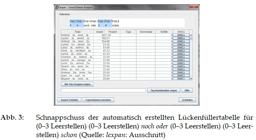
Combining the analytical results from the previous sections, this section describes the two selected terms, each comprising four parts. The first part provides basic information, such as the German headword, its English equivalent in parentheses, and its linguistic categorisation in square brackets. The German definition and its Chinese equivalents are also included in this section. The second part addresses cognitive information. The AME ontological schema is employed to assign each term candidate to a category, establish its attributes (Genus's information), and define the concept's internal semantic relationships using examples from the AME corpus. This procedure adds to the conceptual knowledge framework. The third part contains valency information, detailing typical word combinations and alternative structures found in scientific and technical writing. The fourth part contains linguistic realisations of valency patterns, accompanied by example sentences. When describing valency patterns, different colors are used to show the functions of arguments.

For compounds, we use colored words to highlight the roles of arguments:

Figures 3 and 4 show the description of gießen and Spritzgießen based on the design procedures outlined in Section 4.
6. Conclusion
Compared to traditional German-Chinese specialised dictionaries for technical terms, our dictionary concentrates on specialised verbs, nominalisations, and compounds related to automotive manufacturing. All user needs arising in this communicative context can be categorised as text translation, comprehension, and production. Our contribution to the communicative aspects in the AME is the application of a frame-based and corpus-based strategy to improve the dynamism and coherence of entries in the DCFFA dictionary. The entry structure covers three dimensions of terminology as expressive conceptual signification: communicative, cognitive, and linguistic.
The valency patterns and linguistic realisations within the entry demonstrate the semantic features of terms used to describe automobile manufacturing processes, actions, and technologies, as well as their combinatorial possibilities. These valency patterns facilitate the extraction of the sentence's main structure, while the linguistic realisations aid in filling linguistic slots with appropriate words. Based on the AME ontological schema, we developed a knowledge model to provide a foundation for describing these terms. The cognitive information, particularly the conceptual relations inside definition templates, can be viewed as a simply structured KB that allows users to grasp and recognise concepts.
The next stage is to implement and visualise the lexicographic data. Based on the descriptions of the terms, we must determine how to offer these four data components to users in a way that enables them to access information more efficiently. Building on this foundation, the primary objectives of the next phase will be to select an appropriate platform for data presentation, identify data storage method, and define the query pathways.
7. Endnotes
1. According to the German Industry Standard DIN 8580, there are six subcategories within the production stage of the manufacturing process (Förster and Förster 2018). These processes include primary shaping, material forming, dividing, joining, modifying material properties, and coating.
2. Transport Equipment Manufacturing in the United States (NAICS 336) expresses the fact that automotive companies use the same production processes as other machine manufacturers-bending, forming, welding, machining, and assembling metal or plastic parts into assemblies and finished products.
A. Online dictionaries and encyclopedias
Baidu Baike. https://baike.baidu.com/
Digitales Wörterbuch der deutschen Sprache . https://www.dwds.de/d/woerterbuecher
Fremdwort.de. https://fremdwort.de/
Termoonline. https://www.termonline.cn/
Wikipedia. https://www.wikipedia.org/
Wiktionary . https://de.wiktionary.org/wiki/Hauptseite
B. Other literature
References
- Adelstein, A. and M.T. Cabré. 2002. The Specificity of Units with Specialised Meaning: Polysemy as Explanatory Factor. DELTA: Documentação de Estudos em Linguística Teórica e Aplicada 18(spe): 1-25. https://doi.org/10.1590/S0102-44502002000300003
- Barðdal, J. 2013. Icelandic. Hartmann, I., M. Haspelmath and B. Taylor (Eds.). 2013. Valency Patterns Leipzig. Leipzig: Max Planck Institute for Evolutionary Anthropology. http://valpal.info/contributions/icel1247
- Cabré Castellví, M.T. 2003. Theories of Terminology: Their Description, Prescription and Explanation. Terminology: International Journal of Theoretical and Applied Issues in Specialized Communication 9(2): 163-199.
- Domínguez Vázquez, M.J. and R.H.Gouws. 2023. The Definition, Presentation and Automatic Generation of Contextual Data in Lexicography. International Journal of Lexicography 36(3): 233-259. https://doi.org/10.1093/ijl/ecac020
- Faber, P. 2011. The Dynamics of Specialized Knowledge Representation: Simulational Reconstruction or the Perception-action Interface. Terminology 17(1): 9-29. http://dx.doi.org/10.1075/term.17.1.02fab
- Faber, P. 2015. Frames as a Framework for Terminology. Kockaert, H.J. and F. Steurs (Eds.). 2015. Handbook of Terminology 1: 14-33. Amsterdam: John Benjamins.
- Faber, P. and P. León-Araúz. 2021. Designing Terminology Resources for Environmental Translation. Ji, M. and S. Laviosa (Eds.). 2021. The Oxford Handbook of Translation and Social Practices: 587-616. Oxford: Oxford University Press. https://doi.org/10.1093/oxfordhb/9780190067205.013.7
- Faber, P., P. León-Araúz and J.A. Prieto Velasco. 2009. Semantic Relations, Dynamicity, and Terminological Knowledge Bases. Current Issues in Language Studies 1: 1-23.
- Faber, P.,P. León-Araúz,J.A. PrietoVelasco and A. Reimerink. 2007. Linking Images and Words: The Description of Specialized Concepts. International Journal of Lexicography 20(1): 39-65. https://doi.org/10.1093/ijl/ecl038
- Faber, P., P. León-Araúz and A. Reimerink. 2014. Representing Environmental Knowledge in EcoLexicon. Bárcena, E., T. Read and J. Arús Hita (Eds.). 2014. Languages for Specific Purposes in the Digital Era. Educational Linguistics 19: 267-301. Cham: Springer. https://doi.org/10.1007/978-3-319-02222-2_13
- Faber Benítez, P. 2009. The Cognitive Shift in Terminology and Specialized Translation. MonTI - Monografías de. Traducción e Interpretación 1: 107-134. https://10.6035/MonTI.2009.1.5
- Förster, R. and A. Förster. 2018. Einteilung der Fertigungsverfahren nach DIN 8580. Förster, R. and A. Förster (Eds.). 2018. Einführung in die Fertigungstechnik: 23-135. Cham: Springer. https://doi.org/10.1007/978-3-662-54702-1_2
- Kastberg, P. 2018. Languages for Special Purposes as Instruments for Communicating Knowledge. Humbley. J., G. Budin and C. Laurén (Eds.). 2018. Languages for Special Purposes: An International Handbook: 26-44. Berlin/Boston: De Gruyter Mouton. https://doi.org/10.1515/9783110228014-002
- Lehmann, C. 1991. Predicate Classes and Participation. Seiler, H. and W. Premper (Eds.). 1991. Partizipation. Das sprachliche Erfassen von Sachverhalten: 183-239. Tübingen: Gunter Narr.
- León-Araúz, P. 2022. Terminology and Equivalence. Faber, P. and M.-C. L'Homme (Eds.). 2022. Theoretical Perspectives on Terminology: Explaining Terms, Concepts and Specialized Knowledge: 477-502. Amsterdam: John Benjamins. https://doi.org.10.1075/tlrp.23.22leo
- León-Araúz, P., P. Faber and S. Montero-Martínez. 2012. Specialized Language Semantics. Faber, P. (Ed.). 2012. A Cognitive Linguistics View of Terminology and Specialized Language: 95-176. Berlin: De Gruyter Mouton.
- L'Homme, M.-C. 2015. Predicative Lexical Units in Terminology. Gala, N., R. Rapp and G. Bel-Enguix (Eds.). 2015. Language Production, Cognition, and the Lexicon. Text, Speech and Language Technology 48: 75-93. Cham: Springer. https://doi.org/10.1007/978-3-319-08043-7_6
- L'Homme, M.-C. and B. Robichaud. 2014. Frames and Terminology: Representing Predicative Terms in the Field of the Environment. Zock, M., R. Rapp and C. Huang (Eds.). 2014. Proceedings of the 4th Workshop on Cognitive Aspects of the Lexicon (CogALex), Dublin, Ireland, 23 August 2014: 186-197. Dublin: Association for Computational Linguistics and Dublin City University. https://doi.org/10.3115/V1/W14-4723
- L'Homme, M.-C., B. Robichaud and C.S. Rüggeberg. 2014. Discovering Frames in Specialized Domains. Calzolari, N. et al. (Eds.). 2014. Proceedings of the Ninth International Conference on Language Resources and Evaluation (LREC'14), Reykjavik, Iceland, 26-31 May 2014: 1364-1371. Reykjavik: ELRA.
- Lorente, M. 2001. Tipología verbal y textos especializados. González Pereira, M. and M. Souto Gómez (Eds.). 2001. Cuestiones conceptuales y metodológicas de la lingüística: 143-153. Santiago de Compostela: Universidade de Santiago de Compostela, Servicio de Publicacións.
- Pimentel, J. 2012. Identifying Equivalents of Specialised Verbs in a Bilingual Comparable Corpus of Judgments: A Frame-based Methodology. Calzolari, N. et al. (Eds.). 2012. Proceedings of the Eighth International Conference on Language Resources and Evaluation (LREC'12), Istanbul, Turkey, 23-25 May 2012: 1791-1798. Istanbul: ELRA.
- Pimentel, J. 2013. Methodological Bases for Assigning Terminological Equivalents. A Contribution. Terminology 19(2): 237-257. https://doi.org/10.1075/term.19.2.04pim
- Pimentel, J. 2015. Adding a New Language Version to a Lexical Resource. Is It Possible to Assign Term Equivalents Semi-automatically? Terminàlia 11: 20-29. https://doi.org/10.2436/20.2503.01.74
- Reimerink, A., P. León-Araúz and P.J. Magaña Redondo. 2010. EcoLexicon: An Environmental TKB. Calzolari, N. et al. (Eds.). 2010. Proceedings of the Seventh International Conference on Language Resources and Evaluation (LREC'10), Valletta, Malta, 17-23 May 2010: 2322-2329. Valletta: ELRA. https://doi.org/10.63317/2p9pr2r9kpsm
- Schierholz, S.J. 2003. Fachlexikographie und Terminographie. Zeitschrift für Angewandte Linguistik 39: 5-28.
- Wandji, O., M.-C. L'Homme and N. Grabar. 2013. Discovery of Semantic Frames for a Contrastive Study of Verbs in Medical Corpora. Proceedings 10th International Conference on Terminology and Artificial Intelligence TIA 2013, Paris, 28-30 October 2013. Paris: Université Paris 13.