Undesirable phraseology in certain pre-eviction court rules pertinent to residential properties
Abstract
Section 26 of the Constitution and judicial pronouncements related thereto have progressively resulted in the amendment of certain court rules. Judgments which inspired changes in related court rules include those in Gundwana, Jaftha, Grootboom and Saunderson. Most of these cases sought to infuse the element of judicial oversight into specific formal litigation procedures with the potential to result in the loss of homes. Among the rules subsequently altered, mention can be made of Magistrates' Courts rules 5, 12, 43, and 43A, and High Court rules 31, 46, and 46A. These rules regulate mechanisms in civil procedure with the potential, in other instances, to culminate in eviction processes against homeowners, such as summonses, default judgments and, significantly, executions. The language used in some of the court rules amended in the quest for instituting constitutional safeguards against evictions has seemingly been a cause for concern, necessitating interpretation by various courts. High Court rules 46 and 46A, extending to their Magistrates' Courts counterparts, are cases in point. The confusing wording of these rules has attracted the attention of recent case law for purposes of effective implementation. The perceived shortcomings of these court rules, High Court rules 46 and 46A in particular, are critically explored in this article, with recommendations made with a view towards enhancing civil procedural instruments in eviction-related matters.
civil procedure; court rules; evictions; execution; judicial oversight; litigation; rule amendments
1 INTRODUCTION
Section 26(3) of the Constitution of the Republic of South Africa1 states that "[n]o one may be evicted from their home, or have their home demolished, without an order of court made after considering all the relevant circumstances. No legislation may permit arbitrary evictions." Elaborating on this provision, Sachs J remarks that "[s]ection 26(3) evinces special constitutional regard for a person's place of abode. It acknowledges that a home is more than just a shelter from the elements. It is a zone of personal intimacy and family security". 2
It is clear from the above that a house or home is much more than a mere building or structure and that, in Sachs J's opinion, there is a need for special judicial control of evictions.3 Removal from one's home is a process which is both socially stressful and potentially conflictual.4 Certain laws were therefore enacted to ensure that, in instances where evictions occur, they are nevertheless conducted in a manner sensitive to constitutional values.5 One of those laws, the Prevention of Illegal Eviction from and Unlawful Occupation of Land Act,6 defines "eviction" as "the deprivation of a person of occupation of a building or structure, or the land on which such building or structure is erected, against his or her will ...".7 Unlike in pre-democratic society where landowners had the exclusive right to use their land and evict any unlawful occupiers therefrom,8the Constitution now provides safeguards against homelessness and moderates the ability of a landowner to secure an eviction order.9
To ensure that all relevant circumstances10 are placed before the court and that the order is just and equitable, the Constitutional Court has endorsed a flexible, responsive, inquisitorial and managerial process in disputes concerning housing evictions.11 This has resulted in the progressive amendment of certain court rules to accommodate eviction cases.12 Evictions continue to be a common feature in post-apartheid South Africa, as documented in numerous judicial pronouncements, journals, media articles, publications and so forth. They occur in various spheres of the law, such as civil procedure, landlord and tenant law, and property law.13 In a similar vein, the procedural factors regulating eviction processes in civil courts are contained in various pieces of legislation and are not streamlined.14 As such, regulation of evictions, from commencement of proceedings up to and including the enforcement of eviction orders, tends to be inharmonious and complex.15 In eviction proceedings, procedural and substantive controls that strive to provide occupiers with better tenure security feature prominently.16 However, this article focuses on court rules featuring saliently in the execution of immovable property. Such executions are precursors to evictions and the resultant homelessness of execution debtors.
Legal processes ordinarily instituted for the recovery of debts culminate in some instances in the repossession of a debtor's immovable property, followed by an eviction. These legal processes may originate in different ways, such as foreclosures and other ordinary recovery proceedings for unsecured debts. Foreclosure in the context of this article refers to a procedure by which the holder of a mortgage - an interest in immovable property providing security for the performance of a duty or the payment of a debt - initiates litigation for the selling of the property upon failure of the debtor to pay the mortgage debt, thereby terminating his or her rights in the property.17
According to Brits, "it follows from the mortgagor's duty to repay the loan that the mortgagee has a corresponding right to foreclose the bond" and sell the property in execution where the mortgagor defaults.18 In foreclosures, the creditor (bondholder) is allowed to ask for an order declaring the immovable property specially executable, instead of first attempting to execute against the debtor's movables.19 Once the immovable property is declared specially executable, it can be sold in execution, paving the way for the eviction of the debtor. In Nedcor Bank Ltd v Kindo and Another,20 the court explained that the essence of securing a mortgage bond is that "in the event of non-payment of a debt on the due date, the mortgagee is entitled to foreclose and to have a hypothecated immovable property declared executable".21
In the normal course of events, an eviction order will be preceded by a (1) summons; (2) judgment for payment of debt; (3) order declaring immovable property executable; (4) writ of execution; (5) attachment; and (6) sale in execution. As Theophilopoulos et al. explain, obtaining a civil court judgment is not necessarily the final step in the litigation process.22 Where the judgment debtor is recalcitrant and unwilling to pay the debt as ordered by the court, it will be necessary for the judgment creditor to obtain satisfaction through more formal means. This entails following a process called "execution", as prescribed in the rules of the High Court and Magistrates' Courts.23 Such execution procedures provide a mechanism by which court orders may be enforced and ensure the effectiveness and integrity of judicial decision-making:
In general terms the process of execution entails the attachment and sale by public auction, by the sheriff of the court, of the property of the judgment debtor in order to realise money and thereby satisfy a money judgment. An attachment in execution creates a judicial mortgage (pignus judiciale).24
The following requirements must be met before it may be said that execution has been levied:
(a) the issue of a valid writ of execution;
(b) the attachment of the judgment debtor's property by the sheriff, unless the debtor pays the amount of the writ and costs; and
(c) the sale by the sheriff, through public auction, of the property attached. 25
A writ (or warrant) of execution is a document requested by the party in whose favour any judgment of the court has been granted and directed to the sheriff, ordering him or her to take possession of as much of the debtor's property as will realise, by public sale, the amount of the judgment debt and the costs incurred in satisfying it.26 The primary principle in execution is that it can be carried out only once judgment is granted, and then only by means of the issue of a warrant of execution.27 Ordinarily, execution is levied against the debtor's movable assets first before attaching the immovable property.28 As mentioned earlier and illustrated by the judgment in Saunderson,29amongst others, there is no need to rely on the sheriff's nulla bona return where the immovable property concerned is hypothecated, usually with a mortgage, as the court can be asked to declare such property specially executable. The court also has the power to declare immovable property executable in terms of the common law.30 This power is qualified where the property happens to be a primary residence, with this being due to the constitutional requirement for a home to be lost only as a last resort.31
If execution is against the home of a person, the court rules now prescribe that the registrar or clerk of the court shall not issue a warrant of execution against the residential immovable property of any judgment debtor unless the court has ordered execution against such property.32 This is to ensure judicial oversight and consideration of all relevant factors in instances where a person stands to lose his or her house, following judgments in cases such as Jaftha33 and Gundwana.34 Methods of attachment and sale in execution for various classes of property - movable (corporeal and incorporeal) and immovable - are regulated by the rules of court, by statutes, and, in some instances, by judicial authority.35 Attachment is the legal process of seizing property to ensure satisfaction of a judgment.36 The attachment of immovable property is made by the sheriff of the district in which it is situated,37 upon a writ corresponding substantially with the prescribed court forms.38
Attachment is then followed by the sale of the immovable property in the manner stipulated by rules 46 and 46A of the High Court rules or rules 43 and 43A of those of the Magistrates' Courts. This often culminates in the purchaser initiating eviction proceedings against occupiers of the immovable property sold in execution. Figure 1 below illustrates the relevant legal framework.
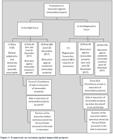
Since 22 December 2017, extensive amendments have been made to the execution rules, forms and conditions of sale pertinent to immovable property constituting a debtor's home. These amendments are meant to be safeguards in the chain of processes that culminate in a debtor's losing his or her rights to the house and result in such a debtor becoming an unlawful occupier susceptible to eviction. Following recent judgments, certain court rules were amended to enhance judicial oversight of eviction-related litigation processes. This article focuses on the unsuitable wording used in those rule amendments. In the discussion that follows, cases in relation to specific procedural laws or court rules will be analysed, particularly in regard to the way in which they may have influenced or prescribed legislative amendments. Remedial suggestions will be made in instances where lacunae or undesirable phraseology seem to exist in relevant court rules.
2 HIGH COURT PROCESSES
The principal legislative instrument regulating the High Court and its procedures is the Superior Courts Act.39 Section 51 of this Act retains the rules applicable to the Constitutional Court, Supreme Court of Appeal (SCA) and the High Court until they are repealed or amended.40 The Act confirms that rules for the SCA, the High Court and the Magistrates' Courts continue to be made in accordance with the Rules Board Act.41 The High Court Rules (also referred to as the Uniform Rules of Court)42 were promulgated on 12 January 196543 and commenced on 15 January 1965. They were initially made by the Chief Justice subject to the approval of the State President.44 This position continued until 20 February 1987 when the Rules Board Act45 came into operation, establishing the Rules Board.
With a view to the efficient, expeditious and uniform administration of justice in the SCA, the High Court and the lower courts, this board may from time to time review the existing rules of court.46 Subject to the approval of the Minister, it may also make, amend or repeal rules for the stated courts regulating the practice and procedure in connection with litigation.47 The object and purpose of the court rules are well articulated by Van Loggerenberg:
The object of the rules is to secure the inexpensive and expeditious completion of litigation before the courts: they are not an end in themselves. Consequently, the rules should be interpreted and applied in a spirit which will facilitate the work of the courts and enable litigants to resolve their disputes in as speedy and inexpensive a manner as possible.48
This objectives of the rules were also underlined by the Constitutional Court in Eke,49wherein it reiterated the flexible principle that the rules exist for the courts, and not the courts for the rules. Simply put, rules should be designed to ensure fair and efficient court proceedings. In Eke, the court stated that " the object of court rules is twofold. The first is to ensure a fair trial or hearing. The second is to secure the inexpensive and expeditious completion of litigation and ... to further the administration of justice ..."50 It is therefore trite that court rules exist to ensure fair play and good order in the conduct of litigation.51 Rules may not lay down substantive legal requirements for a cause of action.52 Rules may re-state the existing law and regulate the procedure that applies to that law,53 but where a rule of court is not procedural but substantive in nature, or where it seeks to expand the substantive law, it will be ultra vires and of no force or effect.54
There are no rules directly governing evictions in the High Court. However, certain court rules feature prominently in the two processes paving the way towards evictions, namely, the granting of judgments (including declaring the immovable property specially executable) and execution against immovable property. These processes are the precursors to the debtor's eventual loss of ownership rights over the immovable property. Prior to 22 December 2017, the two rules significant in this regard were 31 and 46. However, in December 2017 the rules and forms pertaining to execution against immovables were overhauled.55 An analysis of the stated rules pre- and post-December 2017 follows below, as shaped by case law in appropriate instances.
2.1 Rule 31
This rule generally allows a court registrar the authority to grant judgment in certain instances where a defendant has defaulted in delivering a notice of intention to defend a court action or a plea. Normally, the registrar deals directly with and grants such applications for default judgment him- or herself, though sub-rule 31(5)(b)(vi) allows him or her the option of requiring the matter to be enrolled for hearing in an open court by a judge. However, the stated sub-rule was amended in 2013 to make it obligatory for a court registrar to refer to court any application for default judgment where an order is sought declaring residential property specially executable. This is to ensure judicial oversight in instances that may result in a person being evicted from his or her home. The amendment emanates from the Constitutional Court judgment in Gundwana.
The ultimate issue for decision in Gundwana was whether a High Court registrar, in the course of ordering default judgment under rule 31(5)(b) of the High Court Rules, may grant an order declaring mortgaged property which is a person's home (primary residence) specially executable. Elsie Gundwana's contention was that such power of the registrar (exercised without any oversight from a judge) was constitutionally invalid, particularly as it had resulted in an eviction order being granted against her. In dealing with the constitutional validity of the High Court Rules and practice, Judge Froneman pointed out that rule 31(5) makes no explicit reference to orders declaring mortgaged property specially executable. For that reference, one needed to turn to the erstwhile rule 45(1) which dealt with execution following upon a judgment.56 In fact, at the time of delivery of the judgment, rule 45(1) had been amended in December 2010 and substituted with rule 46(1)(a)(ii) in so far as the portion dealing with immovable property was concerned. The provisions of rule 46(1)(a)(ii), prior to its amendment in December 2017, are worth noting.57
The judge came to the conclusion that an evaluation of the facts of each case is necessary in order to determine whether a declaration may be made that hypothecated property constituting a person's home is specially executable. It is the kind of evaluation that must be done by a court of law, not the registrar. To the extent that the High Court Rules and practice allow the registrar to do so, they are unconstitutional.58 In essence, therefore, the court found that the registrar was not constitutionally competent to make execution orders when granting default judgment in terms of rule 31(5)(b).59 In the circumstances, following upon this judgment High Court rule 31(5)(b) was amended with effect from 16 August 2013 to provide as follows:
(b) The registrar may -
(i) grant judgment as requested;
(ii) grant judgment for part of the claim only or on amended terms;
(iii) refuse judgment wholly or in part;
(iv) postpone the application for judgment on such terms as he or she may consider just;
(v) request or receive oral or written submissions; and
(vi) require that the matter be set down for hearing in open court provided that if the application is for an order declaring residential property specially executable, the registrar must refer such application to the court.60
2.2 Rule 46 pre-22 December 2017
Rule 46 generally regulates execution against immovable property, such as the process of issuing of writs of attachment after judgment and the eventual sale. The underlying principle is that, save where immovable property has been specially declared executable, execution must first be levied against the movable property of the debtor.61The rule specifically governing the issuing of writs of attachment is 46(1). As alluded to earlier, rule 46(1)(a)(ii) was amended in 2010 subsequent to Jaftha to ensure that a writ shall not be issued where the immovable property sought to be attached is the primary residence of the judgment debtor unless the court orders execution upon consideration of all relevant circumstances.62 "Primary residence" in this instance can be construed as the debtor's usual or ordinary place of residence, "the home of a person".63
The amendment to rule 46(1)(a)(ii) has its roots in the Constitutional Court judgment of Jaftha. Briefly, the case was about whether a law that permits the sale in execution of peoples' homes (primary residences) because they have not paid their debts, thereby removing their security of tenure, violates the right to have access to adequate housing as protected under section 26 of the Constitution.64 In declaring such a law unconstitutional, the court had to consider a remedy that would somehow balance the interests of both debtors and creditors.65
The court agreed that an appropriate remedy would be the provision of judicial oversight over the execution process. It would then be for the court to order execution only if the circumstances of the case made it appropriate.66 In other words, a court would have to weigh up the relevant factors at play in each case to make an appropriate determination on the aspect of execution. Some of these factors would include the circumstances in which the debt was incurred; any attempts made by the debtor to pay off the debt; the financial situation of the parties; the amount of the debt; whether the debtor is employed or has a source of income to pay off the debt and any other factor relevant to the particular facts of the case before the court.67
In Nedbank Ltd v Martinson,68 the full bench amplified these factors, which are to be contained in an affidavit filed simultaneously with an application for default judgment where a creditor seeks an order declaring specially hypothecated immovable property executable.69
2.3 The era post-22 December 2017
With effect from 22 December 2017, rule 46 and the forms plus the processes regulating execution against immovable property were drastically amended.70 The altered rule 46(1)(a)(ii) now provides as follows:
(1)(a) Subject to the provisions of rule 46A, no writ of execution against the immovable property of any judgment debtor shall be issued unless -
(ii) such immovable property has been declared to be specially executable by the court or where judgment is granted by the registrar under rule 31(5).
The erstwhile proviso71 to the rule has been shifted to the new rule 46A, which was inserted into the rules as part of the amendments. Rule 46A applies whenever an execution creditor seeks to execute against the residential immovable property of a judgment debtor.72 Amongst other things, it regulates applications to declare residential immovable property executable and enjoins the court to consider alternative means by the judgment debtor of satisfying the judgment debt, other than execution against the judgment debtor's primary residence.73 In Bestbier,74 the court essentially confirmed that Rule 46A emanated from the Jaftha and Gundwana judgments, which had entrenched judicial oversight as a tool to preserve the right to adequate housing and security of tenure. Rule 46A has resulted in numerous substantial changes:
• A court cannot authorise execution against immovable property that is the primary residence of a judgment debtor unless the court, having considered all relevant factors, considers that execution against such property is warranted;75
• The registrar is expressly prohibited from issuing a writ of execution against the residential immovable property of any judgment debtor unless a court has ordered execution against such property;76
• An application to declare residential property executable should be accompanied by several supporting documents, such as:
- proof of the market value of the property;
- local authority valuation of the property;
- amounts owing on mortgage bonds registered over the property;
- municipal rates and taxes plus body corporate levies owing in respect of the property; and
- any other factor that may assist the court in deciding.77
Unlike the position under the old rule 46(12), whereby the property could to be sold by the sheriff without a reserve price, the court is now accorded a discretion to set a reserve price, seemingly in an endeavour to avoid sales of immovable properties below cost.78 In deciding whether to fix a reserve and its appropriate amount, the court is mandated to consider various factors, including any other factor which, in its opinion, is necessary for the protection of the interests of the execution creditor and the judgment debtor.79 Rule 46A was affirmed by the full bench in the Hendricks case as being intra vires the powers of the Rules Board because it procedurally confirms that execution against residential immovable property may not occur without judicial oversight.80
Besides being considered in Hendricks, rule 46A provisions were extensively evaluated in Absa Bank Limited v Mokebe.81 In Mokebe, the court concluded that there is a duty on creditors to bring their entire case - including the application for money judgment based on a mortgage bond and an order to declare the immovable property, where it is the primary residence of the judgment debtor, specially executable - simultaneously in one proceeding.82 It reckoned that, should the matter require postponement, then the entire matter would fall to be postponed: piecemeal adjudication is not appropriate.83The court in Hendricks agreed, explaining that the application for the money judgment may be postponed together with the application for an order declaring the property specially executable, as the two applications are intrinsically linked and engage a debtor's section 26 constitutional rights.84
Furthermore, in Mokebe the court made a ruling to the effect that any document initiating proceedings where a mortgaged property may be declared executable must contain the following statement in a reasonably prominent manner:85
The defendant's (or respondent's) 'attention is drawn to section 129(3) of the National Credit Act No. 34 of 2005 that he/she may pay to the credit grantor all amounts that are overdue together with the credit provider's permitted default charges and reasonable taxed or agreed costs of enforcing the agreement prior to the sale and transfer of the property and so revive the credit agreement.
It would seem ideal that the court rules for both the Magistrates' Courts and High Court should prescribe this ruling for standard inclusion in the relevant summons. The court also held that, save in exceptional circumstances, "a reserve price should be set by a court, in all matters where execution is granted against immovable property which is the primary residence of a debtor, where the facts disclosed justify such an order".86
Of significance to this article, however, is the fact that the court in Bestbier observed the lack of clarity in the Rule 46A provisions, mentioning that the operation of this rule has been unclear since its inception.87 For instance, rule 46A(3) provides that "every notice of application to declare residential immovable property executable shall be . . . on notice to the judgment debtor and to any other party who may be affected by the sale in execution". The court grappled with the interpretation of the phrase "any other party who may be affected by the sale in execution" outside of the ambit of judgment debtors and those listed in rule 46(5)(a).88 Tshiqi J remarked that neither the Constitution nor the High Court Rules defines what meaning should be ascribed to the phrase and that it was hence crucial to eliminate uncertainty in this regard.89
In this case, the property owner, Goede Hoop Trust ("the Trust"), received financial assistance from Nedbank secured by nine mortgage bonds over the property totalling R9,200,000 and subsequently failed to comply with its repayment obligations. This triggered Nedbank to institute legal proceedings, including seeking an order to declare the property specially executable. The farm at the centre of the dispute in Bestbier had mixed characteristics and use. On the one hand, it was a farming business enterprise; on the other, the residential premises within it were used as residential immovable property. The court held that the premises occupied by the trustees, beneficiaries and farmworkers were therefore residential immovable property within the meaning of rule 46A(1).90 Initially, Nedbank argued that neither the Trust beneficiaries nor the farmworkers were entitled to notice in terms of rule 46A(3)(b) and that rule 46A was not applicable at all to residential immovable property owned by a trust.91 The court thus had to consider, amongst other things, whether the Trust beneficiaries and farmworkers constituted "any other party who may be affected by the sale in execution". In addition, it had to determine whether residential property owned by a trust but occupied by natural persons as their primary residence falls within the scope of rule 46A(3)(b) and whether rule 46A may be invoked by occupiers other than the judgment debtor who utilise the immovable property as their primary residence.92
In determining who qualifies as an affected person, the court analysed the language used in the pertinent provisions of rule 46A, its interpretation and applicability,93 and echoed the following proposition from Democratic Alliance v Speaker of the National Assembly: "context does not mean only parts of a legislative provision which immediately precede and follow the particular passage under examination; it includes the entire enactment in which the word or words in contention appear".94
In dissecting the provision in rule 46A(1) that the rule applies "whenever an execution creditor seeks to execute against the residential immovable property of a judgment debtor", the court held that the rule essentially applies in all instances where there is an execution against residential immovable property "belonging to" or "owned by" a judgment debtor and at the instance of an execution creditor.95 At this stage of the enquiry, the question is whether the immovable property which the judgment debtor "owns" is "residential immovable property". The physical characteristics of the property, coupled with its actual use, will determine whether the property concerned may be classified as "residential" in nature.96
Determining the "residential" nature of the property first is a vital precursor to proceeding to the next stage of the inquiry, that is, whether the residential property in question constitutes the home or primary residence of the execution debtor, as provided for in High Court rule 46A(2).97 Concerning High Court rule 46A(1), it does not matter if the judgment debtor is not actually occupying the property or is a trust, for that matter: "If a trust owns a residential house, it is 'residential immovable property', if the beneficiaries reside in it, even though the trust itself as a legal entity cannot reside in the property."98
In regard to rule 46A(3)(b), a matter for determination is whether natural persons residing in the property owned by a trust can be categorised as persons that may be affected by the sale in execution.99 In this instance, the court100 concluded that the farmworkers' security of tenure would not necessarily be affected by the sale in execution, as their rights were adequately protected by section 24 of the Extension of Security of Tenure Act.101 Trust beneficiaries, who were not given notice in this instance, were also deemed not to be affected parties, as they could use the surplus achievable after the sale in execution to acquire alternative housing.102 In other words, the rights enshrined in section 26 of the Constitution would not have been violated, as both the trustees, trust beneficiaries and farmworkers were not at risk of being rendered homeless.103 With it being recalled that the court in Jaftha had explained that section 26 of the Constitution focuses on security of tenure, the intention was to reject that part of South Africa's history during which invasive legislation was used to remove people forcibly from their land and homes, rendering them homeless through senseless evictions.104
Other rule 46A provisions whose phraseology and framework have been subjected to judicial criticism are contained in paragraphs (9)(c), (d) and (e) pertaining to reconsideration of the reserve price. The stated paragraphs provide as follows:
(c) If the reserve price is not achieved at a sale in execution, the court must, on a reconsideration of the factors in paragraph (b) and its powers under this rule, order how execution is to proceed.
(d) Where the reserve price is not achieved at a sale in execution, the sheriff must submit a report to the court, within 5 days of the date of the auction, which report shall contain-
(i) the date, time and place at which the auction sale was conducted;
(ii) the names, identity numbers and contact details of the persons who participated in the auction;
(iii) the highest bid or offer made; and
(iv) any other relevant factor which may assist the court in performing its function in paragraph (c).
(e) The court may, after considering the factors in paragraph (d) and any other relevant factor, order that the property be sold to the person who made the highest offer or bid.
In Tchibamba,105 concerns regarding the practical operation of rule 46A(9), particularly the abovementioned portions, were raised. Binns-Ward J affirmed that sub-paragraphs 46A(9)(c), (d) and (e) are not clearly worded.106 The court pointed out that
[i]t is not so much that the individual paragraphs do not read clearly enough when each is considered on its own; it is that, read together, they fail, conspicuously, to provide any procedural framework in terms of which the mandatory reconsideration prescribed in paragraph (c) is to happen.107
The confusion created by the rule resulted in litigants erroneously launching formal applications for reconsideration of reserve prices.108 This is because the rule fails to "provide the procedural framework for getting the sheriff's report before a judge and enabling the judge to obtain the necessary information to undertake a reconsideration with reference to the several factors enumerated in rule 46A(9)(b)".109 The manner in which the rule is phrased does not obligate anyone to institute interlocutory proceedings for the reconsideration of the reserve price.110 Rule 46A(9) simply directs the sheriff to submit a report to the court, whereafter the court receiving such report must undertake the necessary reconsideration, irrespective of whether anyone applies for it.111
Binns-Ward J lamented the fact that the rule is deficient in not providing for how the parties involved are to be given notice of the reconsideration or an indication of how and by when should exercise their right to adduce evidence or address arguments.112Singh, too, argues that rule 46A(9) is characterised by "many gaps", such as failure to provide a precise formula for the calculation of the reserve price or to stipulate how to apply for reconsideration of this price.113 The court in Tchibamba thus called upon the Rules Board to attend to the matter and remedy the "unfortunate lacunae" in rule 46A(9).114 The practical effect of the 2017 rule amendments is gradually becoming clearer in the course of their being implemented and interpreted by the courts.
3 MAGISTRATES' COURTS PROCESSES
3.1 Introduction
Magistrates' Courts are creatures of statute that operate within legislative confines and exist at two levels: that of District Courts and Regional Courts.115 The Magistrates' Courts Act116 regulates Magistrates' Courts in South Africa and procedural aspects connected thereto. The Act provides for a court, in respect of causes of action, to have jurisdiction in actions of ejectment against the occupier of any premises or land within the district or regional division.117 Section 66 deals with the manner of execution of court judgments. It reinforces the principle that execution first lies against movable property.118
In Jaftha, the Constitutional Court held that the failure to provide judicial oversight of sales in execution against the immovable property of judgment debtors in section 66(1)(a) is unconstitutional.119 It ordered that this section must be read as if the words "a court, after consideration of all relevant circumstances, may order execution" appear before the words "against the immovable property of the party".120 The judgment creditor would need to approach a court to allow execution against immovable property, and the court would have to consider all relevant circumstances (examples of which were indicated by the Constitutional Court) in order to make an appropriate decision.121
3.2 Magistrates' Courts Rules122
As with the High Court, there are no rules directly regulating evictions in the Magistrates' Courts. However, certain rules play a pivotal role in processes connected with evictions, such as the commencement of court actions via summons (rule 5) and execution against immovable property (rule 43). Summary judgments may also be sought in actions concerned with evictions (rule 14). The December 2017 amendments concerning execution rules pertaining to execution against immovable property123 also impacted on Magistrates' Courts rule 43 and introduced rule 43A, which corresponds substantially with High Court rule 46A.
3.2.1 Rules 5 and 12
In 2010, rule 5(10) of the Magistrates' Court Rules was amended to give effect to the SCA judgment in Standard Bank of South Africa Ltd v Saunderson and Others.124 In the court's view, it was desirable to lay down a rule of practice requiring summons in which an order for execution against immovable property is sought to inform the defendant that his or her right of access to adequate housing might be implicated by such an order.125 The court effectively did this by issuing a practice direction in its ultimate order, as it considered that it is possible that an order of execution against immovable property could infringe on the provisions of section 26(1) of the Constitution.126 Thus, rule 5(10) now provides that summons in which an order is sought to declare immovable property executable, which is the home of the defendant, must contain a notice in the following form:127
The defendant's attention is drawn to section 26(1) of the Constitution of the Republic of South Africa which accords to everyone the right to have access to adequate housing. Should the defendant claim that the order for eviction will infringe that right it is incumbent on the defendant to place information supporting that claim before the Court.
However, this sub-rule is easy to miss amidst a multitude of Magistrates' Courts rules dealing with a variety of matters. Rule 5 alone has 11 sub-rules, including (10), which deals with summonses. Thus, it is easy for the users of court rules to overlook sub-rule (10) due to its location within the set of Magistrates' Courts Rules. This factor would be obviated if sub-rule (10) were instead included in a set of court rules dedicated to evictions.128 Though Saunderson's practice direction is now included in the rule, the same is nevertheless conspicuously absent in the High Court Rules, particularly rule 17 regulating summons. It is therefore recommended that the Rules Board consider remedying these inconsistencies in the respective rules.
In contrast to High Court rule 31, and contrary to the judicial pronouncement in Saunderson, Magistrates' Court rule 12, which deals with default judgments and applications incidental thereto, lacks a provision that specifically obliges a court registrar or clerk to refer to court a request for default judgment wherein it is sought to declare a residential property specially executable. However, this anomaly is mitigated to a certain extent by the provisions of section 66 of Magistrates' Courts Act and those of rules 43 and 43A, which ensure that the issuing of warrants of execution against immovable property is overseen by a court.
3.2.2 Rule 43
Rule 43 is specifically concerned with execution against immovable property, which may result in the sale of a house and the eviction of occupiers. It is the equivalent of High Court rule 46. The rules and forms pertaining to execution against immovable property in the Magistrates' Courts were similarly amended with effect from 22 December 20 1 7.129 Significantly, rule 43 provides as follows:
Subject to the provisions of rule 43A, no warrant of execution against the immovable property of any judgment debtor shall be issued unless -
(i) a return has been made of any process issued against the movable property of the judgment debtor from which it appears that the said person has insufficient movable property to satisfy the warrant; or
(11) such immovable property has been declared to be specially executable by the court.130
Rule 43 corresponds in almost all material respects with High Court rule 46. One of the slight differences is that sub-rule 43(10) provides that immovable property attached in execution must be sold by public auction conducted by either the sheriff or a private auctioneer. The execution creditor is therefore allowed to request that the property be sold by an auctioneer.131 However, in the High Court only the sheriff may conduct the sale.
3.2.3 Rule 43A
The new rule 43A is substantially similar to the new High Court rule 46A discussed above,132 and is likewise applicable whenever an execution creditor seeks to execute against the residential immovable property of a judgment debtor.133 Therefore, all the remarks with reference to High Court rule 46A apply equally to rule 43A. For the first time, conditions of sale of immovable property in execution akin to those in High Court Form 21 are introduced in the Magistrates' Courts Rules via the new Form 33A.
4 CONCLUSION
Section 6 of the Rules Board Act is a powerful tool at the disposal of the Rules Board, with the board being capable of regularly reviewing, developing or amending court rules. As noted above, court rules play a significant role in procedurally safeguarding and advancing the constitutional values enshrined in section 26 and entrenched in various judicial pronouncements including Jaftha, Grootboom134 and Gundwana. Court decisions such as Saunderson, Mortinson, Gundwana and Jaftha have contributed to amendments to pertinent rules such as High Court rules 31 and 46, Magistrates' Courts rule 5(10), as well as to section 66(1)(a) of the Magistrates' Courts Act. The wholesale rule amendments of 22 December 2017 bear testimony to this.
It would seem only prudent for the Rules Board to continue reviewing some of these rules, as advocated for in judgments such as Bestbier, especially those whose phraseology would seem undesirable or difficult to understand. As a further illustration, High Court rule 31(5) may also now need to be reworked subsequent to Bestbier. Otherwise, how would the court registrar on his or her own discern if the immovable property involved qualifies as a residential property if it is owned by an entity such as a trust, with mixed qualities (residential and business)?
The Rules Board could also consider creatively incorporating Saunderson's practice direction, discussed above, in the High Court Rules, particularly in respect of rule 17 regulating summonses. This would enhance alignment with Magistrates' Court rule 5(10). In the same spirit of working towards the harmonisation of court rules, it would be helpful for Magistrates' Courts rule 12 to be amended specifically to oblige a court registrar or clerk to refer to court a request for default judgment wherein it is sought to declare a residential property specially executable. This would help ensure certainty and promote uniformity among various court rules where this is possible and practicable.135
The list of court rules and possible amendments that could be considered in this regard is not exhaustive and is likely to keep expanding in the light of by continuing developments in the legal sphere. Whenever such rule amendments are effected, caution should be exercised in the language, phraseology and overall wording which is employed.
Books
BIBLIOGRAPHY
- Boggenpoel ZT Property remedies Cape Town: Juta (2017)
- Brits R Real security law Cape Town: Juta (2016)
- Cilliers AC, Loots C & Nel HC Herbstein & Van Winsen: The civil practice of the High Courts and the Supreme Court of Appeal of South Africa vol. 2 5th ed Cape Town: Juta (2009)
- Theophilopoulos C et al. Fundamental principles of civil procedure Durban: LexisNexis Butterworths (2006)
- Van Loggerenberg DE The civil practice of the Magistrates' Courts in South Africa Vol. 1 10th ed Cape Town: Juta (2012)
- Van Loggerenberg DE Erasmus Superior court practice vol. 2 2nd ed Cape Town: Juta (2017)
- Van Loggerenberg DE Erasmus Superior court practice vol. 2 RS 18 Cape Town: Juta (2022)
- Chapters in books
- Journal articles
- Brits R "Execution against residential immovable property in terms of High Court rule 46A" (2021) 32(1) Stellenbosch Law Review 47
- Dafel M "On the flexible procedure of housing eviction applications" (2013) 5 Constitutional Court Review 331
- Muller GM "The legal-historical context of urban forced evictions in South Africa" (2013) 19(2) Fundamina 367
- Singh C 'Unsettling the 'reserves': A consideration of rule 46A (9) of the Uniform Rules of Court and the setting of sale in execution court: Set reserve prices: Changing Tides 17 (Proprietary) Limited N.O. v Kubheka and Others 2022 5 SA 168 (GJ); and Standard Bank of South Africa Limited v Tchibamba 2022 6 SA 571 (WCC)" (2023) 37(1) Speculum Juris 175
- Constitutions
- Constitution of the Republic of South Africa, 1996
- Legislation
- Extension of Security of Tenure Act 62 of 1997
- Housing Act 107 of 1997
- Land Reform (Labour Tenants) Act 3 of 1996
- Magistrates Courts Act 32 of 1944
- Prevention of Illegal Eviction from and Unlawful Occupation of Land Act 19 of 1998
- Rental Housing Act 50 of 1999
- Rules Board for Courts of Law Act 107 of 1985
- Social Housing Act 16 of 2008
- Superior Courts Act 10 of 2013
- Rules
- Rules Regulating the Conduct of the Proceedings of the Several Provincial and Local Divisions of the High Court of South Africa, first published under GN R. 48 in Government Gazette 999 dated 12 January 1965, as amended
- Rules Regulating the Conduct of Proceedings of Magistrates' Courts of South Africa, first published under GN R. 740 in Government Gazette 33487 dated 23 August 2010 (with effect from 15 October 2010), as amended
- Internet sources
-
The Free Dictionary available at https://legal-dictionary.thefreedictionary.com/attachment (accessed 21 February 2024)
» https://legal-dictionary.thefreedictionary.com/attachment - Case law
- Absa Bank Limited v Mokebe; Absa Bank Limited v Kobe; Absa Bank Limited v Vokwani; Standard Bank of South Africa Limited v Colombick and Another 2018 (6) SA 492 (GJ)
- Absa Bank Ltd v Zalvest Twenty (Pty) Ltd and Another 2014 (2) SA 119 (WCC)
- Bestbier and Others v Nedbank Limited 2024 (4) SA 331 (CC)
- Changing Tides 17 (Proprietary) Limited N.O. v Kubheka; Changing Tides 17 (Proprietary) Limited N.O. v Mowasa; Changing Tides 17 (Proprietary) Limited N.O. v Bucktwar; Changing Tides 17 (Proprietary) Limited N.O. v Horsley 2022 (5) SA 168 (GJ)
- Daniels v Scribante and Another 2017 (4) SA 341 (CC)
- Democratie Alliance v Speaker, National Assembly and Others 2016 (3) SA 487 (CC)
- Eke v Parsons 2016 (3) SA 37 (CC)
- Ex parte Christodolides 1953 (2) SA 192 (T)
- Government of the Republic of South Africa and Others v Grootboom 2001 (1) SA 46 (CC)
- Gundwana v Steko Development CC and Others 2011 (3) SA 608 (CC)
- Jaftha v Schoeman and Others, Van Rooyen v Stoltz and Others 2005 (2) SA 140 (CC)
- Nedcor Bank Ltd v Kindo and Another 2002 (3) SA 185 (C)
- Port Elizabeth Municipality v Various Occupiers 2005 (1) SA 217 (CC)
- Standard Bank of South Africa Limited v Hendricks and Another; Standard Bank of South Africa Limited v Sampson and Another; Standard Bank of South Africa Limited v Kamfer; Standard Bank of South Africa Limited v Adams and Another; Standard Bank of South Africa Limited v Botha NO; Absa Bank Limited v Louw 2019 (2) SA 620 (WCC)
- Standard Bank of South Africa Ltd v Saunderson and Others 2006 (2) SA 264 (SCA)
- Standard Bank of South Africa Ltd v Tchibamba and Another 2022 (6) SA 571 (WCC)
- United Reflective Converters [Pty] Ltd v Levine 1988 (4) SA 460 (W)
- Theses
- Brits R Mortgage foreclosure under the Constitution: Property, housing and the National Credit Act (LLD thesis, Stellenbosch University 2012)
2 In Port Elizabeth Municipality v Various Occupiers 2005 (1) SA 217 (CC) (Port Elizabeth) at para 17.
3 Port Elizabeth (2005) at para 18.
4 Port Elizabeth (2005) at para 18.
5 The most noticeable amongst these laws are the Land Reform (Labour Tenants) Act 3 of 1996; Extension of Security of Tenure Act 62 of 1997; Prevention of Illegal Eviction from and Unlawful Occupation of Land Act 19 of 1998; and Rental Housing Act 50 of 1999. Others that are related to housing are the Housing Act 107 of 1997 and the Social Housing Act 16 of 2008.
6 Prevention of Illegal Eviction from and Unlawful Occupation of Land Act 19 of 1998 (PIE).
7 Section 1 of PIE.
8 See Cloete CT A critical analysis of the approach of the courts in the application of eviction remedies in the pre-constitutional and constitutional context (LLM thesis, Stellenbosch University 2016) 1 at 1; Muller GM "The legal-historical context of urban forced evictions in South Africa" (2013) 19(2) Fundamina 367 at 368; Van der Merwe CG "Property and succession" in Hutchison D et al. (eds) Wille's principles of South African law 8 ed Cape Town: Juta (1991) 249 at 270; Boggenpoel ZT Property remedies Cape Town: Juta (2017) at 41-43.
9 Dafel M "On the flexible procedure of housing eviction applications" (2013) 5 Constitutional Court Review 331 at 333.
10 In Absa Bank Limited v Mokebe; Absa Bank Limited v Kobe; Absa Bank Limited v Vokwani; Standard Bank of South Africa Limited v Colombick and Another 2018 (6) SA 492 (GJ) (full bench) ("Mokebe") at para 57 the court confirmed that the process of granting judgment against the homeowner is the first step that may lead to his or her eviction from the property. In the same paragraph, it stated: "Thus a court is to consider all the relevant factors when declaring a property specially executable at the behest of a bondholder."
11 Dafel (2013) 331 at 345.
12 Dafel (2013) 331 at 345. Dafel maintains that this relaxation of general civil procedure rules should be viewed as limited to eviction cases.
13 Neke LDM A quest for a uniform set of rules regulating eviction proceedings in South Africa (PhD thesis, University of South Africa 2021) at 2.
14 Neke (2021) at 2.
15 Neke (2021) at 2.
16 Maass S Tenure security in urban rental housing (LLD thesis, Stellenbosch University 2010) at 141.
17 The Free Dictionary available at https://www.thefreedictionary.com/foreclosure (accessed 12 May 2024).
18 Brits R Real security law Cape Town: Juta (2016) at 62. See also Nedcor Bank Ltd v Kindo and Another 2002 (3) SA 185 (C) at 187, where it was held that the mortgagee's right to claim execution against the property is a natural consequence of calling up a mortgage, subject to a court authorising the sale.
19 See High Court rule 46(1)(a)(ii) and Magistrates' Courts rule 43(1)(a)(ii).
20 Nedcor Bank Ltd v Kindo and Another 2002 (3) SA 185 (C) ("Kindo").
21 Kindo (2002) at 188.
22 Theophilopoulos C et al. Fundamental principles of civil procedure Durban: LexisNexis Butterworths (2006) at 347.
23 Theophilopoulos et al. (2006) at 347.
24 Theophilopoulos et al. (2006) at 347.
25 Cilliers AC, Loots C & Nel HC Herbstein & Van Winsen: The civil practice of the High Courts and the Supreme Court of Appeal of South Africa vol 2 5 ed Cape Town: Juta (2009) at 1021; Theophilopoulos et al. (2006) at 347.
26 Brits R Mortgage foreclosure under the Constitution: Property, housing and the National Credit Act (LLD thesis, Stellenbosch University 2012) at 52. See also Cilliers, Loots & Nel (2009) at 1024; Theophilopoulos (2006) at 351.
27 Theophilopoulos (2006) at 349.
28 Brits (2012) at 53. Proof that there is no or insufficient movable property to satisfy the judgment is usually supplied by the sheriffs nulla bona return.
29 Standard Bank of South Africa Ltd v Saunderson and Others 2006 (2) SA 264 (SCA) ("Saunderson").
30 Brits (2012) at 53 and the authorities cited therein.
31 Brits (2016) at 67.
32 High Court rule 46A(2)(c) and Magistrates' Courts rule 43A(2)(c).
33 Jaftha v Schoeman and Others, Van Rooyen v Stoltz and Others 2005 (2) SA 140 (CC) ("Jaftha").
34 Gundwana v Steko Development CC and Others 2011 (3) SA 608 (CC) ("Gundwana").
35 Cilliers, Loots & Nel (2009) at 1053.
36 The Free Dictionary available at https://legal-dictionary.thefreedictionary.com/attachment (accessed 21 February 2024).
37 High Court rule 46(2) and Magistrates' Courts rule 43(2). This is compatible with the lex rei sitae principle, whereby the property is governed by the laws of the place where it is situated.
38 The applicable forms in this regard are Form 20 of the First Schedule of the High Court Rules and Form 32 of Annexure 1 of the Magistrates' Courts Rules.
39 Superior Courts Act 10 of 2013.
40 The Act commenced on 23 August 2013 with a few exceptions.
41 Section 30(1) of the Superior Courts Act.
42 'High Court Rules' refers to the Rules Regulating the Conduct of the Proceedings of the Several Provincial and Local Divisions of the High Court of South Africa, first published under GN R. 48 in Government Gazette 999 dated 12 January 1965, as amended. An alternative name used to describe these rules is 'Uniform Rules of Court'.
43 Government Gazette 999 dated 12 January 1965: GN R. 48.
44 Van Loggerenberg DE Erasmus Superior court practice vol. 2 2 ed Cape Town: Juta (2017) at D1-7.
45 Rules Board for Courts of Law Act 107 of 1985 (the Rules Board Act). It establishes the Rules Board for Courts of Law (the Rules Board).
46 Section 6(1) of the Rules Board Act.
47 Section 6(1) of the Rules Board Act.
48 Van Loggerenberg (2017) at D1-7.
49 Eke (2016) at paras 39-40.
50 Eke (2016) at para 40.
51 Absa Bank Ltd v Zalvest Twenty (Pty) Ltd and Another 2014 (2) SA 119 (WCC) at para 9. This position was confirmed in Standard Bank of South Africa Limited v Hendricks and Another; Standard Bank of South Africa Limited v Sampson and Another; Standard Bank of South Africa Limited v Kamfer; Standard Bank of South Africa Limited v Adams and Another; Standard Bank of South Africa Limited v Botha NO; Absa Bank Limited v Louw 2019 (2) SA 620 (WCC) (full bench) ("Hendricks") at para 25.
52 Hendricks (2019) at para 26.
53 United Reflective Converters (Pty) Ltd v Levine 1988 (4) SA 460 (W) ('United Reflective Converters") at paras 463F-G.
54 United Reflective Converters (1988) at paras 463B-C; Ex parte Christodolides 1953 (2) SA 192 (T) at paras 195A-D.
55 Through the amendments contained in GN R. 1272 Government Gazette 41257 dated 17 November 2017, which commenced on 22 December 2017.
56 Gundwana (2011) at para 36.
57 As amended by GN R. 981 Government Gazette 33689 dated 19 November 2010, which came into effect on 24 December 2010. Rule 46(1)(a)(i) and (ii) provided as follows prior to 22 December 2017: "No writ of execution against the immovable property of any judgment debtor shall issue until - (i) a return shall have been made of any process which may have been issued against the movable property of the judgment debtor from which it appears that the said person has not sufficient movable property to satisfy the writ; or (ii) such immovable property shall have been declared to be specially executable by the court or, in the case of a judgment granted in terms of rule 31(5), by the registrar: Provided that, where the property sought to be attached is the primary residence of the judgment debtor, no writ shall issue unless the court, having considered all the relevant circumstances, orders execution against such property."
58 Gundwana (2011) at para 49.
59 Gundwana (2011) at para 52.
60 High Court rule 31(5)(b) was amended by GN R. 471 Government Gazette 36638 dated 12 July 2013, the commencement date being 16 August 2013. The amendment itself, in the form of a proviso, is italicised.
61 Van Loggerenberg (2017) at D1-611. See also Barclays Nasionale Bank Bpk v Badenhorst 1971 (1) SA 333 (N).
62 See also Brits (2016) at 73.
63 Van Loggerenberg (2017) at D1-614. See also FirstRand Bank Ltd v Folscher and Another, and Similar Matters 2011 (4) SA 314 (GNP) at paras 28.1-31 and 49-51.
64 Jaftha (2005) at para 1.
65 Jaftha (2005) at para 53.
66 Jaftha (2005) at para 54.
67 Jaftha (2005) at para 60.
68 Nedbank Ltd v Mortinson 2005 (6) SA 462 (W) ("Martinson"].
69 Mortinson (2005) at para 33. The following factors must be contained in the stated affidavit: "The amount of the arrears outstanding as at the date of the application for default judgment; whether the immovable property which it is sought to have declared executable was acquired by means of or with the assistance of a State subsidy; whether to the knowledge of the creditor the immovable property is occupied or not; whether the immovable property is utilised for residential purposes or commercial purposes; and whether the debt which is sought to be enforced was incurred in order to acquire the immovable property sought to be declared executable or not."
70 Amendments contained in GN R. 1272 Government Gazette 41257 dated 17 November 2017, commencing on 22 December 2017.
71 The portion of the rule which stated "[p]rovided that, where the property sought to be attached is the primary residence of the judgment debtor, no writ shall issue unless the court, having considered all the relevant circumstances, orders execution against such property".
72 Rule 46A(1]. New Form 2A is the specimen for applications to declare immovable property executable in terms of rule 46A.
73 Rule 46A(2)(a)(ii).
74 Bestbier and Others v Nedbank Limited 2024 (4) SA 331 (CC) ("Bestbier") at para 35.
75 Rule 46A(2)(b).
76 Rule 46A(2)(c).
77 Rule 46A(5).
78 Rule 46A(8)(e). See Brits R "Execution against residential immovable property in terms of High Court rule 46A" (2021) 32(1) Stellenbosch Law Review 47 at 61-62.
79 Rule 46A(9)(a) and (b).
80 Hendricks (2019) at para 27.
81 Mokebe (2018).
82 Mokebe (2018) at para 29.
83 Mokebe (2018) at para 29.
84 Hendricks (2019) at paras 48-49.
85 Mokebe (2018) at para 46.
86 Mokebe (2018) at para 66.
87 Bestbier (2024) at para 36. See also Brits R "Executing a debt against residential property: The potential of rule 46A of the Uniform Rules of Court beyond a literal reading of Property of a Judgment Debtor" (2020) 45(2) Journal for Juridical Science 74.
88 Rule 46(5)(a) provides, amongst other things, that " no immovable property which is subject to any claim preferent to that of the execution creditor shall be sold in execution unless - (a) the execution creditor has caused notice of the intended sale to be served upon - (i) preferent creditors; (ii) the local authority, if the property is rated; and (iii) the body corporate, if the property is a sectional title unit
89 Bestbier (2024) at para 36.
90 Bestbier (2024) at para 80.
91 Bestbier (2024) at para 52.
92 Bestbier (2024) at para 52.
93 Bestbier (2024) at para 65.
94 Democratic Alliance v Speaker, National Assembly and Others 2016 (3) SA 487 (CC) at para 27. This was also cited with approval by the Constitutional Court in Daniels v Scribante and Another 2017 (4) SA 341 (CC) at para 29.
95 Bestbier (2024) at para 66.
96 Bestbier (2024) at para 66.
97 High Court rule 46A(2) essentially fortifies the fact that in eviction matters it is a person's security of tenure in his or her home or primary residence that is sought to be protected. In Jaftha (2005) at para 53, the court remarked: "An appropriate remedy should be sufficiently flexible, therefore, to accommodate varying circumstances in a way that takes cognisance of the plight of a debtor who stands to lose his or her security of tenure See also Neke (2021) at 47-48.
98 Bestbier (2024) at para 75.
99 Bestbier (2024) at para 77.
100 Bestbier (2024) at para 85.
101 Extension of Security of Tenure Act 62 of 1997 (ESTA). Section 24 of ESTA provides that the rights of an occupier shall be binding on a successor in title of an owner or person in charge of the land concerned. Furthermore, the consent given by the owner or person in charge of the land concerned (for occupation of land) shall be binding on his or her successor in title as if he or she or it had given it.
102 Bestbier (2024) at para 80.
103 See Jaftha (2005) at para 1 wherein the court emphasised that removing a person's security of tenure violates the right to have access to adequate housing, which is protected in section 26 of the Constitution. Security of tenure was not at risk in this instance.
104 Jaftha (2005) at para 25.
105 Standard Bank of South Africa Ltd v Tchibamba and Another 2022 (6) SA 571 (WCC) (Tchibamba).
106 Tchibamba (2022) at para 11. In this regard, the court agreed with sentiments echoed in Van Loggerenberg DE Erasmus Superior court practice vol. 2 RS 18 Cape Town: Juta (2022) at D1-632W and Changing Tides 17 (Proprietary) Limited N.O. v Kubheka; Changing Tides 17 (Proprietary) Limited N.O. v Mowasa; Changing Tides 17 (Proprietary) Limited N.O. v Bucktwar; Changing Tides 17 (Proprietary) Limited N.O. v Horsley 2022 (5) SA 168 (GJ) (Changing Tides) at para 9.
107 Tchibamba (2022) at para 11.
108 Tchibamba (2022) at para 33.
109 Tchibamba (2022) at para 33.
110 Tchibamba (2022) at para 33.
111 Tchibamba (2022) at para 32.
112 Tchibamba (2022) at para 37. As far as the court was concerned, it noted at para 38, Rule 46A(9) that it "plainly implies that a court that fixes a reserve price in its order is not functus until the contemplated sale has been concluded at or above the determined reserve price".
113 Singh C "Unsettling the 'reserves': A consideration of rule 46A (9) of the Uniform Rules of Court and the setting of sale in execution court: Set reserve prices: Changing Tides 17 (Proprietary) Limited N.O. v Kubheka and Others 2022 5 SA 168 (GJ); and Standard Bank of South Africa Limited v Tchibamba 2022 6 SA 571 (WCC)" (2023) 37(1) Speculum Juris 175 at 176-178.
114 See Tchibamba (2022) at paras 13 and 39.
115 See Theophilopoulos et al. (2006) at 12.
116 Magistrates' Courts Act 32 of 1944.
117 At section 29(1)(b) of the Magistrates' Courts Act 32 of 1944.
118 Section 66(1)(a) of the Magistrates' Courts Act reads: "Whenever a court gives judgment for the payment of money ... such judgment, in case of failure to pay such money forthwith ... shall be enforceable by execution against the movable property and, if there is not found sufficient movable property to satisfy the judgment ... or the court, on good cause shown, so orders, then against the immovable property of the party against whom such judgment has been given
119 Jaftha (2005) at paras 61 and 67.
120 Jaftha (2005) at paras 64 and 67.
121 See also Van Loggerenberg DE The civil practice of the Magistrates' Courts in South Africa vol. 1 10 ed Cape Town: Juta (2012) at 453-455.
122 Rules Regulating the Conduct of Proceedings of Magistrates' Courts of South Africa, first published under GN R. 740 in Government Gazette 33487 dated 23 August 2010 (with effect from 15 October 2010), as amended (Magistrates' Courts Rules).
123 As described in section 2.3 above.
124 Standard Bank of South Africa Ltd v Saunderson and Others 2006 (2) SA 264 (SCA) ("Saunderson").
125 Saunderson (2006) at para 25.
126 Saunderson (2006) at para 25. The full court order is contained in para 27 and will be referenced.
127 Rule 5(10) of the Magistrates' Courts Rules.
128 See Neke (2022), particularly at chapters 1 and 2.
129 These amendments are also contained in GN R. 1272 Government Gazette 41257 dated 17 November 2017.
130 Magistrates' Courts rule 43(1)(a).
131 Magistrates' Courts rule 43(10)(b).
132 In section 2.3 above.
133 Magistrates' Courts rule 43A(1). New Form 1B is the specimen for applications to declare immovable property executable in terms of rule 43A.
134 Government of the Republic of South Africa and Others v Grootboom 2001 (1) SA 46 (CC).
135 As initially advocated for in Neke (2021) in Chapter 2.