Reading visual representations of 'Ndabeni' in the public realms
Abstract
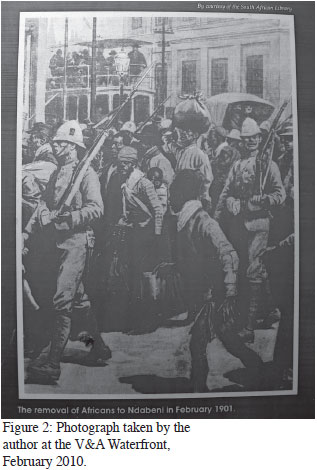
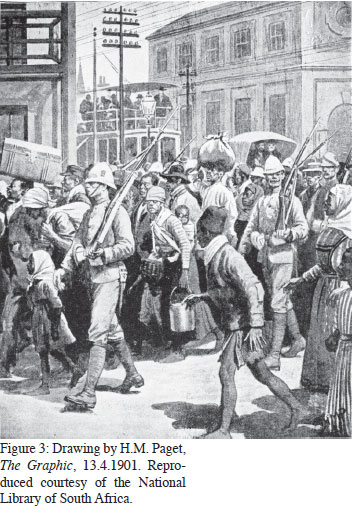
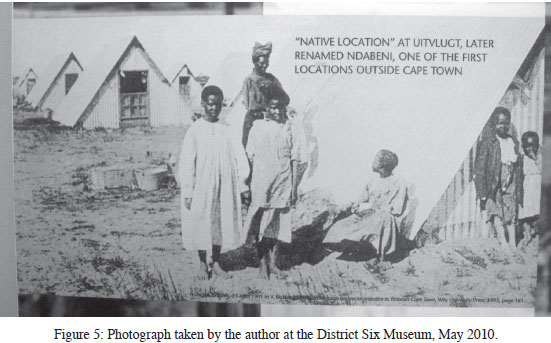
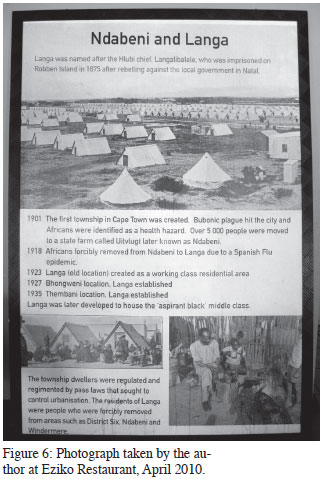
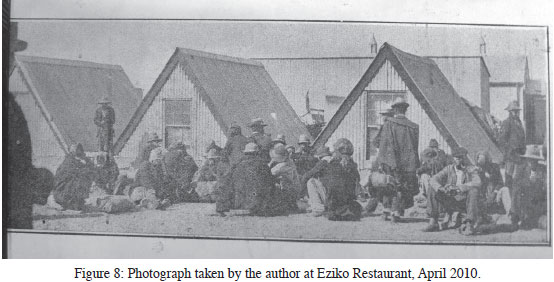
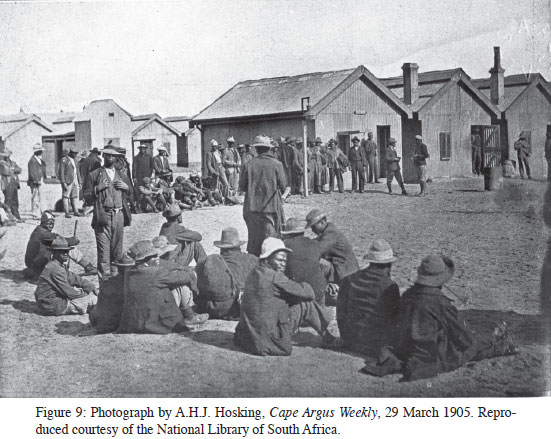
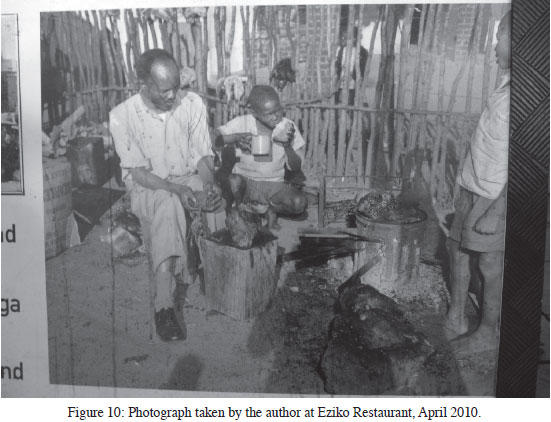
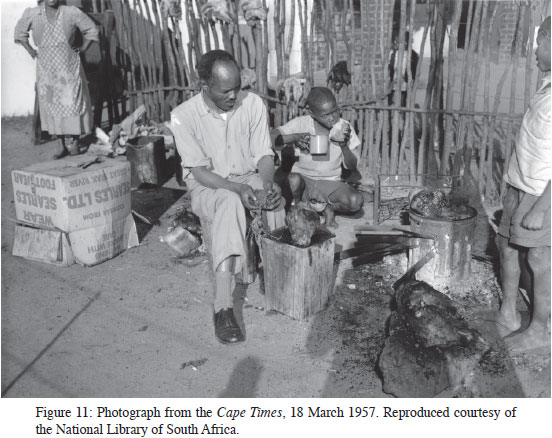
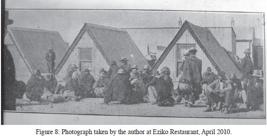
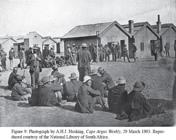
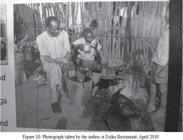
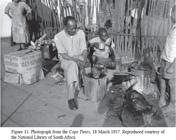
This essay outlines and analyses contemporary image representations of Ndabeni (also called kwa-Ndabeni), a location near Cape Town where a group of people became confined between 1901 and 1936 following an outbreak of the bubonic plague in the city. This location was to shape Cape Town's landscape for a little less that thirty-five years, accommodating people who were forcibly removed from the Cape Town docklands and from District Six. Images representing this place have been produced, archived, recovered, modified, reproduced and circulated in different ways and contexts. Ndabeni has become public knowledge through public visual representations that have been produced across a range of sites in post-apartheid Cape Town. I focus on three sites: the Victoria and Alfred Waterfront, the District Six Museum, and the Eziko Restaurant and Catering School. In each case I analyse the processes through which the Ndabeni images in question have been used and reused over time in changing contexts. I analyse the 'modalities' in which these images have been composed, interpreted and employed and in which knowledge has been mediated. I explore the contents and contexts of the storyboards and exhibition panels that purport to represent Ndabeni. Finally, I discuss potential meanings that could be constructed if the images could be read independent of the texts.
 Thumbnail
 Thumbnail
 Thumbnail
 Thumbnail
 Thumbnail
 Thumbnail
 Thumbnail
 Thumbnail