
 Making the Bemba-speaking People Ethnographic: The White Fathers and Missionary Ethnography in Northern Zambia
Abstract
This article examines the history of ethnological studies conducted by the missionaries of Africa ('White Fathers') in Northern Zambia, situating their work within the broader context of British colonial social anthropology. It explores the relationship between missionary ethnographic practices and the Rhodes-Livingstone Institute, a government anthropological institute established in 1938. The White Fathers' studies of African customs formed part of a broader process of their agendas to 'modernise' and Christianise African populations. Christianisation was a modernising project, in relation to how missionaries framed their work as bringing 'modernity' to colonised societies, often defined in terms of Western ideas of progress, development, and civilisation. This idea was central to the ideology of empire, especially from the 19th century onwards, and had both material and discursive dimensions. This work and the processes of enculturation, processes of adapting Christian beliefs to local customs, paralleled the indirect rule system. In this paper, I argue that the White Fathers' close engagement with Bemba cultural practices and material culture contributed to the ethnologisation of Bemba identity, reinforcing tribal distinctions and elevating Bemba prominence over other ethnic groups. These studies not only shaped colonial knowledge production but also played a role in transforming indigenous subjectivities, positioning local populations as governable Christian citizens. By interrogating the entanglements between missionary ethnography and colonial anthropology, this article sheds light on the intersections of Christianisation, knowledge, power, and colonialism in colonial Zambia, and seeks to contribute to wider scholarship on missionaries as ethnographic agents in colonial Africa.
thnology; White Fathers; Bemba; missionary ethnography; Northern Rhodesia; Rhodes-Livingstone Institute
Introduction
This article discusses the history of ethnological studies by missionaries of Africa (White Fathers) in Northern Zambia, and seeks to contribute to wider scholarship on missionaries as ethnographic agents in colonial Africa, echoing studies such as Jean and John Comaroff's work in southern Africa by showing how Christian evangelisation and knowledge production were tied to colonial governance and social engineering.1 It considers the missionaries' ethnographic work in relation to the practices of British colonial social anthropology introduced in Zambia through the work of the Rhodes-Livingstone Institute, a government anthropological institute established in 1938. I argue that the study by the White Fathers on African customs was part of a process of 'enculturation' that accompanied indirect rule. The missionaries' quest to understand cultural practices and material culture from close by set off a process of making Bemba culture ethnological. Significantly, the missionaries' ethnological studies - also called 'ethnographic studies' - hardened tribal identities and increased the prominence of the Bemba over other ethnic groups.
British Occupation and the White Fathers in Northern Zambia
The White Fathers set up the first permanent Mission Stations in northern Zambia in 1891 as part of their expansion of activities from present-day Malawi and Tanzania. The White Fathers began as an order of Catholic Priests founded in 1873 by the Frenchman Charles Martical Alleman Lavigerie, who had become Archbishop of Tunis and Algiers in 1868. The priests who made up the society were primarily French in origin but became an international missionary society over time. In Zambia, most priests were French, German and Dutch. Lavigerie supported French, Belgian, and Portuguese colonial expansion into sub-Saharan Africa, as he reasoned that this would, in turn, result in the growth of Christianity in sub-Saharan Africa. Initially sponsored by the Portuguese with the blessing of the Vatican to spread Catholicism, and thus Portuguese political influence in present-day Malawi, the White Fathers had to abandon these efforts in 1880, when the British South African Company agent Harry Johnston annexed Malawi on behalf of Britain.2 As British influence grew from Cape Town into the interior, the presence of the White Fathers in Malawi became increasingly untenable from a British viewpoint, due to their identification with the Portuguese and because they were primarily French.3 In the end, they abandoned Malawi and relocated to the Karema Mission on the shores of Lake Tanganyika in the German-controlled Tanganyika (present-day Tanzania), which had been established by members of their society a few years earlier. From there, the White Fathers expanded into Zambia. By 1930, when the British anthropologist Audrey Richards4 arrived in Bemba country to begin her anthropological research, the Roman Catholic Church was fully established. Richards observed that 'Catholic influence is predominant in the heart of Bemba country, and the White Fathers have now built over fifteen stations in the tribal territory, mostly distributed in key stations near the villages and big chiefs'.5
The Production of Bemba Ethnographic Heritage
The chief object of this work is to provide the missionaries, and especially those who have recently arrived, with a prompt to their Apostolic work, and to enable them to have a better understanding of the people to whom they are sent to teach. Hence missionaries must know their Africans, not as they think they should be, but as they are in actual fact. Consequently, knowledge of the customs and beliefs of the local people is essential to every good Pastor of souls. Therefore, this work will discuss the BaBemba tribe, such important subjects as the life of the Bemba from birth to death, child-care, taboos, diet, religious beliefs, and the fundamental question of Bemba belief in the power of ancestral spirits. Ignorance of the African customs and beliefs on the part of the missionary could certainly result in a lack of understanding of his flock and their manner of reasoning with the consequent stifling of his apostolic work.6
This quote, taken from the preamble of study materials written by Fr. Francois Tanguy of Ilondola Language Study Centre for new priests posted to LuBemba, indicates the centrality of and motivations for the study of indigenous customs in relation to missionary work.
Although the missionaries mainly studied and wrote about the Bemba-speaking people, they also included studies of other groups, like the Mambwe, Lungu, Bisa, Ila and Lunda-speaking peoples. The studies led to the creation of written dictionaries, grammar books, and large bodies of written ethnographies on customs and 'tribal' histories. They also formed the basis of educational materials such as literacy textbooks and readers produced by the White Fathers and later adopted by others. These texts were vehicles for turning fluid language and social histories into fixed ethnic groups and had the effect of transmitting and cementing ethnic consciousness and 'tribal' histories, while also serving the project of Christianisation.
Scholars have analysed the role of missionaries and other producers of knowledge on Africa in creating tribalism and hardening ethnicity. Leroy Vail observed that contrary to popular belief, 'ethnicity is not a natural, cultural residue but a consciously crafted ideological creation'.7 In the seminal volume, The Creation of Tribalism in Southern Africa, Vail and others argued that tribalism, as a form of identity and socio-political organisation, was not inherent to African societies but rather constructed through various external factors and historical events. The volume challenges the notion that tribal identities were pre-existing and timeless, arguing that these identities were shaped by colonial powers and later utilised by postcolonial governments for political purposes. The volume examines how colonial powers, such as Britain and Portugal, implemented policies that restructured African societies, divided ethnic groups, and established hierarchical systems of control. The authors discuss the role of forced labour, land dispossession, and social engineering in creating divisions and antagonisms among different ethnic communities.8
The attribution of an ethnological character of the work, ceremonies and material culture of the Bemba-speaking people was a core part of the White Fathers' proselytising work and was done to make the work of Christian evangelism possible. Missionaries needed to understand African languages and customs to translate the Christian message to make converts. A major premise of missionary work and their conversion of Africans to Christianity involved a prohibition on competing African religious practices and customs. Understanding local cultural features was a necessary element of assessing the extent to which these could be accommodated, and how to formulate the Christian message in relation to African customs in a way that made the acceptance of Christianity possible.
These processes of ethnographic production and cultural appropriation were complex and evolving and reflected the changing relationships between Christianity and African customs in relation to broader historical developments globally. Broadly, in the early period, between the 1900s to the 1930s, missionaries dismissed many African customs and cultures as pagan. In the post-war period, missionaries' attitudes were more accepting, due in part to changing attitudes towards minority and colonised people and because of the processes of indirect rule, which were premised on using indigenous systems, laws, and customs for colonial governance. Resistance from African communities and actors would also have played a role in this change in attitudes.
The missionaries also adopted a form of indirect rule through the processes of enculturation, which became more entrenched in this period. The growing acceptance of different cultures was because of the increasing intellectualisation of the Catholic Church as part of its modernising agenda in the aftermath of the First World War. This led the church to emphasise the use of science in missionary methods.9 This was formalised with the installation of the great Vatican Exhibition, held from 1 December 1924 to 10 January 1926, which Amaral showed was part of the agenda to modernise the papacy and project a 'modern and supranational mission church'.10 Through the Vatican exhibition, the Catholic church joined the imperial culture of great exhibitions characteristic of empires in the nineteenth and early twentieth centuries.11
The Vatican Exhibition put objects from societies outside Europe on display, that the Pope had asked missionaries worldwide to collect and send to Rome. These included religious, ritual and healing objects, 'life-size models of scenes from daily life, missionaries' diaries and observations about the people's life, culture and religion'.12 The artefacts were labelled ethnographically, highlighting the society of origin, use, identification of the object and the missionary order that had sent it.13 The artefacts from this exposition later came to make up the Vatican Ethnological Museum, cu-rated by Wilhelm Schmidt, the principal architect of the exhibition and the museum's founding director. In 1906, Schmidt founded Anthropos: An International Review of Ethnology and Linguistics, which published articles from missionaries worldwide on indigenous religions and cultures. Missionaries working among the Bemba, like Edouard Labrecque, published several articles in the journal in the 1930s. The church's turn to science also coincided with the creation of institutes like the International Institute of Languages and Cultures in 1929, whose main backers and founders were missionaries. Established in London, the institute was created to advance the systematic study of African languages and the cultures in which they were spoken. Its work involved defining, documenting, and standardising linguistic practices across Africa. It is likely that institutes like the Ilondola Language Study Centre were created to advance the work of the international institute. The institute introduced Africa, an international journal where many missionaries, including missionaries who wrote on the Bemba, published mainly anthropological studies.
In the then Northern Rhodesia, White Fathers studied the Bemba-speaking people and produced significant ethnographic studies on them. The study of languages, cultures, and customs were among the most key features of the modus operandi of the White Fathers. Cardinal Lavigerie, the society's founder, recommended that missionaries avoid 'Europeanising' Africans as much as possible and adapt the Christian message to indigenous traditions. Because of this requirement, the White Fathers set up language study centres in their work regions. The language centres went beyond the study of language and also operated as centres for the study, learning, organisation, and dissemination of knowledge on African customs and cultures.14 In Northern Rhodesia, the White Fathers set up the Ilondola Language Study Centre in Chinsali District in the 1950s. Although Ilondola was only formalised as a study centre then, it had been used for such purposes long before this. Here, all priests posted to Northern Rhodesia were expected to spend up to six months learning the Bemba language and customs before being posted to a mission station or parish.15 New priests were attached to older priests who acted as their tutors and could also draw on handwritten and typewritten ethnographies from earlier priests, editing them in the process. The original archive of what is now the White Fathers Archive in Lusaka was initially kept at the Ilondola Language Study Centre.16
Having outlined the broader intellectual and linguistic pursuits of the White Fathers, including their work on cultural studies, as well as their visibility through initiatives such as the Vatican exhibition, the discussion now turns to examine these undertakings in greater detail. The following sections explore how their engagement with language shaped educational initiatives and curricula, how their studies of Bemba customs informed both ethnographic and missionary projects, and how the production of Bemba readers connected these efforts. Together, these examples reveal the interconnections between linguistic, educational, and cultural work, and show how Africans associated with the mission churches increasingly became active participants in these processes.
Bemba language: Grammar books, dictionaries and writing
The initial Bemba ethnographic writings were grammar books and dictionaries, the first produced by Dupont in 1900.17 In Northern Rhodesia, the White Fathers were the first Catholic society and the first European settlers in northern Zambia. They were also the first to learn the local language and write down indigenous languages via dictionaries and grammar books. Through the Ilondola Study centre, the White Fathers translated Bemba into European languages like French, German, Dutch, English and Flemish. Thus, the influence of the White Fathers in codifying written Bemba was significant.
In 1920, Fr. Louis Guillerme18 published one of the most ambitious Bemba-French grammar books, running to more than 500 pages.19 The learning of vernacular languages was a practical part of making communication and, thus evangelisation, possible. But the learning of language was importantly also the basis for ethnological work, making it possible for the missionaries to claim to know people they were proselytising. As Irvine noted, nineteenth-century intellectual developments in Europe had created an 'idealised vision of distinct "peoples whose special "spirit" or mentality was to be found in their language'.20 There are more than 75 entries for grammar books, dictionaries, and other language materials in the White Fathers archives in Lusaka, testimony to the significant position of language as an ethnological tool.
However, the relationship between language and ethnic identity is not straight-forward. Dell Hymes's 1968 essay, 'Linguistic Problems in Defining the Concept of Tribe, challenged the long-held assumption that language, geography, and ethnicity are naturally correlated identifiers of distinct peoples. By demonstrating that these categories are often disconnected and only variably related, Hymes exposed the flaws in what he called an 'idealised vision' of cultural and linguistic unity. His intervention disrupted the prevailing notion that linguistic and geographic boundaries neatly aligned with social and ethnic identities, an assumption that had shaped much anthropological thought.21
Different missionaries conducted this ethnological work over time.22 Language was crucial for defining the character of 'tribes' and thus in the creation of disparate societies and their transfer into imagined, organised ethnic groups. Missionaries codified African languages and determined their form by writing down previously unwritten ones, in the process delimiting and creating boundaries for each language linked to specific ethnicities.23 Sinfree Makoni noted that these linguistic processes had 'clear political dimensions and implied particular forms of social relations between Africans and Europeans and among Africans themselves'.24 These developments limited the participation of Africans in the creation of discourses about them. The consequences were dire. As Makoni argues, these 'inventions were structured in a way that encouraged Africans to internalise European epistemology about themselves, creating a new view about their current affairs and superimposing new values about their past'.25
The influence of the White Fathers in codifying Bemba and making it the default official language of Northern Zambia also resulted from their involvement in the formulation of vernacular syllabuses for both their schools and government schools in Northern Rhodesia. Northern Rhodesia's government only started establishing schools in 1925, following the takeover of the territory by the colonial office from the British South Africa Company the previous year.26 By then, the White Fathers had over 500 schools and 25000 pupils, including a Teaching Training School that opened at Rosa Maria Mission, Chilubi, in 1903.27 When the colonial government started their own schools and had to draw up syllabuses, the White Fathers were consulted on numerous occasions, especially for the Bemba language syllabus. In November 1939, the secretary for the syllabus committee at Munali Training School in Lusaka invited Fr. Francois Tanguy, the principal of Malole Mission and the Education Secretary of the White Fathers from 1925-1943, to help formulate national syllabuses for standards VII and VII for Bemba.28
Similarly, communication with the African Literature committee based in Ndola in 1943 shows that the priests represented by Fr. Tanguy were involved in the committee's activities in promoting and assisting with producing Bemba and other vernacular literature.29 Fr. Tanguy also represented the White Fathers on the Bemba Advisory Committee for the school certificate under the Department of African Education.30 The White Fathers were also intensely involved in the work of the African Literature Committee to promoted the writings of educated Africans. Additionally, through the Ilondola Language Study Centre, the White Fathers trained various groups of people in the Bemba language and customs. These included priests, government officials and other expatriates from state organisations like the Norwegian Agency for Development Cooperation (NORAD) and researchers, thereby spreading their influence in the language further.31
Although Bemba was not the only language in the northern region of Northern Rhodesia, the priests almost exclusively concentrated their efforts and interventions on Bemba. In the White Fathers' Archive in Lusaka, it is amazing how absent other languages have become in the records of the personal papers of the missionaries. Over time, the northern region increasingly became identified with the Bemba people, and Bemba emerged as the region's de facto lingua franca. This development can be attributed in part to the role of missionaries, who trained many of the earliest teachers, most of whom were Bemba speakers. These teachers subsequently taught pupils from a variety of linguistic backgrounds, including ciLala, ciBisa, ciMambwe, and ciLungu. In addition, the White Fathers produced school readers exclusively in Bemba, even though these materials were used across Catholic schools that also served non-Bemba-speaking communities. From a practical standpoint, it was logical for missionaries to focus on a single language, as this reduced the need to learn and operate in the many languages and dialects that characterised the region. This process of vernacular standardisation was not merely pedagogical but formed part of the broader colonial apparatus of governance aimed at rendering African populations more legible and governable as colonial subjects.
Over time most people coming from the Northern province for labour migration on the Copperbelt and other areas along the line of rail were tagged as Bemba.32 Due to the early introduction of schooling in the Northern province, people seen as Bemba-speaking also had an advantage in acquiring clerical and other white-collar jobs in the early colonial period.33 This was enhanced when in 1931, mining officials and the colonial administration introduced the institution of tribal elders to manage the affairs of Africans on the Copperbelt along customary lines, as part of the processes of indirect rule. Consequently, people from smaller language groups were integrated into the larger groups that had been turned into ethnic groups, like the Bemba, Lozi, and Ngoni. And they themselves had been naturalised as the paramount chieftainships of the different regions as part of the administrative conveniences made possible by indirect rule. Additionally, by the early 1940s, mine managers adopted Bemba as one of the languages for official communication.34 This further enhanced the formation of Bemba ethnic identity and strength.35
Arguably, the relationship between missionary constructions of identity and local modes of self-identification in northern Zambia was far from straightforward. Before the arrival of the White Fathers, people in the region identified themselves in various ways, including kinship, clan affiliation, and place of origin, with social belonging defined in fluid and situational ways rather than through rigid ethnic categories. The missionaries' ethnographic and linguistic interventions gradually contributed to reconfiguring these forms of belonging into more bounded and standardised notions of 'tribe'. Through their documentation of customs, translation of oral traditions, and production of Bemba grammars and readers, the White Fathers helped transform 'Bemba' from a linguistic label into a more encompassing ethnic identity that carried political and cultural weight in colonial contexts. Yet, this was not a one-sided process. Local actors, particularly those connected to mission schools and churches, and traditional political leaders such as chiefs, engaged actively with these emerging categories, appropriating and reinterpreting them for their own purposes. In this sense, the making of 'Bemba' as an ethnological and cultural category was an interactive and contested process shaped by both missionary and African agency. Situating this argument in relation to broader scholarship, studies such as Beidelman's Colonial Evangelism and John and Jean Comaroff's Revelation and Revolution illustrate similar dynamics elsewhere in Africa, where missionary encounters reconfigured notions of personhood and belonging.36 As Dell Hymes argues, the long-standing assumption that language, geography, and ethnicity naturally coincide obscures the historical contingencies through which such associations were produced. The White Fathers' work exemplifies this process, revealing how linguistic standardisation and ethnographic description functioned as metacultural practices that objectified local lifeworlds, rendering them legible within missionary and colonial epistemologies. Drawing on Kirshenblatt-Gimblett's notion of metaculture, this process can be understood as one that made Bemba culture 'ethnological', translating lived practice into the textual, comparative, and didactic forms that would later underpin both anthropological representations and heritage discourses.37
The study and writing of Bemba customs
Apart from studying language, priest posted to LuBemba was also expected to learn Bemba culture and customs. However, some priests turned these efforts into assumed expertise and wrote more formally, publishing texts in several local and international publications. From 1910, priests such as Jan van Sambeek, Eugene Welfele, François Tanguy, Louis Guillerme, Louis Ettienne and Eduard Labreque wrote extensively on the religious practices and customs of the Bemba. Later prominent scholars included Fr. Hugo Hinfelaar, Jean Jacques Corbeil, and Louis Oger. They also wrote, though to a lesser extent, on surrounding language groups such as the Bisa, Mambwe, Lungu, Lunda, Shila and others.38 The broad range of themes covered the whole spectrum of Bemba life, including religious, social, political, and economic systems. Notable themes were religious practices and beliefs, female initiation and marriage systems, natural environment, clan systems, witchcraft and sorcery, death rituals and rituals related to sexuality and reproduction and political systems.
In 1954, the study of indigenous customs was boosted even further when the headquarters of the White Fathers in Rome sent more than 745 queries on native customs to missionaries serving in West and Central Africa.39 These queries were contained in six volumes in the form of booklets of detailed questions titled Table d'Enquête sur les Moeurs et Coutumes Indigènes (survey table on indigenous manners and customs). The White Fathers' headquarters expected each mission station to respond to these. As such, there were responses from numerous missionaries, many writing on the same group, for example the Bemba. But there were also many responses about other presumed ethnic groups like the Batwa, Bisa, Nsenga and Ngoni.40 The questions and answers dealt with customs from birth to death. The responses to the queries were so detailed that some comprised several hundred pages. For example, Fr. Tanguy's original response was more than 400 pages long.41 However, as they dealt with the same questions, the answers to queries about a particular group were usually similar to those pertaining to another.
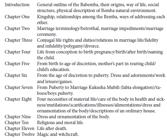
This cataloguing effort provided further impetus for the process by which language groups were turned into ethnic groups. It also lay the foundations for later publications on customs of these ethnic groups such as the Bembas. Thus, the Ilondola Language Study centre published the responses of Fathers Louis Étienne, Francois Tanguy, and Edouard Labrecque in a series of publications called Bemba Cultural Data Monographs beginning in the late 1950s. The series also published older collections of studies on various aspects of Bemba culture, such as those made by earlier scholars as far back as the 1910s. The Table of Contents for Fr. Tanguy's responses provides a helpful indication of the topics covered in these queries and responses.
Ifya Bukaya and other Bemba readers
From the mid-1920s, the White Fathers relationship with Bemba ethnographies took another turn when they began to produce a series of vernacular Bemba 'readers', which were meant for priests to use while teaching reading, literacy, religious education, civic education, history, and geography. Other subjects in the curriculum were arithmetic, physical education, and hygiene.42 Later one was added for home economics, especially for girls. The most important of these readers was the Ifya bukaya series. Ifya bukaya is a Cibemba phrase that can be translated as 'of familiar things' or 'our stories'. The White Fathers at Chilubula produced Ifya bukaya in four editions (1929, 1931, 1932 and 1940). They were substantial in content; the third Bemba reader, for example, ran to more than 300 pages.
The topics covered in these publications were eclectic. The volumes covered a combination of different themes written in narrative form or storytelling form. Themes included aspects of the natural environment, origins of the Bemba, clan systems, the royal histories of Bemba chiefs, customs of the Bemba and, significantly, accounts of the histories of White Fathers and other missionaries such as David Livingstone.43 Ifya bukaya readers were evangelical tools, as they had sections on Christianity, and they also commented on indigenous customs that were considered bad, such as ancestral worship.44 Other White Fathers publications, such as Imyendele Isuma (rightful living), were also used to arbitrate behaviour, customs, lifestyle, and dispensed instructions on rightful living for family life and supposed proper gendered conduct for husbands and wives in different situations.45 These readers had the effect of changing the subjectivities of people in very significant ways. They made the White Fathers mediators, interpreters, and transmitters of Bemba history and culture. The readers also contributed to the privileging of Bemba over other languages and ethnicities because they were used for all the missionary schools in the region, regardless of ethnicity. The Bemba readers crystallised centuries-old but dynamic oral histories and fixed and bound these. Derek Peterson notes: 'Through these and other documentary practices, the routines of human life were lifted out of the real dynamic world, placed outside the reach of change and innovation, and rendered anachronistic at the moment of publication.'46
Through the readers, the White Fathers helped to crystallise the idea of the 'tribe' as a cohesive social and political group. The following extract is taken from the civic education lesson, which taught pupils about tribes, by asking them to name their 'tribe', their chief, the physical boundaries of their 'tribe', and the BOMA where they paid tax. These understandings were key to colonial administration as part of indirect rule, where the idea of 'tribe' as a social and political entity was core to colonial governance.47 An extract from one of the lessons from the Bemba Reader demonstrates these processes as follows:
-mutundu nshi (What tribe are you?)
-Mfumu nani (Who is your chief?)
-Imipaka ya calo (The boundary of your chiefdom)
-Iboma basonkako (Boma where you pay tax)
Writing 'tribal' histories
The priests wrote histories of different language groups, now understood as ethnic groups, such as the Lunda and the Bisa. But the most prominent are the histories of the Bemba.48 These written ethnohistories were, in essence, oral histories taken from the ruling elites, crystallising oral traditions and formalising royal narratives. They emphasised the Luba-Lunda origins of the Bemba, the divine origins of the Bemba ruling clan and the wars the Bemba fought and won in the history of migration to the final settlement in Bembaland. These histories constituted much of the content of the second Bemba reader (1931). A lot of chapters in the second reader were about how the Bemba defeated different groups until they finally settled. Giacomo Macola has analysed these processes in relation to the centrality of Fr. Labrecque in the formalisation of oral traditions of Lunda history through his publications.49
The production of this large body of ethnography was not only done by white priests but also by African catechists, who were essential mediators in these processes. Early White Fathers were not enough to man all their early converts, who lived in villages scattered all over LuBemba and seasonally shifted villages during certain times of the agricultural cycle. The White Fathers used itinerant African catechists to recruit new converts and ensure the adherence of old converts and catechumens. Catechists travelled over large areas to administer sacraments such as the baptism of the dead, Eucharist, and mass. They were also essential mediators on customs that were to be considered pagan and, therefore, forbidden.50 Through their collaboration, missionaries ensured adherence to Christian norms and punished converts who practiced prohibited customs such as female initiation ceremonies.51 The White Fathers also used these nameless African catechists to collect detailed ethnographic accounts that went into the early-published vernacular tests. In due course, these African catechists also wrote Bemba ethnographies after the fashion of the White Fathers. The White Fathers archive contains scores of responses to enquiries and ethnographic accounts written by African catechists, whose authorship is usually identified as 'written by an African'.52
Whereas in the first few decades of the 1900s, ethnographic studies by the White Fathers about Bemba culture had been made to convert Africans to Christianity and stop what they considered as pagan practices, the study of Bemba culture in the post-war period was made to replace historic Bemba customs with new ones. While presented as traditional, these practices/institutions were a new creation, a hybridisation between Christian practices and indigenous practices in which the conventions of Christianity were made to take precedence. The missionaries cleansed indigenous practices of elements perceived to be intolerable to a Christian approach, providing a Christian character to these while also retaining a veneer of traditional culture. These practices were then adopted in Christian communities as indigenous culture.
While missionaries presented this surge in interest in indigenous cultures as benevolent, it was part of the broader processes of the consolidation of colonialism, especially with the introduction of indirect rule, which used African cultural institutions to rule over colonised peoples, as argued above. For Catholic missionaries, this later period was characterised by the concept of 'enculturation', in which African cultural institutions and practices were adopted and adapted to Christianity.
Missionary ethnography, colonialism and the Rhodes Livingstone Institute
It is important to consider missionary studies in relation to the development of professional colonial science research in Northern Rhodesia conducted within the framework of colonial governance through the Rhodes Livingstone Institute. In my research I could not establish whether the White Fathers communicated or collaborated directly with the anthropologists of the Rhodes Livingstone Institute (RLI). However, in 1943, the Reverend Maxwell Roberts, a missionary with the London Missionary Society in Northern Zambia, sent several chisungu objects to the RLI with a view of finding out if the institute had such objects or any information related to them.53 These were used for initiation among the Mambwe-speaking people. Reverend Roberts collected a large number of objects for museums in Scotland and the University of the Witwatersrand.
It is not entirely clear what the missionaries thought of the anthropologists associated with the Rhodes-Livingstone Institute. On the one hand, Reverend Maxwell's decision to send samples from his ethnographic collection to the Institute suggests a degree of recognition of, and deference to, the professional expertise of its anthropologists. On the other hand, although Audrey Richards was not affiliated with the institute, her interactions with the White Fathers during her fieldwork among the Bemba reveal a deep sense of rivalry between her, as a professional anthropologist, and the missionaries regarding claims to expertise and the authority to represent Bemba culture. Her fieldnotes and communication to family and associates are full of examples of these rivalries. In June 1931, toward the end of her three weeks of participant observation of the chisungu ceremony, Richards received that month's edition of the journal Africa, in which Fr. Edouard Labrecque of Malole Mission in Kasama had published an article on Bemba marriage which included descriptions of chisungu rites. Her response to it, as expressed in a letter to her mother, demonstrates the conflicts and rivalry in the claim to expertise between herself as a trained anthropologist and the Catholic missionaries. As she wrote to her mother:
All well & nearly leaving ... It has been a wonderful chance [observing the chisungu ceremony] and a great opening for crushing my Roman Catholic arch-enemy who has written a stupid article - all wrong - on the subject [chisungu] in 'Africa' this month! I expect that I am the only white person who has seen one [the chisungu].54
There are parallels between the developments of professional anthropology in Northern Rhodesia and the evolution of ethnographic studies conducted by missionaries. While the missionaries started their ethnographic studies by the early 1900s, these intensified in the 1930s, when they also began to publish in renowned international journals like Anthropos and Africa. By the 1930s, following a boom in mining due to the discovery of new copper mining technologies and the consolidation of colonial rule after the First World War, there was an increase in ethnological studies in the territory, which reflected the firm establishment of colonialism. Lord Hubert Young, governor of Northern Rhodesia, introduced plans for establishing an institute to conduct anthropological studies in the territory around this period.
By the early 1930s, Hubert Young, governor of Northern Rhodesia, was keen to have the institute in place because of rising concerns over growing problems with governing Africans, as shown in the Copperbelt strikes of 1935 and 1940, which revealed growing African dissent.55 According to records from the Audrey Richards archives, he and other officials in Northern Rhodesia had been in touch with Audrey Richards and Bronislaw Malinowski about the practical uses of anthropology in colonial governance. Richards had given Young a copy of Malinowski's 'Practical Anthropology', published in the January 1929 issue of Africa.56 Malinowski extolled the use of scientific anthropological knowledge on indigenous communities for the colonial administration, especially in relation to indirect rule.57 Influenced by his mentor's views, Godfrey Wilson repeated these uses of anthropological knowledge and motivated enough anthropologists to map and study the indigenous society along ethnic lines. He stated the link between governance and anthropology: '"Indirect Rule" demands respect for and deliberate utilisation of African institutions. And no one can use to the best effect a material whose properties he only half understands.'58 The institute was thus conceived as a research centre for understanding African societies and their problems, and for providing information to the colonial government to assist in the colony's purposes of planning and governance.59 The starting point for the work of the RLI was the assumption that Africans were naturally organised into 'tribes', understood as natural, bounded, primordial societies with distinct characteristics whose social organisations and meanings and whose customs and cultures anthropologists could untangle and decode through study.60
Missionaries, anthropologists, and colonial administrators all needed knowledge of African societies and customs to control and govern African people. Michel Foucault developed the term 'governmentality' to analyse how populations were made controllable or governable. Through this concept, Foucault widened our understanding of the power-knowledge complex in relation to governance and how knowledge became a significant technology of power. Governmentality focused on the techniques, rationalities, and strategies that those in power deployed to render society governable. Here, power involved forms of social control through disciplinary institutions and, most importantly, through shaping knowledge. Through controlling what people knew of themselves and how they saw themselves, power took the form of shaping people's subjectivities, and in the long term, society internalised this power-brokered knowledge of themselves.61
Rassool invites us to view empire not as territorial or spatial but as 'an epistemology of societies, persons, things, and their interconnectedness'. He demonstrates how processes of knowledge-making through disciplinary practices, such as archaeology, physical and social anthropology, and institutions, like museums, enabled the 'emergence of new forms of governmentality, social knowability and the division created between what were seen as "rude" and "civilised" societies'.62 Mamdani also elaborated how Africans were made colonial subjects through processes of 'define and rule' through indirect rule. The colonisers governed by defining and managing difference by constructing races and tribes.63 These processes 'shaped the subjectivities of the entire colonised population'.64
Like the government anthropologists of the RLI, missionaries also provided information on indigenous societies to help with colonial governance. In January 1946, Fr. Tanguy wrote to R.S. Hudson, Secretary of Native Affairs in Northern Rhodesia, to restate the advice he had given Hudson in a consultation that had taken place the previous day over a problem about the succession to the Chitimukulu throne in the Bemba Paramountcy. In the letter, Tanguy explained the 'tribal custom of the Bemba' over succession, and the implications of various scenarios regarding the government intervention in the matter. Based on his knowledge of Bemba culture, he gave the Secretary the following advice:
My feeling, after many talks with the chiefs on this subject, is that while they are actually disagreeing with one another, they will all be satisfied if the decision is taken by the responsible man, namely: Chimba [a high priest]. Should a disagreement occur between Chimba and the chiefs, Chimba should be requested to produce some good reasons to explain his choice, and if acceptable, the government should back up Chimba's decision. May I make the following suggestion? In case of conflict, it may be good to warn the chiefs, as it is clear that you are unable to agree between you wouldn't it be better that the government decided and chose the man to become Chitimukulu without taking the tribal customs into account? - I wonder what the reaction could be, but it may enable to open a new method of succession for the future.65
Another example is a 'Report on Marriage' written for Native Courts in which Fr. Belin Jean-Pierre explained the 'tribal customs' of Bemba marriage.66 The report further explained the questions the 'native' authority was to ask to decide on the validity of Bemba traditional marriages. This shows how ethnography and governance went hand in hand and how missionaries, much like government anthropologists of the RLI, provided information on indigenous people to make them governable.
For missionaries, shaping subjectivities involved moulding people's worldviews through Christianisation and thus shaping African customs and practices in relation to their conformity to Christian teachings. Written ethnographies also formed the backbone of materials for religious instruction. Hugo Hinfelaar showed how these and other evangelical practices by the White Fathers changed the nature of the understanding of family life and relations between husbands and wives. These new practices challenged the ethos of historical mores and customs like chisungu female initiation rites and introduced patriarchal Christian understandings of the family and societal structure, changing the place of men and women therein. These placed men at the head of the households and of their religious practices, thereby significantly diminishing the religious role of women with which she had been invested through chisungu. These also affected observances of rites such as those involving sexual purification and cleansing for which initiated women had been expected to take the lead. In this vein, a 1925 pre-marriage counselling publication had the following question and answer session:
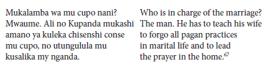
The work of missionaries had a direct effect on changing historic and customary practices and also entribing people in Northern Rhodesia and making them governable as Christian.
Conclusion
The ethnological work of the White Fathers in Northern Zambia must be understood not simply as a benign exercise in cultural understanding, but as a central component of a broader colonial project that sought to reconfigure African societies through the intertwined processes of Christianisation and modernisation. By aligning themselves with colonial frameworks of knowledge production, including those advanced by the Rhodes-Livingstone Institute, the missionaries played a significant role in constructing and legitimising ethnographic categories that served both ecclesiastical and imperial interests. Their close engagement with Bemba customs and material culture, under the guise of enculturation, contributed to the ethnologisation of Bemba identity and helped consolidate Bemba hegemony within the colonial order. These practices were not neutral; they participated in shaping new subjectivities and reinforcing the logic of indirect rule by rendering African populations intelligible, classifiable, and governable.
Ultimately, this demonstrates that White Father missionaries in Northern Zambia not only documented Bemba customs but also helped construct and elevate Bemba identity within the colonial order, illustrating how missionary ethnography produced both subjects of empire and Christian modernity.
The intersections between missionary ethnography and colonial anthropology reveal how knowledge was mobilised in the service of power, and how religious and scientific discourses worked in tandem to produce the colonial subject. Understanding these dynamics is essential to any critical reflection on the legacies of colonial epistemologies in Zambia and beyond.
The financial assistance of the National Institute for the Humanities and Social Sciences, in collaboration with the Council for the Development of Social Science Research in Africa (CODESRIA) towards this research is hereby acknowledged. Opinions expressed and conclusions arrived at are those of the author and are not necessarily to be attributed to the NIHSS and CODESRIA.
References
- 1 See for example J. Comaroff and J.L. Comaroff, Of Revelation and Revolution: Christianity, Colonialism, and Consciousness in South Africa', Vol. 1. (Chicago: University of Chicago Press, 1991).
- 2 H. Hinfelaar, History of the Catholic Church in Zambia 1895-1995 (Lusaka: Bookworld, 2004), 23.
- 3 Ibid. 24-26.
- 4 Audrey Richards was a British anthropologist best known for her pioneering ethnographic study of Bemba female initiation rituals, published as Chisungu in 1956. Her meticulous documentation and analysis of the symbolism, social functions, and pedagogical dimensions of the chisungu ceremony made the work a foundational text in the anthropology of gender and ritual in Africa.
- She also noted that the Scotland Mission and the London Missionary Society had both equally established themselves with stations at Lubwa, Mwenzo, Chitambo, and Senga, Mporokoso and Mbereshi respectively. In Kasama and Chinsali, the hearts of Bemba country, there was an established European population and government civil service.
- 6 White Fathers Archive (hereafter WFA), I-M-C 66, Tanguy Francois, his own notes in view of a booklet for students at the Language Centre (n.d).
- 8 Ibid.
- 9 A.R. Amaral, 'Exhibiting Faith Against an Imperial Background: Angola and the Spiritans at the Vatican Missionary Exhibition (1925)', Journal of Religion in Africa 50, 1/2 (2020): 83;
- 10 Ibid. 83.
- 11 Ibid.
- 13 Ibid. 125.
- 14 L. Oger, 'Where a Scattered Flock Gathered': Ilondola 1934-1984 (Lusaka: Missionaries of Africa Zambia, 1991), 126-129.
- 15 Ibid. 127.
- 16 These included works by Fr. Edouard Labrecque, Accidents à la Naissance Chez les Babemba', in Anthropos XXV, 1930; 'La Tribu des Babemba 1: Les Origines des Babemba'; 'La Tribu des Babemba 2: Coutumes sur le Marriage', in Anthropos XXXII, 1938; 'Le Sorcellerie chez les Babemba', in Africa IV, 1931; 'Le Mariage Chez le Babemba', in Annale Pontificales 1968; History of the Bena Ngoma (London: MacMillan Press, 1949); History of the Bena Lunda (London: MacMillan Press, 1958).
- 17 WFA 3-P-La10 (Joseph Dupont) 'Essai de grammar Bemba, Paris 1900.
- 19 The original publication can be found at https://gallica.bnf.fr/ark:/12148/bpt6k1472402/f12.item
- 20 J. T. Irvine, 'Language as Cultural "Heritage": Visions of Ethnicity in Nineteenth-Century African Linguistics', in R.D. Peterson, K. Guava, and C. Rasool (eds.), The Politics of Heritage in Africa: Economies, Histories, and Infrastructure (Cambridge: Cambridge University Press, 2015), 194.
- 21 D. Hymes, 'Linguistic Problems in Defining the Concept of "Tribe", In June Helm (ed.), Essays on the Problem of Tribe (Seattle: Publications of the American Ethnological Society, 1968), 23-48.
- 24 Ibid.
- 25 Ibid. 243.
- 26 B. Carmody, 'The Politics of Catholic Education in Zambia: 1891-1964', Journal of Church and State 44, 4 (2002), 781.
- 27 Ibid.
- 28 WFA, 1-M-IP 16. Tanguy Francois: one file with Letters, 1925-1961; J.O. Forester, Munali Training School to Fr. Tanguy, 9 November 1939. Other invitations were to the African Literature Committee and the Bemba advisory committee for the school certificate. WFA, Director of African Education to Fr. Tanguy, 23 June 1945, Mazabuka.
- 29 WFA, 1-M-IP 16 Tanguy Francois, D.S Miller to Fr. Tanguy, Ndola, 4 May 1943. The African Literature Committee was established by the colonial government of Northern Rhodesia (now Zambia) in 1937. Its primary objective was to promote the creation and dissemination of literature in indigenous African languages. This initiative aimed to address the growing literacy rates among Africans by providing reading materials that reflected their cultures and languages. In 1950, the committee's efforts evolved into the formation of the Northern Rhodesia-Nyasaland Joint Publications Bureau. This bureau expanded the scope of the original committee by coordinating the production and distribution of literature across both Northern Rhodesia and Nyasaland (now Malawi). The bureau's mission was to encourage local authorship and make literature accessible to African readers, thereby fostering a reading culture and supporting educational development in the region.
- 30 WFA, 1-M-IP 16 Tanguy Francois, Director of African Education to Fr. Tanguy, Mazabuka 23 June 1945.
- 31 Oger, 'Where a Scattered Flock Gathered', 130.
- 33 M. Mbewe, 'A Triangulation of Relationships: Godfrey Wilson, Zacharia Mawere and their Bemba Informants in Broken Hill, Northern Rhodesia, 1938-1941' (MA thesis submitted to the University of the Western Cape, 2015).
- T.O. Beidelman, Colonial Evangelism: A Socio-Historical Study of an East African Mission at the Grassroots (Bloomington: Indiana University Press, 1982).
- 38 Apart from being directly involved in the editing and publication of the official eastern Lunda ethno-history, in the 1930s and 1940s, Labrecque compiled or helped to compile 'tribal' histories and ethnographies of the Bemba, Bena Mukulu, Ushi and Shila. E. Labrecque, 'La Tribu des Babemba: I, Les Origines des Babemba', Anthropos XXVIII (1933), 633-648; 'Les Origines des Babemba de la Rhodésie du Nord', Annali del Pontificio Museo Missionario Etnologico XXXII (1968), 249-329; History of the Bena Ngoma, (London, 1949).
- 39 WFA-1-M-C 13 Tanguy Francois: 'The Bemba of Zambia: Beliefs, Manners, Customs', (1947).
- 40 There are numerous responses from different priests on different societies to this query. See for example, WFA 1-M-C 131 to 1-M-C 137, Table d'enquête sur les Moeurs et Coutumes Indigènes.
- 41 WFA-1-M-C 12 Tanguy Francois, 'Table d'enquete sur les Moeurs et Coutumes Africaines, par le Generalat des w.f. Reponses par le P. Tanguy. Original manuscripts 1954-1960, 432 pages.
- 42 WFA- Section 3: Bemba publications - schools: 3-p-sc; 1-M-E 11-Tanguy Francois: Notes on Geography, Hygiene, General Knowledge, Science, Religion, Moral Lessons, History of the Church.
- 43 WFA 3-P-Sc 15, White Fathers, Chilubula 'Ifya bukaya: First Bemba Reader 1929; 3-P-Sc 16 White Fathers, Chilubula lIfya bukaya. Second Bemba Reader 1931; 3-P-Sc 17 White Fathers, Chilubula 'Ifya bukaya: Third Bemba Reader 1932.
- 44 WFA, 3-P-Sc16, White Fathers Chilubula, Ifya bukaya, Second Bemba Reader (1931), 16; Also first reader, 61.
- 45 H. Hinfelaar, Bemba-speaking Women of Zambia in a Century of Religious Change, 1892-1992 (Leiden: Brill, 1994), 66.
- 46 D.R. Peterson, 'Introduction: Heritage Management in Colonial and Contemporary Africa', in D.R. Peterson, K. Gavua and C. Rassool (eds), The Politics of Heritage in Africa: Economies, Histories, and Infrastructure (Cambridge: Cambridge University Press, 2015), 1-2.
- 47 See also Y.M. Kabombwe; A. Masinire 'Representations of Colonial Ideologies in Textbooks for History: A Case of Northern Rhodesia from 1925-1963'. Yesterday & Today Journal for History Education in South Africa and Abroad, 34, 2026, 95-118.
- 48 For example, 1-M-G 05 Welfele Eugene: Notebook, probably written around 1930, 'Origine des BaBemba.
- 49 G. Macola, 'Literate Ethnohistory in Colonial Zambia: The Case of 'Ifikolwe Fyandi Na Bantu Bandı, History in Africa, 28, 2001, 187-201;
- G. Macola, 'Historical and Ethnographical Publications in the Vernaculars of Colonial Zambia', 343.
- 50 For example, WFA, 1-M-C 15 Catechist Malole, 'imisango ya cisenshi iyo bacita' (the pagan customs they do), undated manuscript by the catechist of Malole.
- 51 ARP, Richards 3/1 Bemba Diary 1, 18 July 1930.
- 53 ARP, RICHARDS 1/10 J154, Livingstone, Desmond Clark to Richards, late 1946 (this letter is undated, but it is a response to Richards' letter of August 1946).
- 55 M. Musambachime, 'The University of Zambia Institute for African Studies and Social Science Research in Central Africa, 1938-1988, History in Africa, 20 (1993), 238.
- 56 ARP, Audrey Richards to Malinowski, 9 July 1929, Cambridge.
- 60 K. Crehan, The Fractured Community: Landscapes and Power in Rural Zambia (Berkeley, Los Angles and London: University of California Press, 1997), 53-69.
- 61 M. Foucault, The Birth of Biopolitics: Lectures at the College de France, 1978-79 (London: Palgrave MacMillan, 2008).
- 62 C. Rassool, 'Re-storing the Skeletons of Empire', 655; Also, C. Rassool, 'Remaking the Museum after Colonialism', in L. Emmerling, L. Gupta, L. Proença and M. Biwa (eds.), Museum Futures (Berlin: VERLAG TURIA + KANT, 2021), 342.
- 63 M. Mamdani, Define and Rule: Native as Political Identity (Cambridge: Harvard University Press, 2012), 7-8.
64 Ibid. 8.
65 WFA-1-M-IP 16/1 Tanguy Francois, Fr. Tanguy to Mr. Hudson, January 1946.
66 WFA-1-M-C 102 Belin Jean-Pierre 'Kayambi Report on Marriage, 1969.
67 WFA-2-d-ca 'imyendele isuma ya bakristiani abaupana' ('Rightful Living for Married Christians' - with my translations).
