The casual, naturalised and invasive alien flora of Zimbabwe based on herbarium and literature records
Abstract
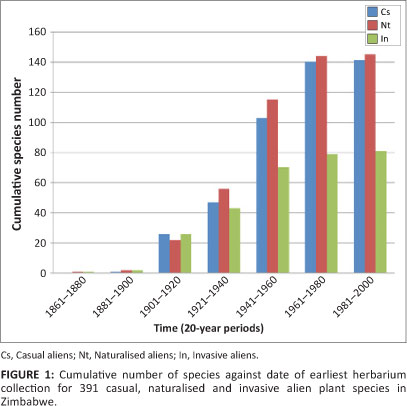
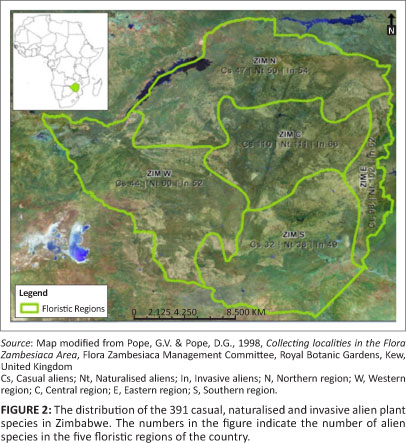
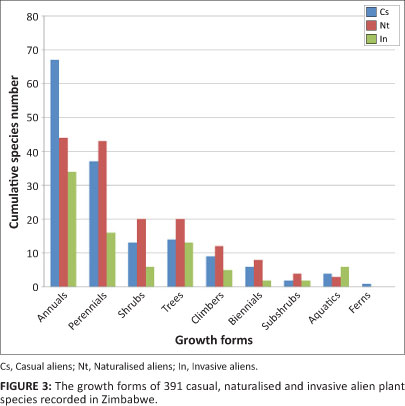
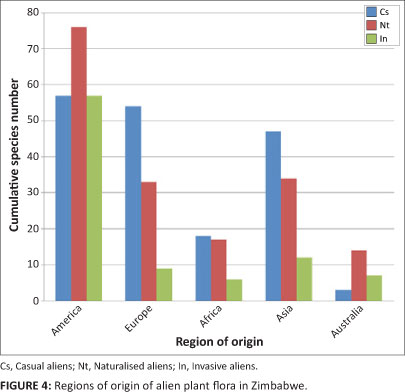
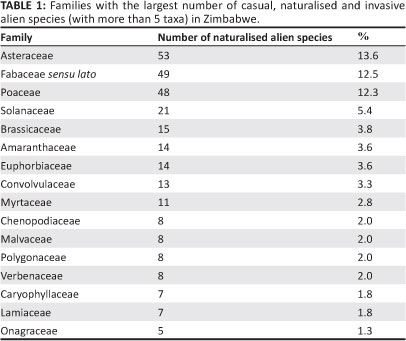
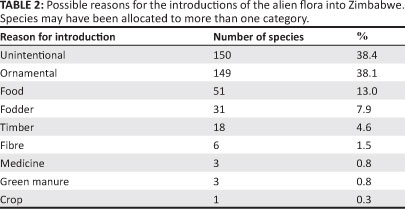
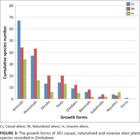
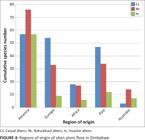
Zimbabwe's casual, naturalised and invasive alien plant species were analysed with regard to their habit, origin, mode or purpose of introduction and their invasion status in the country. This alien flora of 391 taxa belonged to 239 genera and 73 families, corresponding to 6.6% of the total flora of Zimbabwe. Of these, 153 (39.1%) plant species were casual aliens, 154 (39.4%) were naturalised and 84 (21.5%) were invasive species. Most invasions in terms of numbers of alien species were in the central and eastern parts of the country. Asteraceae (53 species), Poaceae (48 species) and Fabaceae sensu lato (49 species) families were prominent in all the floristic regions of the country. Annual and perennial herbaceous species formed the majority of life forms of the casual, naturalised and invasive alien flora of Zimbabwe. Genera with the highest number of alien species were Ipomoea with nine species, Acacia and Euphorbia with eight species each, Chenopodium and Senna with seven species each, Eucalyptus with six species, Oenothera, Physalis and Solanum with five species each. More than 49.6% of the alien plants in Zimbabwe originated primarily from South, Central and North America, followed by Europe (24.6%), Asia (23.8%), Africa (10.5%) and Australasia (5.9%). CONSERVATION IMPLICATIONS: This research provides baseline information and historical invasion patterns of casual, naturalised and invasive alien flora in Zimbabwe. This inventory is a crucial starting point in trying to understand and initiate the management of biological invasions. This is also important for monitoring new introductions and management of existing alien plants in Zimbabwe.
 Thumbnail
 Thumbnail
 Thumbnail
 Thumbnail