Resizing Kruger National Park: Trends in numbers of rhinoceroses within priority zones
Abstract
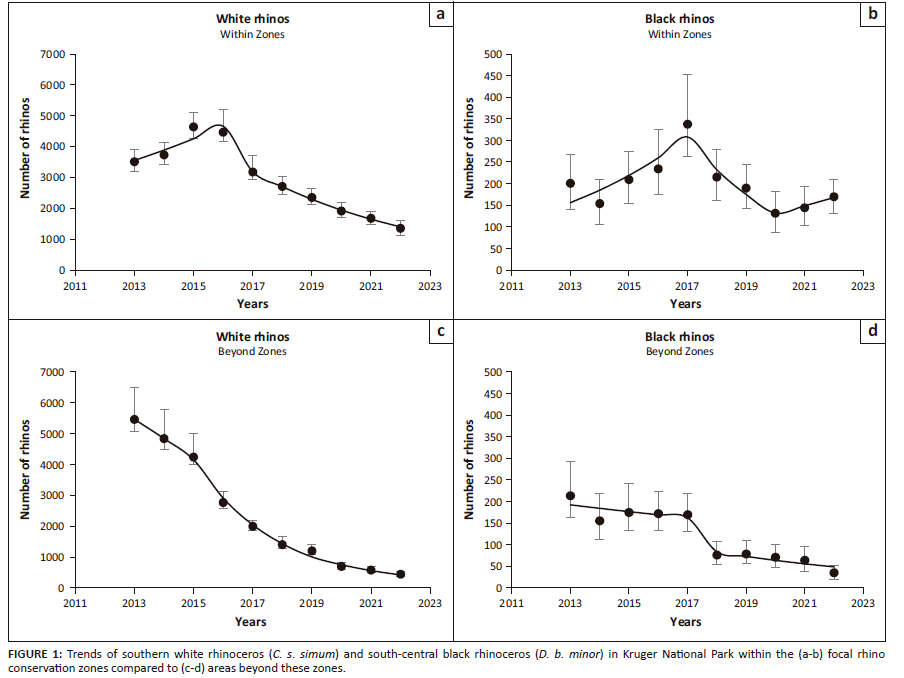
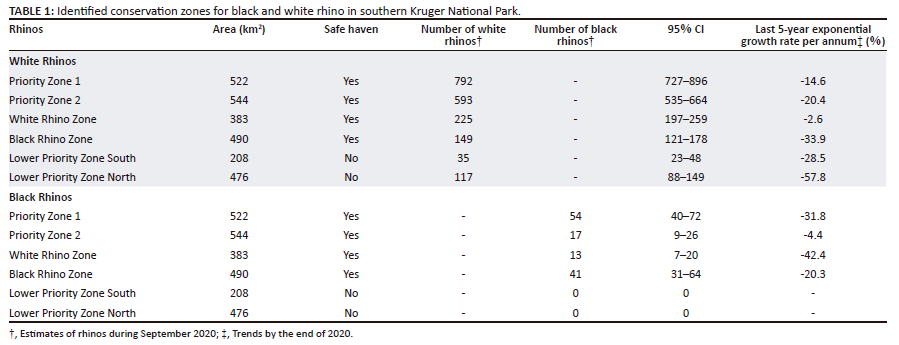
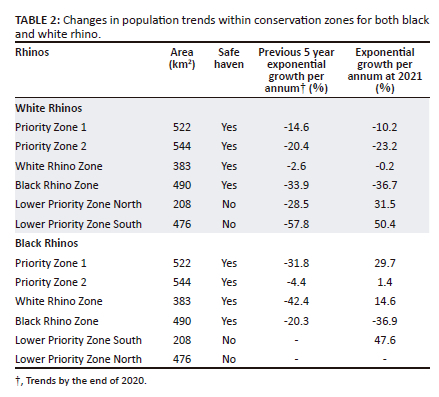
Species typically occupy fewer sites, and average population densities decline from the centre to the edge of a species' range when the range contracts. The poaching of rhinoceroses (rhinos) for their horn has degraded the black and white rhino populations in Kruger National Park (Kruger). Rhino populations have declined, and their distributions have contracted since 2010. We surveyed the black and white rhino populations in the Kruger during 2021 and 2022. We also identified core areas where rhino densities are greater and defined these as priority conservation zones. We then tested the prediction that population growth within priority conservation zones will exceed population growth beyond these zones for both black and white rhino. The results highlighted the continued decline of the white rhino population, while the black rhino population has stabilised since 2020. Growth rates were negative for white rhinos within priority conservation zones, but higher than those beyond these zones. For black rhinos, growth in priority conservation zones was positive and higher than those beyond zones. Priority conservation zones offer an opportunity to combat rhino poaching in a more tactical manner, concentrating resources on key areas for rhino survival. CONSERVATION IMPLICATIONS: We highlight complementary approaches to the existing anti-poaching tactics that focus on exploiting easier access control, situational awareness, integrity and individual-based rhino monitoring when targeting priority conservation zones within Kruger.
range contraction; priority conservation zones; black rhino; white rhino; Kruger National Park
 Thumbnail