A situational review of national Digital Health strategy implementation in sub-Saharan Africa
Abstract
As the global communities approach 2030, towards achieving the United Nations (UN) Sustainable Development Goal (SDG) 3 (Good health and well-being), there are commendable technology-driven efforts in sub-Saharan Africa (SSA) to address health care system-related challenges, including the development of national Digital Health strategies. While these strategies are supposed to drive health care systems strengthening for health security, the extent to which they are being operationalised, implemented and impact measurement is scarcely reported. The Digital Health strategies have expiry timelines and do not consider the integration or implications of Industry 4.0 technology advancements on the health sector. The authors make a probable claim that national Digital Health strategies may not achieve their objectives without adequate re-assessments and that the scarce reporting constitutes a transdisciplinary gap between government-led health authorities, health care practitioners and academic research collaboration. Hence, the objective of this article was to conduct a review of existing peer-reviewed literature that have somewhat investigated implementation of Digital Health strategies in SSA. The findings suggest that inadequate capacity to monitor and report progress, limited available resources and the lack of Digital Health leadership are three of the critical factors that contribute to the uncoordinated and slow pace at which national Digital Health strategies are being operationalised in SSA. TRANSDISCIPLINARY CONTRIBUTION: The article advocates for a transdisciplinary approach through strategic stakeholder engagement between relevant health authorities, academia, industry and non-scientific stakeholders to coordinate, monitor, assess and in reporting extent of national Digital Health strategies implementation, towards UN SDG 3
digital health strategies; health care systems; SDG 3; health security; sub-Saharan Africa
Introduction
Technology advancements and digital transformation have become a critical resource to driving businesses, how people interact, communicate as well as the automation of service delivery. In the health sector, Digital Health (DH) or electronic health (eHealth) refers to application of information and communication technologies (ICTs) and internet to support health and related fields.1,2,3,4567
According to Kante and Ndayizigamiye,89,104,11
Digital Health intervention would assist countries towards addressing contextual barriers to the delivery of quality, safe health care services and ultimately, positive patient outcomes.45,126,9,1314
The authors of this review argue that the scarce reporting constitutes a complex gap because of the multi-stakeholder role and involvement in the formulation, implementation and monitoring of DH strategies. Hence, it requires a transdisciplinary approach to problem-solving.1516
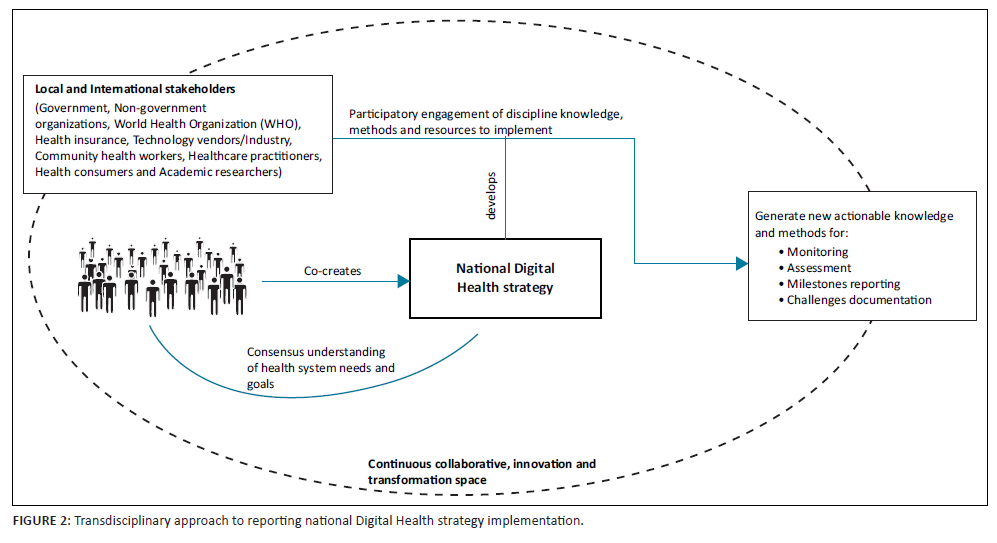
These stakeholders, from their nuanced perspectives need to reach a consensus on understanding the complexity of assessing the health care systems' vision, needs and priorities through national DH strategies' performance. Later, the disciplines, experiences, knowledge insights and inputs from stakeholder are coordinated towards collaboratively generating a new and actionable knowledge base to redress the problem at stake.17
There are a host of countries that have developed national DH strategies in SSA to guide the uptake and implementation of health ICTs, to support and enhance health care service delivery. Scholars have argued for the need to conduct a readiness assessment on eHealth implementation before developing a strategy plan.6,1819,20,2122
A literature review by Haque et al.202123
If the challenges and associated united consequences highlighted earlier in the text are not addressed as a matter of urgency, they stand to continuously impede the successful implementation and accountability reporting of national DH strategies developed by SSA countries. The objective of this article was to conduct a literature analysis of peer-review literature to firstly, identify the reported extent to which national DH strategies are being implemented in SSA countries and secondly, recommend actions to address the constraints associated with the scarce reporting.
Methods
The goal of this review article was to recommend actions to address the current state of national DH strategies operationalisation in sub-Saharan Africa (SSA) countries. In the context of this article, operationalisation refers to translating the core components of a national DH strategy into observable or measurable outputs (leadership and governance, investments, stakeholder engagement, people centred approach, regulations, digital infrastructure, health workforce, interoperable digital applications and services) including implementation of health ICT interventions and their impacts on the health care systems. The authors were guided by Preferred Reporting Items for Systematic Reviews and Analyses (PRISMA) as recommended by Moher et al.24What are the causal factors that contribute to scarce reporting of national Digital Health strategy implementation in SSA? To identify the extent to which national DH strategies are being implemented, literature search, filtering of results and content analysis techniques were adopted.
Search strategy
For the literature search, the strategy was to query online databases of scholarly peer-reviewed publications using a string of keywords. Using Boolean operator in the advanced search, the string of keywords combined for the search are 'Digital Health' AND 'eHealth strategy' AND 'Sub-Saharan Africa'. Three online databases - Google scholar, PubMed and Scopus were selected because of their massive number of indexed publications, subject matter curation and to reduce duplication of queried results. The peer-reviewed publications mainly included journal articles, conference papers and book chapters. A period of 8 years (2015-2023) was considered for the search strategy, because it falls within the UN SDGs timeline. Subsequently, the results were filtered through a set of inclusion and exclusion criteria.
Inclusion and exclusion criteria
First of all, national DH strategy documents were not considered because the article focused on the extent to which their operationalisation is taking place and being reported in SSA countries through peer-reviewed scholarly studies. The inclusion criteria applied for the results to be considered as eligible are that: (1) publications must be written in English language because it is the authors' mode of learning; for participation in educational activities and the preferred means of expression; (2) timeline of publications is between 2015 and 2023; (3) publications relating to SSA countries; (4) studies with interventions implemented informed by the core components of the national DH strategies.
To further filter articles considered for eligibility, a set of exclusion criteria were applied as follows: (1) publications written in non-English language; (2) non-open access publications; (3) publications from outside of SSA context; (4) publications that do not specifically align the implementation of health ICTs to their national DH strategies; (5) publications on DH strategy or policy formulation or development. The choice of quantitative or qualitative or literature review methodologies did not influence eligibility as the rationale of the article was to examine how SSA countries are currently reporting operationalisation of their DH strategies.
Analysis of results
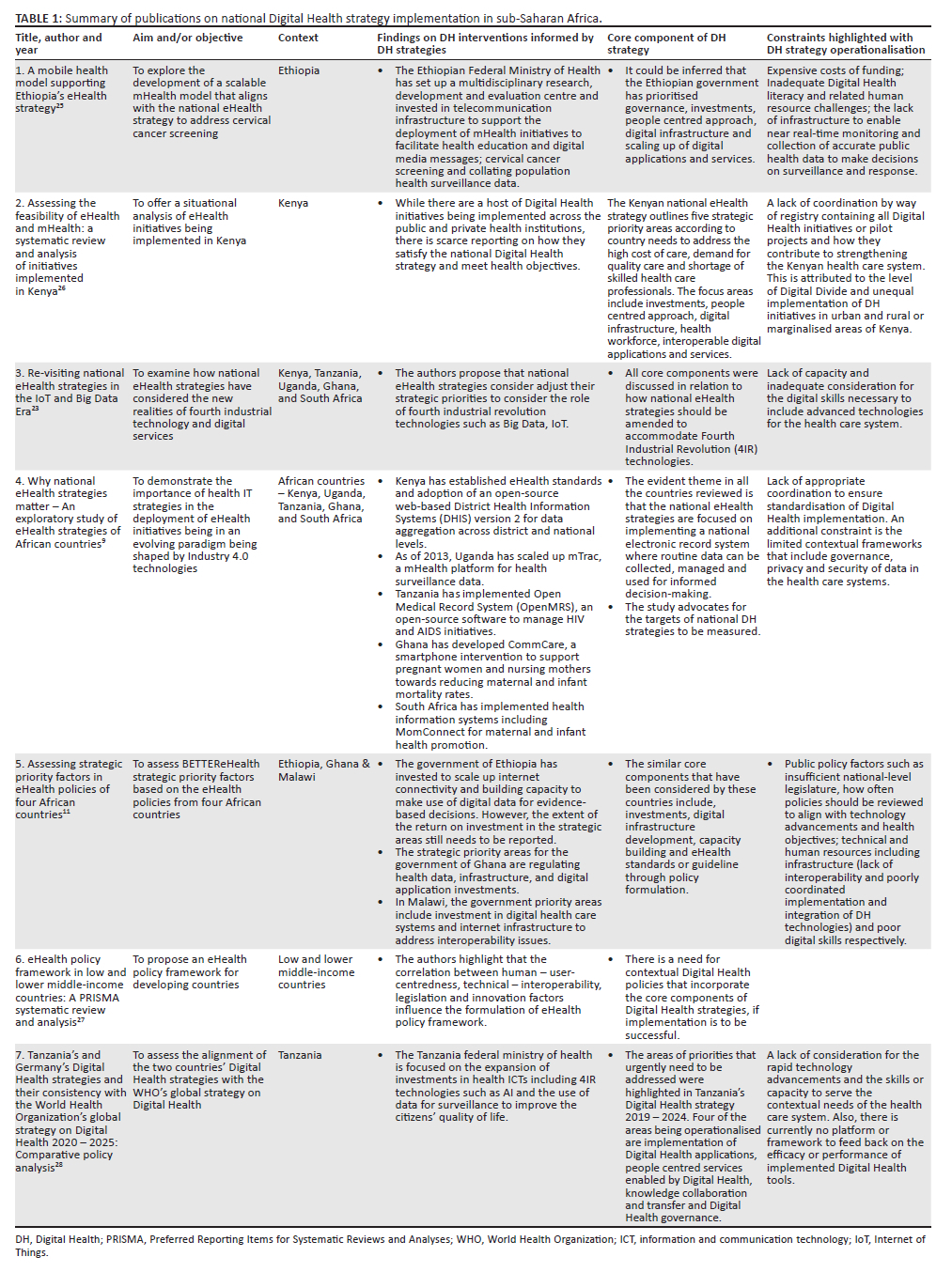
Once the eligible peer-review literatures were identified, a content analysis procedure was adopted to map similarities between articles by focusing on how the core components of the country's DH strategy are operationalised as a strategic priority, type of DHI being implemented and their impact on the broader health care systems or extent of countrywide scale, if reported (see Table 1). This technique enabled the authors to identify the reported extent to which SSA countries are implementing their national DH strategy, core components that are not being reported and draw inference on the associated challenges.
Ethical considerations
This article does not contain any studies involving human participants performed by any of the authors. However, the research ethics committee of the institution was notified of the study for audit purposes. The next section presents a review of the findings. Ethical clearance to conduct this study was obtained from the University of South Africa, Graduate School of Business Leadership_RERC (Ref #: 2024_SBL_AC_003_FA- 2615).
Review findings
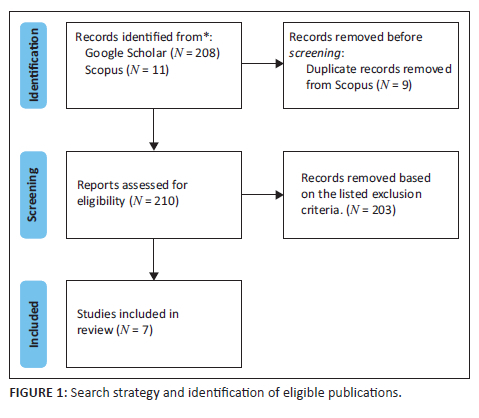
At the end of the literature search, the combination of keywords generated a total number (N = 208) on Google Scholar and Scopus (N = 11) between 2015 and 2023. The search query of PubMed database did not yield any relevant publication records (N = 0). Then, the lists of generated publications were sorted to remove duplicates. As a result, a total number (N = 210) of articles were screened. On applying the exclusion criteria, a total number (N = 203) of publications were discarded while (N = 7) satisfied the inclusion criteria.
The eligible publications explored how selected SSA countries have developed strategic priority areas and are progressing at implementing DHI as informed by their DH strategies. The commonly cited SSA countries include Ethiopia, Ghana, Kenya, Malawi, South Africa, Tanzania and Uganda.
It is not explicitly clear how the DH initiatives align to some of the strategic priority areas of different countries' national DH strategies because their impacts have not been extensively measured nor reported, hence the need for a structured means of reporting facilitated by the various Ministries or Departments of Health. In the included studies conducted in the SSA countries as mentioned in the review findings section, there is evident intention and efforts by governments through their Ministries of Health, to address their nation's health priority needs through the development of health ICT applications and underlying infrastructure. Some of the DHI are reported to have been implemented to scale, for example MomConnect in South Africa, mTrac in Uganda and a national health information system to capture routine health data for surveillance in Kenya. Figure 1 gives a summary of relevant studies and the core components of DH strategies that have been reported in different SSA countries.
The results from the literature search show that there are limited scholarly publications on the reporting of national DH strategies implementation, monitoring, evaluation and review in most SSA countries.6,929
Implications and recommendations
Results from the literature review show that several DH initiatives are being developed as informed by operationalising national DH strategies. Thus, it is argued that development, implementation and assessment of these strategies enable the progress and maturity levels of DH applications.91430176
Subsequently, countries in SSA that have reportedly operationalised their national DH strategy are few compared to the total number that have any form of strategy, plan or framework. The countries have either adopted the nine core components of the WHO global strategy for DH or contextualised their own priority areas. For example, the most common core components as strategic priority areas are investments and infrastructure.9,1115
An adaptive methodology that transcends the multidisciplinary boundaries is most ideal to address the limited to no reporting on the collaborative roles of stakeholders, the available resources concerning skills and digital knowledge required to operationalise priority areas of national DH strategies. To address this, the authors propose a stakeholder mapping, analysis and engagement methodology inclusive of cross-sectional scientific disciplines and non-scientific stakeholders.313233
Leadership in DH requires both political will and commitment as well as the technical knowledge required to manage the complexities associated with the development and implementation of health ICT interventions.3429
Knowledge and capacity development are essential to ensure that all core components of national DH strategies are actively being engaged to optimise the benefits of health ICTs.3532311715Figure 2.
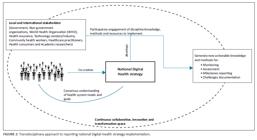
Without adequate resources such as financial investments, ICT infrastructure and the cross-functional collaboration of experienced human capacities, it remains difficult for SSA countries to determine and institutionalise requirements for the successful implementation of DH strategies as well as generating knowledge and capacity to report, monitor and assess milestones. It is for these reasons that Mengiste et al.27
Conclusion
The rationale for the article was to identify the extent to which countries in sub-Saharan Africa (SSA) are (or are not) reporting implementation of their national DH strategies, towards realising UN SDG 3 - 'Good health and well-being'. However, it remains unclear how the DH interventions align to in-country strategic priority areas of their DH strategies because countrywide impacts are not being extensively measured nor reported (actionable knowledge), hence the need for a structured means of reporting facilitated by the Ministries or Departments of Health. To address the complexity of reporting national DH strategy implementation, cross-functional collaborations between academic researchers and health institutions or the related industry and government through their Ministries or Department of Health, and an adaptive methodology to assess DHIs towards new knowledge co-creation could potentially redress the existing gap. Therefore, capacity building; implicit knowledge sharing and resources are critical enabling (or inhibiting) factors to implementing national DH strategies in SSA. Three limitations of this article are the unintended omission of relevant articles published in closed access journals; not considering studies from non-English or French speaking SSA countries and exclusion of non-scholarly publications such as WHO and national Ministries of Health review reports on DH strategies.
In SSA countries such as Ghana, Kenya, Malawi, Uganda, where national DH strategies have been developed, there is a need to monitor, evaluate and report milestones using the WHO DH toolkit as established by Njoroge et al.2630
For future studies, countries that lack reporting mechanisms to assess the extent to which their national DH strategies are being operationalised should consider strategic partnerships with countries like South Africa, who have in the past reviewed implementation of their eHealth strategy 2012-2016 and revised into National Digital Health strategy 2019-2024. The strategic partnerships could be in the form of co-development or knowledge sharing collaboration between academia, policy makers, community health workers, health care professionals, allied health workers, health-related software industry vendors and governments. Further, countries in SSA should identify sources to collect Big Data on implementation of DH strategies through Internet of Things (IoT) then employ BDA to report, identify trends and forecast prescriptive actions on the core components that are lagging in intended outcomes.
Competing interests
The authors declare that they have no financial or personal relationships that may have inappropriately influenced them in writing this article.
Authors' contributions
O.O.O. and N.B.W.M. conceptualised the idea of the manuscript. O.O.O. was responsible for articulating the research problem, conducting the search strategy, analysis of the eligible articles and writing the first draft of the manuscript, while N.B.W.M. proofread and offered critical review before final draft submission.
Funding information
The authors received no specific financial support or grant from any funding agency in the public, commercial or not-for-profit sectors for the research, authorship and publication of this article.
Data availability
Data sharing is not applicable to this article, as no new primary data were created or analysed in this article.
Disclaimer
The views and opinions expressed in this article are those of the authors and are the product of professional research. It does not necessarily reflect the official policy or position of any affiliated institution, funder, agency or that of the publisher. The authors are responsible for this article's results, findings and content.
Acknowledgements
References
-
1.Eysenbach G. What is e-health? J Med Internet Res. 2001;3(2):e20. https://doi.org/10.2196/jmir.3.2.e20
» https://doi.org/10.2196/jmir.3.2.e20 -
2.Ajuwon GA, Rhine L. The level of Internet access and ICT training for health information professionals in sub-Saharan Africa. Health Info Libr J. 2008;25(3):175-185. https://doi.org/10.1111/j.1471-1842.2007.00758
» https://doi.org/10.1111/j.1471-1842.2007.00758 -
3.Tambo E, Madjou G, Mbous Y, Olalubi OA, Yah C, Adedeji AA. Digital health implications in health systems in Africa. Eur J Pharm Med Res [serial online]. 2016 [cited 09 May 2017];91(1):91-93. Available 9th May 2017, from: https://www.researchgate.net/profile/Ernest_Tambo2/publication/291346057_ DIGITAL_HEALTH_IMPLICATIONS_IN_HEALTH_SYSTEMS_IN_AFRICA/links/56a136c708ae2afab8829224.pdf
» https://www.researchgate.net/profile/Ernest_Tambo2/publication/291346057_ DIGITAL_HEALTH_IMPLICATIONS_IN_HEALTH_SYSTEMS_IN_AFRICA/links/56a136c708ae2afab8829224.pdf -
4.Karamagi HC, Muneene D, Droti B, et al. eHealth or e-Chaos: The use of digital health interventions for health systems strengthening in sub-Saharan Africa over the last 10 years: A scoping review. J Glob Health. 2022;12:04090. https://doi.org/10.7189/jogh.12.04090
» https://doi.org/10.7189/jogh.12.04090 -
5.World Health Organization (WHO). Global strategy on digital health [homepage on the Internet]. Vol. 57. World Health Organization/The millennium village project; 2021. Available from: https://www.who.int/docs/default-source/documents/gs4dhdaa2a9f352b0445bafbc79ca799dce4d.pdf
» https://www.who.int/docs/default-source/documents/gs4dhdaa2a9f352b0445bafbc79ca799dce4d.pdf -
6.Ojo A, Tolentino H, Yoon S. Strengthening eHealth systems to support universal health coverage in sub-Saharan Africa. Online J Public Health Inform. 2021;13(3):1-15. https://doi.org/10.5210/ojphi.v13i3.11550
» https://doi.org/10.5210/ojphi.v13i3.11550 -
7.Vota W. Every African country's national eHealth strategy or digital health policy [homepage on the Internet]. ICTworks, 2019 [cited 2023 Dec 11]; p. 1. Available from: https://www.ictworks.org/african-national-ehealth-strategy-policy/
» https://www.ictworks.org/african-national-ehealth-strategy-policy/ -
8.Kante M, Ndayizigamiye P. Internet of medical things, policies and geriatrics: An analysis of the national digital health strategy for South Africa 2019-2024 from the policy triangle framework perspective. Sci Afr. 2021;12(2021):e00759. https://doi.org/10.1016/j.sciaf.2021.e00759
» https://doi.org/10.1016/j.sciaf.2021.e00759 -
9.Maina AM, Singh UG. Why national ehealth strategies matter-an exploratory study of ehealth strategies of African countries. In 2020 International Conference on Electrical and Electronics Engineering (ICE3); 2020 Feb 14. IEEE; p. 670-675. https://doi.org/10.1109/ICE348803.2020.9122831
» https://doi.org/10.1109/ICE348803.2020.9122831 -
10.Victor AA, Frank LJ, Makubalo LE, Kalu AA, Impouma B. Digital health in the African region should be integral to the health systems's strengthening. Mayo Clin Proc Digit Health. 2023;1(3):425-434. https://doi.org/10.1016/j.mcpdig.2023.06.003
» https://doi.org/10.1016/j.mcpdig.2023.06.003 -
11.Larbi D, Anthun KS, Asah FN, Debrah O, Antypas K. Assessing Strategic Priority Factors in eHealth Policies of Four African Countries. In 2022 IST-Africa Conference (IST-Africa); 2022 May 16. IEEE; p. 1-9. https://doi.org/10.23919/IST-Africa56635.2022.9845650
» https://doi.org/10.23919/IST-Africa56635.2022.9845650 -
12.Jones T, Stroetmann K, Dobrev A, Stroetmann V. eHealth for African countries-sustainable strategies. In 2011 IST-Africa Conference Proceedings; 2011 May 11. IEEE; p. 1-11. [cited n.d.]. Available from: https://ieeexplore.ieee.org/abstract/document/6107340. Accessed/downloaded on 25th October 2022
» https://ieeexplore.ieee.org/abstract/document/6107340 - 13.Masilela TC, Foster R, Chetty M. The eHealth strategy for South Africa 2012-2016: How far are we? S Afr Health Rev. 2013;3(May 2015):15-24.
-
14.Biggs JS, Willcocks A, Burger M, Makeham MAB. Digital health benefits evaluation frameworks: Building the evidence to support Australia's National Digital Health Strategy. Med J Aust. 2019;210(S6):S9-S11. https://doi.org/10.5694/mja2.50034
» https://doi.org/10.5694/mja2.50034 - 15.Wickson F, Carew AL, Russell AW. Transdisciplinary research: Characteristics, quandaries and quality. Futures. 2006;38(9):1046-1059.
-
16.Duffy A, Christie GJ, Moreno S. The challenges toward real-world implementation of digital health design approaches: Narrative review. JMIR Hum Factors. 2022;9(3):e35693. https://doi.org/10.2196/35693
» https://doi.org/10.2196/35693 - 17.Levesque VR, Calhoun AJK, Bell KP. Actions speak louder than words: Designing transdisciplinary approaches to enact solutions. J Environ Stud Sci. 2019;9(2):159-169.
-
18.Mauco KL, Scott RE, Mars M. Validation of an e-health readiness assessment framework for developing countries. BMC Health Serv Res. 2020;20(1):1-10. https://doi.org/10.1186/s12913-020-05448-3
» https://doi.org/10.1186/s12913-020-05448-3 - 19.Idoga PE, Toycan M. A literature review of eHealth sector and challenges in Nigeria. In: 13th HONET-ICT International Symposium on Smart MicroGrids for Sustainable Energy Sources Enabled by Photonics and IoT Sensors, HONET-ICT 2016. IEEE, 2016; p. 145-149.
-
20.Haque ME, Ahsan MA, Rahman F, Islam A, EmdadulHaque M. The challenges of eHealth implementation in developing countries: A literature review. IOSR Journal of Dental and Medical Sciences 2019; 18(5):41-57. https://doi.org/10.9790/0853-1805124157
» https://doi.org/10.9790/0853-1805124157 -
21.Archer N, Lokker C, Ghasemaghaei M, DiLiberto D. eHealth implementation issues in low-resource countries: Model, survey, and analysis of user experience. J Med Internet Res. 2021;23(6):e23715. https://doi.org/10.2196/23715
» https://doi.org/10.2196/23715 -
22.Owhor GA, Adeniyi AA, Shomuyiwa D. Overview of digital health in Sub-Saharan Africa: Challenges and recommendations. J Nurs Health Sci [serial online]. 2023 [cited 2023 Nov 17];12(1):19-21. Available from: https://www.broadbandcommission.org/publication/reimagining-global-health-through-artificial-intelligence/
» https://www.broadbandcommission.org/publication/reimagining-global-health-through-artificial-intelligence/ - 23.Maina AM, Singh UG. Re-visiting national eHealth strategies in the IoT and big data era. In: 2019 IST-Africa Week Conference, IST-Africa 2019. 2019; p. 1-8.
-
24.Moher D, Liberati A, Tetzlaff J, Altman DG, Prisma Group. Preferred reporting items for systematic reviews and meta-analyses: the PRISMA statement. International Journal of Surgery 2010;8(5):336-341. https://doi.org/10.1016/j.ijsu.2010.02.007
» https://doi.org/10.1016/j.ijsu.2010.02.007 -
25.Harding K, Biks G, Adefris M, et al. A mobile health model supporting Ethiopia's eHealth strategy. Digit Med. 2018;4(2):54. https://doi.org/10.4103/digm.digm_10_18
» https://doi.org/10.4103/digm.digm_10_18 -
26.Njoroge M, Zurovac D, Ogara EAA, Chuma J, Kirigia D. Assessing the feasibility of eHealth and mHealth: A systematic review and analysis of initiatives implemented in Kenya. BMC Res Notes. 2017;10(1):90. https://doi.org/10.1186/s13104-017-2416-0
» https://doi.org/10.1186/s13104-017-2416-0 -
27.Mengiste SA, Antypas K, Johannessen MR, Klein J, Kazemi G. eHealth policy framework in low and lower middle-income countries; a PRISMA systematic review and analysis. BMC Health Serv Res. 2023;23(1):1-15. https://doi.org/10.1186/s12913-023-09325-7
» https://doi.org/10.1186/s12913-023-09325-7 -
28.Holl F, Kircher J, Hertelendy AJ, Sukums F, Swoboda W. Tanzania's and Germany's digital health strategies and their consistency with the World Health Organization's global strategy on digital health 2020-2025: Comparative policy analysis. J Med Internet Res. 2024;26(1):e52150. https://doi.org/10.2196/52150
» https://doi.org/10.2196/52150 - 29.Prinsloo T, Adebesin F. A synthesis of the causes of ICT4D projects' pilotitis : Prioritising the remedies for the SDG2030 agenda. In: MR Jones et al., editors. International Federation for Information Processing (IFIP) 2023 Joint Working Conference on the Future of Digital Work: The challenge of inequality. Springer Cham, 2023; p. 63-77.
-
30.Perrin Franck C, Babington-Ashaye A, Dietrich D, Bediang G, Veltsos P, Gupta PP, Juech C, Kadam R, Collin M, Setian L, Serrano Pons J. iCHECK-DH: guidelines and checklist for the reporting on digital health implementations. Journal of Medical Internet Research 2023;25:e46694. https://doi.org/10.2196/46694
» https://doi.org/10.2196/46694 -
31.Butt AN, Dimitrijević B. Developing and testing a general framework for conducting transdisciplinary research. Sustain. 2023;15(5):4596. https://doi.org/10.3390/su15054596
» https://doi.org/10.3390/su15054596 - 32.Carayannis EG, Campbell DFJ. Triple helix, Quadruple helix and Quintuple helix and how do Knowledge, Innovation and the Environment relate to Each other? A proposed framework for a trans-disciplinary analysis of sustainable development and social ecology. Int J Soc Ecol Sustain Dev. 2010;1(1):41-69.
-
33.Zharima C, Griffiths F, Goudge J. Exploring the barriers and facilitators to implementing electronic health records in a middle-income country: A qualitative study from South Africa. Front Digit Health. 2023;5(August):1207602. https://doi.org/10.3389/fdgth.2023.1207602
» https://doi.org/10.3389/fdgth.2023.1207602 -
34.Ogundaini OO. eHealth leadership in Sub-Saharan Africa: A rapid review. In 2023 IST-Africa Conference (IST-Africa); 2023 May 31. IEEE; p. 1-8. https://doi.org/10.23919/IST-Africa60249.2023.10187775
» https://doi.org/10.23919/IST-Africa60249.2023.10187775 -
35.Asah FN, Kaasbøll JJ. Challenges and strategies for enhancing ehealth capacity building programs in African nations. J Pers Med. 2023;13(10):1463. https://doi.org/10.3390/jpm13101463
» https://doi.org/10.3390/jpm13101463

Accepted: 19 Aug. 2024
Published: 17 Oct. 2024