Government communication in times of crisis: The priorities and trends in South Africa's response to COVID-19
Abstract
The effectiveness of a government's communication, especially in times of crisis, is crucial to its legitimacy, reputation, disaster management and its ability to ensure the wellbeing of its people. This paper examines the focus and trends in press statements published on South Africa's official coronavirus website during the coronavirus disease 2019 (COVID-19) pandemic. Government decisions, successes and challenges were frequently communicated to the public through these statements. The study aimed to understand what was communicated regarding government's priorities and the factors that shaped them. Data were extracted from 483 press statements published between 05 March 2020 and 15 January 2021. Thematic analysis and mean scores were used to identify the focus and trends in the messages, while the Wilcoxon signed rank test (WSRT) was used to identify the significance of the changes in the mean scores. The results showed a coordinated and persistent effort to inform the public with credible, accurate, timely and empowering information. The most persistent priority of the government was to control the spread of the virus, while several issues relating to the socio-economic wellbeing of the people were prioritised at different stages of the pandemic. There was a parallel movement between the trajectory of the disease and government decisions, suggesting that government response was mostly reactive to the behaviour of the pandemic. The South African government needs to be more proactive in its disaster response and demonstrate a nuanced understanding of its citizens and their challenges.
government communication; COVID-19 pandemic; disaster; press releases; crisis communication; information
Introduction
Overcoming the coronavirus disease 2019 (COVID-19) pandemic and minimising its impact on lives and livelihoods rest heavily on the government's ability to communicate effectively in a digital landscape of ubiquitous speculation, jeopardising information and growing distrust in government. Among the steps taken by the South African government at the onset of the pandemic was the creation of an official website for all COVID-19 related information. The website is comprehensive, frequently updated, aiming to inform and educate the public with accurate and credible information while providing health and safety guidance in various languages, and contact information for those who may have further queries or need access to COVID-19 related healthcare support. This paper is concerned with the content of the Press Releases and Notices (PRN) category of the News and Updates section of the website (https://sacoronavirus.co.za). This is the section where regular updates on infection rates, disaster management and other government decisions were posted. The content of this section offered a window into how the government is responding to the pandemic, what or who were its priorities and how this was communicated to the public. The study, therefore, examined 483 press statements (press releases and notices) posted between 05 March 2020 and 15 January 2021 to understand these dynamics within the context of government communication during disasters.
Communication models are generally either linear, interactional or transactional, reflecting different types of relationships between the sender of a message and its receiver, whereby meaning is created, interpreted and negotiated.1 The aspect of communication examined in this paper is the linear, unidirectional communication of the government to its citizens through press statements. The interest of the study was not in the technical dynamics of communication, but in what the content revealed about the focus and priorities of government during the pandemic, the fluctuations or trends in these and the factors that shaped them. The message is the largest unit of communication.2
Government communication
Government communication is variously understood and represented.3,4,566
Government communication is central to the success of any democracy or government. Fairbanks et al.788
Given the increasing distrust of citizens in governments, the governmental communication needs to prioritise effective communication and values such as transparency to minimise fears and mistrust.79109311
Government communication and information system
The Government Communication and Information System (GCIS) provides the framework and protocols for government communication in South Africa. It sees such communication as strategic to service delivery and the functioning of the South African government.1212
In contextualising government communications, the GCIS highlights key elements such as, ensuring that all information is made available at all times to the public, and that effective communication is upheld to shape public opinion and maintain the legitimacy of government. Also, that the focus of government communications should be continuous dialogue that is citizen-focused, and strategic. This means moving beyond simply delivering 'the right message to the right people' to ensuring that the objectives of both the government and the public are met in the process of communication. Thus, the communication needs to be comprehensive, coherent, accessible to individuals and communities, and empower them to utilise the information to improve their lives and participation in governance.
The GCIS generally encourages the use of hybrid models of communication that utilises both traditional and new media technologies and platforms. It offers guidelines for developing and maintaining websites by government departments and units. It also highlights the importance of ensuring that website information is accurate, current, factual, accessible, credible and free of editorial and grammatical errors.
Government communication during disasters
Effective communication is both a necessity and a challenge during a crisis. The heightening of suffering and fears during crises creates a hunger for empowering and assuring information and makes people susceptible to incorrect and dangerous messages as has been witnessed with the COVID-19 pandemic and previous disasters. These messages spread rapidly on social media, competing with official messages, aggravating fears and undermining official efforts.1314
The precise meanings of disaster, crisis and emergency are persistently debated. These terms can be complex or simple, depending on the context, time and sometimes the specific events concerned.1515161717
Being first, right and credible are indispensable principles of effective crisis communication.16131819,20South African Disaster Management Act (DMA) 57 of 2002, amended Act 16, 201521,22National Disaster Management Framework (NDMF) of 2005.2321,23
It is against the background of this legislation that the GCIS provides the basic framework and guidelines for crisis communication and encourages all government departments to have a detailed crisis communication plan. The GCIS understands a crisis to be a situation that threatens the government's integrity and reputation, and its ability to safely deliver services.1212
Methodology
The study analysed all 483 press releases of the South African government and public institutions on COVID-19 from the beginning of the pandemic (05 March 2020) to 15 January 2021. All accessible statements during this period were analysed in order to achieve greater rigour and richness compared to what a selected sample would have offered. Being official public statements, they reveal the official position of the government on relevant issues. The statements were collected from the PRN sub-section of the official coronavirus website of the South African government (https://sacoronavirus.co.za). These statements were released by different government departments, but predominantly, by the Department of Health (DoH) which provided regular infection figures quantifying infection rate and spread. This is followed by the Department of Cooperative Governance and Traditional Affairs (COGTA). Some press statements were released by the Department of Basic Education, Department of Finance and the Department of Government Communication and Information Systems (GCIS), among others, all addressing COVID-19 and lockdown issues relating to their respective mandates. The paper analysed all as 'government' communication. Besides making the analysis easier, the coronavirus website was interpreted as symbolising the effort of the government to respond to the COVID-19 crisis as a unified voice in keeping with the provisions of the GCIS and in line with the principles of effective crisis communication.12,13
This website has emerged as a primary source and reference for COVID-19 information in South Africa. Data were extracted using an evaluation matrix. Analysis aimed at eliciting the FOM and the intended TOM. These parameters made the data more accessible considering the nature of these statements and the need to develop a more nuanced understanding of government's response to the COVID-19 pandemic amid popular criticism. Although the press statements constitute a linear unidirectional communication from the government to the public, the framing of the focus of this study allows it to analyse the data more comprehensively beyond a simple sender-receiver model. Thus, the FOM identified government priorities, the purpose of messages and how these are communicated. The TOM allowed us to identify intended receivers and those affected by the messages.
Content analysis was conducted on a sample of the collected press statements to identify the key themes used as items on the observational matrix. The themes were generated by coding frequently emerging phrases and expressions in the dataset, in line with the broader TOM and FOM. The items for the FOM include updates on coronavirus, containment measures, saving or supporting livelihoods, challenges in handling the pandemic, economic policies and strategies, decrease tension and fear, information on government successes, communicating directives and rules, addressing concerns of workers' unions, partnering with nongovernmental organizations and private organisations and impact of the pandemic on food security. The categories used for the TOM were the general public, civil society, traditional leaders, rural communities and vulnerable groups,1 health professionals, workers' unions, the international community and investors (local and international). While some of these themes overlap, they also capture unique aspects of government messages during the pandemic. Consistent with studies such as those by van Zyl,242526
A measure of central tendency (mean score) was used to examine the focus and trends in the press statements. This assisted in identifying changes and developments in government communication. The Wilcoxon signed rank test (WSRT) was then used to spot differences in the mean ranks. The various data points were expressed as mean scores, which permitted comparison among them. Wilcoxon signed rank test was the most appropriate tool for this process because of its usefulness when data are non-parametric and subjected to paired difference test of repeated measurements to assess variations between mean ranks.272728
Validity and reliability
To ensure validity and reliability, an intercoder validity and reliability test was conducted.29,3024252631
Ethical considerations
This article followed all ethical standards for research without direct contact with human or animal subjects.
Results
Distribution of statements
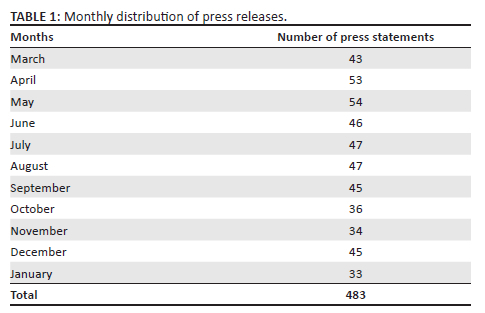
The monthly distribution of the press releases from March 2020 to January 2021 is chronologically presented in Table 1. The table shows that May saw the highest rate of communication by the government (54) followed by April (53), and the months with the least number of statements were November (34) and January (33). The average number of statements released during the period reviewed is 43.9. This shows a high volume of communication during this period (March 2020 - January 2021), with at least one communication released each day, and at least two for 15 days of most months.
Focus of government messages during the pandemic
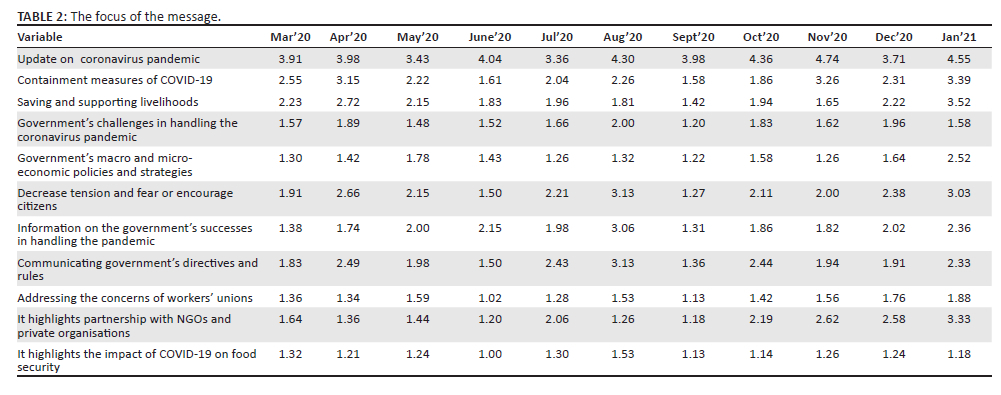
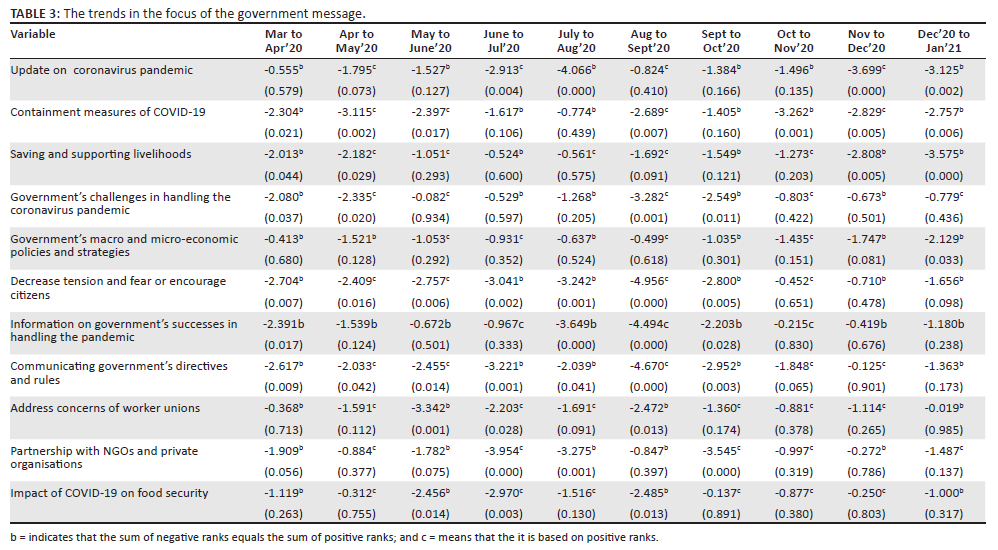
Table 2 presents the content and trend demonstrating the FOM during the pandemic and Table 3 employs WSRT to show the changes in the FOM.
The result shows that government priority in the first 3 months was to control infection and mortality rates. Thus, as Table 2 shows, the items (themes) that scored the highest in terms of the focus of government messaging during the first 3 months of the pandemic (March to May 2020) were update on the coronavirus pandemic (3.91; 3.98; 3.43 respectively) and COVID-19 containment measures (2.55; 3.15; 2.22). This is followed by the comparatively high scores of communicating government's directives and rules (1.83; 2.34; 1.98), decreasing tension and fear (1.91; 2.66; 2.15) and communicating government's challenges in handling the pandemic (1.83; 2.49; 1.98).
The next set of items with considerable scores were saving and supporting livelihoods (2.23; 2.72; 2.15) and partnership with NGOs and private organisations (1.64; 1.36; 1.44). Other areas such as macro and micro-economic policies and strategies (1.30; 1.42; 1.78), the concerns of workers' unions (1.36; 1.34; 159) and the impact of the pandemic on food security (1.32; 1.21; 1.24) received little attention from the government in the first 3 months of the pandemic as indicated by their low scores. However, the scores of all the information items generally increased over the first 3 months into the pandemic. The WSRT results (Table 3) indicate that the level of increment was significant (p < 0.05) in the second and third months for all the information items except for government's macro and micro-economic policies and strategies, addressing concerns of workers' unions, partnership with NGOs and private organisations and impact of COVID-19 on food security.
The focus of the government changed in the fourth month (Jun'20). Besides updates on the coronavirus pandemic which remained higher (mean score = 4.04), the other items experienced a change in trends. For instance, in June 2020, the government's focus shifted towards providing information on its successes in handling the pandemic (mean score = 2.15). Other notable shifts in the FOM were on items such as the COVID-19 containment measures (mean score = 1.61), saving and supporting livelihoods (mean score = 1.83), government's macro and micro-economic policies and strategies (mean score = 1.43) and decrease in tension and fears (mean score = 1.50) which received less attention in June than the preceding 3 months.
Other information items that were generally given less attention in the fourth month included communicating government's directives and rules (mean score = 1.50), addressing the concerns of workers' unions (mean score = 1.02), partnership with NGOs and private organisations (mean score = 1.20) and the impact of COVID-19 on food security (mean score = 1.00). Nonetheless, the WSRT results show that information items such as decrease tension and fear or encourage citizens (p = 0.006), communicating government's directives and rules (p = 0.014) and addressing concerns of workers' unions (p = 0.001) increased significantly in the fourth month.
From the fifth (July 2020) to the sixth month (August 2020), the government's attention was focussed on updates on the coronavirus pandemic, COVID-19 containment measures, saving lives and supporting livelihoods and government's challenges in handling the coronavirus pandemic, increased considerably. Other information items that received increased attention from the government from July to August 2020 were decrease tension and fear or encourage citizens, communicating government's directives and rules and addressing the concerns of workers' unions. Furthermore, items such as governments' macro and micro-economic policies and strategies, government's successes in handling the pandemic and highlights on the impact of COVID-19 on food security also increased during this period.
The WSRT results (Table 3) show that some information items witnessed significant (p < 0.05) increments during this period. These include an update on the coronavirus pandemic, decrease tension and fear or encourage citizens, communicating government's directives and rules, address concerns of worker unions and partnership with NGOs and private organisations. In addition, information on the government's successes in handling the pandemic increased significantly from August to October.
Table 2 further shows additional interesting trends. For example, the government reduced the disclosure level on all the information items in September and October 2020. However, the results show that the government upped its public engagement from November 2020 and the FOM scores increased consistently until January 2021. The WSRT results further demonstrate that the increment level for most of the information items was significant in September and October. However, in November, apart from information on the containment measures of the pandemic, none of the information items recorded a significant increment. The increase observed in Table 2 from November was sustained in December 2020 and January 2021. The WSRT (Table 3) result shows that government attention to key message themes increased significantly in January 2021. Thus, the p-value of less than 0.05 was achieved for items such as update on coronavirus pandemic (p = 0.002), containment measures of the pandemic (p = 0.006), saving and supporting livelihoods (p = 0.000) and governments' macro and micro-economic policies and strategies (p = 0.033).
Target of the message
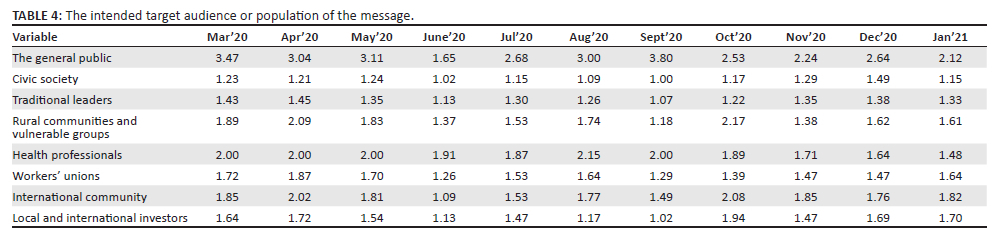
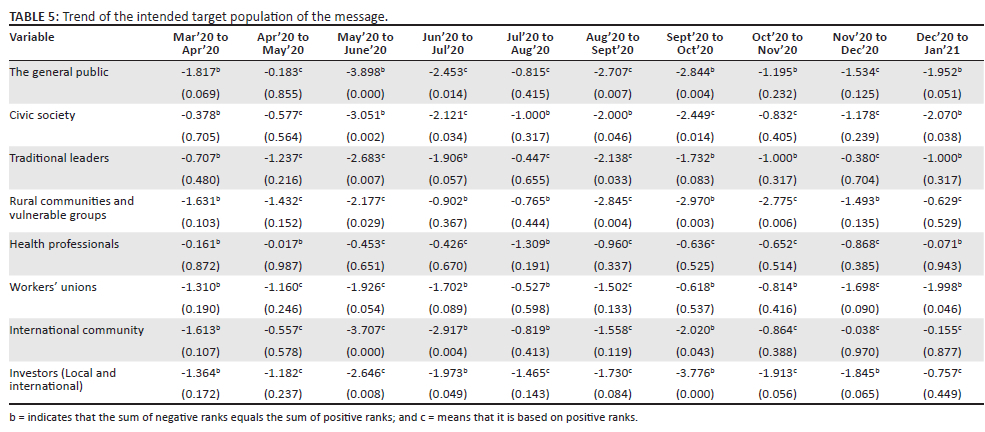
The TOM result and trends are presented in Table 4 and the monthly changes in the TOM during the study period are presented in Table 5 using a WSRT. Table 4 shows that the primary target audience of the South African government during the first 3 months was the general public. Apart from June 2020, this population group recorded a high average score of more than 2.50 each month, although its mean score changed over the months. However, the WSRT results (Table 5) demonstrate that the levels of change in the mean score were only statistically significant from May to June (p = 0.000), June to July (p = 0.014), August to September (p = 0.007) and September to October (p = 0.004). The general public scored more than 3.0 in each of the first 3 months of the pandemic.
The second most affected or targeted population category is health professionals, followed by workers' unions. However, the scores for health professionals and workers' unions decreased over the months, indicating that these audiences were no longer the primary target of government communication. They achieved mean scores of less than 2.5 in each of the months. The WSRT results show that none of the changes observed in these categories of TOM was statistically significant (p > 0.05), except from December 2020 to January 2021 with respect to other workers union (p = 0.046).
During the period reviewed, the result shows that rural communities and vulnerable groups were not a major focus or priority of government during the pandemic (the mean scores for 9 out of 11 months is below 2.00). There is an indication that at the initial stage of the pandemic, the government might have attempted to communicate to vulnerable groups and rural communities. However, a mean score of less than 2.5 throughout the period examined suggests that these population groups were not the main target of the press statements or the issues therein. The level of disclosure changed over the months, albeit insignificantly except for May to June (p = 0.029), August to September(p = 0.004), September to October (p = 0.003) and October to November (p = 0.006).
The press statements in the first 3 months of the pandemic were marginally targeted at the international community or local and international investors. These categories scored less than 2.5 each. This trend persisted for the rest of the study period. As evidenced in Table 5, the scores of these categories sporadically changed over the period reviewed, although not significantly (p > 0.05). The changes in the scores of these items were significant from May to June (p < 0.05), June to July (p < 0.05) and September to October (p < 0.05). Here, the government mostly used its press statements to highlight global solidarity and also to provide information on its partnership with foreign countries and international organisations. Civic society and the traditional leaders received minimal attention in these press statements with respective mean scores of less than 2.0 in each of the months examined.
Discussion
The results of this study indicate a high volume of information flow from the government to the public during the pandemic. The 43.9 average monthly distribution of press statements also indicates that communication was frequent and consistent. This shows a concerted effort towards taking the leadership in ensuring that the public is exposed to the right information in a timely manner. This ensures an informed public and encourages confidence in the government for being in control of the situation and ensuring that citizens are equipped to understand government policies and make the right decisions. This is consistent with the provisions of the GCIS and literature.12,13
The results also demonstrate a degree of responsiveness and flexibility in relation to the uncertainties and changing trajectories of the pandemic. This is visible in the shifts in the focus of government at different stages of the pandemic. This is not interpreted here as an indication of efficiency or effectiveness in how the pandemic was handled. It merely shows what the government prioritised and who these priorities targeted or affected at different periods as communicated in press statements.
It was clear in this study that the priority of the government in the first 3 months of the pandemic (March to May 2020) was to manage the spread of COVID-19. To a lesser degree, the government also tried to ease tensions and reduce fears during this initial period, while highlighting some of the challenges it encountered. Thus, during this time, government decisions primarily served epidemiological purposes. This was consistent with global trends as the perceived immediate threat of the disease was health and mortality.
The study suggests that the government was not entirely blind to the potential impact of the pandemic and the respective lockdown on livelihoods early in the pandemic. It also shows that government strengthened partnerships that were directed towards managing infections at this initial stage. Several organisations in the private and non-profit sectors collaborated with, and complemented government's efforts. This ranged from support with medical equipment by soccer organisations to major infrastructural contributions such as the speedy building of hospitals and establishment of affordable testing centres by the Gift of the Givers Foundation, or the partnership with Cuba that saw 200 Cuban doctors arriving in South Africa to assist with handling the pandemic.32,33,3435,3637373738391221,22
The appearance of the same patterns of reduction in disclosure level in September and October 2020, and the upping of public engagement in November 2020 through January 2021 indicates that the behaviour of the pandemic, with reference to infection rates significantly shaped government communication response and priorities. For example, active infection rates decreased by more than 50% in September and October 2020, while November 2020 marked the emergence of the second wave of the pandemic in South Africa.4041
In terms of the population targeted, the general public stood out as the primary focus of the government throughout the period. The study suggests that the government took steps to ensure a regularly and timeously informed public and to reduce panic. Despite fluctuations in this targeting, the general public consistently remained the primary target audience of the messages. This may suggest that the government cared for the safety and wellbeing of its people and took steps to ensure that these were met. However, this may be undermined by the amount of corruption, incompetence and criticisms involving government officials in the crisis and livelihoods management.42,43,44
The emergence of health professionals and workers as the second major focus of government communication during the pandemic was anticipated. This was because health workers are at the centre of efforts to control the pandemic, and their challenges were widely broadcasted in the early stages of the pandemic. Challenges affecting health workers directly impacted government's ability to control the pandemic and to meet the health needs of citizens. However, this audience gradually ceased to be a primary target of government communication, especially towards the end of the study period (January 2021), after showing statistically significant WSRT scores in December 2020. This may have meant that their challenges were addressed. The increased societal support and celebration of health workers that became the trend around the world during this time, may have also contributed to fewer concerns being publicly raised by health workers, and thereby, fewer directed responses by government. The issues addressed in these communications also affected rural communities and vulnerable groups, but there is no indication that significant efforts were made to specifically address them as a unique group whose pre-pandemic vulnerabilities may have warranted a more focused attention to the pandemic-related challenges faced by them. Government communication took a more blanket and non-dynamic approach in this regard. It simply focused on the general public while overlooking the specific needs of the different sections of the public in most cases. The minimal attention received by civil society and traditional leaders as a population group was also unexpected given the expectation that government would explore every partnership available to it in times of crisis.
Conclusion
During the period reviewed, the South African government took necessary steps to provide the public with regular, consistent, credible and empowering information to minimise the impact of the pandemic on lives and livelihoods. Press releases were a central strategy of government communication during this time. They communicated the government's priorities, successes and struggles, showing how the government adjusted at different stages of the pandemic. Overall, the government appears to have been responsive to the situation in a reactive rather than proactive manner. This contradicts the provisions of the DMA2135,4546
Competing interest
The authors declare that they have no financial or personal relationships that may have inappropriately influenced them in writing this article.
Authors' contributions
S.F.J. conceptualised the project, collected and interpreted the data and formulated the discussions and conclusions of the study. H.M. collected, analysed and interpreted the data. O.T.O. was involved in the conceptualisation of the project, collected data and participated in data analysis and interpretation. B.C.M. participated in the conceptualisation of the project and reviewed the initial draft. All authors took part in finalising the first draft and also in all revisions of the manuscript.
Funding information
S.F.J. acknowledges the support of the National Research Foundation through the SARChI Chair in Sustainable Local (Rural) Livelihoods.
Data availability
The study was based on publicly available press statements on the South African official coronavirus website https://sacoronavirus.co.za.
Disclaimer
The views and opinions expressed in this article are those of the authors and do not necessarily reflect the official policy or position of any affiliated agency or institution of the authors.
Acknowledgements
References
- 1.Corey AM. Chapter 1: Introducing communication. In: Pierce T, editor. The evolution of human communication: From theory to practice. Canada, City of publication is Ontario: EtrePress, 2009; p. 1-28.
- 2.Callow K, Callow JC. Text as purposive communication: A meaning-based analysis. In: Mann WC, Thompso SA, editors. Discourse description: Diverse linguistics analysis of a fund-raising text. Amsterdam: John Benjamins Publishing Company, 1992; p. 5-38.
-
3.Liu BF, Horsley JS, Levenshus AB. Government and corporate communication practices: Do the differences matter? J Appl Commun Res. 2010;38(2):189-213. https://doi.org/10.1080/00909881003639528
» https://doi.org/10.1080/00909881003639528 -
4.Stojiljkovic A. Government communication: Cases and challenges. Inf Commun Soc. 2017;20(12):1786-1787. https://doi.org/10.1080/1369118X.2017.1364782
» https://doi.org/10.1080/1369118X.2017.1364782 -
5.Kim DY, Shim J. Government communication and public acceptance of policies in South Korea. Int Rev Public Adm. 2020;25(1):44-63. https://doi.org/10.1080/12294659.2020.1737371
» https://doi.org/10.1080/12294659.2020.1737371 - 6.Howlett M. Government communication as a policy tool: A framework for analysis. Can Polit Sci Rev. 2009;3(2):23-37.
-
7.Fairbanks J, Plowman KD, Rawlins BL. Transparency in government communication. J Public Aff. 2007;7(1):23-37. https://doi.org/10.1002/pa.245
» https://doi.org/10.1002/pa.245 -
8.Heinze J, Schneider H, Ferié F. Mapping the consumption of government communication: A qualitative study in Germany. J Public Aff. 2013;13(4):370-383. https://doi.org/10.1002/pa.1483
» https://doi.org/10.1002/pa.1483 -
9.Liu BF, Horsley JS, Yang K. Overcoming negative media coverage: Does government communication matter? J Public Adm Res Theory. 2012;22(3):597-621. https://doi.org/10.1093/jopart/mur078
» https://doi.org/10.1093/jopart/mur078 -
10.Suter E, Arndt J, Arthur N, Parboosingh J, Taylor E, Deutschlander S. Role understanding and effective communication as core competencies for collaborative practice. J Interprof Care. 2009;23(1):41-51. https://doi.org/10.1080/13561820802338579
» https://doi.org/10.1080/13561820802338579 -
11.Vivier E, Seabe D, Wentzel M, Sanchez D. From information to engagement: Exploring communication platforms for the government-citizen interface in South Africa. Afr J Inf Commun. 2015;(15): 81-92. https://doi.org/10.23962/10539/20332
» https://doi.org/10.23962/10539/20332 - 12.GCIS. Government communicators' handbook 2014-2017. Pretoria: Government Communication and Information System (GCIS); 2014.
-
13.Collins M, Neville K, Hynes W, Madden M. Communication in a disaster - The development of a crisis communication tool within the S-HELP project. J Decis Syst. 2016;25(suppl 1):160-170. https://doi.org/10.1080/12460125.2016.1187392
» https://doi.org/10.1080/12460125.2016.1187392 - 14.Díaz JCL, Fernández LR, Rojano FJP. Government communication and emotions in the Covid-19 crisis in Spain TT - Comunicación gubernamental y emociones en la crisis del Covid-19 en España. Rev Lat Comun Soc. 2020;(78):23-39.
- 15.Perry RW. What is a disaster? In: Rodríguez H, Quarantelli EL, Dynes RR, editors. Handbook of disaster research. New York, NY: Springer, 2007; p. 1-15.
- 16.Reynolds B, Seeger M. Crisis and emergency risk communication. 2012 Edition. Atlanta: Centers for Disease Control and Prevention. 2012.
- 17.Al-Dahash H, Thayaparan M, Kulatunga U. Understanding the terminologies: Disaster, crisis and emergency. In: Proceedings of the 32nd annual ARCOM conference, ARCOM 2016, Manchester, UK. 5-7 September 2016. p. 1191-1200.
-
18.Chang C. Cross-country comparison of effects of early government communication on personal empowerment during the COVID-19 pandemic in Taiwan and the United States. Health Commun. 2020;37(4):476-489. https://doi.org/10.1080/12460125.2016.1187392
» https://doi.org/10.1080/12460125.2016.1187392 -
19.Antwi-Boasiako J, Nyarkoh E. Government communication during the Covid-19 pandemic; the case of Ghana. Int J Public Adm. 2020;44(11-12):1039-1040. https://doi.org/10.1080/01900692.2021.1956950
» https://doi.org/10.1080/01900692.2021.1956950 -
20.Radwan AF, Mousa SA. Government communication strategies during coronavirus pandemic: United Arab Emirates lessons. J Health Manag. 2020;22(4):516-527. https://doi.org/10.1177/0972063420983091
» https://doi.org/10.1177/0972063420983091 - 21.Republic of South Africa. Disaster Management Act 57. Government Gazette; 2002.
- 22.Republic of South Africa. Disaster Management Amendment Act 16. Government Gazette; 2015.
- 23.Republic of South Africa. National Disaster Management Framework. Government Gazette; 2005.
-
24.Van Zyl AS. Sustainability and integrated reporting in the South African corporate sector. J Sustain Manag JSM. 2014;1(1):19-42. https://doi.org/10.19030/jsm.v1i1.8390
» https://doi.org/10.19030/jsm.v1i1.8390 -
25.Reimsbach D, Hahn R, Gürtürk A. Integrated reporting and assurance of sustainability information: An experimental study on professional investors' information processing. Eur Account Rev. 2018;27(3):551-581. https://doi.org/10.1080/09638180.2016.1273787
» https://doi.org/10.1080/09638180.2016.1273787 -
26.Casonato F, Farneti F, Dumay J. Social capital and integrated reporting: Losing legitimacy when reporting talk is not supported by actions. J Intellect Cap. 2019;20(1):144-164. https://doi.org/10.1108/JIC-08-2018-0132
» https://doi.org/10.1108/JIC-08-2018-0132 - 27.Desai SA. An empirical study on application of Wilcoxon signed rank test in statistical process control when process target is fixed. Int J Manag IT Eng. 2018;8(8):130-136.
- 28.Scheff SW. Fundamental statistical principles for the neurobiologist: A survival guide. Cambridge, Massachusetts, US: Academic Press; 2016.
-
29.Stevens MR, Lyles W, Berke PR. Measuring and reporting intercoder reliability in plan quality evaluation research. J Plan Educ Res. 2014;34(1):77-93. https://doi.org/10.1177/0739456X13513614
» https://doi.org/10.1177/0739456X13513614 -
30.De Raadt A, Warrens MJ, Bosker RJ, Kiers HAL. Kappa coefficients for missing data. Educ Psychol Meas. 2019;79(3):558-576. https://doi.org/10.1177/0013164418823249
» https://doi.org/10.1177/0013164418823249 -
31.Conger AJ. Kappa and rater accuracy: Paradigms and parameters. Educ Psychol Meas. 2017;77(6):1019-1047. https://doi.org/10.1177/0013164416663277
» https://doi.org/10.1177/0013164416663277 -
32.Gift of the Givers. Covid-19 intervention - South Africa. Gift of the Givers Foundation [homepage on the Internet]. 2020 [cited 2022 Mar 21]. Available from: https://giftofthegivers.org/disaster-response/covid-19/
» https://giftofthegivers.org/disaster-response/covid-19/ -
33.SA Coronavirus. Minister Mkhize receives COVID-19 medical equipment from Orlando Pirates and Kaizer Chiefs - SA Corona Virus Online Portal [homepage on the Internet]. SA Corona Virus Online Portal. 2020 [cited 2022 Mar 21]. Available from: https://sacoronavirus.co.za/2020/04/15/minister-mkhize-receives-covid-19-medical-equipment-from-orlando-pirates-and-kaizer-chiefs/
» https://sacoronavirus.co.za/2020/04/15/minister-mkhize-receives-covid-19-medical-equipment-from-orlando-pirates-and-kaizer-chiefs/ -
34.SA Coronavirus. Over 200 Cuban healthcare workers arrive in South Africa - SA Corona Virus Online Portal [homepage on the Internet]. SA Corona Virus Online Portal. 2020 [cited 2022 Mar 21]. Available from: https://sacoronavirus.co.za/2020/04/27/covid-19-i-over-200-cuban-healthcare-workers-arrive-in-south-africa/
» https://sacoronavirus.co.za/2020/04/27/covid-19-i-over-200-cuban-healthcare-workers-arrive-in-south-africa/ -
35.Osseni IA. COVID-19 pandemic in sub-Saharan Africa: Preparedness, response, and hidden potentials. Trop Med Health. 2020;48(1):48. https://doi.org/10.1186/s41182-020-00240-9
» https://doi.org/10.1186/s41182-020-00240-9 -
36.Rutayisire E, Nkundimana G, Mitonga HK, Boye A, Nikwigize S. What works and what does not work in response to COVID-19 prevention and control in Africa. Int J Infect Dis. 2020;97:267-269. https://doi.org/10.1016/j.ijid.2020.06.024
» https://doi.org/10.1016/j.ijid.2020.06.024 -
37.Cheng C, Barceló J, Hartnett AS, Kubinec R, Messerschmidt L. COVID-19 government response event dataset (CoronaNet v.1.0). Nat Hum Behav. 2020;4(7):756-768. https://doi.org/10.1038/s41562-020-0909-7
» https://doi.org/10.1038/s41562-020-0909-7 - 38.Ryan M. COVID-19 pandemic | WHO praises South Africa for efforts to prevent the virus from spreading. SABCNews. 23 April 2020.
-
39.Meyer D. Watch: WHO praises South Africa for 'incredible' COVID-19 response [homepage on the Internet]. The South African. 2020 [cited 2022 Mar 21]. Available from: https://www.thesouthafrican.com/news/world-health-organisation-south-africa-praise-covid-19-2020/
» https://www.thesouthafrican.com/news/world-health-organisation-south-africa-praise-covid-19-2020/ -
40.Worldometer. Coronavirus cases: South Africa [homepage on the Internet]. [cited 2021 Jul 12]. Available from: https://www.worldometers.info/coronavirus/country/south-africa/
» https://www.worldometers.info/coronavirus/country/south-africa/ -
41.Aerts JCJH, Botzen WJ, Clarke KC, et al. Integrating human behaviour dynamics into flood disaster risk assessment. Nat Clim Change. 2018;8(3):193-199. https://doi.org/10.1038/s41558-018-0085-1
» https://doi.org/10.1038/s41558-018-0085-1 -
42.Hatefi S, Smith F, Abou-El-Hossein K, Alizargar J. COVID-19 in South Africa: Lockdown strategy and its effects on public health and other contagious diseases. Public Health. 2020;185:159-160. https://doi.org/10.1016/j.puhe.2020.06.033
» https://doi.org/10.1016/j.puhe.2020.06.033 -
43.Munzhedzi PH. Analysing the application of governance principles in the management of COVID-19 in South Africa: Lessons for the future. Afr Public Serv Deliv Perform Rev. 2021;9(1):2021. https://doi.org/10.1016/j.puhe.2020.06.033
» https://doi.org/10.1016/j.puhe.2020.06.033 - 44.Mlambo VH, Masuku MM. Governance, corruption and COVID-19: The final nail in the coffin for South Africa's dwindling public finances. J Public Adm. 2020;55(3-1):549-565.
-
45.Mojtahedi M, Oo BL. Critical attributes for proactive engagement of stakeholders in disaster risk management. Int J Disaster Risk Reduct. 2017;21:35-43. https://doi.org/10.1016/j.ijdrr.2016.10.017
» https://doi.org/10.1016/j.ijdrr.2016.10.017 -
46.Kasdan DO. Considering socio-cultural factors of disaster risk management. Disaster Prev Manag. 2016;25(4):464-477. https://doi.org/10.1108/DPM-03-2016-0055
» https://doi.org/10.1108/DPM-03-2016-0055

Accepted: 28 Mar. 2022
Published: 15 July 2022