Entrepreneurial orientation on business performance for small, micro and medium enterprises in the telecommunications industry: A management perspective
Abstract
Entrepreneurship is playing a mediating role in ensuring that the impact of climate and technological changes are regulated and made adaptable and adoptable for humanity through entrepreneurial innovations. In this article, a critical discourse analysis is conducted to establish the facts regarding the influential relationships affecting entrepreneurial orientation (EO) and business productivity for small, micro and medium enterprises (SMMEs) in the information and communications industry in Zimbabwe. An exploratory quantitative methodology using a positivist approach was applied to reinforce the independence of the researcher and to eliminate bias in the exploration of the orientations. Data were collected from 308 entrepreneurial entities located in different parts of the Harare urban zones, which were randomly sampled. One of the major findings of this research points conspicuously to the inevitability of EOs. Accordingly, it is recommended that enterprise regulators, legislators and the state should emphasise the inclusion of EO in the existing body of knowledge, and support telecommunications business practitioners to make significant decisions on strategic risk management when conducting strategic formulation and implementation.
entrepreneurial orientation; business performance; enterprising; information and communications; technology
Background
Entrepreneurship, like any other discipline and philosophy, is progressing tremendously in tandem with demographic parabolic shifts. The Green Revolution of the 1950s and 1960s, the Industrial Revolution, spanning from the first to the current Fourth Industrial Revolution (4IR) of 1760 to sometime between 1820 and 1840,123
The historical background of the EO concept has been discussed in several studies including Anderson, Kreiser, and Kuratko,456789107,8
Introduction
The world over, shifts in population demographics, technological developments, economies, corporate social responsibility (CSR) and sustainability considerations are transforming societies in magnitudes never previously experienced, exposing humanity to new challenges and opportunities. Chief among these shifting forces is an accentuation on entrepreneurship by governments, businesses, and the public.11121314
Small micro and medium enterprises in Zimbabwe since 2008
Growth in SMMEs is a crucial constituent in developing economies. However, the growth and evolution of SMMEs in Zimbabwe is undermined by a myriad of issues that result in higher rates of failure for such organisations.1516
Accordingly, in this current study 75% of the SMMEs in the telecommunications industry in Zimbabwe pursue different approaches to growth, and 45% of the stipulated 75% have stagnated and suffered from the growth crisis syndrome. It is this backdrop that aroused the interest of the researcher in the current study. There are many theories that deal with the significance, contribution and function of SMMEs regarding the growth of the national economy. The role of entrepreneurs in SMMEs in the telecommunications industry has been recognised and proven to have unparalleled importance. This study emphasises that 100% of entrepreneurs should be entrepreneurially oriented to improve the status of entrepreneurship and to strengthen the resilience of the enterprises and the economy in a globally cut-throat and challenging ecosystem. Lumpkin and Dess17,181915,16
Telecommunications firms in Zimbabwe, despite a finite access to capital, can perform well if they exhibit and practise higher magnitudes of EO. It is on this basis that EO is appraised as a critical capability of the organisation. Several scholars4,5,6,7
This study sought to ascertain the influence of EO on business performance for SMMEs within the telecommunications industry, that is, the information and communications and technology (ICT) sector in Zimbabwe. The article is structured as follows: it commences by giving background on the study with a clear focus on the global trends in business and corporate EO in SMMEs in the telecommunications industry. The problem statement indicates certain specific management problems that SMMEs in the telecommunications industry are facing with regard to adaptability and time to market their products. From the research problem, the objectives and the research questions are then formulated and established. The justification for the research is subsequently discussed. The research purpose is to create and add value and allow businesses and academics to capture that value. For this purpose, a short literature review was conducted that examined the key and recent contributions related to the subject of EO, and a proposed construct framework was devised for carrying out the assessment of SMMEs in the telecommunications industry in Zimbabwe. Furthermore, the study discusses an appropriate methodology together with the data analysis techniques applied, and the methods for data analysis and results interpretation and synthesis.
Problem statement
The telecommunications sector in Zimbabwe has seen proliferation of many companies; however, only a few companies have evolved from SMMEs to fully fledged enterprises. The SMMEs play a significant economic role in many countries globally. According to the World Bank,2021
This question can logically be looked at on the basis of two premises. Premise 1: research studies have provided the necessary support for the assumption that EO is a necessary condition (antecedent) for high performing businesses (literature review). Premise 2: The SMMEs in the telecommunications sector in Zimbabwe are low performing businesses (assuming performance indicators related to the studies substantiated in premise 1). Conclusion (also a hypothesis): Zimbabwean SMMEs in the telecommunications sector most probably lack EO (with the application of the same measurement instrument used in the studies referred to in premise 1). Accordingly, the research question is formulated as follows: What is the level of EO presence in SMMEs in the telecommunications sector in Zimbabwe? Because this level is low, the current study finds the support for premise 1 within the Zimbabwe context. The studies conducted on the influence of EO were mostly conducted in developed countries outside Zimbabwe. Zimbabwean SMMEs in the telecommunications industry make a large contribution in terms of revenue to the Zimbabwean economy, yet there is little empirical evidence available on the influence of EO on firm performance and the growth of SMMEs in Harare, Zimbabwe. This study aims to investigate this aspect and provide some insights into the Zimbabwean context.
Scope of research
This research involved repeated observations of the same telecommunications SMMEs over a long period of 12 years covering 2008-2020. This period represents the time that the Zimbabwe economy started experiencing catastrophic cash and foreign currency shortages which affected the EO of managers in the entrepreneurial context of the Zimbabwean economy. The Zimbabwe Central Bank, the Reserve Bank of Zimbabwe (RBZ),24
Entrepreneurial orientation
Entrepreneurial orientation measures the firm's structural and systematic organised performance. It is conceptualised as the integral decision-making and business processes operations applied by an entrepreneur to act entrepreneurially.9,25,2627282917,30,3131
Risk-taking
Risk-taking is an EO associated with entrepreneurship during the emerging stages. Risk-taking relates to the uncertain endeavours undertaken by entrepreneurs working for personal attainment, but has since been broadly applied to companies where leaders commit huge outlays to projects whose outcomes are uncertain. Risk-taking is a move towards bold actions such as investing in uncertain markets and committing a large amount of capital resources to investments with uncertain outcomes. Tshikovhi, and Shambare32
Proactiveness
Proactiveness is a firm characteristic that allows it to positively forecast opportunities and sphere of influence in terms of products, services and consumer demand. Proactivity differs fundamentally from affective traits like well-being and from cognitive traits like locus of control. A proactive disposition is a tendency to initiate and maintain actions that directly alter the surrounding environment. Proactiveness is indicated internally and externally, and is measured scientifically using proactive personality scales. This characteristic is said to be the core of primary economic discernment in entrepreneurship. A financier is considered to be an identifier of opportunities in the marketplace and proactively engage in them.19
Innovativeness
Innovativeness is concerned with the nature and form of goods and services a firm introduces into the marketplace. Schumpeter33,34193536
Competitive aggressiveness
In this article, competitive aggressiveness is concerned with the way telecommunications companies engage with their competitors, focusing on companies which are against direct competition and companies that aggressively pursue competitors' markets. Vij and Bedi373830proactiveness and competitive aggressiveness are used interchangeably; however, there is a thin line between the two concepts. Proactiveness is focused on the relationship of the firm to the market opportunities in creating demand, while competitive aggressiveness is concerned with the firm's relationship with the competitors in line with its marketing philosophy.
Autonomy
Autonomy is the self-reliant and independent achievement of an entrepreneur or a team in bringing forth a strategic plan, vision and mission, and carrying it through to completion without being pulled back by overly stringent organisational limitations.1830
Business performance
The available information on performance reveals consensus among the researchers on the appropriate measures for business performance indicators. There is broad diversity in the objective and subjective measures of performance; these are financial and non-financial measures leading to diversities in the EO and performance relationships. The question that arises is what the appropriate form of performance measurement is. Business performance has been accepted in research as an objective measure of performance compared to subjective measures. Objective data is not easily gathered according to the works of Short et al.3940,4131,40
Small, micro and medium enterprises
The terms SMMEs and small businesses are used interchangeably. There is no standard agreed definition for small businesses as this depends on many determinants such the size of the economy, the nature and number of resources available, and the objectives and goals of the supporting agent. Kuratko4221Company Act (Chapter 190) and the Factory and Works Act (Chapter 283), while formal SMMEs are those that are registered as per the Companies Act (Chapter 190). The researcher's focus was on those companies whose businesses are formalised and fall within the telecommunications industry in Zimbabwe.
Entrepreneurial orientation and performance
The results of this study reflected a positive correlation as proved by +1 between EO and the firm's sustainable performance. A firm performance is a multi-faceted concept to the extent that the relationship between EO and the performance of a firm depends on the non-definitive indicators used to assess performance. A customary comparison of EO and performance rests on financial and non-financial measures. Financial measures are not limited to factors like sales growth and return on investments.43404445,46,47,484027,37,49,50
The analysis of the findings boosted concerns that entrepreneurs in the telecommunications industry are in dire need of orientation to enable them to provide an acceptable standard of service delivery effectively and efficiently to consumers.
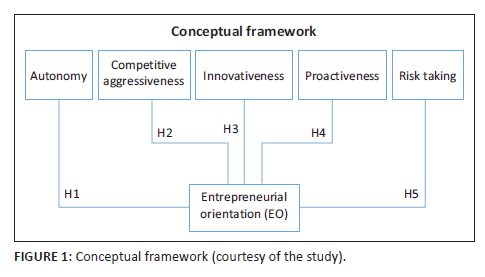
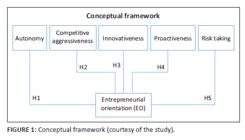
Figure 1 shows the variables that constitute the EOs that stand to impact and influence the performance of SMMEs in the telecommunications industry in Zimbabwe. This study found that entrepreneurs in this sector are greatly concerned with autonomy, proactiveness, innovativeness, competitive aggressiveness and risk-taking.
Methodology
Research methodologies are systems of explicit rules for research based on which claims of knowledge are evaluated. The overall research question for this article concerns the impact of EO on business performance for SMMEs in the telecommunications industry of Zimbabwe. This part of the study focuses on the methods, techniques and tools used in the classification, gathering and management of data, as well as data analysis.5152
Positivism in this study was also emphasised by the fact that the observations were quantifiable and follow a highly structured methodology to enable replication of results. The research uses a deductive approach as a theory was developed and a hypothesis formulated from which the research was designed to test each hypothesis. The findings reflected causal relationships between variables which the research sought to explain, for instance how strategic risk-taking impacts business performance in Zimbabwean information and communications SMMEs. The research was exploratory and descriptive in nature.
Surveys were found to be useful for the research in question, and a survey approach was used because of the ability it offers in terms of data collection. The method is used to describe populations that are too large to observe directly and has much flexibility and versatility.
The study was cross-sectional and covered an analysis of homogenous events that occurred at the selected SMMEs for the period between 2015 and 2020. In the research in question, owners and middle and senior management of the selected telecommunications SMMEs in Harare were selected as the study population.
Population
According to the World Bank,1621
Sampling procedure and study sample
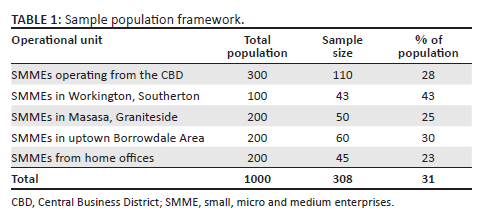
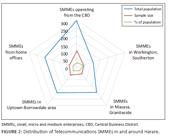
Purposive sampling and judgemental sampling were used, with the researcher's judgement being used to select population members who were good prospects for accurate information. The 2016 Harare Informal Sector Business Survey (ISBS) uses a new mode for measuring these informal business segments. In describing the potential clustering of informal businesses, the analysis used area-based sampling, termed (stratified) 'adaptive cluster sampling' (ACS). The ACS selects a sample of starting grids (usually squares), which constitute the starting point for the fieldwork. In the current study, all informal businesses in the quadrant were enumerated, using a 2-3 min questionnaire (short-form questionnaire). A subset of businesses selected randomly was targeted with a 20 min long-form questionnaire. The total grid area captured all of central municipal Harare, with quadrants of size 200 by 200 m. The sampling was based on four quadrants derived from operational units which included: the SMMEs operating from the Central Business District (CBD), industrial zones including Workington and Southerton, Masasa and Graniteside, and SMMEs operating in upmarket areas where the elites of Zimbabwe reside (in this case Borrowdale Brooke was randomly chosen), as well as SMMEs operating from home offices (Table 1).
Table 1 reflects that a large number of entrepreneurs in the telecommunications industry in Zimbabwe are concentrated in the CBD with 300 enterprises, with the fewest operators being in Workington and Southerton with 100 enterprises. This may be because these areas are designated for heavy industries.
Data collection techniques and instruments
The researcher used primary data for the research. Semi-structured interviews and structured questionnaires were used as the primary data collection methods. In the development of the instruments, a five-point Likert scale was used structured as follows: strongly agree, agree, non-aligned, disagree and strongly disagree. These structures offered reasonable validity and reliability of the data gathered. The initial draft interview script was piloted with five SMMEs which were randomly chosen. The manuscript and the questionnaires were revised before used for gathering data for the key research. In addition, face-to-face interview sessions were held with the owners, and middle and senior management of the telecommunications SMMEs. The interviews were not expected to last more than 2 h. Many of the face-to-face interviews were done in the offices of the interviewees. The interview guides incorporated the firm's environment, the level of responsiveness of EO, strategic risk-taking, autonomy, competitive aggressiveness, innovativeness, proactiveness and business performance. Interviews were recorded with the permission of the participants and transcribed immediately after the interview sessions. Transcripts were sent to the participants for refinement as necessary.53
Data management and analysis
Quantitative regression and correlation analysis were applied in data analysis in this study. Considering the number of variables to be assessed, multiple regressions were employed using appropriate tools such as Statistical Packages and Software Services (SPSS). To observe relationships among the variables that were impacted by EO, correlation analysis was conducted. Bias was prevented by giving participants the opportunity to highlight the factors they consider to be important in their situations with regard to the impact of EO, instead of structuring the research questions around the EO attributes.535455,5654
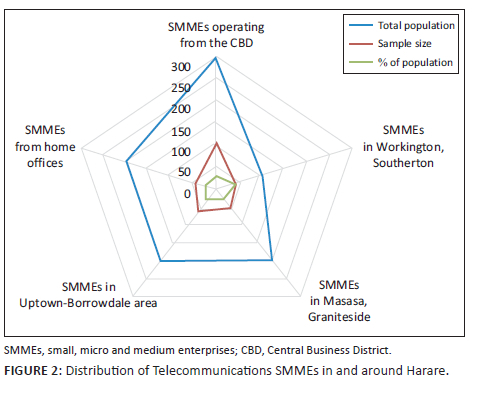
Figure 2 reflects that the SMMEs were concentrated in the CBD and peripheral areas such as Southerton and Workington. These areas are allocated for heavy industry and there is space for high powered machinery; consequently the place is noisy because of heavy machinery. In the CBD, it is quieter which telecommunications businesses require. The other noteworthy factor is the high number of offices in the CBD.
Impact of entrepreneurial orientation on the performance of small, micro and medium enterprises in the telecommunications industry
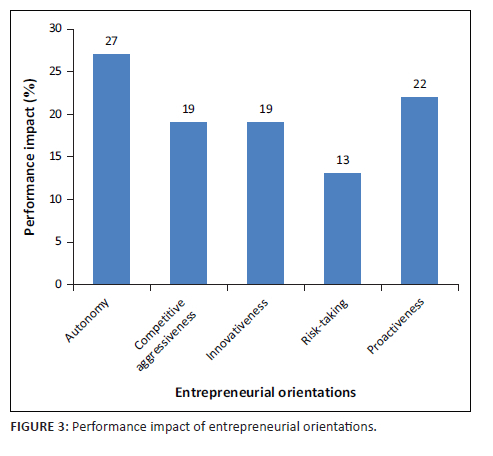
The study revealed relationships between performance and EOs. Figure 3 shows that there is a 27% performance impact (PI) when there is autonomy. In this case, the implication is that entrepreneurs for SMMEs in the telecommunications industry enjoy autonomy which seems to be the key to successful performance for entrepreneurs. The orientations also revealed that risk-taking is the least preferred orientation in SMMEs in the telecommunications industry in Zimbabwe. However without risk-taking, entrepreneurial performance is not sustained.
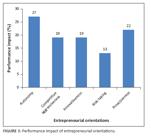
Competitive aggressiveness and innovativeness carry the same weight in the relationship between performance and EO at 19%, as attested by the study respondents. The study found strong relationships between EO and enterprise PI and vice versa. The correlation analysis reflected positive significant relationships between EOs and PI in Zimbabwean SMMEs in the telecommunications industries. The association is linear, PI increases or decreases a fixed amount in line with a unit increase or decrease in EO. The other technique that this research used here is stepwise regression, which involved estimating the best straight line to summarise the associations. Complete correlation between PI and EO was found as expressed by +1. Accordingly, EO improves as PI increases indicating that the correlation is positive; when EO declines, the PI decreases.57
Limitations
The study carried out faced a few limitations. Firstly, the research is limited to the SMMEs in the information and communications sector in Zimbabwe, and as such it may be difficult to make inferences to other sectors. The research also ignored other moderating constructs like environment and access to capital which may have a bearing on the results. Also, the research was limited to the city of Harare only, and as such, there may be differences in terms of EO for this city and other cities and towns in Zimbabwe and outside Zimbabwe. There is also a limitation in terms of measuring performance which can either be objective or subjective. However, this study tried to be objective by approaching the issues from a rational perspective.
Gap and contribution
The research sought to add to the existing body of knowledge useful to academics as well as assisting telecommunications business owners and practitioners with strategy formulation, implementation, development, and practice. It will help shape the practices underpinning sustained competitive advantage for the firms in the sector and could be used in other sectors as well. It will also assist in explaining the function of EO with regard to business performance.24
Conclusion
The tenets of EO have been successfully adopted by progressive economies resulting is phenomenal economic and social status growth as evidenced in such places as China and Japan. In conclusion, there are valid and compelling reasons for conducting this study as the literature is readily available and the need for the study is apparent and the Zimbabwean SMME sector will certainly benefit from it. In a nutshell, one can justifiably assert that EO is quintessential to triggering the PI, which is the best practice of an ongoing, two-way operation. Business performance helps the entrepreneur to develop goals and objectives that benefit the team, the organisation, and the individual, rather than a once-off operational goals that affect the industry. The EO was investigated to promote the commercial effectiveness of an enterprise, a department or an individual to achieve strategic objectives and improve the expected results of SMMEs in the telecommunications sector in Zimbabwe. This study also found that entrepreneurs in SMMEs need autonomy, proactiveness, innovativeness, competitive aggressiveness and risk-taking in declining proportions. These are also correlated to PI in +1 positive Pearson correlation coefficient levels which reflect that they are highly interdependent. Improvement in one of them means increased productivity for the entity. Policymakers and state entrepreneurial agencies like Small Enterprise Development Corporation should evaluate the EO and formulate favourable policies to stimulate the growth and development of SMMEs for they are the economic drivers of employment creation and revenue creation.
Competing interests
The author declares that he has no financial or personal relationships that may have inappropriately influenced him in writing this article.
Author's contributions
The author conducted the research for this article from the conceptualisation and contextualisation of the idea up to the final write up of the article.
Ethical considerations
This article followed all ethical standards for research without direct contact with human or animal subjects.
Funding information
The author received specific funding from University of South Africa for publication fees.
Data availability
Data will be made available from the author upon reasonable request, there are no figures from the raw data, the data used was primary data, which had no restrictions.
Disclaimer
The views and opinions expressed in this article are those of the author and do not necessarily reflect the official policy or position of any affiliated agency of the author.
Acknowledgements
The author acknowledges the Almighty God for granting him the wisdom to put up this research as well as to acknowledge Prof. Benyera in proofreading the article. It is also quintessential for the author to offer gratitude to Walter Sisulu University Mthatha Campus, for supporting the research activities to immeasurable limits.
References
- 1.Rosen W. The most powerful idea in the world: A story of steam, industry, and invention. New York, NY: Random House; 2010.
-
2.Brown EK. The fourth industrial revolution: Will Africa be ready? [homepage on the Internet]. Ghana: ACET: The African Center of Economic Transformation; 2020 [cited 2020 Dec 28]. Available from: www.acetforafrica.org
» www.acetforafrica.org -
3.Ling YAN, Simsek Z, Lubatkin MH, Veiga JF. Transformational leadership's role in promoting corporate entrepreneurship: Examining the CEO-TMT interface. Acad Manag J. 2008;51(3):557-576. https://doi.org/10.5465/amj.2008.32626023
» https://doi.org/10.5465/amj.2008.32626023 -
4.Anderson BS, Kreiser PM, Kuratko DF. Reconceptualizing entrepreneurial orientation. Strateg Manag J. 2015;36(10):1579-1596. https://doi.org/10.1002/smj.2298
» https://doi.org/10.1002/smj.2298 -
5.Basso O, Fayolle A, Bouchard V. Entrepreneurial orientation: The making of a concept. Int J Entrepreneurship Innov. 2009;10(4):313-321. https://doi.org/10.5367/000000009790012327
» https://doi.org/10.5367/000000009790012327 -
6.Covin JG, Wales WJ. The measurement of entrepreneurial orientation. Entrepreneurship Theory Pract. 2012;36(4):677-702. https://doi.org/10.1111/j.1540-6520.2010.00432.x
» https://doi.org/10.1111/j.1540-6520.2010.00432.x - 7.Edmond VP, Wiklund J. The historic roots of entrepreneurial orientation research. Historical Foundations of Entrepreneurship Research. Cheltenham: Edward Elgar Publishing Ltd., 2010; p. 142-160.
-
8.Miller DA. Reflection on EO research and some suggestions for the future. Entrepreneurship Theory Pracy. 2011;35(5):873-894. https://doi.org/10.1111/j.1540-6520.2011.00457.x
» https://doi.org/10.1111/j.1540-6520.2011.00457.x -
9.Covin JG, Lumpkin GT. Entrepreneurial orientation theory and research: Reflections on a needed construct. Entrepreneurship Theory Pract. 2011;35(5):855-872. https://doi.org/10.1111/j.1540-6520.2011.00482.x
» https://doi.org/10.1111/j.1540-6520.2011.00482.x - 10.Anderson R, Shemilt I. The role of economic perspectives and evidence in systematic review. In: Shemilt I, Mugford M, Vale L, editors. Evidence-based decisions and economics: Health care, social welfare, education and criminal justice. 2nd ed. Oxford: Wiley-Blackwell, 2010; p. 23-42.
- 11.Global Entrepreneurship Monitor. 2014 Global Report. London: London Business School; 2014.
- 12.Lukes M, Laguna M, editors. Entrepreneurship: A psychological approach. Prague: Oeconomica; 2012.
-
13.Covin JG, Miller D. International entrepreneurial orientation: Conceptual considerations, research themes, measurement issues, and future research directions. Entrepreneurship Theory Pract. 2014;38(1):11-44. https://doi.org/10.1111/etap.12027
» https://doi.org/10.1111/etap.12027 -
14.Wales WJ, Gupta VK, Mousa FT. Empirical research on entrepreneurial orientation: An assessment and suggestions for future research. Int Small Bus J. 2013;31(4):357-383. https://doi.org/10.1177/0266242611418261
» https://doi.org/10.1177/0266242611418261 - 15.Zimbabwe Agenda for Sustainable Socio-Economic Transformation (Zim Asset). Towards an empowered society and a growing economy. Harare: Government of Zimbabwe Printers; 2013.
-
16.World Bank. World Bank data [homepage on the Internet]. 2016 [cited 2021 Mar 10]. Available from: http://data.worldbank.org/
» http://data.worldbank.org/ -
17.Lumpkin GT, Dess GG. Clarifying the entrepreneurial orientation construct and linking it to performance. Acad Manage Rev. 1996;21(1):135-172. https://doi.org/10.5465/amr.1996.9602161568
» https://doi.org/10.5465/amr.1996.9602161568 -
18.Lumpkin GT, Dess GG. Linking two dimensions of entrepreneurial orientation to firm performance: The moderating role of environment and industry life cycle. J Bus Ventur. 2001;16(5);429-451. https://doi.org/10.1016/S0883-9026(00)00048-3
» https://doi.org/10.1016/S0883-9026(00)00048-3 -
19.Lumpkin GT, Brigham, KH, Todd W. Moss. Long-term orientation: Implications for the entrepreneurial orientation and performance of family businesses. Entrepreneurship Reg Dev. 2010;22(3-4):241-264. https://doi.org/10.1080/08985621003726218
» https://doi.org/10.1080/08985621003726218 - 20.World Bank. The International Bank for reconstruction and development. Washington, DC: World Bank; 2015.
- 21.SEDCO. Regional assessment reports. Harare: Government Printers. 2014
- 22.Mahmood R, Hanafi N. Entrepreneurial orientation and business performance of women-owned small and medium enterprises in Malaysia: Competitive advantage as a mediator. Intl J Bus Soc Sci. 2013;4(1):82-90.
- 23.Kreiser PM, Davis JL. Entrepreneurial orientation and firm performance: The unique impact of innovativeness, proactiveness, and risk-taking. J Small Bus & Entrship. 2010; 23(1):39-51.
- 24.Zaato SG, Mohammad I, Uthamaputhran S, Owusu-Ansah W, Owusu J. Chapter 96: The influence of entrepreneurial orientation on SME performance in Ghana: The role of social capital and government support policies. Berlin: Springer Science and Business Media LLC; 2021.
-
25.Dess GG, Lumpkin GT, Covin JG. Entrepreneurial strategy making and firm performance: Tests of contingency and configuration models. Strateg Manag J. 1997;18(9):677-695. https://doi.org/10.1002/(SICI)1097-0266(199710)18:9%3C677::AID-SMJ905%3E3.0.CO;2-Q
» https://doi.org/10.1002/(SICI)1097-0266(199710)18:9%3C677::AID-SMJ905%3E3.0.CO;2-Q -
26.Mahi U, Mustafa MC, Maruf MD, Ullah MD. Barriers and incentives for youth entrepreneurship start-ups: Evidence from Bangladesh. Global J Manag Bus Res [serial online]. 2015 [cited 2021 Mar 19]. Available from: https://journalofbusiness.org/index.php/GJMBR/article/view/1621
» https://journalofbusiness.org/index.php/GJMBR/article/view/1621 -
27.Rauch A. Let's put the person back into entrepreneurship research: A meta-analysis on the relationship between business owners' personality traits, business creation, and success. Eur J Work Organ Psychol. 2007;16(4):353-385. https://doi.org/10.1080/13594320701595438
» https://doi.org/10.1080/13594320701595438 -
28.Miller D. The correlates of entrepreneurship in three types of firms. Manag Sci. 1983;29(7):770-792. https://doi.org/10.1287/mnsc.29.7.770
» https://doi.org/10.1287/mnsc.29.7.770 -
29.Covin J., Slevin DP. The influence of organization structure on the utility of an entrepreneurial top management style. J Manag Stud. 1988;25(3):217-234. https://doi.org/10.1111/j.1467-6486.1988.tb00033.x
» https://doi.org/10.1111/j.1467-6486.1988.tb00033.x - 30.Lumpkin GT, Dess GG. Strategy in family business: Recent findings and future challenges. The Landscape of Family Business. New York, NY: Edward Elgar; 2013.
-
31.Lumpkin GT, Dess GG. Academy of management. Acad Manag Rev. 2006;21(1):135-172. https://doi.org/10.5465/amr.1996.9602161568
» https://doi.org/10.5465/amr.1996.9602161568 - 32.Tshikovhi N, Shambare R. Entrepreneurial knowledge, personal attitudes, and entrepreneurship intentions among South African Enactus students. Probl Perspect Manag. 2015;13(1):152-158.
- 33.Schumpeter JA. Theorie der wirtschaftlichen Entwicklung (Theory of economic development). 4th ed. Berlin: Duncker & Humblot; 1934.
-
34.Schumpeter JA. Capitalism, socialism, and democracy [homepage on the Internet]. University of Illinois at Urbana-Champaign's Academy for Entrepreneurial Leadership Historical Research Reference in Entrepreneurship; 1942 [cited 2020 July 26]. Available from: https://ssrn.com/abstract=1496200
» https://ssrn.com/abstract=1496200 -
35.Swierczek FW, Ha TT. Entrepreneurial orientation, uncertainty avoidance and firm performance. Int J Entrepreneurship Innov. 2003;4(1):46-58. https://doi.org/10.5367/000000003101299393
» https://doi.org/10.5367/000000003101299393 -
36.Covin JG, Green KM, Slevin DP. Strategic process effects on the entrepreneurial orientation - Sales growth rate relationships. Entrepreneurship Theory Pract. 2006;30(1):57-81. https://doi.org/10.1111/j.1540-6520.2006.00110.x
» https://doi.org/10.1111/j.1540-6520.2006.00110.x - 37.Vij S, Bedi HS. Relationship between entrepreneurial orientation and business performance: A review of literature. IUP J Bus Strateg. 2012;IX(3):17-31.
-
38.Kraus SI, Frese M, Friedrich C, Unger, JM. Entrepreneurial orientation: A psychological model success among southern Africa small business owners. Eur J Work Organ Psychol. 2005;14(3):315-344. https://doi.org/10.1080/13594320500170227
» https://doi.org/10.1080/13594320500170227 -
39.Short JC, Payne GT, Brigham KH, Lumpkin GT, Broberg, JC. Family firms and entrepreneurial orientation in publicly traded firms: A comparative analysis of the S&P 500. Fam Bus Rev. 2009;22(1):9-24. https://doi.org/10.1177/0894486508327823
» https://doi.org/10.1177/0894486508327823 -
40.Wiklund J, Shepherd D. Entrepreneurial orientation and small business performance: A configurational approach. J Bus Ventur. 2005;20:71-91. https://doi.org/10.1016/j.jbusvent.2004.01.001
» https://doi.org/10.1016/j.jbusvent.2004.01.001 -
41.Wiklund J. The sustainability of the entrepreneurial orientation-performance relationship. Entrepreneurship Theory Pract. 1999;24(1):37-49. https://doi.org/10.1177/104225879902400103
» https://doi.org/10.1177/104225879902400103 - 42.Kuratko DF. Entrepreneurship: Theory, process, practice. 11th ed. Mason, OH: Cengage/Southwestern Publishers; 2020.
-
43.Covin JG, Slevin DP, Schultz RL. Implementing strategic missions: Effective strategic, structural, and tactical choices. J Manag Stud. 2001;31(4):481-506. https://doi.org/10.1111/j.1467-6486.1994.tb00627.x
» https://doi.org/10.1111/j.1467-6486.1994.tb00627.x -
44.Rauch A, Wiklund J, Lumpkin G, Frese M. Entrepreneurial orientation and business performance: An assessment of past research and suggestions for the future. Entrepreneurship Theory Pract. 2009;33(3):761-787. https://doi.org/10.1111/j.1540-6520.2009.00308.x
» https://doi.org/10.1111/j.1540-6520.2009.00308.x - 45.Bchini B. Entrepreneurial orientation and firms' performance: The case of Tunisian companies. Int J Econ Com Manag. 2015;III(3):1-15.
-
46.Jain R, Ali SW. Self-efficacy beliefs, marketing orientation and attitude orientation of Indian entrepreneurs. J Entrepreneurship. 2013;22(1):71-95. https://doi.org/10.1177/0971355712469155
» https://doi.org/10.1177/0971355712469155 - 47.Owoseni OO, Adeyeye TC. The role of entrepreneurial orientations on the perceived performance of small and medium-scale enterprises (SMMEs) in Nigeria. Oyo: Ajayi Crowther University; 2011.
-
48.Azlin SA, Amran R, Afiza AA, Zahariah MZ. The impact of entrepreneurial orientation on business performance: A study of technology-based SMMEs in Malaysia. Procedia Soc Behav Sci. 2013;130:46-53. https://doi.org/10.1016/j.sbspro.2014.04.006
» https://doi.org/10.1016/j.sbspro.2014.04.006 - 49.Knight GA. Emerging paradigm for international marketing: The born global firm. East Lansing, MI: Michigan State University; 1997.
-
50.Zahra SA, Covin JG. Contextual influences on the corporate entrepreneurship-performance relationship: A longitudinal analysis. J Bus Ventur. 1995;10(1):43-59. https://doi.org/10.1016/0883-9026(94)00004-E
» https://doi.org/10.1016/0883-9026(94)00004-E - 51.Golafshani N. Understanding reliability and validity in qualitative research: The qualitative report. 2003;8(4):597-606.
- 52.Nwekpa KC. Entrepreneurial orientation and business performance amongst microbusinesses in Nigeria. IOSR J Bus Manag (IOSR-JBM). 2017;19(7):45-53.
- 53.Leedy PD, Ormrod JE. Practical research: Planning and design. 8th ed. Englewood Cliffs, NJ: Pearson Merrill Prentice Hall; 2005.
-
54.Naman JL, Slevin DP. Entrepreneurship and the concept of fit: A model and empirical tests. Strateg Manag J. 1993;14(2):137-153. https://doi.org/10.1002/smj.4250140205
» https://doi.org/10.1002/smj.4250140205 - 55.Miles MB, Huberman AM. Qualitative data analysis: An expanded sourcebook. Thousand Oaks, CA: Sage; 1994.
- 56.Robson C. Real world research: A resource for social scientist and practitioner-researchers. 2nd ed. Oxford: Wiley-Blackwell; 2002.
- 57.Saunders M, Lewis P, Thornhill A. Research methods for business students. Essex: Financial Times/Prentice Hall; 2007.

Accepted: 12 Sept. 2021
Published: 02 Feb. 2022