Adoption for the implementation of smart card technology in public healthcare
Abstract
This study enhances the critical factors for the implementation of smart card technology (SCT) by proposing a conceptual framework based on the healthcare unified theory of acceptance of user technology model (2008), the DeLone and McLean information systems success model and the diffusion of innovation theory (2003) recommending the strategies to be used. The framework was tested using regression analysis on the collected data from 406 self-administered questionnaires from Steve Biko Academic Hospital, Tshwane District Hospital, Kalafong Hospital and Pretoria West Hospital. The structural equation modelling and principal component analysis methods in Statistical Package for Social Sciences were used to analyse the data. The findings of this study show that seven factors - behavioural intention, system use, information quality, service quality, communication, compatibility and trialability - were significantly accepted to ensure the adoption of SCT in public healthcare. TRANSDISCIPLINARY CONTRIBUTION: The healthcare sector has not fully addressed the technology use for healthcare professionals. However, the sector exploited much for the patients' needs to improve quality of healthcare. Therefore, this study recommends that this framework will contribute towards the implementation smart card technology within the public healthcare. The study will contribute to the implementation of SCT and ensure the quality of service delivery in public healthcare.
smart card technology; implementation; healthcare; adoption; structural equation modelling
Introduction
Smart card technology (SCT) entails turning a little rectangular piece of card into a smart device. These cards are small enough to fit in your wallet or back pocket, which is the first benefit they provide. Plastic smart cards may become obsolete in the health sector because of the current rise of mobile technology, which threatens to replace credit and debit smart cards in the business sector. As a result, the portable smart cards allow remote patient data collection, education and awareness, remote patient monitoring, disease epidemic outbreak surveillance and compliance with evidence-based therapy and healthcare that are all important in patients' health needs.1
The benefits of SCT are experienced in public healthcare as it has the potential to support integrated applications and data in areas such as patient diagnostic and treatment support. Smart devices are eroding the traditional boundaries of patient records and technology allows hospitals to expand their reach and provide on-demand mobile access to medical multimedia data. These devices are superior to smart cards because of their interoperability and mobility. Smart cards require the use of a terminal or computer system to retrieve data. In addition, technology has advanced from the first to the third generation of electronic health systems because of smartphones and tablets. However, to accelerate the adoption of smart personal health devices, 'plug-and-play' data ecosystems were developed.2345
Generally, technology adoption cannot be separated from implementation science, as the two aspects are closely related. Technology adoption focuses on how end-users adopt technology, while implementation describes the interventions and variables that help promote evidence-based practice.678
Research motivation
Public healthcare faces numerous challenges because the use of various information systems (ISs) within public healthcare has become a challenge that affects its efficiency and effectiveness. Various factors need to be considered when implementing such technology systems. In this study, healthcare ISs become more sophisticated; they must be built to support the demands of patients and healthcare professionals.9
Also, the quality of services offered by healthcare professionals has an impact on the provision of basic healthcare.10
Some countries have very rudimentary approaches to data storage and retrieval.11121314
Adoption of smart card technology
Technology adoption cannot be separated from implementation science; as a result, technology adoption focuses on how end-users adopt technology, while implementation describes the interventions and variables that help promote evidence-based practice.61516171819192087
The adoption of SCT has many benefits which can help the government to establish strategies and policies. The key benefits include policymakers including technology and innovation to public health care. However, the development of technology acceptance model (TAM) theories can be required, similar to the one used for single-platform e-payment technology.1721
Theoretical framework for smart card technology
This study employed three theoretical frameworks: the healthcare unified theory of acceptance of user technology (HUTAUT) model (2018), the DeLone and McLean IS success model (2003) and the diffusion of innovation theory (DoI) (2003) for the adoption of SCT in public healthcare.22
Healthcare unified theory of acceptance of user technology model
There are various models and theories of technology acceptance, some of which have found applications in healthcare.232425
Delone and McLean information system success model
An assessment of IS success is critical to an organisation's understanding of the value and effectiveness of IS investment and management. This model is widely accepted among IS researchers.2627
Diffusion of innovation theory
Conceptual framework and research hypotheses
Healthcare unified theory of acceptance of user technology model constructs
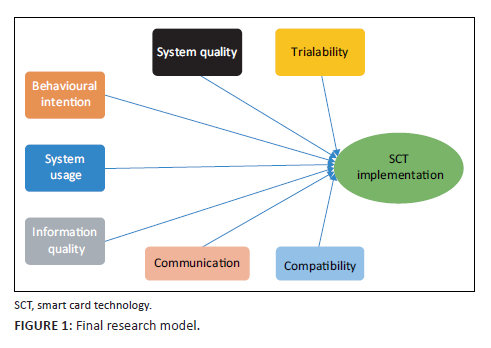
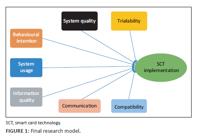
From the proposed conceptual framework illustrated in Figure 1 of this study, five constructs were adopted from HUTAUT. These constructs are EE, PE, SI, FC and BI, and they serve as independent variables.
Effort expectancy
Effort expectation is the extent to which using a system is effortless. The ease of use is key to influencing perceptions of the utility of innovation and is important from both a mandatory and a voluntary point of view. Therefore, the study hypothesises that:
H1: Effort expectancy is expected to have a positive effect on the implementation of SCT in healthcare.
Performance expectancy
Performance expectancy refers to the extent to which an individual believes that the use of technology will benefit healthcare professionals to achieve improvements in job performance. So far, performance expectation has been used to describe the technical context, while subjective standard and funding conditions have been used to define the implementation context.32
H2: Performance expectancy is expected to have a positive effect on the implementation of SCT in healthcare.
Social influence
In the context of this study, SI is defined as the extent to which a person believes that other important people should use a new system.3334
H3: Social influence is expected to have a positive effect on the implementation of SCT in healthcare.
Facilitating conditions
Facilitating conditions are assessed as the extent to which people can use the new technology without undue restrictions. The impact of these conditions on actual usage was greatest among older workers and those with more experience.35
H4: Facilitating conditions are expected to have a positive effect on the behavioural intention to implement SCT in healthcare.
Behavioural intention
In the context of this study, BI relates to a desire or purpose and is a direct determinant of actual usage.36
H5: Behavioural intention is expected to have a positive effect implementation of SCT in healthcare.
Delone and McLean information system success model
As independent variables in this study for the adoption of SCT technology, three constructs from the Delone and McLean model were adopted: service quality, system quality and information quality.
User attitude
The difference between customer expectations and the achieved reality is referred to as service quality.3737
H6: User attitude has a positive effect on the implementation of SCT in healthcare.
User satisfaction
In the context of this study, user satisfaction is referred to as the general use of technology which is reflected in contentment and enjoyment, software and decision satisfaction.38
H7: User satisfaction has a positive effect on the implementation of SCT in healthcare.
System use
Any healthcare facility should be able to provide intelligent search capabilities, quick and multi-site access and the capacity to digitally merge data fragments housed in geographically distributed databases by implementing the system.3940
H8: System use has a positive influence on SCT implementation.
Information quality
Information quality is a measure of how well the information is presented to a healthcare professional. It also indicates how well the information is formatted and presented. It can be argued that SCT should enable hospitals and clinics to seamlessly integrate business processes. In a proper health information system (HIS) implementation, information quality refers to the integration of several factors such as human, organisational and technical factors.41
H9: Information quality is expected to have a positive effect on user satisfaction to implement SCT in healthcare.
System quality
System quality designates the component of an IS dimension and thus summarises various measures of the system itself. As a result, system quality is thought to play a role in convenience, technological flexibility, system correctness, response time and usability.42
H10: System quality has a positive effect on the implementation of SCT in healthcare.
Service quality
In the context of this study, service quality is defined as the overall support provided to the service provider, whether the service is provided in-house or by a third party.4344
H11: Service quality is expected to have a positive effect on user satisfaction to implement SCT in healthcare.
Diffusion of innovation theory
The concept of innovation and diffusion is explained by the different independent variables identified in the model. These variables help explain the different stages of innovation and diffusion processes. In this study of implementing SCT technology, three DoI constructs were used: communication, compatibility and trialability.
Communication
According to Roger (2003)45
H12: Communication is expected to have a positive effect on the implementation of SCT in healthcare.
Compatibility
In this study, Rogers (2003)45
H13: Compatibility is expected to have a positive effect on the implementation of SCT in healthcare.
Trialability implementation
In this study, trialability is viewed as the degree to which health professionals provide services to citizens from time to time. In the relationship between innovation acceptance and trialability, health professionals' attitudes can play a mediating role.4647
H14: Trialability is expected to have a positive effect on the implementation of SCT in healthcare.
Implementation of smart card technology
In the context of this study, implementation strategies have been varied, and challenges in integrating mobile devices include a lack of administrative support and a lack of time or funding for teacher and student training. Overall, the use of mobile devices appears to bring benefits to nursing students; however, there is limited research.30
H15: Implementation of SCT has a positive influence on healthcare.
Methodology
This study adopted a quantitative approach where self-administered questionnaires were collected from healthcare professionals at Tshwane District Hospital, Steve Biko Academic Hospital, Pretoria West District Hospital and Kalafong Tertiary Hospital in Tshwane. The study design is a cross-sectional, face-to-face-based study distributed at these hospitals. The design of the structured questionnaire was done by professional academics who assisted at Steve Biko Academic Hospital. The questionnaire was distributed in physical form using a five-point Likert scale, ranging from strongly disagree (1) to strongly agree (1), which was used to measure the respondents' views on the adoption of the SCT in public healthcare.
Also, in obtaining sampling elements for this study, a nonprobability sampling technique called purposive sampling was used. As a result, the sample size for this study included four hospitals. For this study, data was collected at four hospitals in Gauteng to ensure reliability. In this study, participants were able to complete the survey and were allowed to be anonymous. The study protocol was approved by the ethical committee at the University of South Africa and the National Health Research Council. The Statistical Package for Social Sciences (SPSS) version 26 and AMOS 26 (both manufactured by IBM Corporation, Armonk, New York, United States) with the structural equation model were also used to evaluate the quantitative data. The Cronbach's alpha value was more than 0.7 after reliability and validity testing, indicating that all the data submitted and analysed were reliable.
Ethical considerations
Ethical approval to conduct the study was obtained from the Health Research Ethics Committee of the University of South Africa (ref. no. 2020/CAES_HREC/081). Further permission was obtained from the National Health Research Data (NHRD) to obtain data from Steve Biko Academic Hospital, Kalafong Tertiary Hospital, Tshwane District Hospital and Pretoria West District Hospital.
Results and findings
Sample and data collection
Data were collected during the coronavirus disease 2019 (COVID-19) pandemic over a period of two months in April 2021. Questionnaires were dropped at the different departments to allow the healthcare professionals opportunity to complete them. Managers were explained to assist the healthcare professionals in completing the questionnaires.
Reliability analysis
In the context of this study, reliability analysis was applied to allow consistency of the measured items by checking each construct. Also, the reliability test was performed on healthcare professionals' responses to the questionnaire to determine whether the data received are reliable or not. This was done using different data themes applied, such as expectancy level, usability, communication and trialability. The cut-off of 0.50 was corrected for the item-total correlation. The degree to which a test consistently measures whatever it measures is referred to as its reliability.4849
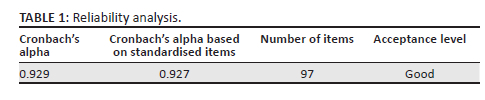
In this study, reliability or accuracy of the questionnaire was tested in SPSS using Cronbach's alpha, also known as the alpha coefficient. Cronbach's alpha is a number ranging from 0 to 1.484748Table 1 summarises the reliability of the questionnaire survey instrument.
Table 1 indicates that, based on 97 questionnaire items, the research instrument has a Cronbach's alpha coefficient of 0.927. The coefficient value is above the minimum threshold of 0.7; therefore, the research instrument was deemed reliable. To check if the results of the latent variables are valid and reliable, Cronbach's alpha, composite reliability and average variance extracted (AVE) were calculated.50
Descriptive statistics of constructs
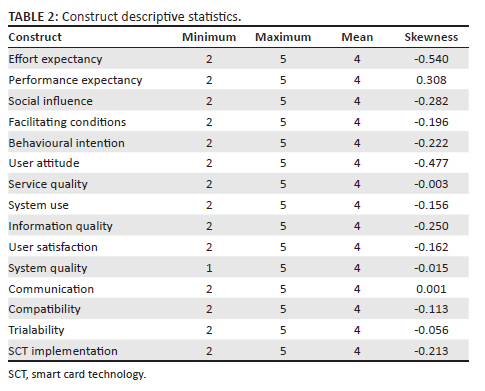
Using descriptive statistics, the researcher investigated and analysed a summary of information on the distribution and central tendency of continuous variables. The adoption factors for SCT influence usage used descriptive statistics which included the mean, minimum, maximum and skewness values used to analyse. In addition, it comprehends the distribution of the collected data. The mean value represents the midpoint of the available range. Skewness is a measure of asymmetry in a set of statistical data from the normal distribution.4848Table 2 summarises the results of the descriptive statistics extracted from SPSS.
The results show that all factors except for system quality had a minimum value of 2, which represents 'disagree'. This means that system quality was the only factor with at least one participant who strongly disagreed about its role towards the implementation of SCT in healthcare institutions, and none of the respondents strongly disagreed with the questions asked about the role of the rest of the factors towards the implementation of SCT in healthcare institutions. Regarding the maximum value, all factors had a maximum value of 5, a value that represents 'strongly agree'. This means that all factors had at least one participant who strongly agreed with the role that these factors play towards the implementation of SCT. These minimum and maximum statistics suggest that the majority of the respondents agreed and strongly agreed with the questions asked about the role of each factor towards the implementation of SCT; however, to be more confident with this conclusion, there is a need to interpret the mean and skewness statistics.
Table 2 shows that the mean value for all the factors is 4, a value that represents 'agree'. This suggests that for an average of 4 to be obtained, the majority of the respondents agreed and strongly agreed with the questions asked about the role of each factor towards the implementation of SCT in healthcare institutions. To further cement this conclusion, skewness statistics were analysed, and the results in Table 4 indicate that all factors except for PE and communication have a negative skewness value, which means that the majority of their data points are aligned to the right side of the mean value (the side with 'agree' and 'strongly agree'). This means that for these factors, the majority of the respondents agreed and strongly agreed with the questions asked about the role they play towards the implementation of SCT in healthcare institutions. Communication and service quality have low positive and negative skewness values of 0.001 and -0.003, respectively, which are nearly zero, suggesting that there is a balance between respondents who agreed or strongly agreed and those who disagreed or strongly disagreed. Furthermore, there could be more respondents who were neutral to the questions asked about the role of communication and service quality towards the implementation of SCT. Performance expectancy had a high positive skewness value of 0.308, meaning that most of the respondents disagreed and strongly disagreed with the questions asked about its role in the implementation of SCT in healthcare institutions.
Of all factors with a negative skewness, EE had the highest negative skewness of −0.54, followed by user attitude, SI, information quality, BI and SCT implementation, with skewness values of −0.477, −0.282, −0.250, −0.222 and −0.213, respectively. System quality and trialability have the least negative skewness value of −0.015 and −0.056, respectively. In summary, respondents generally agreed and strongly agreed with the role that the factors investigated by this study play towards the implementation of SCT in healthcare institutions.
Kaiser-Meyer-Olkin and Bartlett's test
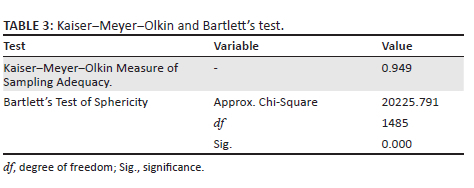
The Kaiser-Meyer-Olkin (KMO) and Bartlett's test was the second result of the principal component analysis (PCA) factor analysis. The KMO statistic ranges from 0 to 1. For factor analysis to be effective, the value of KMO should be close to 1 rather than 0. A value close to 1 indicates that correlation patterns are relatively compact, implying that factor analysis should yield distinct and reliable factors. Also, values between 0.5 and 0.7 are considered mediocre, values between 0.7 and 0.8 are considered very good, values between 0.8 and 0.9 are considered very good and values greater than 0.9 are considered superb.51Table 3; this value falls in the superb range, so one can be confident that factor analysis is appropriate for these data.
Factor analysis
Factor analysis is a method of modelling the covariation among a set of observed variables as a function of one or more latent constructs.52525354
The study extracted factors using the PCA method. The goal of PCA is to find a sequence of orthogonal factors that represent the directions of the greatest variance.55
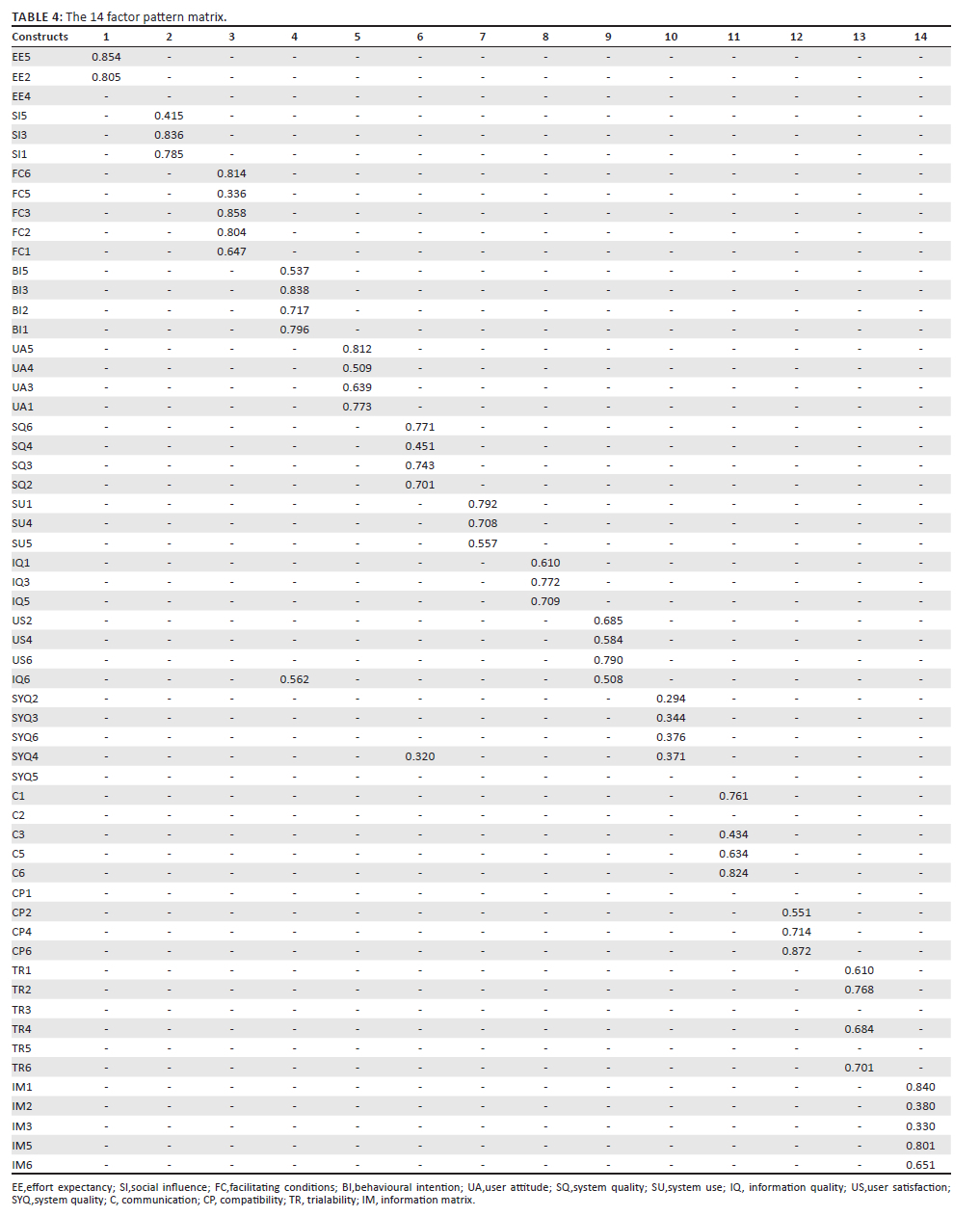
Exploratory factor analysis (EFA) was conducted using maximum likelihood with promax rotation to determine if the items loaded well onto the variables and correlated adequately. Maximum likelihood estimation was chosen to determine the unique variance among items and the correlation between factors. According to Pallant,48n = 406) because promax can account for the correlated factors. The 14-factor pattern matrix (Table 4) shows the outcome of the factor analysis. Before the factor analysis, Bartlett's test of sphericity and KMO measure of sampling adequacy were assessed. The results revealed a KMO of 0.949 and Bartlett's test is significant at α = 0.000 with a Chi-square value of 20225.791, indicating the suitability of conducting exploratory factor analysis (Kaiser, 1974).56
Hypotheses testing
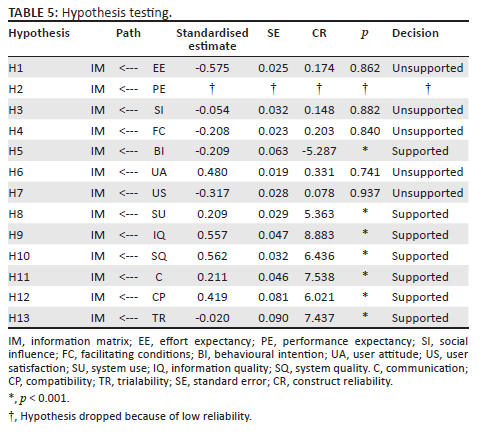
Seven of the 13 hypotheses (Table 5) were supported by the model, as shown in Figure 1 and Table 4. The first hypothesis (H1) was not supported. This suggests that EE does not have a significant impact on the implementation of SCT (β = −0.575, p = 0.862, R2β = −0.054, p = 0.882, R2β = −208, p =0.840, R2
Hypothesis five, which states that BI has a significant impact on implementation of SCT, was supported (β = −0.209, p < 0.001, R2β = 0.480, p = 0.741, R2β = −0.317, p = 937, R2β = 0.209, p < 0.001, R2β = 0.557, p < 0.001, R2β = 0.562, p < 0.001, R2β = 0.211, p < 0.001, R2β = 0.419, p < 0.001, R2β = −0.020, p < 0.001, R2
Discussion
This study has identified variables that contribute to the critical factor analysis for the implementation of SCT in healthcare institutions. Furthermore, the study provides insights into the body of knowledge regarding the implementation of SCT in healthcare institutions. The structural equation modelling (SEM) was based on 15 relationships of the initial variables. Information quality has a significant impact on the implementation of SCT in public healthcare, with the significant value of p < 0.001, β = 0.557 and R2p < 0.001, β = 0.562 and R241
The researcher performed an inferential statistic based on the structural equation model to test all the factors that support and have a significant effect on the implementation of SCT in the public healthcare sector. It was discovered that BI, system usage, information quality, system quality, communication, compatibility and trialability are the critical factors and variables discovered in the study that support the implementation of smart card technologies in the public healthcare as equally discovered.
The researcher strongly believes that the findings discovered in the studies solidly confirm the implementation of the HUTAUT model and the DeLone and McLean (2003) IS success model on effective system use. Notwithstanding the above researcher's works, it was deduced that there exists conformance between their studies and the findings derived from these studies. The researcher equally believes that factors such as communication, compatibility and trialability support the DoI.
Technology implementation with the focus on healthcare professionals to use in public healthcare. However, this study does not rule out the implementation in private healthcare, as the system of admission, for example, is more or less the same as public healthcare. Therefore, lessons can be drawn in both institutions of healthcare to best implement healthcare technologies. Another recommendation is that the study can be extended to include the comparison of healthcare professionals and patients by making a comparison in developed countries and less developed countries. Although smart card itself is fairly old as it has been used in the banking environment, future studies should incorporate this portion as several healthcare workers experience difficulties in the implementation of technology. The study's findings discovered that for a framework for the implementation of SCT discovered seven out of the 13 hypotheses were supported. The first hypothesis was unsupported. This suggests that EE does not have a significant impact on the implementation of SCT (β = −0.575, p = 0.862, R2β = −0.054, p = 0.882, R2β = −208, p = 0.840, R2β = −0.209, p < 0.001, R2β = 0.480, p = 0.741, R2β = −0.317, p = 937, R2β = 0.209, p < 0.001, R2β = 0.557, p < 0.001, R2β = 0.562, p < 0.001, R2β = 0.211, p < 0.001, R2β = 0.419, p < 0.001, R2β = −0.020, p < 0.001, R2
The research did not compromise patients' privacy, but a series of ethical considerations was considered, such as the handling of confidentiality of patient data that is necessary to collect. Another area in the study was keeping confidential information about participants by keeping the questionnaire answers highly anonymous. The researchers must protect the respondents by paying attention to the rights, keeping ethical issues checked and protecting the integrity of the data collected.57
Limitations of the study
As this study was cross-sectional, it was unable to conclude causation. In addition, the COVID-19 pandemic was very high during the collection of data, and not all healthcare professionals in the identified hospitals were able to complete the questionnaire survey. In conclusion, it is required for management to support the healthcare professionals at all costs to avoid workloads that will hamper the delivery of healthcare services. Further studies need to evaluate the usability of technology in the Tshwane hospitals.
Future works
In this study, the use of the TAM as a framework would be recommended to measure the level of adoption and the impact use of SCT in public healthcare.
Conclusion
This study investigated the adoption of SCT in public healthcare and provided recommendations through its analysis performed. The study provides an insight for understanding the used models and theories selected, such as the modified HUTAUT model, the Delone and McLean model and DoI theory, which are all valid in this type of analysis. As previously stated, intriguing departures from the model were discovered and justified. Using relevant literature, these was explained fully. In this study, descriptive statistics presented the mean, median, mode, standard deviation and variance of the data. Furthermore, descriptive statistic shows the age of the respondents, and the graphs of gender distribution among the respondents were tested. Finally, SEM was applied to the data. The research found that seven hypotheses (BI, system use, system quality, information quality, communication, compatibility and trialability) were supported for the study. On the other hand, the PE hypothesis was not dropped because of low reliability, and five hypotheses (EE, SI, FC, user satisfaction and user attitude) were therefore not supported for the study. Therefore, this study will help to develop more relevant technology in public healthcare.
Competing interests
The author has declared that no competing interests exist.
Authors' contributions
L. Malungana conceptualized the idea and wrote the first draft of the article. L. Motsi reviewed the first and final drafts of the article.
Funding information
This research received no specific grant from any funding agency in the public, commercial or not-for-profit sectors.
Data availability
Data used in this study will be made available upon reasonable request to the author.
Disclaimer
The views and opinions expressed in this article are those of the author and do not necessarily reflect the official policy or position of any affiliated agency of the author.
Acknowledgements
This research was supported by the National Health Research Council of South Africa. The authors would like to acknowledge the University of Health Research Ethics Committee, Steve Biko Academic Hospital, Tshwane District Hospital, Kalafong Tertiary Hospital as well as Pretoria West District Hospital for their support for helping us to collect data from healthcare professionals.
References
- 1.Li Z, Su Q, Zhu Y. Smart health information platform for chain of care: Conceptional framework, functional design and pivotal technologies. 2014 11th International Conference on Service Systems and Service Management (ICSSSM). 2014:1-5. https://doi:10.1109/ICSSSM.2014.6943411.
-
2.Sezgin E, Özkan-Yıldırım S. A cross-sectional investigation of acceptance of health information technology: A nationwide survey of community pharmacists in Turkey. Res Soc Adm Pharm. 2016;12(6):949-965. https://doi.org/10.1016/j.sapharm.2015.12.006
» https://doi.org/10.1016/j.sapharm.2015.12.006 -
3.Wirtz BW, Mory L, Ullrich S. eHealth in the public sector: An empirical analysis of the acceptance of Germany's electronic health card. Public Adm. 2012;90(3):642-663. https://doi.org/10.1111/j.1467-9299.2011.02004.x
» https://doi.org/10.1111/j.1467-9299.2011.02004.x -
4.Barbosa G, Takako P, Sadok D. An internet of things security system based on grouping of smart cards managed by field programmable gate array. Comput Electr Eng. 2020;74(2019):331-348. https://doi.org/10.1016/j.compeleceng.2019.02.013
» https://doi.org/10.1016/j.compeleceng.2019.02.013 -
5.Furusa SS, Coleman A. Factors influencing e-health implementation by medical doctors in public hospitals in Zimbabwe. S Afr J Inf Manag. 2018;20(1):1-9. https://doi.org/10.4102/sajim.v20i1.928
» https://doi.org/10.4102/sajim.v20i1.928 -
6.Schoville RR, Titler MG. Guiding healthcare technology implementation: A new integrated technology implementation model. Comput Inform Nurs. 2015;33(3):99-107. https://doi.org/10.1097/CIN.0000000000000130
» https://doi.org/10.1097/CIN.0000000000000130 - 7.Alam MT, Ali ML. A model of a secured smart e-health system. Proceedings of the 2016 International Conference on Industrial Engineering and Operations Management; 2016 Mar 8-10. Kuala Lumpur: IEOM Society International; 2016.
-
8.Adebayo KJ, Ofoegbu EO. Issues on e-health adoption in Nigeria. Int J Mod Educ Comput Sci. 2014;6(9):36-46. https://doi.org/10.5815/ijmecs.2014.09.06
» https://doi.org/10.5815/ijmecs.2014.09.06 -
9.Marufu C, Maboe KA. Utilisation of mobile health by medical doctors in a Zimbabwean health care facility. Health SA Gesondheid. 2017;22:228-234. https://doi.org/10.1016/j.hsag.2017.03.002
» https://doi.org/10.1016/j.hsag.2017.03.002 -
10.Hung SY, Tsai JCA, Chuang CC. Investigating primary health care nurses' intention to use information technology: An empirical study in Taiwan. Decis Support Syst. 2014;57(1):331-342. https://doi.org/10.1016/j.dss.2013.09.016
» https://doi.org/10.1016/j.dss.2013.09.016 -
11.Kushniruk AW, Bates DW, Bainbridge M, Househ MS, Borycki EM. National efforts to improve health information system safety in Canada, the United States of America and England. Int J Med Inform. 2013;82(5):e149-e160. https://doi.org/10.1016/j.ijmedinf.2012.12.006
» https://doi.org/10.1016/j.ijmedinf.2012.12.006 -
12.Renuka K, Kumari S, Li X. Design of a secure three-factor authentication scheme for smart healthcare. J Med Syst. 2019;43(5):133. https://doi.org/10.1007/s10916-019-1251-3
» https://doi.org/10.1007/s10916-019-1251-3 - 13.Welay A, Gebremariam K, Gebretsadik T. Process evaluation of health management information system implementation status in public health facilities of Mekelle Zone, Tigray, Ethiopia. Research & Reviews: A Journal of Computational Biology. 2017 Apr 11;6(1).
-
14.Magaqa VLL. University of Kwazulu-Natal the user-friendliness of a hospital information system using telemedicine in a traditional personnel culture at tertiary Inkosi Albert Luthuli Central Hospital of Kwazulu-Natal in South Africa [homepage on the Internet]. 2012. n.d., p. 360. Available from: http://hdl.handle.net/10413/10383
» http://hdl.handle.net/10413/10383 -
15.Sadoughi F, Khodaveisi T, Ahmadi H. The used theories for the adoption of electronic health record: A systematic literature review. Health Technol (Berl). 2019;9(4):383-400. https://doi.org/10.1007/s12553-018-0277-8
» https://doi.org/10.1007/s12553-018-0277-8 - 16.Howell P, Abdelhamid M, Sharman R, Das S. Smart card adoption in healthcare: An experimental survey design using message framing. 2016 International Conference on Information Systems (ICIS); Dublin:2016; p. 1-12.
-
17.Lai PC. The literature review of technology adoption models and theories for the novelty technology. J Inf Syst Technol Manag. 2017;14(1):21-38. https://doi.org/10.4301/S1807-17752017000100002
» https://doi.org/10.4301/S1807-17752017000100002 -
18.Shiferaw AM, Zegeye DT, Assefa S, Yenit MK. Routine health information system utilization and factors associated thereof among health workers at government health institutions in East Gojjam Zone, Northwest Ethiopia. BMC Med Inform Decis Mak. 2017;17(1):116. https://doi.org/10.1186/s12911-017-0509-2
» https://doi.org/10.1186/s12911-017-0509-2 - 19.Mahajan A, Verma A, Pahuja D. Smart card: Turning point of technology. Int J Comput Sci Mob Comput. 2014;3(10):982-987.
-
20.Putri YA, Budiarto W. Literature review: The implementation of e-health at primary healthcare centers in Surabaya City. J Adm Kesehat Indones. 2020;8(1):40. https://doi.org/10.20473/jaki.v8i1.2020.40-55
» https://doi.org/10.20473/jaki.v8i1.2020.40-55 -
21.Addai EB, Arthur B. Ghana's road to cashless economy: The E-ZWICH experience O Caminho de Gana para uma economia sem dinheiro: A experiência E-ZWICH. J Innov Sustain. 2020;11(1):52-67. https://doi.org/10.23925/2179-3565.2020v11i1p52-67
» https://doi.org/10.23925/2179-3565.2020v11i1p52-67 -
22.DeLone WH, McLean ER. The DeLone and McLean model of information systems success: a ten-year update. J. Manag. Inf. Syst. 2003;19(4):9-30. https://doi.org/10.1080/07421222.2003.11045748
» https://doi.org/10.1080/07421222.2003.11045748 -
23.Holden RJ, Karsh B-T. The technology acceptance model: Its past and its future in health care. J Biomed Inform. 2010;43(1):159-172. https://doi.org/10.1016/j.jbi.2009.07.002
» https://doi.org/10.1016/j.jbi.2009.07.002 - 24.Maeko ME, Van Der Haar DT. A framework for user awareness and acceptance of smart card and fingerprint-based access control to medical information systems in South Africa. 2018 IST-Africa Week Conference (IST-Africa); 2018 May 9; Johannesburg: IEEE, 2018; p. 1-8.
-
25.Dang Y (Mandy), Zhang Y (Gavin), Brown SA, Chen H. Examining the impacts of mental workload and task-technology fit on user acceptance of the social media search system. Inf Syst Front. 2020;22(3):697-718. https://doi.org/10.1007/s10796-018-9879-y
» https://doi.org/10.1007/s10796-018-9879-y -
26.Mehra B, Singh V, Hollenbach N, Partee RP. Rural librarians as change agents in the twenty-first century: Applying community informatics in the southern and central appalachian region to further ICT literacy training. In: Real B, editor. Rural and small public libraries: Challenges and opportunities. Bingley: Emerald Publishing, 2017; p. 123-153. https://doi.org/10.1108/S0065-283020170000043006
» https://doi.org/10.1108/S0065-283020170000043006 -
27.Erlirianto LM, Ali AHN, Herdiyanti A. The implementation of the human, organization, and technology-fit (HOT-Fit) framework to evaluate the electronic medical record (EMR) system in a hospital. Proc Comput Sci. 2015;72:580-587. https://doi.org/10.1016/j.procs.2015.12.166
» https://doi.org/10.1016/j.procs.2015.12.166 -
28.Rogers EM. How research can improve practice: A case study. Theory Pract 1962;1(2):89-93. https://doi.org/10.1080/00405846209541785
» https://doi.org/10.1080/00405846209541785 -
29.Cheng Y-M. Exploring the intention to use mobile learning: The moderating role of personal innovativeness. J Syst Inf Technol. 2014;16(1):40-61. https://doi.org/10.1108/JSIT-05-2013-0012
» https://doi.org/10.1108/JSIT-05-2013-0012 - 30.Chambers D, Simpson L, Neta G, et al. Proceedings from the 9th annual conference on the science of dissemination and implementation. Implement Sci. 2017;12(Suppl_1):1-67.
-
31.Doyle GJ, Garrett B, Currie LM. Integrating mobile devices into nursing curricula: Opportunities for implementation using Rogers' diffusion of innovation model. Nurse Educ Today. 2014;34(5):775-782. https://doi.org/10.1016/j.nedt.2013.10.021
» https://doi.org/10.1016/j.nedt.2013.10.021 -
32.Teo T. Influences of contextual variables on the intention to use technology in education: A latent variable modeling approach. Campus Wide Inf Syst. 2013;30(2):95-105. https://doi.org/10.1108/10650741311306282
» https://doi.org/10.1108/10650741311306282 - 33.Sallehudin H, Bakar NAA, Ismail M, Razak RC, Baker R, Fadzil AFM. The utilization of military lifetime health record. 2019 International Conference on Electrical Engineering and Informatics (ICEEI); 2017 Apr. Bandung: IEEE; p. 506-513.
-
34.Lwoga ET, Komba M. Antecedents of continued usage intentions of web-based learning management system in Tanzania. Educ Train. 2015;57(7):738-756. https://doi.org/10.1108/ET-02-2014-0014
» https://doi.org/10.1108/ET-02-2014-0014 -
35.Kamal SA, Shafiq M, Kakria P. Investigating acceptance of telemedicine services through an extended technology acceptance model (TAM). Technol Soc. 2020;60:101212. https://doi.org/10.1016/j.techsoc.2019.101212
» https://doi.org/10.1016/j.techsoc.2019.101212 - 36.Kiwanuka A. Acceptance process: The missing link between UTAUT and diffusion of innovation theory. Am J Inf Syst. 2015;3(2):40-44.
-
37.Puspita SC, Supriyantoro Hasyim. Analysis of hospital information system implementation using the human-organization-technology (HOT) fit method: A case study hospital in Indonesia. Eur J Bus Manag Res. 2020;5(6):1-8. https://doi.org/10.24018/ejbmr.2020.5.6.592
» https://doi.org/10.24018/ejbmr.2020.5.6.592 - 38.Lau F, Kuziemsky C, editors. Handbook of eHealth Evaluation: An Evidence-based Approach [Internet]. Victoria (BC): University of Victoria; 2017 Feb 27.
- 39.Acquah-Swanzy M. Evaluating electronic health record systems in Ghana: The case of Effia Nkwanta Regional Hospital [master's thesis in telemedicine and e-health]. The Arctic University of Norway; 2015.
-
40.Sombat P, Chaiyasoonthorn W, Chaveesuk S. The acceptance model of hospital information systems in Thailand: A conceptual framework extending TAM. 2018 5th International Conference on Industrial Engineering and Applications (ICIEA). 2018:89-94. https://doi.org/10.1109/IEA.2018.8387076
» https://doi.org/10.1109/IEA.2018.8387076 -
41.Kilsdonk E, Peute LW, Jaspers MWM. Factors influencing implementation success of guideline-based clinical decision support systems: A systematic review and gaps analysis. Int J Med Inform. 2017;98:56-64. https://doi.org/10.1016/j.ijmedinf.2016.12.001
» https://doi.org/10.1016/j.ijmedinf.2016.12.001 -
42.Shachak A, Kuziemsky C, Petersen C. Beyond TAM and UTAUT: Future directions for HIT implementation research. J Biomed Inform. 2019;100:103315. https://doi.org/10.1016/j.jbi.2019.103315
» https://doi.org/10.1016/j.jbi.2019.103315 -
43.Mardani A, Hooker RE, Ozkul S, et al. Application of decision making and fuzzy sets theory to evaluate the healthcare and medical problems: A review of three decades of research with recent developments. Expert Syst Appl. 2019;137:202-231. https://doi.org/10.1016/j.eswa.2019.07.002
» https://doi.org/10.1016/j.eswa.2019.07.002 -
44.Halvorsrud R, Kvale K, Følstad A. Improving service quality through customer journey analysis. J Serv Theory Pract. 2016;26(6):840-867. https://doi.org/10.1108/JSTP-05-2015-0111
» https://doi.org/10.1108/JSTP-05-2015-0111 - 45.Rogers EM. Diffusion of innovations. Glencoe, Ill: The Free Press; 2003.
-
46.Zhang L, Wen H, Li D, Fu Z, Cui S. E-learning adoption intention and its key influence factors based on innovation adoption theory. Math Comput Model. 2010;51(11-12):1428-1432. https://doi.org/10.1016/j.mcm.2009.11.013
» https://doi.org/10.1016/j.mcm.2009.11.013 -
47.Dos Santos Brito K, Da Silva Costa MA, Garcia VC, De Lemos Meira SR. Brazilian government open data: Implementation, challenges, and potential opportunities. Proceedings of the 15th Annual International Conference on Digital Government Research, New York, NY; 2014. https://doi.org/10.1145/2612733.2612770
» https://doi.org/10.1145/2612733.2612770 -
48.Pallant J. SPSS survival manual. 5th ed. London: Routledge; 2020. https://doi.org/10.4324/9781003117445
» https://doi.org/10.4324/9781003117445 - 49.Amaral G, Bushee J, Cordani UG, et al. Stress-related growth: Correlates and changes following a resilience intervention. J Petrol. 2013;369:1689-1699.
-
50.Karamat J, Shurong T, Ahmad N, Afridi S, Khan S, Khan N. Developing sustainable healthcare systems in developing countries: Examining the role of barriers, enablers and drivers on knowledge management adoption. Sustainability. 2019;11(4):954. https://doi.org/10.3390/su11040954
» https://doi.org/10.3390/su11040954 -
51.Dhagarra D, Goswami M, Kumar G. Impact of trust and privacy concerns on technology acceptance in healthcare: An Indian perspective. Int J Med Inform. 2020;141:104164. https://doi.org/10.1016/j.ijmedinf.2020.104164
» https://doi.org/10.1016/j.ijmedinf.2020.104164 - 52.Factor analysis: Exploratory and confirmatory. In: Bandalos DL, Finney SJ editor. The reviewer's guide to quantitative methods in the social sciences. Routledge, 2018; p. 98-122.
- 53.Lee HB, Comrey AL. A first course in factor analysis. Vol. 4. New York, NY: Psychology Press, 2016; p. 1-23.
- 54.Mukherjee SP, Sinha BK, Chattopadhyay AK. Statistical methods in social science research. Singapore: Springer; 2018 Oct 5.
- 55.Çelik A, Yaman H, Turan S, et al. Five ways of doing qualitative analysis. J Mater Process Technol. 2018;1(1):1-8.
-
56.Kaiser HF. An index of factorial simplicity. Psychometrika. 1974 Mar;39(1):31-6. https://doi.org/10.1007/BF02291575
» https://doi.org/10.1007/BF02291575 - 57.John W, Creswell JD. Research Design: Qualitative, Quantitative, and Mixed Methods Approaches, by John Creswell and J. David Creswell. Thousand Oaks, CA: Sage Publication, Inc. 2018.

Accepted: 12 Aug. 2022
Published: 07 Dec. 2022