A transdisciplinary scoping review of social identity among African youths with autism
Abstract
Autism spectrum disorder (ASD) is an evolving concept in the neurodiversity community. There is now a continuum of views ranging from biological through social models of which the medical model views ASD as pathological rather than atypical and the social model views disability as arising from the obstacles faced by individuals in societies. This qualitative study used the Preferred Reporting Items for Systematic Reviews and Meta-Analysis (PRISMA) to interrogate evidence on variations in social identity among youths with ASD living in Africa.1 Seventeen studies were reviewed from twelve databases. Inclusion criteria were studies on ASD in Africa published in English between 2019-2024. Data were thematically analysed following a single approach. Results organised by themes indicated that youths with ASD in Africa: (1) were stigmatised and discriminated (2) have limited access to resources (3) are socially excluded and (4) have low self-esteem. The study's findings suggest that ASD in Africa still holds more of a negative identity. TRANSDISCIPLINARY CONTRIBUTION: The use of different studies in this study allowed integration of views, methods and information from a variety of disciplines. A detailed understanding of how youth with ASD aged 12 years-35 years negotiate their social situations and establish identities across varied in their cultural contexts is made possible by this comprehensive approach. This also facilitated the identification of research gaps and advocates for comprehensive interventions that acknowledge the distinct social realities faced by African youths with ASD
Africa; autism; discrimination; inclusion; neurodiversity; neurology; self-acceptance; social identity; youths
Introduction
Autism is the umbrella term for a group of conditions together described as the autism spectrum disorder (ASD)223424562578,9
Many caregivers are reluctant to work with youths who have ASD because of stigma, discrimination, a lack of understanding and negative attitudes towards youths with ASD.101111,121311
Social identity
According to social identity theory, social identity is the part of a person's self-concept that comes from belonging to social groups.1212,1312
Youths with ASD develop social identities through interactions, experiences and understanding societal norms. Supportive environments, including friendships and inclusive activities, aid in self-expression and connections. According to Zeliadt, youths with ASD who participate in social activities are likely to form more lasting relationships. However, most youths with ASD find it difficult to form relationships because of social communication difficulties, a lack of understanding of social cues, limited empathy, repetitive behaviours, adherence to routines and intense interest. These restrictions negatively impact their abilities to engage in meaningful social connections.1212
The significance of social identity formation of youth with autism spectrum disorder
The formation of social identity among youths with ASD is critical as it influences their self-perception, relationships and overall well-being.1213131211,12,1312
To support social identity formation, youths with ASD require comprehensive interventions that address their unique needs. Support mechanisms may include social skills training, peer mentoring programmes and therapeutic interventions that promote emotional regulation and social understanding.121314
Medical model perspective on autism spectrum disorder spectrum disorders
The medical model of disability is a framework that provides a collection of rules and guidelines that subtly defines individuals with disabilities as being ill by assigning a sick role to people with barriers, it oppresses, dehumanises and controls them.1515,1615,16,1718,192019
The medical perspective on ASD, which often emphasises deficits and abnormalities in neurological functioning,151616131318
The social model perspective on autism spectrum disorder spectrum disorders
The social model of disability has completely changed how society views and understands disability. The social model stresses how societal constraints contribute to disablement, unlike the medical model that pathologises conditions such as ASD as a personal tragedy or individual handicap.1414,1517,2116,221919,222215212217,23
The social model perspective of disability emphasises the impact of societal attitudes, structures and barriers in shaping the experiences of individuals with disabilities, including youths with ASD.14161823,24
Neurodiversity movement perspective on autism spectrum disorder spectrum disorders
There are various ways to frame ASD. Neurodiversity is connected to an 'ecological society' in which human variation is respected and assisted in identifying their niche.171717181618141416
The neurodiversity perspective on ASD emphasises the recognition and validation of individuals with ASD as a part of human diversity, challenging traditional deficit-focused views.171817191425
Autism spectrum disorder in the African context
The concept of ASD as it is widely applied in Western countries is not exclusive to the African context. Autism spectrum disorder is probably more of a functional than a neurological issue in many African countries.26262627
Neither the ASD paradigm as it is known in the Euro-Western context nor any African language has any terms with a similar meaning that originated from Euro-Western countries.26Usonji,26Osatha kulankula bwino, which translates to 'someone who cannot speak properly'.26ukungashintshiswa'26almodai corresponds to the Western understanding of ASD, which means stupid.2828,29'haana kukwana' in Shona that most closely resembles ASD is 'not enough'. A person who is inadequate could find it difficult to participate in social activities and could require assistance.
The African perspective on ASD significantly influences the social identity of youths with the ASD, emphasising community and cultural context over individualism.242526,3027,29
Social identity theory
In this section, we explain the theoretical framework that structured our study's argument. The theoretical underpinning for this study was social identity theory. Social identity theory is a useful theoretical framework for examining the social identities of young people with ASD in Africa.1212131314
Aim of the study
This study aimed to undertake a scoping review on the social identity of youth with ASD in Africa. It seeks to respond to the following questions:
• What is the emerging evidence of social acceptance of youth with ASD living in Africa?
• How do youth with ASD in Africa experience social inclusion in their communities?
• How accessible are resources, opportunities and services for youth with ASD in Africa?
• What is the emerging evidence on self-advocacy and resilience among youth with ASD in African communities?
Methods
Research design
To compile information on social identity among youths with ASD in African, this study used a scoping review. A scoping review offers preliminary data based on an expanding amount of data in a field of study that has received little or no investigation.1
Search strategy
This study conducted searches in the following databases: the African Education Research Database (AERD) produced 5 articles, JSTOR 20, Scopus produced 10, Research Gate seventeen, Bielefeld Academic Search Engine (BASE) 8, SSRN 3, EBSCO Host 12, PubMed 10, Google Scholar 35, Web of Science 5 AJOL 6 and PsycINFO produced 15. The researcher first consulted the EBSCO Host using the study search terms. The EBSCO Host facilitated access to other databases such as the AERD, Scopus, the BASE and Google Scholar: ASD among youths in Africa. The following search terms were used:
• Self-identities of youths with ASD in Africa.
• Self-advocacy buy youths with Autism in Africa.
• Experiences of youths with ASD.
• Identity negotiation among youths with ASD.
• Inclusion of youths with ASD in Africa.
• Social inclusion of youths with ASD in Africa.
• Resources, opportunities or services for youths with ASD in Africa.
• Self-acceptance and self-esteem among youth with ASD in Africa' (search terms are shown in Box 1).
Inclusion criteria
Applying the United Nations Convention on the Rights of Persons with Disabilities (UNCRPD) framework,30,31
Exclusion criteria
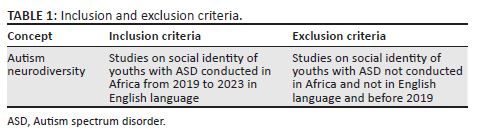
We excluded studies on social identity of youths with ASD in Africa that were published before 2019. Selecting articles published within the last 5 years for a scoping review on social identities of youths with ASD in Africa was crucial to capture recent developments in research, societal understanding and policy changes. This timeframe ensures the inclusion of the latest cultural, environmental and contextual factors affecting these youths, reflecting their current experiences and challenges in the rapidly evolving landscape of ASD research. Our inclusion and exclusion criteria are shown in Table 1.
Finding related studies
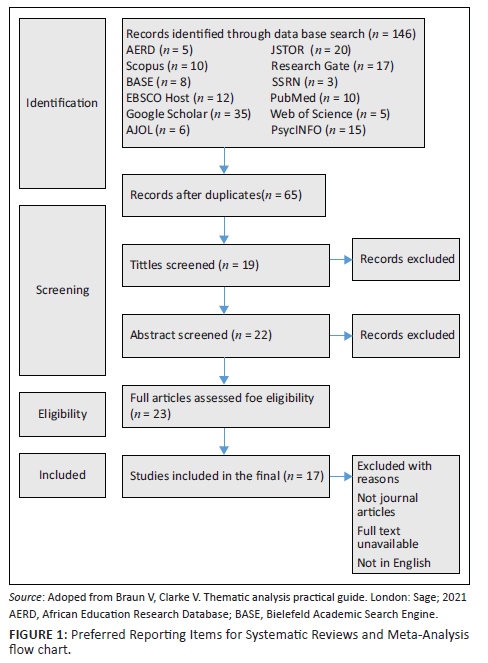
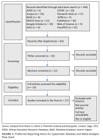
The Preferred Reporting Items for Systematic Reviews and Meta-Analysis (PRISMA) guided the research questions and searching for this scoping review. The use of PRISMA helped in improving transparency and quality of systematic review and meta-analysis of this study. It provided checklist and flow diagram to ensure comprehensive reporting of the study methodology and findings1Figure 1). We carried out our first search in the AERD database for initial leads, progressing our search and identifying productive search terms. We then extended the search strategy with other chosen databases for the thoroughness of the investigation. The use of twelve databases in this study was essential for comprehensive capturing of relevant literature.11Box 1.

Data charting
A total of 146 articles were selected for screening after the publications were meticulously sorted according to the inclusion criteria. Of the 146 studies 65 were duplicates, which we eliminated. Eighty-one articles with suitable titles remained after we eliminated 19 articles in the title screening because they were conducted out of Africa. Twenty-two articles were eliminated at the abstract screening stage of the next screening process because the abstracts were not sufficiently addressing self-identities of youths with ASD in Africa. Using the inclusion criteria for research that were released in English between 2019 and 2023, 23 articles were removed and 17 articles were found for the review.11Figure 1 for the PRISMA flow chart.
Data synthesis
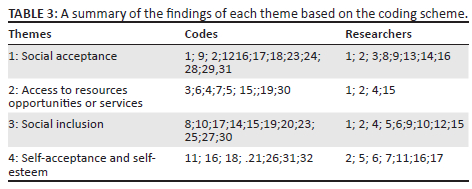
We plotted the results against the main inclusive community principles taken from the framework in order to synthesise the data. The UNCRPD's tenets are as follows: (1) Respect for dignity, (2) Non-discrimination, (3) Full and effective participation, (4) Accessibility, (5) Equality before the law, (6) Right to life, (7) Personal mobility, (8) Education, (9) Health and (10) Work and employment. However, results from this study were plotted against a summary of the UNCPRD because the reviewed articles examined social identities of youths with ASD outside the UNCRPD framework. In order to manage the study results, this scoping review only considered results related to UNCRPD framework because it provides a comprehensive legal framework that underscores the rights and dignity of individuals with disabilities, making it highly relevant for scoping review studies that explore self-identities of youths with ASD in Africa and the tenets of study's social identity theory. The UNCRPD framework-related themes from this study scoping reviews were as follows: (1) social acceptance; (2) access to resources, opportunities or services; (3) social inclusion and (4) self-acceptance and self-esteem.
Ethical considerations
An application for full ethical approval was made to the Zimbabwe Open University Ethical Review Board, and ethics consent was received on 08 June 2024. The ethics waiver number is 6001/123. The Zimbabwe Open University Ethical Review Board issued an ethics waiver for the study because the study does not include human participants.
Results
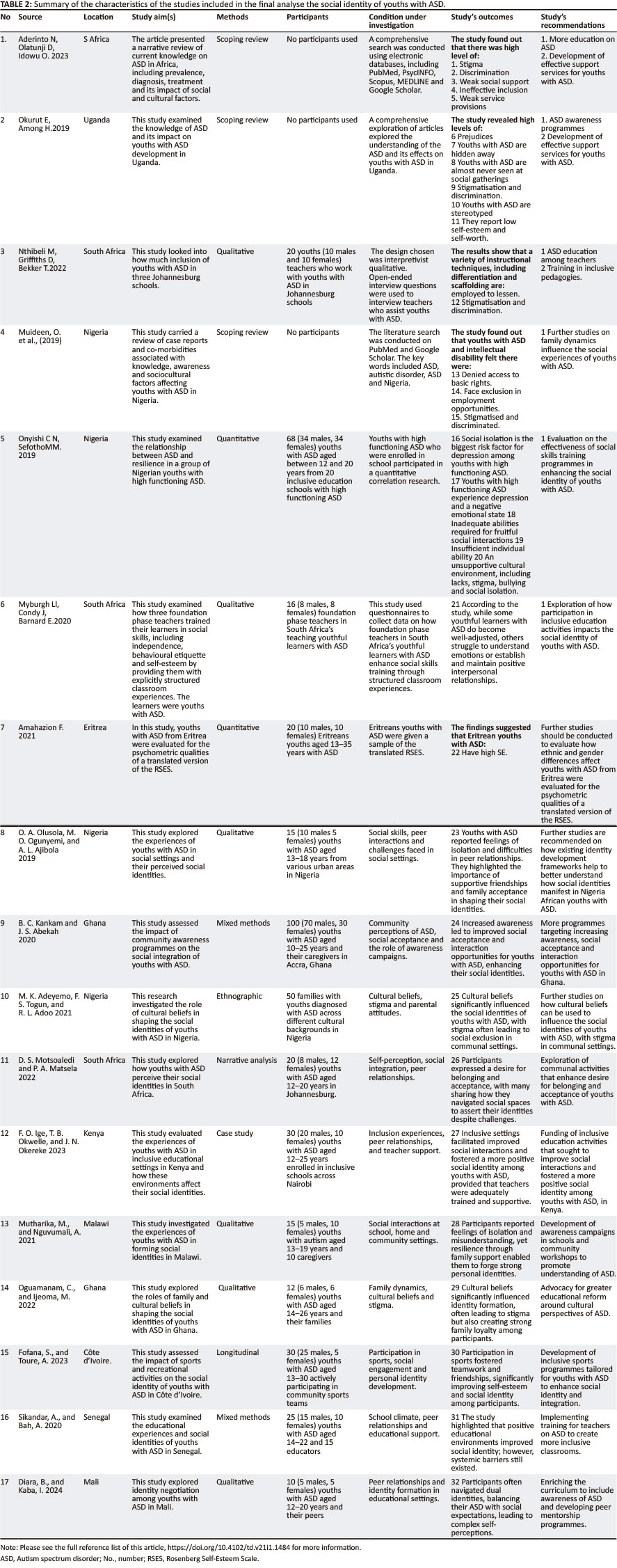
Eight of the seventeen studies12,13,32,33,34,35,36,37Table 3. Four further studies that were evaluated12,13,14,3712,14,32,34,38,37,39,40,4112,38,39,42,43,44,45
Discussions of main findings
This study provides a discussion of the main findings of results which are consistent with the social identity theory and the UNCRPD. Social identity theory provides a thorough framework for examining the social identities of young people with ASD in Africa. Social identity theory helps to explore how social identity impacts the sense of self of individuals with ASD and their interactions with others by taking into account the cultural, societal and individual aspects that define these people's experiences.
Theme 1: Social acceptance
The results of the reviewed research show that social acceptance of youths with ASD in Africa is very low.12,13,32,33,34,35,36,3714
The findings of this study are in agreement with several other studies on the challenges faced by youths with ASD encounter, especially in Africa, particularly when it comes to social acceptance and inclusion. The complicated dynamic influenced by the junction of self-identity, discrimination and stigma affects the standard of living and overall well-being of youths with ASD in this area. According to research by Bakare and Munir, stigma and discrimination had a substantial impact on the feeling of self-identity of youths having in Ghana. Many youths with ASD experience unfavourable biases and preconceptions, which lowers their sense of value and self-esteem.46363512
Theme 2: Access to resources opportunities or services
The study also found out that resources, possibilities for engagement and assistance are inadequate for youths with ASD in African communities.12,14,32,374214
According to a plethora of research, it is very challenging for youths with ASD in Africa to access opportunities, resources and services that are vital to their growth and welfare. According to research by Olusola, Ogunyemi and Ajibola, a lack of understanding and awareness about ASD in many African communities leads to stigma and a lack of support networks for those who have it.3535Table 2). Many African countries lack the resources and trained educators necessary to provide youths with ASD with the education they require. This educational gap impedes not only the social and cognitive development of youths with ASD but also their access to learning facilities. Despite the fact that early therapies and specialised educational programmes can significantly improve outcomes for youths with ASD, many Africans do not have access to these services, according to36373744
Low-income African nations suffer from limited resources, a lack of diagnostic instruments and a shortage of medical experts with the necessary training and expert advocacy organisations.45443744454547
Theme 3: Social inclusion
This study found that there is low level of social inclusion of youths with ASD in various community activities because of social exclusion and marginalisation.12,14,32,34,38,37,39,40,4139
The scoping review study's conclusions are consistent with those of a number of studies,36,41,4849,50,5141,5136
Another study by3333364435,36,48
Theme 4: Self-acceptance and self esteem
The scoping study also found that poor levels of self-acceptance and self-esteem are exhibited by African youths with ASD.12,38,39,42,43,44,453434
There is not much research on youths with ASD in Africa when it comes to self-acceptance and self-esteem, but what is known indicates that these youths do not feel as confident in themselves as their neurotypical classmates do. A study by Myburgh, Condy and Barnard, youths with ASD in Nigeria reported feeling stigmatised and socially isolated, which had a detrimental effect on how they felt about themselves. A different study conducted in Kenya by473749,50,51,5249,50,5145,52
As a result, the stigmatised youths begin to dread themselves and develop negative emotional responses, such as low self-worth and self-esteem.
Limitations of the study
Finding the comprehensive themes in the examination of the youths with ASD social identities was made easier by the utilisation of the UNCRPD for evidence synthesis. Furthermore, a focused search of research on the idea and context was made possible by the utilisation of the UNCRPD framework, which increased the yield for relevance. Our study is not without limits, though. The study produced seven articles for review, indicating a need for additional research given the increasing quantity of research that has been published regarding the youths with ASD social identities in Africa. In order to select and synthesise studies for more conclusive results, future research should also make use of additional frameworks, such as the Salamanca Statement and Framework for Action from UNESCO. Future studies might concentrate on: (1) understanding ASD in African youths, (2) the applicability of perspectives from neurodiversity to ASD in Africa and (3) recognising the social identities and obstacles African youths diagnosed with ASD live in inclusive communities.
Recommendations
Given the strong research findings from this study, legislators, medical experts, educators and the general public must act decisively to alleviate the challenges of youths with ASD. First and foremost, the rights and welfare of youths with ASD must be given top priority by policymakers at the national and local levels. This involves putting anti-discrimination legislation into effect and making sure they are enforced in order to protect the rights of people with disabilities, including ASD. Governments should also set aside enough funding for services and initiatives created specially to address the special requirements of youths with ASD, such as social assistance, high-quality education and access to healthcare. For service providers to properly identify and assist youths with ASD, there is an urgent need for greater knowledge and training. Education is an essential entitlement for every youth, especially those with ASD. To assist youths with ASD in regular education system, it is imperative that educators obtain training on inclusive teaching approaches and tactics. African governments need to start and fund community-based programmes that encourage social connection and involvement for those with ASD. Africa can build a more accepting and helpful society for youths with ASD by promoting a culture of understanding and acceptance. Mental health experts working for African governments should offer counselling and support services targeted at helping youths with ASD develop resilience and self-worth. Moreover, initiatives aimed at enhancing abilities and nurturing self-reliance can aid in increasing confidence and encouraging a people's sense of control with ASD.
Conclusion
To sum up, this scoping review offered a framework for comprehending the holistic themes on youths with ASD' and their social identities in Africa. Evidently, youths with ASD in African societies have a bad social identity. In Africa, youths with ASD experience the following: (1) a sense of stigma and discrimination; (2) restricted access to opportunities, resources or services; (3) a perception of social exclusion or marginalisation and (4) poor levels of self-acceptance and self-esteem. The study's key findings have been pointing towards the idea that a deeper understanding of the many social identities linked with ASD is necessary for Africans to be more inclusive. Support, acceptance and inclusion for youths with neurodiverse.
Competing interests
The authors declare that they have no financial or personal relationships that may have inappropriately influenced them in writing this article.
Authors' contributions
J.M. conceptualised the article, contributed to the literature review, designed data collection, collected data instruments, analysed data and wrote first and final drafts. M.M.S. discussed the study layout, reviewed the study results, supervised the study and reviewed the final draft. J.M. and M.M.S. approved the final accepted version for publication.
Funding information
This research received no specific grant from any funding agency in the public, commercial or not-for-profit sectors.
Data availability
The authors confirm that the data supporting the findings of this study are available within the article and its references.
Disclaimer
The views and opinions expressed in this article are those of the authors and are the product of professional research. They do not necessarily reflect the official policy or position of any affiliated institution, funder, agency or that of the publisher. The authors are responsible for this article's results, findings and content.
Acknowledgements
The authors wish to express gratitude to the authors of articles mentioned in this study. Artificial intelligence is used in this scoping review.
References
- 1.Braun V, Clarke V. Thematic analysis practical guide. London: Sage; 2021.
-
2.Lord C, Cook EH. Amaral DG autism spectrum disorders. Neuron. 2000;8(2):355-363. https://doi.org/10.1016/S0896-6273(00)00115-X
» https://doi.org/10.1016/S0896-6273(00)00115-X -
3.Frith U, Happé F. Autism spectrum disorder. Curr Biol. 2005;15(19):786-790. https://doi.org/10.1016/j.cub.2005.09.033
» https://doi.org/10.1016/j.cub.2005.09.033 -
4.National Institute of Mental Health Autism Spectrum Disorder. Treatment and therapies [homepage on the Internet]. 2018 [cited 2018 Apr 09]. Available from: https://www.nimh.nih.gov/health/topics/autism-spectrum-disorders-asd/index.shtml
» https://www.nimh.nih.gov/health/topics/autism-spectrum-disorders-asd/index.shtml - 5.Comer RJ. Fundamentals of abnormal psychology. New York, NY: Macmillan Learning; 2016.
-
6.Dardennes RM, Al Anbar NN, Prado-Netto A, et al. Treating the cause of illness rather than the symptoms: Parental causal beliefs and treatment choices in autism spectrum disorder. Res Dev Disabil. 2011;32(2):1137-1146. https://doi.org/10.1016/j.ridd.2011.01.010
» https://doi.org/10.1016/j.ridd.2011.01.010 -
7.Betancur C, Buxbaum JD. Haploinsufficiency: A "common" but underdiagnosed highly penetrant monogenic cause of autism spectrum disorders. Mol Autism. 2013;4:17. https://doi.org/10.1186/2040-2392-4-17
» https://doi.org/10.1186/2040-2392-4-17 -
8.Boonzaier L. Autism in an African context' (10 October 2017) University of Cape Town News [homepage on the Internet]. [cited 2018 Apr 06]. Available from: https://www.news.uct.ac.za/article/-2017-10-10-autism-in-an-african-context
» https://www.news.uct.ac.za/article/-2017-10-10-autism-in-an-african-context -
9.Autism Speaks Autism Prevalence [homepage on the Internet]. [cited 2018 Apr 01]. Available from: https://www.autismspeaks.org/what-autism/prevalence
» https://www.autismspeaks.org/what-autism/prevalence -
10.Riche N. Research study on children with disabilities living in Uganda situational analysis on the rights of children with disabilities in Uganda (2014) UNICEF Uganda [homepage on the Internet]. [cited 2018 Mar 29]. Available from: https://www.developmentpathways.co.uk/wp-content/uploads/2020/Webready-DP1294-ESP-Disabilty-Uganda-Sept-2020.pdf
» https://www.developmentpathways.co.uk/wp-content/uploads/2020/Webready-DP1294-ESP-Disabilty-Uganda-Sept-2020.pdf -
11.The African Child Policy Forum Children with disabilities in Uganda: The hidden reality (2011), 26 [homepage on the Internet]. [cited 2018 Apr 05]. Available from: http://afri-can.org/wp-content/uploads/2016/04/Children-with-disabilities-in-Uganda-The-hidden-reality2.pdf
» http://afri-can.org/wp-content/uploads/2016/04/Children-with-disabilities-in-Uganda-The-hidden-reality2.pdf -
12.Bogart KR, Rottenstein A, Lund EM, Bouchard L. Who self-identifies as disabled? An examination of impairment and contextual predictors. Rehabil Psychol. 2017;62(4):553-562. https://doi.org/10.1037/rep0000132
» https://doi.org/10.1037/rep0000132 -
13.Bogart KR, Lund EM, Rottenstein A. Disability pride protects self-esteem through the rejection-identification model. Rehabil Psychol. 2018;63(1):155-159. https://doi.org/10.1037/rep0000166
» https://doi.org/10.1037/rep0000166 - 14.Dunn DS. The social psychology of disability. New York, NY: Oxford University Press; 2015.
-
15.Zeliadt N. Why many autistic children in Africa are hidden away and go undiagnosed. Independent, 14 December 2017 [cited 2018 Apr 09]. Available from: https://www.independent.co.uk/news/long_reads/autism-children-africa-hidden-diagnosis-autistic-mental-disability-a8106106.html
» https://www.independent.co.uk/news/long_reads/autism-children-africa-hidden-diagnosis-autistic-mental-disability-a8106106.html -
16.Masuda M, Boone MS. Mental health stigma, self-concealment, and help-seeking attitudes among Asian American and European American college students with no help-seeking experience'. Int J Counsel. 2011;33(4):266-279. https://doi.org/10.1007/s10447-011-9129-1
» https://doi.org/10.1007/s10447-011-9129-1 -
17.Happé F, Frith U. Annual research review: Looking back to look forward - Changes in the concept of autism and implications for future research. J Child Psychol Psychiatry. 2020;61(3):218-232. https://doi.org/10.1111/jcpp.13176
» https://doi.org/10.1111/jcpp.13176 -
18.Cage E, Troxell-Whitman Z. Understanding the reasons, contexts and costs of camouflaging for autistic adults. J Autism Dev Disord. 2019;49(5):1899-1911. https://doi.org/10.1007/s10803-018-03878-x
» https://doi.org/10.1007/s10803-018-03878-x -
19.Cassidy S, Bradley L, Shaw R, Baron-Cohen S. Risk markers for suicidality in autistic adults. Mol Autism. 2018;9:42. https://doi.org/10.1186/s13229-018-0226-4
» https://doi.org/10.1186/s13229-018-0226-4 -
20.Hull L, Mandy W, Lai MC, et al. Development and validation of the camouflaging autistic traits questionnaire (CAT-Q). J Autism Dev Disord. 2019;49(3):819-833. https://doi.org/10.1007/s10803-018-3792-6
» https://doi.org/10.1007/s10803-018-3792-6 - 21.American Psychiatric Association. Diagnostic and statistical manual of mental disorders (5th ed.). Washington, DC: American Psychiatric Association; 2013.
- 22.Silberman S. Neuro T. The legacy of autism and the future of neurodiversity. New York: Avery; 2015.
-
23.Kapp SK, Gillespie-Lynch K, Brooks PJ, Paradiz M, Gop J. Growing up with autism: The developmental, conceptual, and personal narrative of neurodiversity. J Dev Psychol. 2013;49(5):540-550. https://doi.org/10.1037/a0028353
» https://doi.org/10.1037/a0028353 -
24.Livingston LA, Shah P, Happé F. Compensatory strategies below the behavioural surface in a qualitative study. Lancet Psychiatry. 2019;6(9):766-777. https://doi.org/10.1016/S2215-0366(19)30224-X
» https://doi.org/10.1016/S2215-0366(19)30224-X -
25.Williams ZJ. Commentary: The construct validity of "camouflaging" in Autism: Psychometric considerations and recommendations for future research - Reflection on Lai et al. J Child Psychol Psychiatry. 2021;63(1):118-121. https://doi.org/10.1111/jcpp.13468
» https://doi.org/10.1111/jcpp.13468 -
26.Mandy, W. Social camouflaging in Autism: Is it time to lose the mask? Autism. 2019;23(8):1879-1881. https://doi.org/10.1177/1362361319878559
» https://doi.org/10.1177/1362361319878559 - 27.Pellicano E, Den Houting J. The neurodiversity movement and autism genetics: Implications for understanding autism. J Autism Dev Disord. 2022;52:759-768.
-
28.Robertson SM. Neurodiversity, quality of life, and autistic adults: Shifting research and professional focuses onto real-life challenges. Disabil Stud Q. 2010;30(1): 1069-1076. https://doi.org/10.18061/dsq.v30i1.1069
» https://doi.org/10.18061/dsq.v30i1.1069 - 29.Bakare MO, Munir KM. Autism spectrum disorders in Africa. Department of Psychiatry, Harvard Medical School Nigeria and USA. Research Gate; 2011.
-
30.Franz L, Chambers N, Von Isenburg M. Autism spectrum disorder in sub-Saharan Africa: A comprehensive scoping review. Autism Res. 2017;10(5):723-749. https://doi.org/10.1002/aur.1766
» https://doi.org/10.1002/aur.1766 - 31.Mpofu J. Partnerships for ain Zimbabwean inclusive education system. In Sefa Dei GJ, Phasha N, Mahlo D, editors. Autism: Perspective from Africa Volume I. Pretoria; University of South Africa; 2020, p. 168-181.
-
32.Bogart KR. Disability identity predicts lower anxiety and depression in multiple sclerosis. Rehabil Psychol. 2015;60(1):105-109. https://doi.org/10.1037/rep0000029
» https://doi.org/10.1037/rep0000029 - 33.Okurut E, Among H. Stigmatization, discrimination and the right to heath of autistic children in Uganda. IUIU J Compar Law. 2019;6(1).
-
34.Nthibeli M, Griffiths D, Bekker TLA. Teaching learners with autism in the South African inclusive classroom: Pedagogic strategies and possibilities. Afr J Disabil. 2022;11(1):a979. https://doi.org/10.4102/ajod.v11i0.979
» https://doi.org/10.4102/ajod.v11i0.979 -
35.Amahazion F. Examining the psychometric properties of the Rosenberg Self-Esteem Scale in Eritrean youth. Psychology. 2021;12(1):68-83. https://doi.org/10.4236/psych.2021.121005
» https://doi.org/10.4236/psych.2021.121005 - 36.Olusola OA, Ogunyemi MO, Ajibola AL. The experiences of adolescents with autism in social settings and their perceived social identities in Nigeria. J Autism Disabil. 2019;12(1):45-60.
- 37.Kankam BC, Abekah JS. The impact of community awareness programs on the social integration of youths with autism in Ghana. Autism Disabil Stud. 2020;12(1):45-60.
-
38.Dunn DS, Andrews EE. Person-first and identity-first language: Developing psychologists' cultural competence using disability language. Am Psychol. 2015;70(3):255-264. https://doi.org/10.1037/a0038636
» https://doi.org/10.1037/a0038636 -
39.Freeman SFN, Gulsrud A, Kasari C. Brief report: Linking early joint attention and play abilities to later reports of friendships for children with ASD. J Autism Dev Disord. 2015;45(7):2259-2266. https://doi.org/10.1007/s10803-015-2369-x
» https://doi.org/10.1007/s10803-015-2369-x -
40.Muideen O, Bakare MD, Olufemi G, et al. Autism spectrum disorders in Nigeria: A scoping review of literature and opinion on future research and social policy directions J Health Care Poor Underserved. 2019;30(3):899-909. https://doi.org/10.1353/hpu.2019.0063
» https://doi.org/10.1353/hpu.2019.0063 -
41.Onyishi CN, Sefotho MM. Predictive impact of resilience on depressive symptoms in adolescents with high functioning autism spectrum disorders. Glob J Health Sci. 2019;11(14):81. https://doi.org/10.5539/gjhs.v11n14p81
» https://doi.org/10.5539/gjhs.v11n14p81 -
42.Aderinto N, Olatunji D, Idowu O. Autism in Africa: Prevalence, diagnosis, treatment and the impact of social and cultural factors on families and caregivers: A review. Ann Med Surg. 2023;85:4410-4416. https://doi.org/10.1097/MS9.0000000000001107
» https://doi.org/10.1097/MS9.0000000000001107 - 43.Myburgh L, Condy J, Barnard E. Perspectives in education. London: Longman; 2020.
- 44.Adeyemo MK, Togun FS, Adoo RL. The role of cultural beliefs in shaping the social identities of youths with autism in Nigeria. J Autism Dev Disod.2021;51(4):1234-1245.
- 45.Motsoaledi DS, Matsela PA. Understanding social identities in autism: Insights from youths in South Africa. Afr J Autism Stud. 2022;5(2):10-17.
-
46.Elsabbagh M, Divan G, Koh Y-J, et al. Global prevalence of autism and other pervasive developmental disorders: Global epidemiology of autism. Autism Res. 2012;5(3):160-179. https://doi.org/10.1002/aur.239
» https://doi.org/10.1002/aur.239 - 47.Ige FO, Okwelle TB, Okereke JN. Experiences of autistic youths in inclusive educational settings in Kenya and how these environments affect their social identities. J Educ Res Pract. 2023;7;15-29.
- 48.Oguamanam C, Ijeoma M. The roles of family and cultural beliefs in shaping the social identities of youths with autism in Ghana. Afr J Disabil. 2022;33(16):77-84.
- 49.Mutharika M, Nguvumali A. The experiences of youths with autism in forming social identities in Malawi. Malawi J Soc Sci. 2021;43(27):151-159.
- 50.Fofana S, Toure A. The impact of sports and recreational activities on the social identity of youths with autism in Côte d'Ivoire. J Afr Stud. 2023;4(1):12-21.
- 51.Sikandar A, Bah A. Educational experiences and social identities of youths with autism in Senegal. J Appl Res Intellect Disabil. 2020;43(13):127-134.
- 52.Diara B, Kaba I. Identity negotiation among youths with autism in Mali. Afr J Educ Psychol. 2023;13(6):67-75.
Accepted: 23 Mar. 2025
Published: 27 June 2025