Treatment rationale for dogs poisoned with aldicarb (carbamate pesticide)
Abstract
The treatment rationale for dogs poisoned by aldicarb is reviewed from a pharmacological perspective. The illegal use of aldicarb to maliciously poison dogs is a major problem in some parts of the world. In South Africa, it is probably the most common canine poisoning treated by companion animal veterinarians. Aldicarb poisoning is an emergency and veterinarians need to be able to diagnose it and start with effective treatment immediately to ensure a reasonable prognosis. Successful treatment depends on the timely use of an anti-muscarinic drug (e.g. atropine). Additional supportive treatment options, including fluid therapy, diphenhydramine, benzodiazepines and the prevention of further absorption (activated charcoal) should also be considered. Possible complications after treatment are also briefly discussed.
aldicarb; carbamate; malicious poisoning; supportive treatment; Temik®
INTRODUCTION
Malicious poisoning of dogs, especially with aldicarb (carbamate pesticide), has become an increasingly common emergency faced by companion animal veterinarians in some parts of the world20,43,64.To date, there have been very few published articles discussing the treatment of aldicarb poisoning in dogs2,64, with most published reports focusing on human cases9,31,66. Aldicarb poisoning is an emergency 2,51,64 and patients may die within minutes after ingestion due to respiratory failure22,31,51. Therefore, veterinarians need to be able to promptly diagnose aldicarb toxicity and start with effective treatment immediately to offer a reasonable prognosis. The main focus of this article is to review the treatment options for veterinarians dealing with accidental or malicious aldicarb poisonings.
BACKGROUND INFORMATION TO THE PROBLEM IN SOUTH AFRICA
The malicious use of aldicarb in South Africa to poison dogs is of major concern and it is arguably the most common intoxication treated by veterinarians64642,20 and Spain43
The extensive use of aldicarb in agriculture, and resultant easy accessibility, has been suggested as 1 of the reasons why the malicious use of aldicarb in recent years has increased, in preference to the more traditional poisons such as strychnine43,57,59,62. Criminals use aldicarb to eliminate dogs within residential areas with the intention of gaining access to these properties for malicious activities. Cats are generally not intentionally targeted, but are assumed to be incidentally affected64
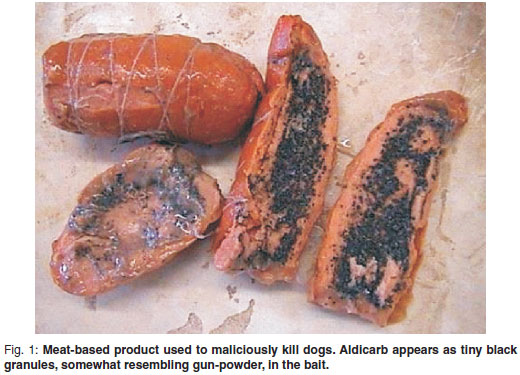
Bayer CropScience (Bayer CropScience, Isando, South Africa) is the sole distributor of aldicarb in South Africa. Aldicarb is marketed world wide under the trade name of Temik®7. It is an agricultural insecticide and nematicide7,24,26, containing 15 % aldicarb and is usually formulated as small black granules (Fig. 1). Temik® is registered for agricultural use in South Africa under the Fertilizers, Farm Feeds, Agricultural and Stock Remedies Act (Act 36 of 1947) and the sale of it to farmers within South Africa is tightly controlled. Only certified farmers are legally able to purchase the product and strict control is enforced regarding the use and storage of the product on farms (Act 36 of 1947) (P Fourie, Bayer CropScience, pers. comm.).
In 2001, Bayer CropScience began adding an extremely bitter substance (denatonium benzoate) to Temik® in order to prevent its use for suicides or homicides in humans (P Fourie, Bayer CropScience, pers. comm.). Unfortunately most animal species do not possess the specific taste receptors found in humans that detect the bitter taste sensation and this protective measure therefore does not absolutely guarantee that animals would not ingest aldicarb treated with denatonium benzoate19
It is estimated that at least 60 % of the aldicarb-containing pesticides used in South Africa for the malicious poisoning of dogs are illegally smuggled across the border into South Africa from neighbouring countries such as Mozambique and Zimbabwe, where strict agricultural product control is lacking (G H Verdoorn, Griffon Poison Information Centre, pers. comm.). In South Africa Temik® is sold illegally by informal street traders as a rodenticide called 'Two Step'5663Tres Pasitos (3 little steps), and is sometimes used in human suicide attempts9,45,66. It has also been reported that aldicarb is illegally used as a household rodenticide in Brazil and the Caribbean Islands and that humans are sometimes poisoned51
Criminals in South Africa wishing to gain access to a property where dogs are present typically insert aldicarb granules into cheap meat baits, such as viennas, sausages or polony, to kill the resident dog(s) (Fig. 1). Pieces of bait are clandestinely thrown over property fences for the dogs to consume, with criminals gaining access to the property once the dogs have been eliminated.
ALDICARB (CARBAMATE) POISONING: DESCRIPTION AND DIAGNOSIS
Chemistry of aldicarb
Aldicarb (2-methyl-2-(methylthio)proprioaldehyde-o-methylcarbamoyloxime) is an extremely toxic substance7,20,24,45 and is classified as an 'extremely hazardous pesticide' (class 1a) according to the World Health Organization classification of pesticides6750 varies between 0.46 mg/kg216266® is about 6.5 mg/kg and it contains 15 % aldicarb (G H Verdoorn, Griffon Poison Information Centre, pers. comm.).
Mode of action of aldicarb in dogs
Both the carbamate and organophosphate pesticides are classified as cholinesterase inhibitors24,60,61. Carbamates, such as aldicarb, cause inhibition of the activity of acetylcholinerase (AChE), an enzyme responsible for the hydrolysis of the neurotransmitter acetylcholine (ACh) into choline and acetic acid21,30,33. The ingestion of a carbamate results in the inactivation of AChE activity by carbamylation of the serine hydroxyl group located at the active site of AChE31,52,59. The carbamylation of the active site on the AChE is temporary and rapidly reversible, and AChE activity is restored when spontaneous hydrolysis of the carbamylated enzyme occurs (often within an hour), resulting in the release of AChE26,31,34,59.
Exposure to organophosphates results in the phosphorylation of the same active site of AChE, but a stable and irreversible bond is formed after 24-48 hours. This process is referred to as 'aging'15,21,25,31,34,60.
Once AChE has been inactivated, ACh accumulates at muscarinic and nicotinic cholinergic receptors in the sympathetic and parasympathetic nervous systems, as well as at neuromuscular junctions resulting in continuous stimulation of these receptors10,15,31,33. Central nervous system (CNS) toxicity is less common in carbamate poisoning because many carbamates do not readily cross the blood-brain barrier (BBB)35,55 .
Clinical signs
The clinical presentations of carbamate and organophosphate poisonings are clinically indistinguishable from each other14,57,61. If a dog presents with clinical signs indicating possible organophosphate or carbamate toxicity, unless there is a clear history that an organophosphate was used (for example, history that the dog was recently dipped by the owner with an organophosphate ectoparasicide), the clinician should assume carbamate poisoning, due to the very high prevalence of malicious misuse of aldicarb in South Africa.
The clinical signs of aldicarb poisoning are associated with muscarinic, nicotinic and central effects33,57,60. Muscarinic receptors are located in the smooth muscle of glands, intestine, cardiac muscle, CNS and the iris. The nicotinic cholinergic receptors are located at the neuromuscular junctions of striated muscle and the ganglionic synapses of the autonomic ganglia25
Muscarinic signs are often very pronounced and include bradycardia, miosis, bronchospasm, bronchorrhea, hypersalivation, lachrymation, urination and diarrhoea. Nicotinic signs include muscle tremors, fasciculations, muscle stiffness, weakness and paralysis8,16. Prolonged muscle activity finally results in exertional rhabdomyolysis4131
Hyper-stimulation of the nicotinic receptors may cause tachycardia, mydriasis and hypertension, instead of the bradycardia, miosis and hypotension that are seen when muscarinic stimulation predominates6666
In dogs, the clinical signs most often reported by veterinarians include muscle tremors and hypersalivation, followed by emesis, miosis, bradycardia, seizures and dyspnoea6416,22,31. In a study undertaken in humans the most common muscarinic effect was diarrhoea, the main nicotinic sign was muscle fasciculations and CNS depression occurred in about 50 % of patients51
Diagnosis
At the Outpatients clinic of the OVAH, most aldicarb emergencies are diagnosed on the basis of the presenting clinical signs and a history of a very acute onset. Owing to the fact that in a clinical emergencies there is little time to confirm a definite diagnosis of aldicarb poisoning before treatment commences, a positive response to initial anti-muscarinic treatment can assist in confirming a preliminary diagnosis.
Some owners may report that the dog vomited up unfamiliar food in which the aldicarb granules were concealed or that they found pieces of meat products containing small black granules in the vicinity of the animal.
Measurement of decreased cholinesterase concentrations in the blood may be considered to confirm the diagnosis of aldicarb toxicity1,5,24. However, due to the fact that the temporary AChE-carbamate bond is rapidly reversed, this test must preferably be performed immediately, seeing that the diagnostic test results could become inconclusive if the test is not performed within a few hours27
THERAPEUTIC OPTIONSDue to the highly toxic nature of aldicarb, dogs presented to a veterinary clinic with the 'classic' clinical signs indicative of aldicarb toxicity, or a relevant history, should always be handled as an emergency. At the OVAH it is generally accepted that without prompt treatment most malicious cases will die within 20-30 min of ingestion, leaving little time for the attending veterinarian to perform additional tests to confirm the diagnosis.
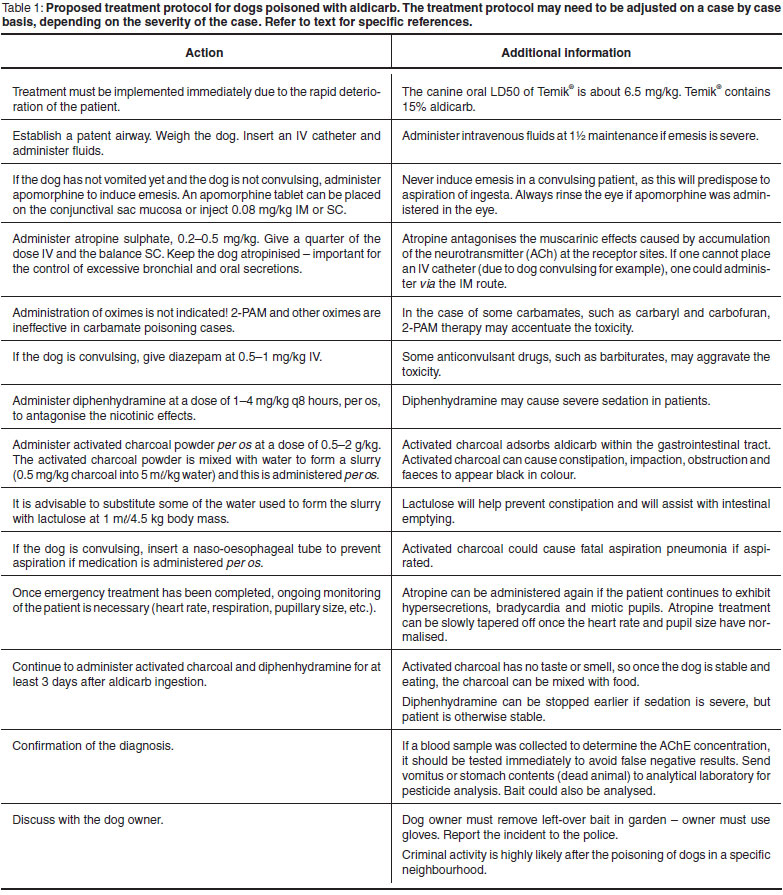
A proposed treatment protocol for dogs poisoned with aldicarb is summarised in Table 1. The sequence of the different recommended procedures detailed in the table is only a guide and the treatment protocol may need to be adjusted on a case by case basis depending on the severity of the poisoning. However, it is essential to administer atropine as soon as possible.
The mortality of clinical cases is high, with a mortality rate of 25-50 % recorded even after prompt treatment6431,33,66. Effective therapy can be expensive, often requiring intensive care and monitoring with a guarded prognosis, which may cause some owners to elect for humane euthanasia instead of treatment64
Immediate action and fluid therapy
Initially, an intravenous catheter should be placed, as intravenous access is crucial for the administration of drugs and fluids33per os.
Intravenous crystalloid fluids should be administered to all patients5533,55.
Muscarinic receptor antagonists
The administration of an antimuscarinic drug as soon as possible is critically important in all cases. Constant over-stimulation of the muscarinic receptors results in severe and fatal consequences. Severe bradycardia and bronchospasm are often life-threatening and need to be treated immediately553350
Atropine sulphate
Atropine is the drug of choice in the treatment of acute aldicarb toxicity. It is a competitive muscarinic receptor antagonist at postganglionic parasympathetic neuroeffector sites5031,33,61. Atropine activity is, however, specific to muscarinic receptors and has no effect on the nicotinic receptors or the AChE-carbamate complex50,55. Atropine administration will therefore not counteract the muscle tremors, weakness and paralysis associated with aldicarb toxicity8,16,31. Atropine may lower the cerebral glucose threshold and thereby reduce the likelihood of brain damage during seizures40,48.
The dose of atropine required to counteract the effects of aldicarb toxicity is extremely high, more than 10 times the recommended pre-anaesthetic dose. The dose is between 0.2-0.5 mg/kg with a quarter of the dose given IV and the balance administered subcutaneously (SC)1850
Atropine is well absorbed from all routes of administration, reaching peak effects 3-4 min post IV administration. It is widely distributed and crosses the BBB. It is metabolised in the liver and excreted in the urine, with up to 50 % being excreted in the unchanged form50
Atropine can cause a range of dose-related adverse effects50350
Glycopyrrolate
Glycopyrrolate could be considered as an alternative drug to atropine for the treatment of aldicarb toxicity6,33, or it could also be used in combination with atropine333506
In contrast to atropine, glycopyrrolate is completely ionised after administration, and is therefore poorly lipid soluble. Glycopyrrolate does not enter the CNS in any appreciable amounts and as a result, does not cause the CNS adverse effects seen with atropine after high dose administration503
The canine LD50 of glycopyrrolate is 25 mg/kg after IV administration504650
Diphenhydramine
Although diphenhydramine is not used routinely for the treatment of organophosphate and carbamate poisonings in humans (not registered for this use in humans), it is often used 'extra label' by some veterinary clinicians to counteract the nicotinic signs10
Diphenhydramine is a 1st generation antihistamine that is a competitive antagonist at the H1 receptors5023,50. Diphenhydramine is used as an adjunctive treatment in aldicarb poisoning in dogs to prevent over exertion of muscles by preventing excess stimulation of the nicotinic receptors at the neuromuscular junctions10,23,50.
Diphenhydramine should be administered orally at presentation10via a naso-oesophageal tube is essential to prevent aspiration if the patient is convulsing or has a weak swallowing reflex. A dose of between 1 and 4 mg/kg, per os, every 8 hours has been advised for dogs and can be administered for up to 3 weeks if necessary10,23. It is well absorbed from the gastrointestinal tract, with a 1st pass effect of between 40-60 %. It may cause severe sedation in dogs and further treatment should be reconsidered if unacceptable sedation is observed50
Oximes
The use of oximes in the treatment of organophosphate poisoning is commonly referred to in human medical literature31,39,61,65. Oximes, such as pralidoxime and obidoxime, are phosphorylated AChE enzyme reactivators, indicated for the treatment of organophosphate toxicity before the process of 'aging' has occurred31,39,65.
In contrast to organophosphate toxicity, the carbamate-induced inhibition of AChE is rapidly reversible with hydrolysis of the carbamylated complex often occurring within an hour315,12,29,55 or even contraindicated27,50 and is therefore not recommended for the treatment of aldicarb poisoning in dogs. Many studies have indicated that the treatment of carbamate poisonings in animals with oximes has resulted in a protective ratio of less than 1 (i.e. worse than no treatment at all)555527,55.
If uncertainty exists as to whether the poisoning is due to an organophosphate or carbamate, the veterinarian may choose to include an oxime in the treatment protocol. In such a case, the dosage of pralidoxime in dogs is 20 mg/kg, 2-3 times a day, with slow IV administration of the initial dose and subsequent doses given IM or SC1750
Benzodiazepines
Some patients may present in a state of seizure. Diazepam (benzodiazepine) is the drug of choice to control seizure activity33,54, reduce anxiety and to induce muscle relaxation3139A receptors in an allosteric fashion39
It has also been reported that diazepam acts synergistically with atropine, potentiating the efficacy of a reduced dose of atropine, improving survival and preventing CNS complications14,31,54.Ithas been shown that diazepam appears to decrease synaptic release of ACh in humans3149
Prevention of systemic absorption
Emesis
Stimulation of emesis shortly after intake would be beneficial3128534450
Adsorption
The use of activated charcoal powder as an adsorbent is recommended in all cases to bind the aldicarb within the gastrointestinal tract, thus limiting further systemic absorption31,50. Activated charcoal powder is a highly porous form of carbon with a large surface area capable of adsorbing ingested toxins50
Administration of activated charcoal per os is contraindicated in a patient that is convulsing or has a weak swallowing reflex because of the high risk of aspiration and resultant severe pneumonia in these cases50
At the OVAH activated charcoal is administered for the initial adsorption of any aldicarb present in the gastrointestinal tract31,50. Thereafter the administration of multiple doses of activated charcoal (chronic treatment) is primarily to adsorb any aldicarb that re-circulates back into the gastrointestinal tract via enterohepatic circulation50
Activated charcoal powder can initially be administered at a dose of 0.5-2.0 g/kg per os or via a naso-oesophageal tube. At the OVAH activated charcoal is mixed with water to form a slurry (1 g charcoal with 5 ml water) and lactulose is added to reduce the risk of constipation5050
In contrast to veterinary practice, the use of activated charcoal in human aldicarb poisoning is not recommended, especially not repeated administrations, as it has been observed to be associated with constipation, impaction and obstruction by 1 of the authors (DJHV). In addition, the effectiveness of activated charcoal therapy in poisoned human patients is also not conclusive31
Increase in the movement of ingesta
Lactulose is a disaccharide laxative and by drawing water into the colon, thus increasing the osmotic pressure, has a laxative effect. The chronic use of activated charcoal in patients can predispose to constipation, which is alleviated by the lactulose. In addition, the laxative effect of lactulose will increase the speed of gastrointestinal tract emptying, which will further assist in the rapid elimination of the ingested aldicarb. The dose of lactulose in dogs is 1 ml per 4.5 kg body mass 3 times daily50
POTENTIAL COMPLICATIONS OF ALDICARB TOXICITYIn view of the fact that the aldicarb case fatality rate is so high, complications are not often seen. However, in a case that survived the initial clinical crisis, complications may be diagnosed. Although the focus of this review is the treatment rationale, veterinarians need to be aware of potential complications.
Pancreatitis
A serious complication seen with organophosphate or carbamate poisonings is pancreatitis4,38,42. Acute necrotic necrohaemorrhagic pancreatitis has been reported in about 12 % of human organophosphate and carbamate cases432
Observations from the OVAH confirmed that pancreatitis is a potential, significant complication in dogs. The clinical signs are typically seen within a few days after the intake of aldicarb, and they usually present with an acute abdomen. This condition is less likely in patients that received immediate and effective treatment42413,38.
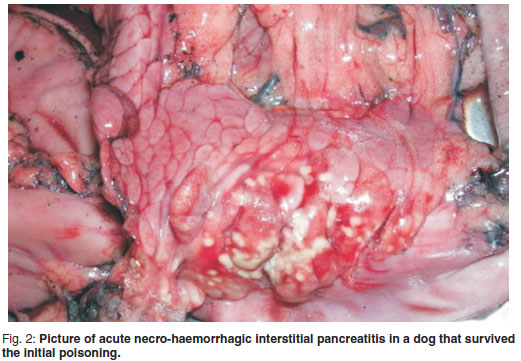
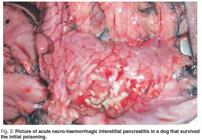
Acute necro-haemorrhagic interstitial pancreatitis (Fig. 2) was confirmed by the Pathology Section (Department of Para-clinical Sciences, Faculty of Veterinary Science, University of Pretoria) in dogs presented for necropsies after unsuccessful treatment. This is rarely seen in cases that died peracutely. A possible explanation for the development of pancreatitis after severe cholinergic stimulation is that the constrictive spasm of the sphincter of Odi and the increase in intraductal pressure increase the risk of activated pancreatic secretions escaping into the interstitial and peripancreatic tissue4,13,38.
Intermediate syndrome
The intermediate syndrome (IMS) was 1st reported in the mid-1980s, describing clinical signs, mostly of muscle paralysis, after the successful treatment (and recovery) of organophosphate poisoning cases11,15,61. It is called the IMS because it is observed after the acute cholinergic signs, but before organophosphate-induced delayed polyneuropathy (OPIDP), which is rarely seen1147
Polyneuropathy
Organophosphate-induced delayed polyneuropathy (OPIDP) is classically associated with organophosphates36,58. However, some carbamates (e.g. methylcarbamates) also inhibit neuropathy target esterase (NTE), the target enzyme in OPIDP development. Based on mechanistic considerations, carbamates were thought to be unable to cause polyneuropathy3737
CONCLUSION
Aldicarb poisoning is the most common poisoning in dogs seen by veterinarians in South Africa. Owing to the toxic nature of aldicarb, immediate and effective treatment is essential to obtain a positive outcome. Atropine is the drug of choice to counteract the life threatening effects such as bronchospasm, increased bronchial secretions and bradycardia. Diphenhydramine may be considered to antagonise the nicotinic effects of aldicarb, thereby reducing muscle fasciculations and tremors. Diazepam may act synergistically with atropine, allowing for a reduction in atropine dosage. Diazepam also has muscle relaxant and sedative effects that may be beneficial in some patients. The use of oximes is not recommended in carbamate poisoning. The use of activated charcoal as an adsorbent to prevent further gastrointestinal absorption is essential. Pancreatitis should be considered in a dog that presents with signs of acute abdomen after aldicarb exposure.
ACKNOWLEDGEMENTS
The authors wish to acknowledge the help and support received from the Departments of Paraclinical Sciences and Companion Animal Clinical Studies, Faculty of Veterinary Science, University of Pretoria.
REFERENCES
- 1. Aaron C K 2001 Organophosphate and carbamates. In Ford M D, Delaney K A (eds) Clinical toxicology (1st edn). W B Saunders, Philadelphia: 819-828
- 2. Anastasio J D, Sharp C R 2011 Acute aldicarb toxicity in dogs: 15 cases (2001- 2009). Journal of Veterinary Emergency and Critical Care 21:253-260
- 3. Arendse R, Irusen W 2009 An atropine and glycopyrrolate combination reduces mortality in organophosphate poisonings. Human and Experimental Toxicology 28:715-720
- 4. Aslan S, Cakir Z, Emet M, Serinken M, Karcioglu O, Kandis H, Uzkeser M 2010 Acute abdomen associated with organophosphate poisoning. Journal of Emergency Medicine (in press) DOI: 10.1016/j.jemermed. 2010.05.072
- 5. Aygun D, Doganay Z, Altinop L, Guven H, Onar M, Deniz T, Sunter T 2002 Serum acetylcholinerase and prognosis of acute organophosphate poisoning. Journal of Toxicology - Clinical Toxicology 40:903-910
- 6. Bardin P G, Van Eeden S F 1990 Organophosphate poisoning: grading the severity and comparing treatment options between atropine and glycopyrrolate. Critical Care Medicine 18:956-960
- 7. Baron R L 1994 A carbamate insecticide: a case study of aldicarb. Environmental Health Perspective 102:23-27
- 8. Campbell A, Chapman M 2000 Carbamate insecticides. In Handbook of poisonings in dogs and cats. Blackwell Science, Oxford: 102-105
- 9. Centers for Disease Control and Prevention (CDC) 1997 Poisonings associated with illegal use of aldicarb as a rodenticide - New York City 1994-1997. Morbidity and Mortality Weekly Report 46:961-963
- 10. Clemmons R M, Meyers D J, Sundlof S F, Rappaport J J, Fossler M E, Hubbell J, Borsey-Lee M R 1984 Correction of organophosphate-induced neuromuscular block by diphenhydramine. American Journal of Veterinary Research 45:2167-2169
- 11. De Bleecker J L 2006 Intermediate syndrome in organophosphate poisoning. In Gupta R C (ed.) Toxicology of organophosphate and carbamate compounds. Elsevier Academic Press, Amsterdam: 371-380
- 12. DeSilva H J, Wijewickerema R, Senanayeke N 1992 Does pralidoxime affect the outcome of management in acute organophosphate poisoning? Lancet 339:1136-1138
- 13. Dressel T D, Goodale R L, Hunninghake D B, Borner J W 1979 Sensitivity of the canine pancreatic intraductal pressure to subclinical reduction in cholinesterase activity. Annals of Surgery190:6-12
- 14. Eddelston M, Buckley N A, Eyer P, Dawson A H 2008 Management of acute organophosphorus pesticide poisoning. Lancet 371:597-607
- 15. Erdman A R 2004 Insecticides. In Dart R C (ed.) Medical toxicology (3rd edn). Lippincot Williams & Wilkins, Philadelphia: 1475- 1496
- 16. Fikes F D 1990 Organophosphorous and carbamate insecticides. Veterinary Clinics of North America: Small Animal Practice 20:353-367
- 17. Fikes F D 1990 Organophosphorus and carbamate insecticides. Veterinary Clinics of North America: Small Animal Practice 20:353- 367
- 18. Firth A 2000 Treatments used in small animal toxicoses. In Kirk RW (ed.) Kirk's current veterinary therapy: XIII Small animal practice. W B Saunders, Philadelphia: 207-211
- 19. Frank M E, Bouverat B P, MacKinnon B I, Hettinger T P 2004 The distinctiveness of ionic and nonionic bitter stimuli. Physiology and Behavior 80:421-431
- 20. Frazier K, Hullinger G, Hines M, Liggett A, Sangster L 1999 Clinical reports: 162 cases of aldicarb intoxication in Georgia domestic animals from 1988-1998. Veterinary and Human Toxicology 41:233-235
- 21. Garcia S J, Aschner M, Syversen T 2006 Inter-species variation in toxicity of cholinesterase inhibitors. In Gupta R C (ed.) Toxicology of organophosphate and carbamate compounds. Elsevier Academic Press, Amsterdam: 145- 158
- 22. Goswamy R, Chaudhuri A, Mahashur A A 1994 Study of respiratory failure in organophosphate and carbamate poisoning. Heart and Lung 23:466-472
- 23. Grauer G F, Hjelle J J 1988 Toxicology: Introduction. In Morgan R V (ed.) Handbook of small animal practice. Churchill Livingston, New York: 1083-1086
- 24. Gupta R C 2006 Classification and uses of organophosphates and carbamates. In Gupta R C (ed.) Toxicology of organophosphate and carbamate compounds. Elsevier Academic Press, Amsterdam: 5-24
- 25. Haddad L M 1983 The organophosphate insecticides. In Haddad L M, Winchester J F (eds) Clinical management of poisoning and drug overdose. W B Saunders, Philadelphia: 704-710
- 26. Haddad L M 1983 The carbamate, organochloride and botanical insecticides; insect repellents. In Haddad L M, Winchester (eds) Clinical management of poisoning and drug overdose. W B Saunders, Philadelphia: 711-712
- 27. Hoffman R S, Manini A F, Russell-Haders A L, Felberbaum M, Mercurio-Zappala M 2009 Use of pralidoxime without atropine in rivastigmine (carbamate) toxicity. Human and Experimental Toxicology 28:599-602
- 28. Jenkins W C 1989 Drugs affecting gastrointestinal function. In Booth N M, McDonald L E (eds) Veterinary pharmacology and therapeutics (6th edn). Iowa State University Press, Ames: 657-671
- 29. Johnson M K, Vale J A, Marrs T C, Meredith T J 1992 Pralidoxime for organophosphate poisoning. Lancet 340: 64
- 30. Jokanović M, Maksimovic M 1997 Abnormal cholinesterase activity: understanding and interpretation. European Journal of Clinical Chemistry and Clinical Biochemistry 35:11-16
- 31. Jokanović M 2009 Medical treatment of acute poisoning with organophosphorus and carbamate pesticides. Toxicology Letters 190:107-115
- 32. Lee H S 1989 Acute pancreatitis and organophosphate poisoning - a case report and review. Singapore Medical Journal 30:599- 601
- 33. Leibson T, Lifshitz M 2008 Organophosphate and carbamate poisoning: review of the current literature and summary of clinical and laboratory experience in southern Israel. Israel Medical Association Journal 10:767-770
- 34. Li H, Schopfer L M, Nachon F 2007 Aging pathways for organophosphate-inhibited human butyrylcholinesterase, including novel pathways for isomalation, resolved by mass spectrometry. Toxicological Sciences 100:136-145
- 35. Lima J S, Reis C A 1995 Poisoning due to illegal use of carbamates as a rodenticide in Rio de Janeiro. Journal of Toxicology - Clinical Toxicology 33:687-690
- 36. Lotti M, Moretto A 2005 Organophosphate-induced delayed polyneuropathy. Toxicology Reviews 24:37-49
- 37. Lotti M, Moretto A 2006 Do carbamates cause polyneuropathy? Muscle Nerve 34:499-502
- 38. Makridges C, Koukouvas M, Achillews G, Tsikkos S, Vounou E, Symeonides M 2005 Methomyl-induced severe acute pancreatitis: possible etiological association. Journal of the Pancreas 6:166-171
- 39. Marrs T C, Vale J A 2006 Management of organophosphorus pesticide poisoning. In Gupta R C (ed.) Toxicology of organophosphate and carbamate compounds. Elsevier Academic Press, Amsterdam: 715-733
- 40. McDonough J H, McLeod C G, Nipwoda M D 1987 Direct micro-injection of soman or VX into amygdale produces repetitive limbic convulsions and neuropathology. Brain Research 435:123-137
- 41. McEntee K, Poncelet L, Clercx C, Henroteaux M 1994 Acute polymyopathy after carbamate poisoning in a dog. Veterinary Record 135:88-90
- 42. Moritz F, Droy J M, Melki J, Bonmarchand G, Leroy J 1994 Acute pancreatitis after carbamate insecticide intoxication. Intensive Care Medicine 20:49-50
- 43. Motas-Guzman M, Maria-Mojica P, Romero D, Martinez-Lopez E, Garcia-Fernandez A J 2003 Intentional poisoning of animals in southeastern Spain. A review of veterinary toxicology service from Murcia, Spain. Veterinary and Human Toxicology 45:47-50
- 44. Mount M E 1989. Toxicology. In Ettinger S J (ed.) Textbook of veterinary internal medicine. W B Saunders, Philadelphia: 456-483
- 45. Nelson L S, Perrone J, DeRoos F, Stork C, Hoffman R S 2001 Aldicarb poisoning by an illicit rodenticide imported into the United States: Tres Pasitos. Journal of Toxicology - Clinical Toxicology 39:447-452
- 46. Olson M E, Vizzutti D, Morck D W, Cox A K 1993 The parasympatholytic effects of atropine sulfate and glycopyrrolate in rats and rabbits. Canadian Journal of Veterinary Research 57: 254-258
- 47. Paul N, Mannathukkaran T J 2005 Intermediate syndrome following carbamate poisoning. Clinical Toxicology 43:867-868
- 48. Pazdernik T L, Nelson S R, Cross R, Churchill L, Giesler M, Samson F E 1986 Effects of antidotes on soman-induced brain damage. Archives of Toxicology 9:333-336
- 49. Platt S R, McDonnell J J 2000 Status epilepticus: managing refractory cases and treating out-of-hospital patients. Compendium on Continuing Education for the Practicing Veterinarian 22:732-741
- 50. Plumb D C 2008 Plumb's veterinary drug handbook (6th edn). Blackwell Publishing, Iowa
- 51. Ragoucy-Sengler C, Tracqui A, Chavonnet A, Daijardin J B, Simonetti M, Kintz P, Pileire B 2000 Aldicarb poisoning. Human and Experimental Toxicology 2000 19:657-662
- 52. Risher J F, Mink F L, Stara J F 1987 The toxicological effects of the carbamate insecticide aldicarb in mammals: a review. Environmental Health Perspectives 72:267-281
- 53. Riviere J E 1985 Clinical management of toxicoses and adverse drug reactions. In Davis LE (ed.) Handbook of small animal therapeutics. Churchill Livingstone, New York: 657-683
- 54. Roberts M D, Aaron C K 2007 Managing acute organophosphorus poisoning. British Medical Journal 334:629-635
- 55. Rosman Y, Makarovsky I, Bentur Y, Shrot S, Dushnistky T, Krivoy A 2009 Carbamate poisoning: treatment recommendations in the settling of a mass casualty event. American Journal of Emergency Medicine 27:1117-1124
- 56. Rother H A 2010 Falling through the regulatory crack: street selling of pesticides and poisoning among urban youth in South Africa. International Journal of Occupational and Environmental Health 16:202-213
- 57. Satoh T 2006 Global epidemiology of organophosphate and carbamate poisonings. In Gupta RC (ed.) Toxicology of organophosphate and carbamate compounds. Elsevier Academic Press, Amsterdam: 89-100
- 58. Singh S, Ranjit A, Parthasarathy S, Sharma N, Bambery P 2005 Organo-phosphate induced delayed neuropathy: report of 2 cases. Neurology India 52:525-526
- 59. Stevens J T, Brekenridge C B 2001 Crop protection chemicals. In Hayes A W. (ed.) Principles and methods of toxicology (4th edn). Taylor & Francis, Philadelphia: 583-591
- 60. Sultatos L G 2006 Interactions of organophosphorus and carbamate compounds with cholinesterases. In Gupta RC (ed.) Toxicology of organophosphate and carbamate compounds. Elsevier Academic Press, Amsterdam: 209-218
- 61. Sungur M, Güven M 2001 Intensive care management of organophosphate insecticide poisoning. Critical Care 5:211-215
- 62. Tomlin C. 1994 The pesticide manual (10th edn). Crop Protection Publications, Farnham: 25
- 63. VealeDJH,WiumCA, Müller G J 2010 A prospective study of the incidence and spectrum of acute poisonings in South Africa based on hospital admission and Poison Information Centre data. Clinical Toxicology 48:284
- 64. Verster R S, Botha C J, Naidoo V, van Schalkwyk O L 2004 Aldicarb poisoning of dogs and cats in Gauteng during 2003. Journal of the South African Veterinary Association 75:177-181
- 65. Verma S K, Ahmad S 2009 High dose pralidoxime in organophosphorus poisoning: a critical appraisal. API Medicine Update 19:448-452
- 66. Waseem M, Perry C, Bomann S, Pai M, Gernsheimer J 2010 Cholinergic crisis after rodenticide poisoning. Western Journal of Emergency Medicine 11:524-527
- 67. World Health Organization 2009 The WHO recommended classification of pesticides by hazard and guidelines to classification. Geneva
Accepted: September 2011