Rabies in the Eastern Cape Province of South Africa - where are we going wrong?
Abstract
Rabies is a growing problem in the Eastern Cape Province of South Africa. This study investigated dog ecology, vaccination coverage and rabies neutralising antibody levels in 203 randomly selected dogs within a local municipality in the former Transkei area. Responses to vaccination were also evaluated in 80 of these dogs. The population was remarkably uniform in size, breed and condition. Slightly over 1/5th of the population was between 6 weeks and 1 year of age, while very few dogs reached 10 years or older. According to owner responses, the Animal Health Technicians achieved a total vaccination coverage of 65 % of owned dogs over several years, but only 56 % within the previous 12 months. Only 32 % of dogs had adequate circulating rabies virus neutralisation antibodies (>0.5IU/ℓ ). After vaccination, 83 % had seroconverted to this level. The magnitude of seroconversion was independent of body condition or age. This study proposes a different approach to vaccination strategies than those currently employed in certain areas of the province.
dog; Eastern Cape; ecology; lyssavirus; rabies; seroconversion; South Africa; Transkei; vaccination
INTRODUCTION
Rabies is a fatal disease caused by a virus of the family Rhabdoviridae, genus Lyssavirus. The severe nature of the estimated 55 000 human deaths a year caused by the disease, mainly in Africa and Asia24Lyssavirus currently includes 11 genotypes recognised by the International Committee on Virus Taxonomy19313140Cynictis penicillata). The cosmopolitan canid biotype, on the other hand, circulates within members of the family Canidae: dogs (Canis familiaris), black backed jackals (C. mesomelas) and bat-eared foxes (Otocyon megalotis)31, 32, 35. While mongoose rabies is considered to be indigenous to the area, canine rabies appears to have been introduced during modern times31
The 1st confirmed diagnosis of rabies in South Africa was in 1893 following an outbreak of the disease in the Eastern Cape from an imported dog6, 40. This outbreak was brought under control, however, and the spatial spread of rabies was then closely associated with wildlife species particularly the yellow mongoose. By 1940, canine rabies had begun to spread south of the Zambezi River so that by 1950 it appeared in South Africa in the northern Limpopo Province, where it is still present6, 26, 40. Subsequent to the 1950 Limpopo outbreak, canine rabies spread to Mozambique from where it entered KwaZulu-Natal in 196125, 40. Although the KwaZulu-Natal outbreak was brought under control, the disease reappeared in 1976 following an influx of refugees from Mozambique4025
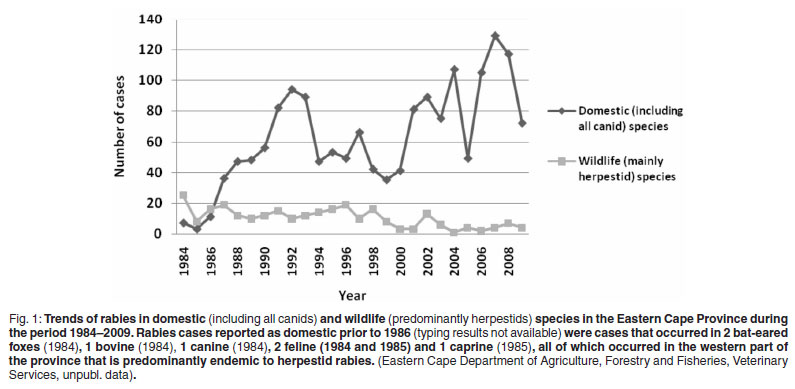
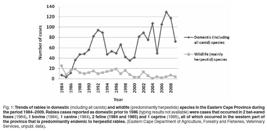
Although rabies has been confirmed in wild and domestic animal species in the Eastern Cape, canine rabies was the main driver of the observed temporal trends over the period 1986-2009 (Fig. 1). The mongoose biotype in the Eastern Cape is maintained especially in the Karoo and adjoining areas (Cacadu, Western Chris Hani and Ukhahlamba District municipalities), but is absent in the former Transkei area3218
Control of rabies through targeted vaccination of at least 70 % of the dog population is the standard method of controlling rabies and has been used successfully in developed countries10, 42, although a reciprocal increase (whether real or relative) of the disease in wildlife species may occur32233
MATERIALS AND METHODS
Study area
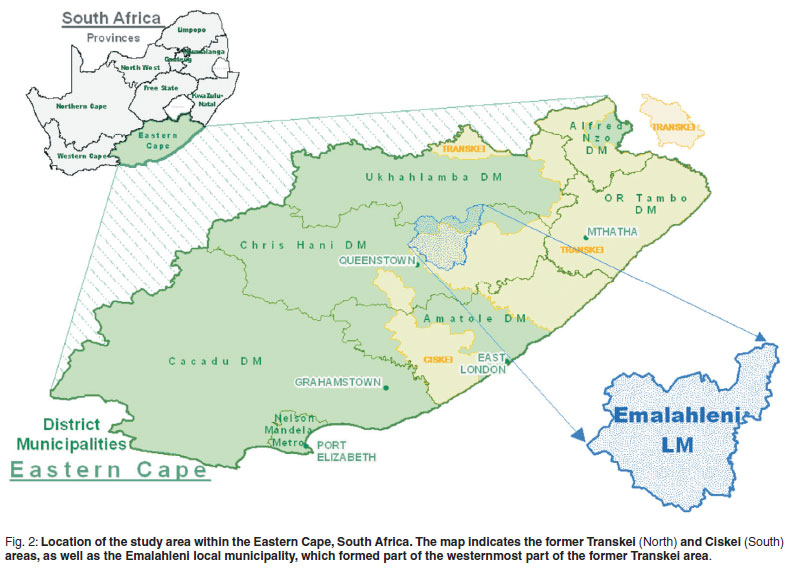
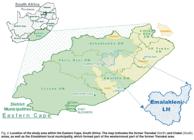
This study was conducted in the Emalahleni Local Municipality, which is administered from the central town of Lady Frere (27º14'E; 31º42'S), and is part of the greater Chris Hani District Municipality in the Eastern Cape Province of South Africa (Fig. 2). The majority (3317 km22 23
Sampling methods
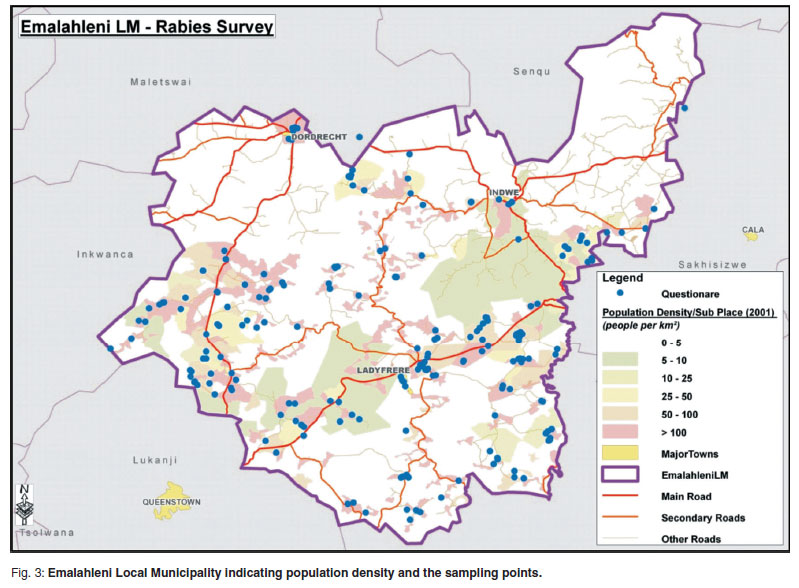
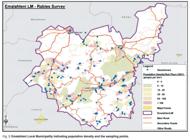
The dog population density is proportional to the human population density and is often remarkably similar across different African communities9, 20, 28.Asa sampling strategy, 203 GPS coordinates were randomly generated throughout the municipality. In order to reflect the expected spread of the canine population, however, the coordinates were weighted/ focused towards areas of higher human population density. This was carried out by selecting 1.4 %, 2.9 %, 7.4 %, 14.7 %, 29.4 % and 44.1 % of the GPS coordinates to fall in human population densities of 0-5, 5-10, 10-25, 25-50, 50-100 and >100 people per square kilometre respectively (Fig. 3). ArcGIS® software (ESRI Inc., Redlands, USA) was used to randomly allocate biased coordinates throughout the municipality based on data from the South African Geo-referenced Information System (www.agis.agric.za). These coordinates were located with a Garmin® nüvi® 220W series GPS tracking device (Garmin Distribution Africa, Honeydew, South Africa). The closest household to each set of coordinates that owned a dog or dogs was used as a sampling point.
Sample collection and storage
The most recent vaccination campaign preceding the study was from October to December 2008. Sampling took place from November 2008 to May 2009. Sampling that coincided with the 2008 campaign (i.e. November and December 2008) was done within areas that were already covered during the 2008 campaign. At each sampling point, 1 dog of at least 6 weeks of age was randomly selected. With the owner's consent, blood was collected from the cephalic, lateral saphenous or jugular veins. The blood was allowed to clot before being centrifuged and the serum stored at -20 ºC within 12 hours. On the day of blood collection, the dog was injected subcutaneously with 1 mℓ of the same vaccine used during the 2008 rabies campaign, namely Rabdomun® (Intervet/Schering-Plough, Isando, RSA (batch A667B2)). Each mℓ of vaccine had an antigenic value of >5.0, as determined by the modified NIH test, and at least 107, 3 MLD50 Flurry LEP strain virus grown on Baby Hamster Kidney (BHK) 21 cell culture, inactivated with an aziridine compound and absorbed into aluminium hydroxide (package insert). A questionnaire administered in isiXhosa, Afrikaans or English was completed through an owner interview for each dog in the study sample. The questionnaire noted the GPS coordinates of the household, the name of owner and the name of the locality, i.e. village/farm. Data recorded about the dog included name, age, sex (male/female/sterilised/lactating), breed, size, condition, rabies vaccination history, function (pet/security/hunting/herding) and any noteworthy external characteristics (external parasites/injuries/external tumours). The dog in question was classified as confined (i.e. permanently confined) or roaming freely (including semi restriction, i.e. access to the general dog population some of the time without owner supervision). Rabies vaccination history was ascertained by asking if the dog was previously vaccinated (yes/no/unsure) and if previously vaccinated, when last (less than 12 months ago/more than 12 months ago/ unsure). In most cases, however, the vaccination history could not be verified. The condition of the dog was subjectively classified as 'poor', 'thin', 'good' or 'overweight': dogs with mange, hair loss, high external parasite burden or which were emaciated were placed into the 'poor' category; 'thin' dogs had a low muscle and fat mass, a well kept coat with no or few external parasites; 'good' condition dogs had an adequate muscle and fat mass, a well kept coat with no or few external parasites and overweight dogs had a well kept coat with no or few external parasites and a fat mass which made palpation of bony prominences on the spine and pelvic area difficult. Interviews and condition scoring were conducted by the local state veterinarian. It should be emphasised that parasite burden was judged only on the presence of adult ticks and fleas seen or felt on the dog's head and external pinnae, dorsal and lateral body wall or tail. No attempt was made to collect or count these parasites. Any dog additions or losses to the household in the past 2 years were recorded as well as the current number of dogs living at the house. A post-vaccination blood sample was taken between 30 and 60 days (mean = 52 days) after the 1st sample from 80 of the sampled dogs. The selection of dogs for the post-vaccination sample was done randomly.
Determination of rabies antibody titres
Rabies antibody titres were assessed using a standard 48 hour fluorescent antibody virus neutralisation test (FAVNT) as described previously721, 38, 41. The FAVN tests were performed at the Onderstepoort Veterinary Institute, an OIE rabies reference laboratory.
Data analysis
Data were analysed with SPSS® statistics 17.0 (SPSS Inc, Chicago, USA). Proportions of responses were evaluated through a chi-square test for an r × k contingency table. Where proportions of previously vaccinated dogs were evaluated, 'unsure' responses (n = 5) were omitted. Serum titre results in International Units per millilitre (IU/ℓ ) were assessed for normality through normal probability plots. Since the distribution of serum titres were skewed to the right, data were log transformed. The difference between the 1st and 2nd (30-60 days post-vaccination) serum rabies antibody titre were evaluated through a paired t-test. A repeated measures analysis of variance (or mixed design ANOVA) with 'age group' and 'condition score' as between subject factors, was used to evaluate the interaction effects of these factors with the repeated serum titre measurements. For purposes of this mixed design ANOVA, the age group factor was pooled into the following categories: less than 1 year, 1-3 years and more than 3 years. The body condition factor was grouped into the following categories: poor, thin and good/ overweight. The level of significance was set at P < 0.05.
RESULTS
Description of the canine population
The majority (96 %) of the dogs were classified as a medium-sized dog, while large dogs represented 3 % and small dogs 1 %. The breed most represented in the study could be classified as Africanis, or the local landrace17
Nearly a quarter of the households (23 %) reported that they use dogs for hunting/herding animals in addition to keeping them as pets or for security reasons. Most of the dogs in the study (77 %) were not confined to the house and roamed freely. The mode of dogs per household that owned dogs was 2 (minimum = 1; 1st quartile = 2; median = 3; 3rd quartile = 4; maximum = 10). The median number of dogs entering the household (born/bought/adopted) during the 2 years prior to the study was 1 (range 0 to 18) and for dogs leaving the household (died/sold/given away) the median was 0.5 (range 0-18). However, by many owners' admission this was an estimate and they could not exactly recall the dog turnover rate at their house over 2 years.
Animal health technician efficacy
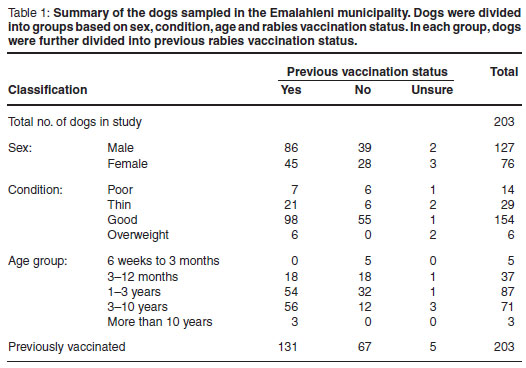
Animal health technicians are responsible for vaccinating as many dogs and cats as possible during the annual vaccination campaigns and in Emalahleni municipality there are currently 8 AHTs. The effectiveness of the previous years' vaccination coverages was evaluated with the question: 'Has the dog sampled been vaccinated before?' (Table 1). Of the 203 respondents, 65 % reported 'yes', 2 % were unsure, and 33 % reported 'no'. Of the dogs that had been vaccinated previously, 64 % had been vaccinated once before, 20 % twice, 10 % 3 times and 1 % 4 times (5 % were unsure as to how many times the dog was vaccinated previously). Slightly more than half of the dogs (56 %) had been vaccinated within the 12 months before being sampled, while 5 % of owners were not sure when last their dogs had been vaccinated. The effect of the population density group the owner resided in was not significant with regard to the reported vaccination status of his/ her dog (χ2P = 0.71). Individual AHT efficacies were compared by grouping the responses in terms of the geographical areas for which each AHT was responsible. Nine geographical areas were identified, of which 8 AHT each has had his/her own area, while a single area was shared between 2 AHTs. The reported vaccination status of dogs was significantly associated with the technician responsible for its vaccination (χ2P = 0.02). Twenty-three per cent of owners reported that they used their dogs for hunting or herding as opposed to using them solely as pets or for security. Of the dogs used for hunting/herding, 72 % were reported as previously vaccinated while 62 % of dogs which are used purely as pets or for security had been vaccinated before according to their owners. The relationship between a dog's use and its reported vaccination status was not significant, however (χ2P = 0.31). There were also no significant relationships between a dog's reported vaccination status and its sex (χ2P = 0.31) or body condition (χ2P = 0.15). Conversely, a dog's reported vaccination status was significantly association with its age (χ2P < 0.001) (Table 1).
Serological description of the dogs sampled
Rabies-neutralising antibody titres were determined in 203 dogs. The geometric mean rabies titre was 0.38 IU/ℓ (1st quartile = 0.15 IU/ℓ (lowest measured point); median = 0.21 IU/ℓ ; 3rd quartile = 0.65 IU/ℓ ). Of the 203 dogs sampled, 51 % had titres above 0.2 IU/ℓ , while only 32 % had titres of >0.5 IU/ℓ - an animal with a titre of 0.5 IU/ℓ and above is highly likely to be protected against rabies virus infection in the face of challenge3, 42. When considering only those dogs whose owners reported previous vaccination, 43 % had rabies-neutralising antibody titres of 0.5 IU/ℓ and above. On the other hand, when considering only dogs with adequate neutralising antibody titres, 11 % had not received a previous vaccination according to their owners. There was a highly significant relationship between a dog's reported vaccination status and whether or not it had an adequate rabies-neutralising antibody titre (χ2P < 0.001). There was no significant relationship between a dog's body condition and whether or not it had a titre of >0.5 IU/ℓ (χ2P = 0.28), but there was sufficient evidence to conclude that titres of 0.5 IU/ℓ and above were associated with increasing age (χ2P < 0.001).
Response to vaccination
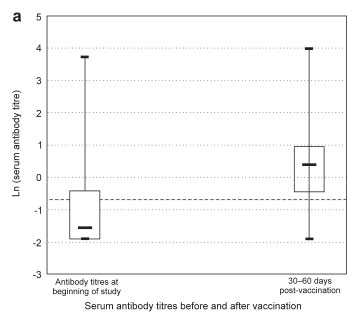
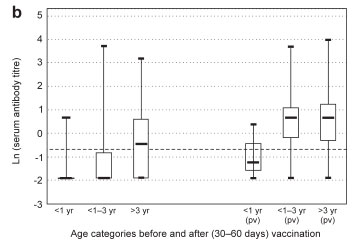
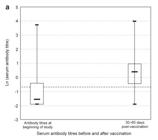
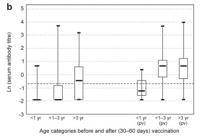
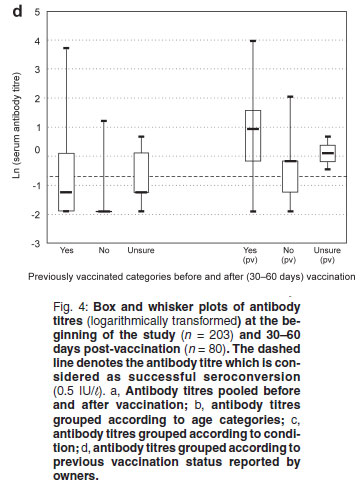
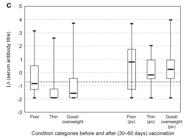
Eighty of the 203 dogs originally sampled were retested 30-60 days later to determine the response to vaccination. Of the 80 dogs that were resampled, 83 % had titres that indicated successful seroconversion. Of those dogs that previously had rabies antibody titres below 0.5 IU/ℓ , 64 % seroconverted to titres above 0.5 IU/ℓ (range: 0.5-23.38 IU/ℓ ). The geometric mean titre of the retested dogs was 1.44 IU/ℓ (1st quartile = 0.64 IU/ℓ ; 3rd quartile = 2.61 IU/ℓ ). A paired-samples t-test indicated that the resampled dogs had a significantly greater titre 30-60 days after the rabies vaccination (Fig. 4a, t(79) = 11.3, P < 0.001) (1st quartile of difference = 0.26 IU/ℓ ; median = 0.7 IU/ℓ ; 3d quartile of differences = 2.14 IU/ℓ ). There seemed to be minor differences in the magnitude of response to vaccination of the different factor groups (Fig. 4b, c, d), although neither the 'age group × vaccination interaction' (F(2 ,72) = 0.65, P = 0.53) nor the 'condition × vaccination interaction' (F(2 ,72) = 1.52, P = 0.225) was significant. However, there was a significant main effect of 'age group' (F(2 ,72) = 5.74, P = 0.005. This effect tells us that at least 1 of the age groups differed in their serum titres.
DISCUSSION
The estimation of the canine population size in Emalahleni could be narrowed down further to c. 16 500, based on 2008's vaccination figures in the municipality (unpubl. records) and vaccination coverage of about 56 % a year (see above). The canine population in the study area was remarkably homogeneous in size, breed, and condition. Interestingly, however, only a small proportion of dogs was assigned to the 'poor condition' category (7 %). The proportion of dogs classified as in good condition (76 %) is slightly higher than similar studies in rural southern Africa (56 %30 3411172730, 34.
As in similar studies in Africa23, 34, 37, there were more males than females. This could be ascribed to better care of male animals due to preference for using male animals during hunting23
Slightly over 1/5th (21 %) of the dogs in the study sample were between 6 weeks and 1 year of age, an observation similar to a study in Tunisia3723 39 >0.5 IU/ℓ ) than older dogs3734
The finding that 77 % of the owned dog population is free-roaming is in accordance with observations in other rural African communities17, 23. It is important to note that the feral (or ownerless) dog proportion is often very small in these communities, seldom exceeding 5 %2033
Although the figures for this study were higher than the 29 % reported in a similar study in Kenya23 10
The immune mechanisms through which an animal is protected against challenge from rabies virus still needs elucidation, but is likely to involve both cellular and humoral immune responses14342
The annual vaccination campaigns in Emalahleni resulted in only 32 % of dogs sampled in this study having adequate protective antibodies, which, interestingly, is the same proportion found in dogs in a similar study in urban Tunisia373293123923 3623, 37 that vaccination of dogs younger than 3 months of age should be considered to increase the proportion of dogs immunised and to increase the proportion of dogs that will receive 2nd and 3rd booster vaccinations. Importantly, however, owner education should be thorough so as to prevent owners from associating the usually high neonatal and juvenile morbidity and mortality rate in these rural settings23
Similar to a previous finding23>0.5 IU/ℓ despite owners reporting no previous vaccination. As all these dogs were older than 1 year, this cannot be ascribed to maternally derived antibodies. This finding could thus either be due to owner ignorance of the vaccination status of his/her dog, a possible false positive reaction of the FAVN test, or even exposure to lyssavirusses in nature. Indeed, there are reported cases of rabies antibody titres being detected in previously unvaccinated but clinically healthy animals where there was a long incubation period after infection, where animals were clinically unaffected carriers of rabies virus or had recovered from clinical infection1, 4, 13-16. If clinically healthy dogs were able to maintain and spread the infection, this might play a significant role in the epidemiology of rabies in the area.
Comparison of antibody titres 30-60 days post-vaccination in this study (n = 80) showed that the majority (83 %) of dogs seroconverted adequately. In a similar study in urban Tunisia37> 0.5 IU/ℓ after vaccination in this study is slightly less than the 85 % and >90 % of dogs responding adequately to 1 or more than 1 rabies vaccination, respectively, in a study of sera from pet dogs vaccinated in veterinary practices in France829, 37, 39. However, as the number of vaccinations a dog had received before the study could not be verified, further interpretation of this result was not attempted.
Vaccination campaigns tend to get coverage in the major and minor media in the area, and considerable effort is made to design and distribute information about the disease in the province. Furthermore, the vaccination campaign is launched at major community meetings across the province every year. According to this evaluation of technician efficacy a breakdown in the campaign occurs afterwards, at field level, with the delivery of vaccine within communities. This is could be attributed to difficulty in supervising the process and lack of motivation of AHTs to complete the campaign in very often demanding environments, as well as a relatively young dog population. Ideally dogs in the area should be vaccinated twice a year, as this could also theoretically lower the proportion of dogs that need to be vaccinated in order to block the spread of disease22
In response to this specific challenge, the 2009 rabies campaign in Emalahleni was approached by pooling AHTs in an area rather than scattering their manpower throughout the district. All the AHTs were thus concentrated in a village for a shorter time than would be the case with individual efforts before moving on to the next village/area. This approach had several advantages: greater visibility of the campaign, improved supervision during the campaign and an increase in proportion of animals vaccinated to 72 % (based on our canine population estimate). Disadvantages included greater transport costs (as AHTs now had to travel to areas other than those for which they had been responsible), and a longer period to conclude the campaign in the municipality (4 months instead of 3 months). Although certain models do predict 70 % vaccination coverage to be adequate in blocking the spread of disease10, 22, they often assume a that a single injection will confer lifelong immunity, and that each vaccinated animal has seroconverted successfully. As we have seen in this study, 83 % of animals vaccinated during the study seroconverted successfully after 30-60 days. Thus, models should also be developed to test whether a 70 % vaccinated proportion would be adequate in blocking the spread of infection given the successful seroconversion proportion above, also taking into account the number of dogs receiving 2 or more vaccinations.
CONCLUSION
Rabies is an emerging public health problem in the Eastern Cape Province, notwithstanding the fact that every year a vaccination campaign is launched to vaccinate as many dogs and cats as possible. This study highlights some of the areas where this worrying trend might originate. Problems identified during previous dog ecology studies in Africa were confirmed in Emalahleni, and we can assume that these trends will continue owing to various socio-economic factors as listed previously40
This study's preliminary findings prompt similar investigation into other rural and urban municipalities in the Eastern Cape and in the rest of South Africa, as findings about dog ecology and vaccination efficacy may differ regionally. Importantly, more studies should focus on the evaluation of different rabies control and vaccination strategies, and why current methods are failing in South Africa. Rabies vaccination strategies in the face of an outbreak also deserve special attention.
ACKNOWLEDGEMENTS
The study was partially funded by the OIE Rabies Reference Laboratory cost centre 04/03/P001. Vehicles and supplies were provided by the Eastern Cape Department of Agriculture, Forestry and Fisheries. The authors thank the following persons: Ms Almir Karstens and Ms Katherina Fourie for their assistance at the Queenstown Veterinary Laboratory, Dr Cebisa Mnqeta for his support and interest and Mr Simon Mandla, whose excellent dog (and people) handling skills during field work made this project a lot easier. Enkosi!
REFERENCES
- 1. Aghomo H O, Oduye O O, Tomori O, Ibe M 1989 Isolation of rabies virus from clinically healthy and previously unvaccinated dogs. Bulletin of Animal Health and Production in Africa 37: 131-135
- 2. Akol G, Lwanga-Iga I, Amaral L A, Kroll-Lwanga-Iga S 1993 Rabies control in Transkei South Africa. Proceedings of the Southern and Eastern African Rabies Group International Symposium, Pietermaritzburg, South Africa, 29-30 April 1993: 81-91
- 3. Aubert TF A 1992 Practical significance of rabies antibodies in cats and dogs. Revue scientifique et technique, Office Internationaldes Êpizooties 11: 735-760
- 4. Bigler W J, McLean R G, Trevino H A 1973 Epizootiologic aspects of raccoon rabies in Florida. American Journal of Epidemiology 98: 326-335
- 5. Blumberg L, Leman P, Paweska J, Weyer J 2010 Human rabies in South Africa, 2009. Communicable Diseases Surveillance Bulletin of the National Institute of Communicable Diseases 8: 16-17
- 6. Brown K In press. Rabid epidemiologies: the emergence and resurgence of rabies in twentieth century South Africa. Journal of the History of Biology. DOI 10.1007/s10739010-9241-9
- 7. Cliquet F, Aubert M, Sagné L 1998 Development of a fluorescent antibody virus neutralisation test (FAVN test) for the quantitation of rabies-neutralising antibody. Journal of Immunological Methods 212: 79-87
- 8. Cliquet F, Verdier Y, Sagné L, Aubert M, Schereffer J L, Selve M, Wasniewski M, Servat A 2003 Neutralising antibody titration in 25 000 sera of dogs and cats vaccinated against rabies in France, in the framework of the new regulations that offer an alternative to quarantine. Revue scientifique et technique, Office International des Êpizooties 22: 857-866
- 9. Cohen C, Sartorius B, Sabeta C, Zulu G, Paweska J, Mogoswane M, Sutton C, Nel L H, Swanepoel R, Leman P A, Grobbelaar A A, Dyason E, Blumberg L 2007 Epidemiology and molecular virus characterization of reemerging rabies, South Africa. Emerging Infectious Diseases 13: 1879-1886
- 10. Coleman P G , Dye C 1996 Immunization coverage required to prevent outbreaks of dog rabies. Vaccine 14: 185-186
- 11. De Balogh K K, Wandeler A I, Meslin F X 1993 A dog ecology study in an urban and a semi-rural area of Zambia. Onderstepoort Journal of Veterinary Research 60: 437-443
- 12. Delgado S, Cármenes P 1997 Immune response following a vaccination campaign against rabies in dogs from northwestern Spain. Preventive Veterinary Medicine 31: 267-261
- 13. Fekadu M 1991 Latency and aborted rabies. In Baer G M (eds) The natural history of rabies. CRC Press, Boca Raton, Florida: 191-198
- 14. Fekadu M 1993 Canine rabies. Onderstepoort Journal of Veterinary Research 60: 421-427
- 15. Fekadu M 1988 Pathogenesis of rabies virus infection in dogs. Reviews of Infectious Diseases 10 Suppl 4: S678-683
- 16. Fekadu M 1972 Atypical rabies in dogs in Ethiopia. Ethiopian Medical Journal 10: 79-86
- 17. Gallant J 2002 The story of the African dog. University of Natal Press, Pietermaritzburg
- 18. Gummow B, Roefs Y A A, de Klerk G 2010 Rabies in South Africa between 1993 and 2005 - what has been achieved? Journal of the South African Veterinary Association 81: 16-21
-
19. International Committee on Taxonomy of Viruses 2010 ICTV master species list 2009 version 5. Online at: http://talk.ictvonline.org/files/ictv_documents/m/msl/1231.aspx (accessed 5 August 2010)
» http://talk.ictvonline.org/files/ictv_documents/m/msl/1231.aspx - 20. Kaare M, Lembo T, Hampson K, Ernest E, Estes A, Mentzel C, Cleaveland S 2009 Rabies control in rural Africa: evaluating strategies for effective domestic dog vaccination. Vaccine 27: 152-160
- 21. Kärber G 1931 Beitrag zur kollektiven Behandlung pharmakologischer Reihenversuche. Naunyn-Schmiedebergs Archiv für Experimentelle Pathologie und Pharmakologie 162: 480-483
- 22. Kitala P M, McDermott J J, Coleman P G, Dye C 2002 Comparison of vaccination strategies for the control of dog rabies in Machakos District, Kenya. Epidemiology and Infection 129: 215-222
- 23. Kitala P M, McDermott J J, Kyule M, Gathuma J, Perry B, Wandeler A 2001 Dog ecology and demography information to support the planning of rabies control in Machakos District, Kenya. Acta Tropica 78: 217-230
- 24. Knobel D L, Cleaveland S, Coleman P G, Fèvre E M, Meltzer M I, MirandaMEG, Shaw A, Zinsstag J, Meslin F 2005 Re-evaluating the burden of rabies in Africa and Asia. Bulletin of the World Health Organization 83: 360-368
- 25. Mansvelt P R 1962 Rabies in South Africa. Field control of the disease. Journal of the South African Veterinary Medical Association 33: 313-319
- 26. Mansvelt P R 1956 Rabies in the northern Transvaal (1950) outbreak. Journal of the South African Veterinary Medical Association 27: 167-178
- 27. McCrindle C M E, Gallant J, Cornelius S T, Schoeman H S 1999 Changing roles of dogs in urban African society: A south African perspective. Anthrozoos 12: 157-161
- 28. Meltzer M I, Rupprecht C E 1998 A review of the economics of the prevention and control of rabies: Part 2: Rabies in dogs, livestock and wildlife. PharmacoEconomics 14: 481-498
- 29. Minke J M, Bouvet J Cliquet F, Wasniewski M, Guiot A L, Lemaitre L, Cariou C, Cozette V, Vergne L, Guigal PM 2009 Comparison of antibody responses after vaccination with two inactivated rabies vaccines. Veterinary Microbiology 133: 283-286
- 30. Minnaar W N, Krecek R C 2001 Veterinary needs of dogs in two resource limited communities in the Gauteng and North West Provinces in South Africa. Journal of the South African Veterinary Association 72: 209-213
- 31. Nel L H, Markotter W 2007 Lyssaviruses. Critical Reviews in Microbiology 33: 301-324
- 32. Nel L H, Sabeta C T, Von Teichman B, Jaftha J B, Rupprecht C E, Bingham J 2005 Mongoose rabies in southern Africa: A reevaluation based on molecular epidemiology. Virus Research 109: 165-173
- 33. Perry B D 1993 Dog ecology in eastern and southern Africa: implications for rabies control. Onderstepoort Journal of Veterinary Research 60: 429-436
- 34. Rautenbach G H, Boomker J, De Villiers I L 1991 A descriptive study of the canine population in a rural town in Southern Africa. Journal of the South African Veterinary Association 62: 158-162
- 35. Sabeta C T, Bingham J, Nel L H 2003 Molecular epidemiology of canid rabies in Zimbabwe and South Africa. Virus Research 91: 203-211
- 36. Sebunya T K, Ndabambi N, Mpuchane S 2007 A serosurvey of rabies antibodies in dogs in Gaborone, Botswana. Journal of Animal and Veterinary Advances 6: 549-552
- 37. Seghaier C, Cliquet F, Hammami S, Aouina T, Tlatli A, Aubert M 1999 Rabies mass vaccination campaigns in Tunisia: Are vaccinated dogs correctly immunized? American Journal of Tropical Medicine and Hygiene 61: 879-884
- 38. Spearman C 1908 The method of 'right and wrong' cases ('constant stimuli') without Gauss's formulae. British Journal of Psychology 227-242
- 39. Suzuki K, González E T, Ascarrunz G, Loza A, Pérez M, Ruiz G, Rojas L, Mancilla K, Pereira J A C, Guzman J A, Pecoraro M R 2008 Antibody response to an anti-rabies vaccine in a dog population under field conditions in Bolivia. Zoonoses and Public Health 55: 414-420
- 40. Swanepoel R 2004 Rabies. In Coetzer J A W, Tustin R C (eds) Infectious diseases of livestock (2nd edn) Vol. 2. Oxford University Press Southern Africa, Cape Town: 1123-1182
- 41. Thrusfield M 2007 Diagnostic testing. In Thrusfield M (ed.) Veterinary epidemiology (3rd edn). Blackwell Science, Oxford: 307-308
- 42. World Health Organization 2005 WHO expert consultation on rabies (2004: Geneva, Switzerland). WHO Technical Report Series 931: viii + 88
Accepted: October 2010.