Swelling disease of Angora goats is characterised by panhypoproteinaemia, leukocytosis, and hyperaldosteronaemia
Abstract
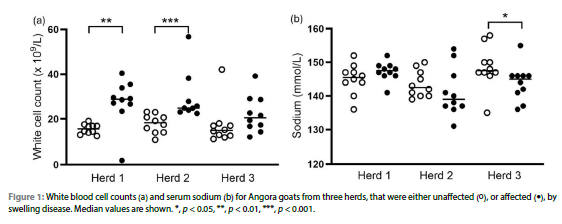
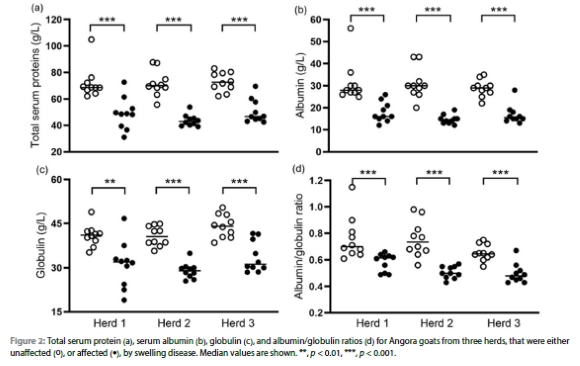
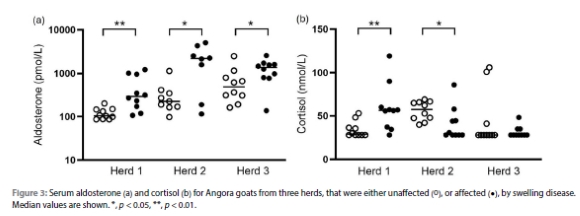
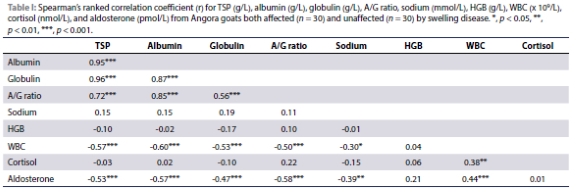
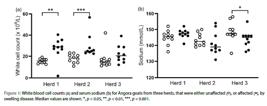
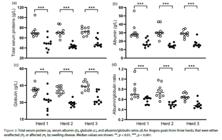
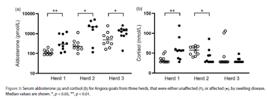
BACKGROUND: Swelling disease is a poorly understood clinical syndrome of South African Angora goats that is characterised by acute-onset diffuse oedema. Adrenocorticotropic hormone-stimulated aldosterone secretion has been proposed as a possible aetiology of swelling disease, but this hypothesis has not been tested. OBJECTIVES: To investigate aldosterone secretion in swelling disease by reanalysing data collected during a 2015 clinical investigation of the syndrome in which serum aldosterone and cortisol levels were measured along with standard clinical laboratory variables in affected and unaffected animals. METHODS: Goats affected with swelling disease, and unaffected herd-mates, were sampled for measurement of haematology variables, serum protein variables, and serum sodium, aldosterone, and cortisol. Results for affected and unaffected goats were compared using the Mann-Whitney U test, and the association between variables was investigated using Spearman's rank-order correlation analysis. RESULTS: Goats affected with swelling disease had significantly higher white blood cell counts (WBC) and serum aldosterone than unaffected animals, and significantly lower total serum protein (TSP), albumin, globulin, and albumin/globulin ratios. For all animals (n = 60), serum protein variables showed a significant and strong positive correlation with one another, and a negative correlation with serum aldosterone and WBC. CONCLUSION: Swelling disease of South African Angora goats is characterised by panhypoproteinaemia, a low A/G ratio, leukocytosis, and hyperaldosteronaemia. Causal relationships between variables could not be determined, however, the detection of hyperaldosteronaemia provides novel insight into the possible pathophysiological mechanisms of this syndrome.
aldosterone; Angora goat; oedema; swelling disease
 Thumbnail
 Thumbnail
 Thumbnail